

OBD-II Code P3075: Engine Coolant Flow Too Low
What P3075 means, why it triggers on many GM vehicles, and how to fix it
- Code P3075 on GM vehicles points to a coolant leak or trapped air in 90% of cases, not a failed water pump.
- Never replace the $400 electric coolant pump as a first step; GM TSB 21-NA-257 explicitly forbids this until leaks are fixed and the system is vacuum-bled.
- Check the upper radiator hose quick-connect fitting first; a degraded seal here is the #1 cause of hidden leaks per GM TSB PIT6494.
- Stop driving immediately if the temperature gauge rises; ignoring P3075 causes warped cylinder heads and head gasket failures costing upwards of $3,000.
What Does P3075 Mean?

P3075 is a General Motors-specific code indicating the Engine Control Module (ECM) detects poor coolant circulation. The computer tests the electric water pump; if it senses the pump moving air instead of fluid (cavitation), it triggers the Check Engine Light. This almost always points to a coolant leak or trapped air, not a bad pump.
Technical definition: The ECM commands the electric coolant pump to run at 4000 RPM for 15 seconds and measures its electrical AC current draw. If the current is lower than calibrated expectations, the ECM concludes the pump is spinning freely in air rather than pushing fluid against resistance, setting code P3075.
Can I Drive With P3075?
Yes, But With Caution. Drive only short distances to a repair facility and monitor the temperature gauge obsessively. This code indicates a critical engine overheating risk. If the gauge hits red or a warning appears, pull over immediately to prevent a $3,000+ head gasket failure.
Common Causes

- Low Engine Coolant Level (due to a leak) (Very Common) — This is the most frequent cause. Modern GM cooling systems are extremely sensitive to fluid levels. A slow leak from a hose, radiator, or valve introduces air and triggers the code. The upper radiator hose quick-connect seal is the #1 failure point per GM TSB PIT6494.
- Air Trapped in the Cooling System (Very Common) — Air becomes trapped after a coolant flush or hose replacement. These systems require special vacuum-fill tools to remove all air pockets. The code often sets once after a proper repair until a full drive cycle purges residual air.
- ECM Software Anomaly (Less Common) — On 2019 GM models with the 2.7L engine, overly sensitive ECM parameters incorrectly trigger P3075. GM TSB 19-NA-149 resolves this with a software update.
- Leaking Turbocharger Coolant Lines (Common) — The 2.7L L3B engine features a liquid-cooled turbocharger. The rubber hoses and metal fittings supplying coolant to the turbo develop slow leaks over time, causing the low coolant condition.
- Faulty Coolant Control Valve (Rare) — Modern engines use complex valves for active thermal management. A stuck valve disrupts circulation and causes leaks. Replacing this valve is a documented fix for persistent P3075 codes on 1.3L engines. 🎬 See how a faulty coolant bypass valve causes similar leak issues.
- Damaged Wiring Harness or Poor Ground (Rare) — Physical damage to the coolant pump wiring harness or a corroded engine ground causes intermittent power faults, triggering P3075 or U-codes.
- Failing Electric Engine Coolant Pump (Very Rare) — The pump itself rarely fails. GM TSBs explicitly forbid replacing the pump until leaks, air pockets, and software issues are definitively ruled out and the code returns a second time.
- Coolant Contamination (Very Rare) — Mixing incompatible coolants or an internal engine leak creates 'brown and chunky' sludge. This blocks flow and requires replacing multiple cooling system components.
Symptoms

- Check Engine Light is on — The Malfunction Indicator Lamp (MIL) illuminates on the dashboard.
- Engine Overheating — The temperature gauge climbs into the red, or a high engine temperature warning appears.
- Reduced Power Message — The dashboard displays 'Reduced Acceleration Drive with Care' as the vehicle enters limp mode to protect the engine.
- No Heat from Vents — The cabin heater blows cold air even when the engine is warm, indicating a low coolant level or a massive air pocket in the heater core.
- Cooling Fan Runs Excessively — The cooling fan runs at high speed for extended periods, even after turning the engine off.
- Visible Coolant Leak or Sweet Smell — Puddles of orange/pink fluid appear under the vehicle, or a distinct sweet antifreeze smell is present.
- A/C System Automatically Disabled — The ECM automatically disables the air conditioning compressor to reduce engine load.
Diagnostic Flowchart
Tap your situation to follow the diagnostic path that matches what you're seeing on this code.
Common Fixes & Costs
- Repair Coolant Leak (e.g., Replace Radiator Hose/Seal) — Parts: $25-$150, Labor: $150-$400, ~1.8 hr book time (Intermediate)
- Perform Cooling System Bleed with Vacuum Tool — Parts: $20-$40 (coolant only), Labor: $125-$250, ~1 hr book time (Professional)
- Reprogram Engine Control Module (ECM) — Parts: $0, Labor: $100-$250, ~1 hr book time (Professional)
- Replace Coolant Control Valve — Parts: $420-$500, Labor: $1000-$1400, ~5 hr book time (Professional)
- Replace Electric Engine Coolant Pump — Parts: $250-$600, Labor: $300-$600, ~2.5 hr book time (Professional)
Used vs. New Parts: Buying Guide
When a used part is worth it: For the electric coolant pump (a last-resort fix), a used OEM part from a low-mileage, accident-damaged vehicle is a cost-effective alternative to a new OEM part.
Donor-vehicle mileage cap: roughly under 60000 miles for the part to have meaningful remaining life.
Donor quality checklist:
- Verify the part number matches exactly.
- Ensure the donor vehicle was not scrapped due to engine failure or overheating.
- Inspect the electrical connector for corrosion or damage.
Decision logic:
- If The vehicle is under warranty or special coverage → Use a new OEM part installed by a dealer to maintain coverage.
- If The budget is extremely tight and the pump is confirmed faulty → A used OEM pump is a viable option, but carries risk.
- If Long-term reliability is the top priority → Buy a new OEM or a top-tier aftermarket pump from a reputable brand like Gates or GMB.
Warranty tradeoff: Used parts typically offer a 30-90 day warranty. New aftermarket parts often come with a 1-year to limited lifetime warranty. New OEM parts carry a 24-month/unlimited-mile warranty when installed by a GM dealer.
Worst-case if a used part fails: $500-$1500 if a used or cheap aftermarket pump fails prematurely, requiring repeat labor costs plus the price of another pump.
What Happens If You Wait — Timeline
- 0-1 month: Check Engine Light on with P3075. Coolant leak is very slow. Vehicle occasionally enters 'limp mode' with reduced power. (MPG impact: 0-2%% · Added cost: $0-$50 (in wasted fuel and potential towing if it overheats unexpectedly))
- 1-3 months: The slow leak causes the coolant level to drop significantly. The engine runs hotter, cooling fans run constantly, and the heater blows cold air. Overheating risk is high. (MPG impact: 3-8%% · Added cost: $100-$300 (towing costs) + increased fuel consumption.)
- 3-6 months: A significant overheating event occurs, exceeding 250°F (121°C). The heat warps the aluminum cylinder head, causing the head gasket seal to fail. (MPG impact: 10-25% (or vehicle is undrivable)% · Added cost: $1,500-$4,000 for cylinder head resurfacing/replacement and head gasket job.)
- 6+ months (or one severe event): Catastrophic failure. Continued driving on a warped head cracks the cylinder head or engine block, seizes pistons, and destroys bearings. The engine is a total loss. (MPG impact: 100% (vehicle is inoperable)% · Added cost: $4,000-$8,000+ for a used or remanufactured engine replacement.)
Cost of Not Fixing It
- Immediate (0-1 month): Risk of sudden engine overheating, especially under load or in hot weather. Vehicle enters a reduced power 'limp mode'. (Added cost: Potential towing costs ($100-$300).)
- Short Term (1-3 months): Continued driving with a low coolant level leads to engine overheating, causing a blown head gasket. (Added cost: $1,500-$4,000+ for head gasket replacement and potential machining of the cylinder head.)
- Long Term (3+ months): Catastrophic engine damage. Severe overheating warps or cracks the cylinder head, seizes pistons, and destroys bearings. (Added cost: $4,000-$8,000+ for a remanufactured or used engine replacement.)
Diagnosis Steps

- Check Coolant Level
Check the coolant overflow reservoir with the engine completely cold. Fluid below the 'min' line confirms a leak.
Tools: None (Beginner) - Visual Inspection for Leaks
Inspect the engine bay for pink or white crusty residue. Focus on the upper radiator hose quick-connect fittings (TSB PIT6494), radiator, and turbo coolant lines.
Tools: Flashlight (Beginner) - Scan for Codes & Check for TSBs
Confirm P3075 is active. For 2019 2.7L models, verify if the dealer performed the ECM software update per TSB 19-NA-149.
Tools: OBD-II Scanner (Beginner) - Perform a Cooling System Pressure Test
Pressurize the cooling system to reveal slow, hidden leaks. This is the definitive diagnostic step required by GM.
Tools: Cooling System Pressure Tester (Intermediate) - Perform a Professional Cooling System Bleed
Use a vacuum-fill tool (like GE-47716) to remove all trapped air. Manual bleeding fails on these systems and causes the code to return.
Tools: Cooling System Vacuum-Fill Tool (Intermediate) - Confirm Fix with GM GDS2 Scan Tool
Perform a road test, then use a GM GDS2 scan tool to verify the P3075 intrusive diagnostic shows 'run and passed'. This confirms the ECM accepts the repair.
Tools: GM GDS2 Professional Scan Tool (Professional) - Analyze Scan Tool Live Data
Monitor 'Engine Coolant Pump AC Current' during the ECM's 15-second, 4000 RPM test. A lower-than-expected reading triggers the code.
Tools: GM GDS2 Professional Scan Tool or equivalent (Advanced) - Test Coolant Pump Electrical Circuit
Check the pump's 4-pin connector for 12V power and solid ground. Poor connections cause performance or communication codes.
Tools: Digital Multimeter, Vehicle-Specific Wiring Diagram (Advanced) - Diagnose the Coolant Pump (Last Resort)
Replace the pump only if the code returns a second time after fixing all leaks and performing a vacuum bleed.
Tools: Professional Scan Tool (Advanced)
When This Code Triggers (Freeze-Frame Conditions)
- Engine Coolant Temp: 185-220°F (85-104°C) (The engine must be at normal operating temperature for the diagnostic to run.)
- RPM: Commanded to ~4000 RPM (The ECM runs an intrusive 15-second test, commanding the pump to a high speed to measure its current draw.)
- Engine State: Running (The self-test runs once per ignition cycle if all enable conditions are met.)
- Vehicle Speed: Varies (The test is not strictly dependent on vehicle speed but on a set of engine operating parameters being met first.)
Related Codes
- P3076 — This is the opposite code, 'Engine Coolant Pump High Current Performance'. P3075 means the pump spins too freely (air/low fluid). P3076 means the pump works too hard, indicating a blockage or seized motor.
- U0672 — 'Lost Communication with Electric Engine Coolant Pump'. U0672 means the problem is purely electrical (wiring, fuse, dead module), whereas P3075 means communication is fine, but performance is out of spec.
- P0128 — 'Coolant Temperature Below Thermostat Regulating Temperature.' P3075 is about flow; P0128 is about temperature. It sets if a stuck-open thermostat or major leak prevents the engine from reaching operating temperature.
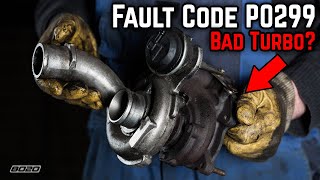
- P0299 — 'Turbocharger Underboost'. The turbo is cooled by engine coolant; if a P3075 condition leads to overheating, the ECM limits turbo boost to protect it, triggering P0299. Fix P3075 first.
- P26BB — 'Engine Coolant Bypass Valve'. A fault with this valve disrupts proper coolant circulation and sets alongside P3075 on affected GM vehicles.
Climate & Environmental Factors
- Cold Weather: Extreme cold causes plastic and rubber to contract, worsening small leaks at seals and hose connections. A leak that appears on a cold start and disappears when the engine warms up is a classic thermal contraction symptom.
- High Altitude: Operating at high altitude lowers the boiling point of coolant. If a P3075 fault exists, the engine is more susceptible to boiling over and overheating at altitude than at sea level.
- High Humidity / Corrosive Environments: Operating in humid or salty environments accelerates corrosion of electrical connections, including the coolant pump connector and ground points, leading to voltage drops or communication errors.
How to Talk to a Mechanic About This Code
Say this: "I have a P3075 code on my vehicle. I'd like to schedule a diagnostic appointment. Based on my research, this is often caused by a coolant leak or air in the system. Can you please perform a cooling system pressure test to check for leaks before considering any part replacements?"
This signals to the shop that you're an informed customer. It directs them to the correct first diagnostic step (pressure testing) and prevents them from incorrectly recommending an expensive water pump replacement.
Avoid saying:
- 'My check engine light is on, can you look at it?'
- 'The code says it's a water pump, can you give me a quote to replace it?'
- 'Just fix whatever is wrong.'
Questions to ask before authorizing the repair:
- Did the cooling system pressure test fail? If so, can you show me where the leak is?
- If the pressure test passed, do you have a vacuum-fill tool to properly bleed the air out of the system?
- Are you aware of GM Technical Service Bulletin 21-NA-257, which advises against replacing the pump on the first visit?
- If this is a 2019 model, have you checked if the ECM software update from TSB 19-NA-149 has been performed?
Where to Take It: Dealer vs Independent vs Chain
- Dealer:
Recommended for warranty work or if an ECM software update is needed.
Best for: Vehicles under warranty or with a potentially applicable Special Coverage program., 2019 models that need the ECM software update per TSB 19-NA-149., Complex cases where a coolant control valve is the issue, requiring GDS2 diagnostic tools.
Downsides: Typically the highest labor rate., May still attempt to replace the pump first if the technician ignores the latest TSBs. (Typical cost: +50% vs. baseline) - Independent Shop:
Best fit for out-of-warranty repairs, but only if you confirm they have a cooling system pressure tester and a vacuum-fill tool.
Best for: Out-of-warranty vehicles where the cause is a straightforward coolant leak., Cost-conscious owners.
Downsides: Quality is highly variable. You must verify the shop is well-equipped., May lack access to GM-specific TSBs or the GDS2 scan tool needed to confirm the fix. (Typical cost: +0% vs. baseline) - Chain Shop:
Acceptable for a simple, obvious leak repair, but AVOID for initial diagnosis.
Best for: Simple part swaps like replacing an accessible, visibly leaking radiator hose.
Downsides: Technician skill varies dramatically., Least likely to be aware of specific TSBs or have advanced tools like a vacuum-filler., Highly likely to misdiagnose and recommend an unnecessary pump replacement. (Typical cost: -10% vs. baseline)
When to Walk Away From the Repair
If the estimated repair cost exceeds 40-50% of the car's private-party value, pause and consider selling or trading it in.
- Car worth $18000, fix is $400: Fix it. A common radiator hose leak is a relatively minor repair and well below the threshold.
- Car worth $8000, fix is $1400: Borderline. If the diagnosis points to a rare and expensive coolant control valve replacement, get a second opinion before proceeding.
- Car worth $5000, fix is $3500: Walk away. If the code was ignored and led to a blown head gasket, the repair cost far exceeds the vehicle's value.
What Scan Tool You Need for This Code
Minimum: A basic OBD-II reader that reads and clears codes and displays live data for Engine Coolant Temperature.
A simple $20 code reader cannot show live coolant temperature to monitor for overheating, nor can it help a technician perform specific bleed procedures or confirm the fix.
Budget: BlueDriver Pro or OBDLink MX+ (~$100) — These Bluetooth scanners connect to your smartphone and provide live data graphing, allowing you to monitor coolant temperature in real-time.
Mid-range: Autel MK808 or Foxwell NT510 Elite for GM (~$250-350) — These tools offer bi-directional controls, including the ability to command the coolant pump on to help with bleeding procedures.
Professional: Autel MaxiCOM MK900BT or Launch X431 series (~$500-1200) — Provides full bi-directional control to manually run the coolant pump bleed procedure. Crucially, it accesses the GM-specific function to confirm the P3075 diagnostic has 'run and passed'.
Rent vs buy: For this code, the most critical tools are a pressure tester and vacuum bleeder, which can be rented from auto parts stores. A budget scanner is a good purchase to monitor live data.
How to Clear the Code After You Fix It
- Fix the root cause (e.g., repair leak, vacuum bleed system).
- Use an OBD-II scan tool to clear the diagnostic trouble code.
- Perform a complete GM drive cycle to allow the readiness monitors to reset.
Drive cycle (~30 minutes): From a cold start (engine temp below 122°F), idle for 2-3 minutes with A/C on. Accelerate to and hold a steady speed of 55 mph for 3-5 minutes. Coast down to 20 mph without braking. Accelerate again to 55-60 mph and hold for 5 minutes. Cool down. Repeat if necessary.
Readiness monitors affected: Comprehensive Component Monitor, Catalyst Monitor, EVAP System Monitor
Before emissions retest: drive at least 100 miles to fully set monitors.
Watch out for:
- The code returns once after a repair if residual air is still in the system; a full road test is needed to purge it.
- Simply clearing the code without fixing the leak or air pocket causes the code to return immediately.
- Not driving long enough or under the correct conditions prevents the P3075 diagnostic test from running and passing.
Will This Fail Emissions / State Inspection?
Yes — this code typically fails an OBD-II emissions inspection.
- California: An active Check Engine Light for code P3075 is an automatic test failure. All readiness monitors must be set to 'Ready', requiring a full drive cycle after the repair.
- New York: The NYVIP3 inspection includes an OBD-II scan. An illuminated Malfunction Indicator Lamp causes the vehicle to fail the emissions inspection.
- Texas: In counties requiring emissions testing, an illuminated Check Engine Light results in an automatic failure. Drive 50-100 miles to reset readiness monitors before a re-test.
Most Commonly Affected Vehicles
- Chevrolet Silverado 1500 (2.7L) (2019-2022) — Very common issue. 2019 models are subject to TSB 19-NA-149 for a software update. All years are prone to radiator inlet hose seal leaks per TSB PIT6494.
- GMC Sierra 1500 (2.7L) (2019-2022) — Shares the same engine and cooling system as the Silverado. TSB 19-NA-149 applies to 2019 models, and TSB 21-NA-257 applies to all years.
- Chevrolet Colorado (2.7L) (2023-2024) — Affected by TSB PIT6494 which specifically calls out coolant leaks at the upper radiator inlet hose causing P3075.
- Chevrolet Blazer (2.0L) (2019-2022) — Affected by TSB 21-NA-257, which points to low coolant or air in the system as the primary cause for the LSY engine.
- GMC Acadia (2.0L) (2020-2022) — The 2.0L LSY engine in this vehicle is highly sensitive to air pockets, making a professional bleed procedure critical per TSB 21-NA-257.
- Cadillac CT4 / CT5 (2.0L, 2.7L) (2020-2022) — Covered under TSB 21-NA-257, with diagnostics focusing on pressure testing for leaks before any part replacement.
- Cadillac XT4 / XT5 / XT6 (2.0L) (2019-2022) — Covered under TSB 21-NA-257. The XT4 was one of the first models where this issue was documented.
- Chevrolet Malibu (2.0L) (2019-2021) — The Chevy Malibu with the 2.0L LSY engine is included in the vehicle list for TSB 21-NA-257, indicating it shares the same potential issue.
- Buick Encore GX (1.3L) (2020-2022) — Shares the same L3T engine and cooling system issues as the Trailblazer. TSB 21-NA-257 applies. A service update (A212334670) for some 2021 models addressed loose cylinder head bolts.
- Chevrolet Trailblazer (1.3L) (2021-2022) — Shares the issue with its platform-mate, the Buick Encore GX. Leaks and air in the system are the main culprits.
- Vauxhall / Opel Insignia (B) (2017-2022) — As a European GM platform sharing similar engine technology, owners report P3075 appearing after a low coolant warning, indicating leaks or air in the system.
Manufacturer-Specific Notes
- General Motors: GM issued TSB 21-NA-257 which explicitly warns technicians NOT to replace the coolant pump on the first visit. The procedure is to pressure test, fix leaks, vacuum bleed, clear codes, and road test.
- General Motors (2019 models): For 2019 models with the 2.7L engine, TSB 19-NA-149 notes a software anomaly causes P3075. Verify the ECM has the latest software before proceeding with physical diagnostics.
- General Motors: TSB PIT6494 identifies a specific common leak point: a degraded seal in the quick-connect fitting of the upper radiator inlet hose. This causes a slow, hard-to-spot leak sufficient to trigger P3075.
- General Motors: The diagnostic test for P3075 resets once after a repair until a full road test at operating temperature purges all remaining air.
- General Motors: Some GM vehicles are covered by Special Coverage programs (e.g., N232413180) that extend the warranty for specific cooling system components. Check with a dealer using your VIN.
- Toyota / Lexus: This code is not used by Toyota or Lexus. They have a similar issue with a 'flow shut-off valve' that leaks, but it sets different codes, typically P268111 or P268115.
- Ford / Honda / Hyundai, etc.: Code P3075 is highly specific to General Motors and its associated brands. It is not used by other major manufacturers.
Real Owner Stories
2024 Chevy Colorado with 26k miles has P3075 and an empty coolant tank.
Owner noticed the radiator fan running at high speed, the oil pressure gauge maxed out, and dampened throttle response. The Check Engine Light came on with code P3075. The coolant reservoir was completely empty.
What they tried:
- Restarting the truck temporarily hid the symptoms.
- Clearing the code with a scanner provided a temporary fix.
Outcome: The root cause was a coolant leak at the upper radiator inlet hose seal, consistent with GM TSB PIT6494. The fix required replacing the hose assembly, refilling with DEX-COOL, and vacuum-bleeding the system.
Lesson: A P3075 code paired with high-speed fans strongly indicates low coolant. Always check the reservoir first; it directly confirms a leak.
Misdiagnosis on a 2022 Buick Encore GX leads to unnecessary pump replacement.
Owner experienced symptoms leading to a P3075 code on the 1.3L engine platform.
What they tried:
- The dealership immediately replaced the electric coolant pump, assuming the part named in the code was the failure.
Outcome: Replacing the pump failed to fix the issue, and the code returned. Further diagnosis revealed a hidden coolant leak. This aligns with GM's TSB 21-NA-257, which explicitly warns technicians NOT to replace the pump on the first visit.
Lesson: Never let a mechanic replace the coolant pump for P3075 without first proving the system is leak-free via a pressure test and has been vacuum-bled.
A 2022 Chevy Trailblazer with persistent P3075 requires an expensive valve repair.
The vehicle was repeatedly towed to a dealer for overheating, reduced power warnings, and visible coolant leaks, setting codes P3075, P06DD, and P0299.
What they tried:
- Multiple unspecified repair attempts failed to stop the overheating and coolant loss.
Outcome: The final, successful repair was replacing the engine's coolant control valve. This complex component manages thermal flow, and its failure caused the circulation issues triggering the codes.
Lesson: If P3075 persists after fixing leaks and bleeding the system multiple times, a faulty coolant control valve is a rare but possible cause.
How to Prevent This Code From Triggering
- Change Engine Coolant per Severe Schedule (Every 5 years or 100,000 miles) — Time and heat degrade the coolant's anti-corrosion additives. Shorter intervals prevent internal corrosion and sludge that lead to leaks and blockages.
- Proactively Replace Radiator Hoses (Every 8-10 years or 100,000 miles) — Rubber hoses degrade from the inside out due to heat cycles. Replacing main hoses before they swell or crack prevents sudden failures that trigger P3075.
- Use Only DEX-COOL Compatible Coolant (Whenever topping off or refilling) — Mixing coolant types causes a chemical reaction that leads to gelling, sludge, and corrosion. Always use a pre-mixed 50/50 orange DEX-COOL formula.
- Periodically Inspect Coolant Level and Hose Connections (Once a month or at every oil change) — A quick visual check of the cold coolant level and a scan for pink/orange crusty residue spots slow leaks long before they trigger the P3075 code.
Frequently Asked Questions
What does code P3075 mean in simple terms for my Chevy/GMC truck?
It means your truck's computer thinks the engine isn't getting enough coolant flow. This is almost always because of a coolant leak somewhere or air trapped in the lines, not because the water pump itself is broken.
Is it safe to drive with code P3075?
It is very risky. You can drive a short distance to a repair shop, but you must watch the temperature gauge. If it starts to rise, pull over immediately to prevent catastrophic engine damage costing over $3,000.
My mechanic wants to replace the water pump for P3075. Is that right?
Not as a first step. General Motors service bulletins (like TSB 21-NA-257) require technicians to find and fix coolant leaks and vacuum-bleed the system first. The pump should only be replaced if the code returns a second time.
I just had my coolant changed and now I have this code. What happened?
Air was trapped in the cooling system during the service. Modern GM cooling systems are difficult to bleed, and remaining air pockets trigger code P3075. The system needs to be bled again with a professional vacuum-fill tool.
What is the most common mistake when diagnosing P3075?
The biggest mistake is replacing the electric coolant pump first. GM requires technicians to check for software updates, pressure test for leaks, and vacuum-bleed the system before condemning the pump.
My truck has P3075 but I can't see any leaks. Where should I look?
Even a microscopic leak triggers this code. Check the O-ring seal inside the upper radiator hose quick-connect fitting for pink or white crusty residue. A cooling system pressure test is the definitive way to expose hidden leaks.
How much does it cost to fix P3075?
A simple system bleed costs $125-$250. If a hose is leaking, expect to pay between $175 and $450. Replacing the pump is an expensive last resort, often costing over $600, but it is rarely the correct fix.
Why did my P3075 code come back right after the mechanic fixed a leak?
Even after fixing a leak, microscopic air bubbles remain trapped. The ECM's diagnostic test is highly sensitive and sets the code until a full road test at operating temperature purges the remaining air.
My coolant looks brown and chunky and I have a P3075 code. What does that mean?
Brown, chunky coolant is a sign of serious contamination from mixing incompatible coolant types or an internal engine leak. This condition requires a full system diagnosis, flush, and repair of the root cause.
Key Takeaways
- Code P3075 on GM vehicles points to a coolant leak or trapped air in 90% of cases, not a failed water pump.
- Never replace the $400 electric coolant pump as a first step; GM TSB 21-NA-257 explicitly forbids this until leaks are fixed and the system is vacuum-bled.
- Check the upper radiator hose quick-connect fitting first; a degraded seal here is the #1 cause of hidden leaks per GM TSB PIT6494.
- Stop driving immediately if the temperature gauge rises; ignoring P3075 causes warped cylinder heads and head gasket failures costing upwards of $3,000.
Helpful Videos

The information in this article is provided for general reference and educational purposes only. Vehicle specifications, procedures, and part compatibility can vary by production date, trim level, and region. Always consult your vehicle's factory service manual and verify part numbers before purchasing or performing repairs. Safety-critical components such as airbags, seat belts, and braking systems should be installed by a qualified professional.
- 🎬 Helpful Videos
- What Does P3075 Mean?
- Can I Drive With P3075?
- Common Causes
- Symptoms
- Diagnostic Flowchart
- Common Fixes & Costs
- Used vs. New Parts: Buying Guide
- What Happens If You Wait — Timeline
- Cost of Not Fixing It
- Diagnosis Steps
- When This Code Triggers (Freeze-Frame Conditions)
- Related Codes
- Climate & Environmental Factors
- How to Talk to a Mechanic About This Code
- Where to Take It: Dealer vs Independent vs Chain
- When to Walk Away From the Repair
- What Scan Tool You Need for This Code
- How to Clear the Code After You Fix It
- Will This Fail Emissions / State Inspection?
- Most Commonly Affected Vehicles
- Manufacturer-Specific Notes
- Real Owner Stories
- 2024 Chevy Colorado with 26k miles has P3075 and an empty coolant tank.
- Misdiagnosis on a 2022 Buick Encore GX leads to unnecessary pump replacement.
- A 2022 Chevy Trailblazer with persistent P3075 requires an expensive valve repair.
- How to Prevent This Code From Triggering
- Frequently Asked Questions
- What does code P3075 mean in simple terms for my Chevy/GMC truck?
- Is it safe to drive with code P3075?
- My mechanic wants to replace the water pump for P3075. Is that right?
- I just had my coolant changed and now I have this code. What happened?
- What is the most common mistake when diagnosing P3075?
- My truck has P3075 but I can't see any leaks. Where should I look?
- How much does it cost to fix P3075?
- Why did my P3075 code come back right after the mechanic fixed a leak?
- My coolant looks brown and chunky and I have a P3075 code. What does that mean?
- Key Takeaways
- 🎟️ Get 5% Off