

OBD-II Code P3054: A Manufacturer-Specific Guide to a Complex Code
What P3054 means, why it triggers, and how to fix it on GM, VW, Audi, BMW, and Hybrid vehicles
- P3054 has completely different definitions depending on your car brand: GM (Crankshaft Sensor), VW/Audi (Starter System), BMW (Steering Sensor), or Chevy Hybrid (DC/DC Converter).
- On GM vehicles, P3054 almost always requires a 15-minute 'CASE Learn' procedure using a $150+ bi-directional scan tool after replacing a sensor.
- For VW and Audi models, a P3054 no-start condition is frequently caused by a $40 faulty starter relay or corroded ground wire, not a failed starter motor.
- Never ignore a P3054 on a GM 2.4L Ecotec engine accompanied by a rattling noise, as it indicates a stretched timing chain that costs $1,500+ to replace.
What Does P3054 Mean?

P3054 is a manufacturer-specific code, meaning its definition changes drastically depending on your vehicle's make. For General Motors (GM), it means the engine's computer (ECU) has not learned the precise position of the crankshaft position sensor, which is critical for engine timing. For Volkswagen (VW) and Audi, it indicates an electrical or mechanical fault in the starter motor circuit. For some hybrids, it points to a DC/DC converter issue, and for BMW, a steering angle sensor problem. This guide breaks down each specific path.
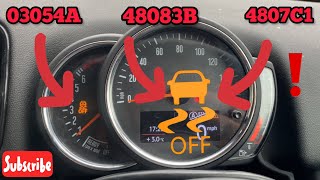
Technical definition: The definition of P3054 varies significantly by manufacturer. For General Motors (GM) vehicles, it is defined as "Crankshaft Position System Variation Not Learned." For Volkswagen Group (Audi, VW), it means "Starter Mechanical or Electrical Malfunction." On Chevrolet hybrid vehicles (like the Volt), it means "DC/DC Converter Actuator Voltage Sensor Circuit 2 High Voltage." For BMW/MINI, fault 03054A indicates a "Signal Processing: Steering Angle Plausibility" error within the Dynamic Stability Control (DSC) system.
Can I Drive With P3054?
No — Do Not Drive. The engine will likely fail to start, leaving you stranded. If it does run, it stalls unexpectedly while driving, causing a sudden loss of power steering and brakes. Tow the vehicle to prevent an accident.
Common Causes

- Skipped 'Relearn' Procedure After Sensor Replacement (GM specific) (Very Common) — After replacing a crankshaft sensor, camshaft sensor, timing chain, or ECM on a GM vehicle, the ECU must learn the new component's electronic signature via a 'CASE Learn' procedure. Skipping this mandatory step is the primary cause of P3054.
- Faulty Starter Relay or Solenoid (VW/Audi specific) (Very Common) — On VW and Audi vehicles, a faulty starter relay fails to deliver power to the starter motor. The internal contacts become corroded or burnt, causing an intermittent or total no-crank condition.
- Stretched or Worn Timing Chain (GM specific) (Common) — On engines like the GM 2.4L Ecotec, a stretched timing chain causes the crankshaft and camshaft signals to fall out of sync. This mechanical misalignment prevents the variation learn procedure from completing successfully.
- Damaged or Corroded Starter Wiring/Grounds (VW/Audi specific) (Common) — The small signal wire on the starter solenoid corrodes and breaks, preventing the starter from engaging. A corroded main ground strap between the engine and chassis also chokes the current required to turn the starter.
- Faulty Crankshaft Position (CKP) Sensor (GM specific) (Common) — The sensor fails due to heat, age, or internal electronic faults, sending incorrect data or no data at all to the ECU.
- Faulty Starter Motor (VW/Audi specific) (Common) — The starter motor fails mechanically (jammed gears) or electrically (burnt windings), directly triggering this code on VAG vehicles. 🎬 See how to diagnose a jammed or faulty starter motor.
- Steering Angle Sensor (SAS) Requires Calibration (BMW/MINI specific) (Less Common) — On BMWs, fault 03054A triggers if the SAS is not recalibrated after a wheel alignment or suspension work.
- Damaged Crankshaft Reluctor Wheel (GM specific) (Less Common) — The toothed wheel read by the CKP sensor gets bent or covered in debris, preventing an accurate reading and blocking the relearn procedure.
- Defective DC/DC Converter (Hybrid Vehicles) (Rare) — On specific hybrid models like the Chevrolet Volt, P3054 indicates a high voltage condition in the DC/DC converter's actuator sensor circuit, completely unrelated to the engine.
- Pyrotechnic Battery Disconnect Triggered (Audi specific) (Rare) — During a collision, some Audi models fire a pyrotechnic charge on the battery terminal to disconnect the starter and prevent fires. This sets a P3054 code and requires replacing the disconnect device.
- Failing Engine Control Module (ECM) (Rare) — The engine's computer develops an internal fault that prevents it from storing learned crankshaft position data or controlling the starter circuit.
Symptoms
- Engine will not start or is hard to start — The engine cranks but fails to fire (GM), or does not crank at all, producing only a single click or silence (VW/Audi).
- Engine stalls unexpectedly — The engine shuts off while driving or idling because it loses the critical crankshaft position signal (GM specific).
- ESP/DSC warning light is on (BMW/MINI specific) — For BMW and MINI vehicles, the primary symptom is the illumination of the stability control warning light, with no engine-related issues.
- Check Engine Light is on (also visible on scanner) — The Malfunction Indicator Lamp (MIL) illuminates immediately upon detecting the fault.
- Rough running, engine misfires, or reduced power (also visible on scanner) — Incorrect timing data (GM) causes the engine to shake, hesitate, or misfire, triggering a P0300 code and forcing the vehicle into reduced power mode.
Diagnostic Flowchart
Tap your situation to follow the diagnostic path that matches what you're seeing on this code.
Common Fixes & Costs
- Perform Crankshaft Position Variation Learn Procedure (GM) — Parts: $0, Labor: $100-$200, ~1 hr book time (Professional)
- Replace Starter Relay (VW/Audi)
— Parts: $20-$50, Labor: $30-$80, ~0.5 hr book time
(Beginner)
VW Jetta (2011-2016): OEM 7N0951253 (Alt: {"brand": "Bosch", "part_number": "0332019453", "price_comparison": "Comparable to OEM"}, {"brand": "Hella", "part_number": "4RA933791051", "price_comparison": "Comparable to OEM"}) - Replace Starter Motor (VW/Audi)
— Parts: $150-$400, Labor: $300-$600, ~3 hr book time
(Intermediate)
Audi A4 (2009-2016): OEM 06H911021E (Alt: {"brand": "Bosch (Reman)", "part_number": "SR0792X", "price_comparison": "Slightly less than OEM"}, {"brand": "Valeo", "part_number": "438224", "price_comparison": "Competitive with Bosch"}) - Replace Crankshaft Position Sensor (GM)
— Parts: $40-$80, Labor: $150-$250, ~1.5 hr book time
(Intermediate)
Chevrolet Equinox (2010-2017, 2.4L): OEM 12674703 (Alt: {"brand": "Standard Motor Products", "part_number": "PC920", "price_comparison": "Slightly less than OEM"}, {"brand": "Bosch", "part_number": "0261210298", "price_comparison": "Premium aftermarket"}) - Repair Damaged Wiring or Connector (VW/Audi) — Parts: $10-$50, Labor: $100-$300, ~1.5 hr book time (Intermediate)
- Replace Timing Chain Kit (GM)
— Parts: $150-$400, Labor: $1200-$2200, ~8 hr book time
(Professional)
Chevrolet Equinox (2010-2017, 2.4L): OEM 12680750 (Alt: {"brand": "Cloyes", "part_number": "9-4201SA", "price_comparison": "Leading aftermarket supplier"}) - Calibrate Steering Angle Sensor (BMW/MINI) — Parts: $0, Labor: $100-$150, ~1 hr book time (Intermediate)
DIY vs Professional
- Perform Crankshaft Position Variation Learn Procedure (GM) — Beginner: No
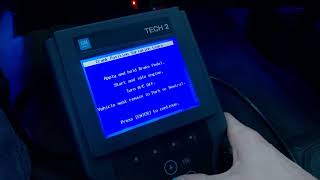
Tools: Professional bi-directional scan tool (e.g., GM Tech 2, high-end Autel). - Replace Starter Relay (VW/Audi) — Beginner: Yes
Tools: None. - Replace Starter Motor (VW/Audi) — Beginner: No (Intermediate skill recommended)
Tools: Jack, jack stands, socket set, extension bars. - Replace Crankshaft Position Sensor (GM) — Beginner: Yes (with caution)
Tools: Socket set, wrenches. - Calibrate Steering Angle Sensor (BMW/MINI) — Beginner: No
Tools: BMW-compatible scan tool. - Replace Timing Chain Kit (GM) — Beginner: No (Professional skill required)
Tools: Engine support bar, torque wrench, specialized timing chain holding tools.
Used vs. New Parts: Buying Guide
When a used part is worth it: Buying used is not recommended for this code. The labor cost to replace a starter is high, and a used part carries a significant risk of premature failure. Crankshaft sensors are too inexpensive to justify buying used.
Donor-vehicle mileage cap: roughly under 60000 miles for the part to have meaningful remaining life.
Donor quality checklist:
- Verify the donor vehicle had low mileage and was not scrapped for engine-related issues.
- Avoid parts from regions with heavy road salt use, as corrosion destroys starters and wiring.
- Match the part number exactly.
Decision logic:
- If The part is a Crankshaft Position Sensor → Always buy new. The part is cheap and critical for engine operation.
- If The part is a Starter Motor and labor for installation is high → Buy a new or professionally remanufactured unit with a warranty. The risk of a used part failing isn't worth the repeat labor cost.
Warranty tradeoff: Used parts offer a 30-90 day part-only warranty. New aftermarket parts come with a 1-year to limited lifetime warranty, protecting against defects.
Worst-case if a used part fails: $300-$600 (Cost of repeat labor to install a second starter after a used one fails)
What Happens If You Wait — Timeline
- Immediate: For VW/Audi, the car will not start. For GM, the Check Engine Light illuminates, accompanied by a rough idle or brief hesitation. For BMW, DSC/ABS lights turn on. (MPG impact: 0-5%% · Added cost: $100-$200 (Towing fee).)
- 1-4 Weeks (GM specific progression): The uncalibrated crank signal causes worsening engine performance. Stalling at stops becomes frequent, misfires (P0300) log, and fuel economy drops. (MPG impact: 5-15%% · Added cost: $50-$150 (Wasted fuel).)
- 1-6 Months (GM specific progression): Constant misfires dump unburnt fuel into the exhaust, causing the catalytic converter to overheat and melt internally. A P0420 code appears. (MPG impact: 10-20%% · Added cost: $1200-$2800 (Catalytic converter replacement).)
- 6+ Months (GM timing chain specific): If the root cause is a stretched timing chain, the chain skips teeth or breaks entirely. Pistons collide with valves, destroying the engine. (MPG impact: 100% (Engine is non-functional)% · Added cost: $5000-$8000 (Complete engine replacement).)
Cost of Not Fixing It
- Immediate: For VW/Audi, you are stranded with a no-start condition. For GM, stalling in traffic creates a severe safety hazard. (Added cost: $100-$200 (Towing fees))
- 1-6 Months: On GM vehicles, persistent misfires overwhelm the catalytic converter with unburnt fuel, causing it to overheat and fail prematurely. (Added cost: $1200-$2800 (Catalytic converter replacement))
- 6+ Months: If a GM code is due to a stretched timing chain, continued operation causes the chain to break, resulting in catastrophic internal engine damage. (Added cost: $5000-$8000 (Engine replacement))
Diagnosis Steps

- Read All Trouble Codes & Identify Vehicle Manufacturer
Use an OBD-II scanner to confirm the P3054 code. The vehicle's make (GM, VW, BMW, etc.) dictates the entire diagnostic path. Do not proceed until you know your manufacturer's specific definition.
Tools: OBD-II Scan Tool (Beginner) - Attempt Crankshaft Position Variation Learn Procedure (GM)
If driving a GM, use a bi-directional scan tool to perform the 'Crankshaft Position Variation Learn' (CASE learn). Warm the engine above 160°F, turn off accessories, rev to fuel cut-off (around 4000 RPM), and let it idle. A successful learn clears the code. If it fails, you have a mechanical timing issue.
Tools: Bi-directional Scan Tool (Intermediate) - Test the Starter Relay (VW/Audi)
Locate the starter relay in the under-hood fuse box. Swap it with an identical relay from a non-critical system (like the horn). If the car starts, the relay is bad. Replace it for $40.
Tools: None (for swapping) (Beginner) - Inspect Starter Circuit Wiring and Connections (VW/Audi)
Visually inspect the large battery cables to the starter and the engine ground strap for corrosion. Check the small, single-wire connector on the starter solenoid; it frequently corrodes and breaks off, causing a no-crank P3054.
Tools: Flashlight, Wrenches (Beginner) - Check Live Data for Crankshaft RPM (GM)
Monitor the Crankshaft RPM PID on a scan tool while cranking the engine. A healthy sensor shows 100-500 RPM. A reading of 0 RPM indicates a hard failure of the sensor or circuit, which must be fixed before attempting a relearn.
Tools: OBD-II Scan Tool with Live Data (Intermediate) - Test Starter Solenoid Signal Voltage (VW/Audi)
Set a multimeter to DC Volts. Check for voltage at the starter solenoid's small signal wire while an assistant turns the key to 'start'. A reading of 10.5V+ means the signal is reaching the starter, proving the starter motor itself is faulty.
Tools: Multimeter (Intermediate) - Calibrate Steering Angle Sensor (BMW/MINI)
Access the DSC module with a BMW-compatible scan tool and perform the steering angle sensor calibration. Turn the wheel lock-to-lock and center it. This clears the 03054A fault after an alignment.
Tools: BMW-specific Scan Tool (e.g., ISTA+) (Intermediate) - Inspect the Timing System (GM)
If the CASE learn fails repeatedly on a GM 2.4L, remove the valve cover to inspect the timing chain. Look for excessive slack or broken plastic guides. A stretched chain prevents the relearn from completing.
Tools: Hand tools, Engine-specific knowledge (Advanced) - Analyze the CKP Sensor Waveform (GM)
Use an oscilloscope to view the CKP sensor's signal. A healthy GM Hall-effect sensor produces a clean 0-5V digital square wave. Dropouts or noise indicate a failing sensor or wiring issue.
Tools: Oscilloscope, Back-probe pins (Advanced) - Test CKP Sensor Circuit Integrity (GM)
Verify the CKP sensor's three circuits at the connector with the key on. You need a 5V/12V reference signal, a ground with less than 0.5 ohms resistance, and a signal wire. Fix any open or shorted wires.
Tools: Multimeter, Wiring Diagram (Advanced)
When This Code Triggers (Freeze-Frame Conditions)
- Engine Coolant Temp: 170-210°F (The code sets when the engine is fully warmed up, as diagnostic self-tests require operating temperature to run.)
- RPM: 1200-2500 (For the GM variant, the lack of calibration is detected during steady-state driving or light acceleration.)
- Engine Load: 20-50% (The fault logs under normal, light-to-moderate engine load during city or highway driving.)
- Vehicle Speed: 30-60 mph (Steady cruising speeds trigger the ECU to verify the crankshaft calibration and set the code if missing.)
Related Codes
- P0315 — The generic SAE code for 'Crankshaft Position System Variation Not Learned.' P3054 is the GM-specific version of P0315. They are diagnosed identically.
- P0016 / P0017 — 'Crankshaft/Camshaft Position Correlation.' Seeing these alongside P3054 on a GM strongly suggests a stretched timing chain. The mechanical fault must be repaired before the P3054 relearn will complete.
- P0335 / P0336 — 'Crankshaft Position Sensor 'A' Circuit.' Indicates a hard electrical fault (no signal). P3054 means a valid signal is present but uncalibrated. You must fix P0335 before addressing P3054.
- P0300 — 'Random/Multiple Cylinder Misfire Detected.' P3054 directly causes P0300 on GM vehicles because uncalibrated crankshaft signals lead to incorrect ignition timing.
Climate & Environmental Factors
- High Humidity & Road Salt: Accelerates corrosion on electrical components. This is the primary driver of P3054 on VW/Audi vehicles, destroying the starter solenoid's signal wire connector and the engine-to-chassis ground strap.
- Cold Weather: Increases the internal resistance of the battery, reducing cranking amperage. The VW/Audi ECU interprets this slow-crank condition as an electrical fault in the starter circuit, triggering P3054.
- Engine Oil Contamination: Oil leaks from valve cover gaskets seep into the starter motor or onto the crankshaft position sensor wiring harness, degrading insulation and causing short circuits.
How to Talk to a Mechanic About This Code
Say this: "I have a P3054 code and I need a diagnostic. My car is a [GM/VW/BMW]. For GM: 'I suspect it needs a CASE relearn or has a timing issue.' For VW/Audi: 'I have a no-start and a P3054, please check the starter relay and wiring before quoting a starter.' For BMW: 'I have a DSC light and a 03054A fault, I believe the steering angle sensor needs calibration.'"
This immediately tells the mechanic you understand the code is manufacturer-specific, preventing them from suggesting an irrelevant repair.
Avoid saying:
- 'My check engine light is on, can you look at it?'
- 'The internet said I need a new crankshaft sensor.'
- 'Just fix whatever is wrong.'
Questions to ask before authorizing the repair:
- For GM: If a CASE learn fails, what is the next diagnostic step you recommend to check the timing system?
- For VW/Audi: Did you test for voltage at the starter solenoid signal wire and check the ground strap integrity?
- For BMW: Will the steering angle sensor calibration be performed with a BMW-compatible scan tool?
- What is the warranty on this specific repair, covering both parts and labor?
Where to Take It: Dealer vs Independent vs Chain
- Dealer:
Recommended for the BMW and Hybrid versions of this code due to proprietary software needs.
Best for: Vehicles under warranty, Complex manufacturer-specific issues (BMW steering sensor, Chevy Volt hybrid fault)
Downsides: Highest labor rates (1.5-2x independent shops), Defaults to expensive part replacement over targeted electrical repair (Typical cost: +50% vs. baseline) - Independent Shop:
Best fit for the most common versions of P3054 (GM and VW/Audi). A good independent shop easily handles a GM CASE relearn or a VW starter circuit diagnosis.
Best for: Out-of-warranty GM and VW/Audi vehicles, Cost-effective diagnosis and repair
Downsides: Quality varies; ensure the shop has bi-directional scan tools required for GM/BMW fixes. (Typical cost: +0% vs. baseline) - Chain Shop:
AVOID for P3054 diagnosis. They lack the specific bi-directional tools for a GM 'relearn' and are likely to misdiagnose a VW/Audi issue.
Best for: Simple, unrelated maintenance like oil changes or tires.
Downsides: Technician skill and diagnostic equipment are inadequate for manufacturer-specific codes., High pressure to upsell common parts (like a starter) without proper diagnosis. (Typical cost: -10% vs. baseline)
When to Walk Away From the Repair
If the estimated repair cost exceeds 40-50% of the car's private-party value, seriously consider selling or trading in the vehicle.
- Car worth $5000, fix is $2500: Borderline. This is a major repair (like a GM timing chain). Get a second opinion before authorizing.
- Car worth $10000, fix is $800: Fix it. A VW starter or GM sensor replacement is well below the threshold.
- Car worth $3000, fix is $2200: Walk away. The repair cost is too high relative to the car's value.
What Scan Tool You Need for This Code
Minimum: A code reader that confirms the P3054 code and shows freeze-frame data.
A basic $20 reader cannot perform the mandatory 'CASE Learn' on a GM, the steering angle sensor calibration on a BMW, or the active tests needed to diagnose the starter circuit on a VW/Audi.
Budget: BlueDriver Pro (~$100) — Excellent for reading codes and viewing live data (like GM crank RPM). However, it lacks the bi-directional control needed for the specific relearn/calibration procedures.
Mid-range: Foxwell NT510 Elite (~$180) — The sweet spot for a DIYer. Offers bi-directional control for specific makes. Performs the GM CASE relearn, BMW steering angle sensor calibration, and activates the VW starter relay.
Professional: Autel MaxiCOM MK808 (~$450) — Provides full bi-directional control for all makes. Performs all required special functions for P3054 across GM, VW, and BMW. Ideal for enthusiasts who work on multiple car brands.
Rent vs buy: You cannot rent the necessary bi-directional scan tool from parts stores. If you have a GM or BMW, you must either buy a capable mid-range scanner or pay a shop for the specific relearn procedure.
How to Clear the Code After You Fix It
- For GM: Perform 'Crankshaft Position Variation Learn' with a bi-directional scan tool. The code will not clear otherwise.
- For VW/Audi: After replacing the faulty component, use a standard OBD-II scan tool to clear codes.
- For all makes: Perform a complete OBD-II drive cycle to allow readiness monitors to run before an emissions test.
Drive cycle (~30 minutes): Start the engine cold. Idle for 3 minutes with the A/C on. Drive 15 minutes at steady highway speeds (55-60 mph). Coast down without braking, then idle for 2 minutes.
Readiness monitors affected: Misfire Monitor, Fuel System Monitor, Comprehensive Component Monitor
Before emissions retest: drive at least 50 miles to fully set monitors.
Watch out for:
- On GM vehicles, clearing the code with a basic scanner fails; the 'CASE Learn' procedure is mandatory.
- Disconnecting the battery resets readiness monitors, resulting in an automatic emissions test failure.
- The code returns immediately if the underlying root cause (e.g., stretched timing chain) is not fixed.
Will This Fail Emissions / State Inspection?
Yes — this code typically fails an OBD-II emissions inspection.
- California: An illuminated MIL results in an automatic Smog Check failure. After repair, readiness monitors must be set to 'complete'.
- New York: A vehicle with an illuminated 'Check Engine' light automatically fails the emissions portion of the annual state inspection.
- Texas: In the 17 counties requiring emissions testing, an illuminated 'Check Engine' light causes an automatic inspection failure.
Most Commonly Affected Vehicles
- Chevrolet Equinox (2010-2017) — Extremely common on the 2.4L Ecotec engine. Triggered by stretched timing chains from excessive oil consumption, or sensor replacement without a CASE learn.
- GMC Terrain (2010-2017) — Shares the 2.4L Ecotec engine with the Equinox, making it prone to the exact same timing chain and sensor relearn issues.
- Audi / Volkswagen A4, Golf, Jetta, Passat, Q7 (2009-2019) — P3054 means 'Starter Mechanical or Electrical Malfunction'. Common causes are bad starter relays, corroded ground straps, or a broken signal wire at the starter solenoid.
- Chevrolet Volt (2011-2019) — Indicates 'DC/DC Converter Actuator Voltage Sensor Circuit 2 High Voltage', a high-voltage system fault requiring specialized diagnostics.
- BMW / MINI 3-Series, 5-Series, X3, Cooper (2006-2013) — Fault 03054A points to a problem with the Steering Angle Sensor (SAS) calibration within the DSC module, usually appearing after a wheel alignment.
- Buick Regal, Verano, LaCrosse (2011-2017) — Uses the 2.4L Ecotec engine and experiences P3054 due to stretched timing chains or sensor failures requiring a CASE learn.
Manufacturer-Specific Notes

- General Motors (Chevrolet, GMC, Buick, Cadillac): Almost always requires a 'Crankshaft Position Variation Learn' (CASE Learn) procedure with a bi-directional scan tool after repairs. GM has a known history of 2.4L timing chain wear leading to this code.
- Audi / Volkswagen: Points exclusively to a problem with the starting system (starter motor, relay, corroded wiring, or post-collision battery disconnect). It is completely unrelated to the crankshaft sensor.
- BMW / MINI: Fault 03054A is unrelated to the engine. It points to a Steering Angle Sensor calibration error within the Dynamic Stability Control module, requiring a software reset.
- Chevrolet (Hybrid): On the Volt and Malibu Hybrid, P3054 means 'DC/DC Converter Actuator Voltage Sensor Circuit 2 High Voltage', requiring high-voltage system diagnostics.
Real Owner Stories
2012 VW Passat TDI, No-Crank, No-Start
The car refused to start, producing only faint relay clicks. The battery tested good. A scan revealed P3054: 'Starter will not turn - jammed or electrical malfunction'.
What they tried:
- Removed and bench-tested the starter motor, which worked perfectly.
- Checked for voltage at the solenoid signal wire during a start attempt and found none.
- Opened the main starter relay (VW Part #8K0951253) under the battery tray and found heavily burnt contacts.
Outcome: The owner cleaned the pitted contacts as a temporary measure, and the car started immediately. They ordered a new $40 relay for a permanent fix.
Lesson: On a VW/Audi, a no-crank P3054 is frequently caused by a faulty, inexpensive starter relay. Always test the relays before paying $500+ for a starter replacement.
2011 Chevy Equinox 2.4L, P3054 after DIY Crank Sensor Replacement
The owner replaced the crankshaft position sensor to fix a stalling issue. The car ran, but the Check Engine Light remained on with code P3054.
What they tried:
- Tried clearing the code with a basic $20 OBD-II reader, but it returned immediately.
- Disconnected the battery for an hour to 'reset' the computer, but the code persisted.
Outcome: A local repair shop used a bi-directional scan tool to perform the 'Crankshaft Position Variation Learn' procedure. The process took 15 minutes, cost $150 in labor, and permanently cleared the code.
Lesson: Replacing a GM crankshaft sensor makes the CASE Relearn procedure mandatory. The code will not clear with a basic scanner or battery disconnect; it requires a professional tool.
VW T6 Transporter, Intermittent No-Start with P3054
The van intermittently failed to start, producing just a 'click'. A scan showed P3054.
What they tried:
- Connected a jumper cable directly from the battery's negative terminal to a bolt on the engine block.
- With the jumper cable in place, the van started perfectly every time.
Outcome: The test proved the issue was a bad ground connection. The owner found the main engine-to-chassis ground strap was heavily corroded. Replacing the strap permanently fixed the problem.
Lesson: A corroded engine ground strap prevents the starter from drawing enough current. A simple jumper cable test quickly diagnoses a bad ground, saving you from buying a starter.
2010 BMW 3-Series (E90), DSC/ABS Lights After Wheel Alignment
Immediately after a wheel alignment, the traction control (DSC) and ABS warning lights illuminated. There were no engine symptoms.
What they tried:
- Used a BMW scan tool and found fault code 03054A, indicating a Steering Angle Sensor (SAS) plausibility error.
Outcome: The owner recalibrated the sensor using the scan tool by turning the steering wheel lock-to-lock. The warning lights turned off immediately.
Lesson: On a BMW, fault 03054A is a steering system code, not an engine code. It commonly appears after an alignment and requires a simple software recalibration.
How to Prevent This Code From Triggering
- Perform regular, high-quality oil changes (GM 2.4L Ecotec). (Every 5,000 miles) — Oil breakdown causes timing chain stretch on GM engines. Clean, full synthetic oil lubricates the chain and tensioners, preventing the mechanical misalignment that triggers P3054.
- Clean and protect starter electrical connections (VW/Audi). (Every 2 years or during battery replacement) — Corrosion on the main battery cables, engine ground strap, and starter solenoid wire is a leading cause of P3054. Applying dielectric grease creates a moisture-proof barrier.
- Address engine oil leaks promptly. (As soon as noticed) — Oil leaking from valve covers saturates the wiring harnesses for the crankshaft position sensor or starter motor, degrading insulation and causing short circuits.
Frequently Asked Questions
What is a 'Crankshaft Position Variation Learn' procedure?
It's a special calibration command sent from a professional scan tool to the car's computer (ECU). It teaches the ECU the exact position of the crankshaft sensor relative to the crankshaft's reluctor wheel. This calibration is essential for precise ignition timing and misfire detection on GM vehicles.
On my VW/Audi, I have a P3054 but the starter was just replaced. What could be wrong?
P3054 on a VW or Audi means 'Starter will not turn - jammed or electrical malfunction'. If the starter is new, the 'electrical malfunction' is the likely culprit. The most common overlooked causes are a faulty starter relay, a corroded main engine ground strap, or a bad connection on the small signal wire to the starter solenoid.
What are the most common mistakes when diagnosing P3054?
The biggest mistake is not knowing the code's definition for your specific vehicle. For GM, it's replacing the crankshaft sensor but failing to perform the mandatory 'relearn' procedure. For VW/Audi, it's replacing the expensive starter motor without first testing the inexpensive relays and wiring.
Can I perform the GM CASE relearn procedure myself?
Only if you have a bi-directional scan tool with the specific 'Crankshaft Position Variation Learn' function. Basic code readers cannot do this. If you lack the right tool, a repair shop must perform the procedure.
Is a P3054 code serious?
Yes, it is a high-severity issue. It causes the engine to stall in traffic or fail to start entirely, creating a major safety risk. Do not drive the vehicle until diagnosed.
Could a weak or bad battery cause a P3054 code?
On a VW or Audi, yes. A weak battery with low voltage fails to provide enough amperage to turn the starter. The ECU interprets this as an 'electrical malfunction' in the starter circuit, triggering P3054.
Will P3054 clear itself?
No. On a GM vehicle, the code is 'latched' and will not clear until a successful Crankshaft Position Variation Learn procedure is completed. On a VW/Audi, the code remains until the underlying electrical or mechanical fault in the starter circuit is repaired.
I have P3054 after replacing my engine, what should I do?
If it's a GM vehicle, you must perform the 'CASE Learn' procedure to sync the ECM with the crankshaft sensor on the new engine. If it's a VW/Audi, ensure all starter motor connections, main power, and ground straps were reconnected securely during the engine swap.
Key Takeaways
- P3054 has completely different definitions depending on your car brand: GM (Crankshaft Sensor), VW/Audi (Starter System), BMW (Steering Sensor), or Chevy Hybrid (DC/DC Converter).
- On GM vehicles, P3054 almost always requires a 15-minute 'CASE Learn' procedure using a $150+ bi-directional scan tool after replacing a sensor.
- For VW and Audi models, a P3054 no-start condition is frequently caused by a $40 faulty starter relay or corroded ground wire, not a failed starter motor.
- Never ignore a P3054 on a GM 2.4L Ecotec engine accompanied by a rattling noise, as it indicates a stretched timing chain that costs $1,500+ to replace.
Helpful Videos

![Chevrolet Equinox [Timing Chain] Replacement & Overview: Ecotec 2.0 2.2 2.4 VVT](https://img.youtube.com/vi/rErcmUb8DEY/mqdefault.jpg)

The information in this article is provided for general reference and educational purposes only. Vehicle specifications, procedures, and part compatibility can vary by production date, trim level, and region. Always consult your vehicle's factory service manual and verify part numbers before purchasing or performing repairs. Safety-critical components such as airbags, seat belts, and braking systems should be installed by a qualified professional.
- 🎬 Helpful Videos
- What Does P3054 Mean?
- Can I Drive With P3054?
- Common Causes
- Symptoms
- Diagnostic Flowchart
- Common Fixes & Costs
- DIY vs Professional
- Used vs. New Parts: Buying Guide
- What Happens If You Wait — Timeline
- Cost of Not Fixing It
- Diagnosis Steps
- When This Code Triggers (Freeze-Frame Conditions)
- Related Codes
- Climate & Environmental Factors
- How to Talk to a Mechanic About This Code
- Where to Take It: Dealer vs Independent vs Chain
- When to Walk Away From the Repair
- What Scan Tool You Need for This Code
- How to Clear the Code After You Fix It
- Will This Fail Emissions / State Inspection?
- Most Commonly Affected Vehicles
- Manufacturer-Specific Notes
- Real Owner Stories
- 2012 VW Passat TDI, No-Crank, No-Start
- 2011 Chevy Equinox 2.4L, P3054 after DIY Crank Sensor Replacement
- VW T6 Transporter, Intermittent No-Start with P3054
- 2010 BMW 3-Series (E90), DSC/ABS Lights After Wheel Alignment
- How to Prevent This Code From Triggering
- Frequently Asked Questions
- What is a 'Crankshaft Position Variation Learn' procedure?
- On my VW/Audi, I have a P3054 but the starter was just replaced. What could be wrong?
- What are the most common mistakes when diagnosing P3054?
- Can I perform the GM CASE relearn procedure myself?
- Is a P3054 code serious?
- Could a weak or bad battery cause a P3054 code?
- Will P3054 clear itself?
- I have P3054 after replacing my engine, what should I do?
- Key Takeaways
- 🎟️ Get 5% Off