

OBD-II Code P3042: Hybrid Battery Block 42 Weak
What P3042 means, why it triggers, and how to fix it
- P3042 confirms high-voltage battery block 42 has dropped at least 0.3V below the other blocks, indicating cell failure or severe corrosion.
- Driving with P3042 forces the gas engine to overwork, risking a $1,500+ catalytic converter failure from unburned fuel.
- Replacing the entire battery pack with a refurbished unit ($1,500-$2,500) is the most reliable fix, as replacing a single module usually leads to another block failing within months.
- On Chevrolet Volts and GM hybrids, P3042 indicates a failed Battery Control Module processor, requiring computer diagnostics rather than battery cell replacement.
What Does P3042 Mean?
P3042 indicates a failure within the high-voltage (HV) hybrid battery pack. The Battery Control Module (BCM) detected that battery block 42 has a significantly lower voltage than the other blocks. This imbalance forces the gasoline engine to run constantly, reduces power, and eventually prevents the car from starting.
Technical definition: The Battery Control Module (BCM) monitors the voltage of individual cell blocks within the high-voltage battery pack. When the voltage difference between the highest and lowest block exceeds 0.3V under load, the BCM registers a fault. Code P3042 specifically pinpoints block 42 as the underperforming unit.
Can I Drive With P3042?
Yes, But With Caution. You can drive short distances, but it is unsafe. The vehicle has reduced power, poor fuel economy, and stalls unexpectedly. Continued driving forces the gasoline engine to overwork, dumping unburned fuel into the exhaust and potentially destroying the catalytic converter 🎬 Watch: Step-by-step guide to replacing a failing hybrid battery pack—an additional $1,500-$3,000 repair.
Common Causes
- Natural battery cell degradation (Very Common) — Over 8-15 years or 100,000+ miles, individual NiMH cells lose their ability to hold a charge, creating severe voltage imbalances across the battery pack.
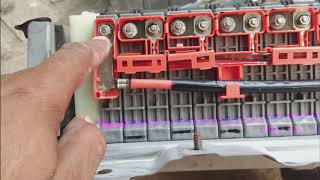
- Corroded or loose battery bus bars (Very Common) — Moisture and battery off-gassing corrode the metal plates (bus bars) connecting the modules. This creates high electrical resistance, causing a voltage drop that mimics a dead cell.
- Faulty hybrid battery cooling fan (Common) — If the cooling fan fails or its intake vents clog with debris, excessive heat rapidly destroys the battery cells, especially those in the center of the pack.
- Internal short circuit (dendrite growth) (Common) — Microscopic crystalline structures called dendrites form inside aging battery cells, creating internal short circuits that increase resistance and drain voltage under load.
- Prolonged vehicle inactivity (Less Common) — Leaving a hybrid undriven for weeks allows the battery to deeply discharge, causing irreversible chemical damage to individual cells.
- Failing 12V auxiliary battery (Rare) — A weak 12V battery causes the hybrid control modules to malfunction, occasionally generating false high-voltage error codes.
- Malfunctioning Battery Control Module (BCM) (Rare) — The computer responsible for monitoring the battery fails and misinterprets sensor readings, falsely reporting a weak block.
Symptoms
- Rapidly fluctuating battery charge — The dashboard battery indicator drops from full to empty in seconds, never shows a full charge, or jumps erratically.
- Engine running constantly — The gasoline engine runs continuously, even at a complete stop, desperately trying to keep the failing HV battery charged.
- Sluggish acceleration — The vehicle feels exceptionally slow and unresponsive because the electric motor cannot draw enough power from the weak battery.
- Loud cooling fan noise — The battery cooling fan (usually behind the rear seats) runs at maximum speed, sounding like a vacuum cleaner, as it tries to cool the overheating pack.
- Check Engine and Hybrid Warning Lights (also visible on scanner) — The Check Engine Light illuminates alongside a 'Check Hybrid System' message or a red master warning triangle.
- Plummeting fuel economy (also visible on scanner) — Because the car relies entirely on the gas engine, average MPG drops by 20% to 50%.
Diagnostic Flowchart
Tap your situation to follow the diagnostic path that matches what you're seeing on this code.
Common Fixes & Costs
- Replace HV battery pack with a remanufactured unit
— Parts: $1,500-$2,500, Labor: $300-$800, ~3.5 hr book time
(Professional)
Toyota Prius (Gen 2/3): OEM G9510-47031 (Alt: Dorman 587-001, Green Bean Battery) - Replace HV battery pack with a new OEM unit
— Parts: $2,000-$3,500, Labor: $500-$1,000, ~3.5 hr book time
(Professional)
Lexus CT200h (2011-2017): OEM G9510-76012 (Alt: N/A) - Recondition the existing battery pack — Parts: $0, Labor: $1,000-$2,000, ~8 hr book time (Professional)
- Replace only the failed module(s) and balance
— Parts: $50-$150, Labor: $600-$1,200, ~6 hr book time
(Professional)
Toyota/Lexus (NiMH): OEM Sourced from donor packs (Alt: Various third-party suppliers) - Install a Hybrid Battery Grid Charger — Parts: $300-$600, Labor: $200-$400, ~2.5 hr book time (DIY Advanced)
Used vs. New Parts: Buying Guide
When a used part is worth it: A refurbished battery makes sense for vehicles over 10 years old where a new OEM battery costs more than 30% of the car's total value.
Donor-vehicle mileage cap: roughly under 100000 miles for the part to have meaningful remaining life.
Donor quality checklist:
- The refurbisher provides at least a 1-year, unlimited mileage warranty.
- The seller provides a recent load-test report showing module capacity and balance.
- The battery has not been sitting unused for more than 30 days.
Decision logic:
- If Vehicle is under 10 years old and you plan to keep it for 5+ years → Buy a new OEM battery for maximum longevity and peace of mind.
- If Vehicle is over 10 years old and budget is tight → Buy a refurbished battery from a reputable national vendor with a strong warranty.
- If You are considering a used battery from a salvage yard → Avoid this. Salvage batteries have no health guarantees and often fail within months.
Warranty tradeoff: Salvage parts offer 30 days at best. Refurbished batteries offer 1 to 3 years. New OEM batteries offer 1 to 3 years depending on the dealer.
Worst-case if a used part fails: $1,500 if a poorly refurbished battery fails, requiring you to pay for labor and a second replacement.
What Happens If You Wait — Timeline
- 0-1 month: Check Engine Light appears. The car drives normally with a slight drop in MPG. The gasoline engine runs slightly more often. (MPG impact: 5-10%% · Added cost: $50 in wasted fuel.)
- 1-3 months: Acceleration feels sluggish. The dashboard battery indicator fluctuates rapidly, and the cooling fan runs loudly. (MPG impact: 10-25%% · Added cost: $150 in wasted fuel. Heat from the failing block degrades adjacent cells.)
- 3-6 months: The vehicle enters limp mode with severely reduced power. The gas engine runs constantly, risking catalytic converter damage. (MPG impact: 25-40%% · Added cost: $1,500 for potential catalytic converter replacement.)
- 6+ months: Catastrophic failure. The vehicle refuses to start or stalls in traffic, requiring a tow. (MPG impact: 40-50%+% · Added cost: $2,500 for mandatory battery replacement and towing.)
Cost of Not Fixing It
- 0-1 month: Noticeable decrease in fuel economy and sluggish acceleration. The gasoline engine runs constantly to compensate. (Added cost: $50-$150 in wasted fuel.)
- 1-3 months: The weak battery block overheats, destroying adjacent healthy cells. Unburned fuel from the overworked gas engine begins damaging the catalytic converter. (Added cost: $1,500-$3,000 for catalytic converter replacement.)
- 3+ months: Catastrophic hybrid battery failure. The vehicle enters limp mode, stalls while driving, or refuses to start entirely. (Added cost: $2,500-$5,000 for mandatory battery replacement and towing fees.)
Diagnosis Steps
- Read the Fault Codes
Use an OBD-II scanner to confirm P3042. Look for accompanying codes like P0A80 (Replace Hybrid Battery Pack) or P3000 (Battery Control System), which confirm a pack-level failure.
Tools: OBD-II Scanner (Beginner) - Check the 12V Auxiliary Battery
Test the standard 12V battery. It must read above 12.4V at rest and pass a load test. A dying 12V battery triggers false hybrid codes.
Tools: Multimeter or Battery Tester (Beginner) - Inspect the Hybrid Cooling Fan
Locate the HV battery cooling fan intake vents in the cabin. Remove any blockages (floor mats, pet hair). If the fan is excessively loud or dead, it caused the battery to overheat.
Tools: Flashlight (Beginner) - Analyze Block Voltages Under Load
Using a Bluetooth scanner and an app like Dr. Prius, view live voltage data for all battery blocks. Perform a brisk acceleration. If Block 42 drops more than 0.3V below the highest block under load, the block is failing.
Tools: Bluetooth OBD-II Scanner, Smartphone with Diagnostic App (Intermediate) - Visually Inspect the Battery Pack (Professional Only)
WARNING: High voltage is lethal. Disconnect and remove the battery pack to inspect the bus bars, wiring harness, and modules for severe corrosion, acid leaks, or swelling.
Tools: High-voltage safety gear, Insulated tools (Professional) - Bus Bar Voltage Drop Test (Professional Only)
With the pack opened and under a small load, use a multimeter set to millivolts (mV) across the bus bar connections for Block 42. A reading above 10 mV indicates high resistance from corrosion, meaning the connection is bad, not necessarily the module.
Tools: High-precision Multimeter, Grid Charger, High-voltage safety gear (Professional) - Test Individual Module Capacity (Professional Only)
Use a hybrid battery analyzer to load test individual modules. A healthy module reads 7.5V-8.2V at rest and stays above 6.0V under load. If Block 42 drops below 6.0V or shows internal resistance above 0.003 ohms, it is dead.
Tools: Hybrid battery analyzer, High-voltage safety gear (Professional)
When This Code Triggers (Freeze-Frame Conditions)
- Engine Coolant Temp: 180-200°F (82-93°C) (The engine is at full operating temperature.)
- State of Charge (SOC): 40-60% (The fault triggers when the battery is in a normal operating state of charge, not completely full or empty.)
- Engine Load: 30-70% (The code triggers under moderate acceleration or while climbing a grade, when the battery is asked to deliver significant current.)
- Vehicle Speed: 25-60 mph (40-97 kph) (Occurs during city or highway driving, rarely at a standstill.)
Related Codes
- P0A80 — The master code for 'Replace Hybrid Battery Pack'. P3042 is the sub-code specifying that Block 42 is the exact location causing the P0A80 fault.
- P3000 — A general 'Battery Control System Malfunction'. This triggers first, prompting the ECU to run a detailed check that eventually reveals P3042.
- P0A7F — Indicates 'Hybrid Battery Pack Deterioration'. While P3042 points to a sudden voltage drop in one block, P0A7F means the entire pack has lost total capacity.
- P0AC4 — A generic code meaning the hybrid powertrain module has requested the Check Engine Light to turn on. It always accompanies specific battery codes.
Climate & Environmental Factors
- High Heat: Ambient temperatures above 95°F (35°C) accelerate chemical degradation, increasing internal resistance and permanently reducing battery capacity.
- High Humidity: Moisture promotes rapid corrosion on copper bus bars, increasing electrical resistance and causing voltage drops that trigger P3042.
- Extreme Cold: Cold temporarily reduces the battery's ability to deliver power, making a weak battery's symptoms more obvious without causing permanent damage.
How to Talk to a Mechanic About This Code
Say this: "I have a P3042 code on my [Year, Make, Model] and the Check Hybrid System light is on. I need a diagnostic to confirm high-voltage battery health, specifically the live data showing individual block voltages."
This proves you understand the code relates to the HV battery and requires specific live data. It prevents the shop from selling you irrelevant diagnostics.
Avoid saying:
- 'My check engine light is on, can you look at it?'
- 'My car is acting weird.'
- 'Just fix whatever's wrong.'
Questions to ask before authorizing the repair:
- Can you show me the printout of the block voltage readings from the scan tool?
- What are my options for repair? (New OEM, refurbished, reconditioning)
- What is the exact warranty on the replacement battery and the labor?
- Did you confirm the battery cooling fan and wiring harness are not the root cause?
Where to Take It: Dealer vs Independent vs Chain
- Dealer:
Recommended only if the vehicle is under warranty. Otherwise, they are too expensive.
Best for: Vehicles still under the 8-10 year hybrid system warranty., Owners who demand a brand new OEM battery regardless of cost.
Downsides: Highest cost for parts and labor., Will refuse to install refurbished or reconditioned batteries. (Typical cost: +50% vs. baseline) - Independent Shop:
Best fit. A hybrid-specialized independent shop offers the best balance of expertise and cost-effective repair options.
Best for: Out-of-warranty vehicles where cost is a major factor., Owners who want to explore refurbished or reconditioned battery options.
Downsides: You must verify they actually specialize in high-voltage hybrid systems. (Typical cost: +0% vs. baseline) - Chain Shop:
AVOID. Chain shops cannot safely or accurately diagnose high-voltage battery failures.
Best for: Oil changes and 12V battery replacements.
Downsides: Technicians lack high-voltage training and equipment., High risk of misdiagnosis. (Typical cost: -10% vs. baseline)
When to Walk Away From the Repair
If the estimated repair cost for a hybrid battery replacement exceeds 50% of the car's current private-party market value, sell the car as-is.
- Car worth $8000, fix is $2500: Fix it. The repair is well under 50% of the car's value and restores its function.
- Car worth $4000, fix is $2500: Borderline. The repair is over 60% of the value. Seek a cheaper refurbished battery option.
- Car worth $3000, fix is $3000: Walk away. The repair costs as much as the car is worth.
What Scan Tool You Need for This Code
Minimum: A Bluetooth OBD-II scanner compatible with hybrid-specific diagnostic apps (like Dr. Prius) to read individual block voltages.
A basic $20 code reader only shows the P3042 code. It cannot access the live voltage data required to prove the battery block is actually failing.
Budget: Veepeak OBDCheck BLE (~$30) — Pairs with the Dr. Prius app to read individual block voltages, view live data, and run battery health checks.
Mid-range: Foxwell NT510 Elite (~$150) — Accesses hybrid-specific PIDs and offers manufacturer-specific bidirectional controls without needing a smartphone app.
Professional: Autel MaxiCOM MK808 (~$500) — Provides full bidirectional control, offline battery pack analysis, and step-by-step repair guidance used by professional shops.
How to Clear the Code After You Fix It
- Ensure the high-voltage service plug is securely reinstalled.
- Reconnect the 12V auxiliary battery.
- Use an OBD-II scan tool to clear all DTCs.
- Perform a complete drive cycle to reset readiness monitors.
Drive cycle (~30 minutes): Idle for 5 minutes. Drive for 15 minutes in mixed city traffic with several stops. Drive for 10 minutes at a steady highway speed (55-65 mph). Allow the vehicle to cool completely, then repeat.
Readiness monitors affected: Hybrid/EV Battery System, Catalyst Monitor, Evaporative System Monitor
Before emissions retest: drive at least 100 miles to fully set monitors.
Watch out for:
- Disconnecting the 12V battery clears the code but resets all monitors, causing an automatic emissions test failure.
- The code returns within three drive cycles if the weak cell or corroded bus bar was not fixed.
- Failing to complete the highway portion of the drive cycle leaves the Catalyst monitor 'Not Ready'.
Will This Fail Emissions / State Inspection?
Yes — this code typically fails an OBD-II emissions inspection.
- California: An active Check Engine Light is an automatic failure. All OBD readiness monitors must be 'Ready', requiring 50-100 miles of driving after repair.
- New York: The vehicle automatically fails the emissions inspection if the Check Engine Light is on or if the Hybrid System monitor is 'Not Ready'.
- Texas: In emissions-testing counties, P3042 causes an automatic failure during the OBD-II scan.
Most Commonly Affected Vehicles
- Toyota Prius (2004-2015) — The most common vehicle for this code. Gen 3 (2010-2015) has a specific TSB for clogged cooling fans causing battery failure.
- Toyota Camry Hybrid (2007-2017) — Early models (2007-2011) suffer from inverter failures that are frequently misdiagnosed as battery cell failures.
- Lexus CT200h (2011-2017) — Mechanically identical to the Gen 3 Prius, making it highly susceptible to clogged cooling fans and subsequent cell degradation.
- Chevrolet Volt (2011-2015) — CRITICAL: On GM vehicles, P3042 means 'Hybrid/EV Battery Interface Control Module Processor Performance'. The battery computer has failed, not the cells.
- Nissan Altima Hybrid (2007-2011) — Uses licensed Toyota hybrid technology and suffers from identical NiMH battery degradation patterns.
- Hyundai Sonata Hybrid (2011-2019) — Diagnosis often points to the Power Relay Assembly rather than individual cell failure. TSBs exist for related hybrid system warnings.
- Ford Escape Hybrid (2005-2012) — Battery cooling system failures are the primary trigger for cell imbalance codes on these older SUVs.
- Honda Civic Hybrid (2006-2015) — The Integrated Motor Assist (IMA) battery pack frequently sets individual cell failure codes as it ages past 100,000 miles.
Manufacturer-Specific Notes
- MINI / BMW: P3042 means 'Camshaft Position Sensor A Circuit Low'. It is completely unrelated to the battery. Symptoms include rough idle and stalling.
- Chevrolet / GM: P3042 indicates a fault within the battery's control computer (Interface Control Module 12 Processor Performance). Do not replace battery cells; diagnose the module.
- Volkswagen: Depending on the model year, P3042 relates to an incorrect signal from the Heater Regulator or a camshaft sensor fault. Use a VW-specific scanner to verify.
- Hyundai: Hyundai issued TSBs for the Power Relay Assembly and electric water pump, both of which cause general hybrid faults that mimic battery failure.
- Toyota / Lexus: For 2020+ models, the hybrid battery warranty is 10 years/150,000 miles. For older models affected by this code, it was 8 years/100,000 miles.
Real Owner Stories
2008 Toyota Prius at 148k miles with sudden warning lights
The dashboard lit up with the Red Triangle and Check Engine lights. The battery charge level fluctuated rapidly from full to empty.
What they tried:
- Confirmed P3000 and P0A80 using the Dr. Prius app.
- Tested the 12V battery, which was healthy at 12.7V.
- Cleared codes, but they returned immediately under hard acceleration.
Outcome: The rapid charge fluctuation confirmed internal cell failure. The owner replaced the pack with a refurbished unit from Green Bean Battery.
Lesson: Even with a healthy 12V battery, a 10+ year old hybrid battery can fail suddenly. Rapid dashboard charge fluctuations are the definitive symptom of dead cells.
2005 Toyota Prius at 320k miles with recurring block failure codes
Scanned P0A80 and P3014 (Block 4 weak). Live data confirmed a severe voltage drop on Block 4.
What they tried:
- Disassembled the pack and replaced the single bad cell in Block 4.
- Reassembled the pack and drove for 30 minutes.
- The car threw new codes: P3000 and P3021 (Block 11 weak).
Outcome: Replacing one cell created a new imbalance, destroying Block 11 immediately. The owner was forced to buy a fully reconditioned pack.
Lesson: Replacing a single weak module is a game of whack-a-mole. The other old modules cannot handle the restored power, leading to immediate secondary failures.
2012 Gen 3 Prius with a cascade of sensor codes
Started with P0B42 (Voltage Sensor Circuit Low). Live data showed Block 8 at 0V and adjacent blocks at 24.9V.
What they tried:
- Cleaned corroded bus bars, but the code remained.
- Replaced the Battery Smart Unit (ECU), but the code remained.
- Replaced the entire voltage sensing wire harness.
Outcome: Replacing the cracked voltage sensing harness fixed the issue. The 0V reading was a broken wire, not a dead battery block.
Lesson: If a block reads exactly 0V while others read abnormally high, the battery cells are fine. The voltage sensing harness or ECU is broken.
How to Prevent This Code From Triggering
- Clean the hybrid battery cooling fan and filter (Every 12 months or 15,000 miles) — Dust and pet hair clog the fan, causing the battery to overheat. Heat is the primary killer of hybrid batteries.
- Drive the vehicle regularly (At least once a week for 20 minutes) — Letting a hybrid sit allows the battery to deeply discharge, causing permanent chemical damage to the cells.
- Avoid extreme temperatures (Daily habit) — Parking in a garage or shade prevents ambient heat from accelerating the chemical breakdown of the battery.
- Maintain a state of charge between 20% and 80% (Daily habit (for Plug-in Hybrids)) — Repeatedly charging to 100% or draining to 0% stresses the battery chemistry. Keeping it in the middle range maximizes lifespan.
- Practice smooth acceleration (Daily habit) — Hard acceleration draws massive current, generating excess heat. Gentle driving keeps the battery cool and extends its life.
Frequently Asked Questions
Can I just replace the one bad battery module for P3042?
Yes, but it is a short-term fix. The other modules share the same age and wear, meaning another block will likely fail soon after. Most shops recommend replacing or reconditioning the entire pack for a lasting repair.
What is hybrid battery reconditioning?
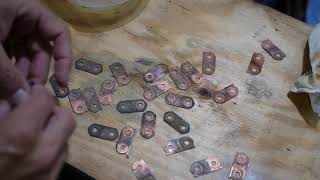
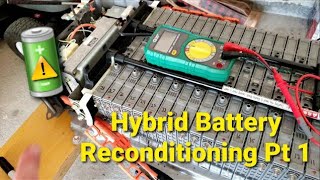
Reconditioning involves deep cycling every module to test capacity, replacing weak modules, cleaning bus bars, and balancing the pack to the exact same voltage. This restores significant battery capacity for less than the cost of a new pack.
Why did the P3042 code reappear after I swapped the module?
The block number '42' is a fixed physical position in the battery pack. If P3042 returns after swapping the module, the issue is the wiring, the voltage sensing harness, or severe bus bar corrosion at that specific location.
My scanner shows P3042, but all block voltages look fine at idle. What gives?
A weak block often hides its voltage drop until it is under heavy load. Perform a dynamic load test by accelerating briskly while monitoring live data. If voltages remain normal, suspect a corroded bus bar at block 42.
Is it worth buying a refurbished hybrid battery?
Yes, a high-quality refurbished pack from a reputable company offers excellent value for older vehicles. Ensure the vendor provides at least a 1-year warranty. Poorly refurbished packs fail quickly, so research the supplier carefully.
Can a bad 12V battery really cause a P3042 code?
Yes. A failing 12V battery causes the hybrid control modules to malfunction, generating false error codes. Always test the 12V battery first before assuming the multi-thousand dollar hybrid battery is dead.
How long does a hybrid battery last?
Most hybrid batteries last 10 to 15 years, or between 100,000 and 150,000 miles. Extreme heat, aggressive driving, and clogged cooling fans significantly shorten this lifespan.
Is it dangerous to work on a hybrid battery myself?
Yes, it is extremely dangerous. Hybrid batteries contain 200+ volts, which is enough to cause fatal electric shock. Only trained professionals with high-voltage safety gear should open the battery pack.
Key Takeaways
- P3042 confirms high-voltage battery block 42 has dropped at least 0.3V below the other blocks, indicating cell failure or severe corrosion.
- Driving with P3042 forces the gas engine to overwork, risking a $1,500+ catalytic converter failure from unburned fuel.
- Replacing the entire battery pack with a refurbished unit ($1,500-$2,500) is the most reliable fix, as replacing a single module usually leads to another block failing within months.
- On Chevrolet Volts and GM hybrids, P3042 indicates a failed Battery Control Module processor, requiring computer diagnostics rather than battery cell replacement.
Helpful Videos




The information in this article is provided for general reference and educational purposes only. Vehicle specifications, procedures, and part compatibility can vary by production date, trim level, and region. Always consult your vehicle's factory service manual and verify part numbers before purchasing or performing repairs. Safety-critical components such as airbags, seat belts, and braking systems should be installed by a qualified professional.
- 🎬 Helpful Videos
- What Does P3042 Mean?
- Can I Drive With P3042?
- Common Causes
- Symptoms
- Diagnostic Flowchart
- Common Fixes & Costs
- Used vs. New Parts: Buying Guide
- What Happens If You Wait — Timeline
- Cost of Not Fixing It
- Diagnosis Steps
- When This Code Triggers (Freeze-Frame Conditions)
- Related Codes
- Climate & Environmental Factors
- How to Talk to a Mechanic About This Code
- Where to Take It: Dealer vs Independent vs Chain
- When to Walk Away From the Repair
- What Scan Tool You Need for This Code
- How to Clear the Code After You Fix It
- Will This Fail Emissions / State Inspection?
- Most Commonly Affected Vehicles
- Manufacturer-Specific Notes
- Real Owner Stories
- 2008 Toyota Prius at 148k miles with sudden warning lights
- 2005 Toyota Prius at 320k miles with recurring block failure codes
- 2012 Gen 3 Prius with a cascade of sensor codes
- How to Prevent This Code From Triggering
- Frequently Asked Questions
- Can I just replace the one bad battery module for P3042?
- What is hybrid battery reconditioning?
- Why did the P3042 code reappear after I swapped the module?
- My scanner shows P3042, but all block voltages look fine at idle. What gives?
- Is it worth buying a refurbished hybrid battery?
- Can a bad 12V battery really cause a P3042 code?
- How long does a hybrid battery last?
- Is it dangerous to work on a hybrid battery myself?
- Key Takeaways
- 🎟️ Get 5% Off