

OBD-II Code P3040: Hybrid Battery Cell Voltage Low
What P3040 means, why it triggers, and how to fix it
- Code P3040 indicates a failing high-voltage hybrid battery block, most frequently affecting Toyota and Lexus vehicles over 8 years old or past 100,000 miles.
- Always load-test the 12V auxiliary battery first; a voltage drop below 11.5V causes the computer to generate false hybrid system fault codes.
- Stop driving immediately to prevent overheating the catalytic converter, which adds $1,500 to $2,500 to your repair bill if destroyed.
- The most cost-effective permanent fix is installing a remanufactured hybrid battery pack, which typically costs $1,500 to $2,500 including labor.
What Does P3040 Mean?
P3040 is a manufacturer-specific code predominantly used by Toyota and Lexus. It indicates the Engine Control Module (ECM) detected a failing section (or 'block') within the high-voltage hybrid battery. The battery consists of small cells grouped into blocks; this code flags a block with significantly lower voltage than the rest, pointing to dying cells that can no longer hold a charge.
Technical definition: The SAE/ISO definition for P3xxx codes designates them as manufacturer-controlled. For Toyota/Lexus, P3040 is a sub-code triggered alongside P3000 (Hybrid Battery Malfunction), defined as 'Hybrid Battery Cell Voltage Becomes Low'. In non-hybrid vehicles like Fords, generic scanners often misinterpret the common P0340 (Camshaft Position Sensor) code as P3040.
Can I Drive With P3040?
No — Do Not Drive. You can physically drive the vehicle, but it is highly advised against. Expect poor fuel economy, severely reduced power, and a high risk of the car stalling in traffic. Continued driving forces the gasoline engine to run constantly and inefficiently, which overheats and destroys the catalytic converter—a secondary failure that adds $1,500 to $2,500 to your repair bill. Tow the vehicle to a hybrid specialist.
Common Causes
- Degraded or failed hybrid battery cells/modules (Very Common) — Over time and thousands of charge cycles, individual cells within the high-voltage battery lose their capacity. This creates a voltage imbalance across the pack, triggering the code when a specific block drops below the required threshold.
- Failing 12V Auxiliary Battery (Common) — The main computer systems rely on stable 12V power. A weak 12V battery causes communication errors and voltage drops that trick the computer into falsely flagging a catastrophic high-voltage hybrid system fault.
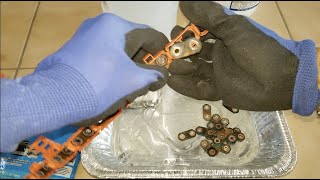
- Corroded hybrid battery bus bars (Common) — The nickel-plated copper plates (bus bars) connecting the battery modules corrode from moisture and electrolyte fumes. This corrosion creates high electrical resistance, causing voltage drops that mimic a dead battery cell. 🎬 See how to clean corroded bus bars to fix error codes.
- Faulty hybrid battery cooling fan or clogged vents (Less Common) — If the dedicated battery cooling fan or its air ducts clog with dust or pet hair, the battery overheats. Extreme heat accelerates cell degradation and causes temporary voltage drops that trigger the code.
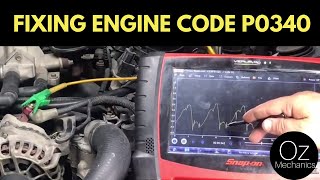
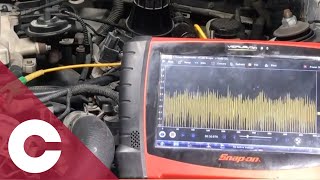
- Failing Alternator (Ford/non-hybrid misdiagnosis) (Less Common) — In non-hybrid vehicles, a failing alternator creates electrical interference (AC ripple) picked up by the camshaft position sensor. This triggers a P0340 code, which generic scanners incorrectly display as P3040. 🎬 Watch: How a failing alternator triggers false camshaft sensor codes.
- Defective Battery ECU (Rare) — The computer monitoring the hybrid battery pack fails internally, sending incorrect voltage readings to the main ECM and falsely triggering the code even if the battery cells are perfectly healthy.
Symptoms
- Master Warning Triangle and Check Engine Light illuminated — The dashboard lights up with multiple warnings, including the red master warning triangle and 'Check Hybrid System' messages.
- Gasoline engine runs constantly — The car struggles to enter electric-only (EV) mode, forcing the gas engine to run continuously even at complete stops.
- Lack of acceleration and power — The vehicle feels sluggish because the electric motors receive insufficient power from the failing battery to assist the gas engine.
- Battery charge level fluctuates rapidly — The dashboard battery gauge drops from full to empty in seconds, demonstrating the battery's inability to hold a stable charge.
- Reduced fuel economy (MPG) — Fuel efficiency drops by 10 to 20 MPG as the vehicle relies entirely on the gasoline engine to move the heavy car.
Diagnostic Flowchart
Tap your situation to follow the diagnostic path that matches what you're seeing on this code.
Common Fixes & Costs
- Replace with a Remanufactured Hybrid Battery Pack — Parts: $1,200-$2,000, Labor: $300-$500, ~2.5 hr book time (Professional)
- Replace 12V Auxiliary Battery — Parts: $150-$300, Labor: $50-$150, ~0.5 hr book time (Beginner)
- Clean or Replace Corroded Bus Bars — Parts: $20-$120, Labor: $400-$800, ~3.5 hr book time (Advanced)
- Replace with a New OEM Hybrid Battery Pack — Parts: $2,500-$4,000, Labor: $400-$800, ~2.5 hr book time (Professional)
- Replace Individual Failed Battery Modules — Parts: $35-$90 per module, Labor: $600-$1,200, ~4.5 hr book time (Advanced)
Used vs. New Parts: Buying Guide
When a used part is worth it: A remanufactured hybrid battery is the best choice for vehicles over 10 years old or past 150,000 miles where the cost of a new OEM battery exceeds the car's value.
Donor-vehicle mileage cap: roughly under 80000 miles for the part to have meaningful remaining life.
Donor quality checklist:
- The supplier offers a warranty of at least 12 to 36 months.
- The remanufacturing process includes load-testing all modules and installing new nickel-plated bus bars.
- The supplier provides mobile installation or partners with local certified shops.
Decision logic:
- If Vehicle is under 8 years old and you plan to keep it for another 100,000 miles → Buy a new OEM battery for maximum longevity.
- If Vehicle is over 10 years old and budget is a primary concern → Purchase a remanufactured battery from a reputable specialist.
- If The vehicle has severe body damage or transmission issues alongside the battery failure → Sell the vehicle as-is; do not invest in a replacement battery.
Warranty tradeoff: Remanufactured batteries offer warranties from 1 to 3 years. New OEM batteries usually come with a 1-to-3-year warranty but last significantly longer in practice.
Worst-case if a used part fails: 1500 if a cheap, poorly refurbished battery fails prematurely, requiring a second replacement.
What Happens If You Wait — Timeline
- 0-1 month: Check Engine Light appears. A slight drop in fuel economy occurs, and the gasoline engine runs slightly more often. (MPG impact: 3-5%% · Added cost: $20-$50 in wasted fuel.)
- 1-4 months: MPG drops by 10+. The car struggles to stay in EV mode, and acceleration becomes noticeably sluggish. (MPG impact: 10-20%% · Added cost: $100-$250 in wasted fuel and strain on the 12V battery.)
- 4-8 months: The vehicle enters 'limp mode' with severely reduced power. The battery cooling fan runs continuously at high speed. (MPG impact: 25-40%% · Added cost: $300-$600 in wasted fuel and a ruined 12V battery.)
- 8+ months: Catastrophic failure. The inefficiently running engine dumps unburnt fuel into the exhaust, destroying the catalytic converter. (MPG impact: 40-50%+% · Added cost: $1500-$2500 for a new catalytic converter.)
Cost of Not Fixing It
- 0-1 month: Fuel economy drops by 5-15 MPG. The vehicle struggles to accelerate and risks stalling in traffic. (Added cost: 50-150)
- 1-6 months: The high-voltage battery fails to charge the 12V battery, leading to a no-start condition and requiring a new 12V battery. (Added cost: 200-300)
- 6+ months: The gasoline engine runs constantly and inefficiently, dumping unburnt fuel into the exhaust and destroying the catalytic converter. (Added cost: 1500-2500)
Diagnosis Steps
- Read All Trouble Codes
Use an OBD-II scanner to pull all codes. P3040 rarely appears alone; look for master codes like P3000 or P0A80, and specific block codes (P3011-P3029) that pinpoint the exact failing section of the battery.
Tools: OBD-II Scanner (Beginner) - Test the 12V Auxiliary Battery
Before condemning the high-voltage battery, test the 12V battery. Connect a multimeter across the terminals with the car off; it must read above 12.2V. A weak 12V battery is the leading cause of false hybrid codes.
Tools: Multimeter (Beginner) - Analyze Live Battery Data
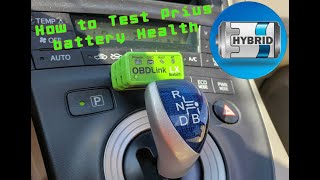
Use a hybrid-capable scanner or the Dr. Prius app to view real-time voltage and internal resistance for each battery block. A block showing a voltage 0.3V to 1.2V lower than the others under load confirms a failure in that specific block.
Tools: Advanced OBD-II Scanner or Dr. Prius App (Intermediate) - Inspect the Battery Cooling Fan and Vents
Locate the hybrid battery cooling air intake vent (usually near the rear seats). Ensure it is free of floor mats, pet hair, or debris. A blocked vent causes overheating, which triggers voltage-related fault codes.
Tools: Flashlight (Beginner) - Check Alternator AC Ripple Voltage (Non-Hybrid Misdiagnosis)
If diagnosing a Ford or non-hybrid showing P3040, test the alternator. Set a multimeter to AC Volts and probe the battery terminals with the engine running. A reading above 0.1V (100mV) indicates failing alternator diodes disrupting the camshaft sensor.
Tools: Multimeter (Intermediate) - Perform a High-Voltage System Disconnect
Disconnect the 12V battery and remove the high-voltage service plug. Wear Class 0 insulated gloves rated for 1000V. Wait 15 minutes for the high-voltage capacitors to discharge before touching any orange cables or opening the battery case.
Tools: Socket set, Class 0 Insulated gloves (Advanced) - Visually Inspect Battery Bus Bars
Open the metal battery case and inspect the copper bus bars and securing nuts. Look for fuzzy, green, or white crust indicating corrosion. Severe corrosion creates high resistance that mimics a failed battery cell.
Tools: Socket set, Pry tools (Advanced) - Test Individual Modules Under Load
Use a battery analyzer to apply a 100W load to individual modules in the suspect block. A healthy module drops slightly and rebounds quickly; a failing module drops below 6.0V and recovers slowly, confirming internal cell death.
Tools: Multimeter, Battery analyzer, Socket set (Advanced)
When This Code Triggers (Freeze-Frame Conditions)
- State of Charge (SOC): 40-60% (The hybrid system is actively using and regenerating the battery under moderate load.)
- Vehicle Speed: 40-60 mph (Steady-state cruising or accelerating onto a highway.)
- Battery Block Voltage: < 14.0V per block (One specific block drops significantly lower than the others during acceleration.)
Related Codes
- P3000 — The master fault code for 'Battery Control System Malfunction'. It alerts the main ECM that a fault exists within the high-voltage system, requiring a deeper scan to find the specific sub-code like P3040.
- P0A80 — The generic SAE code for 'Replace Hybrid Battery Pack'. It triggers when the Battery ECU detects a significant voltage difference between the highest and lowest battery blocks, confirming pack failure.
- P3011 - P3029 — Highly specific sub-codes corresponding to a particular block of cells (e.g., P3011 points to Block 1). They appear alongside P3040 to pinpoint the exact location of the low-voltage failure.
- P0340 — Means 'Camshaft Position Sensor Circuit Malfunction'. Because P3xxx codes are manufacturer-specific, generic scanners misinterpret P0340 as P3040 on non-hybrid vehicles, leading to incorrect diagnostics.
Climate & Environmental Factors
- High Heat: Extreme ambient heat prevents the battery's cooling system from shedding internal temperatures. This accelerates chemical degradation inside the NiMH cells, causing irreversible capacity loss and premature failure.
- High Humidity: Moisture accelerates the corrosion of the nickel-plated copper bus bars linking the modules. This corrosion increases electrical resistance, triggering P3040 even if the battery cells are healthy.
- Extreme Cold: Cold weather reduces the chemical efficiency and power output of the battery. While it rarely causes permanent damage, it amplifies the symptoms of an already weak battery, causing severe MPG drops.
How to Talk to a Mechanic About This Code
Say this: "I have a P3040 code on my vehicle. Before recommending a full hybrid battery replacement, please load-test the 12V auxiliary battery and inspect the high-voltage battery bus bars for corrosion. I also need the live voltage readings for each battery block under load."
This directs the mechanic to perform low-cost diagnostic steps first, preventing a premature $3,000 recommendation to replace the entire HV battery pack due to a weak $200 12V battery.
Avoid saying:
- 'My hybrid battery is dead, how much to replace it?'
- 'My check engine light is on, can you look at it?'
- 'Just fix whatever's wrong, I trust you.'
Questions to ask before authorizing the repair:
- Did you load-test the 12V battery, and what was the voltage drop?
- What was the voltage difference between the highest and lowest battery blocks under load?
- Did you find any corrosion on the bus bars?
- If recommending a replacement, is it a new OEM or a remanufactured unit?
- What is the exact warranty period on the replacement battery and labor?
Where to Take It: Dealer vs Independent vs Chain
- Dealer:
Recommended only if the vehicle is under warranty.
Best for: Vehicles still under the 8yr/100k or 10yr/150k mile hybrid warranty., Owners who demand OEM parts regardless of cost.
Downsides: Highest labor rates, often double independent shops., Will exclusively recommend a brand new $3,500+ OEM battery pack. (Typical cost: +75% vs. baseline) - Chain Shop:
AVOID. Do not take your vehicle here for a P3040 code.
Best for: Tires and oil changes.
Downsides: Technicians are not trained for high-voltage work., Risk of dangerous and incorrect repairs is extremely high. (Typical cost: -15% vs. baseline)
When to Walk Away From the Repair
If the estimated repair cost for a remanufactured battery exceeds 50% of the car's current private-party market value, seriously consider selling the car as-is.
- Car worth $5000, fix is $2500: Borderline. If the rest of the car is in excellent condition, fixing it is worthwhile. Otherwise, sell it.
- Car worth $9000, fix is $2000: Fix it. The repair cost is well under the threshold and restores the vehicle's value.
- Car worth $3000, fix is $2500: Walk away. The repair cost is over 80% of the car's value. It is not economically sensible.
What Scan Tool You Need for This Code
Minimum: A tool that reads manufacturer-specific powertrain codes and displays live data streams for individual hybrid battery block voltages.
A basic $20 scanner cannot read P3040 or display individual battery block voltages, making it useless for diagnosing hybrid battery failures.
Budget: Dr. Prius App + Bluetooth OBD-II Dongle (e.g., BAFX) (~$40) — Allows you to view all individual battery block voltages, internal resistance, and temperatures in real-time on your smartphone. It is the absolute best tool for this specific code.
Mid-range: BlueDriver Pro (~$120) — Accesses Toyota/Lexus specific codes and live data, offering a robust, all-in-one solution that diagnoses other systems like ABS and SRS.
Professional: Autel MaxiCOM MK808 (~$500) — Provides dealer-level diagnostics and bidirectional control to test components like the battery cooling fan.
Rent vs buy: Buy. Rentals from auto parts stores are basic readers that cannot read hybrid block voltages. The Dr. Prius app setup is a mandatory $40 investment for hybrid owners.
How to Clear the Code After You Fix It
- Reconnect the 12V battery and ensure terminals are tight.
- Use an OBD-II scan tool to clear the diagnostic trouble codes (DTCs).
- Perform a complete drive cycle to reset the vehicle's readiness monitors.
Drive cycle (~30 minutes): A typical Toyota drive cycle requires a cold start (engine off for 8 hours), idling for 3 minutes, followed by mixed city and highway driving. Cruise at a steady 55 mph for 10 minutes, followed by several coasting periods without touching the brakes.
Readiness monitors affected: Catalyst Monitor, Evaporative System (EVAP) Monitor, Oxygen Sensor Monitor
Before emissions retest: drive at least 100 miles to fully set monitors.
Watch out for:
- Clearing the code resets readiness monitors to 'Incomplete', causing an automatic emissions test failure.
- The code returns immediately if a weak 12V battery or corroded bus bars were not addressed.
- Failing to keep the fuel tank between 1/4 and 3/4 full prevents the EVAP monitor from running.
Will This Fail Emissions / State Inspection?
Yes — this code typically fails an OBD-II emissions inspection.
- California: An active Check Engine Light or P3040 code results in an automatic failure. All readiness monitors must be set to 'Ready' to pass.
- New York: The vehicle automatically fails if the Check Engine Light is on. After repairs, a drive cycle must be completed to set monitors before re-testing.
- Texas: In emissions-testing counties, an active P3040 code causes an automatic failure during the OBD-II scan.
Most Commonly Affected Vehicles
- Toyota Prius (Gen 2) (2004-2009) — This generation is at an age where battery degradation is extremely common. The 12V auxiliary battery is also a frequent cause of false hybrid system codes on these models.
- Toyota Prius (Gen 3) (2010-2015) — These batteries are reaching the end of their 10-15 year lifespan. Parasitic draws on the 12V battery are a known issue leading to a cascade of electrical faults.
- Toyota Camry Hybrid (2007-2011) — Uses similar hybrid technology to the Prius and is highly susceptible to age-related battery cell failures and bus bar corrosion.
- Lexus CT200h (2011-2017) — Shares the Prius powertrain and is prone to identical battery issues as it ages past the 8-10 year mark. Common related codes include P0A80.
- Ford Mustang (2005-2006) — A P3040 code here is a misinterpretation of P0340 (Camshaft Position Sensor). A failing alternator emits electrical noise that disrupts the cam sensor, triggering the fault (Ford TSB 05-16-8).
- Subaru Outback / Legacy (2013-2014) — Exhibits a P0340 code due to an incorrect camshaft position sensor air gap (TSB 11-122-12). Generic scanners often misread this as P3040.
Manufacturer-Specific Notes
- Toyota/Lexus: For 2020 and newer models, the hybrid battery warranty is 10 years or 150,000 miles. For older models (2004-2019), it was 8 years/100,000 miles. Always test the 12V battery first on older models, as its failure guarantees false hybrid codes.
- Ford: A P3040 code is almost always a scanner error misreading a P0340 camshaft sensor code. TSB 05-16-8 notes a failing alternator causes this by creating electrical interference. Test for AC ripple voltage above 100mV.
- General Motors: GM hybrids do not use P3040. Instead, codes like C1241 point to 12V battery system issues, which cause a variety of seemingly unrelated electrical faults if the 12V battery is weak.
Real Owner Stories
2008 Toyota Prius at 180K miles with P0A80 and P3014
Check Engine and Master Warning lights illuminated. The car felt sluggish and the gasoline engine ran constantly.
What they tried:
- A mechanic read codes P0A80 and P3014 (Block 14 Weak) and quoted $3,000 for a new battery.
- The owner safely disconnected the high-voltage system and opened the battery case.
- They found severe green and white corrosion on the copper bus bars, specifically around block 14.
Outcome: The owner cleaned the bus bars with vinegar and a wire brush, reassembled the pack, and cleared the codes. The codes did not return, and MPG normalized. Total cost was under $10.
Lesson: Corrosion creates high electrical resistance that mimics a failed battery module. Visual inspection and cleaning is a mandatory diagnostic step before replacing the entire battery.
2010 Toyota Camry Hybrid at 150K miles with multiple warning lights
The car sat unused for three weeks. Upon return, it required a jump start, and the dashboard displayed 'Check Hybrid System' alongside a P3040 code.
What they tried:
- The owner replaced the dead 12V auxiliary battery with a new one.
- The car started, but the warning lights remained. A shop recommended a $3,500 hybrid battery replacement.
- The owner checked the new 12V battery and found the negative terminal was loose.
Outcome: After tightening the 12V battery terminal, all warning lights disappeared. The hybrid system functioned perfectly.
Lesson: A weak or poorly connected 12V battery is a notorious cause of false hybrid system fault codes. Always verify 12V connections before authorizing expensive high-voltage repairs.
2005 Toyota Prius at 320K miles with recurring P3000 codes
The owner experienced the 'Red Triangle of Death' with code P3014. They decided to repair the pack themselves by replacing a single module.
What they tried:
- They disassembled the battery, found one module at 6.6V, and replaced it with a used $40 module.
- The car ran well for 30 minutes before throwing a new code, P3021 (Block 11).
- Live data showed the newly stressed block 11 dropping voltage under load.
Outcome: The owner realized replacing a single module in a 320K-mile pack created a voltage imbalance, causing remaining old modules to fail rapidly. They ultimately purchased a complete remanufactured battery pack.
Lesson: Replacing individual modules in an aged battery is a temporary, frustrating fix. A balanced, remanufactured pack is the only reliable long-term solution.
How to Prevent This Code From Triggering
- Clean the Hybrid Battery Cooling Fan and Filter (Inspect every 10,000 miles; clean every 30,000 miles.) — A clogged fan restricts airflow, causing the battery to overheat. Heat accelerates chemical degradation and leads to premature cell failure.
- Ensure the 12V Auxiliary Battery is Healthy (Test annually; replace every 4-5 years.) — A weak 12V battery provides unstable voltage to the computers, causing communication errors that falsely trigger hybrid system warnings.
- Exercise the Battery with Regular Driving (Drive the car for 30 minutes every two weeks.) — Letting a hybrid sit allows the battery to self-discharge to damaging levels. Regular driving keeps the battery within its optimal 40-80% state of charge.
- Apply Dielectric Grease to Bus Bars (During any battery service.) — Applying dielectric grease creates a barrier against moisture, preventing the corrosion that causes high resistance and false voltage drop readings.
Frequently Asked Questions
Can I fix a P3040 code myself?
Fixing the root cause involves working with the high-voltage battery, which carries a risk of fatal electrocution. While advanced DIYers with Class 0 gloves can clean bus bars, replacing the pack or modules requires a professional. Stop DIY and tow to a hybrid specialist if you lack high-voltage training.
Is a remanufactured battery a good option?
Yes, a quality remanufactured battery from a reputable supplier saves thousands over an OEM replacement. These packs are disassembled, weak cells are replaced, bus bars are cleaned, and the entire unit is load-balanced. They typically include a 1-to-3-year warranty and provide reliable long-term performance.
Why did the code come back after I replaced just one bad cell?
When one cell fails due to age, the remaining original cells are equally degraded and will fail shortly after. Replacing a single weak link creates a voltage imbalance that stresses the entire pack. Professionals recommend replacing the entire unit with a balanced, remanufactured pack to avoid repeated breakdowns.
Will a P3040 code drain my 12-volt battery?
Yes. In a hybrid, the high-voltage battery charges the 12-volt battery through a DC-to-DC converter. When a P3040 fault disables the high-voltage system, the converter stops charging, leaving you with a dead 12-volt battery within hours.
How long does a hybrid battery last?
Most hybrid batteries last between 10 to 15 years, or 100,000 to 150,000 miles. Lifespan heavily depends on climate, as extreme heat accelerates chemical degradation. Regular maintenance of the battery cooling fan extends this lifespan significantly.
Could my weak 12V battery be causing the P3040 code?
Yes, a dying 12V battery is the most common cause of false P3040 codes. The vehicle's computers require stable voltage to function; a drop below 11.5V causes communication errors that trigger hybrid system warnings. Always load-test and replace a weak 12V battery before condemning the expensive high-voltage pack.
My mechanic says P3040 means I need a new camshaft sensor. Is that right?
This is a common misdiagnosis in non-hybrid vehicles, particularly Fords. A failing alternator produces AC electrical noise that interferes with the camshaft sensor, triggering a P0340 code that generic scanners misread as P3040. Test the alternator for AC ripple voltage above 100mV to confirm this issue.
What is the difference between a reconditioned and a rebuilt hybrid battery?
'Reconditioned' usually means the pack was tested and only the weakest modules were replaced. 'Rebuilt' or 'remanufactured' implies a thorough process where all modules are individually load-tested, capacity-matched, and reassembled with new bus bars. Always ask the supplier for a fully capacity-matched pack to ensure longevity.
Key Takeaways
- Code P3040 indicates a failing high-voltage hybrid battery block, most frequently affecting Toyota and Lexus vehicles over 8 years old or past 100,000 miles.
- Always load-test the 12V auxiliary battery first; a voltage drop below 11.5V causes the computer to generate false hybrid system fault codes.
- Stop driving immediately to prevent overheating the catalytic converter, which adds $1,500 to $2,500 to your repair bill if destroyed.
- The most cost-effective permanent fix is installing a remanufactured hybrid battery pack, which typically costs $1,500 to $2,500 including labor.
Helpful Videos




The information in this article is provided for general reference and educational purposes only. Vehicle specifications, procedures, and part compatibility can vary by production date, trim level, and region. Always consult your vehicle's factory service manual and verify part numbers before purchasing or performing repairs. Safety-critical components such as airbags, seat belts, and braking systems should be installed by a qualified professional.
- 🎬 Helpful Videos
- What Does P3040 Mean?
- Can I Drive With P3040?
- Common Causes
- Symptoms
- Diagnostic Flowchart
- Common Fixes & Costs
- Used vs. New Parts: Buying Guide
- What Happens If You Wait — Timeline
- Cost of Not Fixing It
- Diagnosis Steps
- When This Code Triggers (Freeze-Frame Conditions)
- Related Codes
- Climate & Environmental Factors
- How to Talk to a Mechanic About This Code
- Where to Take It: Dealer vs Independent vs Chain
- When to Walk Away From the Repair
- What Scan Tool You Need for This Code
- How to Clear the Code After You Fix It
- Will This Fail Emissions / State Inspection?
- Most Commonly Affected Vehicles
- Manufacturer-Specific Notes
- Real Owner Stories
- 2008 Toyota Prius at 180K miles with P0A80 and P3014
- 2010 Toyota Camry Hybrid at 150K miles with multiple warning lights
- 2005 Toyota Prius at 320K miles with recurring P3000 codes
- How to Prevent This Code From Triggering
- Frequently Asked Questions
- Can I fix a P3040 code myself?
- Is a remanufactured battery a good option?
- Why did the code come back after I replaced just one bad cell?
- Will a P3040 code drain my 12-volt battery?
- How long does a hybrid battery last?
- Could my weak 12V battery be causing the P3040 code?
- My mechanic says P3040 means I need a new camshaft sensor. Is that right?
- What is the difference between a reconditioned and a rebuilt hybrid battery?
- Key Takeaways
- 🎟️ Get 5% Off