

OBD-II Code P3034: Hybrid DC-DC Converter Performance
What P3034 means, why it triggers, and how to fix it
- Code P3034 indicates a critical failure of the hybrid 12-volt charging system, causing a complete vehicle stall within 30 minutes of driving.
- A repeatedly dead 12-volt battery and a 'Check Hybrid System' warning are the primary symptoms of this DC-DC converter failure.
- Professionally load test the 12-volt auxiliary battery and verify inverter coolant flow before authorizing a $3,000+ converter replacement.
- Never attempt to replace the DC-DC converter yourself; the 200-600V hybrid system carries a lethal electrical charge requiring specialized safety gear.
- Check your VIN for open recalls immediately, as Jaguar, Land Rover, Toyota, and Nissan have issued free replacement campaigns for this exact failure.
What Does P3034 Mean?

P3034 is a manufacturer-specific code indicating a failure in the high-voltage DC-DC converter. This component acts like an alternator, converting high-voltage DC power (200-500V) from the main hybrid battery into 12-volt power. This 12-volt power charges the auxiliary battery and runs all standard electronics, including the computers that manage the engine, brakes, and safety systems. When this code appears, the 12-volt battery is not charging, leading to an imminent and critical power failure.
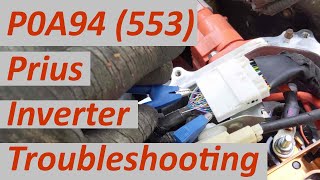
Technical definition: In hybrid vehicles, P3034 indicates a performance failure within the DC-DC converter circuit. The powertrain control module (PCM) monitors the output voltage of the DC-DC converter. If the voltage falls outside the specified 13.5-14.5 volt range for a set period, the module flags the converter as faulty and stores code P3034. The related standard SAE code is P0A94.
Can I Drive With P3034?
No — Do Not Drive. The vehicle is unsafe to operate. Code P3034 indicates the 12-volt battery is not charging. The vehicle runs on the 12-volt battery's stored power for a short time before critical systems fail. You will experience a progressive shutdown of electronics, loss of power steering, and a complete vehicle stall at any speed. Tow it to a qualified repair shop immediately.
Common Causes

- DC-DC Converter Assembly Failure (Very Common) — The converter itself is the primary cause. Internal components like transistors, capacitors, or the boost control microchip fail from heat, vibration, and age. This includes degraded thermal paste or improperly torqued internal bolts.
- Failing 12-Volt Auxiliary Battery (Common) — A weak or internally shorted 12-volt battery causes unstable system voltages. This confuses the hybrid control module, leading it to incorrectly flag a DC-DC converter fault when the battery is the actual problem.
- Inverter Cooling System Failure (Common) — High-power converters are liquid-cooled. A failed electric water pump, coolant leak, or blockage causes the converter to overheat and shut down to prevent fires. This usually triggers a companion P0A93 code.
- Software or Firmware Glitch (Less Common) — A software glitch in the Hybrid Powertrain Control Module (HPCM) incorrectly sets a P3034 code. A dealer software update resolves this without hardware replacement.
- Wiring or Connector Issues (Less Common) — Corrosion or damage on the high-voltage cables or low-voltage control connectors interrupts power delivery or feedback signals, causing the ECU to report a fault.
- Hybrid Control Module Fault (Rare) — The computer monitoring the DC-DC converter fails, incorrectly interpreting data and setting a P3034 code when the converter is functioning properly.
Symptoms

- "Check Hybrid System" Warning Light — The dashboard displays a critical failure message for the hybrid or charging system, accompanied by a red triangle warning light. 🎬 Watch: How to diagnose the Prius Red Triangle of Death.
- Vehicle Shuts Down While Driving — The 12-volt battery fully depletes, causing the entire vehicle to lose power, lose power steering, and coast to a stop.
- Repeatedly Dead 12-Volt Battery — The 12-volt battery dies because the DC-DC converter cannot recharge it. Jump-starting works temporarily, but the battery dies again quickly.
- Widespread Electrical Problems — Flickering dashboard lights, a blank infotainment screen, and slow power windows occur as control modules lose operating voltage.
- Car Will Not Start or Enters 'Limp Mode' — The vehicle refuses to enter the 'Ready' state or operates with severely reduced power to protect high-voltage components.
- Burning Electrical Smell — A severe internal short circuit within the converter produces a distinct smell of burning plastic or electronics from the engine bay.
Diagnostic Flowchart
Tap your situation to follow the diagnostic path that matches what you're seeing on this code.
Common Fixes & Costs
- Replace 12-Volt Auxiliary Battery — Parts: $200-$300, Labor: $50-$100, ~0.5 hr book time (DIY)
- Replace Inverter/Converter Coolant Pump — Parts: $150-$250, Labor: $150-$300, ~1.5 hr book time (Intermediate)
- Reprogram Control Module — Parts: $0, Labor: $150-$250, ~1 hr book time (Professional)
- Replace Inverter/Converter Assembly (Used/Salvage) — Parts: $500-$1500, Labor: $500-$900, ~4.5 hr book time (Professional)
- Replace Inverter/Converter Assembly (New OEM) — Parts: $2500-$6000, Labor: $500-$900, ~4.5 hr book time (Professional)
Used vs. New Parts: Buying Guide
When a used part is worth it: A used inverter assembly is a budget-conscious choice for an older hybrid (over 150k miles) where a new OEM part exceeds the vehicle's value.
Donor-vehicle mileage cap: roughly under 100000 miles for the part to have meaningful remaining life.
Donor quality checklist:
- Match the part number EXACTLY.
- Source from a reputable salvage yard that provides the donor vehicle's VIN and mileage.
- Avoid parts from vehicles scrapped due to flood damage or fire.
- Visually inspect connectors for corrosion and the housing for physical damage.
Decision logic:
- If Vehicle is under warranty or part of a recall/service campaign → use a new OEM part installed by a dealer, as it will be free.
- If Vehicle is newer (< 8 years old) and has significant value → a new OEM or high-quality remanufactured part is the most reliable choice.
- If Budget is the primary concern on an old vehicle and you accept the risk → a used part from a low-mileage, accident-damaged donor is a viable option.
Warranty tradeoff: Used parts typically come with a 30-90 day warranty covering only the part. New OEM parts installed by a dealer carry a 1-2 year parts and labor warranty.
Worst-case if a used part fails: $700-$1200 if the used part fails, requiring a second labor charge.
What Happens If You Wait — Timeline
- 0-5 minutes: The 'Check Hybrid System' or 'Charging System Fault' light illuminates. The DC-DC converter goes offline, and the vehicle begins running exclusively on the 12V battery's stored power. (MPG impact: 0%% · Added cost: $0)
- 5-20 minutes: The vehicle's computers begin to shed electrical load to conserve power. The radio/infotainment system shuts off, A/C stops working, and power windows become slow. (MPG impact: 0%% · Added cost: $0)
- 20-30 minutes: Critical systems are affected as 12V battery voltage drops further. The dashboard goes dark, and electric power steering assist fails. (MPG impact: 0%% · Added cost: $150-$500 (Cost of towing when the vehicle stalls in a dangerous location).)
- Approximately 30 minutes: The 12V battery is completely depleted. The Engine Control Module (ECM) loses power, causing the engine to stall completely. The vehicle coasts to a stop. (MPG impact: N/A% · Added cost: $250-$400 (Cost of a new 12V battery, which is permanently damaged by the complete discharge).)
Cost of Not Fixing It
- Immediately (0-30 minutes of driving): Vehicle runs on 12V reserve, progressive failure of electronics, and complete vehicle stall. (Added cost: $150-$500 for towing and emergency diagnosis.)
- Repeated Jump Starts: Deeply discharges and permanently damages the 12V battery. (Added cost: $250-$400 for a new AGM battery.)
- Long-term (Ignoring related cooling codes): Ignoring P0A93 cooling fault destroys the entire inverter assembly. (Added cost: $2,500-$8,000+)
Diagnosis Steps

- Read All Stored Fault Codes
Use an advanced OBD-II scanner to read codes from all vehicle modules. Look for companion codes like P0A93 (Inverter Cooling) or C1241 (Low Voltage) to narrow the diagnostic path.
Tools: Advanced OBD-II Scanner (Beginner) - Test the 12-Volt Auxiliary Battery
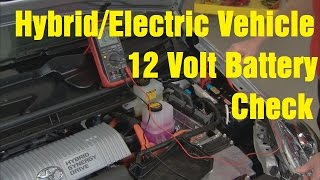
Professionally load test the 12-volt battery. A healthy AGM battery rests at 12.8V and maintains above 9.6V under load. Replace it if it fails before diagnosing the converter.
Tools: Digital Battery Load Tester (Beginner) - Monitor 12-Volt Charging Voltage
With the vehicle in the 'Ready' state, measure the 12-volt battery terminals with a multimeter. A healthy DC-DC converter supplies a steady 13.5 to 14.5 volts. Readings near 12V indicate no charging.
Tools: Multimeter, OBD-II Scanner with Live Data (Intermediate) - Inspect the Inverter Coolant System
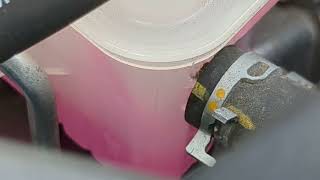
Locate the hybrid inverter coolant reservoir. Ensure the fluid is between the 'min' and 'max' lines. With the vehicle 'Ready', check for fluid turbulence indicating the pump is running.
Tools: Flashlight (Beginner) - [PRO TIP] Command the Inverter Coolant Pump
Use a bi-directional scan tool to activate the inverter coolant pump while the vehicle is off. If it does not run, verify power and ground at the connector before replacing the pump.
Tools: Bi-Directional Scan Tool, Multimeter (Advanced) - [PRO TIP] Check for AC Ripple Voltage
Set a multimeter to AC Volts. With the vehicle 'Ready', probe the 12-volt battery. Readings consistently above 500mV AC strongly suggest failing internal rectifier components within the converter.
Tools: Digital Multimeter with AC Volts (True RMS recommended) (Advanced) - Visually Inspect High-Voltage Wiring
CAUTION: Do not touch orange high-voltage cables. Visually inspect for obvious damage, rodent chewing, or loose connections at the inverter assembly.
Tools: Flashlight, High-Voltage Safety Awareness (Intermediate) - Professional Pinpoint Diagnosis
If previous steps fail, a professional technician must use an oscilloscope to test signals between the control module and the converter. This requires specialized high-voltage safety training.
Tools: High-Voltage Safety Gear, Oscilloscope, Manufacturer Service Info (Professional)
When This Code Triggers (Freeze-Frame Conditions)
- DC-DC Converter Output Voltage: < 12.5V or > 15.5V (The code triggers when the control module sees the 12V system voltage go outside the expected charging range for a set period of time.)
- Vehicle State: Ready On (The fault is typically detected when the hybrid system is active and the DC-DC converter is expected to be charging the 12V battery.)
- Inverter Coolant Temperature: > 200°F / 93°C (If the failure is caused by overheating, the freeze frame may show an excessively high inverter coolant temperature, often with a related code P0A93.)
- Time Since 'Ready On': 1 - 10 minutes (The fault is often intermittent and may only appear after the vehicle has been running for several minutes, allowing components to heat up.)
Related Codes
- P0A94 — Generic SAE code for DC/DC Converter Performance. Diagnosis is identical to P3034.
- P0A93 — Inverter Cooling System Performance. Diagnose and fix the cooling system first to resolve the P3034.
- P0A09 — DC/DC Converter Status Circuit Low. Points to an electrical circuit problem requiring wiring diagram tests.
- C1241 — Low or High Battery Voltage. A cause-or-effect code confirming 12V system voltage drop.
Climate & Environmental Factors
- Cold Weather: Ambient temperatures below 41°F (5°C) trigger short circuits in specific DC-DC converters, notably prompting a major Toyota/Lexus recall.
- Hot Weather / High Heat: Heat destroys power electronics. Failing coolant pumps or blocked radiator fins cause the converter to overheat and fail prematurely in hot climates.
How to Talk to a Mechanic About This Code
Say this: "My hybrid vehicle is showing a P3034 code and a 'Check Hybrid System' warning. I'd like to schedule a diagnostic. Please start by performing a professional load test on the 12-volt battery and inspecting the inverter cooling system for correct coolant level and pump operation before diagnosing the DC-DC converter itself."
This signals you understand the common causes and the correct diagnostic sequence. It prevents a shop from immediately quoting the most expensive repair (inverter/converter replacement) and ensures they rule out the cheaper, more frequent failure points first.
Avoid saying:
- 'My hybrid won't start, just fix it.'
- 'The check engine light is on, can you just look at it?'
- 'I think I need a new inverter.' (Don't diagnose it for them)
Questions to ask before authorizing the repair:
- What were the results of the 12V battery load test?
- With the car in 'Ready' mode, what was the exact charging voltage at the battery terminals?
- Did you find any other fault codes, specifically P0A93 for the inverter cooling system?
- If the converter needs to be replaced, can you provide me with a written, out-the-door estimate that separates parts and labor?
- What is the warranty on the replacement part and the labor for this repair?
Where to Take It: Dealer vs Independent vs Chain
- Dealer:
Excellent choice. Dealers are the safest bet for a P3034, as they are equipped and trained for high-voltage work and have access to all recalls and TSBs.
Best for: Vehicles under warranty or covered by a recall/service campaign., Complex, high-voltage repairs requiring manufacturer-specific tools and training., Diagnosing software-related issues that may require a dealer-only update.
Downsides: Highest labor rates., May be quick to replace an entire assembly rather than troubleshoot a smaller component. (Typical cost: +50% vs. baseline) - Independent Shop:
Good choice, IF they are a certified hybrid/EV specialist. Ask specifically if their technicians are certified for high-voltage work. A qualified independent can save you money, especially on older vehicles.
Best for: Out-of-warranty vehicles where cost is a major factor., Shops with a clear specialization in hybrid and EV repair.
Downsides: A general mechanic is NOT qualified for this repair. You must vet the shop to ensure they have certified hybrid technicians., May lack access to the very latest manufacturer software updates. (Typical cost: +0% vs. baseline) - Chain Shop:
AVOID. Do not take your vehicle to a chain shop for a P3034 code. They can perform a 12V battery test, but they are not qualified to diagnose or repair any other part of the hybrid charging system.
Best for: Tire replacement, oil changes, and selling 12V batteries.
Downsides: Technicians are not trained or equipped to work on high-voltage hybrid systems., High risk of misdiagnosis and being sold unnecessary parts. (Typical cost: -10% vs. baseline)
When to Walk Away From the Repair
If the estimated repair cost for the DC-DC converter assembly exceeds 50% of the car's current private-party value, you should seriously consider selling the car as-is or trading it in.
- Car worth $6000, fix is $3500: Walk away. The repair cost is nearly 60% of the car's value. It is not an economically sound repair.
- Car worth $25000, fix is $4500: Fix it. The repair cost is only 18% of the vehicle's value, which is well below the walk-away threshold.
- Car worth $8000, fix is $1200: Fix it. This cost suggests the failure is a less expensive component like the inverter coolant pump or a used converter assembly. This is a reasonable expense to keep the car running.
What Scan Tool You Need for This Code

Minimum: A scanner that can read manufacturer-specific codes and display live data from the Hybrid Control Module. Specifically, you must be able to view the 'DC-DC Converter Output Voltage' or a similar PID.
A basic $20 code reader will only show the P3034 code but cannot show you the live charging voltage. Without live data, you are blindly guessing between a $250 battery, a $150 coolant pump, and a $4,000 inverter assembly.
Budget: BlueDriver Pro Scan Tool (~$100) — Connects to your phone via Bluetooth and can read hybrid system codes and display essential live data, including hybrid battery status and module voltage, allowing you to see if the DC-DC converter is charging or not.
Mid-range: Innova 5610 (~$350) — Offers bi-directional control, which is critical for this diagnosis. It allows you to command the inverter coolant pump to turn on, helping you quickly determine if a cooling system failure is the root cause. It also has dedicated hybrid/EV battery test functions.
Professional: Autel MaxiCOM MK808S / XTOOL D7 (~$450-650) — These are full-featured bidirectional tablets that provide OE-level diagnostics. They offer extensive live data graphing, full bi-directional control of all modules, and access to advanced service functions, making them powerful enough for professional use but accessible to serious DIYers.
Rent vs buy: For a one-time diagnosis, many auto parts stores like AutoZone offer a loaner tool program. You can 'rent' a capable scanner for free with a refundable deposit. If you plan to work on your hybrid or other modern cars regularly, buying a mid-range tool with bidirectional controls is a worthwhile investment.
How to Clear the Code After You Fix It
- Reconnect any disconnected batteries (12V auxiliary first).
- Use a compatible OBD-II scan tool to clear the P3034 and any related fault codes from all modules.
- Perform a drive cycle to allow the vehicle's readiness monitors to reset.
Drive cycle (~30 minutes): Start the vehicle and idle for 3 minutes. Drive in mixed city/highway conditions for 20 minutes. Allow the vehicle to cool down completely for 4-8 hours and repeat.
Readiness monitors affected: Hybrid/EV Battery monitor, Comprehensive Component Monitor
Before emissions retest: drive at least 50 miles to fully set monitors.
Watch out for:
- Disconnecting the 12V battery will not clear the code.
- The code returns immediately if the root cause remains.
- Failure to bleed the inverter cooling system causes a repeat failure.
Will This Fail Emissions / State Inspection?
Yes — this code typically fails an OBD-II emissions inspection.
- California: An active 'Check Hybrid System' light is an automatic failure of the smog check.
- New York: A P3034 code causes an immediate failure, and the vehicle cannot be registered until repaired.
- Texas: The Malfunction Indicator Lamp (MIL) being illuminated is grounds for failure.
Most Commonly Affected Vehicles
- Jaguar / Land Rover Defender, Range Rover, Discovery, F-Pace, E-Pace (MHEV) (2019-2024) — Recall NHTSA 24V-293 addresses a microchip fault causing total 12V charging loss.
- Toyota Prius (2010-2015) — Overheating Intelligent Power Module transistors prompt warranty extension ZJB.
- Toyota / Lexus RAV4 Prime / NX450h+ (2021-2022) — Recall NHTSA 23V-486 addresses a short circuit and fire risk in cold weather.
- Toyota Camry Hybrid, Corolla Cross Hybrid (2025-2026) — Recall for improperly torqued internal inverter bolts causing power loss.
- Lexus RX400h / RX450h (2006-2022) — Known for expensive inverter failures; new OEM parts exceed $6,000.
- Honda Accord Hybrid, Civic Hybrid, CR-V Hybrid (2012-2025) — TSB 20-030 extends warranty on Motor Power Inverters due to defective solder joints.
- Nissan / Infiniti Pathfinder Hybrid, Murano Hybrid, QX60 Hybrid (2014-2017) — Recall NHTSA 21V-774 fixes a software glitch causing engine stalls.
- Hyundai / Kia Sonata Hybrid, Optima Hybrid, Niro (2011-2019) — Recalls address faulty Voltage Protection Devices cutting power.
- Ford Escape Hybrid, Maverick Hybrid (2020-2024) — Intermittent component failures and wiring issues trigger this code.
Manufacturer-Specific Notes
- General: On non-hybrid vehicles, P3034 refers to unrelated components like intake sensors. This guide focuses exclusively on hybrids.
- Toyota / Lexus: Always load test the 12-volt battery before condemning the inverter. Check for warranty extension ZJB on 2010-2014 Prius models.
- Jaguar / Land Rover: DC-DC converter failures on 48V Mild Hybrid systems are extremely common and covered under recall NHTSA 24V-293.
- Nissan / Infiniti: A software glitch causes stalls on 2014-2017 models. Recall NHTSA 21V-774 provides a free dealership reprogram.
Real Owner Stories
2021 Toyota RAV4 Prime at 25K miles
Car was completely dead one cold morning; would not enter 'Ready' mode, just beeping and flashing lights.
What they tried:
- Jump-started the vehicle, which brought all systems back online.
- Took the 12V battery to an auto parts store, where it was tested and found to be dead.
Outcome: Replaced the original 12V battery with a new AGM battery for $250. All fault codes cleared, and the issue was resolved.
Lesson: A simple dead 12V battery causes terrifying hybrid system failure warnings. Always test the 12V battery before assuming a catastrophic failure.
2012 Toyota Prius at 110K miles
Intermittent 'Red Triangle of Death' warning would appear, sometimes causing a loss of brake assist, but would vanish after restarting the car.
What they tried:
- Initial checks with a multimeter showed a normal charging voltage of ~14V when the car was working.
- Load tested the 12V battery, which tested as healthy.
- Used an OBD2 scanner to log live data during multiple drives, capturing the DC-DC converter output voltage dropping to 10.8V.
Outcome: The intermittent internal failure of the DC-DC converter was confirmed. The owner replaced the inverter assembly with a used unit to save money.
Lesson: Intermittent electronic failures are difficult to diagnose. Using a scan tool that logs live data is crucial to capture the fault 'in the act'.
2022 Land Rover Defender P400 at 15K miles
While driving on the highway, the 'Charging System Fault' warning appeared, followed by a rapid shutdown of all electronics and a complete loss of power.
What they tried:
- The vehicle was towed to the dealership.
- The dealership diagnosed a failed DC-DC converter, a known issue subject to a massive recall.
Outcome: The repair was covered under warranty, but the owner faced a multi-month wait for the replacement part due to a worldwide shortage.
Lesson: Even on a new vehicle, a P3034 indicates a serious manufacturing defect. Always check for recalls.
How to Prevent This Code From Triggering
- Proactively replace the 12V AGM battery (Every 3-5 years) — The 12V battery in a hybrid often fails without the classic 'slow crank' warning. Proactive replacement prevents voltage instability that triggers false hybrid fault codes.
- Inspect and maintain the inverter cooling system (Every 15,000 miles) — Heat is the number one killer of power electronics. A failing coolant pump or low fluid causes the converter to overheat and fail.
- Use a 12V battery tender for infrequent use (If car sits for more than 2 weeks) — A battery tender keeps the 12V battery fully charged, preventing deep discharge cycles that shorten its life.
- Keep hybrid battery cooling vents clear (Every 6 months or 5,000 miles) — Intake vents get clogged with dust and debris. This restricts airflow, causing components to run hotter and shortening their lifespan.
Frequently Asked Questions
Can I replace the DC-DC converter myself?
Absolutely not. This component connects to the high-voltage hybrid system carrying a lethal 200-600V DC charge. Replacement requires specialized training, insulated tools, and safety equipment to de-energize the system.
What happens if the DC-DC converter fails while driving?
The car stops charging the 12V battery and runs on stored power. You will lose the radio, A/C, power steering, and dashboard displays. Finally, the engine shuts off completely, causing the vehicle to coast to a stop.
Why is the repair so expensive?
The inverter assembly is a complex, high-power electronic module costing $2,500 to $8,000. Labor costs are high due to the specialized, time-consuming procedures required to safely de-energize the high-voltage system.
Can I jump-start the car and keep driving?
No. A jump-start gets the car started once, but the failed converter will not recharge the battery, causing the car to shut down again while driving.
Is a P3034 code covered under warranty?
It depends on your vehicle. Many Jaguar, Land Rover, Toyota, and Nissan models have active recalls covering this repair for free. Otherwise, it falls under the hybrid system warranty, typically 8 years/100,000 miles.
What is the most common misdiagnosis for a P3034?
The biggest mistake is replacing the expensive inverter assembly without professionally load testing the 12-volt auxiliary battery. The second is ignoring companion cooling system codes like P0A93.
What is the difference between an inverter and a DC-DC converter?
They are usually packaged in one liquid-cooled assembly. The inverter converts high-voltage DC to AC for the electric motors. The DC-DC converter steps down high-voltage DC to 12V DC for standard electronics.
Key Takeaways
- Code P3034 indicates a critical failure of the hybrid 12-volt charging system, causing a complete vehicle stall within 30 minutes of driving.
- A repeatedly dead 12-volt battery and a 'Check Hybrid System' warning are the primary symptoms of this DC-DC converter failure.
- Professionally load test the 12-volt auxiliary battery and verify inverter coolant flow before authorizing a $3,000+ converter replacement.
- Never attempt to replace the DC-DC converter yourself; the 200-600V hybrid system carries a lethal electrical charge requiring specialized safety gear.
- Check your VIN for open recalls immediately, as Jaguar, Land Rover, Toyota, and Nissan have issued free replacement campaigns for this exact failure.
Helpful Videos



The information in this article is provided for general reference and educational purposes only. Vehicle specifications, procedures, and part compatibility can vary by production date, trim level, and region. Always consult your vehicle's factory service manual and verify part numbers before purchasing or performing repairs. Safety-critical components such as airbags, seat belts, and braking systems should be installed by a qualified professional.
- 🎬 Helpful Videos
- What Does P3034 Mean?
- Can I Drive With P3034?
- Common Causes
- Symptoms
- Diagnostic Flowchart
- Common Fixes & Costs
- Used vs. New Parts: Buying Guide
- What Happens If You Wait — Timeline
- Cost of Not Fixing It
- Diagnosis Steps
- When This Code Triggers (Freeze-Frame Conditions)
- Related Codes
- Climate & Environmental Factors
- How to Talk to a Mechanic About This Code
- Where to Take It: Dealer vs Independent vs Chain
- When to Walk Away From the Repair
- What Scan Tool You Need for This Code
- How to Clear the Code After You Fix It
- Will This Fail Emissions / State Inspection?
- Most Commonly Affected Vehicles
- Manufacturer-Specific Notes
- Real Owner Stories
- 2021 Toyota RAV4 Prime at 25K miles
- 2012 Toyota Prius at 110K miles
- 2022 Land Rover Defender P400 at 15K miles
- How to Prevent This Code From Triggering
- Frequently Asked Questions
- Can I replace the DC-DC converter myself?
- What happens if the DC-DC converter fails while driving?
- Why is the repair so expensive?
- Can I jump-start the car and keep driving?
- Is a P3034 code covered under warranty?
- What is the most common misdiagnosis for a P3034?
- What is the difference between an inverter and a DC-DC converter?
- Key Takeaways
- 🎟️ Get 5% Off