

P3032 on 2016 Dodge Challenger: Barometric Pressure Sensor Plausibility Causes and Fixes
On a 2016 Dodge Challenger, code P3032 is often caused by a software glitch. Check for Technical Service Bulletins (TSBs) like #18-062-17 before replacing parts. A PCM reflash at a dealership is the most common fix. If not software, the Manifold Absolute Pressure (MAP) sensor, which also reads barometric pressure, is the most likely failed part.
- Always check for applicable TSBs first. A PCM software update at a dealership is a very common fix for P3032 on this vehicle and can save you from buying unneeded parts.
- This code points to a 'plausibility' problem, meaning the BARO sensor's reading doesn't make sense to the computer when checked against other data.
- The Manifold Absolute Pressure (MAP) sensor is responsible for reading barometric pressure. If parts need replacing, the MAP sensor is the most likely candidate. Be sure to use the correct part number for your specific engine (3.6L, 5.7L, or 6.4L).
- A simple diagnostic check is to compare the MAP and BARO readings on a scan tool with the key on and engine off; they should be almost identical.
What's Unique About the 2016-2016 Dodge CHALLENGER
For the 2016 Challenger and its platform mates (Dodge Charger, Chrysler 300), this code is specifically mentioned in manufacturer TSBs that group it with many other seemingly unrelated codes. This is unusual and strongly suggests that the root cause is often a software calibration issue within the Powertrain Control Module (PCM), not a hardware failure. A simple PCM reflash at a dealership can often resolve the problem, making it a critical first step before any parts are replaced.
Diagnostic Flowchart
Tap your situation to follow the diagnostic path that matches what you're seeing on this vehicle.
Symptoms You May Notice
- Check Engine Light (MIL) is on
- Rough or unstable idle
- Hesitation during acceleration
- Reduced engine power
- Decreased fuel economy
- Vehicle may enter limp mode
- Replacing the MAP sensor without first checking if a PCM software update is available. The TSBs indicate a software update is a very common fix.
- Replacing the PCM before thoroughly testing the MAP sensor circuit and confirming the sensor itself is functioning correctly.
Most Likely Causes
- PCM Software Update Needed 🔴 High Probability Manufacturer TSB #18-062-17 explicitly lists P3032 as one of several codes that can be resolved by reprogramming the PCM with updated software. This indicates a known calibration issue from the factory affecting multiple systems.
How to confirm: A Dodge dealership or a qualified shop with access to OEM software (like wiTECH) can check your vehicle's current calibration part number against the latest versions listed in the TSBs.
Typical fix: Reprogram (reflash) the PCM to the latest software version. This is a dealer or specialty shop-only procedure.
Est. part cost: $0 - Faulty Manifold Absolute Pressure (MAP) Sensor 🟡 Medium Probability On this platform, the MAP sensor serves a dual purpose, providing the barometric pressure reading at key-on, engine-off. A failure or degradation in the sensor can provide an implausible reading compared to its own reading once the engine is running, triggering the code.
How to confirm: With a scan tool, compare the BARO reading to the MAP reading with the key on and engine off. They should be nearly identical. If they differ significantly, or if the reading doesn't match the actual local atmospheric pressure, the sensor is likely faulty. A multimeter can also be used to check for specific voltage outputs.
Typical fix: Replace the MAP sensor. On the 3.6L V6, it is located on the intake manifold after the throttle body. On V8 models, its location is similar, on the top front of the intake manifold. 🎬 Watch: How to locate and replace the Challenger MAP sensor
Est. part cost: $40-$120 - Wiring or Connector Issue ⚪ Low Probability Engine bay heat and vibration can, over time, cause wiring to fray or connectors to corrode, especially the harness leading to the MAP sensor. Some FCA vehicles of this era are known for general electrical issues, including parasitic drains and faulty grounds that can cause erratic sensor behavior.
How to confirm: Visually inspect the wiring and connector for the MAP sensor. Check for a stable 5-volt reference, good ground, and a logical signal voltage at the connector with a multimeter. Wiggle the harness while monitoring the data on a scan tool to see if the reading fluctuates.
Typical fix: Repair the damaged section of the wiring harness or clean/replace the connector. In some cases on related platforms, the entire engine harness has been replaced to solve persistent low-voltage codes.
Est. part cost: $5-$50
Rare But Worth Checking
- Faulty Powertrain Control Module (PCM): This is rare. A PCM should only be suspected after a software update has been performed and all sensors and wiring have been thoroughly tested and confirmed to be good. On some related Jeep models, this code is more directly linked to internal PCM failure.
- Clogged or Restricted Air Filter: A severely clogged engine air filter can, in some circumstances, skew the pressure readings between what the MAP sensor sees and what the PCM expects for barometric pressure, potentially contributing to this code. This is an easy and inexpensive item to check first.
Diagnosis Steps
- Check for TSBs: Contact a Dodge dealer with your VIN to see if TSB #18-062-17 or #18-032-16 REV. A applies to your vehicle. If so, a PCM reflash is the recommended first step.
- Scan Tool Analysis: Use a scan tool to read the barometric pressure (BARO) and manifold absolute pressure (MAP) values with the Key On, Engine Off (KOEO).
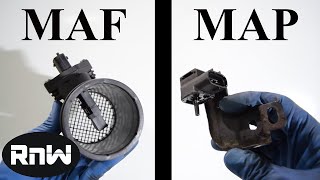
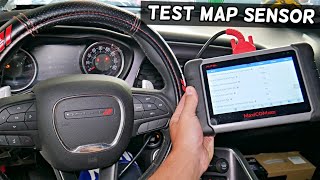
- Compare Readings: The KOEO BARO and MAP readings should be nearly identical and should plausibly match your local altitude/atmospheric pressure. 🎬 Watch: How to test a MAP sensor with a scanner A significant difference points towards a faulty sensor.
- Inspect Air Filter: Check the engine air filter for excessive dirt or blockages, as this can affect pressure readings.
- Inspect Sensor and Wiring: Visually inspect the MAP sensor and its electrical connector for any signs of damage, corrosion, or loose connections. The sensor is typically on the intake manifold.
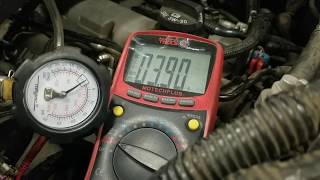
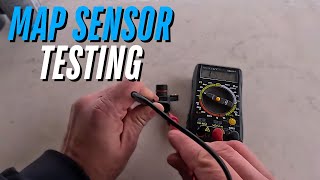
- Test the Circuit: If readings are incorrect, use a multimeter to test the MAP sensor connector for a 5-volt reference signal, a proper ground, and a signal wire that changes with vacuum. 🎬 See this walkthrough on testing a Challenger MAP sensor Wiggle the harness during testing to check for intermittent shorts or opens.
- Replace the Sensor: If the circuit is good but the sensor readings are bad, the MAP sensor is the likely culprit and should be replaced.
- Final Check: If all hardware and wiring test good and a software update did not fix the issue, the PCM may be at fault, though this is rare.
Parts You'll Likely Need
- Manifold Absolute Pressure (MAP) Sensor
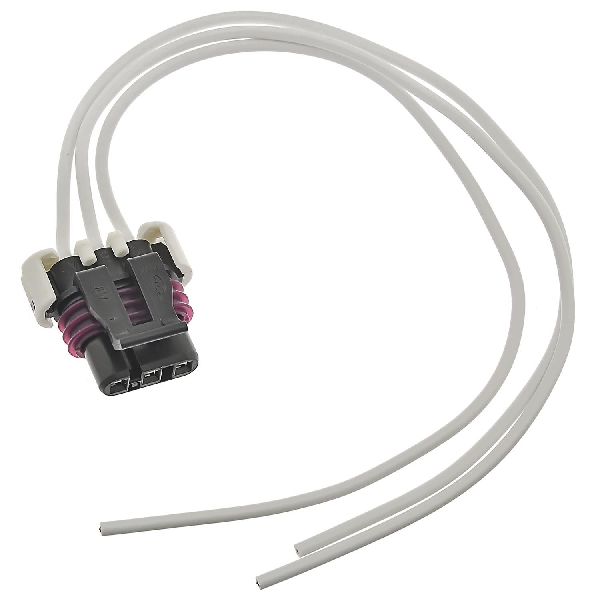
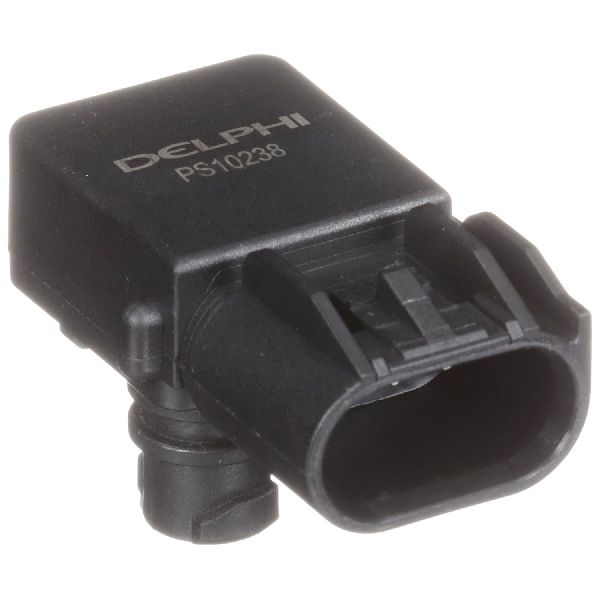
(OEM #68371847AB (for 3.6L V6 & 6.4L V8), 68199324AB (for 5.7L V8))— This sensor provides the barometric pressure reading to the PCM. A fault within this sensor is the most common hardware cause for code P3032 after software issues have been ruled out. Part number 68371847AB is listed for the 3.6L V6 and 6.4L V8 engines. Part number 68199324AB is listed for the 5.7L V8 Hemi.
Trusted brands: Mopar, Bosch, Delphi, NTK
OEM price range: $70-$120
Aftermarket price range: $40-$80
Related Codes That Often Appear With This One
- P2227 — This code for 'Barometric Pressure Circuit Performance' is listed in the same TSBs as P3032. P2227 indicates a problem with the sensor's electrical circuit, while P3032 indicates the sensor's reading is illogical. They often appear together when the sensor or its software calibration is failing.
- P0335 — This Crankshaft Position Sensor code is also listed in TSB #18-062-17, suggesting a PCM software update may fix both issues simultaneously.
- P0441 / P0455 / P0456 — These EVAP system codes are also mentioned in the same TSBs. Their presence alongside P3032 strengthens the case for a PCM software issue affecting multiple systems.
- P0642 — This code for 'Sensor Reference Voltage 1 Circuit Low' can appear on related platforms with wiring harness issues, affecting multiple sensors that share the same 5-volt reference circuit, including the MAP sensor.
Technical Service Bulletins (TSBs) & Recalls
- 18-062-17: Flash: Powertrain Diagnostic and System Improvements. Lists P3032 as a code that may be resolved by a PCM software update.
- 18-032-16 REV. A: Also lists P3032 among a group of diagnostic trouble codes, reinforcing its inclusion in software updates for 2016 models.
Platform-Specific Known Issues
- Technical Service Bulletin #18-062-17 indicates that a PCM software update can resolve this code, along with a long list of others, without needing to replace any parts.
- TSB #18-032-16 REV. A also lists P3032, reinforcing that software updates are a primary factory-specified solution for this code on 2016 models.
Mechanic-Grade Diagnostic Values
- MAP Sensor 5V Reference Circuit Voltage — expected: 4.8V - 5.2V with Key On, Engine Off (KOEO). Failure: Voltage below 4.8V or above 5.2V indicates a problem with the PCM or wiring.
- MAP Sensor Ground Circuit Voltage Drop — expected: Less than 0.1V (100mV). Failure: Voltage higher than 0.1V indicates high resistance in the ground circuit, which can skew sensor readings.
- MAP Sensor Signal Voltage (KOEO) — expected: Approximately 4.5V - 5.0V (should match local atmospheric pressure). Failure: A significantly lower voltage suggests a faulty sensor or a vacuum leak in the sensor itself.
- MAP Sensor Signal Voltage at Idle — expected: 1.0V - 2.0V (once engine is running and idle is stable). Failure: Voltage that remains high (near the KOEO reading) or does not change when the throttle is snapped indicates a non-responsive or failed sensor.
Scan Tool Commands That Help
- wiTECH (OEM Dealer Tool): Reprogram PCM — This is the primary repair procedure specified by TSBs #18-062-17 and #18-032-16 REV. A for code P3032. It should be performed before replacing hardware if the vehicle's software is outdated.
- wiTECH or equivalent professional scan tool: Live Data Graphing (MAP/BARO) — Used to visually monitor the sensor's voltage or pressure reading in real-time. This is critical for performing a 'wiggle test' on the harness or for observing the sensor's response when snapping the throttle to confirm it is reacting correctly.
Wiring & Ground Locations
- MAP Sensor Fuses — In the underhood fuse box (passenger side), check mini fuses F31, F34, F35, and F37.. The MAP sensor shares power with other engine sensors. A blown fuse will cut power to the sensor, causing it to fail its plausibility check at key-on.
- MAP Sensor Relays — Check relay R63 in the underhood fuse box and relays R14 and R29 in the trunk fuse box (behind the battery).. These relays provide power to the circuits that the MAP sensor relies on. A faulty relay can cause intermittent power loss to the sensor.
- (K1) MAP Signal Circuit — The signal wire running between the MAP sensor connector and the PCM connector (C2).. This wire carries the pressure reading back to the PCM. A short or open in this specific wire will cause incorrect readings and trigger the code.
- (K900) Sensor Ground Circuit — The ground wire running from the MAP sensor connector back to the PCM ground splice.. A poor ground is a common cause of erratic sensor behavior. A voltage drop test on this circuit can identify high resistance that a simple continuity test might miss.
- (F856) 5-Volt Supply Circuit — The power wire providing the 5V reference from the PCM (Connector C2) to the MAP sensor.. An unstable or low reference voltage will cause the sensor's output signal to be incorrect, leading to a plausibility failure.
OEM Part Supersession History
5149174AA, 5149174AB, 68371847AA→68371847AB— Standard part revision and consolidation for improved reliability or manufacturing.
Heads up: Applies to 3.6L V6 and 6.4L V8 engines. The newest part number should always be used.5033310AC, 5149091AA, 68199324AA→68199324AB— Standard part revision and consolidation for improved reliability or manufacturing.
Heads up: Applies to 5.7L V8 engines. The newest part number should always be used.
Model Year Variations Within This Range
- 2016: No significant mid-year variations related to the P3032 code or its diagnosis are documented. The TSBs, part numbers, and diagnostic procedures apply broadly to the 2016 model year.
Helpful Videos
We Have This Part in Stock


The information in this article is provided for general reference and educational purposes only. Vehicle specifications, procedures, and part compatibility can vary by production date, trim level, and region. Always consult your vehicle's factory service manual and verify part numbers before purchasing or performing repairs. Safety-critical components such as airbags, seat belts, and braking systems should be installed by a qualified professional.
- Dodge CHALLENGER:
- 🎬 Helpful Videos
- 🛍️ Shop This Part
- What's Unique About the 2016-2016 Dodge CHALLENGER
- Diagnostic Flowchart
- Symptoms You May Notice
- Most Likely Causes
- Rare But Worth Checking
- Diagnosis Steps
- Parts You'll Likely Need
- Related Codes That Often Appear With This One
- Technical Service Bulletins (TSBs) & Recalls
- Platform-Specific Known Issues
- Mechanic-Grade Diagnostic Values
- Scan Tool Commands That Help
- Wiring & Ground Locations
- OEM Part Supersession History
- Model Year Variations Within This Range
- 🎟️ Get 5% Off