

OBD-II Code P3031: Hybrid Battery Cell/Block Failure
What P3031 means, why it triggers, and how to fix it
- P3031 is a Toyota/Lexus-specific code indicating a critical failure in battery block #31, almost always accompanied by the P0A80 'Replace Hybrid Battery' master code.
- Stop driving the vehicle within 1 to 3 days; continuing to drive drops fuel economy by up to 40% and risks destroying the $2,000+ hybrid inverter.
- Diagnose the exact failure using a $40 Bluetooth OBD-II adapter and the Dr. Prius app to verify if block 31's voltage drops more than 0.3V below other blocks under load.
- Replacing the entire battery pack with a new OEM ($2,500-$4,500) or reputable reconditioned unit ($1,500-$2,500) is the only reliable long-term fix.
- Avoid replacing just the single failed module, as the remaining 10-year-old modules will inevitably fail shortly after, forcing you to pay the $500+ labor cost again.
What Does P3031 Mean?

P3031 is a manufacturer-specific code, primarily used by Toyota and Lexus, indicating the engine control unit (ECU) detected a failure in block #31 of the high-voltage hybrid battery pack. The computer triggered this code because block 31 is weak, cannot hold a charge, or is severely out of balance with the other battery blocks.
Technical definition: A manufacturer-specific sub-code indicating the battery monitoring system detected a voltage difference or internal resistance in high-voltage battery block #31 that exceeds the maximum allowable threshold (usually a >0.3V delta). It almost universally triggers alongside the master code P0A80 (Replace Hybrid Battery Pack).
Can I Drive With P3031?
Yes, But With Caution. You can drive, but expect poor acceleration, a 20-40% drop in gas mileage, and stalling. The car can fail to start at any time; do not drive far. Continuing to drive with a severely unbalanced battery strains the gasoline engine and damages the transaxle or inverter, turning a $2,000 battery issue into a $5,000+ repair.
Common Causes

- Degraded Hybrid Battery Module(s) (Very Common) — Over time and thousands of charge cycles, the chemical capacity of individual NiMH modules degrades. When the modules comprising block #31 lose their ability to hold a charge, the voltage drops and triggers the code.
- Premature Failure of Refurbished Battery (Common) — Low-quality refurbished battery packs often fail within 1-2 years. If the rebuilder only replaced one or two bad cells instead of properly load-testing and balancing the entire pack, the remaining old modules quickly fail.
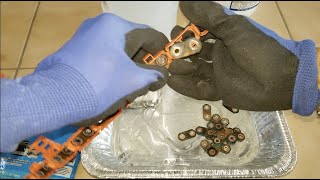
- Corroded Battery Bus Bars (Common) — The copper plates (bus bars) connecting the battery modules corrode over time, especially in humid climates. This corrosion creates high electrical resistance, causing the computer to misread the voltage and falsely flag block #31 as failed. 🎬 Watch: How to clean corroded bus bars to fix error codes.
- Clogged Battery Cooling Fan (Less Common) — The hybrid battery relies on a dedicated cooling fan. If the fan intake gets clogged with dust or pet hair, the battery overheats, accelerating cell degradation and causing premature block failure.
- Water Intrusion (Less Common) — On older hatchbacks (like the Gen 2 Prius), cracked roof seams allow rainwater to pool in the trunk. This moisture corrodes the battery pack's electronics and wiring harness, causing short circuits and false block failure codes.
- Weak 12-Volt Auxiliary Battery (Rare) — A dying 12-volt battery provides unstable voltage to the vehicle's computers during startup. This causes the battery management system to crash or misread sensor data, occasionally throwing false high-voltage battery codes.
Symptoms

- Check Engine / Red Triangle Warning Light — The dashboard illuminates the main check engine light, a 'Check Hybrid System' message, or the master warning 'Red Triangle of Death'.
- Battery Gauge Fluctuating Rapidly — The dashboard battery charge indicator jumps erratically from full to empty in minutes, confirming the cells can no longer hold a stable charge.
- Gasoline Engine Runs Constantly — The gas engine refuses to shut off at stoplights and runs continuously while driving to compensate for the dead hybrid battery.
- Sluggish Acceleration — The vehicle feels exceptionally slow and struggles to climb hills because the electric motor provides zero assist to the gas engine.
- Loud Cooling Fan Noise — A loud fan noise emanates from the rear seat or trunk area as the battery cooling system works overtime to cool the failing, overheating modules.
- Decreased Fuel Economy (also visible on scanner) — Fuel efficiency drops by 20-40% (e.g., a Prius dropping from 45 MPG to 30 MPG) due to the gas engine running constantly.
Diagnostic Flowchart

Tap your situation to follow the diagnostic path that matches what you're seeing on this code.
Common Fixes & Costs
- Install a Reconditioned Hybrid Battery Pack — Parts: $1,500-$2,500, Labor: $200-$400 (Often included in mobile installation), ~2.5 hr book time (Professional)
- Replace Entire High-Voltage Battery Pack with New OEM — Parts: $2,500-$4,500, Labor: $500-$1,000, ~3.5 hr book time (Professional)
- Replace Individual Bad Battery Modules — Parts: $35-$100 per module, Labor: $500-$1,000, ~4.5 hr book time (Professional)
- Clean or Replace Corroded Bus Bars — Parts: $50-$150, Labor: $400-$800, ~4.0 hr book time (Professional)
- Replace Hybrid Battery Cooling Fan — Parts: $150-$400, Labor: $150-$300, ~1.5 hr book time (Intermediate)
Used vs. New Parts: Buying Guide
When a used part is worth it: A 'reconditioned' battery makes sense for budget-conscious owners on older, high-mileage vehicles where a new battery exceeds the car's value. It is also viable if you plan to sell the car within 1-2 years.
Donor-vehicle mileage cap: roughly under 80000 miles for the part to have meaningful remaining life.
Donor quality checklist:
- Verify the reconditioning process includes testing and balancing ALL modules, not just replacing the one that failed.
- Ask for documentation of the battery's tested capacity and internal resistance.
- Ensure the bus bars have been cleaned or replaced with nickel-plated versions.
- Choose a reputable provider that specializes in hybrid batteries and offers a warranty.
Decision logic:
- If Vehicle is newer or you plan to keep it for 3+ years → Buy a new OEM or high-quality new aftermarket battery for maximum longevity and reliability.
- If Vehicle is over 150,000 miles and budget is the primary concern → A reconditioned battery is an acceptable choice, but accept that its lifespan will be shorter (typically 3-5 years).
- If You are selling the car in the next 1-2 years → A reconditioned battery with a transferable warranty is a cost-effective solution.
Warranty tradeoff: Reconditioned batteries typically come with a 1-year warranty. New aftermarket batteries offer 3-year warranties. New OEM batteries from a dealer have a 1-year parts warranty but represent the highest 10-year lifespan quality.
Worst-case if a used part fails: $500-$1000 if a reconditioned battery fails outside its short warranty period, requiring repeat labor costs plus the price of another battery.
What Happens If You Wait — Timeline
- 0-4 weeks: The 'Check Hybrid System' light appears, possibly intermittently at first, especially on hot days or under heavy load. No other major symptoms are noticeable. (MPG impact: 0-5%% · Added cost: $0)
- 1-3 months: The warning light is now on constantly. A noticeable drop in fuel economy occurs as the gasoline engine runs more frequently to charge the weak battery. Acceleration feels slightly sluggish. (MPG impact: 10-25%% · Added cost: $50-$150 in wasted fuel)
- 3-6 months: Performance is significantly degraded. The car feels weak, and the battery charge indicator on the dash fluctuates wildly. The risk of being stranded due to a no-start condition increases. Strain on the motor-generators in the transaxle begins. (MPG impact: 25-40%% · Added cost: $150-$400 in wasted fuel, plus initial wear on other components.)
- 6+ months: Vehicle enters a reduced-power 'limp mode'. The constant voltage instability from the failing battery pack puts severe stress on the inverter and transaxle. Failure of these components becomes a high risk, turning a battery job into a multi-part repair. (MPG impact: 40-50%+% · Added cost: $2000-$5000+ for potential inverter or transaxle damage.)
Cost of Not Fixing It
- 0-3 months: Significant drop in fuel economy (20-40%), sluggish acceleration, and risk of being stranded. The gasoline engine runs excessively to compensate for the weak battery. (Added cost: $100-$300 in extra fuel costs.)
- 3-9 months: Increased strain on the gasoline engine and transmission. The constant demand to charge the failing battery overworks the motor-generators in the transaxle. The vehicle enters a 'limp mode' with severely reduced power. (Added cost: $2000-$4000 for potential transaxle or engine damage.)
- 9+ months: Catastrophic failure of other high-voltage components. A severely degraded battery puts immense stress on the inverter, which converts DC to AC power. Inverter failure is a very expensive repair. (Added cost: $1800-$4200 for a replacement inverter.)
Diagnosis Steps
- Read the Trouble Codes
Scan the vehicle to confirm P3031 and note any accompanying codes like P0A80. A standard scanner reads the code, but you need a hybrid-capable scanner for the next steps.
Tools: OBD-II Scanner (Beginner) - Check the 12V Auxiliary Battery
Test the 12V auxiliary battery with the car off. It must read at least 12.4 volts. A weak 12V battery causes the computers to generate false hybrid codes. Replace it before condemning the high-voltage pack.
Tools: Multimeter (Beginner) - Analyze Block Voltages
Use a Bluetooth OBD-II adapter and an app like Dr. Prius or Hybrid Assistant. View the live data stream for the hybrid battery. Look at the voltage for Block 31; it will show a significantly lower voltage than the others.
Tools: Advanced OBD-II Scanner (with Hybrid Live Data) (Intermediate) - Perform a Load Test
With the live data active, put the car in Drive, press the brake firmly, and press the gas pedal for 15 seconds to load the battery. If Block 31's voltage drops more than 0.3V below the highest block, the module is definitively failing.
Tools: Advanced OBD-II Scanner (with Hybrid Live Data) (Intermediate) - Inspect the Cooling Fan
Locate the hybrid battery cooling fan intake (usually near the rear seat). Remove the trim and check the fan and filter for heavy dust or pet hair blockages. Clean it thoroughly.
Tools: Flashlight, Screwdrivers, Trim Removal Tools (Intermediate) - Inspect Bus Bars for Corrosion (Professional Only)
A professional will disconnect the high-voltage safety plug, open the battery pack, and inspect the copper bus bars. Heavy green corrosion indicates resistance issues that mimic a failed cell.
Tools: High-Voltage Safety Gear (Class 0 Gloves), Insulated Tools (Advanced) - Test Individual Modules (Professional Only)
A specialist removes the modules and measures internal resistance. Healthy NiMH modules read 19-25 mΩ. Readings over 30 mΩ confirm the module is dead and requires replacement.
Tools: Hybrid Battery Analyzer, Milliohm Meter, Insulated Tools (Advanced)
When This Code Triggers (Freeze-Frame Conditions)
- Battery Block Voltage Delta: >0.3V (The primary trigger; the voltage difference between the highest and lowest block exceeds the threshold during steady driving or moderate acceleration.)
- State of Charge (SOC): 40-60% (The code sets when the battery is in a normal operating state of charge, not fully charged or depleted.)
- Engine Coolant Temp: 180-205°F (82-96°C) (The engine is fully warmed up and at normal operating temperature.)
- Vehicle Speed: 35-65 mph (56-105 kph) (The fault is detected during steady-state cruising or light acceleration, where the battery management system gets stable readings.)
Related Codes
- P0A80 — This is the primary master code. P0A80 means 'Replace Hybrid Battery Pack' and triggers when the overall voltage difference between battery blocks exceeds a critical threshold. P3031 is the specific sub-code that tells you Block 31 is the weak link.
- P3000 — A general code for 'Battery Control System Malfunction.' It often appears with P0A80 and P3031. If you see P3000 alone, it points to a problem with the battery ECU itself rather than the cells.
- P3011 - P3028 — These codes are identical to P3031 but point to different battery blocks (e.g., P3011 points to block 11). It is common to have multiple of these codes stored at once if several parts of the battery are failing.
- P0A7F — This code means 'Hybrid Battery Pack Deterioration.' It is an earlier warning sign than P0A80. P0A7F indicates the battery's overall capacity is fading, signaling that a P0A80 and a specific P30xx code are coming soon.
Climate & Environmental Factors
- High Heat: Extreme heat (above 95°F or 35°C) is the primary environmental factor that shortens battery life. It accelerates the chemical degradation of cells, increases internal resistance, and forces the cooling system to work harder.
- High Humidity: Sustained high humidity promotes corrosion on the copper bus bars and electrical connectors within the battery pack. This corrosion increases resistance and causes the Battery ECU to misread module voltages.
- Extreme Cold: Very cold temperatures reduce the chemical efficiency of the battery, leading to lower available power and increased internal resistance. This makes a weak battery's performance issues more noticeable.
- High Altitude: At high altitudes, the air is less dense, which reduces the efficiency of the air-cooled battery fan. This leads to higher average battery temperatures, contributing to long-term degradation.
How to Talk to a Mechanic About This Code
Say this: "I have a P3031 code, likely with a P0A80, on my [Year, Make, Model]. I need a diagnostic for the high-voltage battery. I'd like you to check the live data for all battery block voltages and inspect the battery cooling fan for blockages. Can you give me a quote for the diagnostic and then separate quotes for replacing the pack with a new OEM unit versus a quality reconditioned unit?"
This signals you understand the code and the required diagnostic steps. It directs the shop to the specific, necessary work, helps you compare the most common repair paths, and prevents them from starting with unrelated or unnecessary diagnostics, saving time and money.
Avoid saying:
- 'My hybrid warning light is on, can you just fix it?'
- 'My car is acting weird, I think it's the battery.'
- 'Just do whatever you think is best.'
Questions to ask before authorizing the repair:
- Did the diagnostic confirm a failed module or pack imbalance? Can I see the live data printout showing the block voltages?
- Have you inspected the bus bars for corrosion and the cooling fan for blockages?
- If recommending a reconditioned pack, what is your process for testing and balancing the modules?
- What is the warranty on the battery pack itself (both new and reconditioned options), and what does your labor warranty cover? Is the warranty transferrable?
- Does your quoted price include all labor, supplies, and core charges?
Where to Take It: Dealer vs Independent vs Chain
- Dealer:
A safe but very expensive option for out-of-warranty repairs. The best choice only if the vehicle is still covered by the manufacturer's hybrid warranty.
Best for: Vehicles still under the hybrid system warranty (typically 8yr/100k or 10yr/150k miles)., Owners who prioritize a guaranteed new OEM part and are less sensitive to cost., Complex issues that involve the inverter or other control modules covered by a TSB.
Downsides: Highest cost, often 1.5-2x the labor rate of an independent shop., Will only offer the most expensive fix (new OEM battery pack) and will not install customer-supplied or reconditioned parts. (Typical cost: +50% vs. baseline) - Independent Shop:
Best fit for most out-of-warranty owners, *if* it's a reputable independent shop that specializes in hybrids. They offer more flexible and cost-effective solutions than a dealer.
Best for: Out-of-warranty vehicles where cost is a major factor., Owners who want multiple repair options (e.g., new OEM, aftermarket, reconditioned)., Getting an honest assessment of whether a cheaper fix (like cleaning bus bars) might work.
Downsides: Not all independent shops are qualified. You MUST find a 'hybrid specialist' with documented experience and proper high-voltage safety equipment., Quality of reconditioned batteries varies wildly between shops. (Typical cost: +0% vs. baseline) - Chain Shop:
AVOID. This is a specialized, high-voltage repair that is outside the scope of work for almost all chain shops. Do not take your vehicle here for a P3031 code.
Best for: Services completely unrelated to the hybrid system, like tires or oil changes.
Downsides: Technicians are generally not trained or equipped to work on high-voltage battery systems., High risk of misdiagnosis and recommending unnecessary repairs. They will likely be unable to perform the repair and will refer you elsewhere after charging a diagnostic fee. (Typical cost: -10% vs. baseline)
When to Walk Away From the Repair
If the estimated repair cost for a new or quality reconditioned battery exceeds 50-60% of the car's current private-party value, you should seriously consider selling the car as-is or trading it in.
- Car worth $7500, fix is $3500: Borderline. The repair is about 47% of the car's value. If the rest of the car is in excellent condition, fixing it is reasonable. If it needs other work (tires, brakes), it may be time to walk away.
- Car worth $12000, fix is $4000: Fix it. The repair is 33% of the car's value, which is a reasonable investment to keep a good car running for several more years.
- Car worth $4000, fix is $3000: Walk away. The repair cost is 75% of the car's value. It is not economical to proceed.
What Scan Tool You Need for This Code
Minimum: An OBD-II adapter that connects to a smartphone app like Dr. Prius or Hybrid Assistant. This is required to read the individual battery block voltages, which is essential for diagnosing P3031.
A basic $20 code reader only shows you the P3031/P0A80 codes. It CANNOT show you the live data for each of the 14 or 28 battery blocks to confirm the failure, making it useless for true diagnosis.
Budget: Veepeak OBDCheck BLE / Panlong Bluetooth OBD2 (~$40) — These are simple Bluetooth/BLE adapters recommended by the makers of the Dr. Prius app. Paired with the app, they provide full access to live battery block voltages, temperatures, and internal resistance readings needed to diagnose the pack's health.
Mid-range: BlueDriver Pro OBDII Scan Tool (~$120) — While a popular and capable scanner, for this specific code, you must verify it provides access to the manufacturer-specific PIDs for hybrid battery block voltages. An app-based solution like Dr. Prius is often more specialized and reliable for this particular task.
Professional: Autel MaxiSys MK808 / MS909EV / Ultra EV (~$500-3000+) — Professional-grade tools that offer comprehensive diagnostics for all vehicle systems, including the high-voltage battery. They display block diagrams, provide state-of-health (SoH) analysis, perform bi-directional tests, and offer guided component disassembly instructions.
Rent vs buy: Buy. The best budget tools for this job are OBD-II adapters paired with smartphone apps. Since auto parts stores don't rent these specific adapters, purchasing one (around $40) is the best route for any owner of an aging hybrid vehicle.
How to Clear the Code After You Fix It
- Reconnect 12V battery if disconnected.
- Use an OBD-II scan tool to clear all Diagnostic Trouble Codes (DTCs).
- Perform a complete drive cycle to allow the vehicle's readiness monitors to run.
Drive cycle (~30 minutes): A typical Toyota drive cycle involves: 1) A cold start (sit for 8+ hours). 2) Idle for 2-3 minutes. 3) A mix of city driving (25-40 mph) with several stops. 4) Steady highway driving (55-60 mph) for 10-15 minutes. 5) Allowing the vehicle to cool down. This confirms the repair and sets emissions monitors.
Readiness monitors affected: Catalyst (CAT) monitor, Evaporative (EVAP) System monitor, Oxygen (O2) Sensor monitor
Before emissions retest: drive at least 100 miles to fully set monitors.
Watch out for:
- Clearing the code without performing a drive cycle leaves readiness monitors 'Not Ready', causing an immediate emissions test failure.
- The code returns quickly if the underlying cause (bad cells, corrosion) was not fully resolved.
- Having a full tank of gas prevents the EVAP monitor from running; keep the tank between 1/4 and 3/4 full.
Will This Fail Emissions / State Inspection?
Yes — this code typically fails an OBD-II emissions inspection.
- California: An illuminated Check Engine Light is an automatic failure. After repair, all readiness monitors must be 'Ready' to pass the Smog Check. This requires driving 100+ miles in various conditions.
- New York: A vehicle with an active Check Engine Light automatically fails the emissions portion of the annual state inspection. After clearing the code, a full drive cycle must be completed before re-inspection.
- Texas: In the 17 counties requiring emissions testing, an illuminated Check Engine Light due to a P3031 code results in a failed OBD-II test. The vehicle cannot pass until the issue is repaired and the code is cleared.
Most Commonly Affected Vehicles
- Toyota Prius (2004-2015) — Gen 2 (2004-2009) and Gen 3 (2010-2015) models are highly susceptible. Gen 3 models are also known for EGR cooler clogging, which causes engine misfires that mimic battery problems.
- Toyota Camry Hybrid (2007-2017) — Models from 2007-2011 (XV40) are at an age where battery failure is common. Later models (XV50) share similar technology and are affected as they accumulate mileage.
- Lexus CT200h (2011-2017) — Utilizes the exact same powertrain and battery system as the Prius Gen 3, making it equally susceptible to block failures.
- Toyota Highlander Hybrid (2006-2016) — Larger battery packs in these SUVs are subject to cell failure over time. The 2006-2007 models had a recall for the hybrid inverter, which causes similar warnings.
- Lexus RX 400h / RX 450h (2006-2015) — These luxury hybrid SUVs face long-term battery degradation. The RX400h (2006-2008) is known for potential inverter failures that present with similar symptoms.
- Lexus GS 450h (2007-2018) — This performance hybrid sedan uses a similar high-voltage battery architecture and develops block failures with age and mileage, particularly in the 2007-2011 generation.
- Lexus ES 300h (2013-2018) — Sharing its hybrid powertrain with the Toyota Camry Hybrid, the ES 300h is equally susceptible to codes like P0A80 and P30xx as its battery modules age.
- Toyota Avalon Hybrid (2013-2018) — Built on the same platform as the Camry Hybrid and Lexus ES 300h, the Avalon Hybrid experiences identical battery failure patterns.
Manufacturer-Specific Notes
- Toyota/Lexus: On these vehicles, the last two digits of a P30xx code directly identify the failing battery block. A technician uses this to immediately focus on a specific part of the battery pack. For example, P3014 points to block 14, P3020 to block 20, and P3031 to block 31.
- Ford/Chevrolet/Nissan: The P3031 code is highly specific to Toyota/Lexus. Other manufacturers use different codes for similar issues. A Chevy Volt shows P0AFA, a Ford Escape shows P0A1F, and a Nissan Leaf shows P31E7.
- Toyota/Lexus: Toyota and Lexus have issued Warranty Enhancement Programs extending coverage for specific hybrid inverter and Intelligent Power Module (IPM) issues that mimic battery failure symptoms. Owners should check with a dealer to see if their VIN is covered.
Real Owner Stories
2006 Toyota Prius at 106K miles - The Refurbished Battery Nightmare
Owner bought a used 2006 Prius with 106k miles. After a few months, the original hybrid battery died. They purchased a refurbished battery with a 2-year warranty for about $1,750.
What they tried:
- Installed the refurbished battery, which worked for several months before failing again.
- The supplier replaced the failed refurbished pack under warranty at no cost.
- A few months later, the second refurbished battery also failed, triggering the same warnings.
Outcome: The owner was left in a cycle of repeated failures with a low-quality refurbished battery pack, highlighting that the rebuilding process was insufficient and did not address all weak cells.
Lesson: Be cautious with 'refurbished' batteries. Their quality varies wildly, and some only have the single worst cell replaced, leading to a 'whack-a-mole' scenario where other old cells fail shortly after. A short warranty is not enough if the pack quality is poor.
2004 Toyota Prius with P3014 - The Loose Connection 'Fix'
Owner of a 2004 Prius with a reconditioned battery from 2017 started getting various codes. A P3014 (Battery Block 4 becomes weak) appeared, along with the red triangle of death.
What they tried:
- The owner decided to clear the codes by disconnecting the 12V auxiliary battery.
- While doing so, they noticed the 12V battery terminal connection was extremely loose.
- They tightened the terminal connection securely before reconnecting the battery.
Outcome: After tightening the loose 12V terminal, the hybrid warning lights did not return on a subsequent test drive, and fuel economy improved. The immediate false codes were caused by the poor electrical connection from the 12V battery, which powers the car's computer systems.
Lesson: Always check the simple things first. Before assuming a catastrophic hybrid battery failure, ensure the 12V auxiliary battery is healthy and its connections are clean and tight. A weak 12V battery causes a variety of false, scary-looking error codes.
2007 Toyota Prius - Misdiagnosis due to Water Leak
After heavy rain, the owner of a 2007 Prius found their car had warning lights and wouldn't operate. A dealership diagnosed the issue as a flooded hybrid battery and computer, quoting a massive repair bill.
What they tried:
- The owner sought a second opinion from the Prius community.
- They learned that on Gen 2 Prius models, body seams at the top of the hatchback crack and leak water.
- This water runs down internal panels and pools in the trunk, often in the 12V battery well, not necessarily flooding the high-voltage battery itself.
Outcome: The actual problem was water affecting the 12V battery and surrounding electronics, not a complete failure of the HV battery pack. By draining the water and drying the components, a much cheaper repair was possible. The root cause is fixing the cracked body seams with silicone sealant.
Lesson: If P3031 appears after heavy rain or you notice moisture in the trunk, investigate for water intrusion before replacing the HV battery. On older hatchbacks, cracked body seams are a known issue that mimics a battery failure.
2010 Toyota Prius at 222k miles - The 'Whack-A-Mole' Repair
A 2010 Prius with 222k miles displayed the 'Check Hybrid System' message and code P0A80. A scan with Dr. Prius identified Block 8 as having low voltage (a P3018 code).
What they tried:
- The owner removed the entire high-voltage battery pack.
- They performed a load test on all the individual modules (cells).
- They confirmed that the modules in Block 8 could not hold a charge under load.
- They purchased two new modules from eBay for £24 each and replaced only the failed ones.
Outcome: After reassembly, the car returned to normal operation. This is a successful 'whack-a-mole' repair.
Lesson: Replacing only the specific failed modules is the cheapest parts-cost solution and works temporarily. However, all other modules in the pack are the same age. It is highly likely another module will fail in the near future, requiring you to repeat the significant labor of removing the battery pack.
How to Prevent This Code From Triggering

- Clean the Hybrid Battery Cooling Fan & Filter (Every 30,000-60,000 miles, or sooner if you have pets.) — This is the single most important preventive action. The fan pulls cabin air to cool the HV battery. If it gets clogged with dust, lint, or pet hair, the battery runs hot, drastically shortening its lifespan. Overheating is the #1 killer of hybrid batteries.
- Park in the Shade or a Garage (Daily habit) — Reduces exposure to extreme ambient heat, which accelerates the chemical degradation of the battery cells. In hot climates, parking in direct sunlight significantly shortens battery life.
- Drive the Car Regularly (At least once every 1-2 weeks for 20-30 minutes.) — Letting a hybrid sit for extended periods causes the battery to enter a deep discharge state, permanently reducing its capacity and health. Regular driving keeps the battery cells active and properly cycled.
- Maintain the 12V Auxiliary Battery (Check every oil change; replace every 3-5 years.) — The small 12V battery powers the car's computers (ECUs). A weak 12V battery provides unstable voltage, causing the ECUs to malfunction and generate false error codes, including hybrid system warnings.
- Avoid Frequent, Aggressive Acceleration (Daily driving habit) — Hard acceleration places a high current demand on the battery, generating excess heat and stress on the cells. Smooth, gentle driving habits minimize this strain, promoting a longer battery lifespan.
Frequently Asked Questions
Can I just replace the one bad cell in my hybrid battery?
Yes, but it is highly discouraged. The other cells are the exact same age and will likely fail within months. This 'whack-a-mole' approach forces you to pay for the labor-intensive removal process multiple times.
What are the most common mistakes when diagnosing P3031?
The biggest mistake is replacing a single module without load-testing the rest of the pack. Another common error is ignoring heavily corroded bus bars, which cause high electrical resistance that mimics a dead battery cell.
My refurbished battery failed after only a year. What happened?
Low-quality rebuilders often replace only the single dead cell instead of properly balancing the entire pack. The remaining old cells quickly degrade and fail. Always buy refurbished packs from reputable companies that offer strong, multi-year warranties.
Is it worth replacing the hybrid battery in an old car?
Yes, if the engine and transmission are in good condition. A $2,000 reconditioned battery is significantly cheaper than buying a new vehicle and can extend your car's life by several years.
How long does a hybrid battery last?
Most OEM hybrid batteries last 10 to 15 years, or 100,000 to 150,000 miles. Extreme heat and frequent aggressive driving accelerate chemical degradation and shorten this lifespan.
Is my hybrid battery covered under warranty?
For Toyota/Lexus models 2020 and newer, the factory warranty covers the battery for 10 years or 150,000 miles. Older models typically have an 8-year or 100,000-mile warranty. Check with your local dealership using your VIN.
Can I work on the high-voltage battery myself?
No. The hybrid battery pack contains over 200 volts of direct current, which is lethal. This repair requires specialized Class 0 insulated safety gear and should only be performed by trained professionals.
Will a P3031 code cause me to fail an emissions test?
Yes. The P3031 code illuminates the Check Engine Light, resulting in an automatic failure for any state OBD-II emissions inspection. You must repair the battery and complete a drive cycle to pass.
Key Takeaways
- P3031 is a Toyota/Lexus-specific code indicating a critical failure in battery block #31, almost always accompanied by the P0A80 'Replace Hybrid Battery' master code.
- Stop driving the vehicle within 1 to 3 days; continuing to drive drops fuel economy by up to 40% and risks destroying the $2,000+ hybrid inverter.
- Diagnose the exact failure using a $40 Bluetooth OBD-II adapter and the Dr. Prius app to verify if block 31's voltage drops more than 0.3V below other blocks under load.
- Replacing the entire battery pack with a new OEM ($2,500-$4,500) or reputable reconditioned unit ($1,500-$2,500) is the only reliable long-term fix.
- Avoid replacing just the single failed module, as the remaining 10-year-old modules will inevitably fail shortly after, forcing you to pay the $500+ labor cost again.
Helpful Videos






The information in this article is provided for general reference and educational purposes only. Vehicle specifications, procedures, and part compatibility can vary by production date, trim level, and region. Always consult your vehicle's factory service manual and verify part numbers before purchasing or performing repairs. Safety-critical components such as airbags, seat belts, and braking systems should be installed by a qualified professional.
- 🎬 Helpful Videos
- What Does P3031 Mean?
- Can I Drive With P3031?
- Common Causes
- Symptoms
- Diagnostic Flowchart
- Common Fixes & Costs
- Used vs. New Parts: Buying Guide
- What Happens If You Wait — Timeline
- Cost of Not Fixing It
- Diagnosis Steps
- When This Code Triggers (Freeze-Frame Conditions)
- Related Codes
- Climate & Environmental Factors
- How to Talk to a Mechanic About This Code
- Where to Take It: Dealer vs Independent vs Chain
- When to Walk Away From the Repair
- What Scan Tool You Need for This Code
- How to Clear the Code After You Fix It
- Will This Fail Emissions / State Inspection?
- Most Commonly Affected Vehicles
- Manufacturer-Specific Notes
- Real Owner Stories
- 2006 Toyota Prius at 106K miles - The Refurbished Battery Nightmare
- 2004 Toyota Prius with P3014 - The Loose Connection 'Fix'
- 2007 Toyota Prius - Misdiagnosis due to Water Leak
- 2010 Toyota Prius at 222k miles - The 'Whack-A-Mole' Repair
- How to Prevent This Code From Triggering
- Frequently Asked Questions
- Can I just replace the one bad cell in my hybrid battery?
- What are the most common mistakes when diagnosing P3031?
- My refurbished battery failed after only a year. What happened?
- Is it worth replacing the hybrid battery in an old car?
- How long does a hybrid battery last?
- Is my hybrid battery covered under warranty?
- Can I work on the high-voltage battery myself?
- Will a P3031 code cause me to fail an emissions test?
- Key Takeaways
- 🎟️ Get 5% Off