

OBD-II Code P3025: Hybrid Battery Block 15 Becomes Weak
What P3025 means, why it triggers, and how to fix it
- Code P3025 indicates Block 15 of your high-voltage battery has failed, a standard wear issue for hybrids over 10 years old or 100,000 miles.
- Expect an immediate 5-15 MPG drop, sluggish acceleration, and a red 'Check Hybrid System' dashboard warning.
- Limit driving to a direct trip to a repair shop; continuing to drive forces the gas engine to overwork and destroys the $1,500+ catalytic converter.
- Test the 12V auxiliary battery before replacing high-voltage parts, as a voltage drop below 11.5V triggers false hybrid system failure codes.
- Replace the entire battery pack with a reconditioned ($1,500-$3,000) or new OEM ($2,500-$4,000) unit rather than swapping single modules to prevent repeat failures.
What Does P3025 Mean?
Your car's computer has detected a failure in the high-voltage (HV) battery pack. Specifically, one section of the battery, known as 'Block 15', is weak and cannot hold a charge. This imbalance forces the gas engine to run constantly, eliminates electric-only drive capability, and strains the entire hybrid system.
Technical definition: The official SAE definition for P3025 on Toyota and Lexus vehicles is "Battery Block 15 Becomes Weak." This means the Hybrid Vehicle Control ECU has detected that the voltage or internal resistance of the 15th battery block is abnormally different from the other blocks in the high-voltage battery assembly for a specified period.
Can I Drive With P3025?
Yes, But With Caution. You can drive the vehicle, but limit driving to a direct trip to a repair shop. The car operates with reduced power, gets poor gas mileage, and stalls or fails to start, leaving you stranded. Continuing to drive forces the gas engine to run inefficiently, dumping unburned fuel into the exhaust and destroying the catalytic converter, a repair that costs an additional $1,500 to $2,500.
Common Causes
- Aged and degraded hybrid battery modules (Very Common) — The HV battery wears out over time, typically after 10-15 years or 100,000-150,000 miles. Individual sections, called modules, lose their capacity to hold a charge, triggering the code when Block 15 fails.
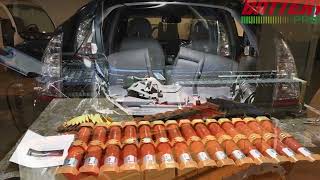
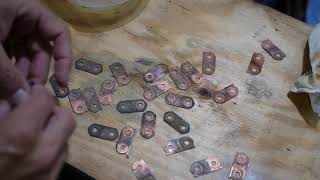
- Corroded battery bus bars (Common) — Metal plates called bus bars connect the battery modules. These corrode over time, creating high electrical resistance that causes the computer to read false low voltages, triggering a weak block code.
- Cell imbalance from prolonged inactivity (Common) — If a hybrid sits unused for months, individual cells self-discharge at different rates. This creates a severe voltage imbalance across the pack that triggers the P3025 code upon startup.
- Improperly torqued module connections (Common) — If the battery was previously serviced, nuts on the module terminals may not be torqued to the strict manufacturer specification (usually 48 in-lbs). Loose connections create high resistance mimicking a dead module.
- Faulty Battery Management System (BMS) ECU (Less Common) — The computer monitoring the battery pack's health fails or suffers from moisture corrosion on its connector pins, incorrectly reporting a Block 15 failure when the cells are healthy.
- Clogged battery cooling system (Rare) — The HV battery relies on a dedicated cooling fan. If the intake vent clogs with dust or pet hair, the battery overheats, causing cells to degrade and fail prematurely.
Symptoms
- Check Hybrid System warning light — The main dashboard warning light, typically a red triangle or a 'Check Hybrid System' message, illuminates immediately.
- Severe drop in fuel economy — The vehicle relies heavily on the gas engine because the battery cannot provide power, causing fuel economy to plummet by 10-15 MPG.
- Sluggish acceleration and high engine revs — The car feels exceptionally slow when accelerating or climbing hills. The gas engine revs unusually high to compensate for the missing electric torque.
- Erratic battery gauge fluctuations — The dashboard battery charge indicator jumps wildly from full to empty in minutes, proving the pack cannot hold a steady charge.
- Vehicle refuses to enter 'READY' mode — In severe cases, the car powers on but the 'READY' light fails to illuminate, completely preventing you from driving.
Diagnostic Flowchart
Tap your situation to follow the diagnostic path that matches what you're seeing on this code.
Common Fixes & Costs
- Install a Reconditioned Hybrid Battery Pack
— Parts: $1,500-$2,500, Labor: $300-$800, ~3.5 hr book time
(Intermediate)
Toyota Prius (Gen 2, 2004-2009): OEM N/A (Alt: Dorman 587-001, Cardone 5H-4002)
Toyota Prius (Gen 3, 2010-2015): OEM N/A (Alt: Dorman 587-007, Cardone 5H-4003) - Install a New OEM Hybrid Battery Pack
— Parts: $2,000-$3,500, Labor: $400-$1,000, ~3.5 hr book time
(Intermediate)
Toyota Prius (Gen 2, 2004-2009): OEM G9510-47031, G9280-47110 (Alt: N/A)
Toyota Prius (Gen 3, 2010-2015): OEM G9510-76012, G9280-47010 (Alt: N/A) - Replace Individual Bad Modules in Block 15
— Parts: $40-$100 per module, Labor: $600-$1,200, ~5 hr book time
(Professional)
Most Toyota/Lexus Hybrids: OEM Not sold individually by Toyota. (Alt: Specify 7.2V, 6.5Ah NiMH Prismatic Module.) - Clean and Replace Corroded Bus Bars
— Parts: $50-$150, Labor: $500-$1,000, ~4.5 hr book time
(Professional)
Most Toyota/Lexus Hybrids: OEM Nuts: 90179-08246 (Alt: Nickel-plated bus bar kits available online.) - Perform a Professional Battery Balancing Service — Parts: $50-$150, Labor: $300-$600, ~3 hr book time (Professional)
Used vs. New Parts: Buying Guide
When a used part is worth it: A reconditioned or refurbished battery makes sense for older, high-mileage vehicles where the cost of a new OEM battery is a significant portion of the car's value. It is also a good budget-friendly option if you plan to sell the car in the next few years.
Donor-vehicle mileage cap: roughly under 100000 miles for the part to have meaningful remaining life.
Donor quality checklist:
- Verify the reconditioning process includes load testing and balancing of all modules, not just replacing the failed ones.
- Check for a comprehensive warranty (1-2 years is standard for quality reconditioned packs).
- Avoid packs built from modules of unknown origin or history; look for reputable builders who test and grade their cells.
Decision logic:
- If Vehicle is newer or has low mileage and you plan to keep it long-term → Buy a new OEM or high-quality new aftermarket battery for maximum lifespan and reliability.
- If Vehicle is over 10 years old or has >150K miles and budget is the primary concern → A quality reconditioned battery is a practical choice, offering 3-5 years of expected life.
- If You need the car back on the road immediately and OEM parts have a long lead time → Reconditioned batteries are often more readily available.
Warranty tradeoff: Used/Reconditioned parts typically offer a 12-36 month warranty. New aftermarket batteries offer 3-5 year warranties. New OEM batteries installed by a dealer come with a 12-month/unlimited mileage warranty, but the battery itself is expected to last 10+ years.
Worst-case if a used part fails: 500-1500 if a reconditioned pack fails outside of warranty, requiring repeat labor costs plus the cost of another battery.
What Happens If You Wait — Timeline
- 0-1 month: Check Hybrid System light appears. Car drives normally, but the gas engine runs more often. The battery cooling fan runs at high speed constantly. (MPG impact: 5-15%% · Added cost: $25-75 in wasted fuel)
- 1-3 months: Noticeable loss of power and sluggish acceleration. The battery gauge on the dash fluctuates wildly. The car struggles to accelerate up hills or merge onto highways. (MPG impact: 15-30%% · Added cost: $75-200 in wasted fuel)
- 3-6 months: The inefficient engine operation starts damaging other parts. Unburnt fuel enters the exhaust, overheating and beginning to melt the inside of the catalytic converter. The car stalls unexpectedly. (MPG impact: 30-50%% · Added cost: $1500-2500 for a now-necessary catalytic converter replacement, on top of the battery repair.)
- 6+ months: Catastrophic failure. The vehicle refuses to enter 'READY' mode, leaving you stranded. The catalytic converter is likely destroyed. The extreme voltage instability damages the expensive hybrid inverter. (MPG impact: 100% (car is undrivable)% · Added cost: $3000-6000+ for a battery, catalytic converter, and possible inverter repair.)
Cost of Not Fixing It
- 0-1 month: Significant drop in fuel economy (5-15 MPG). Sluggish performance and potential for stalling, leaving you stranded. (Added cost: 50-150)
- 1-6 months: Increased strain on the gasoline engine and transmission. The constant, inefficient running forces unburnt fuel into the exhaust, overheating and destroying the catalytic converter. (Added cost: 1500-2500)
- 6+ months: Complete failure of the high-voltage battery pack, preventing the vehicle from starting or entering 'READY' mode. Extreme voltage instability damages the expensive hybrid inverter. (Added cost: 3000-6000)
Diagnosis Steps
- Read Trouble Codes
Use a hybrid-capable OBD-II scanner to confirm P3025. Note any accompanying codes like P0A80 (Replace Hybrid Battery) or P0AFA (Low System Voltage).
Tools: OBD-II Scanner with hybrid capabilities (e.g., Dr. Prius app, Techstream) (Beginner) - Test the 12V Auxiliary Battery
A failing 12V battery causes widespread electronic communication errors, frequently triggering false HV battery codes. Load test it to ensure it maintains at least 11.5 volts under load.
Tools: Multimeter, professional battery load tester (Beginner) - Analyze Live Block Voltages
View the live data for all battery blocks. A healthy pack shows a maximum voltage difference of less than 0.2V between any two blocks. A difference greater than 0.3V under load confirms Block 15 has failed.
Tools: Advanced OBD-II Scanner with hybrid live data (Intermediate) - Inspect the Battery Cooling Fan and Vent
Locate the HV battery cooling intake (usually near the rear seat). Check for blockages from dust or pet hair. Listen to ensure the fan operates smoothly.
Tools: Flashlight (Beginner) - Analyze Freeze Frame Data
Review the 'Freeze Frame' data stored when P3025 triggered. This snapshot shows the exact voltage of all blocks at the moment of failure, providing definitive proof without needing to recreate the fault.
Tools: Advanced OBD-II Scanner (Intermediate) - Check Module Internal Resistance (Professional)
Measure the internal resistance of each block via live data. A healthy pack has consistent readings (within 2-3 mΩ). Block 15 shows significantly higher resistance (5-10+ mΩ above average) if it is failing.
Tools: Advanced OBD-II Scanner with resistance PID (Advanced) - Inspect the Hybrid Battery ECU Connector (Professional)
Access the battery ECU and visually inspect its harness connector for green or white corrosion caused by moisture, which causes false voltage readings.
Tools: Basic hand tools, high-voltage safety gear (Advanced) - Perform a Physical Battery Inspection (Professional)
WARNING: Fatal electric shock risk. Remove the battery pack and inspect the modules and bus bars for severe corrosion, electrolyte leaks, or physical swelling.
Tools: Class 0 (1000V) high-voltage safety gloves, insulated tools, multimeter (Professional) - Load Test Individual Modules (Professional)
Disassemble the pack and test each module in Block 15 with a specialized load tester. Modules that drop voltage significantly faster than others under a controlled load are definitively faulty.
Tools: Class 0 high-voltage safety gloves, insulated tools, battery load tester (Professional)
Related Codes
- P3000 — This is a general 'HV Battery Malfunction' code. It almost always appears alongside a more specific code like P3025. Think of P3000 as the main alarm bell, while P3025 tells you exactly which 'room' the fire is in. You cannot diagnose the battery problem with P3000 alone.
- P0A80 — 'Replace Hybrid Battery Pack.' This code is triggered when the Battery ECU determines the entire pack is failing. P3025 indicates a localized problem (Block 15 is weak), while P0A80 indicates a global problem where the voltage difference between the highest and lowest blocks has exceeded the maximum allowable limit (typically >0.3V).
- P3011 - P3029 — These codes are identical to P3025 but point to different battery blocks (e.g., P3016 is 'Battery Block 6 Becomes Weak'). It is common to fix one block (like P3025) only to have another code (e.g., P3022) appear weeks later because all modules are the same age and fail at a similar rate.
- P0AFA — 'Hybrid Battery System Voltage Low.' This code frequently appears with P30xx codes and points to an issue with the 12V auxiliary battery being weak or failing, which causes communication errors within the high-voltage system.
Climate & Environmental Factors
- High Heat: Heat is the primary enemy of NiMH hybrid batteries. Sustained high temperatures, such as in southern US states, accelerate the chemical degradation inside the battery cells, leading to a shorter overall lifespan and earlier failure. Parking in direct sunlight frequently exacerbates this issue.
- Cold Weather: Extreme cold temporarily reduces the battery's available capacity and efficiency. This results in lower fuel economy in the winter as the engine must run more to charge the battery. However, unlike heat, cold does not typically cause permanent, accelerated degradation.
- High Humidity: High humidity increases the rate of corrosion on the copper bus bars and terminal nuts that connect the battery modules. This is because the battery is air-cooled using air from the vehicle's cabin, which is often moisture-laden.
- High Altitude: At high altitudes, the air is less dense, which reduces the efficiency of the air-cooled battery cooling system. This causes higher average battery temperatures during operation, contributing to faster degradation over time.
How to Talk to a Mechanic About This Code
Say this: "I have a P3025 code on my vehicle and I'd like to schedule a diagnostic for the high-voltage battery. I want to understand the health of the entire pack, so could you please provide a printout of the live data showing all the battery block voltages and their internal resistance readings?"
This signals you are an informed consumer who understands that P3025 requires a deeper diagnosis than just reading the code. It directs the shop to perform the specific tests needed to prove the battery's condition and prevents them from suggesting a single-module swap, which is an unreliable fix.
Avoid saying:
- 'My hybrid light is on, can you check it?'
- 'Just fix whatever is wrong with the battery.'
- 'I think I just need one battery cell replaced.'
Questions to ask before authorizing the repair:
- What is the voltage difference between the highest and lowest battery blocks?
- Can you show me the internal resistance readings for each block?
- Are you recommending a new OEM, a new aftermarket, or a reconditioned battery pack, and what is the warranty for each in years and miles?
- Does the repair estimate include cleaning the battery bus bars and inspecting the battery cooling fan?
- If I choose a reconditioned pack, can you describe your testing and balancing process?
Where to Take It: Dealer vs Independent vs Chain
- Dealer:
Recommended only if the vehicle is under warranty. Otherwise, an independent specialist is more cost-effective.
Best for: Vehicles still under the hybrid system warranty (typically 8yr/100k or 10yr/150k miles)., Owners who prioritize a new OEM part and are less sensitive to cost.
Downsides: Highest labor rates and part costs, often 30-50% more than an independent shop., Will almost exclusively recommend a full, new OEM battery pack replacement, which is rarely the most economical choice for an older vehicle. (Typical cost: +50% vs. baseline) - Independent Shop:
Best fit for most out-of-warranty vehicles. Seek a well-reviewed shop that specializes in hybrid repair to get the best value and expertise.
Best for: Out-of-warranty vehicles where cost is a major factor., Owners who want more repair options, like high-quality reconditioned or new aftermarket batteries., Getting a more experienced diagnosis, as these shops work on hybrid batteries daily.
Downsides: Quality varies greatly; you must find a true *hybrid specialist*, not a general mechanic., Requires vetting via reviews and asking about their experience with your specific model. (Typical cost: +0% vs. baseline) - Chain Shop:
AVOID. Chain shops are not equipped to diagnose or repair high-voltage hybrid battery systems. Do not take your vehicle here for a P3025 code.
Best for: Simple maintenance like oil changes, tires, and 12V battery replacement.
Downsides: Technicians generally lack the specific training and safety equipment required for high-voltage battery work., They cannot perform the necessary diagnostics (like reading block voltages) and are likely to either misdiagnose the issue or refer you elsewhere. (Typical cost: -10% vs. baseline)
When to Walk Away From the Repair
Sell or trade the vehicle as-is if the total battery repair estimate exceeds 50% of its current private-party market value.
- Car worth $5000, fix is $2500: Borderline. This is a 50% ratio. If the rest of the car is in excellent condition, fixing it is worthwhile. Get a firm quote for a reconditioned battery to lower the cost.
- Car worth $10000, fix is $3000: Fix it. The repair is 30% of the car's value, which is well within a reasonable limit for a critical component.
- Car worth $3000, fix is $2200: Walk away. The repair cost is over 70% of the car's value. It is not an economically sound repair.
What Scan Tool You Need for This Code
Minimum: A tool that can read manufacturer-specific live data for the hybrid system, specifically the individual battery block voltages.
A basic $20 code reader will only give you the P3025 code. It CANNOT see the individual block voltages, which is the only way to confirm the diagnosis. You will be guessing without this data. Some popular scanners like BlueDriver have limited or no support for hybrid battery block data.
Budget: Dr. Prius/Dr. Hybrid App + Recommended OBD-II Adapter (e.g., Veepeak OBDCheck BLE) (~$50) — This combination is specifically designed to diagnose hybrid batteries. It displays all block voltages, internal resistance, and temperatures, providing everything needed for a definitive DIY diagnosis.
Mid-range: TopDon ArtiDiag800BT or Foxwell NT510 Elite (~$150) — These scanners offer deeper access to most vehicle modules, including the hybrid ECU. They reliably read and graph live battery block voltages and access freeze frame data, providing robust diagnostic capabilities.
Professional: Autel MaxiCOM MK808 / MK808BT (~$500) — Provides full, OE-level diagnostics for all systems. It easily reads live data streams for all hybrid components, performs system tests, and accesses detailed trouble code information, making it a powerful tool for any serious DIYer or independent shop.
Rent vs buy: Rent only if you can confirm the rental tool is a professional model (like an Autel or Launch) that can read hybrid-specific live data. Basic parts-store loaner tools are not sufficient. Given the low cost and specific function of the Dr. Prius app and a compatible adapter, buying is the recommended path for this code.
How to Clear the Code After You Fix It
- Reconnect the 12V battery if it was disconnected.
- Use an OBD-II scan tool to clear all Diagnostic Trouble Codes (DTCs).
- Perform the Toyota-specific drive cycle to run the onboard readiness monitors.
Drive cycle (~30 minutes): After clearing codes, let the vehicle sit for 8+ hours for a true cold start. Start the engine and let it idle for 10 minutes. Then, drive for 15-20 minutes with mixed city/highway speeds, including a period of steady driving between 40-70 mph for at least 10 minutes. Avoid aggressive acceleration. Let the vehicle cool down completely. The readiness monitors should now be set.
Readiness monitors affected: Catalyst Monitor, EVAP System Monitor, Oxygen Sensor Monitor
Before emissions retest: drive at least 100 miles to fully set monitors.
Watch out for:
- Simply disconnecting the 12V battery clears the code, but it also resets all readiness monitors to 'Incomplete', causing an automatic emissions test failure.
- The code returns within a few drive cycles if the underlying weak battery block is not repaired or replaced.
- Failing to perform the complete drive cycle leaves monitors 'Incomplete', preventing you from passing a state inspection.
Will This Fail Emissions / State Inspection?
Yes — this code typically fails an OBD-II emissions inspection.
- California: An active Check Engine Light from code P3025 is an automatic failure. All readiness monitors must be 'Complete' to pass. After repair, a specific drive cycle must be performed.
- New York: The NYS DMV inspection includes an OBD-II scan. Any emissions-related trouble code, including P3025, results in an immediate inspection failure.
- Texas: In counties requiring emissions testing, an illuminated Check Engine Light is an automatic failure. Clearing the code right before the test is not a solution, as the 'Not Ready' status of the readiness monitors also causes a failure.
Most Commonly Affected Vehicles
- Toyota Prius (Gen 2) (2004-2009) — Extremely common as these vehicles age. Be aware of other common issues like inverter coolant pump failure (subject to a recall) and inaccurate fuel gauge readings.
- Toyota Prius (Gen 3) (2010-2015) — Now in the prime age for battery failure. These models are also known for EGR (Exhaust Gas Recirculation) system clogs that lead to head gasket failure if not cleaned periodically.
- Toyota Camry Hybrid (2007-2011) — Shares similar hybrid technology with the Prius and experiences battery block failures at a similar rate. Owners report battery lifespan is often around 10 years or 150,000-200,000 miles.
- Lexus CT200h (2011-2017) — As the luxury version of the Prius, it uses the same core powertrain. Like the Gen 3 Prius, the EGR system should be cleaned every 100k miles to prevent engine issues.
- Lexus RX450h (2010-2015) — These models are also known to set P30xx codes as their high-voltage batteries age. Repair costs are generally higher than their Toyota counterparts.
- Nissan Altima Hybrid (2007-2011) — The Nissan Altima Hybrid used a hybrid system licensed from Toyota, and therefore suffers from the same P30xx battery block failure codes as its Toyota counterparts.
- Chevrolet Tahoe Hybrid (2008-2013) — While less common, the two-mode hybrid system in the Tahoe and other GM SUVs experiences battery degradation that triggers codes indicating a weak battery section, although the code is rarely P3025 specifically.
- Hyundai Sonata Hybrid (2011-2015) — Early Sonata Hybrids are now reaching an age where battery degradation is a concern. While Hyundai uses different specific codes, the underlying issue of a weak block within the battery pack is a known problem.
Manufacturer-Specific Notes
- Toyota/Lexus: This code is almost exclusively used by Toyota and Lexus for this specific meaning. The 'whack-a-mole' effect is very common: a DIYer replaces the modules for Block 15, and a month later gets a P3022 code because another block has failed. This is why most shops recommend replacing the entire pack.
- Ford: Ford doesn't use the P3025 code for battery issues. Their older hybrids like the Escape Hybrid experience identical failures but use different codes (like P0A1F or P0A7F) to report similar battery degradation problems.
- Nissan: On some Nissan models, P3025 has a completely different meaning. For example, on certain vehicles, it indicates 'Lost Communication With Steering Angle Sensor Module', which is unrelated to the hybrid battery.
- BMW: Like Nissan, BMW uses the P3025 code for an entirely different system. On many BMWs, P3025 translates to 'Heated oxygen sensor 1, bank 2 - initialization error', a fault in the emissions control system. It has no connection to the hybrid battery.
Real Owner Stories
2007 Camry Hybrid at 135K miles - The 'Whack-a-Mole' Experience
Owner initially got a P3022 code (Block 12 weak). They identified a single bad module in that block, replaced it, and the car ran fine for one day.
What they tried:
- Replaced one bad module in Block 12 for the original P3022 code.
Outcome: The car threw a new code, P3025 (Block 15 weak), just 30 miles later. This is a classic example of the 'whack-a-mole' problem, where fixing one aged module only highlights the next weakest one in the pack.
Lesson: Replacing single modules on an old battery pack is often a temporary fix. The other modules are just as old and likely to fail soon, leading to repeated repairs. A full pack replacement or reconditioning is a more reliable long-term solution.
2005 Prius at 115K miles - Misdiagnosed by General Mechanic
Red triangle light appeared. A general repair shop scanned the codes and found P0A80 (Replace Hybrid Battery) but told the owner they weren't equipped to service the problem.
What they tried:
- Took car to a general mechanic who could read the main code but offered no solution.
- Went to a Toyota dealership for a full diagnosis.
Outcome: The Toyota dealership confirmed P0A80 and also found the specific P3000 code, identifying a bad module in Block 11. They quoted $3,800 for a new battery. The owner was a victim of a seller who likely just cleared the codes before selling the car.
Lesson: A general 'Replace Battery' code (P0A80) isn't enough. A hybrid-specific diagnosis is needed to pinpoint the problem. Be wary of used hybrids where the warning lights suddenly appear shortly after purchase; the codes may have been recently cleared.
DIY Module Replacement Failure on a Gen 3 Prius
Owner got P0A80 at 131k miles. Using a voltmeter, they found one module with low voltage (6.61V) and decided to replace only that single module.
What they tried:
- Swapped one module with a new one reading 7.93V.
- Did not perform any charge balancing on the pack.
Outcome: The car drove fine for a day, then the hybrid fan went to full speed and the car became sluggish. A new code, P3024 (abnormally high resistance in block 14), appeared. The DIY repair failed because mixing a new, fully charged module with older, weaker ones without balancing the entire pack created a new imbalance that the computer immediately detected.
Lesson: DIY module replacement is not as simple as swapping parts. Without proper load testing and charge balancing of ALL modules together, the repair will almost certainly fail and may even trigger new codes.
2007 Prius at 100K miles - Code Appears After Sitting for Months
A Prius sat unused for nine months. The 12V battery was dead and replaced. After an oil change and a short drive, the red triangle of death and hybrid battery codes appeared.
What they tried:
- Replaced the dead 12V battery.
- Cleared the hybrid codes with an OBD scanner, but they kept returning.
Outcome: The high-voltage battery pack developed an internal imbalance from sitting for a prolonged period. Individual cells self-discharged at different rates, and when the car was started again, the system detected this imbalance as a fault.
Lesson: Letting a hybrid vehicle sit for many months is a known cause of battery cell imbalance. If you must store the vehicle, it's critical to follow manufacturer procedures, which often involve running the car in 'READY' mode for 30 minutes every few months to keep the HV battery healthy.
How to Prevent This Code From Triggering
- Clean the hybrid battery cooling fan and vent (Inspect every 20,000 miles; clean as needed. More often if you have pets or live in a dusty area.) — The battery is air-cooled by a fan that pulls cabin air. If the fan or its intake vent (near the rear seat) gets clogged with pet hair, dust, or debris, the battery overheats, drastically shortening its life.
- Drive the car regularly (At least once every few weeks for 30+ minutes.) — Letting a hybrid sit for months causes the battery modules to self-discharge at different rates, leading to an imbalance that triggers fault codes. Regular driving keeps the pack balanced and healthy.
- Avoid extreme heat when possible (Daily habit) — Heat is the primary killer of hybrid batteries. Parking in a garage or in the shade instead of direct sunlight lowers the battery's resting temperature, slowing chemical degradation.
- Practice smooth driving (Every drive) — Gentle acceleration and coasting to stops (regenerative braking) puts less strain on the battery. Hard acceleration and braking force rapid, high-current charging and discharging, which generates more heat and stress on the cells.
- Maintain the 12V auxiliary battery (Test annually after 3 years of age.) — The 12V battery powers the computers that control the high-voltage system. A weak 12V battery causes a cascade of confusing electronic errors, including false hybrid system warnings.
Frequently Asked Questions
Can I just replace the one bad module in Block 15?
Yes, but it is usually a temporary fix. The other modules are the exact same age and will likely fail soon, triggering a new code for a different block. Technicians refer to this frustrating cycle as 'whack-a-mole'.
Can a bad 12V battery cause code P3025?
Yes, indirectly. A weak 12V auxiliary battery causes widespread electronic communication errors, triggering false codes for the high-voltage system. Always load-test the 12V battery first during any hybrid diagnosis.
What is hybrid battery balancing and is it worth it?
Balancing is a process where all individual modules are charged and discharged together to equalize their voltage. It is absolutely essential after replacing individual cells. Mixing new, strong cells with older, weak ones without balancing causes the computer to immediately trigger a new fault code.
Will driving with P3025 damage my catalytic converter?
Yes, it frequently does. A weak hybrid battery forces the gas engine to run constantly and inefficiently, dumping unburned fuel into the exhaust. This overheats and destroys the catalytic converter, adding $1,500+ to your repair bill.
What is the difference between a reconditioned and a new battery pack?
A new OEM pack contains brand-new modules, lasts 10+ years, and costs $2,500-$4,000. A reconditioned pack uses tested, balanced used modules, lasts 3-5 years, and costs $1,500-$3,000, making it ideal for older vehicles.
Will clearing the code fix the problem?
No. The code will disappear temporarily, but the computer will detect the weak battery block again within a few miles of driving, and the warning lights will return.
My mechanic replaced the bad cells, but the code came back. Why?
This happens when the mechanic fails to balance the entire battery pack after swapping cells. Mixing older, weaker modules with newer, stronger ones creates a voltage imbalance. The computer detects this imbalance immediately and triggers a new fault code.
Key Takeaways
- Code P3025 indicates Block 15 of your high-voltage battery has failed, a standard wear issue for hybrids over 10 years old or 100,000 miles.
- Expect an immediate 5-15 MPG drop, sluggish acceleration, and a red 'Check Hybrid System' dashboard warning.
- Limit driving to a direct trip to a repair shop; continuing to drive forces the gas engine to overwork and destroys the $1,500+ catalytic converter.
- Test the 12V auxiliary battery before replacing high-voltage parts, as a voltage drop below 11.5V triggers false hybrid system failure codes.
- Replace the entire battery pack with a reconditioned ($1,500-$3,000) or new OEM ($2,500-$4,000) unit rather than swapping single modules to prevent repeat failures.
Helpful Videos

The information in this article is provided for general reference and educational purposes only. Vehicle specifications, procedures, and part compatibility can vary by production date, trim level, and region. Always consult your vehicle's factory service manual and verify part numbers before purchasing or performing repairs. Safety-critical components such as airbags, seat belts, and braking systems should be installed by a qualified professional.
- 🎬 Helpful Videos
- What Does P3025 Mean?
- Can I Drive With P3025?
- Common Causes
- Symptoms
- Diagnostic Flowchart
- Common Fixes & Costs
- Used vs. New Parts: Buying Guide
- What Happens If You Wait — Timeline
- Cost of Not Fixing It
- Diagnosis Steps
- Related Codes
- Climate & Environmental Factors
- How to Talk to a Mechanic About This Code
- Where to Take It: Dealer vs Independent vs Chain
- When to Walk Away From the Repair
- What Scan Tool You Need for This Code
- How to Clear the Code After You Fix It
- Will This Fail Emissions / State Inspection?
- Most Commonly Affected Vehicles
- Manufacturer-Specific Notes
- Real Owner Stories
- 2007 Camry Hybrid at 135K miles - The 'Whack-a-Mole' Experience
- 2005 Prius at 115K miles - Misdiagnosed by General Mechanic
- DIY Module Replacement Failure on a Gen 3 Prius
- 2007 Prius at 100K miles - Code Appears After Sitting for Months
- How to Prevent This Code From Triggering
- Frequently Asked Questions
- Can I just replace the one bad module in Block 15?
- Can a bad 12V battery cause code P3025?
- What is hybrid battery balancing and is it worth it?
- Will driving with P3025 damage my catalytic converter?
- What is the difference between a reconditioned and a new battery pack?
- Will clearing the code fix the problem?
- My mechanic replaced the bad cells, but the code came back. Why?
- Key Takeaways
- 🎟️ Get 5% Off