

OBD-II Code P3020: Hybrid Battery Block Weak
What P3020 means, why it triggers, and how to fix it
- P3020 indicates a failure in Block 10 of the high-voltage hybrid battery, most commonly affecting 2004-2015 Toyota Prius and Camry Hybrid models.
- Clean the hybrid battery cooling fan intake vent near the rear seat before assuming the battery is dead, as overheating is a primary trigger for this code.
- Use an OBD-II scanner and the Dr. Prius app to monitor live data; a voltage drop of more than 0.3V in Block 10 under load confirms a failing module.
- Expect to pay between $1,500 and $2,600 for a remanufactured battery pack replacement if Block 10 is permanently damaged.
What Does P3020 Mean?

P3020 indicates the vehicle's Battery Management System detected a voltage drop in 'Block 10' of the high-voltage hybrid battery. This imbalance severely reduces power, fuel efficiency, and reliability.
Technical definition: The Battery ECU continuously monitors the voltage of individual battery blocks (pairs of modules). It sets P3020 when the voltage difference between Block 10 and the other blocks exceeds 0.3V during charging or discharging cycles.
Can I Drive With P3020?
No — Do Not Drive. Driving is not recommended. The vehicle enters a low-power 'limp mode,' gets poor fuel economy, and shuts down unexpectedly. Continued driving forces the gasoline engine to run excessively, overheating the catalytic converter and adding $2,000-$2,800 to your total repair bill.
Common Causes

- One or more failing battery modules in Block 10 (Very Common) — The high-voltage battery consists of individual modules that degrade over time. P3020 triggers when Block 10 modules lose their ability to hold a charge. Visible electrolyte leakage (a white or grey crust) confirms internal module failure.
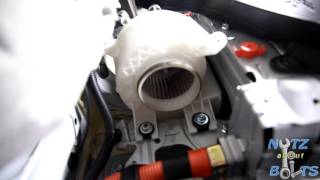
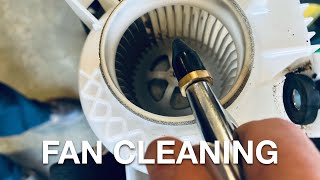
- Clogged or failing HV battery cooling fan (Common) — The battery generates significant heat. If the cooling fan or its intake vent (near the back seat) clogs with dust or pet hair, the battery overheats. 🎬 See how to clean your hybrid battery cooling fan. Overheating dramatically accelerates degradation and triggers this code.
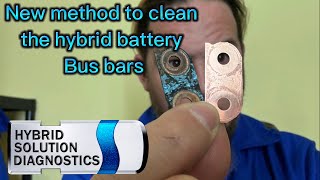
- Corroded hybrid battery bus bars or sense wires (Common) — Copper bus bars connect the battery modules, and sense wires report voltage to the ECU. Corrosion (a greenish-blue or white crust) creates high electrical resistance, tricking the computer into reading a low voltage 🎬 Watch: How to clean corroded battery bus bars. for Block 10 even if the modules are healthy.
- Loose connections at Block 10 (Less Common) — In Toyota/Lexus models, Block 10 is where the main service plug connects to the battery pack. A loose bus bar nut or an improperly seated service plug from recent maintenance creates a high-resistance connection.
- Faulty or outdated Battery ECU (Rare) — The computer monitoring the hybrid battery fails or runs outdated software, misinterpreting sensor data. Check for Technical Service Bulletins (TSBs) requiring a software update before replacing the ECU.
Symptoms

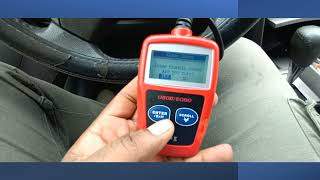
- Check Engine Light and Master Warning Light — The Check Engine light illuminates alongside the red triangle master warning light and a 'Check Hybrid System' message on the dashboard. 🎬 Watch: Diagnosing the Red Triangle and P3020 error codes.
- Gasoline engine runs constantly — The gas engine kicks on frequently and runs continuously, even at low speeds or when stopped, to charge the weak battery.
- Battery charge level fluctuates rapidly — The dashboard battery gauge swings from full to empty (or green to purple) very quickly, indicating the battery cannot hold a stable charge.
- Sluggish acceleration — The electric motor fails to provide full assistance, making the car slow and underpowered when merging or climbing hills.
- Decreased fuel economy — Average fuel efficiency drops by 10 to 20 MPG as the vehicle relies entirely on the gasoline engine.
- Rotten egg smell from the rear seat — A sulfur smell indicates a battery module is overheating and venting toxic gas. This requires immediate attention.
Diagnostic Flowchart

Tap your situation to follow the diagnostic path that matches what you're seeing on this code.
Common Fixes & Costs
- Clean the HV battery cooling fan and ducts — Parts: $0, Labor: $150-$300, ~2.0 hr book time (Intermediate)
- Clean or replace corroded battery bus bars and nuts — Parts: $30-$80, Labor: $300-$600, ~4.0 hr book time (Professional)
- Replace the entire hybrid battery pack (Remanufactured) — Parts: $1,200-$2,000, Labor: $300-$600, ~3.0 hr book time (Professional)
- Replace the entire hybrid battery pack (New OEM) — Parts: $2,000-$3,500, Labor: $400-$800, ~3.0 hr book time (Professional)
- Replace one or two failing battery modules and rebalance pack — Parts: $40-$100, Labor: $600-$1,200, ~6.0 hr book time (Professional)
DIY vs Professional
- Clean the HV battery cooling fan and ducts — Beginner: Yes
Tools: Socket set, trim removal tools, vacuum cleaner, compressed air. - Clean or replace corroded battery bus bars and nuts — Beginner: No
Tools: Class 0 high-voltage safety gloves, insulated tools, torque wrench (in-lbs), socket set, multimeter, wire brush. - Replace one or two failing battery modules — Beginner: No
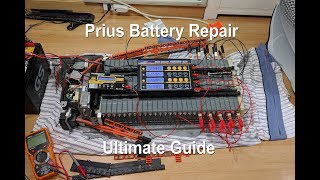
Tools: Full high-voltage safety gear, insulated tools, torque wrench, advanced scanner, hobby charger/balancer. - Replace the entire hybrid battery pack — Beginner: No
Tools: High-voltage safety gear, insulated tools, socket set, torque wrench, floor jack, helper.
Used vs. New Parts: Buying Guide
When a used part is worth it: A remanufactured hybrid battery is a budget-friendly choice for an older, high-mileage vehicle where a new battery exceeds 40% of the car's value, or if you plan to sell the car within 2 years.
Donor-vehicle mileage cap: roughly under 80000 miles for the part to have meaningful remaining life.
Donor quality checklist:
- Verify the part comes from a reputable rebuilder who individually tests, replaces, and balances the modules.
- Ask for a recent health report (e.g., from a Dr. Prius test).
- Favor batteries sourced from newer, low-mileage wrecked vehicles over those reconditioned from old, high-mileage cores.
Decision logic:
- If You plan to keep the car for 3+ years → Buy a new OEM or high-quality new aftermarket battery for maximum longevity and peace of mind.
- If The vehicle has over 150,000 miles and your budget is tight → A remanufactured battery is an acceptable risk, but expect a lifespan of 1-3 years.
- If The vehicle is a low-mileage car you want to keep reliable → Invest in a new battery; the extra cost is justified for long-term reliability.
Warranty tradeoff: Remanufactured batteries typically offer a limited warranty of 12-24 months. New aftermarket batteries come with 3-5 year warranties, while a new OEM battery installed by a dealer provides the best coverage.
Worst-case if a used part fails: $1,500-$3,000 if the remanufactured part fails outside of its warranty period, requiring a replacement part and repeat installation labor.
What Happens If You Wait — Timeline
- 0-1 month: Warning lights are on. The gasoline engine runs more often, and the HV battery fan runs constantly. (MPG impact: 10-25% decrease (e.g., 48 MPG drops to 36-43 MPG).% · Added cost: $50-$150 in wasted fuel.)
- 1-3 months: The car enters 'limp mode' with sluggish acceleration. The battery state-of-charge gauge fluctuates wildly from full to empty. (MPG impact: 25-40% decrease (e.g., 48 MPG drops to 29-36 MPG).% · Added cost: $150-$400 in wasted fuel. Risk of secondary damage begins.)
- 3-6 months: The gasoline engine runs non-stop, putting extreme stress on the catalytic converter. The risk of being stranded increases. (MPG impact: 40-60% decrease (e.g., 48 MPG drops to below 25 MPG).% · Added cost: $2,000-$2,800 to replace the damaged catalytic converter.)
- 6+ months: Catastrophic failure. A severely neglected weak cell overheats, ruptures, and vents toxic smoke into the cabin. The car will not start. (MPG impact: N/A (Vehicle is undrivable).% · Added cost: $4,000-$6,000 for a full battery replacement, new catalytic converter, and towing.)
Cost of Not Fixing It
- 0-1 Month: Noticeable drop in fuel economy (10-20 MPG) and sluggish acceleration. The gasoline engine runs constantly. (Added cost: $50-$150 in wasted fuel.)
- 1-6 Months: Excessive gasoline engine operation overheats and destroys the catalytic converter. The car enters 'limp mode' with severely limited power. (Added cost: $2,000-$2,800 for catalytic converter replacement.)
- 6+ Months: The battery pack fails completely, causing a no-start condition. A failing module overheats, ruptures, and fills the cabin with toxic smoke. (Added cost: $4,000-$6,000 for a full battery replacement, new catalytic converter, and towing fees.)
Diagnosis Steps
- Read the Trouble Codes
Use an OBD-II scanner capable of reading manufacturer-specific codes to confirm P3020. Check for accompanying codes like P0A80 (Replace Hybrid Battery Pack) or P3000 (Battery Control System Malfunction).
Tools: Advanced OBD-II Scanner or Bluetooth Adapter with Dr. Prius App (Beginner) - Analyze Live Battery Data
View live data from the hybrid battery using the Dr. Prius app. Watch the voltages of all 14 battery blocks. Under load (accelerating), a voltage difference greater than 0.3V between Block 10 and the highest block confirms a failure.
Tools: Advanced OBD-II Scanner or Bluetooth Adapter with Dr. Prius App (Beginner) - Inspect and Clean the Battery Cooling Fan
Locate the HV battery cooling fan air intake vent (usually on the side of the rear passenger seat). Remove any blockages. If the intake is dirty, remove the interior trim panels to access and clean the fan motor and blades with compressed air.
Tools: Flashlight, socket set, trim removal tools, vacuum cleaner, compressed air (Intermediate) - Visually Inspect the Hybrid Battery and Service Plug
Disconnect the 12V battery and remove the high-voltage service plug. Wait 10 minutes for capacitors to discharge. Remove the battery cover and inspect the bus bars for greenish-blue corrosion. Verify the service plug connections at Block 10 are tight.
Tools: Class 0 high-voltage safety gloves, insulated tools, socket set (Advanced) - Measure Bus Bar and Connection Resistance
With the battery safely disconnected, measure the resistance across each bus bar connecting the modules within Block 10. A clean connection reads less than 1 milliohm. Readings higher than 5 milliohms indicate corrosion requiring cleaning.
Tools: Milliohm meter, insulated tools, torque wrench (in-lbs) (Advanced) - Perform a Module Load Test
Charge a module to 8.0V, then apply a consistent load (two 12V 55W headlight bulbs) for 2 minutes. A healthy module's voltage drops less than 0.2V. A weak module drops 0.5V or more.
Tools: Hobby charger/discharger, 12V headlight bulbs, multimeter, stopwatch (Professional) - Check Battery Temperature Sensor Correlation
Monitor live data for all battery temperature sensors. Readings must be within 4-5°F of each other. A sensor showing an illogical temperature (like -40°F) is faulty and forces improper fan operation.
Tools: Advanced OBD-II Scanner, Multimeter (Advanced)
When This Code Triggers (Freeze-Frame Conditions)
- Engine Coolant Temp: 180-200°F (82-93°C) (Sets when the engine is fully warmed up during normal operation.)
- Engine RPM: 1500-2500 RPM (Triggers under moderate engine load, such as steady cruising or gentle acceleration, where the battery is actively discharging.)
- Engine Load: 30-60% (Detected when hybrid system demand forces the weak battery block's voltage to drop noticeably.)
- Vehicle Speed: 35-55 mph (56-88 km/h) (Occurs during city or highway driving as the system cycles between the electric motor and gasoline engine.)
Related Codes
- P0A80 — Means 'Replace Hybrid Battery Pack' and is the most common code paired with P3020. P0A80 is the general fault code, while P3020 pinpoints the specific weak block.
- P3000 — Means 'Battery Control System Malfunction'. A general code set when the Battery ECU detects any fault and requests the main computer to turn on the warning lights.
- P3011 - P3028 — Identical to P3020 but point to different battery blocks (e.g., P3011 is Block 1). Seeing multiple of these codes together indicates widespread battery failure requiring a full pack replacement.
- P0A82 — Relates to 'Hybrid Battery Cooling Fan Performance'. A failed fan causes the battery to overheat, triggering P3020. Fix the fan first.
- P0A9C / P0A9D — Indicates a fault with a 'Hybrid Battery Temperature Sensor'. A faulty sensor provides incorrect data, leading to improper cooling fan control and eventual battery failure.
Climate & Environmental Factors
- High Heat: Sustained high ambient temperatures force the battery cooling fan to work harder. If the cooling system cannot keep up, the battery's internal temperature rises, accelerating the degradation of the NiMH cells and triggering premature failure.
- High Humidity: High humidity accelerates the corrosion of copper bus bars and electrical connections within the battery pack. This moisture leads to increased electrical resistance, mimicking module failure.
- Cold Weather: In temperatures below freezing, the chemical reactions inside the NiMH battery slow down, increasing internal resistance. This makes existing weaknesses in the battery more apparent and triggers fault codes during cold snaps.
- High Altitude: Less dense air at high altitudes reduces the efficiency of the air-cooled battery fan, forcing it to spin faster and putting extra strain on the fan motor.
How to Talk to a Mechanic About This Code
Say this: "I have a P3020 code and need a diagnostic. I want to start by checking the live data for battery block voltages under load, and performing a physical inspection of the HV battery cooling fan and bus bar connections for corrosion before discussing major component replacement."
This directs the mechanic to perform a thorough diagnosis of common, cheaper failure points (fan, corrosion) instead of immediately quoting a $3,000 battery replacement.
Avoid saying:
- 'My check engine light is on, can you look at it?'
- 'My hybrid battery is dead, how much for a new one?'
- 'Just fix whatever's wrong'
Questions to ask before authorizing the repair:
- What was the voltage difference between Block 10 and the other blocks under load?
- Did you find any blockage in the cooling fan or its intake vent?
- Was there visible corrosion on the bus bars or wiring harness for Block 10?
- If replacing the battery, is it new OEM, new aftermarket, or remanufactured? What is the warranty?
- If replacing modules, how are you testing and balancing them to match the rest of the pack?
Where to Take It: Dealer vs Independent vs Chain
- Dealer:
Best for: Vehicles still under the hybrid system warranty (typically 8yr/100k or 10yr/150k miles)., Complex cases where a previous shop failed to diagnose the issue.
Downsides: Highest labor rates., Strong tendency to recommend a full, new OEM battery pack replacement, even when a cheaper repair (like cleaning bus bars) is viable. (Typical cost: +50% vs. baseline) - Independent Shop:
Best fit, IF it is a vetted hybrid specialist. Their willingness to discuss options beyond full replacement is a good sign.
Best for: Out-of-warranty vehicles where cost is a major factor., Accessing a wider range of repair options, like remanufactured batteries or module-level repair.
Downsides: Quality varies dramatically. Must be a shop that specializes in hybrid vehicles and high-voltage systems. (Typical cost: +0% vs. baseline) - Chain Shop:
AVOID. Do not take your vehicle to a chain for a P3020 code. They are not equipped to handle this repair safely.
Best for: Tires, oil changes, and 12-volt battery replacement.
Downsides: Technicians lack the training and safety equipment for high-voltage hybrid battery work. High risk of misdiagnosis. (Typical cost: -10% vs. baseline)
When to Walk Away From the Repair
If the estimated repair cost for the hybrid battery exceeds 50% of the car's current private-party market value, seriously consider selling the car 'as-is'.
- Car worth $4500, fix is $2500: Walk away. The repair cost is over 55% of the car's value. The risk of other age-related failures is high.
- Car worth $9000, fix is $2600: Fix it. The repair is under 30% of the car's value and restores its primary function and fuel economy.
- Car worth $3000, fix is $300: Fix it. If the diagnosis confirms a cheaper fix like bus bar cleaning or a fan replacement, it is well worth the investment.
What Scan Tool You Need for This Code

Minimum: A tool that reads manufacturer-specific live data, specifically the individual battery block voltages from the Hybrid Control ECU.
A basic $20 scanner only shows a generic P0A80 'Replace Hybrid Battery' code. It cannot see the specific P3020 code or the live block voltage data needed to confirm the fault.
Budget: Veepeak OBDCheck BLE + Dr. Prius App (~$45) — The gold standard for DIY hybrid diagnosis. The Dr. Prius app displays all hybrid battery block voltages, temperatures, and internal resistance in a clear graphical interface, allowing you to see the imbalance in Block 10 in real-time.
Mid-range: Foxwell NT510 Elite for Toyota (~$180) — A powerful handheld scanner pre-loaded with Toyota-specific software. It accesses the hybrid control module to read live data for all battery blocks, temperatures, and fan speed without needing a phone.
Professional: Autel MaxiCOM MK808S (~$500) — Provides full, OE-level diagnostics. Offers detailed live data graphing for battery block voltages and performs bidirectional controls to test the battery cooling fan directly.
Rent vs buy: Buy. The best budget tool (OBD adapter and smartphone app) is inexpensive. Auto parts store rental scanners are basic code readers incapable of reading hybrid-specific live data.
How to Clear the Code After You Fix It
- Reconnect the 12V battery if disconnected.
- Use a compatible OBD-II scan tool to erase P3020 and P0A80 from the ECU.
- Perform a complete drive cycle to allow the vehicle's computers to relearn parameters and run internal readiness tests.
Drive cycle (~30 minutes): Cold start and idle for 3 minutes. Drive in stop-and-go city traffic for 15 minutes. Drive at a steady highway speed (55 mph) for 10 minutes. Safely decelerate to a stop and let the vehicle sit for 3 minutes before shutting down.
Readiness monitors affected: Catalyst Monitor, Evaporative System Monitor, Oxygen Sensor Monitor
Before emissions retest: drive at least 100 miles to fully set monitors.
Watch out for:
- Disconnecting the 12V battery does not permanently clear the code from the hybrid battery ECU.
- The code returns immediately if the underlying cause (bad module, corrosion, bad fan) was not repaired.
- Failing to perform a proper drive cycle results in incomplete readiness monitors, causing an automatic emissions test failure.
Will This Fail Emissions / State Inspection?
Yes — this code typically fails an OBD-II emissions inspection.
- California: An active Check Engine Light results in an automatic smog check failure. After repairs, a full drive cycle (often 100+ miles) is required to set the OBD-II readiness monitors.
- New York: An illuminated Malfunction Indicator Lamp (MIL) for any reason, including P3020, causes an automatic failure of the annual OBD-II emissions scan.
- Texas: In the 17 counties requiring emissions testing, an active P3020 trouble code causes the vehicle to fail the OBD-II portion of the state inspection.
Most Commonly Affected Vehicles
- Toyota Prius (Gen 2) (2004-2009) — Extremely common as these NiMH batteries age. Bus bar corrosion and module failure are the primary culprits.
- Toyota Prius (Gen 3) (2010-2015) — The battery cooling fan design in these models is highly susceptible to clogging with dust and debris, leading to overheating.
- Toyota Camry Hybrid (2007-2011) — Uses similar battery technology to the Gen 2 Prius. The cooling fan intake location makes it prone to blockage if the rear deck is covered.
- Lexus CT200h (2011-2017) — Shares its hybrid powertrain with the Gen 3 Prius, making it prone to the same cooling fan and cell degradation issues.
- Nissan Altima Hybrid (2007-2011) — Licensed Toyota's hybrid technology and suffers from the identical battery degradation and bus bar corrosion issues as the Camry Hybrid.
- Kia / Hyundai Niro, Ioniq, Sonata Hybrid (2011-Present) — These brands rarely use code P3020. A cylinder 2 misfire is typically reported with code P0302. Hybrid battery issues use generic codes like P0A80.
- BMW ActiveHybrid 3, 5, 7 Series (2012-2016) — On BMW models, P3020 indicates 'Heated oxygen sensor 1, bank 1 - incorrect signal voltage'. This is an emissions system issue, not a hybrid battery fault.
- Mercedes-Benz C-Class, A-Class (2012-Present) — On Mercedes-Benz vehicles, P3020 indicates 'Combustion Misfire on Cylinder 2', an engine issue completely unrelated to the hybrid battery.
Manufacturer-Specific Notes
- Toyota/Lexus: Block 10 is physically located where the main service plug disconnects the battery pack. Any recent service work involving the battery makes this block's connections the primary suspect for a loose connection.
- Nissan: The 2007-2011 Altima Hybrid uses a powertrain licensed from Toyota, making its diagnosis and repair for P3020 identical to that of a Toyota Camry Hybrid.
- Mercedes-Benz: P3020 indicates a 'Combustion Misfire on Cylinder 2'. It is not related to the hybrid battery and points to an issue with a spark plug, ignition coil, or fuel injector.
- BMW: P3020 indicates 'Heated oxygen sensor 1, bank 1 - incorrect signal voltage', related to the emissions system. It is not a battery code.
Real Owner Stories
2007 Prius at 97K miles - Code Appears After Recent Battery Replacement
Owner had the hybrid battery replaced due to a P0A80 code. A month later, the master warning light returned with code P3020.
What they tried:
- The owner returned the car to the mechanic who performed the replacement.
Outcome: The issue was a defective replacement battery. Because the mechanic installed a genuine Toyota battery with a warranty, the replacement was covered. P3020 confirmed a defect within the newly installed pack.
Lesson: Even a brand new or remanufactured battery can have defects. A specific block code like P3020 appearing shortly after a full pack replacement strongly suggests a warranty issue with the new pack.
2005 Prius at 260K miles - The Easy Fix Was Worth a Try
Owner got the red triangle and a P3020 code. The hybrid battery fan ran continuously and the battery charge stayed at one bar.
What they tried:
- The owner first considered replacing the entire battery pack.
- Forum members advised cleaning the battery cooling fan and checking connections for corrosion before attempting expensive repairs.
Outcome: Cleaning the clogged cooling fan resolved the overheating issue, and the code did not return. The high resistance from heat was tricking the computer into reading a weak block.
Lesson: Don't immediately jump to the most expensive conclusion. A clogged cooling fan is a common and cheap root cause. Always start with the simplest fixes first.
2007 Camry Hybrid - The Temporary Hack
The 'Check VSC' light came on with code P3020. The owner experienced a loss of acceleration and feared getting stranded.
What they tried:
- The owner used a basic OBD-II scanner to erase the code, which temporarily restored normal vehicle operation and stopped the fan from running constantly.
Outcome: Clearing the code provided a temporary workaround to get home, but the code returned days later because the underlying battery pack was weak. The owner ultimately replaced the hybrid battery.
Lesson: Continuously clearing a P3020 code is an emergency measure, not a repair. Ignoring the root cause leads to more significant damage, particularly to the catalytic converter.
How to Prevent This Code From Triggering
- Inspect and clean the hybrid battery cooling fan intake vent. (Every 5,000-10,000 miles (at every oil change).) — The vent is the system's only air source. Keeping it clear of debris prevents the fan from starving for air, stopping battery overheating.
- Perform a professional cleaning of the HV battery cooling fan. (Every 30,000 miles, or annually if you have pets.) — Dust builds up directly on the fan blades, reducing efficiency. This is the single most effective preventative action to extend battery life.
- Schedule an annual hybrid system diagnostic check. (Annually or every 15,000 miles.) — A scan with the Dr. Prius app reveals subtle imbalances in battery block voltages long before they trigger a warning light.
- Drive the car regularly. (At least once every two weeks.) — Letting a hybrid sit for extended periods causes the NiMH battery to deeply discharge, reducing its overall capacity and lifespan.
Frequently Asked Questions
Can I just replace the one bad module in Block 10?
Yes, but it is a short-term fix. When one module fails, the others are usually near the end of their lifespan as well. For a lasting repair, professionals rebalance the entire pack to ensure all modules have similar capacity.
Is it safe to drive with code P3020?
No, driving is not recommended. The car enters a low-power 'limp mode' and the gasoline engine runs constantly, risking severe damage to the catalytic converter. The vehicle can also shut down unexpectedly in traffic.
Why did P3020 appear right after I bought a used hybrid?
Sellers sometimes clear trouble codes right before a sale to hide a failing battery. The warning lights return once the car's computer completes its drive cycle and detects the weak block again. Always get a pre-purchase inspection that includes a battery health test.
What are the most common mistakes when diagnosing P3020?
The biggest mistake is replacing the entire battery pack without checking the cooling fan and bus bars first. A clogged fan causes overheating, and corroded bus bars mimic a dead module by increasing electrical resistance. Always rule out these cheaper fixes before spending thousands.
My mechanic replaced a module but the code came back. What happened?
The replacement module was likely not capacity-matched and balanced with the older modules in the pack. Alternatively, the root cause—such as a clogged cooling fan—was ignored, causing another module to overheat and fail. Proper balancing is mandatory for module replacement.
Can a bad 12-volt battery cause a P3020 code?
No, P3020 specifically indicates a failure in the high-voltage hybrid battery pack. However, a dying 12-volt battery causes communication errors between computers and triggers false warning lights. Test the 12-volt battery first to rule out electrical gremlins.
How can I prevent code P3020?
Keep the high-voltage battery cooling system clean by regularly inspecting the intake vent near the rear seats. Have the cooling fan professionally cleaned every 30,000 miles to prevent dust buildup. Regular driving also prevents the battery from deeply discharging.
Key Takeaways
- P3020 indicates a failure in Block 10 of the high-voltage hybrid battery, most commonly affecting 2004-2015 Toyota Prius and Camry Hybrid models.
- Clean the hybrid battery cooling fan intake vent near the rear seat before assuming the battery is dead, as overheating is a primary trigger for this code.
- Use an OBD-II scanner and the Dr. Prius app to monitor live data; a voltage drop of more than 0.3V in Block 10 under load confirms a failing module.
- Expect to pay between $1,500 and $2,600 for a remanufactured battery pack replacement if Block 10 is permanently damaged.
Helpful Videos

The information in this article is provided for general reference and educational purposes only. Vehicle specifications, procedures, and part compatibility can vary by production date, trim level, and region. Always consult your vehicle's factory service manual and verify part numbers before purchasing or performing repairs. Safety-critical components such as airbags, seat belts, and braking systems should be installed by a qualified professional.
- 🎬 Helpful Videos
- What Does P3020 Mean?
- Can I Drive With P3020?
- Common Causes
- Symptoms
- Diagnostic Flowchart
- Common Fixes & Costs
- DIY vs Professional
- Used vs. New Parts: Buying Guide
- What Happens If You Wait — Timeline
- Cost of Not Fixing It
- Diagnosis Steps
- When This Code Triggers (Freeze-Frame Conditions)
- Related Codes
- Climate & Environmental Factors
- How to Talk to a Mechanic About This Code
- Where to Take It: Dealer vs Independent vs Chain
- When to Walk Away From the Repair
- What Scan Tool You Need for This Code
- How to Clear the Code After You Fix It
- Will This Fail Emissions / State Inspection?
- Most Commonly Affected Vehicles
- Manufacturer-Specific Notes
- Real Owner Stories
- 2007 Prius at 97K miles - Code Appears After Recent Battery Replacement
- 2005 Prius at 260K miles - The Easy Fix Was Worth a Try
- 2007 Camry Hybrid - The Temporary Hack
- How to Prevent This Code From Triggering
- Frequently Asked Questions
- Can I just replace the one bad module in Block 10?
- Is it safe to drive with code P3020?
- Why did P3020 appear right after I bought a used hybrid?
- What are the most common mistakes when diagnosing P3020?
- My mechanic replaced a module but the code came back. What happened?
- Can a bad 12-volt battery cause a P3020 code?
- How can I prevent code P3020?
- Key Takeaways
- 🎟️ Get 5% Off