

OBD-II Code P3018: Hybrid Battery Block 8 Weak
An Expert Guide to Diagnosing and Fixing P3018
- Code P3018 indicates Battery Block 8 has dropped at least 0.3V below the other blocks, signaling a failing cell or high resistance.
- Test the 12V auxiliary battery and clean the hybrid cooling fan before spending $1,500+ on a high-voltage battery replacement.
- Do not replace a single $40 battery module on a pack over 10 years old; replace the entire pack to avoid continuous 'whack-a-mole' failures.
- Driving with P3018 for more than a few weeks forces the gas engine to overwork, risking a $2,000 catalytic converter failure.
What Does P3018 Mean?

The P3018 code signifies the Engine Control Unit (ECU) detected a critical voltage drop or high resistance in 'Block 8' of the high-voltage hybrid battery. The battery pack contains individual cells grouped into modules, paired into electronically monitored blocks. This code pinpoints Block 8 as the specific underperforming unit disrupting the entire pack's balance.
Technical definition: Defined by Toyota and Lexus as 'Battery Block 8 Becomes Weak'. The Battery Management System sets this code when Block 8's voltage or internal resistance deviates from the other blocks 🎬 Watch: How to test your Prius battery health by a predetermined threshold (typically >0.3V). This imbalance is identified under load during acceleration or regenerative braking.
Can I Drive With P3018?
Yes, But With Caution. You can drive, but it is strongly discouraged for anything more than short, essential trips. The vehicle will likely lose power, enter a low-power 'limp mode,' or shut down unexpectedly. Continuing to drive for hundreds of miles puts significant strain on the hybrid inverter and gasoline engine, which damages the catalytic converter and turns a battery issue into a $4,000+ multi-component repair.
Common Causes

- Failing cells within battery block 8 (Very Common) — Over thousands of charge cycles, individual nickel-metal hydride (NiMH) cells degrade, lose charge capacity, and increase internal resistance, causing the block's voltage to drop.
- Corroded or loose battery busbar connectors (Common) — Copper or nickel-plated busbars link the battery modules. Moisture causes corrosion, creating high resistance that the ECU misinterprets as a weak battery block.
- Overall hybrid battery pack degradation (Very Common) — If the battery is over 10 years old or has 150,000+ miles, multiple blocks are nearing the end of their lifespan. Expect codes like P3017 or P3019 to appear shortly after P3018.
- Clogged hybrid battery cooling system (Common) — A blocked cooling fan or dirty filter causes the battery pack to overheat. Chronic overheating accelerates chemical degradation, leading to premature block failure.
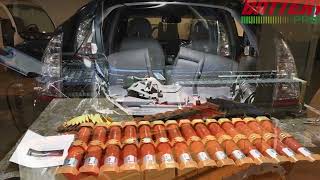
- Improper module replacement (Less Common) — Replacing a single module without professionally balancing the entire pack creates an immediate imbalance. The unmatched module charges at a different rate, triggering a fault. 🎬 Watch this walkthrough on replacing a single battery module
- Damaged voltage sensing harness (Rare) — A wiring harness reports each block's voltage to the ECU. Corroded connectors or loose pins send inaccurate readings, falsely triggering P3018.
- Faulty Battery Management System (ECU) (Rare) — The computer monitoring the battery's health rarely fails, but when it does, it generates false error codes for a healthy battery pack.
- Leaking battery electrolyte (Very Rare) — A cracked module leaks conductive potassium hydroxide electrolyte, causing corrosion, short circuits, or a high-voltage isolation fault (P0AA6).
Symptoms

- Check Engine Light and Master Warning — The Malfunction Indicator Lamp illuminates alongside a master warning like Toyota's 'Red Triangle of Death' and a 'Check Hybrid System' message.
- Reduced power and limp mode — The vehicle feels noticeably weak during acceleration. It often enters a protective 'limp mode,' severely limiting speed to prevent high-voltage damage.
- Decreased fuel economy — The gasoline engine runs constantly at higher RPMs to compensate for the lack of electric assistance, dropping fuel efficiency by 10-15 MPG.
- Constantly running battery cooling fan — The rear cooling fan runs continuously at high speed to cool down Block 8, which generates excess heat due to high internal resistance.
Diagnostic Flowchart

Tap your situation to follow the diagnostic path that matches what you're seeing on this code.
Common Fixes & Costs
- Replace the high-voltage battery pack
— Parts: $1,500 - $4,000, Labor: $300 - $800, ~4 hr book time
(Professional)
Toyota Prius (Gen 2, 2004-2009): OEM G9510-47031 (Alt: Dorman 587-001, GreenTec Auto Remanufactured)
Toyota Prius (Gen 3, 2010-2015): OEM G9510-76012 (Alt: Dorman 587-041, NewPriusBatteries.com Cylindrical Upgrade) - Clean or replace corroded busbars
— Parts: $30 - $80, Labor: $300 - $600, ~4.5 hr book time
(Intermediate)
Universal for Toyota/Lexus: OEM G9285-47010 (Busbar), 90179-05045 (Nut) (Alt: Aftermarket Nickel-Plated Busbar Kits) - Replace the failing module in Block 8
— Parts: $35 - $100, Labor: $400 - $800, ~5 hr book time
(Advanced)
Universal NiMH Module: OEM G9282-47010 (Alt: Reconditioned Modules (Electron, Exclusively Hybrid)) - Perform full pack reconditioning — Parts: $0, Labor: $500 - $1,500, ~8 hr book time (Professional)
- Replace the Battery ECU
— Parts: $150 - $400, Labor: $150 - $300, ~2.5 hr book time
(Professional)
Toyota Prius (Gen 2, 2004-2009): OEM 89890-47070 (Alt: Used/Remanufactured units)
Used vs. New Parts: Buying Guide
When a used part is worth it: A reconditioned battery is cost-effective for older, higher-mileage vehicles (over 150k miles) where a new OEM battery exceeds the car's value.
Donor-vehicle mileage cap: roughly under 100000 miles for the part to have meaningful remaining life.
Donor quality checklist:
- Look for a reputable rebuilder offering a strong warranty (1 year or more).
- Verify their process includes testing ALL modules, replacing weak ones, and balancing the entire pack.
- Avoid junkyard batteries with short (30-90 day) warranties.
Decision logic:
- If Vehicle is < 8 years old or < 100K miles → Buy new OEM or high-quality new aftermarket for long-term reliability.
- If Vehicle is > 12 years old or > 150K miles AND budget is the primary concern → A quality reconditioned battery is acceptable; expect 3-5 years of life.
- If You plan to keep the car for 5+ more years, regardless of age → Favor a new battery (OEM or aftermarket) for maximum longevity.
Warranty tradeoff: Junkyard parts have a 30-90 day warranty. Reconditioned batteries range from 12 months to lifetime. New OEM parts installed by a dealer carry a 12-month/12,000-mile warranty.
Worst-case if a used part fails: $1000-2500 if a used/reconditioned part fails after the warranty period, requiring a second replacement.
What Happens If You Wait — Timeline
- 0-1 month: Check Engine Light and 'Check Hybrid System' warnings appear. The car feels sluggish, and the gas engine runs more often. (MPG impact: 5-15%% · Added cost: $20-50 in wasted fuel)
- 1-3 months: Vehicle performance worsens. 'Limp mode' engages during high-demand situations. The State of Charge gauge fluctuates rapidly. (MPG impact: 15-25%% · Added cost: $50-150 in wasted fuel)
- 3-6 months: The weak block strains the system. Other aging blocks fail, triggering additional codes. The overworked gas engine risks damaging the catalytic converter. (MPG impact: 25-40%% · Added cost: $1200-2800 (potential catalytic converter replacement))
- 6+ months: Cascading failure. Severe imbalance damages the hybrid inverter. The car refuses to start or shuts down unexpectedly. (MPG impact: 40-60%+% · Added cost: $4000-8000+ (battery + inverter and/or catalytic converter))
Cost of Not Fixing It
- 0-1 month: Noticeable drop in fuel economy (5-10 MPG), sluggish performance, and frequent engine cycling. (Added cost: Negligible)
- 1-6 months: The gasoline engine overworks to compensate for the weak battery, putting excessive heat and strain on the catalytic converter, leading to failure. (Added cost: $1200-2800)
- 6+ months: Catastrophic failure. Continued strain damages the hybrid inverter. Other battery modules fail, leading to a no-start condition. (Added cost: $4000-8000+)
Diagnosis Steps

- Read All Fault Codes
Use an OBD-II scanner to confirm P3018. Check for P0A80 ('Replace Hybrid Battery Pack'), which confirms systemic failure, or P0AA6, which indicates a dangerous high-voltage leak.
Tools: OBD-II Scanner or diagnostic app (Dr. Prius, Torque Pro) (Beginner) - Test the 12-Volt Auxiliary Battery
A weak 12V battery causes cascading electronic failures and false ECU codes. A resting voltage below 12.0V or a failed load test requires immediate replacement before diagnosing the hybrid pack.
Tools: Digital Multimeter or Automotive Battery Tester (Beginner) - Inspect the Hybrid Battery Cooling Fan
Locate the cooling fan intake in the rear passenger area. Remove any pet hair, dust, or debris blocking the vent. A clogged fan guarantees battery overheating and failure.
Tools: Flashlight, trim removal tools, vacuum cleaner (Intermediate) - Analyze Live Hybrid Battery Data
Use an app like Dr. Prius to observe block voltages and internal resistance. A healthy pack shows blocks within 0.2V of each other. Accelerate hard: if Block 8 drops 0.5V lower than others or shows resistance above 30 milliohms, the block has failed.
Tools: Advanced OBD-II Scanner or Dr. Prius app with Bluetooth adapter (Intermediate) - Visually Inspect the Battery Internals
De-energize and remove the high-voltage battery pack. Inspect the module busbars for white or blue/green corrosion. Look for swollen modules or crusty electrolyte leakage.
Tools: Class 0 high-voltage gloves, insulated tools, multimeter (Advanced) - Perform a Module Capacity Test
Disassemble the pack and test Block 8 modules using a battery analyzer. This performs a full charge/discharge cycle to measure true capacity. Modules testing below 3.5 Ah are failed.
Tools: Hybrid battery charger/discharger/analyzer (Advanced)
When This Code Triggers (Freeze-Frame Conditions)
- Engine Coolant Temp: 180-200°F (Engine is fully warmed up.)
- RPM: 1500-2500 (Vehicle is cruising at a steady speed.)
- Engine Load: 30-60% (Maintaining speed on a level road or slight incline.)
- Vehicle Speed: 35-55 mph (Steady state highway or city driving, not during hard acceleration or braking.)
Related Codes
- P0A80 — The general 'Replace Hybrid Battery Pack' code. P3018 triggers early when voltage differs by >0.3V; P0A80 triggers when the difference exceeds 1.2V, indicating complete failure.
- P3000 — A general 'Battery Control System' fault. This umbrella alert always accompanies specific codes like P3018 and cannot be diagnosed alone.
- P3017, P3019, P3020, etc. — Identical codes for different blocks. Multiple P30xx codes confirm the entire battery pack is failing from old age, making single-module replacement useless.
- P0AA6 — Indicates a dangerous high-voltage leak to the chassis. Often appears if a failing cell in Block 8 cracks and leaks electrolyte. Requires immediate professional service.
Climate & Environmental Factors
- High Heat: High ambient temperatures accelerate the chemical degradation of battery cells and increase internal resistance, shortening lifespan and triggering fault codes.
- High Humidity: Moisture causes corrosion on copper busbars and wiring harness connectors. This corrosion increases resistance, which the ECU misinterprets as a weak cell.
- Extreme Cold: Cold temperatures reduce chemical efficiency. A borderline weak block drops below the voltage threshold during cold starts or acceleration, triggering P3018.
- High Altitude: Less dense air reduces the efficiency of the battery's air-cooling system, leading to higher average battery temperatures and accelerated degradation.
How to Talk to a Mechanic About This Code
Say this: "I have a P3018 code. Before recommending a full battery replacement, please check the live data for all battery block voltages and internal resistances. I also want to rule out a clogged cooling fan or busbar corrosion."
Signals you understand proper diagnostic steps, encouraging a thorough analysis rather than jumping to the most expensive conclusion.
Avoid saying:
- 'Just fix whatever's wrong'
- 'My check engine light is on, can you look at it?'
- 'Whatever you recommend'
Questions to ask before authorizing the repair:
- What were the specific voltage readings for all battery blocks at rest and under load?
- What was the internal resistance of block 8 compared to the other blocks?
- Did you physically inspect the battery cooling fan and busbars?
- If recommending a full pack replacement, what is the warranty and does it include labor?
- If recommending replacing a module, how do you balance the new module with the rest of the pack?
Where to Take It: Dealer vs Independent vs Chain
- Dealer:
A safe but expensive choice for out-of-warranty vehicles.
Best for: Vehicles still under the hybrid system warranty, Owners prioritizing OEM parts
Downsides: Highest labor rates, often 20-40% more than independent shops., Will always recommend a full, new OEM battery pack. (Typical cost: +40% vs. baseline) - Independent Shop:
Best fit, IF it's a hybrid specialist. They offer expert knowledge and lower labor costs.
Best for: Out-of-warranty vehicles where cost is a major factor., Accessing remanufactured batteries or module-level repairs.
Downsides: Must be a 'Hybrid Specialist'. General shops lack high-voltage training. (Typical cost: +0% vs. baseline) - Chain Shop:
AVOID. This specialized repair is outside the scope of chain shops.
Best for: Simple services like tires, oil changes, and 12V battery replacement.
Downsides: Technicians are not trained for high-voltage hybrid systems., High risk of misdiagnosis or improper repair. (Typical cost: -10% vs. baseline)
When to Walk Away From the Repair
If the estimated repair cost exceeds 40-50% of the car's current private-party value, seriously consider selling the car as-is.
- Car worth $5000, fix is $2500: Borderline. A remanufactured battery might be worthwhile, but a new OEM battery is not economical.
- Car worth $9000, fix is $3000: Fix it. The repair cost is well below the threshold and provides several more years of service.
- Car worth $3000, fix is $2800: Walk away. The repair cost is nearly the entire value of the car.
What Scan Tool You Need for This Code
Minimum: A tool that reads manufacturer-specific live data, specifically individual hybrid battery block voltages and internal resistance.
A basic $20 code reader only confirms P3018 exists. It cannot display the live voltage data needed to confirm block 8 is underperforming.
Budget: Bluetooth OBD-II Adapter with Dr. Prius App (~$50) — Provides detailed live data on all battery blocks, including voltage, internal resistance, and temperature, and runs automated health tests.
Mid-range: Foxwell NT510 Elite with Toyota Software (~$180) — Provides access to Toyota-specific systems to view the live data stream for all hybrid battery blocks.
Professional: Autel MaxiCOM MK808 (~$500-1500) — Offers full OE-level diagnostics, reads live data for all blocks, and performs bidirectional tests.
Rent vs buy: Buy. Free rental scanners from auto parts stores are basic code readers and lack the function to view live hybrid battery data.
How to Clear the Code After You Fix It
- Reconnect 12V battery if disconnected.
- Use an OBD-II scan tool to select 'Clear/Erase Codes'.
- Perform a complete drive cycle to allow readiness monitors to set.
Drive cycle (~30 minutes): From a cold start, idle for 5 mins. Drive for 15-20 minutes with mixed city/highway speeds, including steady cruising between 50-60 mph. Allow the car to cool down completely.
Readiness monitors affected: Catalyst (CAT) monitor, Evaporative (EVAP) system monitor, Oxygen (O2) sensor monitor
Before emissions retest: drive at least 100 miles to fully set monitors.
Watch out for:
- Clearing the code does not fix the physical battery issue; the code returns quickly.
- Disconnecting the 12V battery resets all vehicle memory and forces all readiness monitors to 'Not Ready', failing an emissions test.
- The EVAP monitor requires specific fuel levels (1/4 to 3/4 tank) and ambient temperatures to set.
Will This Fail Emissions / State Inspection?
Yes — this code typically fails an OBD-II emissions inspection.
- California: An illuminated Check Engine Light is an automatic failure. Driving 100+ miles after clearing the code is necessary before a retest.
- New York: Any fault code that turns on the Check Engine Light results in an automatic failure during the OBD-II scan.
- Texas: In the 17 counties requiring emissions testing, an illuminated Check Engine Light causes failure of the OBD-II inspection.
Most Commonly Affected Vehicles
- Toyota Prius (Gen 2) (2004-2009) — Extremely common. Original HV batteries are well past their service life, making P3018 a frequent code.
- Toyota Prius (Gen 3) (2010-2015) — Very common as these vehicles age, experiencing identical mileage-related cell degradation as Gen 2.
- Toyota Camry Hybrid (2007-2011) — Shares hybrid technology with the Prius and is highly susceptible to P30xx block codes.
- Lexus CT 200h (2011-2017) — Uses the Prius Gen 3 battery pack and powertrain, experiencing identical P3018 faults.
- Nissan Altima Hybrid (2007-2011) — Uses Toyota's hybrid system under license and is vulnerable to the exact same battery block failures.
- Lexus HS 250h (2010-2012) — Shares its drivetrain with the Camry Hybrid and develops identical battery issues.
- Lexus RX 400h (2006-2008) — Older RX 400h models commonly report battery degradation codes like P3018.
- Lexus RX 450h (2010-2015) — The successor to the 400h, showing increasing frequency of age-related P30xx codes.
Manufacturer-Specific Notes
- Toyota / Lexus: Toyota numbers battery blocks sequentially; P3018 specifically targets the 8th block. Toyota extended hybrid battery warranties to 10 years/150,000 miles for 2020+ models.
- Nissan: The 2007-2011 Altima Hybrid uses Toyota's licensed system, so P3018 functions identically. On other Nissan models, P3018 indicates immobilizer or communication circuit failures.
- Tata / VW / Peugeot: These manufacturers use P3018 for unrelated issues like transmission communication faults or exhaust throttle valves. Always verify the definition for non-Toyota/Lexus vehicles.
Real Owner Stories
2007 Toyota Camry Hybrid with ~150K miles
The 'Check Hybrid System' light came on. The dealer diagnosed a failed hybrid battery and quoted $4,400.
What they tried:
- Owner removed the battery pack.
- Visually inspected the modules and busbar connectors.
- Found significant corrosion on the copper busbars.
Outcome: The owner cleaned the corroded busbars using vinegar, steel wool, and baking soda. The warning light cleared and the car operated normally.
Lesson: Corroded busbars mimic a failed battery block by creating high resistance. Always visually inspect and clean busbars before buying a new battery pack.
2006 Toyota Prius with original HV battery
Check Engine Light and P3018 code. The owner had replaced a single cell three years prior.
What they tried:
- Suspected a failing 6-year-old 12V battery reading 11.9V.
- Logged data with the Dr. Prius app during a test drive.
- Confirmed Block 8's voltage fluctuated wildly with high internal resistance.
Outcome: The owner concluded the HV battery was failing again. They faced the choice of replacing another single module or the entire pack.
Lesson: While a weak 12V battery causes electronic issues, P3018 combined with high resistance data from Dr. Prius confirms the HV battery is the root cause.
Gen 2 Toyota Prius with multiple battery codes
Red Triangle of Death appeared with P3000, P0A80, and P3012. Live data showed Block 2 failing inconsistently.
What they tried:
- Considered replacing only the single failing module.
- Posted live data screenshots to a forum for advice.
Outcome: Experienced users advised that replacing one module on an 18-year-old battery starts a 'whack-a-mole' cycle. The owner replaced the entire pack.
Lesson: When P0A80 accompanies a specific block code on an old battery, replacing single modules is a high-risk, short-term fix.
How to Prevent This Code From Triggering
- Clean the hybrid battery cooling fan and filter (Every 20,000-30,000 miles, or annually in dusty climates.) — A clogged fan blocks airflow, causing the battery pack to overheat and accelerating cell degradation.
- Practice smooth driving habits (Daily habit) — Aggressive acceleration and hard braking create high-current demands that generate excess heat, stressing battery cells.
- Avoid frequent short trips (Daily habit) — Short trips prevent the battery system from reaching its optimal, stable operating temperature.
- Park in the shade or a garage (Daily habit) — Extreme heat is the primary enemy of hybrid batteries, accelerating chemical degradation even when the car is off.
- Drive the car regularly (At least once every 1-2 weeks) — Letting a hybrid sit causes the battery to self-discharge to low levels, harming the cells.
Frequently Asked Questions
Can I just replace battery block 8?
Replacing just the failing modules is a temporary fix. Because all modules are the same age, others will likely fail soon. This leads to a frustrating cycle of repeatedly disassembling the battery.
What is a battery block?
In a Toyota hybrid, two 7.2V modules are wired in series to create one 14.4V 'block'. The ECU monitors the voltage of these blocks, not individual modules. A Gen 2 Prius has 28 modules forming 14 blocks.
What is a common misdiagnosis?
Assuming the battery modules are dead without checking for simpler causes. Heavily corroded busbar connections create high resistance that mimics a weak cell. Always inspect and clean busbars before replacing expensive components.
Will P3018 fail an emissions test?
Yes. P3018 illuminates the Check Engine Light, resulting in an automatic emissions test failure in all jurisdictions.
Can I reset the code and keep driving?
Clearing the code does not fix the physical voltage imbalance, and the code will return within a few drive cycles. The car's performance remains poor until the underlying issue is repaired.
Does weather affect P3018?
Yes. Extreme heat increases internal resistance, pushing borderline blocks over the failure threshold. Cold weather reduces chemical efficiency, causing weak blocks to drop voltage rapidly during acceleration.
Is reconditioning worth it?
Reconditioning restores balance and extends pack life if the battery isn't too old and cells haven't physically failed. However, for packs with over 150,000 miles or multiple weak blocks, it is a short-lived solution.
Key Takeaways
- Code P3018 indicates Battery Block 8 has dropped at least 0.3V below the other blocks, signaling a failing cell or high resistance.
- Test the 12V auxiliary battery and clean the hybrid cooling fan before spending $1,500+ on a high-voltage battery replacement.
- Do not replace a single $40 battery module on a pack over 10 years old; replace the entire pack to avoid continuous 'whack-a-mole' failures.
- Driving with P3018 for more than a few weeks forces the gas engine to overwork, risking a $2,000 catalytic converter failure.
Helpful Videos


The information in this article is provided for general reference and educational purposes only. Vehicle specifications, procedures, and part compatibility can vary by production date, trim level, and region. Always consult your vehicle's factory service manual and verify part numbers before purchasing or performing repairs. Safety-critical components such as airbags, seat belts, and braking systems should be installed by a qualified professional.
- 🎬 Helpful Videos
- What Does P3018 Mean?
- Can I Drive With P3018?
- Common Causes
- Symptoms
- Diagnostic Flowchart
- Common Fixes & Costs
- Used vs. New Parts: Buying Guide
- What Happens If You Wait — Timeline
- Cost of Not Fixing It
- Diagnosis Steps
- When This Code Triggers (Freeze-Frame Conditions)
- Related Codes
- Climate & Environmental Factors
- How to Talk to a Mechanic About This Code
- Where to Take It: Dealer vs Independent vs Chain
- When to Walk Away From the Repair
- What Scan Tool You Need for This Code
- How to Clear the Code After You Fix It
- Will This Fail Emissions / State Inspection?
- Most Commonly Affected Vehicles
- Manufacturer-Specific Notes
- Real Owner Stories
- 2007 Toyota Camry Hybrid with ~150K miles
- 2006 Toyota Prius with original HV battery
- Gen 2 Toyota Prius with multiple battery codes
- How to Prevent This Code From Triggering
- Frequently Asked Questions
- Can I just replace battery block 8?
- What is a battery block?
- What is a common misdiagnosis?
- Will P3018 fail an emissions test?
- Can I reset the code and keep driving?
- Does weather affect P3018?
- Is reconditioning worth it?
- Key Takeaways
- 🎟️ Get 5% Off