

OBD-II Code P3006: High Voltage Battery State of Charge Imbalance
What P3006 means, why it triggers, and how to fix it
- Code P3006 triggers when the charge difference (Delta SOC) between hybrid battery modules exceeds 20%, indicating a severe pack imbalance.
- Toyota, Lexus, and Ford hybrids over 10 years old or past 150,000 miles are the most common vehicles to experience this failure.
- On BMW and VW diesel models, P3006 is not a hybrid code; it indicates a faulty fuel pressure regulator or heating relay requiring a $150-$300 repair.
- Replacing the entire high-voltage battery pack ($1,900–$4,800) is the only permanent fix, as replacing individual modules usually leads to repeat failures within 6 months.
- Driving with an active P3006 code forces the vehicle into a 25-mph 'limp mode' and permanently damages the 12V auxiliary battery within weeks.
What Does P3006 Mean?

P3006 means the Engine Control Unit (ECU) detects a severe charge imbalance across the high-voltage (HV) hybrid battery modules. Think of it like a flashlight with multiple batteries; if some are full and others are empty, the flashlight fails to power on.
Technical definition: The SAE/ISO definition is "Battery State of Charge (SOC) are uneven". The code sets when the difference in charge level (Delta SOC) between the highest and lowest charged battery modules exceeds 20%. A Delta SOC reading of 40% or higher confirms a dead battery pack.
Can I Drive With P3006?
No — Do Not Drive. You can physically drive for a short distance, but it is highly dangerous. The vehicle suddenly loses the ability to accelerate or enters a 25-mph "limp mode," creating a hazard in traffic. Continuing to drive also drains the 12V auxiliary battery, guaranteeing you will be stranded.
Common Causes

- Aging or Failing HV Battery Modules (Very Common) — Over 150,000 miles, individual battery modules lose their capacity to hold a charge, creating an unrecoverable imbalance across the entire pack.
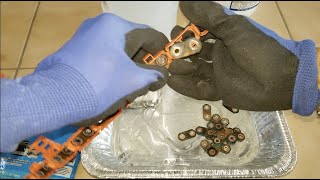
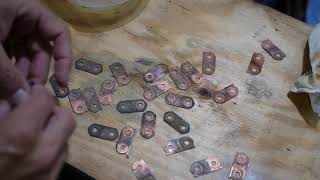
- Corroded Bus Bars or Sensing Wires (Common) — Copper connectors (bus bars) linking the modules corrode, creating electrical resistance. This prevents cells from charging properly and tricks the ECU into seeing a voltage imbalance. Damaged sensing wires cause the same false readings.
- Blocked HV Battery Cooling Fan (Common) — Debris or pet hair blocking the cooling fan intake causes the battery to overheat. Chronic overheating permanently degrades modules and triggers P3006.
- Prolonged Vehicle Inactivity (Less Common) — Letting a hybrid sit for months allows weaker cells to self-discharge faster than healthy ones, creating a severe imbalance detected immediately upon startup.
- Internal Module Electrolyte Leak (Less Common) — Modules develop micro-leaks at terminal seals. Leaking electrolyte creates a conductive path to ground (triggering P3009) and unbalances the pack.
- Faulty HV Battery ECU (Rare) — The battery control module fails and sends incorrect state-of-charge data, triggering the code even if the physical battery is healthy.
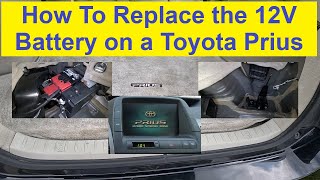
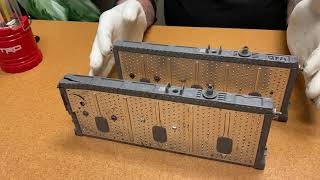
- Failing 12V Auxiliary Battery (Rare) — A weak 12V battery causes severe voltage drops during startup, confusing the hybrid computers and generating false P3006 codes. 🎬 Watch: Step-by-step DIY guide for replacing the 12V auxiliary battery.
Symptoms
- Reduced Power and Poor Acceleration ('Limp Mode') — The car feels sluggish and restricts power, often refusing to exceed 25 mph.
- Check Engine Light and Master Warning Light On — The 'Check Engine' light and the red triangle master warning light illuminate immediately.
- Wildly Fluctuating Battery Gauge — The dashboard battery charge level jumps rapidly between full and empty instead of changing smoothly.
- HV Battery Cooling Fan Running Constantly — The rear battery cooling fan runs at maximum speed to cool the struggling, imbalanced modules.
- Decreased Fuel Economy and Abnormal Engine Revving — Fuel economy drops by 10-15 MPG because the gasoline engine runs constantly to compensate for the failing hybrid battery.
- High 'Delta SOC' Reading on Scan Tool (scan-tool only — no driver-felt sign) — Live data shows a 'Delta SOC' (difference in state of charge) above the 20% failure threshold. 🎬 Watch: A Toyota expert explains how to check for battery failure.
Diagnostic Flowchart
Tap your situation to follow the diagnostic path that matches what you're seeing on this code.
Common Fixes & Costs
- Replace the High-Voltage (HV) Battery Pack — Parts: $1,500-$4,000, Labor: $400-$800, ~3.5 hr book time (Professional)
- Clean or Replace Corroded Bus Bars and Wires — Parts: $50-$150, Labor: $300-$600, ~5 hr book time (Intermediate)
- Recondition the Entire Battery Pack — Parts: $0, Labor: $600-$1200, ~8 hr book time (Professional)
- Replace Individual Failing Battery Modules — Parts: $40-$100 per module, Labor: $400-$800, ~6 hr book time (Professional)
- Replace the HV Battery ECU — Parts: $100-$800, Labor: $200-$400, ~3 hr book time (Professional)
Used vs. New Parts: Buying Guide
When a used part is worth it: A remanufactured battery is a sensible choice for older, high-mileage vehicles where the cost of a new OEM battery is not justified.
Donor-vehicle mileage cap: roughly under 100000 miles for the part to have meaningful remaining life.
Donor quality checklist:
- Verify the warranty length and terms; reputable remanufacturers offer multi-year, transferable warranties.
- Avoid batteries that have only had one or two cells replaced.
- Ask about the age of the 'new' cells in a remanufactured pack; old stock degrades on the shelf.
Decision logic:
- If Vehicle is >10 years old OR budget is the primary concern → buy a quality remanufactured battery with a strong warranty (2+ years).
- If You plan to keep the vehicle for many more years → buy a new OEM or high-quality new aftermarket battery for maximum longevity.
- If You plan to sell the vehicle within 1-2 years → a lower-cost reconditioned battery with a 1-year warranty is an acceptable choice.
Warranty tradeoff: Used/reconditioned batteries typically offer warranties from 1 to 4 years, which can be a better value than the standard 1-year warranty on a new OEM replacement battery.
Worst-case if a used part fails: $1000-$2500 if a cheap battery fails after the warranty expires, requiring you to pay for another battery plus a second round of installation labor.
What Happens If You Wait — Timeline
- 0-1 month: Code P3006 appears intermittently. The battery gauge fluctuates. No major driving symptoms yet. (MPG impact: 0-5%% · Added cost: $0-$30 in wasted fuel)
- 1-3 months: The Check Engine Light stays on. The car enters a limited power 'limp mode' during hard acceleration. The gasoline engine runs constantly. (MPG impact: 5-15%% · Added cost: $50-$150 in wasted fuel and increased engine wear)
- 3-6 months: Limp mode becomes severe, making highway driving dangerous. The HV battery fails to charge the 12V auxiliary battery, leading to a no-start situation. (MPG impact: 15-25%% · Added cost: $150-$350 for a tow and new 12V battery)
- 6+ months: Catastrophic battery failure. The computer shuts the hybrid system down completely to prevent damage. The car is undriveable. (MPG impact: 100% (undriveable)% · Added cost: $2,000-$4,800 for a mandatory battery replacement)
Cost of Not Fixing It
- 0-1 month: Noticeable drop in fuel economy (5-15% MPG loss) and unpredictable 'limp mode' events. (Added cost: $20-$50 in extra fuel costs.)
- 1-6 months: Increased risk of being stranded as the main hybrid battery fails to charge the 12V battery. (Added cost: $150-$350 (cost of a tow plus a new 12V battery).)
- 6+ months: Complete and irreversible failure of the high-voltage battery pack. The vehicle becomes undriveable. (Added cost: $2,000-$4,800 (full cost of battery replacement parts and labor).)
Diagnosis Steps
- Scan for All Codes
Use a hybrid-compatible OBD-II scanner to confirm P3006 and check for block-specific codes (P3011-P3029) that pinpoint the exact failing module.
Tools: Hybrid-aware OBD-II Scanner (Beginner) - Analyze Live Battery Data (Delta SOC)
View the live data for the HV battery. A 'Delta SOC' percentage above 20% confirms a significant imbalance. Check individual block voltages to identify the weak links.
Tools: Hybrid-aware OBD-II Scanner (Intermediate) - Inspect the HV Battery Cooling Fan
Locate the cooling fan intake vent (usually near the rear seats) and remove any blocking debris or pet hair. A blocked fan guarantees premature battery failure.
Tools: Flashlight (Beginner) - Check the 12V Auxiliary Battery
Test the 12V battery. Voltage below 12.4V at rest or 11.0V during startup indicates a weak battery causing false hybrid system codes.
Tools: Multimeter (Beginner) - Visually Inspect and Test Battery Bus Bars (Advanced)
WARNING: High voltage risk. Disconnect the battery, open the case, and inspect copper bus bars for blue-green corrosion. Use a multimeter set to millivolts to measure voltage drop across each bar under load; anything above a few millivolts indicates high resistance.
Tools: High-voltage safety gloves (Class 0), Insulated tools, Multimeter (Advanced) - Perform a Professional Load Test
Monitor the voltage of each module while the battery is under heavy load (hard acceleration). A voltage difference greater than 1.2V between the highest and lowest block indicates a failing pack.
Tools: Professional diagnostic tools (e.g., Techstream) (Professional) - Check Individual Module Voltages (Advanced)
Remove the battery pack cover and use a multimeter to check each module. A healthy NiMH module reads 7.0V-8.5V. A module reading around 6.0V is dead.
Tools: Multimeter, High-voltage safety gloves (Class 0), Insulated tools (Advanced) - Check Fuel Pressure (BMW/VW Diesel Models Only)
For BMW/VW diesels where P3006 means 'Fuel rail pressure too high', monitor live fuel rail pressure at idle to identify a faulty regulator.
Tools: OBD-II Scanner with live data (Advanced)
When This Code Triggers (Freeze-Frame Conditions)
- Delta SOC (%): >20% (This is the direct trigger; the ECU logs the code when the difference between battery block charge levels exceeds the threshold.)
- Vehicle Speed: 0-65 mph (Triggers at idle, in traffic, or at highway speeds during battery charge/discharge events.)
- Engine Load: 20-70% (During steady cruise, acceleration, or regenerative braking when the battery imbalance becomes most apparent.)
Related Codes
- P3000 — A general 'HV Battery Malfunction' code that acts as a master alarm. It always appears with P3006. Focus diagnosis on the P3006.
- P3011 - P3029 — These codes pinpoint exactly which battery 'block' is weak (e.g., P3011 for Block 1). If present with P3006, they tell you exactly where to start testing.
- P3009 — Means 'High Voltage Leak Detected'. This is a critical electrical safety fault where high voltage is leaking to the vehicle's metal chassis, requiring an insulation tester to diagnose.
- P0A80 — Means 'Replace Hybrid Battery Pack'. While P3006 indicates an imbalance that might be fixable, P0A80 is the ECU's final judgment that the entire pack has failed.
Climate & Environmental Factors
- High Humidity: Consistently high humidity accelerates the corrosion of copper bus bars, increasing electrical resistance and causing imbalance.
- Extreme Heat: High ambient temperatures force the battery cooling system to work harder and accelerate the degradation of the electrolyte inside the modules.
- Extreme Cold: Frigid temperatures reduce the chemical efficiency of NiMH batteries, making existing imbalances more pronounced during cold starts.
How to Talk to a Mechanic About This Code
Say this: "I have a P3006 code on my hybrid vehicle. I need a technician who can read hybrid-specific data like Delta SOC and individual battery block voltages to determine if the cause is failing modules or bus bar corrosion."
This language signals you understand this is a complex hybrid issue. It directs the shop to perform a data-driven diagnosis rather than immediately quoting a full battery replacement.
Avoid saying:
- 'My hybrid battery is dead, how much for a new one?'
- 'My check engine light is on, can you look at it?'
- 'Just fix whatever's wrong.'
Questions to ask before authorizing the repair:
- What was the Delta SOC percentage from the scan tool?
- Did you see any specific battery block codes (like P3011-P3029)?
- Did you visually inspect the battery bus bars for corrosion?
- What are my options besides a brand new OEM battery?
- What is the warranty on the recommended repair, including both parts and labor?
Where to Take It: Dealer vs Independent vs Chain
- Dealer:
Use for warranty claims. If out of warranty, get a quote here but compare it against a hybrid specialist before proceeding.
Best for: Vehicles still under the hybrid system warranty (typically 8yr/100k or 10yr/150k miles), Complex diagnostics where a specialist independent shop is not available
Downsides: Highest labor rates and parts costs., Very likely to recommend only a full, new OEM battery pack replacement. (Typical cost: +50% vs. baseline) - Chain Shop:
AVOID. Do not take your vehicle to a chain shop for a P3006 code. They are not equipped to handle this repair safely.
Best for: Oil changes, tires, and brakes.
Downsides: Almost never have the training or specialized tools required for high-voltage battery diagnostics., High risk of misdiagnosis or refusal to work on the system. (Typical cost: -10% vs. baseline)
When to Walk Away From the Repair
If the estimated repair cost for the hybrid battery exceeds 50% of the car's current private-party value, seriously consider selling the car as-is.
- Car worth $5000, fix is $2500: Borderline. A remanufactured battery might be worth it if the rest of the car is in excellent condition. Get a second opinion.
- Car worth $8000, fix is $2500: Fix it. The repair cost is well below the 50% threshold, preserving the value of the vehicle.
- Car worth $3500, fix is $3000: Walk away. The repair cost is nearly the entire value of the car. It is not economically viable.
What Scan Tool You Need for This Code

Minimum: A tool that can read manufacturer-specific live data from the Hybrid Control ECU, specifically battery block voltages and Delta SOC.
A cheap, generic code reader CANNOT show you the critical data needed to diagnose the problem: the individual voltages of the battery blocks and the 'Delta SOC' value.
Budget: Dr. Prius App with compatible OBD2 adapter (e.g., Panlong, Veepeak) (~$20-40 (adapter) + app subscription) — Provides a full hybrid battery health check, showing all block voltages, Delta SOC, and internal resistance readings on an easy-to-understand interface.
Mid-range: LAUNCH Creader Elite for Toyota / Foxwell NT510 Elite (~$150-300) — Accesses Toyota-specific systems, allowing you to view live data streams for all battery blocks directly on the device without needing a phone app.
Professional: Autel MaxiCOM MK808 / Toyota Techstream (~$500-1200 (Autel) or $50 + laptop (Techstream clone)) — Provides dealer-level diagnostics. Techstream is the actual software used by Toyota dealers and gives complete access to all data and utility functions.
How to Clear the Code After You Fix It
- Reconnect the 12V battery if it was disconnected.
- Use an OBD-II scan tool to erase the P3006 and any related fault codes.
- Perform a complete drive cycle to allow the vehicle's readiness monitors to run.
Drive cycle (~30 minutes): A general Toyota drive cycle includes a cold start, 5-10 minutes of idling, 15-20 minutes of mixed city and highway driving, and a final idle period before shutdown.
Readiness monitors affected: Catalyst Monitor, EVAP System Monitor, O2 Sensor Monitor
Before emissions retest: drive at least 100 miles to fully set monitors.
Watch out for:
- Simply clearing the code will not fix the underlying battery problem, and the code will return immediately.
- Disconnecting the 12V battery clears codes but resets all emissions readiness monitors, requiring a lengthy drive cycle to reset.
Will This Fail Emissions / State Inspection?
Yes — this code typically fails an OBD-II emissions inspection.
- California: An active Check Engine Light for P3006 is an automatic smog check failure.
- New York: An illuminated Malfunction Indicator Lamp (Check Engine Light) results in an emissions test failure.
- Texas: A vehicle with code P3006 fails the OBD-II portion of the state inspection.
Most Commonly Affected Vehicles
- Toyota Prius (Gen 1 & 2) (2001-2009) — Extremely common as original batteries reach the end of their service life (150,000+ miles). P3006 is a classic indicator of battery failure.
- Toyota Camry Hybrid (2007-2011) — Uses similar HV battery technology to the Prius and is susceptible to identical age-related battery failures and imbalances.
- Ford Escape Hybrid (2005-2012) — Early Ford hybrids use Sanyo battery modules well-known to fail and cause imbalance codes like P3006 as they age.
- Toyota Highlander Hybrid (2006-2010) — Faces similar battery degradation issues leading to a P3006 code as vehicles surpass the 10-year/150,000-mile mark.
- Lexus RX 400h (2006-2008) — Shares the Highlander Hybrid powertrain and is prone to the same HV battery imbalance problems with age and mileage.
- BMW 3-Series (E90/E92 Diesel) (2007-2011) — IMPORTANT: On BMW diesels, P3006 indicates 'Fuel rail pressure too high,' caused by a faulty fuel pressure regulator. It is NOT a hybrid battery code.
- Volkswagen Jetta/Golf/Passat (TDI) (2009-2014) — IMPORTANT: On VW diesels, P3006 indicates a fault with the 'High Power Heating Relay (J360)'. It is NOT a hybrid battery code.
Manufacturer-Specific Notes
- Toyota/Lexus: Toyota uses 'Delta SOC' (State of Charge difference) to trigger this code. If the value is 20% or higher, the battery pack is unbalanced and requires service.
- BMW: For diesel BMWs (like the E90/E92), P3006 is defined as 'Fuel rail pressure too high.' The fix is a new fuel pressure regulator.
- Volkswagen/Audi: On VW and Audi diesel models, P3006 refers to the 'High Power Heating Relay (J360)'. This is not a hybrid battery issue.
- Ford: Ford's 'Electric Vehicle Component' warranty covers the high-voltage battery if capacity drops below 70% of its original value during the 8-year/100,000-mile period.
Real Owner Stories
2002 Prius with 145k miles, recently installed rebuilt battery
Owner had a rebuilt hybrid battery professionally installed. The car runs great on 200-mile daily drives, but occasionally throws code P3006 when sitting in traffic.
Outcome: The modules in the rebuilt battery pack are not perfectly balanced. The shop that performed the rebuild is responsible for diagnosing and fixing it under warranty.
Lesson: Even with a rebuilt battery, a P3006 code points to an imbalance issue within the pack. Always return to the installer for warranty service.
Gen 1 Prius with original battery, throwing P3006
The owner received a P3006 code and took it to a shop that installed a rebuilt battery. The code returned within a week. The shop swapped the pack, and the code returned again.
Outcome: The issue was unresolved after two warranty attempts. The next diagnostic step is checking the individual voltage sensors or the battery ECU itself.
Lesson: If a P3006 code persists after multiple replacement battery packs, consider a faulty Battery ECU or a problem with the shop's rebuilding process.
2002 Prius at 178k miles with original battery
The car threw codes P3006, P3009, and P3012, with symptoms of engine revving and poor performance.
Outcome: The first Dorman battery had been tested 8 months prior to receipt, meaning it sat on a shelf and self-discharged unevenly.
Lesson: When buying a remanufactured battery, inquire about the testing or build date. A battery sitting on a shelf for months develops an imbalance right out of the box.
How to Prevent This Code From Triggering

- Clean the HV Battery Cooling Fan and Vents (Every 30,000 miles, or annually if you have pets) — Pet hair and dust clog the fan, causing the battery to overheat, which accelerates cell degradation and leads to imbalance.
- Drive the Vehicle Regularly (At least once a week for 30 minutes) — Letting a hybrid sit allows battery modules to self-discharge at different rates. Regular driving keeps cells active and balanced.
- Avoid Extreme Temperatures (Daily habit) — Extreme heat accelerates chemical breakdown within battery cells. Parking in a garage or shaded area prolongs battery life.
- Practice Smooth Driving (Daily habit) — Gentle acceleration and coasting puts less strain on the battery. Hard acceleration causes rapid charge cycles that stress the pack.
Frequently Asked Questions
Can I just replace the one bad battery cell myself?
Do not attempt this without high-voltage training and Class 0 safety gloves. Replacing a single cell is a temporary fix because the remaining old cells will likely fail within months. It also requires specialized balancing equipment to match the new cell to the old pack.
Is a refurbished or remanufactured hybrid battery a good option?
A quality remanufactured battery from a reputable company with a multi-year warranty is an excellent, cost-effective choice. Avoid cheap 'refurbished' packs from unverified sellers, as they often only replace one or two cells before reselling. Always ask for the build date to ensure the battery hasn't degraded while sitting on a shelf.
My P3006 code appeared right after I replaced my 12V battery. Is this a coincidence?
It is likely not a coincidence. Disconnecting the 12V battery resets the vehicle's computers, forcing the hybrid ECU to run a fresh self-check that detects a pre-existing imbalance. Alternatively, a weak new 12V battery causes voltage drops that trigger false P3006 codes.
Will clearing the code fix the problem?
No. Clearing the code temporarily turns off the warning lights, but the ECU detects the physical battery imbalance and triggers the code again within a few miles.
Will this code leave me stranded on the side of the road?
Yes. Severe battery imbalances force the car into a low-power 'limp mode' or shut down the hybrid system entirely to prevent electrical fires.
How long can you drive with a P3006 code?
Stop driving immediately if possible. While some drivers manage local trips for a few weeks, the vehicle can unexpectedly lose acceleration at highway speeds. Continued driving also permanently damages the 12V battery.
What does Delta SOC mean for a P3006 code?
Delta SOC (State of Charge) is the percentage difference between the most-charged and least-charged module blocks in your hybrid battery. Toyota triggers a P3006 code when this difference exceeds 20%. A reading of 40% or more confirms irreversible battery failure.
Key Takeaways
- Code P3006 triggers when the charge difference (Delta SOC) between hybrid battery modules exceeds 20%, indicating a severe pack imbalance.
- Toyota, Lexus, and Ford hybrids over 10 years old or past 150,000 miles are the most common vehicles to experience this failure.
- On BMW and VW diesel models, P3006 is not a hybrid code; it indicates a faulty fuel pressure regulator or heating relay requiring a $150-$300 repair.
- Replacing the entire high-voltage battery pack ($1,900–$4,800) is the only permanent fix, as replacing individual modules usually leads to repeat failures within 6 months.
- Driving with an active P3006 code forces the vehicle into a 25-mph 'limp mode' and permanently damages the 12V auxiliary battery within weeks.
Helpful Videos





The information in this article is provided for general reference and educational purposes only. Vehicle specifications, procedures, and part compatibility can vary by production date, trim level, and region. Always consult your vehicle's factory service manual and verify part numbers before purchasing or performing repairs. Safety-critical components such as airbags, seat belts, and braking systems should be installed by a qualified professional.
- 🎬 Helpful Videos
- What Does P3006 Mean?
- Can I Drive With P3006?
- Common Causes
- Symptoms
- Diagnostic Flowchart
- Common Fixes & Costs
- Used vs. New Parts: Buying Guide
- What Happens If You Wait — Timeline
- Cost of Not Fixing It
- Diagnosis Steps
- When This Code Triggers (Freeze-Frame Conditions)
- Related Codes
- Climate & Environmental Factors
- How to Talk to a Mechanic About This Code
- Where to Take It: Dealer vs Independent vs Chain
- When to Walk Away From the Repair
- What Scan Tool You Need for This Code
- How to Clear the Code After You Fix It
- Will This Fail Emissions / State Inspection?
- Most Commonly Affected Vehicles
- Manufacturer-Specific Notes
- Real Owner Stories
- 2002 Prius with 145k miles, recently installed rebuilt battery
- Gen 1 Prius with original battery, throwing P3006
- 2002 Prius at 178k miles with original battery
- How to Prevent This Code From Triggering
- Frequently Asked Questions
- Can I just replace the one bad battery cell myself?
- Is a refurbished or remanufactured hybrid battery a good option?
- My P3006 code appeared right after I replaced my 12V battery. Is this a coincidence?
- Will clearing the code fix the problem?
- Will this code leave me stranded on the side of the road?
- How long can you drive with a P3006 code?
- What does Delta SOC mean for a P3006 code?
- Key Takeaways
- 🎟️ Get 5% Off