

P3004 on 2017 Toyota Prius V: Inverter Failure Causes and Fixes
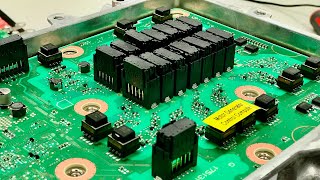
On a 2017 Toyota Prius V, code P3004 almost always indicates a failure of the Intelligent Power Module (IPM) inside the main hybrid inverter assembly. This is a well-known issue, and Toyota has issued a Customer Support Program (23TE03, superseding 20TE10) that extends warranty coverage for this specific failure for 20 years from the date of first use with no mileage limit. Before paying for any repairs, contact a Toyota dealer with your VIN to check for coverage, as the repair is often free.
- P3004 on a 2017 Prius V indicates a critical failure in the high-voltage system, most commonly the Intelligent Power Module (IPM) within the inverter.
- This is a known issue covered by Toyota's Customer Support Program 23TE03, which extends the warranty on this part to 20 years with unlimited mileage.
- ALWAYS contact a Toyota dealer with your VIN to check for warranty coverage before authorizing or paying for any repairs.
- Driving is not recommended as the vehicle is in a reduced-power 'limp mode' and could shut down unexpectedly.
- While less common, the code can also be caused by a failed hybrid battery relay (contactor) or damaged high-voltage wiring.
What's Unique About the 2017-2017 Toyota PRIUS V

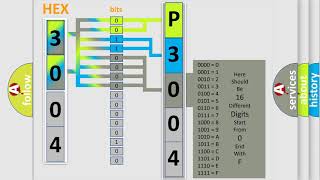
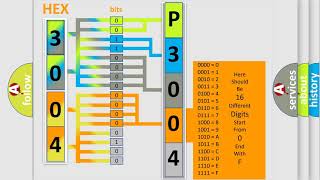
The 2012-2017 Toyota Prius V, along with some standard Prius models, is known for premature failure of the Intelligent Power Module (IPM) within the hybrid inverter. This issue is so widespread that Toyota, as part of a class-action lawsuit settlement, has issued multiple Technical Service Bulletins (TSBs) and a Customer Support Program (23TE03, which supersedes 20TE10 and others) to extend the warranty for this specific component failure. The program acknowledges that the IPM can fail due to thermal stress, triggering code P3004 🎬 Watch: A short explanation of the P3004 fault code. and putting the vehicle into a fail-safe mode. The extended coverage lasts for 20 years from the vehicle's date of first use, with no mileage limitation, and includes provisions for towing and a loaner vehicle.
Diagnostic Flowchart
Tap your situation to follow the diagnostic path that matches what you're seeing on this vehicle.
Symptoms You May Notice
- "Check Hybrid System" message on the dashboard
- Master warning light illuminated
- Check Engine Light (MIL) on
- Vehicle enters 'Fail Safe' or 'limp' mode with drastically reduced power
- Vehicle will not achieve 'Ready' mode, effectively a no-start condition
- Clicking sound from the rear of the vehicle for a few seconds on startup attempt.
- Complete shutdown of the hybrid system while driving (in some cases).
- Replacing the 12V auxiliary battery. While a weak 12V battery can cause various electrical issues in a Prius, it will not directly cause the specific P3004 high-voltage malfunction. Owners often replace it first, but the code remains.
- Replacing the main hybrid battery pack. The P3004 code points to a power transfer issue or an inverter fault, not typically a failure of the battery cells themselves. Misdiagnosing this can lead to a very expensive and unnecessary repair, although a failing inverter can eventually damage the battery pack.
Most Likely Causes

- Failed Intelligent Power Module (IPM) in the Inverter Assembly 🔴 High Probability This is a documented design weakness acknowledged by Toyota through multiple TSBs and a warranty extension program (CSP 23TE03) specifically for this component, which is known to fail from thermal stress.
How to confirm: Diagnosis by a Toyota dealer using Techstream software to confirm P3004 and associated codes. The dealer will follow the diagnostic procedure outlined in TSB T-SB-0003-21 or 23TE03 to verify the IPM failure. A DIY method mentioned in forums involves checking resistance on the inverter side (with the battery disconnected), where a reading of 0 ohms indicates a short.
Typical fix: Replacement of the failed IPM Transistor Kit or the entire inverter with converter assembly. This repair is covered under Toyota's Customer Support Program 23TE03 for 20 years/unlimited miles if performed at a dealer.
Est. part cost: $2000-$4000 - Failed Hybrid Battery Contactor (Relay) ⚪ Low Probability The high-voltage relays (contactors) in the battery junction block can fail, preventing power from reaching the inverter. The hybrid ECU detects this lack of voltage during the pre-charge sequence and logs P3004.
How to confirm: A technician can perform an active test on the battery contactors (often labeled SMRB, SMRP, SMRG) to listen for the audible 'click' of each one engaging. A silent contactor indicates failure. This is often done using Toyota's Techstream software to command each relay individually.
Typical fix: Replacement of the faulty contactor(s) within the hybrid battery junction block assembly.
Est. part cost: $100-$300 - Damaged High-Voltage Wiring or Connections ⚪ Low Probability While not a design flaw, connections can become loose or corroded over time, especially after previous battery work.
How to confirm: Visual inspection of the orange high-voltage cables between the battery and inverter for any signs of damage, corrosion, or loose connections. A common check is to ensure all heavy orange cable connections and contactor studs are torqued to spec.
Typical fix: Repairing or replacing the damaged wiring harness or cleaning and re-torquing connections.
Est. part cost: $50-$500
Rare But Worth Checking
- Failed Inverter Coolant Pump:
Diagnosis Steps
- Check your vehicle's VIN with a Toyota dealer to see if it is covered under the Customer Support Program 23TE03. This should always be the first step, as the repair is likely free.
- If not covered, have a qualified hybrid technician use a professional scan tool (like Toyota Techstream) to read the DTC and its associated freeze-frame data to see the exact conditions when the fault occurred.
- The technician must de-power the high-voltage system by removing the service plug and waiting at least 10 minutes for the capacitors to discharge.
- Check the inverter coolant pump operation. Verify coolant is circulating in the inverter coolant reservoir. A failed pump is a common root cause of IPM failure.
- Inspect all high-voltage (orange) cable connections between the hybrid battery and the inverter for tightness and any signs of corrosion or damage.
- Follow the specific troubleshooting guide in the Toyota service manual for P3004. This will involve checking the pre-charge sequence and voltage at the inverter input.
- Using a scan tool, command the hybrid battery contactors (relays) to check for an audible 'click'. If one is silent, the junction block assembly is likely faulty.
- If diagnostics confirm no external wiring, pump, or relay issues, the inverter assembly itself is faulty and requires replacement of the IPM or the entire unit.
Parts You'll Likely Need

- Inverter with Converter Assembly
(OEM #G9200-47220)— This is the component that houses the Intelligent Power Module (IPM), which is the most common failure point for code P3004 on this vehicle. Often the entire assembly is replaced.
Trusted brands: Toyota (OEM)
OEM price range: $2500-$3400
Aftermarket price range: $275-$1000 (Used/Remanufactured) - Power Module Intelligent (IPM) Transistor Kit
(OEM #04899-47021)— For technicians qualified to repair the inverter assembly instead of replacing it, this kit contains the specific transistors that fail. The repair also requires special thermal grease.
Trusted brands: Toyota (OEM)
OEM price range: $500-$800
Related Codes That Often Appear With This One
- P0A94 — This code for 'DC/DC Converter Performance' is frequently triggered along with P3004 as they both relate to the inverter/converter assembly. The DC/DC converter is integrated into the assembly, and an IPM failure affects its operation. Toyota lists them together in all relevant TSBs.
- P324E — This code relates to the 'MG ECU power relay intermittent circuit'. The Motor Generator ECU (MG ECU) is part of the inverter assembly, and an IPM failure disrupts its power supply, triggering this code. It is explicitly mentioned in Toyota's TSBs alongside P3004.
- P0A1A — This code for 'Generator Control Module' is also part of the same system. The IPM is critical for controlling the motor-generators. A fault in the IPM will cause the control module to log a fault. It is listed in the same TSBs as a common companion code to P3004.
Technical Service Bulletins (TSBs) & Recalls
- 23TE03
Platform-Specific Known Issues
- Customer Support Program (Warranty Extension): Toyota has issued program 23TE03 (which supersedes 20TE10) specifically for the failure of the Intelligent Power Module (IPM) in the inverter. This was the result of a class-action settlement. It extends the warranty coverage for this specific repair for up to 20 years with no mileage limit from the vehicle's first day of service. Owners should always check with a dealer for VIN eligibility before paying for repairs, as the program also includes provisions for towing and a loaner car.
Mechanic-Grade Diagnostic Values
- System Main Resistor Resistance — expected: 18 to 22 Ω. Failure: A reading outside this range indicates a fault in the resistor.
- Pre-charge Resistor Resistance — expected: 31 ohms. Failure: A reading significantly different from 31 ohms suggests the resistor is faulty.
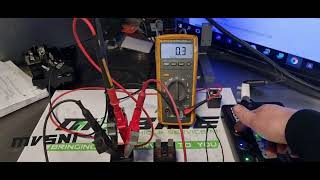
- Inverter High-Voltage Input Resistance to Ground — expected: High resistance (Mega-ohms). Failure: A reading of 0.0 ohms indicates a dead short within the inverter assembly, confirming IPM failure.
Hidden / Shadow Codes Worth Checking
- P3004-131: Indicates that the high voltage from the battery was not seen at the inverter/converter assembly. This points to an open circuit condition, such as a failed contactor (relay), blown fuse, or disconnected cable. (see via Toyota Techstream or equivalent professional scan tool.)
- P3004-132: Indicates an inverter voltage sensor malfunction or that the limiter resistance has increased. This points more specifically to an internal inverter or system main resistor issue. (see via Toyota Techstream or equivalent professional scan tool.)
- P3004-800 / P3004-801: Indicates an excessive or minimal overcurrent was detected during the pre-charge sequence. This strongly suggests a short circuit in the high-voltage system, often within the inverter itself or the A/C compressor. (see via Toyota Techstream or equivalent professional scan tool.)
Scan Tool Commands That Help
- Toyota Techstream: Active Test: Hybrid Battery Contactors (SMRP, SMRB, SMRG) — This function is used to individually command each high-voltage relay to close. The technician listens for an audible 'click'. A silent relay indicates it has failed and is the likely cause of the P3004-131 open-circuit code.
- Toyota Techstream: Data List Monitoring (VL-Voltage before Boosting, VH-Voltage after Boosting) — During a startup attempt, a technician can monitor the voltage before and after the pre-charge sequence. If the 'Voltage after Boosting' (at the inverter) does not rise to meet the 'Voltage before Boosting' (at the battery), it confirms a failure in the connection between the two, which could be a relay, fuse, or the inverter itself.
Wiring & Ground Locations

- Inverter Main Ground — On the driver's side rear of the inverter assembly, connected to a bracket which then bolts to the chassis.. While not a common cause for P3004, a poor or corroded main ground for the inverter can cause a variety of electrical issues. The inverter houses the DC-DC converter which supplies all 12V power to the vehicle, and a bad ground can affect its operation and potentially trigger fault codes.
- Connector A59 — A large multi-pin connector on the inverter with converter assembly.. This connector contains wiring for various sensors and control signals, including the generator resolver. Diagnostic procedures for related codes (and sometimes P3004) require resistance and voltage checks at specific pins on this connector.
Real Owner Repair Stories
- PriusChat user 'alinica2001' (2011 Toyota Auris (European Prius equivalent)) — Car would not start, displayed hybrid system warnings, and logged code P3004-800.
❌ Tried (didn't work) Initial diagnostics pointed towards the inverter.
✅ What actually fixed it The user measured the resistance on the high-voltage terminals of the inverter (with the battery disconnected) and found it was 0.0 ohms, indicating a dead short. Replacing the inverter assembly with a known-good used unit from a newer model (G9200-47190) resolved the issue completely. - PriusChat user 'wadekebuli' (2012 Toyota Prius Four) — P3004 code present.
❌ Tried (didn't work) Initial diagnosis was unclear why an A/C related issue would cause a high-voltage battery code.
✅ What actually fixed it The user identified that the high-voltage A/C compressor had failed and shorted. Because the A/C compressor is part of the high-voltage circuit, its failure interrupted the entire system. Replacing the A/C compressor and repairing the wiring plug resolved the P3004 code. - Reddit user, confirmed at dealer (2010 Toyota Prius) — No-start condition, 'Check Hybrid System' message, clicking sound from the rear of the vehicle, code P3004.
❌ Tried (didn't work) Replacing the 12V auxiliary battery did not fix the problem.
✅ What actually fixed it The vehicle was taken to a Toyota dealership. They diagnosed it as a failed inverter, and the repair was performed at no charge under Toyota's extended warranty program for this specific issue.
OEM Part Supersession History
G9200-47162→G9200-47220, G9200-29015, G9200-49035, G9200-49056— Part evolution and updates to address the IPM failure issue.
Heads up: While wrecking yards may match parts by VIN, it is critical to use a part number confirmed by a Toyota dealer to be compatible. In one documented case, a wrecker-supplied inverter (G9200-47220) was insisted to be compatible by VIN but did not work in a vehicle that originally had a G9200-47162, leading to a failed repair.
Helpful Videos

We Have This Part in Stock


The information in this article is provided for general reference and educational purposes only. Vehicle specifications, procedures, and part compatibility can vary by production date, trim level, and region. Always consult your vehicle's factory service manual and verify part numbers before purchasing or performing repairs. Safety-critical components such as airbags, seat belts, and braking systems should be installed by a qualified professional.
- Toyota PRIUS V:
- 🎬 Helpful Videos
- 🛍️ Shop This Part
- What's Unique About the 2017-2017 Toyota PRIUS V
- Diagnostic Flowchart
- Symptoms You May Notice
- Most Likely Causes
- Rare But Worth Checking
- Diagnosis Steps
- Parts You'll Likely Need
- Related Codes That Often Appear With This One
- Technical Service Bulletins (TSBs) & Recalls
- Platform-Specific Known Issues
- Mechanic-Grade Diagnostic Values
- Hidden / Shadow Codes Worth Checking
- Scan Tool Commands That Help
- Wiring & Ground Locations
- Real Owner Repair Stories
- OEM Part Supersession History
- 🎟️ Get 5% Off