

P3004 on 2011-2015 Kia Optima Hybrid: High Voltage Power Resource Fault Causes and Fixes
Code P3004 means your Optima Hybrid has a serious fault in the high-voltage system and will not start. The most likely cause is a failed relay or pre-charge resistor inside the HV battery junction block assembly. This is not a DIY repair due to extreme electrical shock hazard; professional service from a hybrid-certified technician is required.
- P3004 is a critical fault that will prevent your car from starting.
- Do not attempt to diagnose or repair this issue yourself due to the risk of fatal electrical shock.
- The problem is most likely a failed relay or resistor inside the HV battery junction block.
- The vehicle must be towed to a qualified repair shop with technicians trained in hybrid vehicle service.
What's Unique About the 2011-2015 Kia Optima
While the P3004 fault is common to many hybrid designs, the Optima platform and its direct mate, the Hyundai Sonata Hybrid, have shown sensitivity in their battery protection circuits. Later model years (2017-2018) were subject to a recall (SC162) for an overly sensitive Voltage Protection Device (VPD) that could cause a loss of power, specifically in EV mode. This history suggests that the battery management and relay systems are a key area of concern when diagnosing power-related hybrid faults on these vehicles.
Symptoms You May Notice
- Hybrid System Warning Light is illuminated
- Vehicle will not start or enter 'Ready' mode
- Complete loss of motive power
- A 'clicking' sound may be heard from the rear of the vehicle (or a lack of clicking) as the system attempts to engage the relays upon startup attempt.
- Replacing the 12V auxiliary battery. While a weak 12V battery can cause many electrical issues, it does not typically cause the specific pre-charge failure indicated by P3004.
- Condemning the entire HV battery pack. P3004 points to a connection issue between the battery and inverter, not necessarily a failure of the battery cells themselves. A forum user described a situation where a shop misdiagnosed a bad hybrid battery when the actual cause was a seized engine preventing the hybrid system from starting correctly.
Most Likely Causes
- Failed HV Battery Junction Block Assembly (Main Relays/Contactors) 🔴 High Probability The junction block houses the electromechanical relays (contactors) that connect the HV battery to the rest of the car. These relays have a finite lifespan and can fail by sticking open or burning out, which is a common failure point in aging hybrid vehicles as they are activated at every startup.
How to confirm: A technician can use a scan tool to monitor the relay command status and may attempt to manually actuate the relays to listen for the characteristic 'click' of engagement. Resistance and voltage tests across the relays are performed with the HV system safely de-energized. A silent relay when commanded is a strong indicator of failure.
Typical fix: Replacement of the faulty relay or the entire HV battery junction block assembly. 🎬 See how to replace a Kia Optima hybrid battery module The relays are often integrated into the block and not sold separately.
Est. part cost: $300-$800 - Failed Pre-Charge Resistor 🟡 Medium Probability This resistor absorbs a significant energy spike during every startup to safely charge the inverter capacitors. Over time, it can burn out and fail, creating an open circuit and preventing the pre-charge sequence from completing.
How to confirm: The resistor, typically located within the junction block, is tested for the correct resistance value using a multimeter after the system is de-energized. An open circuit (infinite resistance) indicates failure. The spec for a similar system is around 18-22 Ω.
Typical fix: Replacement of the pre-charge resistor. On many Kia/Hyundai models, this resistor is integrated into the larger junction block assembly, requiring the replacement of the entire unit.
Est. part cost: $50-$200 - Damaged or Loose High-Voltage Wiring 🟡 Medium Probability
How to confirm: After de-energizing the system, a technician will visually inspect all high-voltage (orange) cables for damage, corrosion, or loose connections between the battery pack, junction block, and inverter. A megohmmeter is used to test for insulation breakdown (shorts to ground), which requires a reading of 10 MΩ or higher to be considered safe.
Typical fix: Repairing or replacing the damaged cable section and ensuring all connections are clean and torqued to specification.
Est. part cost: $150-$500 - Blown High-Voltage Fuse ⚪ Low Probability
How to confirm: The main HV fuse, often integrated into the service plug or junction block, is checked for continuity. A blown fuse often points to another underlying short circuit that must be found and corrected first. One owner reported a 150A fuse being the cause of failure.
Typical fix: Replacing the fuse after diagnosing and correcting the root cause of the overcurrent condition. Kia may not sell the fuse separately from the larger assembly.
Est. part cost: $40-$100
Rare But Worth Checking
- Failed Inverter with Converter Assembly: A short circuit or other failure inside the inverter can prevent the pre-charge sequence from completing successfully. This is an expensive component and should be considered only after ruling out all other possibilities. In an analogous Toyota system, a failed power transistor within the inverter assembly was the root cause of a P3004 code.
- Faulty Hybrid Control ECU: In very rare cases, the control module itself may fail to properly command the relays or read the voltage sensors, leading to a false P3004 code. This is a last-resort diagnosis. Corrosion on the ECU connector pins has also been noted as a potential cause.
Diagnosis Steps
- SAFETY FIRST: This is a job for a qualified hybrid technician. The system must be properly de-energized by removing the HV service plug and waiting at least 10 minutes for capacitors to discharge.
- Scan for all DTCs in all modules to get a complete picture of the fault. If other DTCs are present, they should be diagnosed first. Pay close attention to any detailed INF or sub-codes that specify the nature of the P3004 fault (e.g., -131, -132, -803).
- Using a professional scan tool (like Kia GDS), monitor the live data for the hybrid control system, paying attention to HV battery voltage, inverter voltage, and the command status of the main relays (contactors).
- Visually inspect all high-voltage cable connections for any signs of corrosion, looseness, or physical damage, particularly at the battery, junction block, and inverter. Pay special attention to main ground connections in the trunk area.
- Test the main relays (contactors) within the HV junction block for proper mechanical ('click') and electrical operation. This can be done via a scan tool actuation test.
- Measure the resistance of the pre-charge resistor to ensure it is within specification. An open circuit indicates failure.
- Perform an insulation test on the high-voltage cables using a megohmmeter to check for any shorts to ground.
- If all external components and wiring test correctly, further diagnostics on the inverter and Hybrid Control ECU are required.
Parts You'll Likely Need
- HV Battery Junction Block Assembly
(OEM #37512-4R000 (Verification with VIN is required))— This assembly contains the system main relays (contactors) and the pre-charge resistor 🎬 Watch this budget repair guide for Kia hybrid battery issues, which are the most common failure points for this code.
Trusted brands: Kia (OEM), Hyundai (OEM)
OEM price range: $400-$800
Aftermarket price range: Not commonly available
Related Codes That Often Appear With This One
- C1259 — This is a generic code for HV System Regenerative Malfunction, often triggered as a secondary fault when the primary P3004 issue occurs.
- C1310 — This code indicates a general HV System Malfunction and is frequently logged alongside more specific codes like P3004.
Platform-Specific Known Issues
- While not for the 2011-2015 models, Kia issued recall SC162 for 2017-2018 Optima Hybrids due to a faulty Voltage Protection Device (VPD) that could inadvertently cut power, highlighting a history of sensitivity in the platform's hybrid protection circuits.
- A user on a Kia forum with a 2019 Optima PHEV reported an astronomical repair cost for a faulty control board integrated with the battery, highlighting the high cost of out-of-warranty hybrid component failures at dealerships.
Mechanic-Grade Diagnostic Values
- Pre-Charge Resistor Resistance — expected: 18 to 22 Ω. Failure: An open circuit (infinite resistance) or a value significantly outside this range.
- Resistance of low-voltage wire harness between Hybrid ECU and Junction Block — expected: Below 1 Ω. Failure: Higher resistance indicates a wiring or connector issue.
Hidden / Shadow Codes Worth Checking
- P3004 with INF codes (e.g., 131, 132, 800, 801, 803): These are manufacturer-specific sub-codes that provide detailed reasons for the P3004 fault. For example, P3004-131 indicates a failure during the pre-charge sequence, while P3004-803 can indicate an open circuit detected after the system is supposed to be ready. P3004-800 can indicate an excessive overcurrent during pre-charge. (see via A dealer-level scan tool like the Kia GDS (Global Diagnostic System) is required to view these INF codes.)
Scan Tool Commands That Help
- Kia GDS (Global Diagnostic System): Actuation Test — To manually command the main HV relays (contactors) in the junction block to open and close. This allows a technician to confirm if the relays are responding to commands from the Hybrid ECU and to listen for the audible 'click' of mechanical operation.
- Kia GDS (Global Diagnostic System): Resetting Adaptive Values — After replacing a major component like the junction block or ECU, this function may be required to clear learned values and ensure the new part operates correctly within the system.
Wiring & Ground Locations
- Main HV Battery Ground Lug — In the trunk, connected to the HV battery assembly and bolted to the vehicle chassis.. A loose or improperly installed main ground for the HV battery can prevent the entire pre-charge sequence from completing, directly causing a P3004. This was the confirmed fix in an analogous system after a battery replacement.
- 91860-4C010 — This is the part number for a body electrical ground strap for 2012-2013 models; its exact location should be confirmed with a service manual but is critical for proper system grounding.. Poor grounding between the body, engine, and hybrid components can cause unpredictable voltage readings and trigger control module faults.
- Instrument Panel Junction Box (Connector A, Pin #38) — Located behind the driver's side kick panel.. While not directly causing P3004, knowing this location is critical for diagnostics if the 12V battery is dead and the trunk (containing the HV battery service plug) cannot be opened. Applying power here can manually pop the trunk.
Real Owner Repair Stories
- PriusChat forum user (Toyota Prius (analogous system)) — P3004 code immediately after replacing all HV battery modules.
❌ Tried (didn't work) Re-torquing bus bars, Checking all visible connections
✅ What actually fixed it The main ground lug for the HV battery was found trapped underneath a component plate and was not connected to the chassis. Correctly securing the ground lug to its proper location resolved the code. - YouTube comment (2015 Kia Optima Hybrid) — Hybrid battery malfunctioning, car would not start, multiple error messages.
❌ Tried (didn't work) Initial diagnosis from Kia suggested a faulty module costing over $1,000.
✅ What actually fixed it The user identified a blown 150A main fuse as the root cause. They noted that Kia would not sell the fuse separately, so they ordered one online and replaced it, which fixed the vehicle.
OEM Part Supersession History
37511-4R000→37511-4R200AS— Part revision or update by the manufacturer.
Heads up: Using the incorrect version for your vehicle's production date may lead to communication or fitment issues. Always verify with VIN.37511-4R100→37511-4R201— Part revision or update by the manufacturer.
Heads up: This part number applies to a narrow mid-generation range, highlighting the importance of VIN verification.37517-4R000→37517-4R100— Part revision for the BMS wiring harness.
Model Year Variations Within This Range
- 2011-2013: The main battery assembly and its associated safety plug have multiple part numbers with specific production date ranges (e.g., parts for early 2011-2012 vs. parts for 2013). This indicates internal revisions that may affect compatibility when sourcing used or new-old-stock components.
Diagnostic Flowchart
Other Known Issues on This Vehicle
Issues unrelated to this code that are worth knowing about as an owner of this generation:
- Engine Failure (Bearing Wear) 🔴 High — Widespread issue for this generation, though less documented for the hybrid's Nu engine compared to the non-hybrid Theta II GDI. Failure can occur under 100,000 miles. (Ref: Recall SC147 was issued for the non-hybrid Theta II engine; coverage for the hybrid's Nu engine is less clear but owners have reported similar failures.)
- Electric Power Steering (MDPS) Failure 🟠 Medium — Commonly reported issue where the steering feels stiff, notchy, or locks up intermittently. Often caused by a worn gear in the steering column. (Ref: TSB CHA060 provides a software update and diagnostic procedure, which may lead to steering column replacement.)
- General Electrical System Faults 🟡 Low — Owners report various electrical gremlins, including flickering lights, battery drain, and infotainment system malfunctions.
- Airbag Control Unit (ACU) Malfunction 🔴 High — A recall was issued because a short circuit in the ACU could prevent frontal airbags and seatbelt pretensioners from deploying in a crash. (Ref: NHTSA Campaign Number: 18V137000)
- Hybrid System Component Failures 🟠 Medium — Beyond the P3004 code, aging hybrid components like the battery cells, electric motor/generator, and power electronics can fail, typically after 120,000 km (approx. 75,000 miles).
Used vs. New Parts: Buying Guide for This Vehicle
When a used part is the smart pick: A used HV Battery Junction Block assembly from a low-mileage donor vehicle can be a cost-effective solution, as the primary failure modes are electromechanical (relays) or thermal (resistor) wear. Given the high cost of a new OEM unit, a used part is a reasonable gamble if its history is known.
Donor-vehicle mileage cap: roughly under 80000 miles for the part to have meaningful remaining life.
What to inspect on the donor part:
- Check for any signs of water intrusion, corrosion on the connectors, or melting/discoloration on the plastic housing.
- If possible, verify the donor vehicle did not have hybrid system fault codes prior to being dismantled.
- Ensure the donor vehicle is from the same model year range to avoid part incompatibility issues noted in the supersession history.
OEM-only on this vehicle (don't cheap out):
- HV Battery Junction Block Assembly (as a complete unit). Aftermarket versions are not common or trusted.
- Hybrid Control ECU / Battery Management System (BMS). These modules are vehicle-specific and require OEM software compatibility.
Aftermarket brands forum-validated for this vehicle:
- For the complete hybrid battery pack, companies like Greentec Auto and Dorman offer reconditioned units with new cells and warranties, which are a trusted alternative to a new OEM battery pack.
Brands owners have reported issues with on this vehicle:
- No specific brands are cited as problematic, but extreme caution is advised for unbranded, no-name electronic components from online marketplaces, especially for a safety-critical high-voltage system.
Real Owner Stories
Aggregated from forums and TSBs cited above. Mileages and costs reflect what owners reported in those sources.
2014 Kia Optima Hybrid 2.4L
Symptoms: The owner was stranded by a complete loss of motive power.
What fixed it: The issue was identified as a seized engine, which prevented the hybrid system from entering 'Ready' mode.
Source hint: Reddit - A 2014 Optima Hybrid owner shared their experience... URL: https://www.reddit.com/r/kia/comments/of3p1s/kia_optima_hybrid_engine_failure/
2019 Kia Optima PHEV
Symptoms: Faulty control board integrated with the battery.
What fixed it: The owner noted high dealership repair costs and recommended seeking specialized independent hybrid repair shops.
Source hint: Kia Forums - A user with a newer Optima PHEV details the high cost of hybrid component repair... URL: https://www.kia-forums.com/threads/kia-optima-phev-2019-%E2%80%93-high-cost-of-hybrid-battery-repair.358259/
2012 Kia Optima Hybrid 2.4L — ~75000 miles
Symptoms: Failure of aging hybrid components including the battery cells and power electronics.
What fixed it: Replacement of hybrid system components after they failed around the 120,000 km mark.
Source hint: Known Issues - Hybrid System Component Failures
Related OBD-II Codes
Frequently Asked Questions
I hear a clicking sound from the rear of my 2013 Optima Hybrid when I try to start it, but it won't enter 'Ready' mode. Is this P3004?
Is there a recall for the hybrid system power loss on my 2011-2015 Optima Hybrid?
Can I just replace the pre-charge resistor to fix P3004 on my Kia Optima?
My 2014 Optima Hybrid lost power and won't start; could this be the engine instead of the hybrid battery?
What is the safety procedure for diagnosing P3004 on a Nu 2.4L Hybrid?
Helpful Videos

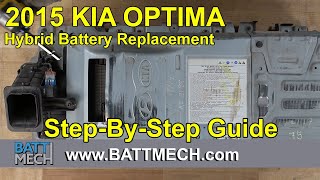
We Have This Part in Stock



The information in this article is provided for general reference and educational purposes only. Vehicle specifications, procedures, and part compatibility can vary by production date, trim level, and region. Always consult your vehicle's factory service manual and verify part numbers before purchasing or performing repairs. Safety-critical components such as airbags, seat belts, and braking systems should be installed by a qualified professional.
- Kia Optima:
- 🎬 Helpful Videos
- 🛍️ Shop This Part
- What's Unique About the 2011-2015 Kia Optima
- Symptoms You May Notice
- Most Likely Causes
- Rare But Worth Checking
- Diagnosis Steps
- Parts You'll Likely Need
- Related Codes That Often Appear With This One
- Platform-Specific Known Issues
- Mechanic-Grade Diagnostic Values
- Hidden / Shadow Codes Worth Checking
- Scan Tool Commands That Help
- Wiring & Ground Locations
- Real Owner Repair Stories
- OEM Part Supersession History
- Model Year Variations Within This Range
- Diagnostic Flowchart
- Other Known Issues on This Vehicle
- Used vs. New Parts: Buying Guide for This Vehicle
- Real Owner Stories
- 2014 Kia Optima Hybrid 2.4L
- 2019 Kia Optima PHEV
- 2012 Kia Optima Hybrid 2.4L — ~75000 miles
- Related OBD-II Codes
- Frequently Asked Questions
- 🎟️ Get 5% Off