

P3004 on 2009-2013 Chevrolet Silverado 1500 Hybrid: High Voltage System Failure Causes and Fixes
P3004 on a Silverado Hybrid indicates a critical failure in the 300-volt hybrid system, usually causing a no-start condition. The most likely causes are failed high-voltage relays inside the Battery Energy Control Module (BECM) or a fault in the Power Inverter Module (PIM). This is not a DIY repair due to lethal voltage risk.
- P3004 on a Silverado Hybrid is a critical high-voltage system fault, not a simple engine misfire.
- The vehicle is unsafe to drive and will likely not start. It should be towed to a qualified hybrid repair facility.
- This is NOT a DIY repair. The 300-volt system poses a risk of fatal electric shock.
- The most common causes are failed relays within the Battery Energy Control Module (BECM) or a failed Power Inverter Module (PIM).
- Diagnosis requires a professional scan tool to read GM-specific hybrid codes and sub-codes to pinpoint the exact failure.
What's Unique About the 2009-2013 Chevrolet Silverado 1500
The GM 2-Mode Hybrid system in the Silverado, which pairs the 6.0L LFA V8 engine with the 2ML70 transmission, is a sophisticated high-voltage system (300V) very different from a standard gasoline truck. While some generic code readers may incorrectly define P3004 as a cylinder misfire, this is wrong for this hybrid platform. The code exclusively points to a fault within the high-voltage power-up sequence. This system is shared across several GM SUVs and trucks from the same era, including the Tahoe, Yukon, and Escalade hybrids. The 2ML70 transmission itself is a complex unit containing two electric motors and lacks a traditional torque converter, relying on an auxiliary electric pump for certain functions.
Symptoms You May Notice
- Vehicle will not start or enter 'Ready' mode
- 'Check Hybrid System' message on the instrument cluster
- Check Engine Light is on
- Complete loss of power if the fault occurs while driving
- Inability to clear the code with a standard OBD-II scanner
- Replacing the entire 300V hybrid battery pack. While possible, P3004 typically points to a power delivery component (relays, inverter) rather than the battery cells themselves. Other codes like P1AEE are more directly related to battery cell failure.
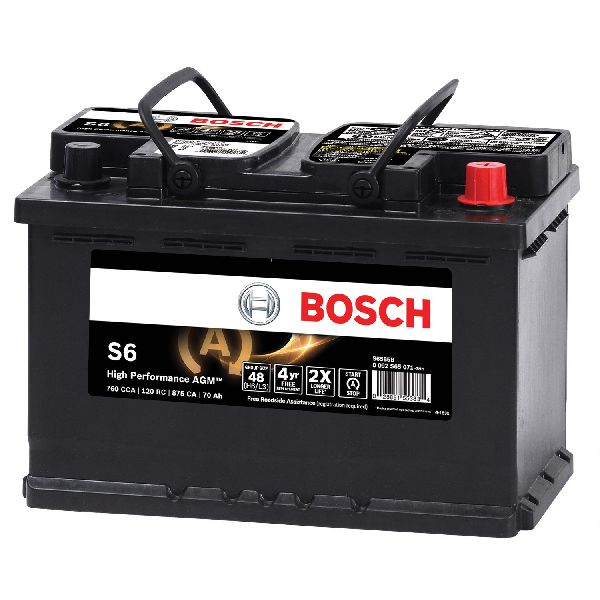
- Replacing the 12V auxiliary battery. A bad 12V battery should be replaced, but it is rarely the root cause of a P3004 code, though it can cause complicating communication issues.
Most Likely Causes
- Failed High-Voltage Contactor Relays 🔴 High Probability The contactors (relays) are mechanical switches that handle very high voltage and current. They are a known wear item in all hybrid systems and are housed within the Battery Energy Control Module (BECM) on this truck. These relays can fail to close, creating an open circuit.
How to confirm: A technician with a professional scan tool can perform an 'Active Test' to command the relays to close. If a relay is silent and does not click, it has failed. This often corresponds with an 'open circuit' sub-code like P3004-131 or P3004-132.
Typical fix: Replacement of the Battery Energy Control Module (BECM) or the specific failed relay within the high-voltage battery assembly. In many cases, the entire BECM is replaced as it contains the relays and control circuitry.
Est. part cost: $400-$800 - Power Inverter Module (PIM) Failure 🟡 Medium Probability The PIM (also known as the inverter) contains complex power electronics, specifically the Intelligent Power Module (IPM), that can fail from thermal stress or age. A short circuit within the PIM is a common cause for this code.
How to confirm: This is often diagnosed when a 'short circuit' sub-code like P3004-800 is present. A technician may perform insulation resistance tests (megger tests) on the high-voltage cables leading to the PIM to confirm the short is internal to the unit after properly de-energizing the system.
Typical fix: Replacement of the entire Power Inverter Module assembly. In some cases on other platforms, only the IPM transistor set within the inverter is replaced, but this is a highly specialized repair.
Est. part cost: $1500-$3000 - Failed Pre-Charge Resistor ⚪ Low Probability The pre-charge resistor allows the PIM's capacitors to charge slowly to prevent a massive current inrush. If this resistor burns out and creates an open circuit, the pre-charge sequence will fail, triggering a P3004 code, often with a specific sub-code like P3004-132.
How to confirm: A technician must de-energize the high-voltage system and measure the resistance of the pre-charge resistor, which is typically located within the battery junction block or BECM. An infinite resistance reading (open circuit) confirms failure.
Typical fix: Replacement of the pre-charge resistor or the assembly it is part of (often the BECM/junction block).
Est. part cost: $100-$250
Rare But Worth Checking
- Damaged High-Voltage Wiring: The thick, orange-sheathed high-voltage cables can be damaged by road debris, corrosion, or improper service, leading to an open or short circuit. A visual inspection and insulation testing are necessary.
- Weak 12V Auxiliary Battery: While it won't directly cause a high-voltage fault, a weak or improperly connected 12V battery can cause communication errors between the various control modules, preventing the hybrid system from initializing correctly. In some cases, a complete discharge may require a '300V system reset' with an advanced scan tool after the 12V issue is corrected.
- Hybrid Battery Cooling System Fault: The high-voltage battery has its own cooling system with fans and ducting. If airflow is blocked by items placed on the rear floor, the battery can overheat, leading to premature failure of modules or control components.
Diagnosis Steps
- WARNING: These steps are for informational purposes for a qualified technician. Do NOT attempt without proper training and safety equipment.
- Connect a professional scan tool (like a GM Tech 2 or equivalent) capable of reading GM hybrid system data.
- Read all DTCs and any associated sub-codes (e.g., -131, -132, -800) from the Hybrid Powertrain Control Module 2 (HPCM 2).
- Check the status and health of the 12V auxiliary battery. Ensure connections are clean and tight. Charge or replace if necessary.
- Using the scan tool, monitor high-voltage data during a start attempt to see if voltage is present at the PIM during pre-charge.
- If an open circuit is suspected (P3004-131), use the scan tool's bidirectional controls to command the high-voltage contactors. Listen for audible clicks from the battery pack area. No click indicates a failed relay or control circuit.
- If a short circuit is suspected (P3004-800), safely de-energize the entire high-voltage system by removing the service disconnect plug and waiting at least 10 minutes.
- Perform an insulation resistance (megger) test on the high-voltage cables between the battery and the PIM to isolate the location of the short.
- Visually inspect all high-voltage cable connections for signs of corrosion, arcing, or physical damage.
- If the 12V system was fully discharged, a 300V system reset may be required using an advanced scan tool before the hybrid system will re-initialize.
Parts You'll Likely Need
- Battery Energy Control Module (BECM)
(OEM #24253332)— This module contains the high-voltage contactor relays that are a primary failure point for this code, causing an open circuit condition (P3004-131). Failure of this module is a widely discussed issue.
Trusted brands: ACDelco, GM Genuine Parts
OEM price range: $400-$800
Aftermarket price range: $250-$500 (Remanufactured) - Power Inverter Module (PIM) / Hybrid Inverter Assembly
(OEM #24255311)— Internal failure of the power electronics (IPM) within the inverter is a common cause of a short-circuit condition that triggers P3004-800.
Trusted brands: ACDelco, GM Genuine Parts
OEM price range: $1500-$3000
Aftermarket price range: $1000-$2000 (Remanufactured)
Related Codes That Often Appear With This One
- P0A0F — Engine Failed to Start. This is a common companion code as the P3004 fault prevents the hybrid system from starting the gasoline engine.
- P0AC4 — Hybrid Powertrain Control Module Requested MIL Illumination. This is a generic code indicating that the hybrid module has detected a fault and has requested the Check Engine Light to be turned on.
- P0A94 — DC/DC Converter Performance. This code may appear alongside P3004 if the fault is related to the Power Inverter Module (PIM), as the DC/DC converter (APM) is often housed within or connected to it.
Technical Service Bulletins (TSBs) & Recalls
- PIP4600E: A GM technical service bulletin that outlines the diagnostic and replacement restriction process for the 2ML70 transmission, emphasizing repair over replacement and the necessity of following high-voltage disable procedures.
Platform-Specific Known Issues
- No-Start After 12V Battery Depletion: A unique issue with these trucks is that if the 12V auxiliary battery is disconnected or goes completely dead, the hybrid system may not 'wake up' even after the 12V battery is restored. A user on Electric Vehicle Forums reported needing to use an advanced scan tool to perform a '300V reset function' to get the hybrid module to re-initialize and clear the codes.
Mechanic-Grade Diagnostic Values
- Pre-Charge Resistor Resistance — expected: 18 to 22 Ω. Failure: An infinite resistance (open circuit) or a value significantly outside the expected range indicates failure.
- High-Voltage Cable Insulation Resistance (Megger Test) — expected: Greater than 10 MΩ (Megaohms) at 500V or 1000V DC. Failure: A reading below the threshold, especially one that trends towards zero, indicates a short to ground in the cable or a connected component (like the PIM).
Hidden / Shadow Codes Worth Checking
- P3004-131: High Voltage Power Resource Malfunction - Open Circuit Detected. This sub-code points to a failure in the pre-charge sequence where the system expected to see voltage but did not, often due to a failed contactor relay or a break in the circuit. (see via GM GDS2 (Global Diagnostic System 2) or Tech2 scan tool connected to the HPCM-2.)
- P3004-132: High Voltage Power Resource Malfunction - Pre-charge Failure/Inverter Voltage Sensor Malfunction. This indicates the pre-charge resistor may be open or has increased in resistance, preventing the PIM capacitors from charging correctly. (see via GM GDS2 (Global Diagnostic System 2) or Tech2 scan tool connected to the HPCM-2.)
- P3004-800: High Voltage Power Resource Malfunction - Short Circuit Detected. This is a critical sub-code indicating a short circuit in the high-voltage system, most commonly internal to the Power Inverter Module (PIM). (see via GM GDS2 (Global Diagnostic System 2) or Tech2 scan tool connected to the HPCM-2.)
Scan Tool Commands That Help
- GM GDS2/Tech2: Hybrid/EV Battery Pack Contactor Control — This is a bidirectional active test used to command each of the high-voltage contactors (relays) inside the BECM to open and close. A technician listens for an audible 'click' from each relay. The absence of a click from a specific contactor confirms mechanical failure of that relay, pinpointing the cause of an open circuit (P3004-131).
- GM GDS2/Tech2: Configuration/Reset Functions - Reset Hybrid/EV Battery Pack Data — After replacing the BECM or the entire battery pack, this function must be performed. It clears learned values, initializes the new module, and allows the HPCM-2 to recognize the new hardware. Failure to perform this reset can result in continued no-start conditions or incorrect battery state-of-health monitoring.
- GM GDS2/Tech2: SPS2 (Service Programming System 2) - Reprogram ECU — When a new BECM or HPCM-2 is installed, it must be programmed with the vehicle's specific VIN and the latest GM calibrations. This ensures software compatibility between all hybrid control modules.
Wiring & Ground Locations
- PCM/HPCM-2 Ground — On the top rear of the driver's side cylinder head. A black wire from the main engine harness bolts directly to the engine block.. This is the primary ground for the computer that controls the entire hybrid system. A loose or corroded connection here can cause erratic behavior, communication faults between modules, and failure of the high-voltage contactor relays to receive the command to close, potentially mimicking a P3004 fault.
- Main Battery to Frame Ground — Under the radiator on the driver's side frame rail. A heavy gauge cable runs from the negative terminal of the 12V battery to a bolt on the frame.. A poor 12V ground can cause low system voltage for all control modules. This can prevent the HPCM-2 from initializing correctly and properly managing the 300V pre-charge sequence, leading to a variety of faults.
- BECM Location — Inside the main 300V hybrid battery pack, which is located under the rear seat.. The BECM contains the contactor relays and pre-charge resistor that are the most common failure points for P3004. Knowing its location is critical for understanding the repair scope, which involves removing and opening the high-voltage battery assembly.
- PIM/Inverter Location — Under the hood, typically covered by a large plastic shield. It's a large aluminum-finned box with thick orange cables connected to it.. The PIM is the destination for the high-voltage power during the pre-charge sequence. If a P3004-800 (short circuit) is present, this component is the most likely cause. Technicians will disconnect the cables here to perform insulation tests.
Real Owner Repair Stories
- tahoeyukonforum.com user (2009 Chevrolet Tahoe Hybrid (shares the same platform)) — No start, 'Check Hybrid System' message, code P3004.
❌ Tried (didn't work) Initial diagnosis pointed towards the entire hybrid battery pack.
✅ What actually fixed it The final repair was the replacement of the Battery Energy Control Module (BECM) located inside the battery pack. The contactor relays within the original BECM had failed, causing the open circuit. The battery cells themselves were fine.
OEM Part Supersession History
24253332→This part number remains the primary replacement for the BECM, but it is often sold as part of a larger battery service kit. Several remanufactured options from companies like Dorman have also entered the market.— N/A - Part number is still active.
Heads up: A used or remanufactured BECM must be reprogrammed using GM's SPS2 software to the vehicle's VIN. Failure to program will result in a no-start condition.24255311→This part number for the Power Inverter Module (PIM) is still largely active, though stock may be limited to remanufactured units. Check with a GM dealer for the most current part number as minor revisions may have occurred.— N/A
Heads up: While a direct replacement, some early modules may have had different software. It is best practice to ensure the HPCM-2 is updated with the latest calibrations via SPS2 after PIM replacement to ensure full compatibility.
Diagnostic Flowchart
Other Known Issues on This Vehicle
Issues unrelated to this code that are worth knowing about as an owner of this generation:
- Excessive Oil Consumption / AFM Lifter Failure 🔴 High — Common issue on the 6.0L LFA V8 engine, often appearing after 80,000 miles. The Active Fuel Management (AFM) system's lifters can become stuck or fail, leading to misfires, noise, and high oil consumption.
- 2ML70 Hybrid Transmission Failure 🔴 High — The complex 2ML70 transmission is known for internal failures, including slipping clutches and issues with the auxiliary fluid pump. Repairs are extremely expensive and specialized, with many shops refusing to work on them. A Reddit user reported a $9,000 replacement quote from a dealer. (Ref: PIP4600E)
- Accessory Power Module (APM) Failure 🟠 Medium — The APM (also called the DC-DC converter, P/N 24253342) which converts 300V to 12V power, is known to fail. This can cause the 12V system to be overcharged, setting codes like P0563 and causing a protective shutdown of the vehicle.
- Parasitic 12V Battery Drain 🟡 Low — Owners report that the numerous control modules can drain the 12V battery if the vehicle is left sitting for more than a week, leading to a no-start condition that can be difficult to resolve without a scan tool.
Used vs. New Parts: Buying Guide for This Vehicle
When a used part is the smart pick: For the Power Inverter Module (PIM), a used part from a low-mileage, accident-damaged donor vehicle can be a cost-effective alternative to a new or remanufactured unit, as they are generally robust if not subjected to overheating. For the BECM, a used part is risky due to the high failure rate of the internal relays; a remanufactured unit with upgraded components is a smarter choice.
Donor-vehicle mileage cap: roughly under 80000 miles for the part to have meaningful remaining life.
What to inspect on the donor part:
- For a PIM, check for any signs of coolant leaks or corrosion on the housing and connectors.
- Verify the donor vehicle was not involved in a front-end collision that could have damaged the inverter.
- Ask for the VIN of the donor vehicle to check its history for any hybrid-related issues.
- For a BECM, avoid any units from vehicles that were stored outdoors with the battery discharged for long periods.
OEM-only on this vehicle (don't cheap out):
- High-Voltage Cables: Due to the critical safety nature and specific shielding, only OEM orange high-voltage cables should be used if a replacement is needed.
Aftermarket brands forum-validated for this vehicle:
- Dorman offers remanufactured BECM and sometimes entire hybrid battery packs with claims of improved internal components like nickel-plated bus bars to prevent corrosion.
Brands owners have reported issues with on this vehicle:
- Avoid unknown, no-name sellers on online marketplaces for critical components like the BECM or PIM. The risk of receiving a non-functional or improperly tested part is extremely high, and programming issues are common.
Real Owner Stories
Aggregated from forums and TSBs cited above. Mileages and costs reflect what owners reported in those sources.
2009 Silverado Hybrid 6.0L V8
Symptoms: The vehicle had a no-start condition with many communication codes present after a 12V battery issue.
What fixed it: Corrected a loose 12V battery cable and performed a '300V reset' with a scan tool to re-initialize the hybrid module.
Source hint: Electric Vehicle Forums - '2009 Silverado Hybrid No Start communication codes'
2008-2013 Chevrolet Silverado 1500 Hybrid 6.0L V8
Symptoms: Sudden loss of propulsion while driving and inability to restart the vehicle.
What fixed it: Replacement of the Battery Energy Control Module (BECM) due to internal relay failure.
Source hint: Reddit r/volt - 'Finally hit with the dreaded BECM failure. So sad!'
2008-2013 Chevrolet Silverado 1500 Hybrid 6.0L V8
Symptoms: Internal transmission failure including slipping clutches and auxiliary fluid pump issues.
What fixed it: Full replacement of the 2ML70 hybrid transmission.
Cost: $9,000-$9,000
Source hint: Reddit user report cited in 2ML70 Hybrid Transmission Failure section
Related OBD-II Codes
Frequently Asked Questions
My 2009 Silverado Hybrid won't start after the 12V battery died; is there a special procedure to fix this?
Does GM technical service bulletin PIP4600E apply to my 2009-2013 Silverado 1500 Hybrid?
I'm seeing P3004 with sub-code -131 or -132; what does that specifically mean for my Chevy truck?
What is the 'short circuit' sub-code for the P3004 on this platform?
Can I use a standard OBD-II scanner to clear the P3004 code on my Silverado Hybrid?
Is the 6.0L V8 in my Hybrid prone to the same lifter issues as the standard Silverado?
Used OEM Parts in Stock




New Aftermarket Parts Available


The information in this article is provided for general reference and educational purposes only. Vehicle specifications, procedures, and part compatibility can vary by production date, trim level, and region. Always consult your vehicle's factory service manual and verify part numbers before purchasing or performing repairs. Safety-critical components such as airbags, seat belts, and braking systems should be installed by a qualified professional.
- Chevrolet Silverado 1500:
- 🛍️ Shop This Part
- What's Unique About the 2009-2013 Chevrolet Silverado 1500
- Symptoms You May Notice
- Most Likely Causes
- Rare But Worth Checking
- Diagnosis Steps
- Parts You'll Likely Need
- Related Codes That Often Appear With This One
- Technical Service Bulletins (TSBs) & Recalls
- Platform-Specific Known Issues
- Mechanic-Grade Diagnostic Values
- Hidden / Shadow Codes Worth Checking
- Scan Tool Commands That Help
- Wiring & Ground Locations
- Real Owner Repair Stories
- OEM Part Supersession History
- Diagnostic Flowchart
- Other Known Issues on This Vehicle
- Used vs. New Parts: Buying Guide for This Vehicle
- Real Owner Stories
- 2009 Silverado Hybrid 6.0L V8
- 2008-2013 Chevrolet Silverado 1500 Hybrid 6.0L V8
- 2008-2013 Chevrolet Silverado 1500 Hybrid 6.0L V8
- Related OBD-II Codes
- Frequently Asked Questions
- 🎟️ Get 5% Off