

P3000 on 2010-2015 Lexus RX 450h: Hybrid Battery Malfunction Causes and Fixes
On a 2010-2015 RX 450h, code P3000 signals a fault in the high-voltage hybrid battery system. The most common cause is an aging, degraded battery pack requiring replacement. A remanufactured battery costs roughly $2,500-$4,500, while a new OEM pack from a dealer can be $5,000 or more. Less common causes include a clogged cooling fan or a deeply discharged battery from running out of fuel.
- P3000 is a general, but serious, fault code for the hybrid battery system; professional diagnosis is required to find the specific cause.
- The most likely cause on a 2010-2015 RX 450h is an aging HV battery pack that needs replacement.
- Before assuming the worst, check for simple causes like an empty fuel tank or a clogged battery cooling air vent.
- Due to extreme high voltage, diagnosis and repair should only be performed by a qualified technician.
- A remanufactured battery from a reputable independent shop can save thousands of dollars compared to a new battery from a Lexus dealership.
What's Unique About the 2010-2015 Lexus RX 450h

The Lexus RX 450h of this era uses a large 288V Nickel-Metal Hydride (NiMH) battery pack located under the rear seats, composed of 30 individual modules. As these vehicles are now over a decade old, age-related battery degradation is the primary reason owners see the P3000 code. Unlike simpler engine codes, P3000 is a gateway to a complex diagnostic process involving high-voltage systems. It can be triggered by a serious component failure like a degraded battery cell, or by a simple operational error like running out of gas, which prevents the engine from recharging the HV battery.
Symptoms You May Notice
- "Check Hybrid System" warning message on the dashboard
- Red triangle warning light illuminated
- Vehicle fails to go into "READY" mode (will not start)
- Reduced power and acceleration
- Significantly decreased fuel economy
- Engine running more often than usual
- Audible clicking from the rear of the vehicle as high-voltage relays attempt to engage but fail
- Replacing the 12V auxiliary battery. While a dead 12V battery can cause a no-start condition and various warning lights, it will not typically set a P3000 code. The P3000 code is specific to the high-voltage system.
Most Likely Causes

- Degraded or Failing High-Voltage (HV) Battery Pack 🔴 High Probability The NiMH battery packs in this generation have a typical lifespan of 8-12 years or 100,000-150,000 miles. Vehicles in the 2010-2015 range are now at an age where natural battery degradation is common. The pack consists of 30 modules, and failure of even one can cause an imbalance and trigger the code.
How to confirm: A technician with a hybrid-capable scan tool (like Toyota Techstream) can view the voltage of each individual battery block. A voltage difference greater than ~0.3V between blocks indicates an imbalance and a failing pack. This is often accompanied by code P0A80 ('Replace Hybrid Battery Pack').
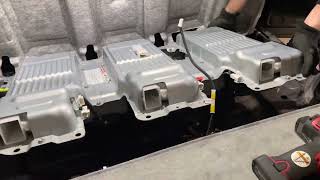
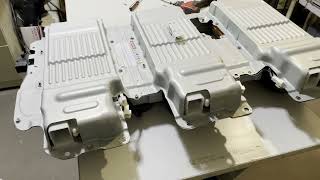
Typical fix: Replace the entire high-voltage battery pack with a new OEM, remanufactured, or refurbished unit. While individual modules can be replaced, it is a specialized job and may not be reliable long-term. 🎬 See how a professional technician rebuilds these hybrid battery packs.
Est. part cost: $2200-$7000 - Clogged or Failed HV Battery Cooling Fan System 🟡 Medium Probability The battery cooling system draws air from the cabin through vents in the rear passenger area. These vents can become clogged with dust, pet hair, or debris, restricting airflow. Forum discussions indicate this generation RX 450h does not have a separate, easily replaceable filter element, meaning the fan blades themselves become coated in dust over time, reducing their efficiency. If the fan fails or airflow is blocked, the battery can overheat, which accelerates degradation and triggers faults.
How to confirm: Inspect the battery cooling intake vents for blockages. A technician can use a scan tool to command the fan to run and verify its operation. Excessive noise or no fan activity indicates a problem. Visual inspection of the fan requires significant disassembly of the rear interior. 🎬 Watch: Step-by-step guide to removing and reinstalling the battery pack.
Typical fix: Clean the cooling fan and all air passages. If the fan motor has failed, it must be replaced. This requires significant disassembly of the rear interior.
Est. part cost: $0 for cleaning, $150-$300 for a replacement fan motor - Critically Low HV Battery State of Charge (SOC) ⚪ Low Probability This is an operational issue, not a part failure. If the vehicle runs out of gasoline, the engine cannot run to charge the HV battery. Leaving the vehicle in Neutral for an extended time also prevents charging. If the vehicle is stored for several months, the battery can self-discharge to a critically low level.
How to confirm: Check the fuel gauge. Ask if the vehicle was stored for a long time or left in Neutral. The sub-code P3000-388 is specifically associated with a low state of charge.
Typical fix: Refuel the vehicle. If the battery is too low to start the engine, it may require a special 'rescue charge' from a dealer or hybrid specialist using a specific high-voltage charger like the GRX-5100, as outlined in Toyota TSB T-SB-0095-20. A standard 12V jump start will not work.
Est. part cost: $0-$300 for a rescue charge service
Rare But Worth Checking
- Faulty Battery ECU or Wiring Harness: Corrosion on connectors or a break in the wiring harness can interrupt communication between battery modules and the ECU, triggering a P3000 code. This is less common than pack failure but should be investigated, especially in areas with high humidity or road salt usage.
- Faulty HV Battery Junction Box / Internal Relay: A failure can occur within the battery pack's internal junction box or safety relays. In this scenario, the battery modules may hold a proper charge, but the junction box fails to transmit power to the rest of the hybrid system. Diagnosis requires testing for voltage at the main output terminals of the battery assembly.
Diagnosis Steps
- SAFETY FIRST: Do not attempt to service the high-voltage system without proper training and equipment. The following steps are for informational purposes.
- Connect a hybrid-compatible diagnostic scanner (e.g., Toyota Techstream) to the OBD-II port.
- Read all codes from the Hybrid Control and Battery Control ECUs. Note the P3000 and any specific sub-codes (e.g., P3000-388) or other DTCs like P0A80.
- Check for simple causes: Verify the vehicle has an adequate fuel level and that the 12V auxiliary battery is charged.
- Using the scan tool, navigate to the live data stream for the HV Battery ECU.
- Monitor the voltage of all battery blocks (typically 15-20 blocks). Look for any block that reads significantly lower or higher than the others. A variance of more than 0.3V is a strong indicator of a failing pack.
- Inspect the HV battery cooling system. Check the intake vents under/behind the rear seats for obstructions. Use the scan tool's utility function to command the cooling fan on and listen for its operation.
- If the battery pack and cooling system appear okay, investigate the wiring harness and connectors at the Battery ECU and the battery pack itself for any signs of corrosion, damage, or loose connections.
- If a low SOC is suspected (P3000-388), and refueling does not allow the car to start, a 'rescue charge' procedure may be necessary.
Parts You'll Likely Need
- High-Voltage Hybrid Battery Pack
(OEM #G9510-48051 (supersedes G9510-48050), G9510-48070)— This is the most common cause of P3000 on an aging RX 450h. The entire pack is typically replaced 🎬 Watch: Learn about upgrading to cooler-running hybrid battery cells. as a unit because balancing individual new and old cells is unreliable.
Trusted brands: Lexus (OEM), Dorman (Remanufactured, P/N: 587-033), GreenTec Auto (Remanufactured), Electron (Remanufactured)
OEM price range: $4500-$7000
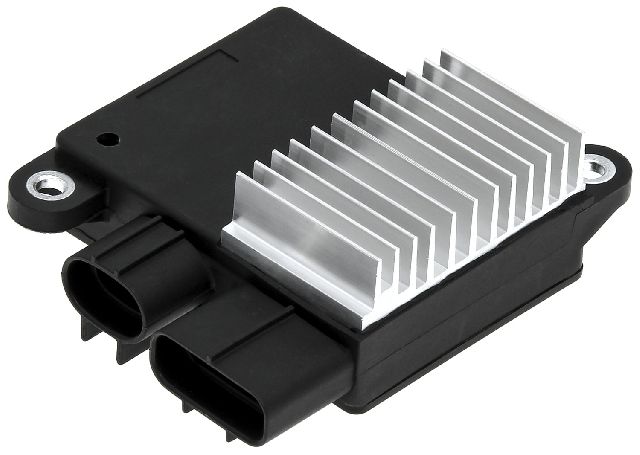
Aftermarket price range: $2200-$4000 - HV Battery Cooling Fan — If the cooling fan fails or becomes too clogged to function, it will cause the battery to overheat, leading to premature failure and triggering fault codes. It's a common secondary failure point.
Trusted brands: Lexus (OEM), Aisin
OEM price range: $200-$300
Aftermarket price range: $100-$200
Related Codes That Often Appear With This One
- P0A80 — This code specifically means 'Replace Hybrid Battery Pack'. P3000 is the general alert, and P0A80 is often the specific diagnosis that follows when cell degradation is the root cause.
- P0A7F — This code means 'Hybrid Battery Pack Deterioration' and is another common companion to P3000, indicating the battery has reached the end of its service life.
- P3190 — This code means 'Poor Engine Power' and can be set alongside P3000 if the gasoline engine fails to start (e.g., out of fuel), which then leads to the depletion of the HV battery.
Technical Service Bulletins (TSBs) & Recalls
- T-SB-0095-20: While not specific to the RX450h, this Toyota bulletin describes the 'Rescue Charge' procedure for various hybrid
Platform-Specific Known Issues
- A common point of confusion for owners and even some shops is the HV battery cooling system. Forum discussions and parts diagrams suggest the 2010-2015 RX 450h does not have a separate, serviceable filter element like some other Toyota/Lexus hybrids. The system uses a screen at the intake vent, but the fan blades themselves are what collect performance-robbing dust, requiring a labor-intensive cleaning procedure for proper maintenance.
Mechanic-Grade Diagnostic Values

- HV Battery Block Voltage Difference (Under Load) — expected: 0.05V to 0.15V between the minimum and maximum block voltages during a forced discharge cycle.. Failure: A difference greater than 0.8V is a concern, and a difference exceeding 1.2V will typically set a fault code like P0A80.
- HV System Insulation Resistance (Megohmmeter Test) — expected: Infinite or >100 Megaohms (MΩ) between HV terminals and chassis ground.. Failure: A reading below 10 MΩ indicates a significant loss of isolation (leakage). A fault is typically set below 1-2 MΩ.
- HV Battery Temperature Sensor Resistance — expected: Resistance changes inversely with temperature. At 0°C (32°F), resistance is ~6 kΩ. At 60°C (140°F), resistance is ~0.5 kΩ.. Failure: An open or shorted reading, or a value that does not correspond to the ambient temperature of the battery pack.
Hidden / Shadow Codes Worth Checking
- P3000 (INF 388): Indicates an abnormal drop in the HV battery's State of Charge (SOC), often caused by running out of fuel, leaving the vehicle in Neutral, or long-term storage. (see via Toyota Techstream or equivalent advanced scan tool under the Hybrid Control ECU's DTC information.)
- P0A80 (INF 123): This is the specific sub-code for 'Replace Hybrid Battery Pack', triggered when the voltage difference between battery blocks exceeds the maximum threshold. (see via Toyota Techstream or equivalent advanced scan tool under the Hybrid Control ECU's DTC information.)
- P0AA6 (INF 526 / 612 / 613 / 614): Indicates a Hybrid Battery Voltage System Isolation Fault. INF 526 is a general isolation fault, while 612, 613, and 614 point to the HV battery area, transaxle area, or DC high-voltage area, respectively. This means high voltage may be leaking to the chassis. (see via Toyota Techstream or equivalent advanced scan tool. These are critical safety-related codes.)
Scan Tool Commands That Help
- Toyota Techstream: Active Test: 'Driving the Battery Cooling Fan' — To manually activate the HV battery cooling fan (or fans, as this model has three) to verify its operation. The test allows for selecting different speeds (e.g., 'air volume mode 6') to check functionality without having to wait for the battery to heat up.
- Toyota Techstream: Active Test: 'Battery Charge' — This function, found under the Hybrid Control menu, can be used to force the gasoline engine to run and charge the HV battery. It is useful for diagnostics and after certain service procedures.
Wiring & Ground Locations
- G1 — Under the center floor console.. This is a major chassis ground point in the vicinity of the hybrid control systems. Poor contact here could cause various communication errors.
- G2 — Under the rear of the vehicle.. This ground point is near the HV battery assembly and could affect the battery cooling system or other related components if corroded or loose.
- Connectors m1 and m4 — Connector m1 is on the Battery Cooling Blower assembly. Connector m4 is on the Battery Smart Unit (Battery ECU).. When diagnosing a non-functional cooling fan, a technician can test for continuity between pin m1-2 and pin m4-7 to verify the integrity of the control wire from the ECU to the fan motor.
OEM Part Supersession History
G9510-48050→G9510-48051— Standard part revision and update by the manufacturer.
Heads up: The new part number (G9510-48051) is the correct replacement for all 2010-2015 RX 450h models and is fully compatible.
Model Year Variations Within This Range
- 2013-2015: The RX series received a facelift for the 2013 model year, which included cosmetic updates (spindle grille) and some electronic feature additions like available Blind Spot Monitoring. However, for the purposes of diagnosing a P3000 code, the core 2GR-FXE hybrid powertrain, the NiMH HV battery pack, and its control systems remained fundamentally the same as the 2010-2012 models.
Diagnostic Flowchart
Used vs. New Parts: Buying Guide for This Vehicle
When a used part is the smart pick: A used HV battery pack from a salvage yard can be a cost-effective option if the budget does not allow for a new or remanufactured unit. It is most viable for the primary cause of P3000: complete pack failure. It is not applicable for smaller parts like fans or relays, which should be bought new.
Donor-vehicle mileage cap: roughly under 100000 miles for the part to have meaningful remaining life.
What to inspect on the donor part:
- Prioritize a donor vehicle from the latest possible year (2013-2015) to get the newest possible battery.
- Verify the donor vehicle's mileage is under 100,000 miles, as battery degradation accelerates significantly after this point.
- Inspect the battery case for any signs of physical damage, corrosion, or water intrusion.
- If possible, obtain the VIN of the donor car to check its history for accidents or flood damage.
OEM-only on this vehicle (don't cheap out):
- High-Voltage Hybrid Battery Pack: While aftermarket options exist, a new OEM battery from Lexus offers the highest probability of long-term reliability and is considered the best value if you plan to keep the vehicle for many years.
- Battery ECU (Smart Unit): Due to its complexity and critical role in managing the battery, using a new OEM part is strongly advised if it is found to be faulty.
Aftermarket brands forum-validated for this vehicle:
- Dorman (Remanufactured Battery)
- GreenTec Auto (Remanufactured/New Cell Battery)
- Electron (Remanufactured Battery)
Real Owner Stories
Aggregated from forums and TSBs cited above. Mileages and costs reflect what owners reported in those sources.
2014 Lexus RX 450h 2GR-FXE 3.5L Hybrid — 150000 miles
Symptoms: The vehicle stalled and displayed P3000 and P3190 codes.
What fixed it: The issue was severely misdiagnosed by a dealer as a locked engine and failed hybrid battery with a $15,000 estimate. An independent shop later discovered the vehicle could be turned on in neutral, indicating the problem was likely with the transmission or another system, not the battery.
Cost: $15000-$15000
Source hint: ClubLexus: 'P3000 and p3190'
2010 Lexus RX 450h 2GR-FXE 3.5L Hybrid
Symptoms: Owner received a quote for a new hybrid battery, indicating a battery failure code was present.
What fixed it: The owner was exploring options between a new OEM battery, a refurbished unit, and the possibility of replacing individual cells. The importance of checking the battery cooling fan for blockages was also discussed as a potential contributing factor.
Source hint: ClubLexus: 'Hybrid Battery -- new or refurbished?'
2008 Lexus RX 450h Hybrid — ~180000 miles
Symptoms: Owner of a high-mileage vehicle was quoted $5,000 for a battery replacement.
What fixed it: The owner was considering whether to repair or sell the vehicle. Commenters suggested that aftermarket battery replacement options could be half the price of the dealer quote.
Cost: $5000-$5000
Source hint: Reddit r/Lexus: 'Repair or Sell Question about 2008 RX 450 Hybrid'
Related OBD-II Codes
Frequently Asked Questions
My 2012 RX 450h won't go into 'READY' mode after I tried jump-starting the 12V battery. What's wrong?
Where is the hybrid battery cooling fan filter on my RX 450h? I want to clean it.
My mechanic says my hybrid battery is failing. Can I save money by just replacing the one bad module?
I ran out of gas and now my RX 450h has a P3000 code and won't start, even after I added fuel. What should I do?
How does a technician definitively confirm the high-voltage battery pack is the cause of the P3000 code?
Helpful Videos
We Have This Part in Stock




The information in this article is provided for general reference and educational purposes only. Vehicle specifications, procedures, and part compatibility can vary by production date, trim level, and region. Always consult your vehicle's factory service manual and verify part numbers before purchasing or performing repairs. Safety-critical components such as airbags, seat belts, and braking systems should be installed by a qualified professional.
- Lexus RX 450h:
- 🎬 Helpful Videos
- 🛍️ Shop This Part
- What's Unique About the 2010-2015 Lexus RX 450h
- Symptoms You May Notice
- Most Likely Causes
- Rare But Worth Checking
- Diagnosis Steps
- Parts You'll Likely Need
- Related Codes That Often Appear With This One
- Technical Service Bulletins (TSBs) & Recalls
- Platform-Specific Known Issues
- Mechanic-Grade Diagnostic Values
- Hidden / Shadow Codes Worth Checking
- Scan Tool Commands That Help
- Wiring & Ground Locations
- OEM Part Supersession History
- Model Year Variations Within This Range
- Diagnostic Flowchart
- Used vs. New Parts: Buying Guide for This Vehicle
- Real Owner Stories
- 2014 Lexus RX 450h 2GR-FXE 3.5L Hybrid — 150000 miles
- 2010 Lexus RX 450h 2GR-FXE 3.5L Hybrid
- 2008 Lexus RX 450h Hybrid — ~180000 miles
- Related OBD-II Codes
- Frequently Asked Questions
- 🎟️ Get 5% Off