

P3000 on 2010-2012 Lexus HS 250h: Battery Control System Malfunction Causes and Fixes
Code P3000 on a 2010-2012 Lexus HS 250h indicates a general fault in the high-voltage (HV) battery system. The most common cause is a failing HV battery pack due to age, but it can also be triggered by a clogged battery cooling fan, a faulty battery ECU, or a deeply discharged battery from prolonged disuse. This is a serious code that requires professional diagnosis with a tool like Toyota Techstream to read mandatory sub-codes.
- P3000 is a general warning for a fault in the hybrid battery system; it is not the specific fault itself.
- Before assuming a costly battery replacement, always inspect the HV battery cooling fan and its intake vent for blockages, a very common issue on the HS 250h.
- Diagnosis and repair of the high-voltage system are extremely dangerous and should be left to a qualified professional with hybrid vehicle experience.
- An advanced scan tool is required to read the specific sub-codes that will pinpoint the actual problem, such as a failing battery pack (P0A80) or a specific weak cell block.
- Check for simple issues first: ensure the car has fuel and that the 12V auxiliary battery is healthy.
What's Unique About the 2010-2012 Lexus HS 250h
The Lexus HS 250h uses a 244.8-volt Nickel-Metal Hydride (NiMH) battery pack, a technology known for age-related degradation. A very common issue on this platform, which shares its powertrain with the Toyota Camry Hybrid, is the clogging of the hybrid battery cooling fan intake vent, located near the rear passenger seat. This can lead to battery overheating and trigger a P3000 code long before the battery itself has completely failed, making a fan inspection a critical first step. Another key issue is deep discharge; if the vehicle sits unused for an extended period (e.g., several weeks or months), the HV battery can self-discharge to a point where the car will not enter 'Ready' mode, setting a P3000 code. Toyota has a specific dealer procedure called a 'Rescue Charge' for this scenario.
Symptoms You May Notice
- "Check Hybrid System" message on the dashboard.
- Illuminated Check Engine Light and Master Warning Light (red triangle).
- Vehicle enters a low-power "limp" or fail-safe mode.
- Reduced acceleration and overall performance.
- The gasoline engine runs more frequently than usual.
- Decreased fuel economy.
- Vehicle may fail to start or will not enter 'Ready' mode.
- Immediately replacing the expensive HV battery pack without first inspecting the much cheaper and more accessible battery cooling fan and its intake vent.
- Replacing the HV battery when it is only deeply discharged and could be recovered with a dealer 'Rescue Charge' procedure.
Most Likely Causes
- Failing High-Voltage (HV) Hybrid Battery Pack 🔴 High Probability The NiMH battery technology used in this model has a finite lifespan and degrades with age and use, typically after 8-12 years. This is the most common point of failure for the P3000 code as the vehicle ages and individual cell blocks weaken.
How to confirm: Use an advanced scan tool like Toyota Techstream or a hybrid-specific app like Dr. Prius to check for code P0A80 ('Replace Hybrid Battery Pack') and to view the voltage of individual battery blocks. A significant voltage difference between blocks (typically >0.3V) indicates a failing pack.
Typical fix: Replace the high-voltage battery pack with a new or remanufactured unit. Some specialists can recondition the pack by replacing individual failed modules.
Est. part cost: $1500-$3500 - Clogged or Failed HV Battery Cooling Fan 🟡 Medium Probability The battery cooling fan's intake vent is located in the rear passenger area and is prone to getting clogged with dust, pet hair, and debris, causing the HV battery to overheat. This is a very common and preventable issue.
How to confirm: Visually inspect the fan intake vent for blockages. With the vehicle in 'Ready' mode, listen for the fan running. An advanced scan tool can command the fan to run at various speeds to test its function. A user on a Lexus forum noted that simply removing the fan for cleaning triggered the code, which was cleared after re-installation, highlighting the system's sensitivity.
Typical fix: Clean the fan intake vent and the fan blades themselves. If the fan motor has failed, it must be replaced.
Est. part cost: $150-$300 - Excessively Discharged HV Battery 🟡 Medium Probability If the vehicle is not driven for several weeks or months, the NiMH battery will naturally self-discharge to a critically low level. The system then prevents startup to protect the battery, triggering P3000 with an associated information code. This can also happen if the car runs out of gas, as the engine cannot run to charge the HV battery.
How to confirm: Confirm if the vehicle has been parked for an extended period (3+ weeks) or if it ran out of fuel. The vehicle will have 12V power (lights, radio) but will not enter 'Ready' mode. A scan tool will show P3000 and likely a P0A1F and an INF code like 388.
Typical fix: Refuel the vehicle if empty. If deeply discharged from sitting, it requires a special 'Rescue Charge' using a dealer-specific GRX-5100 diagnostic station as outlined in a Toyota TSB. A standard jump start will not work.
Est. part cost: $0 - $650 - Battery ECU Malfunction ⚪ Low Probability
How to confirm: This is diagnosed by exclusion. If the HV battery pack, cooling system, and all related wiring are confirmed to be in good condition, the Battery ECU is the likely culprit. This requires professional-level diagnostics and verification with a known-good part.
Typical fix: Replace the Battery ECU. This often requires programming to the vehicle.
Est. part cost: $400-$800
Rare But Worth Checking
- Corroded Wiring or Connectors: Corrosion on a connector for the battery cooling fan circuit or on the battery bus bars can cause high resistance and trigger a P3000 code. It's worth checking the wiring harness near the fan and battery for any signs of water intrusion or corrosion, especially when replacing battery modules.
- Failing 12V Auxiliary Battery: While it doesn't directly cause P3000, a weak 12V battery is known to cause a cascade of random, unrelated warning lights and electronic issues on Lexus vehicles. A user on ClubLexus was advised to test the 12V battery first when a 'Check Hybrid System' light appeared. It's an easy and inexpensive item to test and rule out early in the diagnostic process.
Diagnosis Steps
- Read all Diagnostic Trouble Codes (DTCs) from all vehicle modules using a hybrid-compatible OBD-II scanner with access to manufacturer-specific codes (e.g., Toyota Techstream, Autel, high-end BlueDriver). Note any codes accompanying P3000, especially P0A80 or INF codes.
- Check the fuel level. If the vehicle is out of gas, refuel it, clear the codes, and attempt to start.
- Inspect the 12V auxiliary battery located in the trunk. Test its voltage and load capacity. A battery older than 5 years should be considered suspect as it can cause erroneous electronic faults.
- Locate the HV battery cooling intake vent in the rear passenger area (typically a small grille) and inspect for blockages. Clean any debris found.
- Using an advanced scan tool, access the live data from the HV Battery ECU.
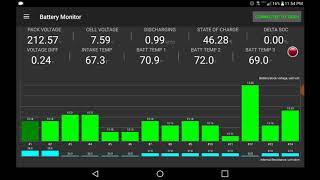
- Monitor the voltages of all individual battery blocks. A variance of more than 0.3V between the highest and lowest block typically indicates a failing battery pack. Apps like Dr. Prius can also perform this function with a compatible OBD-II adapter. 🎬 See how to test your traction battery with the Dr. Prius app
- Use the scan tool's active test function to command the HV battery cooling fan to operate at different speeds. Verify it runs and responds correctly.
- If the fan does not run, inspect the fan motor, relay, fuse, and wiring for faults.
- If the history indicates the vehicle was parked for over a month and won't go into 'Ready' mode, suspect a deep discharge. The vehicle may need a dealer 'Rescue Charge' per a Toyota TSB.
- If all tests point to a healthy battery, cooling system, and wiring, the Battery ECU itself may be faulty.
Parts You'll Likely Need
- High-Voltage (HV) Hybrid Battery Assembly
(OEM #G9510-75010 (superseded by G9510-75011))— This is the most common cause of P3000 due to natural age-related degradation of the NiMH cells.
Trusted brands: Lexus (OEM), Dorman (Remanufactured), Green Bean Battery (Remanufactured), Best Hybrid Batteries (Remanufactured)
OEM price range: $2800-$3500
Aftermarket price range: $1500-$2500 - HV Battery Cooling Fan Assembly
(OEM #G9230-75010)— The cooling fan is critical for battery longevity. Its motor can fail over time, or it can become so clogged with debris that it can't cool the pack effectively, leading to overheating and a P3000 code.
Trusted brands: Lexus (OEM), Various (Used OEM)
OEM price range: $150-$300
Aftermarket price range: $75-$150 (Used)
Related Codes That Often Appear With This One
- P0A80 — P0A80 ('Replace Hybrid Battery Pack') is a more specific code stored in the Battery ECU. P3000 is the general code sent to the main ECU, so they almost always appear together when the battery pack itself has failed due to age-related cell imbalance.
- P3011-P3029 — These codes correspond to specific blocks of cells within the hybrid battery pack (e.g., P3012 means 'Battery Block 2 Becomes Weak'). They help pinpoint which part of the battery is failing and will be present alongside P3000.
- P0A85 — This code indicates a fault in the 'Hybrid Battery Pack Cooling Fan 1 Control Circuit'. It will appear with P3000 if the battery fault is being caused by an electrical issue with the cooling fan system.
- P0A1F — This code for 'Battery Energy Control Module' is often seen with P3000 when the HV battery is in a deep discharge state after being parked for a long time.
Mechanic-Grade Diagnostic Values
- Individual HV battery module voltage — expected: 7.2V - 8.4V per module, with all modules reading very close to each other.. Failure: A difference of more than 0.3V between the highest and lowest module voltage indicates an imbalance and likely failure.
- HEV main fuse resistance — expected: Below 1 Ω. Failure: High or infinite resistance indicates a blown fuse, cutting power to the battery ECU.
Hidden / Shadow Codes Worth Checking
- P0AA6 with INF 526 or 613: This indicates a 'Hybrid Battery Voltage System Isolation Fault,' which is a ground fault somewhere in the high-voltage system. INF 526 is a general isolation fault, while INF 613 may point more specifically toward the transaxle, motor/generator cables, or inverter. (see via Toyota Techstream or equivalent advanced scan tool capable of reading manufacturer-specific sub-codes (Information Codes).)
- P3000-xxx (e.g., P3000-123): The P3000 code itself can be stored with a specific information code suffix that provides a more direct clue to the fault's origin, similar to other Toyota/Lexus codes. These are essential for diagnosis and avoiding guesswork. (see via Toyota Techstream software is the primary tool for viewing these detailed sub-codes.)
Scan Tool Commands That Help
- Toyota Techstream: Active Test: 'Control the HV Bat Fan Speed' — This is used to verify the functionality of the hybrid battery cooling fan. The technician can command the fan to run at different speeds (e.g., 1 through 7) to confirm the motor works and responds to commands from the Battery ECU.
- Toyota Techstream: Data List: 'Battery Block Voltage' — This is the primary diagnostic screen for checking HV battery health. It displays the voltage of all 17 cell blocks in real-time, allowing a technician to spot a weak or failing block by comparing its voltage to the others.
- Toyota Techstream: Utility: 'Hybrid Control System Health Check' — After a repair or if a code was cleared, the system may require a drive cycle to gather enough data to run a self-check. If a health check fails with a P3000, it may instruct the user to drive the vehicle for a set distance (e.g., 300-500 miles) and re-run the check.
Wiring & Ground Locations
- Hybrid Vehicle Control ECU — Located in the left (driver's) side of the engine compartment.. This is the master computer for the hybrid system that sets the P3000 code based on signals from the Battery ECU. Checking its connections is a key step.
- Battery ECU (Battery Smart Unit) — Mounted on or inside the high-voltage battery assembly, behind the rear seat.. This ECU directly monitors the battery cells, fan, and relays. A fault here or in its wiring is a direct cause of P3000.
- J/C F94 and J/C F97 — Junction Connectors located on the left side of the dashboard.. These are key electrical junctions that route power and data lines for various ECUs, including those in the hybrid system. A poor connection here can cause communication errors.
- Orange High-Voltage Power Cables — Routed under the vehicle's chassis and within the engine compartment.. These cables carry lethal voltage. Damage or corrosion to these cables can cause an isolation fault (P0AA6) which in turn triggers P3000.
Real Owner Repair Stories
- ClubLexus Forum user 'agent_dess' (Lexus IS300h (similar hybrid system logic)) — P3000 code appeared during a dealer service/hybrid health check.
✅ What actually fixed it The user had previously removed the hybrid battery cooling fan for cleaning. This action of disconnecting and reconnecting the component logged the P3000 fault. The dealer cleared the code, instructed the owner to drive for 300 miles to allow the system to gather new data, and the car passed the subsequent health check without any parts being replaced.
OEM Part Supersession History
G9510-75010→G9510-75011— Standard part number update or revision by the manufacturer. The specific changes (e.g., internal chemistry, construction) are not publicly detailed but the new part is the correct service replacement.
Model Year Variations Within This Range
- 2010-2012: Unlike many later Lexus hybrids, the HS 250h sold in North America does not have a separate, serviceable hybrid battery cooling *filter*. It only has a fan and an intake vent grille. Cleaning efforts should focus on the fan blades and the ducting itself, not looking for a non-existent filter.
- 2010: The 2010 model year was subject to a specific recall for the hybrid transaxle assembly, which could fail and cause the vehicle to enter a reduced-power limp mode with warning lights. These symptoms can be mistaken for an HV battery failure, so confirming this recall has been performed is a critical diagnostic step for 2010 models.
Diagnostic Flowchart
Other Known Issues on This Vehicle
Issues unrelated to this code that are worth knowing about as an owner of this generation:
- Excessive Engine Oil Consumption 🔴 High — Common on 2AZ-FXE engines, especially after 60,000-100,000 miles. Caused by a piston ring design flaw. (Ref: Lexus issued TSB L-SB-0006-15 and Warranty Enhancement Program ZLE (POL14-04) to address this by replacing the piston and ring set.)
- Melting / Sticky Dashboard 🟠 Medium — Common in vehicles exposed to high heat and sunlight. The dashboard material degrades, becoming sticky and creating a dangerous glare on the windshield. (Ref: Lexus initiated a Customer Support Program to replace affected dashboards, though the program had an expiration and is now handled case-by-case.)
- Brake Actuator / Booster Pump Failure 🔴 High — The brake booster or actuator assembly can fail, leading to a hard brake pedal, various warning lights (ABS, VSC, Brake), and reduced or complete loss of braking assistance. (Ref: Toyota/Lexus issued several recalls and customer support programs (e.g., ZJB for Prius, which uses a similar system) for related brake system components.)
- Hybrid Transaxle Failure 🔴 High — A manufacturing defect could cause premature wear and a short circuit within the transaxle, leading to a total loss of propulsion. (Ref: Lexus recalled ~18,000 2010 HS 250h models to replace the entire hybrid transaxle assembly.)
Used vs. New Parts: Buying Guide for This Vehicle
When a used part is the smart pick: For electronic components like the Battery ECU or mechanical parts like the HV Battery Cooling Fan assembly, a tested, used part from a reputable automotive recycler can be a cost-effective and reliable repair.
Donor-vehicle mileage cap: roughly under 120000 miles for the part to have meaningful remaining life.
What to inspect on the donor part:
- For a full HV battery pack, visually inspect the battery case for any cracks, damage, or signs of swelling.
- Remove the service cover and check the copper bus bars connecting the modules. Any white or blue-green crust indicates corrosion from leaking cells and the battery should be rejected.
- Verify the part number on the donor battery matches the required OEM number (G9510-75010 or G9510-75011).
- Obtain a history of the donor vehicle if possible, specifically looking for low mileage and a newer model year to maximize remaining life.
OEM-only on this vehicle (don't cheap out):
- High-Voltage Service Plug: Due to its critical safety function, using a new OEM service plug is strongly recommended if the original is damaged or lost.
Aftermarket brands forum-validated for this vehicle:
- Green Bean Battery (Remanufactured)
- Dorman (Remanufactured or New Components)
- NexPower (Cylindrical cell upgrades - requires research)
Brands owners have reported issues with on this vehicle:
- Unbranded or unvetted sellers on marketplaces like Alibaba or eBay without a significant warranty or positive, vehicle-specific reviews. Quality can be extremely inconsistent.
Real Owner Stories
Aggregated from forums and TSBs cited above. Mileages and costs reflect what owners reported in those sources.
2010 Lexus HS 250h 2.4L
Symptoms: The 'Check Hybrid System' warning appeared along with the Master Warning Light (red triangle). The owner was concerned about the 12V battery health after having previously replaced the HV battery.
What fixed it: Diagnosis focused on the 12V auxiliary battery and hybrid system health.
Source hint: ClubLexus: Check Hybrid System Issues. *HELP*****
2010 Lexus HS 250h 2.4L
Symptoms: The owner experienced a 'rubber banding' or surging effect at highway speeds specifically when the hybrid system switched between the gasoline engine and the battery.
What fixed it: Identified as a characteristic of the hybrid system's power management transition.
Source hint: ClubLexus: Surging
2010 Lexus HS 250h 2.4L
Symptoms: The vehicle required a $3000 repair due to a failed brake booster pump and brake pedal issues.
What fixed it: Replacement of the brake booster pump assembly, potentially covered under a customer support program.
Source hint: ClubLexus: Brake booster pump/Brake pedal issues
2010-2012 Lexus HS 250h 2.4L — ~80000 miles
Symptoms: Excessive engine oil consumption, a known issue for the 2AZ-FXE engine after reaching 60,000-100,000 miles.
What fixed it: Engine rebuild involving the replacement of the piston and ring set as per TSB L-SB-0006-15.
Source hint: Reddit r/Lexus: HS250h Oil Consumption issue?
Related OBD-II Codes
Frequently Asked Questions
My 2010 Lexus HS 250h is consuming a lot of oil; is there a TSB for this?
Can I fix the P3000 code on my HS 250h by just cleaning the air vent?
Will a standard jump start clear the P3000 code if my HS 250h has been sitting for months?
My brake pedal feels hard and I have multiple warning lights; is this related to the P3000 code?
Is the P3000 code common on other cars besides the Lexus HS 250h?
What voltage difference indicates my HS 250h battery pack is failing?
Helpful Videos
Used OEM Parts in Stock

New Aftermarket Parts Available


The information in this article is provided for general reference and educational purposes only. Vehicle specifications, procedures, and part compatibility can vary by production date, trim level, and region. Always consult your vehicle's factory service manual and verify part numbers before purchasing or performing repairs. Safety-critical components such as airbags, seat belts, and braking systems should be installed by a qualified professional.
- Lexus HS 250h:
- 🎬 Helpful Videos
- 🛍️ Shop This Part
- What's Unique About the 2010-2012 Lexus HS 250h
- Symptoms You May Notice
- Most Likely Causes
- Rare But Worth Checking
- Diagnosis Steps
- Parts You'll Likely Need
- Related Codes That Often Appear With This One
- Mechanic-Grade Diagnostic Values
- Hidden / Shadow Codes Worth Checking
- Scan Tool Commands That Help
- Wiring & Ground Locations
- Real Owner Repair Stories
- OEM Part Supersession History
- Model Year Variations Within This Range
- Diagnostic Flowchart
- Other Known Issues on This Vehicle
- Used vs. New Parts: Buying Guide for This Vehicle
- Real Owner Stories
- 2010 Lexus HS 250h 2.4L
- 2010 Lexus HS 250h 2.4L
- 2010 Lexus HS 250h 2.4L
- 2010-2012 Lexus HS 250h 2.4L — ~80000 miles
- Related OBD-II Codes
- Frequently Asked Questions
- 🎟️ Get 5% Off