

P3000 on 2011-2017 Lexus CT200h: HV Battery System Malfunction Causes and Fixes
Code P3000 on a Lexus CT200h means there's a fault in the high-voltage (HV) hybrid battery system. The most likely cause is a failing hybrid battery pack due to age, or a clogged battery cooling fan causing it to overheat. This is a serious issue that requires professional diagnosis, but some diagnostic steps and cleaning can be performed by a skilled DIYer.
- P3000 means there is a serious fault in the high-voltage battery system that requires immediate attention.
- Before suspecting an expensive battery replacement, always check and clean the hybrid battery cooling fan and test the health of the 12V auxiliary battery.
- Diagnosis and repair of the high-voltage system are extremely dangerous and should be left to a qualified professional with hybrid vehicle experience.
- This code is very often accompanied by P0A80, which strongly indicates the high-voltage battery pack itself has failed.
- The 2011-2017 CT200h is a single generation, so these issues and fixes apply to all model years.
What's Unique About the 2011-2017 Lexus CT200h

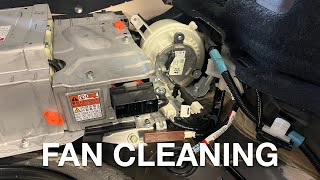
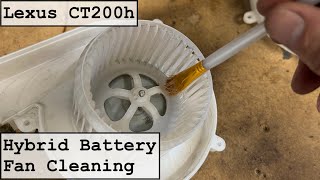
The Lexus CT200h shares its hybrid powertrain with the third-generation Toyota Prius, a platform known for its reliability but also for eventual battery degradation. As these vehicles age, the P3000 code is a common indicator that the original Nickel-Metal Hydride (NiMH) battery pack is reaching the end of its service life. A unique and very frequent issue on this platform is the clogging of the hybrid battery cooling fan, located by the rear passenger seat. Because this is often overlooked during routine service, it can lead to battery overheating and premature failure, making a P3000 code more likely. Many owners on forums for both the CT200h and Prius have documented this cleaning process 🎬 Watch: Step-by-step guide to cleaning your CT200h cooling fan as a critical preventative maintenance item.
Symptoms You May Notice
- "Check Hybrid System" message on the dashboard
- Check Engine Light and/or red triangle Master Warning Light are on
- Vehicle fails to start or enter 'Ready' mode
- Reduced engine power and sluggish acceleration
- Noticeable decrease in fuel economy (MPG)
- Gasoline engine runs constantly, even at low speeds or idle
- Hybrid battery cooling fan, located near the rear seat, runs constantly or is unusually loud
- Replacing the inverter/converter. While part of the hybrid system, failure of this component is less common and usually presents with different, more specific codes. P3000 points more directly to the battery pack and its immediate control and support systems.
Most Likely Causes

- Failing High-Voltage (HV) Hybrid Battery Pack 🔴 High Probability The NiMH battery packs naturally degrade after 8-10+ years or 100,000-150,000 miles. Individual cells or modules fail, creating a voltage imbalance across the pack that the Battery ECU detects, triggering P3000 and often P0A80.
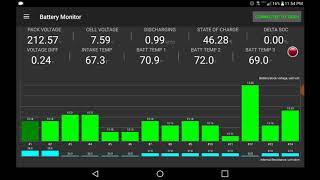
How to confirm: Use a hybrid-specific scan tool or an app like Dr. Prius/Hybrid Assistant to view live data for all 14 battery blocks. 🎬 Watch: How to use the Dr. Prius app for diagnostics A voltage difference greater than 0.3V between the highest and lowest block under load is a strong indicator of a failing pack. This is the most common confirmation method discussed in owner forums.
Typical fix: A complete replacement of the HV battery pack is the most reliable fix. A less expensive, but potentially less durable, option is to recondition the pack by replacing only the failed modules. This requires balancing the cells and is a complex job.
Est. part cost: $1900-$2600 for a new OEM or quality aftermarket pack. Module replacement can be cheaper but is more labor-intensive. - Clogged or Failed Hybrid Battery Cooling Fan 🔴 High Probability The fan's intake vent is located on the rear passenger-side trim panel and easily ingests dust, debris, and pet hair, which clogs the fan blades and ducts. This prevents proper cooling, causing the battery to overheat, which degrades the battery and triggers a fault.
How to confirm: Visually inspect the intake vent for blockage. Listen for the fan running after driving; if it's very loud or completely silent, it may be failing. The fan assembly must be removed for a thorough inspection and cleaning, a process well-documented in DIY videos. 🎬 See how to access and clean the hybrid fan assembly A diagnostic scan may also show a specific fan-related code like P0A85 (Control Circuit High).
Typical fix: Remove the rear seat and trim panels to access the fan assembly. Thoroughly clean the fan blades and surrounding ducts with compressed air and brushes. If the fan motor has failed, it must be replaced. The OEM part number is G9230-76010.
Est. part cost: $0 (for cleaning) - $180 for a new OEM fan assembly. - Faulty Battery ECU (Battery Management System) ⚪ Low Probability While the ECU itself is generally reliable, the connector socket on the ECU circuit board can corrode or fail, leading to poor connections from the voltage sensing harness. This can cause the ECU to send erroneous fault signals.
How to confirm: This is diagnosed by exclusion. If the HV battery pack, cooling system, and wiring harness have been confirmed to be in good working order, the Battery ECU becomes the primary suspect. A visual inspection of the ECU's connector pins for corrosion is necessary.
Typical fix: Replacement of the Battery ECU (also called Battery Voltage Sensor), part number 89892-47080. In some cases, only the corroded socket on the board needs to be replaced by a skilled technician.
Est. part cost: $300-$400 for a new ECU/Sensor.
Rare But Worth Checking
- Corroded Battery Bus Bars or Wiring: The nickel-plated copper plates (bus bars) connecting the 28 battery modules can corrode over time, creating high resistance and causing voltage reading errors. This is often found when inspecting a failing battery pack. Cleaning with vinegar and a wire brush or replacing them with a new kit (around $30) is a common part of a battery reconditioning job.
- Faulty HV Battery Voltage Sense Harness: The wiring harness that connects the individual battery modules to the Battery ECU can fail. Corrosion can build up on the terminals that attach to the modules, or the wires themselves can break. This will prevent the ECU from accurately reading block voltages. PriusChat forums have detailed discussions on diagnosing and replacing this harness.
- Weak 12V Auxiliary Battery: A failing 12V battery can cause low voltage conditions that disrupt communication between various ECUs, including the hybrid system, leading to false or multiple trouble codes. Always test the 12V battery first as it's a simple and common failure point on all modern cars.
- Running Out of Fuel: If the car runs out of fuel, the gasoline engine cannot run to charge the hybrid battery. If the battery's state of charge drops to a critically low level, the hybrid system will set a P3000 fault and may prevent the car from entering 'Ready' mode even after adding fuel.
Diagnosis Steps

- Read all stored trouble codes using a hybrid-compatible OBD-II scanner (like a Carista or Veepeak dongle) and a specialized app (like Dr. Prius or Hybrid Assistant). Note P3000 and any accompanying sub-codes or codes from other ECUs (e.g., P0A80, P30xx).
- Test the 12V auxiliary battery, located in the engine bay. It should read above 12.4 volts with the car off. A weak or failing 12V battery can cause numerous false electronic faults.
- Inspect the hybrid battery cooling fan intake, located on the rear passenger side interior trim. Check for obstructions like paper, plastic bags, or pet hair.
- Using your diagnostic app, monitor the live data for the hybrid battery. Check the temperatures from the battery's three temperature sensors and observe the individual voltage of all 14 battery blocks. Look for any block that deviates by more than 0.3V from the others, especially under load (acceleration or braking).
- If overheating is suspected, perform a full fan cleaning. This involves removing the rear seat bottom and side trim. Several YouTube videos provide a step-by-step guide for the CT200h and Gen 3 Prius.
- If a significant voltage imbalance is confirmed, the issue lies with the HV battery pack itself. This requires professional service or advanced DIY repair.
- SAFETY FIRST: Before physically inspecting the battery, disconnect the high-voltage service plug (located in the trunk area) and wait at least 10 minutes for the capacitors to discharge. Always wear high-voltage safety gloves (Class 0).
- If the battery pack is removed, inspect the copper bus bars for the tell-tale signs of greenish-blue or white corrosion. If found, they should be cleaned thoroughly or replaced.
Parts You'll Likely Need

- High-Voltage Hybrid Battery Pack
(OEM #G9510-76012 (or newer revisions like G9510-76014))— This is the most common cause of P3000, as the battery pack degrades with age and use, leading to imbalanced cells.
Trusted brands: Lexus (OEM), Exclusively Hybrid, GreenTec Auto, Dorman - Hybrid Battery Cooling Fan Assembly
(OEM #G9230-76010)— The fan gets clogged with debris, leading to battery overheating, or the motor fails entirely. Cleaning is often sufficient, but replacement is needed if the motor is dead.
Trusted brands: Lexus (OEM) - Hybrid Battery Bus Bar Kit — The original bus bars corrode, causing high resistance and voltage sensing errors. Aftermarket kits with new nuts are widely available and recommended when servicing the battery.
Trusted brands: Various aftermarket kits on eBay or Amazon
Related Codes That Often Appear With This One
- P0A80 — This code means 'Replace Hybrid Battery Pack.' It is the most common and direct companion to P3000, confirming that the Battery ECU has determined the battery's overall health has degraded beyond an acceptable threshold.
- P3011 - P3024 — These codes each correspond to one of the 14 'blocks' of cells in the battery pack (each block contains two modules). For example, P3011 means 'Battery Block 1 Becomes Weak.' They help pinpoint which specific part of the battery is failing.
- P0A7F — This code for 'Hybrid Battery Pack Deterioration' is another general indicator of the battery aging and losing its ability to hold a charge effectively. It often appears alongside P0A80.
- P3190 — This code means 'Poor Engine Power.' It can be triggered when the hybrid system is not providing enough electric assistance, forcing the gasoline engine to struggle on its own. It can also be caused by unrelated fuel or air intake issues.
Technical Service Bulletins (TSBs) & Recalls
- While no TSB is directly for P3000 on the CT200h, related bulletins exist. L-SB-0015-23 Rev1 discusses proper battery maintenance during storage to prevent premature failure, a condition that can lead to P3000.
- TSB L-SB-0019-15 for the related code P3190 on this platform points to a disconnected vacuum hose, highlighting the importance of checking for multiple issues.
Platform-Specific Known Issues
- Battery Filter Location: Some owners report that in addition to the fan itself, there is a small filter screen located within the air ducting that can become clogged. Accessing it requires similar disassembly as cleaning the fan.
- Permanent DTC for California Smog: Owners in California have reported that even after replacing the battery and clearing the codes, a 'permanent' P0A80 code can remain stored in the ECU. This will cause a smog check failure until the vehicle completes a specific and lengthy drive cycle to verify the repair, which can take several hundred miles of driving.
Mechanic-Grade Diagnostic Values
- HV Battery Block Voltage Difference — expected: Less than 0.3V difference between the highest and lowest block reading.. Failure: A difference greater than 0.3V indicates an imbalance, typically due to one or more failing cells/modules.
- Individual Battery Module Voltage — expected: Approximately 7.2V per module (each block contains 2 modules).. Failure: A module reading significantly below 7.2V is a sign of failure.
- HV Battery State of Charge (SOC) Operating Range — expected: The system maintains the SOC between 40% and 80% for longevity.. Failure: The display showing 'full' corresponds to only 80% actual charge, and 'empty' corresponds to 40%. This is normal operation, not a fault.
Hidden / Shadow Codes Worth Checking
- P3000 with 3-digit Information Code (e.g., P3000-123): Toyota/Lexus systems supplement the main P3000 code with a 3-digit 'information code' that provides a more specific reason for the fault. For example, P3000-123 points to an 'Abnormal signal input from battery ECU'. These are critical for accurate diagnosis. (see via Toyota Techstream software or other advanced, professional-grade scan tools.)
Scan Tool Commands That Help
- Toyota Techstream: Active Test: "Control the HV Bat Fan Speed" — This bidirectional command allows a technician to manually activate the hybrid battery cooling fan at different speeds to verify its operation without having to drive the vehicle to induce high temperatures. It's used to confirm if the fan motor is functional when a P3000 is accompanied by overheating symptoms or a fan-related code like P0A85.
Wiring & Ground Locations
- Ground Point 'BE' — In the rear luggage compartment, near the HV battery assembly.. This is a primary ground point for the Battery ECU (Battery Voltage Sensor). A poor connection or corrosion at this ground can cause erratic behavior, communication loss, and false P3000 codes. Service manuals show this as a critical point to check during electrical diagnosis of the hybrid system.
Real Owner Repair Stories
- Torque News article detailing a Gen 2 Prius repair (mechanically similar) (2004 Toyota Prius) — P3000 code that kept returning, specifically P3000-123 (Abnormal signal from battery ECU) and P0A85 (Cooling Fan Circuit High).
❌ Tried (didn't work) Replacing the HV battery with a known-good unit did not solve the problem., Clearing codes would result in them returning immediately.
✅ What actually fixed it The root cause was severe corrosion on a wiring harness connector located near the battery cooling fan, likely due to a water leak in the rear hatch area. The voltage at the fan fuse was only 10.3V instead of battery voltage. Repairing the corroded connector by soldering in a replacement from a salvage yard resolved all codes. - YouTube video by 'Papa77' detailing a Prius repair (Toyota Prius (Gen 2)) — P3000 and P0A0D (High Voltage System Interlock Circuit High).
❌ Tried (didn't work) Testing and charging the 12V auxiliary battery., Checking battery health via the hidden diagnostic menu.
✅ What actually fixed it After removing the HV battery to perform continuity checks on the wiring, the technician found a corroded orange connector on the Battery ECU. This connector faces the front of the vehicle and does not need to be unplugged to remove the battery, so it was easily missed. Cleaning the corrosion from the connector pins fixed the fault.
OEM Part Supersession History
89892-47020→89892-47080— This is the Battery ECU / Battery Voltage Sensor. The part was updated around 2012. While the exact reason for the revision isn't officially stated, it's common for manufacturers to update parts to improve reliability, address a known weakness, or change internal components.
Heads up: The parts are generally considered interchangeable, but it is always recommended to use the latest revision (89892-47080) when replacing it to benefit from any improvements. Some owners have expressed concern about receiving the older part when ordering the new one.G9230-47020, G9230-47070→G9230-76010— This is the HV Battery Cooling Fan assembly. The part number was updated over the years. Revisions can involve changes to the motor, fan blade design, or mounting for improved performance or durability.
Heads up: The latest part number, G9230-76010, is the correct replacement for the entire 2011-2017 CT200h range and its Prius equivalent.
Diagnostic Flowchart
Used vs. New Parts: Buying Guide for This Vehicle
When a used part is the smart pick: A used OEM Battery ECU (Voltage Sensor) or a complete cooling fan assembly from a low-mileage donor vehicle can be a cost-effective and reliable repair. These components have a low failure rate compared to the battery pack itself. A used wiring harness or connector can also be a viable source for repairing a corroded section of wiring.
Donor-vehicle mileage cap: roughly under 80000 miles for the part to have meaningful remaining life.
What to inspect on the donor part:
- For ECUs and fans, check for any signs of water intrusion, corrosion on pins, or physical damage.
- For a complete HV battery, it is extremely risky. You MUST see a report from a tool like Dr. Prius showing balanced block voltages (less than 0.3V variance) and check the date of manufacture.
- Verify the donor vehicle was not in a flood or a major rear-end collision.
OEM-only on this vehicle (don't cheap out):
- HV Battery Pack: While many aftermarket options exist, a new OEM pack from Toyota/Lexus offers the highest likelihood of long-term reliability without compatibility issues. If choosing aftermarket, extensive research is required.
Aftermarket brands forum-validated for this vehicle:
- Green Bean Battery: Often mentioned in forums with generally positive reviews for their reconditioned batteries and mobile installation service.
- Greentec Auto: Has physical shop locations and is noted for having a good reputation.
- New cylindrical cell packs (various brands like Electron): Some companies offer packs rebuilt with brand-new, higher-performance cylindrical cells instead of the original prismatic cells, which can be a good option.
Brands owners have reported issues with on this vehicle:
- Dorman: Multiple forum and Reddit threads report premature failure of Dorman reconditioned hybrid batteries, sometimes within 1-2 years, and potential issues with warranty claims.
- Unbranded/cheap eBay modules: Individual modules sold cheaply online are often of unknown quality and can quickly unbalance a reconditioned pack, leading to repeat failures.
Real Owner Stories
Aggregated from forums and TSBs cited above. Mileages and costs reflect what owners reported in those sources.
2011-2017 Lexus CT200h 2ZR-FXE 1.8L Hybrid
Symptoms: Owner had a P0A80 code, which frequently accompanies P3000, and was exploring repair options.
What fixed it: The owner was advised that replacing individual failed battery cells with identical ones from a Gen 3 Toyota Prius is a viable repair.
Cost: $950-$3000
Source hint: Reddit r/CT200h post titled 'P0A80 code - passing smog'
Toyota Prius (same platform as CT200h)
Symptoms: A persistent P3000 'hybrid battery malfunction' code that did not resolve after checking the battery pack itself.
What fixed it: The problem was traced to corroded pins on the Battery ECU's connector socket. Repairing the connection on the ECU board resolved the fault.
Source hint: PriusChat.com thread titled 'P3000 hybrid battery malfunction-urgent, need help!'
2011-2017 Lexus CT200h 2ZR-FXE 1.8L Hybrid
Symptoms: Symptoms of an overheating battery, such as the gasoline engine 'rev hanging'.
What fixed it: A thorough cleaning of the hybrid battery cooling fan and its surrounding ducts to restore proper airflow and cooling.
Source hint: ClubLexus.com thread titled 'Anyone clean their hybrid battery fan?'
2011-2017 Lexus CT200h 2ZR-FXE 1.8L Hybrid
Symptoms: After replacing the hybrid battery and clearing codes, the vehicle still failed a smog check.
What fixed it: The fix was not a part replacement, but completing a specific and lengthy drive cycle over several hundred miles, which allowed the ECU to verify the repair and clear a 'permanent' P0A80 code.
Source hint: Vehicle Specific Issue: Permanent DTC for California Smog
Related OBD-II Codes
Frequently Asked Questions
My CT200h has a P3000 code. Is it more likely the battery or the cooling fan?
Can I use parts from a Toyota Prius to fix my Lexus CT200h's P3000 battery issue?
I replaced my hybrid battery, but my CT200h still won't pass the California smog check. Why?
What's the best way to check my CT200h's hybrid battery health myself?
I hear a loud fan noise from the back seat of my CT200h. Is this related to the P3000 code?
What is the part number for the hybrid battery cooling fan on a 2011-2017 CT200h?
Are there any specific TSBs for code P3000 on the Lexus CT200h?
Helpful Videos
We Have This Part in Stock


The information in this article is provided for general reference and educational purposes only. Vehicle specifications, procedures, and part compatibility can vary by production date, trim level, and region. Always consult your vehicle's factory service manual and verify part numbers before purchasing or performing repairs. Safety-critical components such as airbags, seat belts, and braking systems should be installed by a qualified professional.
- Lexus CT200h:
- 🎬 Helpful Videos
- 🛍️ Shop This Part
- What's Unique About the 2011-2017 Lexus CT200h
- Symptoms You May Notice
- Most Likely Causes
- Rare But Worth Checking
- Diagnosis Steps
- Parts You'll Likely Need
- Related Codes That Often Appear With This One
- Technical Service Bulletins (TSBs) & Recalls
- Platform-Specific Known Issues
- Mechanic-Grade Diagnostic Values
- Hidden / Shadow Codes Worth Checking
- Scan Tool Commands That Help
- Wiring & Ground Locations
- Real Owner Repair Stories
- OEM Part Supersession History
- Diagnostic Flowchart
- Used vs. New Parts: Buying Guide for This Vehicle
- Real Owner Stories
- 2011-2017 Lexus CT200h 2ZR-FXE 1.8L Hybrid
- Toyota Prius (same platform as CT200h)
- 2011-2017 Lexus CT200h 2ZR-FXE 1.8L Hybrid
- 2011-2017 Lexus CT200h 2ZR-FXE 1.8L Hybrid
- Related OBD-II Codes
- Frequently Asked Questions
- 🎟️ Get 5% Off