

P3000 on 2012-2015 Holden Volt: High Voltage System Fault Causes and Fixes
On a 2012-2015 Holden Volt, code P3000 is almost always caused by a low coolant level in the high-voltage battery cooling system or a faulty level sensor. The fix is typically inexpensive, involving a coolant top-off or replacing a ~$50 sensor, making it a DIY-friendly repair (2/5 difficulty).
- P3000 on a 2012-2015 Holden Volt is not a severe fault and is almost always related to the battery cooling system.
- Always check the battery coolant level (driver's side reservoir) before any other diagnostic steps.
- The coolant level sensor (P/N 22922224) is a common failure point and is a separate, easily replaceable part, despite what some dealers may claim.
- Do not confuse this issue with the P3000 code on a 2016+ Volt, which indicates a much more serious BECM failure.
What's Unique About the 2012-2015 Holden Volt
The first-generation Holden Volt (and its Chevrolet Volt/Opel Ampera twin) is unique because code P3000 is usually a minor issue, unlike in many other hybrids. While P3000 often signals serious battery problems in other vehicles, on the 2012-2015 Volt it's a well-documented quirk related to the battery's dedicated cooling system. This is critically different from the second-generation (2016+) Volt, where P3000 signifies a much more severe and costly failure of the Battery Energy Control Module (BECM). Therefore, it is essential not to confuse the diagnosis between the two generations.
Symptoms You May Notice
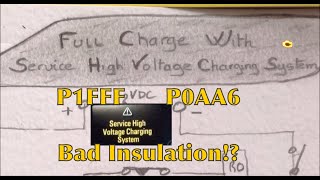
- "Service High Voltage Charging System" message on the driver information center (DIC)
- Check Engine Light (Malfunction Indicator Lamp) is on
- Vehicle will not charge when plugged in.
- Vehicle forced to run on the gasoline range extender engine more or exclusively.
- Amber light on the dashboard when attempting to charge.
- Assuming a major high-voltage battery failure. On this specific generation, P3000 is rarely a 'death sentence' for the battery pack and is almost always a cooling system issue.
- Replacing the entire battery coolant reservoir. Many dealers or shops may claim the sensor is integral to the reservoir tank, but it is a separate, replaceable part. One owner on Reddit was quoted $700 for this unnecessary repair.
- Checking the wrong coolant reservoir. The fault is related to the battery cooling system (driver's side), not the main engine cooling system (passenger's side).
Most Likely Causes
- Low High-Voltage Battery Coolant Level 🔴 High Probability Early models sometimes had air in the cooling system from the factory, which would eventually purge and lower the effective coolant level. Small leaks can also develop over time. GM even issued service campaign #14114 for some 2012-2013 models to address low levels from the factory.
How to confirm: Visually inspect the coolant level in the translucent reservoir on the DRIVER'S side of the engine bay. Do not confuse this with the engine coolant reservoir on the passenger side. The level should be at or above the black sticker on the side of the tank. TSB PI0961A notes that a level 1.5 inches (38 mm) below the tank's seam is enough to trigger the fault.
Typical fix: Top off the reservoir with pre-mixed Dex-Cool coolant. After topping off, the code may need to be cleared with a scan tool, as the message can become 'latched' in the control module's memory.
Est. part cost: $20-$30 - Failed Drive Motor Battery Coolant Level Sensor 🟡 Medium Probability The sensor is known to fail due to incomplete internal solder joints, causing it to send a false 'low level' signal even when the coolant is full. This was common enough for GM to issue a technical service bulletin (PI0961) for 2013 models, which was later updated to PI0961A to include 2011-2014 models.
How to confirm: If the coolant level is confirmed to be correct but the P3000 and P1FFE codes persist or return quickly, the sensor is the likely culprit. A diagnostic scan may also show specific sensor circuit faults like P1FFB, P1FFC, or P1FFD.
Typical fix: Replace the coolant level sensor. This sensor clips into the bottom of the coolant reservoir and can be replaced separately from the tank, despite some dealer claims. Some owners have also used aftermarket 'defeat plugs' which are resistors that mimic a 'full' signal, though sensor replacement is the proper repair.
Est. part cost: $40-$60
Rare But Worth Checking
- Leaking Battery Cooling System: If you have to repeatedly top off the coolant, there is a leak in the system that must be found and repaired. TSB PI0961A mandates a pressure test of the system if the coolant is found low. This could be a hose, fitting, or the radiator for the battery pack.
- Failed Battery Coolant Pump: A failure of the pump that circulates coolant through the battery pack can also trigger high-voltage system faults, though this is less common than the sensor or low fluid level.
- Internal breaks in coolant sensor wiring jumper harness: TSB PI0961C mentions that internal breaks in the short jumper harness (P/N 13586114) for the level sensor can cause intermittent failures. A technician should manipulate this harness while testing to see if the fault appears or disappears.
Diagnosis Steps
- Read all fault codes using an OBD-II scanner. Note if P1FFE or P1FFF are present with P3000.
- Open the hood and locate the high-voltage battery coolant reservoir on the driver's side.
- Inspect the coolant level. The correct level is at or above the top of the black sticker on the side of the tank. A level 1.5 inches (38mm) below the tank seam is low enough to cause the fault.
- If the level is low, top it off using pre-mixed Dex-Cool coolant (GM P/N 12378390 or equivalent). Do not overfill.
- Clear the fault codes with a scan tool. Note that simply topping off the fluid may not clear the 'Service High Voltage Charging System' message without a reset, as the code can become permanent and require a drive cycle or a dealer-level tool to clear.
- If the codes return and the coolant level is confirmed to be correct, the coolant level sensor is the most likely cause.
- To replace the sensor, disconnect the 12V battery. The sensor is located at the bottom of the battery coolant reservoir. It can be unclipped by sliding it toward the front of the vehicle and replaced without removing the entire tank.
- After replacing the sensor, reconnect the 12V battery, clear any codes, and verify the fault does not return after a full drive cycle.
Parts You'll Likely Need
- Drive Motor Battery Coolant Level Sensor
(OEM #22922224)— This sensor is the most common point of failure after low coolant levels. Internal solder joints can fail, leading to false readings. This part number replaces the older, less reliable part number 95281145.
Trusted brands: ACDelco, GM Genuine
OEM price range: $40-$60
Aftermarket price range: $30-$50 - Dex-Cool Antifreeze/Coolant (Pre-mixed 50/50)
(OEM #12378390)— This is the specified coolant for topping off the battery cooling system if the level is found to be low.
Trusted brands: ACDelco
OEM price range: $25-$35
Aftermarket price range: $20-$30
Related Codes That Often Appear With This One
- P1FFE — This is the specific GM code for 'Drive Motor Battery Coolant Level Low' and is the most direct cause of P3000 on this vehicle.
- P1FFF — This code for 'System Isolation / Coolant Level Sensor Fault' is often set alongside P1FFE, indicating the charging system has been disabled due to the detected fault.
- P1E00 — This is a generic code indicating that the hybrid powertrain control module has requested the check engine light to be turned on. It will almost always be present with other powertrain faults.
- P0AA6 — This code for 'Hybrid/EV Battery Voltage System Isolation Lost' can also be triggered by the faulty coolant level sensor, as the system may interpret the sensor fault as a more serious isolation issue.
Technical Service Bulletins (TSBs) & Recalls
- PI0961A - This is a revision of the original PI0961. It expands the model years to 2011-2014 and provides detailed diagnostic steps for the 'Service High Voltage Charging System' message and DTCs like P1FFE and P1FFF. It identifies the cause as either a low coolant level or a faulty level sensor due to bad internal solder joints. Crucially, it instructs technicians to perform a pressure test of the cooling system if the level is found to be low.
Platform-Specific Known Issues
- Real-World Repair Story: Dealer vs. DIY: A 2014 Volt owner on the gm-volt.com forums reported receiving a dealer quote of $700 to fix the 'Service High Voltage Charging System' message. The dealer claimed the sensor and reservoir were a single unit requiring 4.2 hours of labor. The owner declined, purchased the sensor (P/N 22922224) online, and replaced it in minutes without tools by simply unclipping it from the bottom of the tank, saving over $650.
Mechanic-Grade Diagnostic Values
- Battery Coolant Level Sensor 5V Reference Circuit — expected: 4.8 - 5.2 Volts (between the 5V signal circuit and ground). Failure: Voltage outside this range points to a wiring issue or a fault in the Hybrid Powertrain Control Module 2 (HPCM2).
- Battery Coolant Level Sensor Low Reference to Ground Resistance — expected: Less than 1.0 Ohm (e.g., 0.7 Ohms). Failure: High resistance indicates a poor ground connection for the sensor circuit.
- DIY Sensor Bypass Resistance — expected: ~24.7 kOhms. Failure: This is not a failure indicator, but a known resistance value that can be used with a resistor to temporarily bypass the sensor, tricking the system into thinking the coolant level is full. This is a diagnostic step, not a permanent repair.
Scan Tool Commands That Help
- GDS2 (or equivalent like VXDIAG VCX Nano): Hybrid/EV Battery Pack Coolant Pump Bleed Procedure — This command is required after draining the battery cooling system or replacing any components to actuate the coolant pump and purge air from the system. The procedure can take up to an hour and must be done while maintaining a vacuum on the system.
- GDS2 (or equivalent like VXDIAG VCX Nano): Clear Secured High Voltage DTCs — Some codes, like P1FFF, can become 'latched' or 'permanent' and may not clear with a standard OBD-II tool. This special function within the Hybrid Powertrain Control Module 2 menu is required to force-clear these persistent codes after the underlying repair is complete.
Wiring & Ground Locations
- Drive Motor Battery Coolant Level Sensor Jumper Harness (P/N 13586114) — This is a short wiring harness that connects the level sensor at the bottom of the battery coolant reservoir to the main engine harness.. TSB PI0961C identifies that this specific jumper harness can suffer from internal wire breaks, causing intermittent sensor signals and triggering P1FFE/P3000 even when the sensor and coolant level are good. Technicians are advised to wiggle-test this harness during diagnosis.
Real Owner Repair Stories
- Reddit user in r/volt (2017 Chevrolet Volt (Note: This is a Gen 2, but the diagnostic values are identical for the Gen 1 sensor circuit)) — Check engine light on, "Service High Voltage Charging System" message, car stopped charging. Codes P1FFE and P1FFF present.
❌ Tried (didn't work) The owner took it to a dealer who wanted to replace the entire coolant reservoir for $1200.
✅ What actually fixed it The dealer service report, which the owner posted, showed the technician performed the correct diagnostic steps: confirming coolant level, testing for 5.01V on the signal circuit, and 0.7 ohms on the ground circuit. Since the wiring tested good, the problem was confirmed to be the sensor itself, which is a separate part from the reservoir. The owner questioned the dealer's recommendation to replace the whole tank.
OEM Part Supersession History
95281145→22922224— The original sensor was prone to failure from incomplete internal solder joints as noted in TSBs. The new part number is the revised, more reliable version.
Model Year Variations Within This Range
- 2012-2013: These model years were subject to GM Service Campaign #14114 for low battery coolant levels from the factory. Air trapped in the system during assembly would eventually purge, causing the level to drop and trigger the P1FFE/P3000 codes. Later models were less prone to this specific factory-fill issue.
Diagnostic Flowchart
Other Known Issues on This Vehicle
Issues unrelated to this code that are worth knowing about as an owner of this generation:
- Drive Motor Rotor (Stator) Bearing Failure 🔴 High — Commonly occurs between 80,000-120,000 miles. Characterized by a loud whining or 'buzz saw' noise, especially during regenerative braking. (Ref: TSB PIP5081H)
- 'Shift to Park' Message When Powering Off 🟡 Low — A very common annoyance where the car displays 'Action Required: Shift to Park' and won't shut down. It's caused by a faulty microswitch in the shifter assembly. This issue is widespread across many GM vehicles of the era. (Ref: TSB 19-NA-206 (for later models, but describes the same issue))
- Sticking/Failed Charge Port Door Actuator 🟠 Medium — The electronic lock for the charge port door frequently fails, preventing the door from opening and thus preventing charging. A manual release is accessible from the trunk.
Used vs. New Parts: Buying Guide for This Vehicle
When a used part is the smart pick: For this specific repair, using used parts is generally not recommended. The primary failure parts are a low-cost sensor known for a high failure rate and coolant, which should always be new.
What to inspect on the donor part:
- Not applicable as used parts are not advised for this repair.
OEM-only on this vehicle (don't cheap out):
- Drive Motor Battery Coolant Level Sensor: While aftermarket sensors exist, the cost difference is minimal, and the ACDelco/GM Genuine part (P/N 22922224) is the proven, reliable replacement for the faulty original. Given the sensor's critical role in enabling charging, using the OEM part is a smart choice.
- Dex-Cool Coolant: It is critical to use new, pre-mixed Dex-Cool coolant meeting GM's specification. Using the wrong type or using concentrate mixed with tap water can introduce minerals that may cause isolation faults or damage sensitive components in the high-voltage cooling loop.
Brands owners have reported issues with on this vehicle:
- Unknown/unbranded sensors: Given the history of internal failures on the original sensor, opting for a no-name aftermarket part to save a few dollars is a significant risk.
Real Owner Stories
Aggregated from forums and TSBs cited above. Mileages and costs reflect what owners reported in those sources.
2014 Holden Volt 1.4L LUU Voltec
Symptoms: Received a 'Service High Voltage Charging System' message. Dealer quoted $700, claiming the sensor and reservoir were a single unit requiring 4.2 hours of labor.
What fixed it: Purchased the sensor (P/N 22922224) online and replaced it in minutes without tools by unclipping it from the bottom of the tank.
Cost: $40-$60
Source hint: gm-volt.com forum thread: 'Coolant sensor "Service High Voltage Charging System" is not difficult to fix.'
2013 Chevrolet Volt 1.4L LUU
Symptoms: The car displayed a 'Service High Voltage Charging System' message and the code remained in the module's permanent memory.
What fixed it: Replaced the coolant sensor and used a dealer-level scan tool to clear the permanent code.
Source hint: owner_reports: gm-volt.com/threads/service-high-voltage-charging-system-again.318385/
Related OBD-II Codes
Frequently Asked Questions
Does TSB PI0961A apply to my 2012-2015 Holden Volt?
Where is the high-voltage battery coolant reservoir located on the Holden Volt?
What is the correct coolant level to prevent the P3000 code?
Can I just top off the coolant to clear the 'Service High Voltage Charging System' message?
Is the coolant level sensor a separate part, or do I need to replace the whole tank?
What type of coolant should I use for the high-voltage battery system?
Helpful Videos


The information in this article is provided for general reference and educational purposes only. Vehicle specifications, procedures, and part compatibility can vary by production date, trim level, and region. Always consult your vehicle's factory service manual and verify part numbers before purchasing or performing repairs. Safety-critical components such as airbags, seat belts, and braking systems should be installed by a qualified professional.
- Holden Volt:
- 🎬 Helpful Videos
- What's Unique About the 2012-2015 Holden Volt
- Symptoms You May Notice
- Most Likely Causes
- Rare But Worth Checking
- Diagnosis Steps
- Parts You'll Likely Need
- Related Codes That Often Appear With This One
- Technical Service Bulletins (TSBs) & Recalls
- Platform-Specific Known Issues
- Mechanic-Grade Diagnostic Values
- Scan Tool Commands That Help
- Wiring & Ground Locations
- Real Owner Repair Stories
- OEM Part Supersession History
- Model Year Variations Within This Range
- Diagnostic Flowchart
- Other Known Issues on This Vehicle
- Used vs. New Parts: Buying Guide for This Vehicle
- Real Owner Stories
- 2014 Holden Volt 1.4L LUU Voltec
- 2013 Chevrolet Volt 1.4L LUU
- Related OBD-II Codes
- Frequently Asked Questions
- 🎟️ Get 5% Off