

OBD-II Code P3000: High Voltage Battery Malfunction
What P3000 means, why it triggers, and how to fix it
- P3000 is a master warning code triggered by the Hybrid Vehicle ECU when it detects a critical fault in the high-voltage battery system.
- Do not immediately replace the $2,500+ battery pack; first check for a clogged $0 cooling fan or a blown $150 12V auxiliary battery.
- A basic OBD-II scanner cannot diagnose P3000; you must use a hybrid-capable tool to read specific sub-codes like P0A80 from the Battery ECU.
- On 2016-2018 Chevrolet Volts, P3000 usually indicates a failed Battery Energy Control Module (BECM) covered under a 15-year/150,000-mile extended warranty.
What Does P3000 Mean?

P3000 is a master warning code indicating your car's main computer (Hybrid Vehicle ECU) received a distress signal from the hybrid battery's dedicated computer (Battery ECU). It acts as a general alarm for the hybrid system, confirming a specific problem exists within the high-voltage battery pack or its support systems. This code does not pinpoint the exact failure but is almost always a precursor to specific sub-codes like P0A80.
Technical definition: The official SAE J2012 definition for P3000 is a 'Manufacturer Controlled DTC,' meaning each automaker assigns it a different meaning. However, Toyota and Lexus use it almost exclusively to indicate a 'Battery Control System Malfunction.' The main hybrid ECU sets this code when it receives a fault signal from the Battery ECU.
Can I Drive With P3000?
Yes, But With Caution. You can drive short distances in an emergency, but regular use is strictly prohibited. The gasoline engine overworks, fuel economy plummets, and the hybrid system will eventually shut down completely, leaving you stranded. Continued driving with a failing battery strains other hybrid components and damages the catalytic converter, adding $800-$2,500 to the final repair bill.
Common Causes


- Degraded or Failing High-Voltage (HV) Battery Pack (Very Common) — Over time, individual battery cells lose their ability to hold a charge, creating an imbalance across the pack. The Battery ECU detects this voltage delta and triggers P3000, almost always alongside the specific P0A80 code.
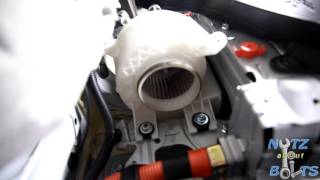
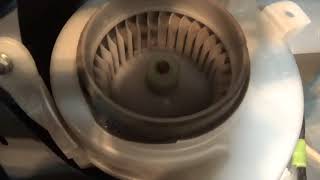
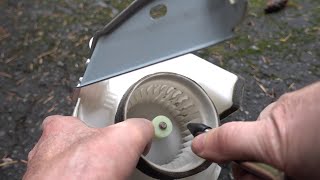
- Failed or Clogged HV Battery Cooling Fan (Common) — The HV battery relies on a dedicated fan to maintain safe operating temperatures. If the fan fails or its intake vents clog with pet hair or debris, the battery overheats 🎬 Watch: How to clean your hybrid battery fan and filter, accelerating cell degradation and triggering P3000.
- Corroded Battery Wiring, Bus Bars, or Sensing Harness (Common) — Moisture and leaking battery cells corrode the metal bus bars and wiring connecting the battery modules. This corrosion creates high electrical resistance, skewing voltage readings and forcing the Battery ECU to report a false battery failure.
- Critically Low State of Charge (Rare) — If the vehicle runs out of gasoline or idles in Neutral for extended periods, the engine cannot charge the HV battery. Once the charge level drops below a critical threshold, the system sets P3000 (often with info code 388) to protect the cells from deep discharge.
- Faulty Battery ECU or BECM (Less Common) — The computer managing the HV battery occasionally fails internally or suffers from software glitches. On 2016-2018 Chevrolet Volts, a failing Battery Energy Control Module (BECM) is the primary cause of P3000. 🎬 See this step-by-step Chevy Volt BECM replacement guide
- Failed Hybrid System Main Relay (Contactor) (Less Common) — High-voltage relays connect the battery pack to the vehicle's drive system. If these contactors fail to open or close correctly, the system detects a high-voltage isolation fault and sets P3000.
- Malfunctioning Hybrid Inverter/Converter (Rare) — The inverter changes DC voltage from the battery to AC for the motors. An internal failure disrupts battery charging and discharging, triggering P3000.
Symptoms

- Check Engine and Hybrid System Warning Lights — The 'Check Engine' light, a red triangle of death, or a 'Check Hybrid System' message illuminates immediately on the dashboard.
- Gasoline Engine Runs Constantly — The car rarely enters electric-only (EV) mode. The gasoline engine runs continuously, causing fuel economy to drop by 10-15 MPG.
- Reduced Power and Sluggish Acceleration — The electric motor stops providing assistance, causing the car to feel hesitant or enter a 'limp mode' with severely restricted power.
- Loud Fan Noise From Rear of Vehicle — The battery cooling fan runs constantly at maximum speed as the system desperately tries to cool overheating battery modules.
- Erratic Battery Gauge Behavior — The dashboard battery charge level drops from full to empty instantly or fluctuates unpredictably.
- Vehicle Fails to Start — The hybrid system shuts down completely to protect itself, preventing the vehicle from entering the 'Ready' state to drive.
- Imbalanced Battery Block Voltages (scan-tool only — no driver-felt sign) — Live scanner data reveals one or more battery blocks with a voltage significantly lower (0.3V+) than the others under load.
Diagnostic Flowchart
Tap your situation to follow the diagnostic path that matches what you're seeing on this code.
Common Fixes & Costs
- Clean HV Battery Cooling Fan and Vents — Parts: $0, Labor: $0 - $200, ~1.0 hr book time (DIY)
- Replace High-Voltage Battery Pack (Remanufactured/Aftermarket)
— Parts: $1,500 - $2,500, Labor: $300 - $800, ~3.5 hr book time
(Professional)
Toyota Prius (2004-2009): OEM - Replace High-Voltage Battery Pack (New OEM)
— Parts: $2,000 - $3,500, Labor: $500 - $1,000, ~3.5 hr book time
(Professional)
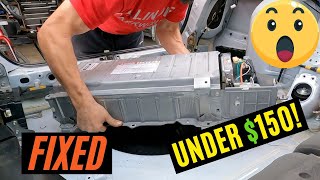
Toyota Prius (2004-2009): OEM - Recondition High-Voltage Battery — Parts: $50 - $300, Labor: $800 - $1,500, ~6.0 hr book time (Professional)
- Replace HV Battery Cooling Fan Assembly
— Parts: $150 - $450, Labor: $100 - $300, ~1.5 hr book time
(DIY)
Toyota Prius (2004-2009): OEM - Replace Battery Energy Control Module (BECM) - GM Specific
— Parts: $600 - $1,000, Labor: $800 - $1,500, ~8.0 hr book time
(Professional)
Chevrolet Volt (2016-2018): OEM
Used vs. New Parts: Buying Guide
When a used part is worth it: A reconditioned battery makes sense for vehicles over 10 years old or with 150,000+ miles where a new battery exceeds 50% of the car's value.
Donor-vehicle mileage cap: roughly under 100000 miles for the part to have meaningful remaining life.
Donor quality checklist:
- Ensure the provider offers a robust warranty of at least 1 year.
- Verify the reconditioning process includes computer-balancing the entire pack, not just replacing one module.
- Avoid sellers who 'whack-a-mole' single failed modules, as this guarantees a domino effect of future failures.
Decision logic:
- If Vehicle is > 10 years old OR > 150K miles AND budget is the primary concern → Buy a quality reconditioned battery; expect 3-5 years of life.
- If You plan to keep the vehicle for 5+ years OR it is a lower-mileage vehicle → Buy a new OEM or high-quality new aftermarket battery for maximum longevity (8-10+ years).
- If The vehicle is used for rideshare or critical daily driving → Buy a new battery to maximize reliability and avoid income-losing downtime.
Warranty tradeoff: Reconditioned: 1-3 year warranties. New Aftermarket: Often have longer warranties than OEM, sometimes transferable. New OEM: 1-3 year warranty, but may be non-transferable if you sell the car.
Worst-case if a used part fails: 500-1500 if a non-local battery fails under warranty; you are responsible for shipping, labor, or towing costs.
What Happens If You Wait — Timeline
- 0-1 month: Warning lights appear. The car drives normally, but the gas engine runs more often and fuel economy drops slightly. The code returns after a few drive cycles if cleared. (MPG impact: 5-10%% · Added cost: $20-80 in wasted fuel)
- 1-4 months: Performance degrades noticeably. The car feels sluggish on hills as electric assist becomes unreliable. The battery gauge fluctuates wildly, and the risk of entering 'limp mode' increases. (MPG impact: 15-25%% · Added cost: $100-300 in wasted fuel)
- 4-8 months: The vehicle becomes highly unreliable. It fails to start intermittently, as the HV battery lacks the charge to become 'Ready'. The car is not dependable for daily use. (MPG impact: 25-40%% · Added cost: $300-600 in wasted fuel, plus potential towing costs)
- 8+ months: Complete failure of the hybrid system. The vehicle will not start or become 'Ready' to drive. Continued inefficient operation destroys the catalytic converter. (MPG impact: 100% (inoperable)% · Added cost: $3,000-8,000 for a new battery plus catalytic converter damage.)
Cost of Not Fixing It
- 0-1 month: Significant drop in fuel economy (10-15 MPG) and poor acceleration. Vehicle enters 'limp mode' or fails to start intermittently. (Added cost: 50-150 in extra fuel costs)
- 1-6 months: Increased strain on the gasoline engine and transmission. High potential for damage to the inverter/converter due to voltage instability. (Added cost: 1500-4000 for inverter or transmission damage)
- 6+ months: Complete failure of the hybrid system renders the vehicle inoperable. Constant inefficient operation destroys the catalytic converter. (Added cost: 3000-8000 for battery plus catalytic converter replacement)
Diagnosis Steps
- Read Generic and Manufacturer-Specific Fault Codes
Use an advanced OBD-II scanner with hybrid capabilities to confirm P3000. You must access the Hybrid Control and Battery ECUs to read the critical sub-codes (e.g., P0A80, P0A7F) that pinpoint the actual fault.
Tools: Hybrid-Specific Scan Tool (e.g., Techstream, Dr. Prius) (Intermediate) - Check Fuel Level and 12V Battery Health
Verify the vehicle has gas, as an empty tank triggers P3000 (info code 388). Next, load-test the 12V auxiliary battery. A weak 12V battery causes cascade electronic failures and prevents accurate hybrid system diagnosis.
Tools: Digital Multimeter or Battery Tester (Beginner) - Inspect the Battery Cooling Fan and Vents
Visually inspect the HV battery cooling fan intake vents in the rear passenger area. Ensure they are completely free of pet hair, dust, and luggage. If you find code P0A82, the cooling system is the root cause.
Tools: Flashlight (Beginner) - PRO TIP: Analyze and Load-Test Individual Battery Block Voltages
Using your scan tool, view live data for the individual battery blocks. Accelerate firmly to stress the battery. Monitor the 'Min Block Voltage' and 'Max Block Voltage'. A difference (delta-V) consistently exceeding 0.3V indicates a weak pack; a delta-V over 1.2V confirms a failed battery.
Tools: Hybrid-Specific Scan Tool (Advanced) - PRO TIP: Test the Battery Cooling Fan Circuit
Back-probe the fan controller connector with the vehicle on. You must read battery voltage (12-14V) at the power feed wire. A reading of 10.3V or less proves high resistance in the circuit, caused by a corroded wire or connector.
Tools: Digital Multimeter, Wiring Diagram (Advanced) - Inspect Battery Terminals, Bus Bars, and Sensing Harness (Professional Only)
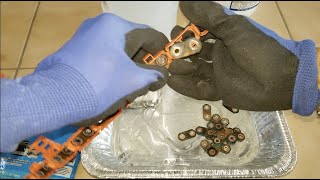
DANGEROUS: After disabling the high-voltage system, a technician removes the battery cover to inspect the copper bus bars and ECU connector pins. White or green crystalline corrosion creates high resistance, directly causing false cell imbalance codes.
Tools: High-voltage safety gear, insulated hand tools (Professional)
When This Code Triggers (Freeze-Frame Conditions)
- Engine Coolant Temp: 170-210°F (77-99°C) (Engine at full operating temperature.)
- Vehicle Speed: 25-65 mph (40-105 km/h) (During steady-state cruising or moderate acceleration.)
- State of Charge (SOC): 40-60% (During normal hybrid operation where the system is actively charging and discharging.)
- Battery Block Voltage Delta: > 0.5V (The voltage difference between the highest and lowest battery blocks exceeds the failure threshold under load.)
Related Codes
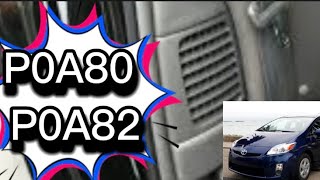
- P0A80 — The most common partner to P3000. P3000 is the general alarm, while P0A80 ('Replace Hybrid Battery Pack') is the specific diagnosis confirming the battery failed an internal health check due to imbalanced cells.
- P0A7F — Indicates 'Hybrid Battery Pack Deterioration.' Triggered by the battery's overall loss of capacity over time, whereas P0A80 is triggered by an immediate voltage difference between cell blocks.
- P3011 - P3029 — Highly specific codes pointing to a weak battery block (e.g., P3014 means 'Battery Block 4 Becomes Weak'). These codes are invaluable for targeted repairs like replacing individual modules.
- P0A82 — Indicates 'Hybrid Battery Pack Cooling Fan Performance.' Seeing P0A82 with P3000 proves the problem is the cooling system, not the battery itself.
Climate & Environmental Factors
- High Heat: High ambient temperatures accelerate the chemical degradation of NiMH battery cells, reducing capacity and increasing internal resistance. If the cooling system cannot keep temperatures below 122°F (50°C), permanent damage occurs, triggering P3000.
- High Humidity: Moisture promotes rapid corrosion on copper bus bars and voltage sensing harness pins. This corrosion increases electrical resistance, causing the ECU to read false voltage imbalances and trigger P3000 even on healthy batteries.
- Extreme Cold: Cold temperatures temporarily reduce battery efficiency and available power, forcing reliance on the gas engine. However, cold does not cause the permanent, irreversible damage that heat does.
How to Talk to a Mechanic About This Code
Say this: "I have a P3000 code on my [Year, Make, Model]. I'd like to schedule a diagnostic appointment. Before condemning the battery pack, please check for any related codes like P0A82 and inspect the battery cooling fan, its vents, and wiring for issues. I'd also like to know the individual block voltages from the live data scan."
This signals to the shop that you're an informed customer. It directs them to check common, cheaper failure points (like a clogged fan or corroded wire) before defaulting to the most expensive repair (full battery replacement). Mentioning specific sub-codes and live data shows you understand the proper diagnostic process.
Avoid saying:
- 'My hybrid warning light is on, can you fix it?'
- 'I think I need a new battery.'
- 'Just do whatever it takes to fix it.'
Questions to ask before authorizing the repair:
- What specific sub-codes (like P0A80 or P0A82) did you find in the Battery ECU?
- What was the voltage difference between the highest and lowest battery blocks under load?
- Did you inspect the battery cooling fan and its intake vent for blockages?
- Did you check the wiring and connectors for the fan and the battery ECU for corrosion?
- What is the warranty on the proposed replacement battery, and does it cover both parts and labor?
Where to Take It: Dealer vs Independent vs Chain
- Dealer:
Recommended for warranty work or for specific known module issues (like the Chevy Volt). For out-of-warranty battery issues, they are a safe but expensive choice.
Best for: Vehicles under the hybrid system or emissions warranty., Complex manufacturer-specific issues (e.g., Chevy Volt BECM failure)., Owners who prioritize OEM parts and a manufacturer-backed warranty above all else.
Downsides: Highest labor rates, often 20-40% more than independent shops., May only offer a full, new OEM battery replacement, which is the most expensive option., Less flexibility on repair options. (Typical cost: +40% vs. baseline) - Independent Shop:
Best fit for most out-of-warranty P3000 repairs. A qualified hybrid specialist performs a thorough diagnosis, checks for cheaper fixes, and offers more cost-effective battery solutions than a dealer.
Best for: Out-of-warranty vehicles where cost is a major factor., Accessing a wider range of repair options (reconditioned, aftermarket, or new OEM parts)., Building a long-term relationship with a trusted mechanic.
Downsides: Not all independent shops are qualified to work on high-voltage systems. You MUST find a 'hybrid specialist'., Quality and expertise can vary widely; vetting through reviews and certifications is crucial. (Typical cost: +0% vs. baseline) - Chain Shop:
AVOID for P3000 diagnosis and repair. They are not equipped to handle the complexities of a hybrid battery system and are likely to either misdiagnose the issue or refer you to a specialist.
Best for: Basic maintenance like tires, oil changes, and 12V battery replacement.
Downsides: Technicians generally lack the specific training and expensive equipment required for high-voltage system diagnosis and repair., High risk of misdiagnosis, leading to unnecessary and expensive recommendations., Most will refuse to work on the high-voltage battery itself due to safety and liability concerns. (Typical cost: -10% vs. baseline)
When to Walk Away From the Repair
If the estimated repair cost for the high-voltage battery exceeds 50% of the car's current private-party market value, sell the vehicle as-is or trade it in.
- Car worth $6000, fix is $3500: Borderline. The repair cost is over 50% of the car's value. Get a second opinion from a hybrid specialist on reconditioned battery options before proceeding.
- Car worth $12000, fix is $4000: Fix it. The repair cost is significant but well below the 50% threshold, making it a worthwhile investment to keep a reliable vehicle on the road.
- Car worth $3500, fix is $3000: Walk away. The repair cost is nearly the entire value of the car. It is not economically sensible to perform the repair.
What Scan Tool You Need for This Code

Minimum: A tool that can read manufacturer-specific codes from the Hybrid Control and Battery ECUs. It must be able to display live data for individual battery block voltages.
A basic $20 scanner only shows the generic P3000 code from the engine ECU. It cannot access the critical sub-codes (like P0A80) or the live battery block voltage data from the Battery ECU, which is essential for determining if the battery failed.
Budget: Dr. Prius / Hybrid Assistant App with a compatible OBD-II Adapter (e.g., OBDLink LX) (~$80) — This is the best budget option. These apps are specifically designed for hybrid vehicles and read detailed battery health information, including individual block voltages, temperature readings, and perform automated battery health tests.
Mid-range: Foxwell NT510 Elite (~$180) — A dedicated handheld scanner that supports Toyota/Lexus specific systems. It reads and clears codes from the hybrid modules and displays live data streams for battery voltages, providing a robust and reliable connection.
Professional: Autel MaxiCOM MK808 (~$500) — A professional-grade diagnostic tablet. It offers full bidirectional control, allowing you to run active tests (like commanding the battery cooling fan on/off), access all manufacturer-specific codes, and perform system initializations after a battery replacement.
Rent vs buy: Auto parts stores do not rent the advanced scanners needed for this job. Their loaner tools are basic code readers that are insufficient. For a one-time diagnosis, it is more cost-effective to pay a hybrid specialist shop for a one-hour diagnostic fee.
How to Clear the Code After You Fix It
- Reconnect 12V battery if disconnected
- Use a hybrid-capable OBD-II scan tool to clear codes from all relevant ECUs (Engine, Hybrid, Battery)
- Perform a drive cycle to allow readiness monitors to run
Drive cycle (~30 minutes): From a cold start, idle for 5-10 minutes. Drive a mix of city (25-40 mph) and highway (55-65 mph) speeds for at least 20 minutes, including periods of steady cruising and normal acceleration. Allow the vehicle to cool down completely before re-checking.
Readiness monitors affected: Catalyst Monitor, EVAP System Monitor, Oxygen Sensor Monitor
Before emissions retest: drive at least 100 miles to fully set monitors.
Watch out for:
- Disconnecting the 12V battery clears the code but resets all readiness monitors to 'Not Ready', guaranteeing an emissions test failure.
- The code returns immediately if the underlying physical fault (bad battery, corroded wire) is not repaired.
- Failing to complete a full drive cycle leaves monitors 'Not Ready', preventing the vehicle from passing an OBD-II emissions test.
Will This Fail Emissions / State Inspection?
Yes — this code typically fails an OBD-II emissions inspection.
- California: An illuminated Check Engine Light is an automatic failure. After repair, a specific drive cycle must be completed to set all readiness monitors to 'Ready' before re-testing.
- New York: An active P3000 code causes an automatic failure. The Malfunction Indicator Lamp must also be functional (on with key, off with engine running).
- Texas: An illuminated Check Engine Light results in an automatic failure. After clearing the code, you can only have one monitor 'Not Ready' to pass.
Most Commonly Affected Vehicles
- Toyota Prius (2004-2015) — Gen 2 and Gen 3 models are highly susceptible due to natural NiMH battery aging. Gen 2 models frequently suffer from hatch water leaks that corrode battery wiring.
- Toyota Camry Hybrid (2007-2017) — Uses aging NiMH battery technology prone to failure after 8-12 years. Early models (2007-2011) are the most common offenders.
- Lexus RX 400h / RX 450h (2006-2015) — Shares hybrid technology with the Highlander Hybrid and experiences identical battery degradation and cooling fan failures.
- Toyota Highlander Hybrid (2006-2016) — The large NiMH battery pack in these SUVs is subject to the same age-related failures as other Toyota hybrids from this era.
- Ford Fusion Hybrid (2010-2012) — First-generation Fusion Hybrids are now at an age where battery degradation is common, leading to P3000 and related codes.
- Nissan Altima Hybrid (2007-2011) — Uses hybrid technology licensed from Toyota, suffering from identical NiMH battery aging issues that trigger P3000.
- Chevrolet Volt (2016-2018) — P3000 is almost exclusively caused by a failing Battery Energy Control Module (BECM). GM issued special coverage N232432680 extending the warranty to 15 years/150,000 miles.
- BMW 3-Series Diesel (e.g., 320d, 335d) (2006-2018) — Unrelated to a hybrid battery, P3000 on BMW diesels indicates a fault with the fuel rail pressure sensor.
Manufacturer-Specific Notes
- Toyota/Lexus: P3000 is an informational code set by the main Hybrid Vehicle ECU to report a fault signal from the Battery ECU. Per TSB T-TT-0303-14, technicians must ignore P3000 and diagnose the specific underlying code (like P0A80) from the Battery ECU.
- General Motors (GM): On the 2016-2018 Chevrolet Volt, P3000 is a symptom of a failing Battery Energy Control Module (BECM), not the battery cells. GM extended the warranty on this part to 15 years or 150,000 miles.
- Volkswagen / Audi (VAG): On VAG diesels, P3000 relates to a malfunction in the glow plug warning lamp's communication network, completely unrelated to a battery.
- BMW: For diesel BMWs, P3000 indicates a 'Rail Pressure Sensor, Monitoring Deviation' fault, affecting the fuel delivery system, not a hybrid battery.
Real Owner Stories
2007 Toyota Prius at 150K miles - Misdiagnosis Story
Red triangle light and P3000 code appeared. The owner was told by a dealership they needed a new HV battery for thousands of dollars.
What they tried:
- Took it to the dealer, who diagnosed a failed HV battery.
- Owner sought a second opinion from an independent mechanic.
- The mechanic found the hybrid cooling fan was not receiving power.
Outcome: The issue was a corroded wiring connector for the cooling fan, a known issue on Gen 2 Prius models susceptible to hatch water leaks. Repairing the connector cost a fraction of a battery replacement and solved the problem.
Lesson: P3000 does not automatically mean the battery failed. Always diagnose cheaper related components like the cooling fan and its wiring before committing to a multi-thousand dollar battery replacement.
2017 Chevrolet Volt - Unusual Root Cause
Car entered a reduced power mode, failed to start, and displayed a 'Check Engine' light with a P3000 code.
What they tried:
- The vehicle was towed to a dealership for diagnosis.
- The dealer identified a failed Battery Energy Control Module (BECM).
Outcome: The repair was covered for free under GM's Special Coverage N232432680, which extends the warranty for the BECM to 15 years or 150,000 miles.
Lesson: On specific models like the 2016-2018 Chevy Volt, P3000 is frequently caused by a faulty control module, not the battery cells. Always check for applicable special warranties before paying for this repair.
2013 Toyota Prius C - Easy Fix
The 'Check Hybrid System' warning light came on with a P3000 code. The owner frequently transported their shedding dog.
What they tried:
- Owner suspected a cooling issue and inspected the HV battery cooling fan.
- Upon removing the rear seat trim, they found the fan intake and blades completely clogged with pet hair.
Outcome: The owner cleaned the fan and intake vents with a vacuum. After reassembly and clearing the code, P3000 did not return, and battery temperatures normalized. Total cost was $0.
Lesson: The easiest potential fix should be checked first. Visually inspect and clean the battery cooling fan intake vents, especially if you carry pets or live in a dusty area.
How to Prevent This Code From Triggering
- Clean the HV Battery Cooling Fan and Vents (Every 30,000 miles, or more often if you have pets.) — The battery cooling fan pulls in cabin air to cool the battery. Pet hair and dust clog the fan, causing the battery to overheat, which accelerates degradation and triggers P3000.
- Exercise the Battery with Regular Driving (Drive the car at least once or twice a week.) — Letting a hybrid vehicle sit for long periods shortens battery life. Regular driving keeps cells active and helps the battery management system maintain an optimal state of charge.
- Practice Smooth Driving Habits (Daily habit) — Avoiding hard acceleration and braking reduces strain on the battery. Coasting to a stop maximizes energy captured by regenerative braking, extending battery life.
- Inspect for Water Leaks and Control Humidity (Annually or after noticing any interior dampness.) — High humidity and water intrusion promote corrosion on battery terminals and ECU connectors. Keeping the interior dry prevents electrical resistance issues that lead to false fault codes.
- Avoid Extreme Temperatures When Possible (Daily habit) — Heat is the primary enemy of a hybrid battery. Parking in the shade or in a garage protects the battery from extreme heat that accelerates chemical degradation.
Frequently Asked Questions
Can I just clear the P3000 code and keep driving?
You can clear the code, but it will return quickly. Clearing the code does not fix the underlying physical problem, and ignoring it leads to worsening symptoms and eventual breakdown. Stop driving and diagnose the root cause to prevent damaging other expensive hybrid components.
Do I have to go to the dealer to fix a P3000 code?
No. Independent hybrid specialist shops are often more affordable and just as capable as dealerships. They offer a wider range of solutions, including remanufactured or reconditioned batteries, which dealers typically do not provide.
What are common misdiagnosis pitfalls for P3000?
A frequent mistake is immediately replacing the $2,500+ hybrid battery pack without checking support systems. P3000 is often caused by cheaper problems, such as a clogged battery cooling fan, a corroded fan wiring connector, or a faulty voltage sensing harness. Always diagnose the cooling and wiring systems first.
Can a bad 12V battery cause a P3000 code?
It is rare for a bad 12V battery to directly cause a P3000 code. However, a weak 12V battery causes strange electronic glitches and prevents the hybrid system's computers from operating correctly. Always load-test and rule out the 12V battery before replacing high-voltage components.
Is replacing the hybrid battery my only option?
Not always. If the problem is a clogged cooling fan, cleaning it solves the issue for free. If only one or two battery modules are weak, professional reconditioning replaces only the bad modules for a fraction of the cost of a full replacement.
Why do I need a special scanner for P3000?
A basic scanner only reads generic codes from the main engine computer. P3000 is a master warning indicating the separate Battery ECU holds the specific fault data. You need a hybrid-capable scanner to communicate with the Battery ECU and read underlying codes like P0A80.
Is it dangerous to work on the hybrid battery myself?
Yes, it is extremely dangerous. The high-voltage battery operates at over 200 volts, which is lethal if mishandled. Stop DIY diagnosis and tow the vehicle to a hybrid specialist if the repair requires opening the orange high-voltage cables or the battery casing.
How much does it cost to fix a P3000 code?
Costs range from $0 for cleaning a clogged cooling fan to over $3,500 for a new OEM battery. A remanufactured battery replacement typically costs $1,800 to $2,500 installed. Always diagnose the exact sub-code before authorizing expensive repairs.
Key Takeaways
- P3000 is a master warning code triggered by the Hybrid Vehicle ECU when it detects a critical fault in the high-voltage battery system.
- Do not immediately replace the $2,500+ battery pack; first check for a clogged $0 cooling fan or a blown $150 12V auxiliary battery.
- A basic OBD-II scanner cannot diagnose P3000; you must use a hybrid-capable tool to read specific sub-codes like P0A80 from the Battery ECU.
- On 2016-2018 Chevrolet Volts, P3000 usually indicates a failed Battery Energy Control Module (BECM) covered under a 15-year/150,000-mile extended warranty.
Helpful Videos




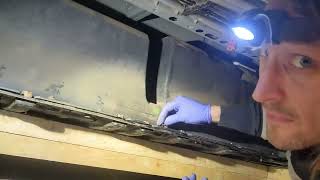

The information in this article is provided for general reference and educational purposes only. Vehicle specifications, procedures, and part compatibility can vary by production date, trim level, and region. Always consult your vehicle's factory service manual and verify part numbers before purchasing or performing repairs. Safety-critical components such as airbags, seat belts, and braking systems should be installed by a qualified professional.
- 🎬 Helpful Videos
- What Does P3000 Mean?
- Can I Drive With P3000?
- Common Causes
- Symptoms
- Diagnostic Flowchart
- Common Fixes & Costs
- Used vs. New Parts: Buying Guide
- What Happens If You Wait — Timeline
- Cost of Not Fixing It
- Diagnosis Steps
- When This Code Triggers (Freeze-Frame Conditions)
- Related Codes
- Climate & Environmental Factors
- How to Talk to a Mechanic About This Code
- Where to Take It: Dealer vs Independent vs Chain
- When to Walk Away From the Repair
- What Scan Tool You Need for This Code
- How to Clear the Code After You Fix It
- Will This Fail Emissions / State Inspection?
- Most Commonly Affected Vehicles
- Manufacturer-Specific Notes
- Real Owner Stories
- 2007 Toyota Prius at 150K miles - Misdiagnosis Story
- 2017 Chevrolet Volt - Unusual Root Cause
- 2013 Toyota Prius C - Easy Fix
- How to Prevent This Code From Triggering
- Frequently Asked Questions
- Can I just clear the P3000 code and keep driving?
- Do I have to go to the dealer to fix a P3000 code?
- What are common misdiagnosis pitfalls for P3000?
- Can a bad 12V battery cause a P3000 code?
- Is replacing the hybrid battery my only option?
- Why do I need a special scanner for P3000?
- Is it dangerous to work on the hybrid battery myself?
- How much does it cost to fix a P3000 code?
- Key Takeaways
- 🎟️ Get 5% Off