

OBD-II Code P2980: Transmission Fluid Pressure Sensor Circuit Performance
The Ultimate Guide to What P2980 Means, Why It Triggers, and How to Fix It
- Stop driving immediately if P2980 triggers, as the resulting 30-mph 'limp mode' creates a safety hazard and risks a $4,000 transmission replacement.
- Inspect the external transmission wiring harness first, as heat-damaged wires or corroded connectors cause over 40% of erratic sensor performance codes.
- Check your transmission fluid level and color; dark, burnt-smelling fluid indicates severe internal wear that a simple $150 sensor replacement will not fix.
- Verify the sensor's live voltage data using an advanced OBD-II scanner before buying parts, ensuring the signal actually responds to changes in engine RPM.
- Search for manufacturer Technical Service Bulletins (TSBs) before authorizing mechanical repairs, as a 1-hour dealer software update fixes this code on many 2017+ vehicles.
What Does P2980 Mean?
P2980 means the Powertrain Control Module (PCM) or Transmission Control Module (TCM) detects an erratic or irrational signal from a transmission fluid pressure (TFP) sensor circuit. This sensor reports hydraulic fluid pressure, which is critical for commanding smooth gear shifts. A 'Performance' code means the sensor's signal doesn't match expected values based on engine speed, vehicle speed, and commanded gear. For example, if the computer commands a shift that should raise pressure, but the sensor reading remains static or jumps erratically, it triggers P2980.
Technical definition: P2980 stands for 'Transmission Fluid Pressure Sensor/Switch 'X' Circuit Range/Performance'. The 'P2' prefix designates a generic powertrain fault, and the P27xx-P29xx range relates to transmission components. This code signifies the voltage signal from a specific pressure sensor circuit is outside its expected operational range or behaving erratically, indicating a performance issue rather than a simple open or short circuit.
Can I Drive With P2980?
No — Do Not Drive. Driving with this code causes severe and unpredictable transmission behavior. Your vehicle will likely enter 'limp mode,' limiting speed to 30-40 mph and locking the transmission in a single gear. Continuing to drive risks catastrophic transmission damage, turning a $150 sensor or wiring issue into a $4,000 transmission replacement. The risk of sudden power loss makes it unsafe in traffic.
Common Causes
- Damaged wiring or poor electrical connections (Very Common) — The transmission wiring harness is exposed to extreme heat and vibration, causing frayed wires, corroded connectors, or loose pins. This is the primary cause of intermittent circuit performance codes.
- Low, dirty, or incorrect transmission fluid (Common) — Low fluid causes pressure drops, while degraded or incorrect fluid lacks required hydraulic properties. Dirty fluid also clogs the sensor's orifice or internal filters, causing false out-of-spec readings.
- Faulty Transmission Fluid Pressure Sensor (TFPS) (Common) — The sensor fails internally due to age, heat cycles, or fluid contamination, sending erratic voltage readings to the TCM.
- Software anomalies or corrupted data (Less Common) — A glitch in the TCM or PCM software triggers the code erroneously. This requires a software re-flash from the dealer, common in newer GM and Ford vehicles.
- Failing transmission valve body or solenoids (Less Common) — A cracked valve body, sticking valve, or failing pressure control solenoid causes real hydraulic pressure drops that the sensor accurately reports.
- Weak battery or failing charging system (Uncommon) — Modern transmissions require stable voltage. A weak battery causes the TCM to receive erratic signals, triggering false transmission sensor codes.
- Faulty Powertrain or Transmission Control Module (PCM/TCM) (Rare) — The computer module itself fails. Diagnose this only after exhaustively ruling out all wiring, sensor, and mechanical faults.
Symptoms
- Check Engine Light is on — An illuminated Malfunction Indicator Lamp (MIL) on your dashboard is the first sign, sometimes accompanied by a transmission warning message.
- Harsh, erratic, or delayed shifting — The transmission slams into gear or hesitates because the computer lacks accurate pressure data to control the shift solenoids.
- Flashing gear indicator light ('D' light) — On specific vehicles like Hondas and Acuras, a flashing 'D' (Drive) light indicates a direct transmission fault.
- Decreased fuel economy — Inefficient shifting and failure of the torque converter to lock up forces the engine to work harder, dropping gas mileage by 5-15%.
- Vehicle is stuck in "limp mode" — The TCM locks the transmission into a single gear (usually 2nd or 3rd) to prevent damage, limiting top speed to 30-40 mph.
Diagnostic Flowchart
Tap your situation to follow the diagnostic path that matches what you're seeing on this code.
Common Fixes & Costs
- Repairing Damaged Wiring or Connectors — Parts: $10-$50, Labor: $150-$300, ~1.5 hr book time (Intermediate)
- Replacing the Transmission Fluid Pressure Sensor (TFPS) — Parts: $40-$150, Labor: $150-$400, ~2.0 hr book time (Intermediate)
- Transmission Fluid and Filter Change — Parts: $80-$150, Labor: $150-$250, ~1.0 hr book time (DIY)
- Updating or Re-flashing the TCM/PCM Software — Parts: $0, Labor: $150-$250, ~1.0 hr book time (Professional)
- Replacing the Transmission Valve Body — Parts: $500-$1500, Labor: $400-$1200, ~4.0 hr book time (Professional)
DIY vs Professional
- Repairing Damaged Wiring or Connectors — Beginner:
Tools: Digital multimeter, wire strippers, crimpers, heat shrink tubing, soldering iron. - Replacing an External TFPS — Beginner:
Tools: Socket set, torque wrench, rags. - Transmission Fluid and Filter Change — Beginner:
Tools: Socket set, torque wrench, drain pan, fluid pump/funnel, correct fluid, new filter. - Replacing an Internal TFPS or Valve Body — Beginner:
Tools: Extensive socket set, torque wrench, service manual, clean drain pans, specialized connector tools.
Used vs. New Parts: Buying Guide
When a used part is worth it: A used valve body is a budget-conscious choice for an older, high-mileage vehicle (over 150k miles) where the goal is to keep it running for another 1-2 years without investing more than the car is worth.
Donor-vehicle mileage cap: roughly under 80000 miles for the part to have meaningful remaining life.
Donor quality checklist:
- Buy from a reputable salvage yard offering at least a 30-90 day warranty.
- Match the part number exactly, as calibrations vary by year and model.
- Avoid parts with visible external damage or from vehicles in severe accidents.
Decision logic:
- If Vehicle is less than 8 years old or under 100,000 miles → Buy a new or remanufactured unit. The higher cost is justified by the longer lifespan and comprehensive warranty.
- If Vehicle is over 10 years old and your budget is extremely tight → A used part is an acceptable risk, but understand it may not be a long-term solution.
- If The part is for a transmission with a high failure rate (e.g., some CVTs) → Strongly favor a remanufactured unit from a specialist like Sonnax, as they correct original design flaws.
Warranty tradeoff: Used parts typically offer a 30-90 day part-only warranty, meaning you pay labor again if it fails. Remanufactured units usually come with a 1-3 year warranty that includes limited labor coverage.
Worst-case if a used part fails: $800-$1500 in duplicate labor and fluid costs if the used part fails.
What Happens If You Wait — Timeline
- 0-1 month: Code P2980 sets, MIL illuminates. You notice occasional, minor shift hesitation or delayed engagement into Drive. (MPG impact: 0-5%% · Added cost: $0-$50 in wasted fuel.)
- 1-3 months: Shifting becomes harsher. The vehicle enters 'limp mode' intermittently in heavy traffic. Internal heat builds, accelerating fluid breakdown. (MPG impact: 5-10%% · Added cost: $100-$400 in wasted fuel and potential towing.)
- 3-6 months: Limp mode becomes frequent. Incorrect line pressure causes significant wear on clutch packs and damages shift solenoids or the valve body. (MPG impact: 10-20%% · Added cost: $800-$2,500 for valve body and solenoid replacement.)
- 6+ months: Catastrophic internal failure. The transmission slips severely, makes grinding noises, or fails to engage. Fluid is black and full of metal debris. (MPG impact: N/A (Vehicle is inoperable)% · Added cost: $3,500-$8,000+ for a complete transmission rebuild or replacement.)
Cost of Not Fixing It
- Immediate (0-1 month): Erratic shifting and sudden 'limp mode' engagement creates a severe safety risk in traffic. (Added cost: $50-$150 in wasted fuel and potential towing.)
- Short Term (1-6 months): Driving with incorrect line pressure overheats and destroys internal components like clutch packs and solenoids. (Added cost: $800-$2,500 for valve body or solenoid pack replacement.)
- Long Term (6+ months): Catastrophic transmission failure. Accumulated wear destroys clutches and hard parts, rendering the vehicle undrivable. (Added cost: $3,500-$7,000+ for a complete transmission rebuild or replacement.)
Diagnosis Steps
- Scan for All Trouble Codes
Use an OBD-II scanner to read PCM and TCM codes. Document all codes and freeze frame data, then clear them to see which return immediately.
Tools: OBD-II Scanner with TCM access (Beginner) - Check Transmission Fluid Level and Condition
Check the fluid level with the engine running and warm. Fluid must be pink or red. Dark brown, black, or burnt-smelling fluid indicates severe degradation causing pressure issues.
Tools: Rag, Owner's Manual (Beginner) - Visually Inspect Wiring and Connectors
Inspect the wiring harness and pressure sensor connector for frayed, burnt, or corroded wires. Ensure the connector is securely latched and free of moisture.
Tools: Flashlight (Intermediate) - Test Sensor Operation with Live Data & Wiggle Test
Monitor the 'TFPS Voltage' and 'Actual Fluid Pressure' PIDs on a scanner. Wiggle the wiring harness; if the voltage jumps erratically, you have a wiring break. If the reading ignores RPM changes, the sensor is dead.
Tools: Advanced OBD-II Scanner with Live Data (Advanced) - Test Sensor Circuit at the Connector
Disconnect the sensor and use a multimeter. Verify 5-volt reference from the TCM, check for less than 1 ohm of resistance on the ground wire, and ensure the signal wire has no shorts.
Tools: Digital Multimeter, Wiring Diagram (Advanced) - Check Mechanical Transmission Pressure
Connect a mechanical pressure gauge to the transmission test ports. If actual pressure is low but the sensor reads normal (or vice versa), you have a true hydraulic failure like a bad pump or valve body.
Tools: Transmission Pressure Gauge Set, Service Manual (Professional) - Analyze Sensor Waveform
Use an oscilloscope to graph the sensor's signal voltage. A failing sensor shows a noisy, erratic waveform with sharp spikes that a digital multimeter misses.
Tools: Automotive Oscilloscope, Wiring Diagram (Professional)
When This Code Triggers (Freeze-Frame Conditions)
- Engine Coolant Temp: 180-210°F (82-99°C) (The fault typically registers when the engine and transmission reach full operating temperature.)
- Engine RPM: 1500-2500 RPM (The code sets during or immediately after a gear shift under steady throttle or light acceleration.)
- Vehicle Speed: 35-55 mph (56-88 km/h) (Most likely occurs during highway cruising speeds when the transmission shifts between higher gears.)
- Transmission Fluid Temperature: 150-220°F (65-104°C) (The TCM actively monitors pressure performance once the fluid warms to its correct viscosity.)
Related Codes
- P0700 — A general 'Transmission Control System Malfunction' code set by the ECM when the TCM detects a fault. You must use a scanner capable of reading TCM-specific codes to see the underlying P2980.
- P0840-P084F — This family relates to transmission fluid pressure sensor circuits. While P2980 is a 'Performance' code, others specify 'Circuit Low' or 'Circuit High', pointing directly to electrical shorts or opens.
- P0868 — 'Transmission Fluid Pressure Low' indicates confirmed low system pressure from a leak, failing pump, or clogged filter. P2980 appears alongside it if the pressure drop causes erratic sensor readings.
- P0613 / U0100 — These indicate module-level problems. P0613 means 'TCM Processor Error,' and U0100 means 'Lost Communication.' The P2980 is a symptom of the failing control module.
Climate & Environmental Factors
- High Humidity and Moisture: Moisture penetrates non-sealed connectors, corroding pins and causing poor electrical conductivity. Condensation inside sensor housings causes short circuits or signal drift.
- Extreme Heat: Sustained high temperatures from exhaust components degrade plastic wiring insulation, making it brittle. Heat accelerates the aging of internal sensor electronics.
- Extreme Cold: Very cold temperatures increase transmission fluid viscosity, causing temporary abnormal pressure readings on startup that trigger performance codes if marginal issues exist.
How to Talk to a Mechanic About This Code
Say this: "I have a P2980 transmission code and I'm experiencing harsh shifting. I'd like to schedule a diagnostic appointment. Please check the transmission wiring, view live data from the pressure sensor, and verify fluid condition before recommending major part replacements."
This signals you're an informed customer. It directs the shop to investigate less-expensive causes (wiring, fluid) before jumping to costly conclusions like replacing the valve body, reducing the risk of being upsold.
Avoid saying:
- 'My check engine light is on, can you look at it?'
- 'My car is shifting weird, just fix it.'
- 'I think I need a new transmission.'
Questions to ask before authorizing the repair:
- What were the results of the wiring and connector inspection?
- Can you show me the live data from the pressure sensor? Did its voltage reading match what the computer commanded?
- If you recommend a valve body replacement, what specific tests ruled out a simpler electrical fault?
- Is there a Technical Service Bulletin (TSB) or software update for this issue on my specific vehicle?
- What is the warranty on the proposed repair, and does it cover both parts and labor?
Where to Take It: Dealer vs Independent vs Chain
- Dealer:
Recommended if your vehicle is under warranty or has a known TSB for a software fix.
Best for: Vehicles under powertrain warranty., Known software-related issues (e.g., Ford 10R80, Chevy Equinox EV)., Complex, brand-specific transmissions (e.g., VW/Audi DSG, BMW).
Downsides: Highest labor rates., Prefers replacing large assemblies rather than performing component-level repairs. (Typical cost: +50% vs. baseline) - Chain Shop:
AVOID for diagnosing a P2980 code. The risk of an expensive misdiagnosis is extremely high.
Best for: Basic fluid exchanges on simple transmissions.
Downsides: High pressure to upsell; notorious for turning minor issues into full rebuild recommendations., Technician diagnostic capability for complex codes is highly inconsistent. (Typical cost: -20% vs. baseline)
When to Walk Away From the Repair
If the estimated repair cost exceeds 50% of the car's private-party value, it's time to seriously consider selling or trading it in.
- Car worth $4000, fix is $2200: Walk away. The repair cost is over 50% of the car's value. The money is better put toward a replacement vehicle.
- Car worth $15000, fix is $2500: Fix it. The repair cost is well below the 50% threshold and restores the vehicle's function and value.
- Car worth $6000, fix is $4500: Walk away. A repair this expensive on a lower-value car is a poor investment.
What Scan Tool You Need for This Code
Minimum: A scanner that reads manufacturer-specific Transmission Control Module (TCM) codes and displays live data for transmission PIDs.
A basic $20 code reader only shows the P0700 generic fault, not the specific P2980 code. Crucially, it cannot display live pressure sensor voltage, which is essential to determine if the sensor is faulty, the wiring is bad, or there's a real pressure problem.
Rent vs buy: Auto parts store loaner tools are basic code readers and insufficient for this code. If this is a one-time diagnosis, paying a specialist shop ($120-$200) is cheaper than buying a mid-range scanner.
How to Clear the Code After You Fix It
- Use a compatible OBD-II scan tool to erase the diagnostic trouble codes.
- Ensure the fuel tank is between 30% and 70% full.
- Perform a complete drive cycle to allow the vehicle's readiness monitors to run.
Drive cycle (~30 minutes): 1. Cold start (engine off for 8+ hours). 2. Idle for 3 minutes. 3. Drive in mixed city traffic for 15 minutes, including several stops. 4. Maintain a steady highway speed (55-60 mph) for 10 minutes. 5. Coast to a lower speed without heavy braking. 6. Idle for 3 minutes before shutting down.
Readiness monitors affected: Comprehensive Component Monitor (CCM), Catalyst (CAT) Monitor, Oxygen (O2) Sensor Monitor
Before emissions retest: drive at least 100 miles to fully set monitors.
Watch out for:
- Disconnecting the battery clears the code but erases readiness monitors, guaranteeing an emissions test failure.
- The code reappears within two drive cycles if the underlying mechanical or electrical fault remains.
- Failing to complete the exact drive cycle leaves monitors incomplete, preventing OBD-II emissions inspection passage.
Will This Fail Emissions / State Inspection?
Yes — this code typically fails an OBD-II emissions inspection.
- California: A Check Engine Light on is an automatic smog check failure. All required OBD readiness monitors must also be in a 'Ready' state to pass.
- New York: The NYS DMV inspection includes an OBD-II scan. An illuminated Malfunction Indicator Lamp is an automatic failure.
- Texas: In the 17 counties requiring emissions testing, an illuminated Check Engine Light causes the vehicle to fail the OBD inspection.
Most Commonly Affected Vehicles
- Chevrolet Equinox EV (2024-2025) — This code appears as a false positive from the OnStar diagnostic system. If the check engine light is on, it requires a dealer-installed software update referenced in bulletin PIP5994.
- Nissan Rogue, Sentra, Altima, Juke (2013-2020) — These Jatco CVTs are notorious for fluid breakdown leading to pressure loss and sensor codes. The code often points to a failing valve body or slipping push-belt.
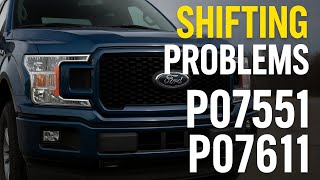
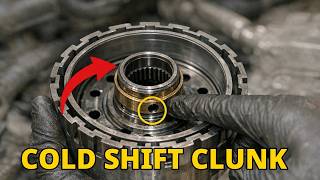
- Ford F-150, Explorer, Mustang (2017-2023) — Models with the 10R80 transmission experience harsh shifting addressed by TSBs like 22-2428, starting with a PCM reprogram. Mechanical failures involve the CDF clutch drum bushing.
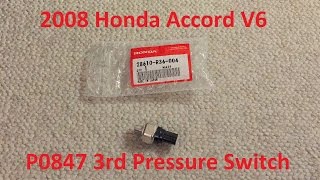
- Honda Civic, Accord, Odyssey, Pilot (2005-2016) — Pressure switch failure is well-documented, causing a flashing 'D' light. Switches are external and inexpensive to replace using OEM parts.
- Subaru Outback, Forester, Impreza, Crosstrek (2012-2021) — TR580 and TR690 CVTs suffer from torque converter clutch solenoid failure within the valve body. Aftermarket solenoids offer a cheaper repair than full valve body replacement.
- Volkswagen/Audi Golf, GTI, A3, A4 (2015-2020) — DSG transmissions experience failures in the mechatronic unit, triggering pressure and communication faults.
- BMW Various models with ZF 6HP/8HP transmissions (2010-2018) — Pressure sensor faults link to a leaking mechatronic sleeve or a failing mechatronic unit, requiring expensive replacement.
- Dodge/Jeep/Chrysler Various models with 45RFE/545RFE/68RFE (2003-2018) — These transmissions suffer from faulty governor pressure solenoids and sensors, replaced together as a block inside the transmission pan.
Manufacturer-Specific Notes
- Chevrolet: On Equinox EV models, P2980 triggers as a false positive by OnStar. If the light is on, it requires a dealer software update per GM bulletin PIP5994.
- Nissan: Pressure sensor codes on CVTs indicate a failing valve body, not just a bad sensor. Nissan extended the CVT warranty to 84 months/84,000 miles for certain models due to class-action lawsuits.
- Honda: A failing pressure switch causes a flashing 'D' (Drive) light on the gear indicator, appearing before or alongside the Check Engine Light.
- Subaru: Subaru extended its powertrain warranty to 10 years/100,000 miles for many 2012-2018 CVTs to cover common valve body solenoid failures.
- Ford: For the 10R80 transmission, the first step for shifting complaints is a PCM/TCM software update per TSB 22-2428, resolving issues that mimic hard part failures.
Real Owner Stories
2024 Chevrolet Equinox EV with ~5K miles
Received an alert from the vehicle's mobile app for code P2980. The Check Engine Light was also illuminated.
What they tried:
- Owner performed a reset procedure described on the Chevy help site, which cleared the errors temporarily.
- Took the vehicle to the dealer for service.
Outcome: The dealer performed a software fix referenced in Preliminary Information bulletin PIP5994. The error did not return.
Lesson: For newer vehicles, a sensor performance code is often a software glitch. If the light is on, a dealer software update is usually the first and only required fix.
2015 Nissan Rogue with ~100K miles
Vehicle experienced shuddering, hesitation, and the Check Engine Light came on with a pressure-related code.
What they tried:
- A general repair shop suggested a fluid change, which failed.
- The owner was quoted over $4,000 for a full transmission replacement.
Outcome: A transmission specialist diagnosed a failing valve body, not a complete transmission failure. The valve body was replaced for $1,800, restoring normal shifting.
Lesson: On vehicles with known transmission issues, a pressure code points to a specific component failure. Always get a second opinion from a specialist before agreeing to a full replacement.
2018 Ford F-150 with 10R80 Transmission at 70K miles
Experienced intermittent harsh and delayed shifts, particularly a slam into 3rd gear. No Check Engine Light initially.
What they tried:
- Researched forums and found TSB 22-2428 describing the exact symptoms.
Outcome: The dealer verified the concern and reprogrammed the PCM and TCM per the bulletin. The shifting issues resolved under the powertrain warranty.
Lesson: Search for Technical Service Bulletins (TSBs) matching your symptoms. Providing the TSB number to the service advisor leads to a faster, cheaper software-based repair.
How to Prevent This Code From Triggering
- Perform regular transmission fluid and filter changes (Every 30,000-60,000 miles) — Clean fluid maintains hydraulic properties, lubricates moving parts, and prevents overheating, which is the primary cause of transmission failure.
- Use only the manufacturer-specified transmission fluid type (Every fluid change) — Modern transmissions require specific fluid viscosity and additive packages. Incorrect fluid causes shifting problems and pressure sensor faults.
- Install an auxiliary transmission cooler (Once, especially for towing or hot climates) — An external cooler provides better heat dissipation than the stock radiator cooler, prolonging the life of the fluid, sensors, and clutches.
- Proactively replace known-to-fail external pressure switches (Every 50,000-60,000 miles on affected models (e.g., Hondas)) — Replacing weak-point pressure switches proactively prevents future breakdowns and diagnostic headaches.
- Protect wiring from heat and vibration (During any under-hood maintenance) — Securing harnesses away from exhaust components and using heat-reflective tape prevents insulation from becoming brittle and cracking.
Frequently Asked Questions
What's the difference between a transmission pressure 'sensor' and a 'switch'?
A pressure switch is a simple on/off device that closes a circuit at a preset pressure. A pressure sensor provides a continuous, variable voltage signal corresponding to the exact fluid pressure. Code P2980 typically relates to a sensor whose variable signal is performing erratically.
Can a weak car battery cause a P2980 code?
Yes. Modern transmissions rely on computers (TCMs) that require stable voltage to function. A weak battery provides inconsistent voltage, causing the TCM to misinterpret sensor data and throw false performance codes like P2980.
My app reported P2980, but the Check Engine Light isn't on. What should I do?
This is often a false positive reported by the vehicle's telematics system. Perform a few drive cycles; the code will likely clear itself if no true fault exists. If the Check Engine Light illuminates or shifting problems occur, schedule a service appointment immediately.
Is a P2980 repair covered under my powertrain warranty?
Yes, transmission sensors and internal components are covered under the standard powertrain warranty. Manufacturers like Nissan and Subaru also offer extended CVT warranties that cover these specific repairs. Always check your vehicle's warranty terms before paying out of pocket.
How much does it cost to diagnose this code?
Most repair shops charge a diagnostic fee equivalent to one hour of labor, typically $120 to $200. This covers scanning the code, checking live data, and performing initial electrical tests. This fee is usually credited toward the final repair cost.
Will a transmission fluid change fix a P2980 code?
A fluid change only fixes P2980 if the root cause is severely degraded or low fluid causing actual pressure drops. It will not fix a damaged wire, a dead sensor, or a failing valve body. Always diagnose the electrical circuit before assuming new fluid will solve the problem.
Where is the transmission fluid pressure sensor located?
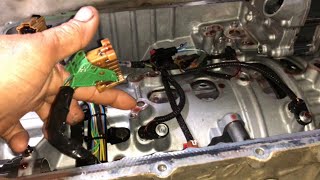
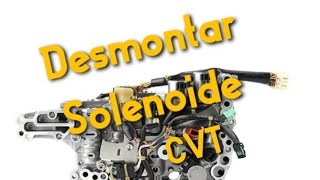
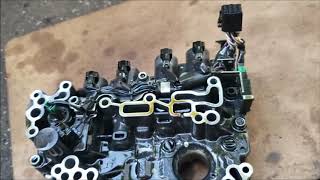
Location varies entirely by vehicle make and model. On many Hondas, pressure switches are bolted to the outside of the transmission case and are easily accessible. On Nissan CVTs and Ford 10-speeds, the sensor is buried inside the transmission oil pan on the valve body, requiring significant labor.
Key Takeaways
- Stop driving immediately if P2980 triggers, as the resulting 30-mph 'limp mode' creates a safety hazard and risks a $4,000 transmission replacement.
- Inspect the external transmission wiring harness first, as heat-damaged wires or corroded connectors cause over 40% of erratic sensor performance codes.
- Check your transmission fluid level and color; dark, burnt-smelling fluid indicates severe internal wear that a simple $150 sensor replacement will not fix.
- Verify the sensor's live voltage data using an advanced OBD-II scanner before buying parts, ensuring the signal actually responds to changes in engine RPM.
- Search for manufacturer Technical Service Bulletins (TSBs) before authorizing mechanical repairs, as a 1-hour dealer software update fixes this code on many 2017+ vehicles.
Helpful Videos



The information in this article is provided for general reference and educational purposes only. Vehicle specifications, procedures, and part compatibility can vary by production date, trim level, and region. Always consult your vehicle's factory service manual and verify part numbers before purchasing or performing repairs. Safety-critical components such as airbags, seat belts, and braking systems should be installed by a qualified professional.
- 🎬 Helpful Videos
- What Does P2980 Mean?
- Can I Drive With P2980?
- Common Causes
- Symptoms
- Diagnostic Flowchart
- Common Fixes & Costs
- DIY vs Professional
- Used vs. New Parts: Buying Guide
- What Happens If You Wait — Timeline
- Cost of Not Fixing It
- Diagnosis Steps
- When This Code Triggers (Freeze-Frame Conditions)
- Related Codes
- Climate & Environmental Factors
- How to Talk to a Mechanic About This Code
- Where to Take It: Dealer vs Independent vs Chain
- When to Walk Away From the Repair
- What Scan Tool You Need for This Code
- How to Clear the Code After You Fix It
- Will This Fail Emissions / State Inspection?
- Most Commonly Affected Vehicles
- Manufacturer-Specific Notes
- Real Owner Stories
- 2024 Chevrolet Equinox EV with ~5K miles
- 2015 Nissan Rogue with ~100K miles
- 2018 Ford F-150 with 10R80 Transmission at 70K miles
- How to Prevent This Code From Triggering
- Frequently Asked Questions
- What's the difference between a transmission pressure 'sensor' and a 'switch'?
- Can a weak car battery cause a P2980 code?
- My app reported P2980, but the Check Engine Light isn't on. What should I do?
- Is a P2980 repair covered under my powertrain warranty?
- How much does it cost to diagnose this code?
- Will a transmission fluid change fix a P2980 code?
- Where is the transmission fluid pressure sensor located?
- Key Takeaways
- 🎟️ Get 5% Off