

OBD-II Code P2886: Engine Disconnect Clutch Stuck Closed
A Comprehensive Guide to What P2886 Means, Why It Triggers, and How to Fix It
- Code P2886 indicates the engine disconnect clutch is stuck closed, causing the vehicle to stall when stopping or refuse to shift out of Park.
- The most frequent cause is a failed Transmission Control Module (TCM), particularly on 2011-2018 Ford Focus and Fiesta models.
- Before replacing expensive parts, test the TCM ground connection resistance; a reading above 0.5 ohms requires cleaning the chassis ground points to bare metal.
- Do not drive the vehicle with this code active, as forcing it into gear causes secondary mechanical damage to the shift forks and clutch assembly costing over $2,000.
- Always check for manufacturer warranty extensions, such as Ford's Customer Satisfaction Program 14M02, which covers TCM replacements up to 10 years or 150,000 miles.
What Does P2886 Mean?
Your car's Powertrain Control Module (PCM) or Transmission Control Module (TCM) reports a critical problem with the engine disconnect clutch. This clutch disengages the engine from the transmission for smooth gear shifts in a dual-clutch system. Code P2886 triggers because the control module commanded the clutch to open, but system feedback confirms it remains stuck closed.
Technical definition: The official SAE/OBD-II definition for code P2886 is "Engine Disconnect Clutch Stuck Closed". This indicates the control module commanded the engine disconnect clutch to open, but the feedback sensor or position data reported that the clutch remained in the engaged position.
Can I Drive With P2886?
No — Do Not Drive. It is strongly advised not to drive. The vehicle stalls unexpectedly when coming to a stop, fails to accelerate from a standstill, or becomes stuck in a single gear. This creates an immediate safety risk of being stranded in traffic. Continuing to drive causes secondary damage to the transmission's internal components, escalating repair costs by thousands of dollars.
Common Causes
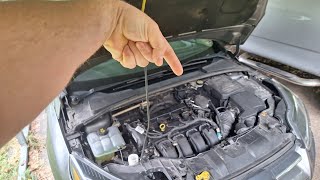
- Faulty Transmission Control Module (TCM) (Very Common) — This is the most frequent cause. The module fails due to internal issues like cracked solder joints, moisture damage, or failure of the internal driver circuits that send power to the clutch actuator. 🎬 Watch: A walkthrough of common Ford TCM faults and issues.
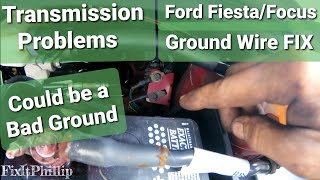
- Poor Ground Connection to TCM (Common) — A corroded, loose, or broken ground wire for the TCM is a well-documented issue, particularly on Ford models. This unstable electrical reference causes erratic transmission codes and behaviors, including P2886.
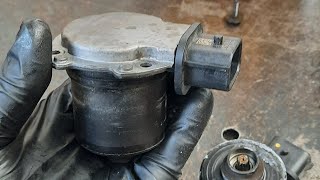
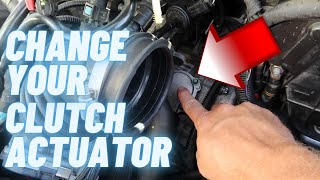
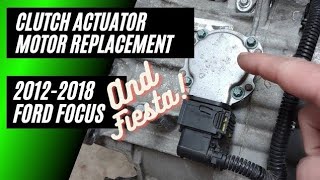
- Failed Clutch Actuator or Solenoid (Common) — The electric motor or hydraulic solenoid that physically moves the clutch burns out, seizes mechanically, or becomes clogged with contaminated fluid, preventing it from operating when commanded. 🎬 See this guide on how to replace a clutch actuator.
- Damaged Wiring Harness or Connectors (Common) — The wires carrying signals between the TCM and the clutch actuator become frayed, corroded, or broken from vibration and exposure to the elements, interrupting the command or feedback loop.
- Faulty Clutch Position Sensor (Less Common) — If the dedicated sensor reporting the clutch's position fails, it sends an incorrect signal, making the TCM believe the clutch is stuck closed when it is actually functioning normally.
- Low or Contaminated Transmission Fluid (Less Common) — In systems using hydraulic actuators, low or dirty fluid prevents the actuator from developing the necessary hydraulic pressure to move the clutch fork. This occurs frequently on high-mileage vehicles with missed fluid services.
- Mechanical Failure of the Clutch Assembly (Rare) — While less common than electronic faults, the clutch release bearing, fork, or the clutch pack itself seizes or breaks mechanically, physically preventing disengagement.
Symptoms
- Engine Stalls When Stopping — Because the clutch is stuck engaged, the engine stalls when you bring the vehicle to a stop, identical to stopping in a manual car without pressing the clutch pedal.
- Inability to Shift Out of Park or Neutral — The vehicle becomes completely stuck in Park or Neutral, with the gear selector refusing to engage Drive or Reverse.
- Severe Drivability Issues — You experience harsh or delayed gear shifts, a feeling of the engine dragging, or a complete loss of forward momentum where the engine revs but the car does not move.
- Check Engine or Transmission Warning Light (also visible on scanner) — A Check Engine Light, wrench icon, or a dedicated transmission warning light (often a gear with an exclamation point) illuminates on the dashboard.
Diagnostic Flowchart
Tap your situation to follow the diagnostic path that matches what you're seeing on this code.
Common Fixes & Costs
- Replace the Transmission Control Module (TCM) — Parts: $500-$800, Labor: $200-$400, ~2.5 hr book time (Professional)
- Clean or Repair TCM Ground Connection — Parts: $0-$10, Labor: $50-$150, ~0.8 hr book time (Beginner)
- Replace the Clutch Actuator — Parts: $150-$350, Labor: $150-$300, ~2 hr book time (Intermediate)
- Repair or Replace the Wiring Harness — Parts: $50-$400, Labor: $200-$800, ~3 hr book time (Professional)
- Update the Control Module Software — Parts: $0, Labor: $150-$250, ~1 hr book time (Professional)
DIY vs Professional
- Clean or Repair TCM Ground Connection — Beginner:
Tools: Socket set, wire brush, contact cleaner. - Replace the Clutch Actuator — Beginner:
Tools: Socket set, inverted Torx sockets, torque wrench, jack and jack stands. - Replace the Transmission Control Module (TCM) — Beginner:
Tools: Socket set, trim removal tools.
Used vs. New Parts: Buying Guide
When a used part is worth it: For a Transmission Control Module (TCM), buying a used part is never recommended. The risk of premature failure is extremely high.
Donor-vehicle mileage cap: roughly under 20000 miles for the part to have meaningful remaining life.
Donor quality checklist:
- Used TCMs for Ford PowerShift models come from the same faulty production batches and have the same internal design flaws.
- A used TCM must be reprogrammed to your vehicle's specific VIN by a dealer; it is not a plug-and-play part.
- Repair shops refuse to install or warranty customer-supplied used electronic modules due to the high failure rate.
Decision logic:
- If The part is a Transmission Control Module (TCM). → Buy a new OEM part or a professionally remanufactured unit from a reputable company offering a lifetime warranty. Avoid junkyard parts.
- If The vehicle is a 2011-2016 Ford Focus or Fiesta. → Check with a Ford dealer first. The original TCM warranty was extended to 10 years/150,000 miles.
- If The part is a mechanical component like a clutch actuator. → A used part from a low-mileage vehicle is acceptable, but a new aftermarket part offers a better warranty for a similar cost.
Warranty tradeoff: Used TCMs typically have a 30-day warranty, which is insufficient for latent faults. New OEM and quality remanufactured modules offer warranties from 1 year to a lifetime.
Worst-case if a used part fails: $500-$800 if a used TCM fails after installation, covering repeat labor for removal, installation, and programming of another part.
What Happens If You Wait — Timeline
- Immediate (First Occurrence): Code P2886 is logged. The 'Check Engine' or 'Transmission Malfunction' light illuminates. The vehicle stalls when stopping or refuses to shift out of Park. The car is undrivable. (MPG impact: N/A (Vehicle is disabled)% · Added cost: $100-$300 (for mandatory towing).)
- 1-5 attempts to 'force' it to drive: Forcing the car into gear with a stuck clutch puts immense strain on the opposing clutch pack, shift forks, and synchronizers. Grinding noises occur, and plastic shift fork components break. (MPG impact: 15-25% (due to dragging clutch)% · Added cost: $500-$1,500 (Risk of destroying shift forks, actuators, and the second clutch assembly).)
- 1-2 weeks of ignoring the problem: Continued stress from the initial electronic fault causes severe secondary mechanical damage. The clutch actuator motor burns out, and the clutch assembly permanently warps from heat and friction. (MPG impact: N/A% · Added cost: $2,000-$4,000 (Repair escalates to requiring a new clutch assembly and actuators).)
- 1+ month: Catastrophic internal transmission failure. Metal debris from the failed clutch circulates, destroying gears and bearings. A complete transmission replacement is required. (MPG impact: N/A% · Added cost: $4,000-$7,000+ (Cost of a replacement transmission plus labor).)
Cost of Not Fixing It
- Immediate: Vehicle is unsafe and undrivable. It stalls in traffic, refuses to move, or gets stuck in gear, creating a high risk of an accident. (Added cost: $100-$300 (Towing))
- 0-1 month: Attempting to drive with a stuck clutch places extreme stress on the transmission synchronizers, shift forks, and gear sets. This turns a simple electronic repair into a major internal transmission failure. (Added cost: $2000-$4000)
- 1-6 months: Catastrophic transmission failure occurs. The initial problem, which could have been fixed for under $1,000, now requires a complete transmission rebuild or replacement. (Added cost: $4000-$7000+)
Diagnosis Steps
- Read Trouble Codes and Live Data
Use an OBD-II scanner to confirm P2886 and look for related codes (e.g., U0100, P0805). Monitor live data PIDs for clutch actuator command vs. actual position. A mismatch where the command changes but the position does not confirms the fault.
Tools: OBD-II Scanner (Beginner) - Test Battery and System Voltage
Ensure the battery is fully charged (12.4V+ with engine off) and the alternator is working correctly (13.7-14.7V with engine running). Low system voltage causes communication errors and triggers false codes.
Tools: Multimeter (Beginner) - Visually Inspect Wiring and Grounds
Inspect the wiring harness and connectors for the TCM and clutch actuator for corrosion, chafing, or loose pins. Remove, clean, and secure the main TCM ground points on the chassis.
Tools: Flashlight, Socket Set, Wire Brush, Contact Cleaner (Intermediate) - Test TCM Ground Circuit Integrity
Disconnect the negative battery terminal and the TCM connector. Measure the resistance between each ground pin and a clean, bare metal spot on the chassis. A reading above 0.5 ohms indicates a bad ground requiring repair.
Tools: Multimeter, Wiring Diagram, Socket Set (Advanced) - Perform Clutch Actuator Bi-Directional Test
Command the clutch actuator to open and close using an advanced scan tool. If the actuator doesn't move despite being commanded, the problem is the actuator, its wiring, or the TCM.
Tools: Advanced Bi-Directional Scan Tool (Advanced) - Inspect Transmission Fluid
For hydraulically actuated systems, check the transmission fluid level and condition. Low, dark, or burnt-smelling fluid points to internal hydraulic failures.
Tools: Rag, Gloves (Beginner) - Measure Actuator Current Draw
Measure the current drawn by the actuator during a commanded test. High current draw with no movement indicates a mechanically seized actuator. Low or no current draw indicates an open circuit or failed TCM driver.
Tools: Low-Amp Probe, Multimeter, Wiring Diagram (Advanced) - Test Control Module Communication and Drivers
Back-probe the command signal wire from the TCM to the actuator with an oscilloscope. A weak, noisy, or absent signal points directly to a failed driver circuit inside the TCM.
Tools: Oscilloscope, Back-Probe Pins, Wiring Diagram (Professional)
When This Code Triggers (Freeze-Frame Conditions)
- Engine Coolant Temp: 185-205°F (Vehicle is at full operating temperature.)
- RPM: 800-1500 RPM (During an attempted gear shift or when coming to a stop.)
- Vehicle Speed: 0-10 mph (Fault triggers when slowing to a stop or attempting to accelerate from a standstill.)
- Commanded Gear: Neutral or 1st (The TCM is attempting to disengage the clutch to stop the vehicle or select first gear.)
- Engine Load: 15-30% (Low load conditions where a clutch disengagement is commanded.)
Related Codes
- U0100 — Indicates 'Lost Communication With ECM/PCM'. If present with P2886, it confirms the TCM has failed completely, lost power, or has a bad ground connection.
- P2872 — Means "Clutch 'A' Stuck Engaged". This points to one of the two internal clutches in a DCT being stuck, rather than the main engine disconnect clutch. The causes are identical.
- P0700 — A general transmission fault code. It is the TCM's way of telling the main engine computer to turn on the Check Engine Light. It is always accompanied by specific codes like P2886.
- P0805 — Means "Clutch Position Sensor 'A' Circuit Malfunction". This code points to a problem with the sensor reporting the clutch's position, which causes P2886 if it provides false information.
- P2887 — The opposite of P2886, meaning "Engine Disconnect Clutch Stuck Open". This results in a no-power situation where the engine revs but the car does not move.
Climate & Environmental Factors
- Hot Climates / Heavy Traffic: High ambient temperatures and stop-and-go driving are major stress factors for dry-clutch transmissions. The lack of fluid cooling leads to overheating, accelerated clutch wear, and triggers 'Transmission Hot' warnings.
- Cold Climates: In very cold weather, transmission fluid thickens, slowing down hydraulic or mechanical actuation. This leads to harsh shifts and delayed engagement when the vehicle is first started.
How to Talk to a Mechanic About This Code
Say this: "I have a P2886 code on my vehicle, and it stalls when coming to a stop. I need to schedule a diagnostic appointment. Based on my research, this is often a TCM, ground, or actuator issue. Can you confirm you have the tools to test these specific electronic components and perform module programming before quoting a full clutch replacement?"
This signals you are an informed consumer. It directs the shop toward a proper electrical diagnosis of the most common failures, preventing them from immediately suggesting the most expensive mechanical repair.
Avoid saying:
- 'My transmission is broken, how much for a new one?'
- 'My check engine light is on, can you just fix it?'
- 'Just do whatever you think is necessary.'
Questions to ask before authorizing the repair:
- Did you test the TCM ground connections for resistance? What was the reading?
- Were you able to command the clutch actuators with a scan tool and see them respond?
- If you are recommending a TCM replacement, does your quote include the mandatory VIN programming and the clutch adaptive learn procedure?
- What is the warranty on the proposed parts and labor?
Where to Take It: Dealer vs Independent vs Chain
- Dealer:
The best first stop for Ford owners due to potential free repairs under extended warranties. For other makes, a good but expensive option for a definitive diagnosis.
Best for: Ford Focus/Fiesta owners checking for warranty extensions (e.g., 14M02) before any other step., Vehicles still under powertrain warranty., Complex diagnostics requiring manufacturer-specific software that independent shops lack.
Downsides: Highest labor rates., Less willing to attempt smaller-scale repairs like wiring fixes before recommending a full module replacement. (Typical cost: +40% vs. baseline) - Independent Shop:
A strong choice, but only if you vet the shop. Ask if they have experience with dual-clutch transmissions and can program new control modules. A general mechanic is out of their depth.
Best for: Out-of-warranty vehicles where cost is a major factor., Simple, well-documented fixes like the TCM ground repair., Shops specializing in transmission repair or European makes.
Downsides: Quality and equipment vary wildly. Must confirm they have bi-directional scanners and experience with DCTs/TCM programming., Cannot check for or perform warranty work. (Typical cost: +0% vs. baseline) - Chain Shop:
AVOID for diagnosing P2886. Their business model is not suited for complex electronic transmission work. Only use them for ruling out a simple battery issue.
Best for: Battery testing and replacement, which is an initial check.
Downsides: Technicians lack the specialized tools or training for DCT diagnostics or TCM programming., High risk of misdiagnosis, leading to recommendations for unnecessary and expensive mechanical repairs. (Typical cost: -10% vs. baseline)
When to Walk Away From the Repair
If the estimated repair cost exceeds 50% of the car's private-party value, sell the car as-is or for scrap.
- Car worth $3000, fix is $1700: Walk away. The repair cost is over 50% of the vehicle's value. You will not recoup this cost.
- Car worth $8000, fix is $1700: Fix it. The repair cost is significant but well below the 50% threshold. Fixing it preserves a functional vehicle.
- Car worth $4500, fix is $3500: Walk away. A repair quote this high indicates a full transmission replacement, which far exceeds the car's value.
What Scan Tool You Need for This Code
Minimum: A scanner that reads manufacturer-specific transmission codes and views live data PIDs for clutch command vs. actual position.
A basic $20 code reader only confirms the P2886 code. It cannot perform the necessary bi-directional tests to command the clutch actuators, nor can it execute the mandatory 'clutch adaptive learn' procedure after a repair.
Budget: FORScan with OBDLink EX adapter (~$80) — For Ford vehicles, this provides dealer-level diagnostics. It reads all Ford-specific codes, views live TCM data, runs actuator tests, and performs the critical clutch adaptive learn procedure.
Mid-range: Foxwell NT510 Elite / Autel MaxiCOM MK808 (~$180) — Offers bi-directional control essential for commanding the clutch actuators to test their function. They also perform service functions like the clutch relearn on many makes.
Professional: Autel MaxiSys MS906 Pro / Launch X431 Series (~$1000-2500) — Provides full professional-grade diagnostic capabilities, including module programming, advanced coding, and access to all vehicle systems required for new TCM installation.
Rent vs buy: Rental scanners from auto parts stores are basic readers and are NOT sufficient for this repair. You must buy a capable bi-directional scanner or take the vehicle to a qualified shop.
How to Clear the Code After You Fix It
- Reconnect the battery if it was disconnected for the repair.
- Use a compatible OBD-II scan tool to erase the Diagnostic Trouble Codes (DTCs) from the TCM and PCM.
- Perform the mandatory clutch adaptive learn procedure as specified by the manufacturer.
- Perform a complete drive cycle to allow the vehicle's readiness monitors to run.
Drive cycle (~30 minutes): A generic OBD-II drive cycle includes a cold start (sitting for 8 hours), 2-3 minutes of idling, 5-10 minutes of city driving with several stops, and 10-15 minutes of steady highway speed driving (55 mph).
Readiness monitors affected: Comprehensive Component Monitor, Misfire Monitor, Catalyst Monitor, Evaporative System Monitor
Before emissions retest: drive at least 50 miles to fully set monitors.
Watch out for:
- Disconnecting the battery clears the code but erases all readiness monitors, causing an automatic emissions test failure.
- The code returns immediately if the underlying mechanical or electrical fault has not been properly repaired.
- Skipping the clutch adaptive learn procedure guarantees the code will return and shifting will be erratic.
Will This Fail Emissions / State Inspection?
Yes — this code typically fails an OBD-II emissions inspection.
- California: An illuminated Check Engine Light results in an automatic smog test failure. After repairs, the vehicle must be driven through a complete drive cycle to set all readiness monitors before re-testing.
- New York: An active Check Engine Light is an automatic failure of the NYS vehicle inspection. The vehicle fails if more than one readiness monitor is 'Not Ready'.
- Texas: In counties requiring emissions testing, an illuminated Check Engine Light is an automatic failure. The OBD-II system's readiness monitors must be set to 'Ready' to pass.
Most Commonly Affected Vehicles
- Ford Focus (2012-2018) — Equipped with the notorious PowerShift (DPS6) transmission. Subject to multiple TSBs and warranty extensions for both the TCM and clutch assembly.
- Ford Fiesta (2011-2019) — Uses the DPS6 PowerShift transmission and suffers from the same TCM and clutch actuator failures as the Focus. Warranty extensions apply to 2011-2016 models.
- Dodge Dart (2013-2016) — Models with the 1.4L engine and dual-clutch transmission (DDCT) are known for failures of the electro-hydraulic control unit and related sensors.
- Hyundai Tucson, Veloster, Elantra, Sonata (2016-2021) — Models equipped with the 7-speed dry dual-clutch transmission (DCT) report frequent failures of the clutch actuator assembly and related logic issues.
- Kia Forte, Optima, Seltos (2017-2021) — Shares the 7-speed dry DCT with Hyundai and is susceptible to the exact same actuator and control failures.
- Volvo Various Models with Powershift (2008-2018) — Volvo models using the Powershift transmission (developed with Ford/Getrag) experience clutch actuator, position sensor, and TCM faults leading to similar codes.
- Smart ForTwo (2008-2015) — The 451 model is infamous for clutch actuator failures. The actuator requires replacement and software adaptation using Mercedes-specific tools.
- Saturn Aura (2007-2009) — Certain Aura models with the 6T70/6T40 automatic transmission experience failures of the 3-5-R wave plate, leading to symptoms confused with clutch issues.
Manufacturer-Specific Notes
- Ford: The DPS6 transmission issue led to class-action lawsuits. Ford issued Customer Satisfaction Program 14M02, extending the TCM warranty to 10 years/150,000 miles. Always check for TSBs and warranty coverage before paying for repairs.
- Subaru: On CVT-equipped Subarus (2010-2015), stalling symptoms are not caused by a clutch but by a faulty torque converter lock-up solenoid in the valve body. This is fixed by replacing just the solenoid.
- Smart: On ForTwo models, the clutch actuator is adjustable via slotted mounting holes. After replacement or adjustment, a 'clutch adaptation' procedure is mandatory and requires the Mercedes-Benz STAR diagnostic tool.
- Saturn/GM: On 2007-2009 models with the 6-speed automatic, a broken 3-5-Reverse wave plate inside the transmission is a common failure causing symptoms easily misdiagnosed as clutch issues.
Real Owner Stories
2014 Ford Focus, 88,000 miles - The Classic TCM Failure
Owner experienced intermittent loss of power, shuddering, and a 'Transmission Malfunction' warning light. The car frequently refused to move from a stop.
Outcome: The Ford dealer diagnosed a faulty Transmission Control Module (TCM). The part was replaced free of charge under the extended warranty (10 years/150,000 miles). The issue was resolved completely after the new TCM was installed and programmed.
Lesson: If you own a 2011-2018 Focus or Fiesta, ALWAYS check for warranty extensions like 14M02 before paying for transmission repairs. What feels like a mechanical failure is almost always the electronic TCM.
2012 Ford Fiesta - The $10 Bad Ground Fix
Vehicle exhibited erratic shifting, occasional stalling at lights, and threw multiple transmission codes, including P2886 and communication code U0100.
Outcome: The owner found the main ground points under the airbox were bolted over factory paint, causing a poor connection. They sanded the paint off the chassis to expose bare metal, cleaned the wire terminals, and re-secured the grounds. The total cost was under $10. All transmission codes disappeared permanently.
Lesson: On Ford models, a bad ground is a well-documented cause of these exact symptoms. This is a simple, cheap fix and must be the absolute first check before replacing any parts.
2013 Dodge Dart 1.4L, 95,000 miles - Misdiagnosis Leads to Frustration
The car stalled when coming to a stop, had a rough idle, and occasionally struggled to start. Code P2886 was active.
Outcome: A transmission specialist identified the electro-hydraulic control unit (part of the DDCT transmission) as the culprit. The internal solenoids were failing, causing the clutch to remain engaged. Replacing the control unit cost over $1,500.
Lesson: Do not chase symptoms by replacing common parts like the battery or alternator without a proper diagnosis. P2886 points to a specific transmission control circuit requiring a transmission specialist.
2017 Hyundai Veloster DCT, 75,000 miles - Overheating and Actuator Failure
While driving on the highway, a 'Transmission Overheating' warning appeared. The car shifted erratically before losing forward momentum entirely, acting as if it were in neutral.
Outcome: A deeper diagnosis found that one of the two electric clutch actuators had failed. The motor responsible for moving the clutch fork burned out. The actuator was replaced, and a clutch adaptive learn procedure was performed, resolving the problem.
Lesson: On Hyundai/Kia DCT models, the clutch actuators are a common failure point. A 'Transmission Overheating' warning on these cars indicates a slipping clutch caused by a failing actuator.
How to Prevent This Code From Triggering
- Adapt driving style for a dry DCT (Ford, Hyundai, Kia). (Daily habit) — Avoid 'creeping' in traffic or holding the car on a hill with the throttle. This forces the clutch to slip continuously, generating excessive heat that damages the clutch material, actuators, and TCM. Hold the car with the brake pedal when stopped.
- Perform periodic ground connection cleaning. (Every 30,000 miles or 2 years) — On Ford models, factory-painted ground points are a known failure point. Proactively cleaning them to bare metal ensures the TCM has a stable electrical reference, preventing communication errors.
- Ensure battery health and replace proactively. (Test annually, replace every 4-5 years) — Transmission control modules are highly sensitive to voltage drops. A weak battery provides inconsistent voltage, causing communication glitches and triggering false codes like P2886.
- Follow manufacturer's transmission fluid service interval. (Every 30,000-60,000 miles (for wet-clutch/hydraulic systems)) — Clean fluid is essential for cooling and actuating the clutches in hydraulic systems. Old fluid causes overheating and clogs the delicate solenoid valves in the control unit.
Frequently Asked Questions
Is it safe to drive my car with code P2886?
No. The vehicle stalls in traffic, fails to move from an intersection, or becomes stuck in gear, creating a serious safety hazard. Have the vehicle towed to a repair shop immediately.
What is the most common misdiagnosis for P2886?
Replacing the entire transmission or the expensive dual-clutch assembly is the most common misdiagnosis. The root cause is usually electronic, such as a faulty TCM, bad wiring, or a poor ground connection. Insist on a thorough electrical diagnosis before approving major mechanical repairs.
Can a bad battery cause a P2886 code?
Yes. A weak battery or failing alternator causes low system voltage (below 12V), leading to communication errors between modules. This triggers false fault codes, including P2886, making battery testing a crucial first step.
Can I use a used TCM to save money?
Buying a used TCM is highly risky and often a waste of money. Used modules require professional VIN programming and frequently suffer from the same internal defects as your original part. Most reputable shops refuse to install or warranty customer-supplied used electronic modules.
How much does it cost to fix P2886?
Costs range from $0 for a warranty replacement to $1,200 for a new TCM installed at a dealership. A simple ground wire repair costs under $150, while replacing a clutch actuator averages $350 to $600. Always check for manufacturer warranty extensions before paying out of pocket.
What is a 'clutch adaptive learn' and is it required?
A clutch adaptive learn is a mandatory scan tool procedure that teaches the TCM the exact engagement point of the clutch. It is absolutely required after replacing a TCM or clutch components on a dual-clutch transmission. Skipping this step causes harsh shifting, premature clutch wear, and the immediate return of code P2886.
Will clearing the code make it go away?
No. Clearing the code only erases it temporarily from the computer's memory. Because P2886 indicates a hard physical or electronic fault, the TCM detects the problem again immediately upon startup and the code returns.
What does the 'Engine Disconnect' warning light mean?
This dashboard light indicates the control module detected a fault with the clutch system separating the engine from the transmission. When paired with code P2886, it confirms the computer knows the clutch failed to open as commanded. The vehicle requires immediate diagnostic attention.
Key Takeaways
- Code P2886 indicates the engine disconnect clutch is stuck closed, causing the vehicle to stall when stopping or refuse to shift out of Park.
- The most frequent cause is a failed Transmission Control Module (TCM), particularly on 2011-2018 Ford Focus and Fiesta models.
- Before replacing expensive parts, test the TCM ground connection resistance; a reading above 0.5 ohms requires cleaning the chassis ground points to bare metal.
- Do not drive the vehicle with this code active, as forcing it into gear causes secondary mechanical damage to the shift forks and clutch assembly costing over $2,000.
- Always check for manufacturer warranty extensions, such as Ford's Customer Satisfaction Program 14M02, which covers TCM replacements up to 10 years or 150,000 miles.
Helpful Videos

The information in this article is provided for general reference and educational purposes only. Vehicle specifications, procedures, and part compatibility can vary by production date, trim level, and region. Always consult your vehicle's factory service manual and verify part numbers before purchasing or performing repairs. Safety-critical components such as airbags, seat belts, and braking systems should be installed by a qualified professional.
- 🎬 Helpful Videos
- What Does P2886 Mean?
- Can I Drive With P2886?
- Common Causes
- Symptoms
- Diagnostic Flowchart
- Common Fixes & Costs
- DIY vs Professional
- Used vs. New Parts: Buying Guide
- What Happens If You Wait — Timeline
- Cost of Not Fixing It
- Diagnosis Steps
- When This Code Triggers (Freeze-Frame Conditions)
- Related Codes
- Climate & Environmental Factors
- How to Talk to a Mechanic About This Code
- Where to Take It: Dealer vs Independent vs Chain
- When to Walk Away From the Repair
- What Scan Tool You Need for This Code
- How to Clear the Code After You Fix It
- Will This Fail Emissions / State Inspection?
- Most Commonly Affected Vehicles
- Manufacturer-Specific Notes
- Real Owner Stories
- 2014 Ford Focus, 88,000 miles - The Classic TCM Failure
- 2012 Ford Fiesta - The $10 Bad Ground Fix
- 2013 Dodge Dart 1.4L, 95,000 miles - Misdiagnosis Leads to Frustration
- 2017 Hyundai Veloster DCT, 75,000 miles - Overheating and Actuator Failure
- How to Prevent This Code From Triggering
- Frequently Asked Questions
- Is it safe to drive my car with code P2886?
- What is the most common misdiagnosis for P2886?
- Can a bad battery cause a P2886 code?
- Can I use a used TCM to save money?
- How much does it cost to fix P2886?
- What is a 'clutch adaptive learn' and is it required?
- Will clearing the code make it go away?
- What does the 'Engine Disconnect' warning light mean?
- Key Takeaways
- 🎟️ Get 5% Off