

OBD-II Code P2872: Clutch 'A' Stuck Engaged
The Ultimate Guide to Understanding, Diagnosing, and Fixing P2872
- P2872 indicates the 'A' clutch (controlling gears 1, 3, and 5) is mechanically stuck engaged, creating an immediate safety hazard.
- This fault plagues 2012-2018 Ford Focus and 2011-2019 Ford Fiesta models equipped with the DPS6 PowerShift transmission.
- Over 80% of P2872 codes stem from a failed $150 clutch actuator motor or a binding clutch fork choked by internal dust.
- Isolate the failure by swapping the 'A' and 'B' actuators; if the code changes to P287A, replace the actuator.
- Every actuator, clutch, or TCM replacement requires a mandatory 'TCM Adaptive Relearn' using a bi-directional scan tool to prevent the code from returning instantly.
What Does P2872 Mean?

The Transmission Control Module (TCM) detected the 'A' clutch in the dual-clutch transmission is stuck engaged. Clutch 'A' manages odd-numbered gears (1, 3, 5). When it cannot disengage, the transmission cannot select gears, causing severe shifting failures.
Technical definition: The TCM commanded clutch 'A' to disengage, but internal sensors confirm the clutch remains mechanically applied.
Can I Drive With P2872?
No — Do Not Drive. Driving with code P2872 is a significant safety risk. The transmission will fail to shift, get stuck in gear, or cause a sudden loss of power in traffic. Continuing to drive destroys the 'B' clutch and internal components, turning a $300 actuator fix into a $3,000 transmission replacement.
Common Causes

- Defective Clutch Actuator Motor 'A' (Very Common) — The electric motor that physically moves the clutch fork fails internally, becomes weak, or jams. This is the most frequent cause, especially in 2012-2018 Ford models.
- Binding or Dirty Clutch Fork (Very Common) — Dust from normal clutch wear accumulates in the bell housing, creating a thick sludge. This contamination causes the clutch release fork to bind, preventing it from moving freely even if the actuator motor works perfectly.
- Failing Transmission Control Module (TCM) (Common) — The TCM develops bad solder joints or internal electronic faults, preventing it from sending the correct signals to the clutch actuator. Ford issued extended warranties specifically for this failure.
- Leaking Input Shaft Seals (Common) — Input shaft seals fail, allowing transmission fluid to leak into the dry clutch housing. This fluid contaminates the friction material, causing severe shudder and erratic engagement that leads to a stuck clutch.
- Improper TCM Relearn After Repair (Common) — After replacing an actuator, clutch, or TCM, the control module must perform an adaptive learning procedure. If skipped, the TCM cannot locate the new part's engagement point, causing the code to return instantly.
- Worn or Damaged Clutch Assembly (Less Common) — The internal components of the dual-clutch pack, including the throwout bearing and pressure plate, wear out or break, physically jamming the clutch.
- Poor Electrical Connection or Bad Ground (Rare) — A loose, corroded, or damaged ground wire for the TCM causes a loss of signal or insufficient power. A weak 12V battery also triggers false electronic transmission codes.
Symptoms

- Check Engine Light is on — The Malfunction Indicator Lamp (MIL) illuminates immediately when the fault is detected.
- Harsh, Delayed, or Failed Shifting — The vehicle struggles to shift into or out of odd-numbered gears (1, 3, 5). It skips gears, revs high before slamming into gear, or shifts violently.
- Shuddering or Jerking from a Stop — A noticeable shudder or vibration occurs when accelerating from a complete stop, mimicking a poorly driven manual transmission.
- Inability to Move or Complete Loss of Power — The transmission gets stuck in gear or fails to engage entirely. The engine revs, but no power transfers to the wheels.
- 'Transmission Overheating' Message — A warning message appears on the dashboard. The stuck clutch generates extreme friction, overheating the assembly.
- Grinding or Clicking Noises — Mechanical grinding, clicking, or clunking during shifts indicates internal wear on the clutch forks or the clutch assembly.
Diagnostic Flowchart

Tap your situation to follow the diagnostic path that matches what you're seeing on this code.
Common Fixes & Costs
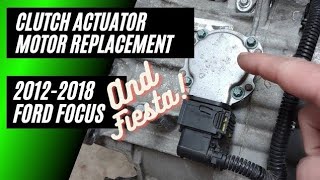
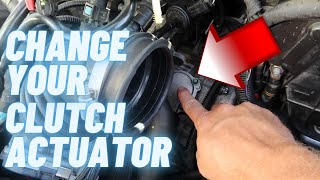
- Replace Clutch Actuator Motor 'A'
— Parts: $100-$200, Labor: $150-$250, ~1.5 hr book time
(Intermediate)
2012-2018 Ford Focus/Fiesta: OEM AE8Z-7C604-A (Alt: {"brand": "Dorman", "part_number": "609-029"}) - Replace Transmission Control Module (TCM)
— Parts: $400-$600, Labor: $150-$300, ~2.0 hr book time
(Professional)
2012-2018 Ford Focus/Fiesta: OEM AE8Z-7Z369-F (Alt: {"brand": "Freedom Injection (Reman)", "part_number": "AE8Z-7Z369"}) - Replace Clutch Assembly, Forks, and Seals
— Parts: $600-$900, Labor: $1200-$1800, ~8.5 hr book time
(Professional)
2012-2018 Ford Focus/Fiesta: OEM F1FZ-7B546-B (Clutch Assembly) (Alt: {"brand": "LuK", "part_number": "602000800"}) - Perform TCM Adaptive Relearn — Parts: $0, Labor: $100-$150, ~1.0 hr book time (Professional)
- Clean TCM Ground Connection — Parts: $0-$10, Labor: $50-$100, ~0.5 hr book time (Beginner)
Used vs. New Parts: Buying Guide
When a used part is worth it: A used TCM makes sense only if you verify it is the updated version (code 'K05' or higher) from a low-mileage vehicle. Never buy a used clutch actuator due to high failure rates.
Donor-vehicle mileage cap: roughly under 60000 miles for the part to have meaningful remaining life.
Donor quality checklist:
- Verify the donor vehicle was not scrapped due to transmission failure.
- For a TCM, confirm the label has the redesigned part code (e.g., K05).
Decision logic:
- If The part is a clutch actuator → Buy new OEM. The savings on a used part are not worth the risk of repeat failure.
- If The part is a TCM and you can verify the updated revision (e.g., K05) → A used part is a viable budget option.
- If The part is a TCM and you cannot verify the revision → Buy a new or remanufactured TCM. Installing an outdated TCM leads to repeat failure.
Warranty tradeoff: Used parts have a 30-90 day warranty. New OEM parts have a 2-year/unlimited-mile warranty.
Worst-case if a used part fails: $300-$600 if a used electronic part fails, requiring repeat labor and a new part.
What Happens If You Wait — Timeline
- 0-1 week: Code P2872 sets. Intermittent, harsh 1-2 or 2-3 shifts occur. The car feels like it skips a gear. (MPG impact: 0-5%% · Added cost: $0)
- 1-4 weeks: Shifting problems become consistent. The car refuses to move from a stop. 'Transmission Overheating' messages appear as the stuck 'A' clutch forces the 'B' clutch to overwork. (MPG impact: 5-10%% · Added cost: $150-$300 (Towing))
- 1-3 months: The vehicle becomes completely unreliable. The opposing clutch ('B') and its fork are under constant strain. Grinding or popping noises start. (MPG impact: 10-15%% · Added cost: $800-$1500 (Requires replacement of opposing clutch components))
- 3+ months: Catastrophic failure. Both clutch packs, both forks, and the throwout bearings are destroyed. The repair requires a complete transmission teardown. (MPG impact: 15-25%% · Added cost: $2500-$4000+ (Full clutch system replacement))
Cost of Not Fixing It
- Immediate: Severe driving conditions, including getting stuck in gear and complete loss of propulsion. (Added cost: $150-$300 (Towing))
- Weeks to Months: Continued operation places extreme stress on the opposing clutch ('B'), causing accelerated wear. (Added cost: $800-$1500)
- Several Months: Catastrophic internal transmission damage requiring a full clutch and fork assembly replacement. (Added cost: $2500-$4000+)
Diagnosis Steps
- Scan for All Trouble Codes
Use an OBD-II scanner to confirm P2872. Note all other codes. P287A (Clutch 'B' Stuck) or P0805 (Actuator Circuit) pinpoint the exact failure point.
Tools: OBD-II Scanner (Beginner) - Swap the Clutch Actuators
Mark the 'A' (top) and 'B' (bottom) clutch actuators. Swap their positions. Clear codes and drive. If the code changes to P287A, the actuator motor is definitively faulty.
Tools: Socket Set (E8 Torx), Marking Pen (Advanced) - Perform Manual Clutch Fork Test
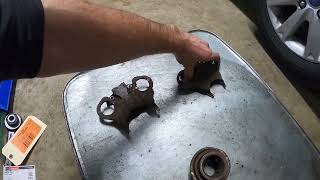
Remove the 'A' clutch actuator. Use a splined tool to rotate the fork mechanism counter-clockwise. It must feel perfectly smooth for 10-14 turns and spring back instantly. If it binds or pops, the transmission must be removed.
Tools: Socket Set, Clutch Reset Tool (Advanced) - Check Battery Health and Grounds
Ensure the battery is above 12.4V. Inspect and clean the main TCM ground straps on the chassis near the air filter box to ensure a bare-metal connection.
Tools: Multimeter, Battery Tester, Socket Set, Wire Brush (Beginner) - Monitor Live Data
Use a bi-directional scanner to monitor 'Clutch A Commanded Position' vs 'Actual Position'. If commanded changes but actual does not, the actuator or fork failed. If no command is sent, the TCM failed.
Tools: Advanced Bi-Directional Scan Tool (Professional)
When This Code Triggers (Freeze-Frame Conditions)
- Engine Coolant Temp: 180-205°F (Vehicle at full operating temperature.)
- RPM: 1500-2500 (During a commanded upshift or downshift.)
- Vehicle Speed: 20-55 mph (When shifting between odd gears (e.g., 3rd to 4th, where clutch 'A' must disengage).)
Related Codes
- P287A — 'Clutch 'B' Stuck Engaged'. The direct counterpart to P2872. If swapping the 'A' and 'B' actuators changes the code to P287A, the actuator is confirmed faulty.
- P0805 — 'Clutch Position Sensor 'A' Circuit'. The sensor is built into the actuator motor. Seeing P0805 with P2872 proves the actuator itself failed.
- P07A3 — 'Transmission Friction Element 'A' Stuck On'. A generic version of the same fault. Treat it identically to P2872.
Climate & Environmental Factors
- Stop-and-Go Traffic: Dry clutch transmissions overheat in heavy, slow-moving traffic. This excessive heat accelerates wear on the clutch material and causes the TCM and actuators to malfunction.
- High Humidity: High humidity contributes to corrosion on electrical connectors and ground points for the TCM and actuators, leading to erratic signals.
How to Talk to a Mechanic About This Code
Say this: "I have a P2872 code on my Ford Focus. Can you perform a manual clutch fork test and swap the actuators before quoting a full clutch replacement?"
This directs the mechanic toward a logical diagnostic path and prevents them from immediately quoting a $2,500 clutch assembly without verifying a $200 actuator failure.
Avoid saying:
- 'Just fix whatever's wrong'
- 'My check engine light is on, can you look at it?'
- 'Whatever you recommend'
Questions to ask before authorizing the repair:
- What were the results of the manual clutch fork test? Did it feel smooth or gritty?
- Did you swap the 'A' and 'B' actuators, and did the code change to P287A?
- Does your estimate include performing the mandatory TCM adaptive relearn procedure?
Where to Take It: Dealer vs Independent vs Chain
- Dealer:
Go here FIRST to check your VIN for warranty coverage. If not covered, get a second opinion from an independent shop.
Best for: Vehicles potentially still under a Ford Customer Satisfaction Program (14M01 or 14M02).
Downsides: Highest labor rates., Defaults to a full clutch assembly replacement if not under warranty. (Typical cost: +50% vs. baseline) - Independent Shop:
Excellent choice, but only IF the shop confirms they own the equipment to perform the final adaptive learning.
Best for: Out-of-warranty vehicles where cost is a major factor., Shops that specialize in transmission repair.
Downsides: A general mechanic lacks the bi-directional tools required for the mandatory TCM relearn procedure. (Typical cost: +0% vs. baseline) - Chain Shop:
AVOID. This specialized transmission repair requires diagnostic procedures far outside the scope of a chain shop.
Best for: Simple services like oil changes and brakes.
Downsides: Technicians lack specialized training for this complex repair., High risk of misdiagnosis. (Typical cost: -10% vs. baseline)
When to Walk Away From the Repair
If the estimated repair cost exceeds 50-60% of the car's private-party market value, seriously consider selling the car as-is.
- Car worth $3500, fix is $3000: Walk away. The repair cost is nearly the entire value of the car. The transmission's known reliability issues mean this won't be the last expensive repair.
- Car worth $6000, fix is $750: Fix it. If diagnosis confirms a simple actuator or TCM failure, the repair cost is well below the threshold.
- Car worth $4000, fix is $2500: Borderline. The repair cost is over 60% of the car's value. Get a second opinion before proceeding.
What Scan Tool You Need for This Code
Minimum: A bi-directional scan tool capable of performing the 'TCM Adaptive Learning' procedure specifically for Ford vehicles.
A basic $50 code reader CANNOT perform the mandatory relearn procedure required after replacing an actuator, clutch, or TCM. Without this step, the repair fails instantly.
Budget: FORScan with OBDLink EX Adapter (~$60) — FORScan is PC-based software for Ford vehicles. With an extended license, it performs the critical TCM adaptive learning procedure. This is the most cost-effective DIY option.
Mid-range: Foxwell NT510 Elite (with Ford software) (~$180) — This handheld bi-directional scanner offers OE-level access for Ford models and performs the 'Transmission Adaptive Learning' required to complete the P2872 repair.
Professional: Autel MaxiCOM MK808 (~$500) — A professional-grade tablet scanner with full bi-directional control. It provides clear, step-by-step guided functions for the Ford 'Clutch System Learn' procedure.
Rent vs buy: You cannot rent a bi-directional scanner from a parts store. If you are a DIYer, you must buy a tool like FORScan or a mid-range scanner to complete this repair.
How to Clear the Code After You Fix It
- Reconnect battery if disconnected for repair.
- Use an OBD-II scan tool to clear all fault codes from the TCM and PCM.
- Perform the mandatory 'Clutch System Learn' procedure with a bi-directional scan tool.
- Perform a complete drive cycle to verify the repair.
Drive cycle (~30 minutes): Idle for 3 minutes. Drive in stop-and-go traffic for 15 minutes, allowing shifts through all gears. Drive for 10 minutes at a steady 55 mph. Allow the vehicle to cool down completely.
Readiness monitors affected: Comprehensive Component Monitor
Before emissions retest: drive at least 100 miles to fully set monitors.
Watch out for:
- The code returns immediately if the underlying mechanical fault is not fixed.
- Forgetting to perform the mandatory TCM adaptive relearn procedure guarantees the code comes back.
Will This Fail Emissions / State Inspection?
Yes — this code typically fails an OBD-II emissions inspection.
- California: An illuminated Check Engine Light results in an automatic failure of the smog check's OBD-II inspection.
- New York: An active P2872 code and illuminated Check Engine Light is an automatic failure.
- Texas: In counties requiring emissions testing, an illuminated Check Engine Light is an automatic fail.
Most Commonly Affected Vehicles
- Ford Focus (2012-2018) — Extremely common due to the DPS6 PowerShift transmission. Issues with shuddering, actuators, TCMs, and binding forks are widespread.
- Ford Fiesta (2011-2019) — Uses the same problematic DPS6 PowerShift transmission as the Focus and suffers from identical P2872 issues.
- Dodge Dart (2013-2016) — Models with the 1.4L Turbo engine and the C635 DDCT experience electro-hydraulic actuator unit or internal clutch collapse.
- Hyundai Elantra (2017-2020) — Models with the 7-speed dry DCT log this code due to clutch actuator or internal clutch pack overheating in traffic.
- Kia Forte (2014-2018) — Shares the 7-speed dry DCT with Hyundai and presents with a permanently engaged clutch stemming from actuator issues.
Manufacturer-Specific Notes
- Ford: The DPS6 transmission uses a dry clutch system with electric motor actuators. These generate more heat than wet clutch systems, leading to clutch dust contamination, overheating, and premature failure of forks and actuators.
- Ford: Ford issued Customer Satisfaction Programs for the DPS6. Check with a dealer for coverage under 14M01 (clutch assembly) and 14M02 (TCM). These programs have strict time and mileage limits.
- Dodge: On the Dart DDCT, a weak vehicle battery causes severe electronic transmission faults. Verify battery health before condemning the transmission.
Real Owner Stories
2018 Ford Focus at 47K miles - Actuator Failure
Car started over-revving between 15-20 MPH and choking when slowing down. The P2872 code appeared just 38 days past the 5-year/60k mile powertrain warranty.
Outcome: The owner replaced the clutch actuator at an independent shop for $600, resolving the issue.
Lesson: Actuator failure is common even on newer, low-mileage models. If you are nearing the end of your powertrain warranty, report any shifting issues to a dealer immediately.
2012 Ford Fiesta at 119K miles - Misdiagnosis & The Real Cause
Vehicle triggered P2872. A shop had previously replaced the clutch, but the problem returned within months.
Outcome: The forks were removed, cleaned with brake cleaner, lubricated, and reinstalled. The fix cost minimal parts but required 8 hours of labor.
Lesson: If a clutch was recently replaced and P2872 returns, the root cause is binding clutch forks. Replacing the clutch without cleaning or replacing the forks guarantees repeat failure.
2012 Ford Focus at ~200 miles post-purchase - Repair Attempt Cascade
Bought a used Focus. After 200 miles, the check engine light came on with code P2872.
Outcome: The owner skipped the mandatory TCM relearn procedure after both repairs, leaving the car undrivable. They sold the car at a massive loss.
Lesson: Throwing parts at P2872 without proper diagnosis or a bi-directional scan tool for the TCM relearn is a guaranteed waste of money.
How to Prevent This Code From Triggering
- Change Transmission Fluid every 30,000 miles (Every 30,000 miles) — The DPS6 uses gear oil for its synchronizers and internal gears. Changing it regularly removes metal particles and reduces wear on internal components.
- Avoid 'Creeping' in Stop-and-Go Traffic (Daily driving habit) — Creeping forward slowly causes the clutch to slip, generating excessive heat and clutch dust. This dust is the primary cause of binding clutch forks. Wait for a larger gap, then accelerate decisively.
- Use Manual/Sport Mode in Heavy Traffic (As needed in specific traffic conditions) — In slow traffic, the transmission frequently shifts between 1st and 2nd gear. Locking it in 1st gear prevents constant shifting, reducing clutch slip and heat buildup.
- Use the Foot Brake, Not the Handbrake, at Stops (Every time you stop in gear) — The TCM uses the brake pedal signal to disengage the clutches. Using only the handbrake while in 'Drive' forces the clutch to engage against stopped wheels, causing rapid wear.
Frequently Asked Questions
Can I just clear the code and keep driving?
No. The code will return immediately. This indicates a hard mechanical or serious electrical problem that will leave you stranded.
Is this a recall issue on my Ford Focus?
It is not a formal safety recall, but Ford issued extended warranties (14M01 and 14M02). Contact a dealer with your VIN to check your specific coverage limits.
My mechanic replaced the clutch, but the code came back. Why?
The mechanic likely failed to clean or replace the binding clutch forks, or they skipped the mandatory TCM 'Clutch System Learn' procedure. Both errors guarantee the code returns.
Is it worth fixing a high-mileage Ford Focus/Fiesta with this code?
A full clutch and fork replacement costs $2,000 to $3,000. Owners must weigh this against the vehicle's low market value. If not covered by Ford's extended warranty programs, this repair is often not economically viable.
Can I fix P2872 myself?
A skilled DIYer can replace a clutch actuator, but replacing the clutch or forks requires transmission removal. Crucially, you must own an advanced scan tool to perform the mandatory TCM relearn. Without this tool, your DIY repair will fail.
Why does my Ford Focus shudder when I accelerate?
Shuddering is caused by clutch dust buildup or leaking input shaft seals contaminating the clutch surfaces. It is a precursor to serious faults like P2872.
Can a bad battery cause transmission problems with code P2872?
Yes. A weak battery provides insufficient voltage to the TCM and actuators, causing erratic behavior. Always verify battery health before starting expensive transmission repairs.
Key Takeaways
- P2872 indicates the 'A' clutch (controlling gears 1, 3, and 5) is mechanically stuck engaged, creating an immediate safety hazard.
- This fault plagues 2012-2018 Ford Focus and 2011-2019 Ford Fiesta models equipped with the DPS6 PowerShift transmission.
- Over 80% of P2872 codes stem from a failed $150 clutch actuator motor or a binding clutch fork choked by internal dust.
- Isolate the failure by swapping the 'A' and 'B' actuators; if the code changes to P287A, replace the actuator.
- Every actuator, clutch, or TCM replacement requires a mandatory 'TCM Adaptive Relearn' using a bi-directional scan tool to prevent the code from returning instantly.
Helpful Videos


The information in this article is provided for general reference and educational purposes only. Vehicle specifications, procedures, and part compatibility can vary by production date, trim level, and region. Always consult your vehicle's factory service manual and verify part numbers before purchasing or performing repairs. Safety-critical components such as airbags, seat belts, and braking systems should be installed by a qualified professional.
- 🎬 Helpful Videos
- What Does P2872 Mean?
- Can I Drive With P2872?
- Common Causes
- Symptoms
- Diagnostic Flowchart
- Common Fixes & Costs
- Used vs. New Parts: Buying Guide
- What Happens If You Wait — Timeline
- Cost of Not Fixing It
- Diagnosis Steps
- When This Code Triggers (Freeze-Frame Conditions)
- Related Codes
- Climate & Environmental Factors
- How to Talk to a Mechanic About This Code
- Where to Take It: Dealer vs Independent vs Chain
- When to Walk Away From the Repair
- What Scan Tool You Need for This Code
- How to Clear the Code After You Fix It
- Will This Fail Emissions / State Inspection?
- Most Commonly Affected Vehicles
- Manufacturer-Specific Notes
- Real Owner Stories
- 2018 Ford Focus at 47K miles - Actuator Failure
- 2012 Ford Fiesta at 119K miles - Misdiagnosis & The Real Cause
- 2012 Ford Focus at ~200 miles post-purchase - Repair Attempt Cascade
- How to Prevent This Code From Triggering
- Frequently Asked Questions
- Can I just clear the code and keep driving?
- Is this a recall issue on my Ford Focus?
- My mechanic replaced the clutch, but the code came back. Why?
- Is it worth fixing a high-mileage Ford Focus/Fiesta with this code?
- Can I fix P2872 myself?
- Why does my Ford Focus shudder when I accelerate?
- Can a bad battery cause transmission problems with code P2872?
- Key Takeaways
- 🎟️ Get 5% Off