

OBD-II Code P2867: Clutch 'B' Position Circuit Intermittent
The Ultimate 2026 Guide: What P2867 means, why it triggers, and how to fix it for good.
- P2867 indicates an electrical failure in the clutch 'B' position circuit, most commonly caused by a faulty Transmission Control Module (TCM) in 2012-2018 Ford and 2008-2018 VW/Audi vehicles.
- Stop driving immediately; the transmission will unpredictably drop into neutral or lock into gear, creating a severe accident risk and accelerating a $1,000 electronic repair into a $4,000 mechanical failure.
- Always test the 12V battery and perform a wiring harness 'wiggle test' before replacing parts, as low voltage or a loose $10 ground strap perfectly mimics a $1,200 TCM failure.
- Check your VIN with a dealer before authorizing repairs, as Ford's 14M02 program extends TCM warranty coverage to 10 years or 150,000 miles, and VW often provides goodwill assistance for Mechatronic failures.
What Does P2867 Mean?
The Transmission Control Module (TCM) lost consistent communication with the clutch 'B' position sensor. This code exclusively affects dual-clutch transmissions (DCT). The TCM sees the sensor signal dropping in and out, leaving it blind to the clutch's actual physical position.
Technical definition: The SAE/OBD-II definition is "Clutch B Position Circuit Intermittent" or "Shift Fork E Position Circuit Intermittent". This indicates the electrical signal from the position sensor to the TCM is unstable, fluctuating, or periodically lost.
Can I Drive With P2867?
No — Do Not Drive. Do not drive the vehicle. The transmission will suddenly shift into neutral, fail to engage a gear, or shift erratically, creating a severe safety risk in traffic. Continuing to drive turns a $1,000 electronic issue into a $4,000 catastrophic mechanical failure of the clutches.
Common Causes
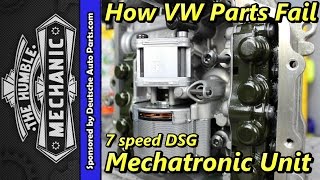
- Failing Transmission Control Module (TCM) / Mechatronic Unit (Very Common) — The TCM controls the transmission. Internal failures, such as cracked solder joints from vibration and heat cycles, are the most frequent cause of this code in Ford and Volkswagen models. On VW, Audi, and BMW, this component is the Mechatronic unit, combining the TCM with the hydraulic valve body.
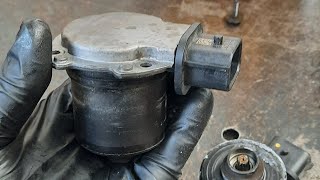
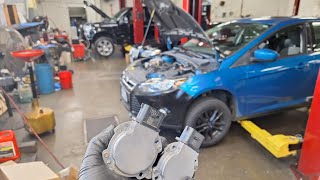
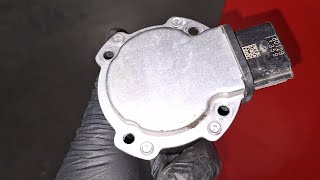
- Faulty Clutch Actuator or Position Sensor (Common) — The electric motor (actuator) that moves the clutch fork, or the sensor reading its position, fails. These parts are often integrated. The intermittent signal 🎬 See this step-by-step guide to diagnosing and replacing clutch actuators. is usually the first sign of complete sensor death.
- Damaged Wiring or Poor Ground Connection (Common) — Wires between the TCM and actuator chafe, melt, or corrode. Additionally, a loose or corroded main ground strap for the TCM causes floating voltages and intermittent circuit faults. Technicians frequently overlook grounds, leading to unnecessary parts replacement.
- Corrupted TCM Software (Common) — The TCM relies on software to interpret sensor data. Outdated software or logic glitches cause the module to misinterpret normal sensor fluctuations as an intermittent fault. A manufacturer software reflash fixes this.
- Internal Hydraulic Leak or Dirty Fluid (Less Common) — On wet-clutch units like VW's DSG, internal leaks in the Mechatronic valve body or heavily degraded fluid cause erratic hydraulic pressure. The position sensor correctly reports the resulting erratic fork movement, which the TCM flags as a circuit fault.
- Mechanical Wear on the Shift Fork (Rare) — The physical fork that engages the gear bends or wears down. This causes abnormal movement the sensor cannot track correctly, tricking the TCM into logging a circuit problem.
Symptoms
- Sudden Drop to Neutral or Limp Mode — The transmission unexpectedly shifts into neutral while driving or enters a 'limp mode' with severely limited power and speed.
- Harsh or Jerky Shifting — The car shudders, jolts, or shakes violently, especially when accelerating from a stop or during low-speed 1-2 and 2-3 gear changes.
- Delayed Gear Engagement — A noticeable 2-to-3 second hesitation occurs when shifting into Drive or Reverse, followed by a hard mechanical clunk.
- Transmission Warning Light / Flashing PRNDS — The check engine light illuminates. On VW/Audi models, the gear selector indicator (PRNDS) flashes rapidly on the dashboard.
- Grinding or Clicking Noises — Audible grinding or rapid clicking sounds emit from the transmission as the actuators struggle to find the correct fork position.
Diagnostic Flowchart
Tap your situation to follow the diagnostic path that matches what you're seeing on this code.
Common Fixes & Costs
- Replace the Transmission Control Module (TCM) — Parts: $400-$800, Labor: $200-$400 (includes programming), ~2.5 hr book time (Professional)
- Replace/Rebuild the Mechatronic Unit — Parts: $1,500-$3,000, Labor: $500-$1,000, ~5 hr book time (Professional)
- Replace the Clutch Actuator(s) — Parts: $100-$300, Labor: $150-$300, ~1.5 hr book time (Intermediate)
- Repair Damaged Wiring or Ground Connection — Parts: $10-$50, Labor: $150-$400, ~2 hr book time (Intermediate)
- Replace the Dual Clutch Assembly — Parts: $800-$1,500, Labor: $1,000-$1,500, ~8 hr book time (Professional)
DIY vs Professional
- Replace the Transmission Control Module (TCM) - Ford — Beginner:
Tools: Basic socket set, bi-directional scan tool (e.g., FORScan) for mandatory TCM Adaptive Learning. - Replace the Mechatronic Unit - VW/Audi — Beginner:
Tools: Transmission jack, torque wrench, shift fork alignment tools, VCDS diagnostic tool for cloning. - Replace Clutch Actuator(s) - Ford — Beginner:
Tools: Basic socket set, E-Torx sockets, jack stands. - Repair Damaged Wiring or Ground Connection — Beginner:
Tools: Multimeter, soldering iron, heat shrink tubing, wire strippers.
Used vs. New Parts: Buying Guide
When a used part is worth it: For Ford, buying a used OEM TCM with the updated 'K05' part number is highly cost-effective. For VW/Audi, a professionally rebuilt Mechatronic unit is superior to a used junkyard part.
Donor-vehicle mileage cap: roughly under 80000 miles for the part to have meaningful remaining life.
Donor quality checklist:
- For Ford, verify the part number on the sticker ends in the updated 'K05' revision.
- For VW/Audi rebuilt units, demand a lifetime warranty from the specialist shop.
- Avoid unbranded aftermarket TCMs on Amazon/eBay; they fail rapidly.
Decision logic:
- If Vehicle is a Ford Focus/Fiesta and a used, updated OEM TCM ('K05') is available → Buy the used OEM part; it offers high reliability for a fraction of the dealer cost.
- If Vehicle is a VW/Audi and budget is a concern → Purchase a professionally rebuilt Mechatronic unit with a lifetime warranty.
- If The part is a cheap aftermarket TCM from an unknown brand → Walk away. The risk of premature failure and stranding is too high.
Warranty tradeoff: Used junkyard parts offer 30 days. Rebuilt specialist parts offer 1-year to lifetime warranties. New OEM parts offer 1-2 years.
Worst-case if a used part fails: $500-$1000 if a used part fails, accounting for repeat labor and towing.
What Happens If You Wait — Timeline
- 0-1 month: A brief 'Transmission Fault' message appears and disappears. The code is stored, but drivability remains normal. (MPG impact: 0% · Added cost: $0)
- 1-3 months: The check engine light stays on. The driver experiences occasional harsh shifts or a clunk when shifting into Drive. (MPG impact: 5% · Added cost: $100 (Minor actuator strain))
- 3-6 months: The transmission unexpectedly drops into neutral while driving. The intermittent electrical fault causes mechanical slipping, burning the clutch packs. (MPG impact: 15% · Added cost: $2,000 (Requires mechanical clutch replacement))
- 6+ months: Catastrophic failure. The vehicle refuses to move. The clutch pack shatters, sending metal debris through the transmission. (MPG impact: N/A% · Added cost: $5,000+ (Full transmission replacement))
Cost of Not Fixing It
- Immediate: Severe safety risk. Unpredictable shifting causes the car to stall, lurch, or lose power in traffic, leading to an accident. (Added cost: Cost of an accident or towing.)
- 1-3 months: Accelerated mechanical wear. Intermittent electrical engagement causes the physical clutch packs to slip and burn, turning a $1,000 module repair into a $3,500 mechanical rebuild. (Added cost: $2,500-$4,000)
- 3+ months: Catastrophic transmission failure. The clutch assembly shatters, sending metal debris through the transmission case and destroying the gearsets. (Added cost: $5,000-$8,000+)
Diagnosis Steps
- Check Battery and Grounds
A weak battery or poor ground causes intermittent electronic faults. Ensure battery voltage is above 12.4V with the engine off. Inspect and clean the main ground straps to the chassis and transmission housing. A resistance test from the TCM ground pin to the chassis must read less than 0.1 ohms.
Tools: Multimeter, Wire Brush, Socket Set (Beginner) - Check for Accompanying Codes
Use an OBD-II scanner to pull all codes. P0700 is a generic flag and can be ignored. If P287A (Clutch Stuck) is present, you have a mechanical binding issue. If P090C (Actuator Circuit Low) is present, focus entirely on the actuator motor and its wiring.
Tools: OBD-II Scanner (Beginner) - Inspect the Wiring Harness
Visually trace the wiring from the TCM to the clutch actuators. Look for chafing against the engine block, melted insulation near the exhaust, or green corrosion inside the connector pins.
Tools: Flashlight, Inspection Mirror (Intermediate) - Monitor Live Data & Perform Wiggle Test
Watch the live data PID for 'Clutch B Position' on a scan tool. While monitoring, aggressively wiggle the wiring harness at the TCM and actuator connectors. If the voltage or position value drops out or spikes during the wiggle, you found the broken wire.
Tools: Advanced Bi-Directional Scan Tool (Advanced) - [PRO TIP] Test Actuator Circuit with a Multimeter
Test for a stable 5V reference from the TCM to the sensor, and verify continuity to ground (<0.1 ohms). Back-probe the signal wire; the voltage must change smoothly as the actuator moves. Any sudden drop to 0V indicates an open circuit.
Tools: Multimeter, Back-Probe Pins, Wiring Diagram (Advanced) - [PRO TIP] Analyze Sensor Signal with an Oscilloscope
Connect an oscilloscope to the sensor's signal wire. A healthy Hall-effect sensor produces a clean digital square wave. An intermittent fault appears as dropouts (flatlines to zero) or fuzzy noise in the waveform, catching micro-faults a multimeter misses.
Tools: Oscilloscope, Wiring Diagram (Professional) - [PRO TIP] TCM Communication 'Ping' Test
Use a high-level scan tool to perform a bidirectional 'ping' to the TCM. If the tool cannot establish or maintain communication, and the main CAN bus is healthy, the TCM has suffered an internal failure.
Tools: Advanced Bi-Directional Scan Tool (Professional)
When This Code Triggers (Freeze-Frame Conditions)
- Transmission Fluid Temp: 175-220°F (80-105°C) (Faults trigger most often when fully warmed up, as heat expands micro-cracks in the TCM solder joints.)
- Gear Commanded: 2nd, 4th, or 6th (Clutch 'B' controls the even-numbered gears. The code logs exactly when the TCM commands a shift into an even gear.)
Related Codes
- P0700 — A generic Transmission Control System Malfunction code. It simply tells the engine computer that the TCM has a problem. It always accompanies a specific code like P2867.
- P2865 — Indicates "Clutch 'A' Position Circuit Intermittent." It is the exact same electrical fault, but on the opposite clutch pack.
- P0902 — Indicates "Clutch Actuator Circuit Low." This points to a hard low-voltage condition in the actuator motor circuit.
- P287A — Indicates "Clutch B Stuck Engaged." The intermittent electrical signals caused the TCM to lose control, physically jamming the clutch.
Climate & Environmental Factors
- Excessive Heat: The TCM mounts directly to the transmission case. Constant exposure to 200°F+ temperatures degrades the internal circuit board and cracks solder joints, causing sudden electrical failure.
- High Humidity / Moisture: Moisture penetrates aging TCM housing seals, corroding the circuit board and connector pins. This creates electrical shorts and intermittent signal dropouts.
- Vibration: High-frequency vibrations from the engine and road cause micro-fractures in the TCM's internal solder joints, a classic trigger for intermittent circuit codes.
How to Talk to a Mechanic About This Code
Say this: "I have a P2867 code on my car. Since this is a circuit code, please start with a full electrical diagnosis—checking TCM grounds, the wiring harness, and actuator circuits—before recommending mechanical parts. Also, please check my VIN for any open recalls or warranty extensions on the TCM."
This proves you know P2867 is an electrical fault, preventing the shop from immediately quoting a $3,000 mechanical clutch replacement. Mentioning warranties forces them to check for free manufacturer coverage.
Avoid saying:
- 'My transmission is slipping, I think I need a new clutch.'
- 'Just fix whatever's wrong, I need the car back ASAP.'
- 'My check engine light is on, can you look at it?'
Questions to ask before authorizing the repair:
- Did you perform a wiggle test on the wiring harness to check for an intermittent short?
- What was the exact resistance reading on the TCM ground circuit?
- Have you confirmed with a dealer that my VIN is not covered by Ford's 14M02 program or a VW goodwill program?
- Will you perform the mandatory Transmission Adaptive Learning procedure after installing the new part?
Where to Take It: Dealer vs Independent vs Chain
- Dealer:
Highly Recommended. They are mandatory for processing Ford warranty extensions and VW goodwill claims, and possess the proprietary software to program new modules.
Best for: Vehicles potentially covered by extended warranties (Ford 14M02) or goodwill programs., Complex Mechatronic programming for German brands (VW, Audi, BMW).
Downsides: Highest labor rates and parts costs., Will default to a $3,000 full component replacement rather than a $50 wiring repair. (Typical cost: +50% vs. baseline) - Independent Shop:
Conditionally Recommended. Only use a dedicated transmission specialist or brand-specific shop. Avoid general-purpose mechanics for DCT electrical faults.
Best for: Out-of-warranty vehicles where cost is a major factor., Dedicated transmission specialists or European auto specialists.
Downsides: General mechanics lack the specialized scan tools required to program DCTs., Cannot process manufacturer warranty claims. (Typical cost: +0% vs. baseline) - Chain Shop:
STRONGLY AVOID. Taking your vehicle here for a P2867 fault guarantees wasted time and money.
Best for: Oil changes, tires, and brake pads.
Downsides: Technicians lack the training and equipment for complex DCT diagnosis., Extreme risk of misdiagnosis and unnecessary upsells. (Typical cost: -10% vs. baseline)
When to Walk Away From the Repair
If the estimated repair cost exceeds 40% of the car's private-party value, seriously consider selling the vehicle instead of repairing it.
- Car worth $4500, fix is $2800: Walk away. The repair is 62% of the car's value. Sell it 'as-is' to a mechanic.
- Car worth $15000, fix is $3000: Fix it. The repair is 20% of the vehicle's value, making it a sound investment to keep the car on the road.
What Scan Tool You Need for This Code
Minimum: A bi-directional scan tool capable of performing 'Transmission Adaptive Learning' or 'TCM Reset' functions.
A $20 code reader cannot perform the mandatory 'adaptive learning' procedure after the repair. Skipping this step guarantees the car will not shift properly, even with brand new parts.
Budget: FORScan with ELM327 adapter (for Ford) (~$50) — The gold standard for Ford DIYers. Provides dealer-level access to perform TCM Adaptive Learning and view live clutch position data via a Windows laptop.
Mid-range: Foxwell NT510 Elite (~$180) — Includes one free manufacturer software package. Performs advanced transmission adaptations and runs bi-directional tests on actuators.
Professional: Autel MaxiCOM MK808S (~$450) — Professional-grade tool with comprehensive coverage. Features dedicated 'Trans Adaption' functions for almost all makes, making post-repair calibration effortless.
Rent vs buy: Buy. Parts store rental scanners are basic code readers and lack the bi-directional capability required to relearn the transmission.
How to Clear the Code After You Fix It
- Use an advanced OBD-II scan tool to clear the fault code.
- Perform the manufacturer-specific 'Transmission Adaptive Learning' or 'Basic Settings' procedure.
- Execute the specified post-learning drive cycle to calibrate clutch engagement points.
Drive cycle (~30 minutes): Cold start and idle for 5 minutes. Drive 15 minutes in stop-and-go city traffic, accelerating gently through all gears. Drive 10 minutes at a steady 60 mph. Park and let the vehicle cool completely.
Readiness monitors affected: Catalyst Monitor, O2 Sensor Monitor, Evaporative System Monitor
Before emissions retest: drive at least 100 miles to fully set monitors.
Watch out for:
- Clearing the code without performing the mandatory adaptive learning procedure guarantees the transmission will shift harshly or refuse to go into gear.
- Disconnecting the battery clears the code but erases all emissions readiness monitors, causing an automatic smog test failure.
Will This Fail Emissions / State Inspection?
Yes — this code typically fails an OBD-II emissions inspection.
- California: An illuminated check engine light is an automatic failure. You must repair the fault and complete a full drive cycle to set readiness monitors before retesting.
- New York: Automatic failure if the check engine light is on. Only one readiness monitor is permitted to be 'Not Ready' for vehicles 2001 and newer.
- Texas: In emissions-testing counties, an active P2867 code or illuminated check engine light results in an immediate failure.
Most Commonly Affected Vehicles
- Ford Focus (2012-2018) — Uses the DPS6 PowerShift transmission. TCM and actuator failures are universally common. Covered under extended warranty program 14M02.
- Ford Fiesta (2011-2019) — Shares the DPS6 transmission with the Focus. Experiences identical TCM and clutch control circuit failures.
- Volkswagen Golf / Jetta / Passat (2008-2018) — Models with the 7-speed DQ200 (dry clutch) and 6-speed DQ250 (wet clutch) DSG suffer frequent Mechatronic unit electronic failures.
- Hyundai Veloster / Tucson / Elantra (2016-2022) — The 7-speed DCT (D7UF1) is prone to actuator issues and erratic shifting logic, often requiring TCM software updates.
- Kia Forte / Seltos / Soul (2017-2023) — Shares the 7-speed DCT with Hyundai. Software updates are the mandatory first step in diagnosis.
- BMW M3 / 135i / 335i (2008-2013) — The Getrag DCT experiences Mechatronics faults, often exacerbated by hidden fluid leaks from the plastic pan or side seals.
Manufacturer-Specific Notes
- Ford: The DPS6 transmission is covered by Customer Satisfaction Program 14M02, extending the TCM warranty to 10 years/150,000 miles. A supplement provides a one-time replacement for older vehicles through June 30, 2025. Always check your VIN at a dealer before paying out of pocket.
- Volkswagen/Audi: VW uses the term 'Mechatronic' instead of TCM. The DQ200 dry-clutch DSG is notorious for electronic failures. Dealers frequently offer 'goodwill' financial assistance for out-of-warranty Mechatronic replacements if you have a strong dealer service history.
- Hyundai/Kia: Dealers resolve many 7-speed DCT circuit and shifting codes simply by flashing the TCM with updated software via Technical Service Bulletins (TSBs). This is always step one before replacing hard parts.
Real Owner Stories
2014 Ford Focus, 110k miles - The Classic TCM Failure
Check engine light illuminated on a cold morning. The car revved but would not accelerate, and reverse was completely gone. Codes P2867 and P2861 were present.
Outcome: The dealer confirmed a faulty TCM. Because the vehicle was under the 150,000-mile limit, Ford replaced the TCM at zero cost to the owner.
Lesson: If you own a 2011-2019 Ford Focus or Fiesta, your absolute first step is checking your VIN for 14M02 warranty coverage before paying a single dollar for diagnosis.
2012 VW Golf, out of warranty - Goodwill Assistance
The car jerked violently in 1st and 2nd gear. Eventually, the 'PRNDS' light flashed on the dash, and the dealer quoted $3,000 for a new Mechatronic unit.
Outcome: VW Australia agreed to cover 100% of the repair cost under a 'goodwill' claim, despite the car being out of warranty.
Lesson: Never accept a massive repair bill for a known VW/Audi Mechatronic failure without first politely requesting 'goodwill' assistance from corporate.
2018 Ford Focus, 95k miles - Actuator Swap Diagnosis
Car shifted hard from 1st to 3rd and made clicking noises. Code P2867 was present.
Outcome: The code changed from P2867 to P2865 (Clutch A fault). This proved the $150 actuator was dead, saving the owner from buying a $600 TCM.
Lesson: Swapping the two identical clutch actuators on a Ford is a brilliant, free diagnostic step to prove an actuator is faulty before replacing expensive modules.
How to Prevent This Code From Triggering
- Change DCT fluid and filter (Every 30,000-40,000 miles) — Clean fluid cools the Mechatronic unit in wet-clutch DSGs. Degraded fluid causes overheating, which destroys the internal electronics.
- Avoid 'creeping' in heavy traffic (Daily driving habit) — Slow creeping forces the clutches to slip continuously, generating massive heat that cooks the TCM mounted to the transmission case.
- Shift to Neutral at long stops (At stops longer than 20 seconds) — Holding the brake in Drive keeps the clutch semi-engaged. Shifting to Neutral fully disengages it, drastically reducing heat buildup.
Frequently Asked Questions
Is it safe to drive my car with code P2867?
No. The transmission will suddenly shift to neutral or lock in gear, causing an accident. Continued driving also destroys the mechanical clutch packs.
Why is this code so common on the Ford Focus and Fiesta?
The 2012-2018 Focus and 2011-2019 Fiesta use the DPS6 transmission. Its TCM suffers from a massive failure rate due to internal solder joints cracking from heat and vibration.
What is the difference between a TCM and a Mechatronic unit?
A TCM is a standalone electronic computer. A Mechatronic unit (used in VW, Audi, BMW) combines the TCM computer and the hydraulic valve body into one submerged unit inside the transmission.
What is the most common misdiagnosis for P2867?
Mechanics often replace the mechanical clutch assembly first. P2867 is an electrical circuit code, meaning you must test the TCM, wiring, and actuators before touching the mechanical clutch.
Can a VW/Audi Mechatronic unit be repaired?
Yes. Specialized shops rebuild Mechatronic units by repairing the internal circuit boards or replacing solenoids for half the cost of a new dealer unit.
Will a transmission fluid change fix P2867?
No. P2867 is an electrical circuit failure. New fluid cannot fix a broken wire, a bad ground, or a failing computer chip.
What is 'Transmission Adaptive Learning'?
The TCM learns and adjusts shift pressures to compensate for clutch wear. After replacing transmission parts, you must use a scan tool to clear this memory and relearn the shift points, or the car will not shift properly.
Is this repair covered by a recall or warranty?
Ford extended the TCM warranty on many Focus and Fiesta models to 10 years/150,000 miles under program 14M02. Always check your VIN with a dealer before paying for repairs.
Why did my transmission fail without any warning signs?
Electronic faults happen instantly. A wire shorts or a solder joint cracks, causing an immediate loss of signal and transmission control without the gradual slipping seen in mechanical failures.
Key Takeaways
- P2867 indicates an electrical failure in the clutch 'B' position circuit, most commonly caused by a faulty Transmission Control Module (TCM) in 2012-2018 Ford and 2008-2018 VW/Audi vehicles.
- Stop driving immediately; the transmission will unpredictably drop into neutral or lock into gear, creating a severe accident risk and accelerating a $1,000 electronic repair into a $4,000 mechanical failure.
- Always test the 12V battery and perform a wiring harness 'wiggle test' before replacing parts, as low voltage or a loose $10 ground strap perfectly mimics a $1,200 TCM failure.
- Check your VIN with a dealer before authorizing repairs, as Ford's 14M02 program extends TCM warranty coverage to 10 years or 150,000 miles, and VW often provides goodwill assistance for Mechatronic failures.
Helpful Videos



The information in this article is provided for general reference and educational purposes only. Vehicle specifications, procedures, and part compatibility can vary by production date, trim level, and region. Always consult your vehicle's factory service manual and verify part numbers before purchasing or performing repairs. Safety-critical components such as airbags, seat belts, and braking systems should be installed by a qualified professional.
- 🎬 Helpful Videos
- What Does P2867 Mean?
- Can I Drive With P2867?
- Common Causes
- Symptoms
- Diagnostic Flowchart
- Common Fixes & Costs
- DIY vs Professional
- Used vs. New Parts: Buying Guide
- What Happens If You Wait — Timeline
- Cost of Not Fixing It
- Diagnosis Steps
- When This Code Triggers (Freeze-Frame Conditions)
- Related Codes
- Climate & Environmental Factors
- How to Talk to a Mechanic About This Code
- Where to Take It: Dealer vs Independent vs Chain
- When to Walk Away From the Repair
- What Scan Tool You Need for This Code
- How to Clear the Code After You Fix It
- Will This Fail Emissions / State Inspection?
- Most Commonly Affected Vehicles
- Manufacturer-Specific Notes
- Real Owner Stories
- 2014 Ford Focus, 110k miles - The Classic TCM Failure
- 2012 VW Golf, out of warranty - Goodwill Assistance
- 2018 Ford Focus, 95k miles - Actuator Swap Diagnosis
- How to Prevent This Code From Triggering
- Frequently Asked Questions
- Is it safe to drive my car with code P2867?
- Why is this code so common on the Ford Focus and Fiesta?
- What is the difference between a TCM and a Mechatronic unit?
- What is the most common misdiagnosis for P2867?
- Can a VW/Audi Mechatronic unit be repaired?
- Will a transmission fluid change fix P2867?
- What is 'Transmission Adaptive Learning'?
- Is this repair covered by a recall or warranty?
- Why did my transmission fail without any warning signs?
- Key Takeaways
- 🎟️ Get 5% Off