

OBD-II Code P2862: Clutch 'B' Position Control Circuit High
What P2862 means, why it triggers, and how to fix it
- Code P2862 indicates a high-voltage short in the 'B' clutch circuit, disabling even gears (2, 4, 6) and Reverse.
- A failed Transmission Control Module (TCM) is the root cause in over 80% of Ford Focus and Fiesta cases.
- Before paying for diagnostics on a 2011-2018 Ford, call a dealership with your VIN to check for free replacement under extended warranty program 14M02.
- Swapping the 'A' and 'B' clutch actuator motors is a free, 30-minute DIY test to determine if a $50 motor is the culprit before replacing the $900 TCM.
- Never replace the $3,000 clutch assembly for this code without first verifying the TCM and actuator motors are fully functional.
What Does P2862 Mean?

Code P2862 means the Transmission Control Module (TCM) detects abnormally high voltage in the 'B' clutch actuator circuit. In dual-clutch transmissions, Clutch 'B' controls even gears (2, 4, 6) and Reverse.
Technical definition: The TCM registered a voltage reading in the clutch 'B' actuator control circuit higher than the manufacturer-specified range. This indicates a short to battery voltage in the wiring or an internal failure within the TCM.
Can I Drive With P2862?
Yes, But With Caution. You can drive the vehicle, but it will be locked in 'limp mode' with limited gears (typically 1st and Reverse). Long-term driving causes severe transmission damage. Continuing to drive with clutch slip overheats the assembly, turning a $900 TCM repair into a $3,000+ clutch replacement.
Common Causes

- Faulty Transmission Control Module (TCM) (Very Common) — The TCM is the most frequent cause, especially in Ford DPS6 transmissions. Internal driver circuits short to power, sending constant 12V voltage to the actuator and triggering the fault.
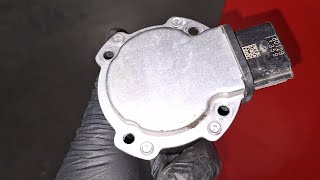
- Failed Clutch Actuator Motor (Common) — Electric motors that physically move the clutch forks develop internal shorts, causing high voltage readings, or seize mechanically, creating current spikes the TCM interprets as a circuit fault.
- Wiring Harness Short to Power (Common) — Wiring connecting the TCM to the actuator chafes against the engine block or hot exhaust components, melting the insulation and touching a 12V power source.
- Poor Ground Connection (Less Common) — Corroded or loose ground straps on the transmission or chassis cause erratic voltage readings. The TCM misinterprets this floating voltage as a 'high' signal.
- Broken Internal Transmission Components (Less Common) — On Ford DPS6 transmissions, a small aluminum shift drum stop shears off inside the case. This allows the drum to over-rotate, mimicking an electrical fault and often triggering codes P2837 or P287B alongside P2862.
Symptoms

- Check Engine Light & Transmission Warning — The dashboard illuminates the Check Engine Light, often accompanied by a 'Transmission Fault Service Now' message.
- Transmission Stuck in One Gear (Limp Mode) — The transmission locks into a single gear (usually 1st) to prevent internal damage, severely limiting vehicle speed.
- No Reverse or No Drive — Shifting into Drive or Reverse results in the engine revving without the vehicle moving, indicating the clutch completely failed to engage.
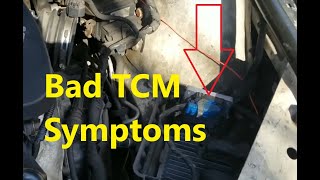
- Harsh Shifting or Shuddering — The vehicle violently jerks when changing gears (especially 2nd, 4th, and 6th) or shudders heavily when accelerating from a complete stop. 🎬 Watch: A breakdown of common bad TCM symptoms
Diagnostic Flowchart

Tap your situation to follow the diagnostic path that matches what you're seeing on this code.
Common Fixes & Costs
- Replace Transmission Control Module (TCM)
— Parts: $300-$900, Labor: $150-$300, ~1.5 hr book time
(Intermediate)
Ford Focus/Fiesta: OEM AE8Z-7Z369-F (Alt: Dorman 609-231 (Remanufactured))
Dodge Dart (1.4L Turbo): OEM Mopar 68210293AA (Alt: N/A) - Replace Clutch Actuator Motor
— Parts: $50-$150, Labor: $100-$250, ~1.5 hr book time
(DIY)
Ford Focus/Fiesta: OEM AE8Z-7C604-A (Alt: Various unbranded options)
Hyundai Veloster / Kia Forte: OEM 41470-2D300 (Alt: Various unbranded options) - Repair Damaged Wiring or Connectors — Parts: $10-$50, Labor: $150-$400, ~3.0 hr book time (Intermediate)
- Replace Clutch Assembly and Forks — Parts: $600-$1200, Labor: $800-$1500, ~10.0 hr book time (Professional)
- Transmission Case Half or Full Rebuild — Parts: $800-$2500, Labor: $1000-$2000, ~15.0 hr book time (Professional)
DIY vs Professional
- Replace Transmission Control Module (TCM) — Beginner: No
Tools: Socket set, trim removal tools, bidirectional OBD-II interface (e.g., FORScan), laptop. - Replace Clutch Actuator Motor — Beginner: Yes
Tools: Basic hand tools, E8 External Torx socket. - Repair Damaged Wiring — Beginner: No
Tools: Digital multimeter, wire strippers, soldering iron, heat shrink tubing.
Used vs. New Parts: Buying Guide
When a used part is worth it: A used or remanufactured TCM is viable for vehicles over 100k miles or when OEM parts are on backorder.
Donor-vehicle mileage cap: roughly under 80000 miles for the part to have meaningful remaining life.
Donor quality checklist:
- Verify the part number (e.g., AE8Z-7Z369-F) matches exactly.
- Favor remanufactured units from reputable brands (like Dorman) featuring reinforced soldered connections.
- Ensure the salvage yard offers at least a 30-day warranty.
Decision logic:
- If Vehicle is covered by Ford's 14M02 extended warranty → Use a new OEM part installed by a dealer at no cost.
- If Vehicle has under 80k miles → Buy a new OEM or high-quality remanufactured part for maximum reliability.
- If Vehicle has over 100k miles and budget is tight → A used part from a low-mileage donor is acceptable, but expect a shorter lifespan.
Warranty tradeoff: Used salvage parts offer 30-90 days. Remanufactured parts offer 1-year to lifetime warranties. New OEM parts carry a 2-year unlimited mileage warranty if dealer-installed.
Worst-case if a used part fails: $400-$800 if a used part fails, requiring repeat labor and mandatory reprogramming fees.
What Happens If You Wait — Timeline
- 0-1 month: Check Engine Light illuminates. Shifting becomes harsh or delayed for even gears. The fault is often intermittent. (MPG impact: 0-5%% · Added cost: $0)
- 1-3 months: Transmission frequently enters limp mode, locking into 1st gear. Reverse gear fails to engage. (MPG impact: 15-30%% · Added cost: $100-$200)
- 3-6 months: Clutch slips and drags constantly. Excessive heat destroys the clutch friction material and damages the forks. (MPG impact: 20-40%% · Added cost: $2500-$4000)
- 6+ months: Catastrophic failure. The clutch assembly shatters or the internal shift drum stop shears off, sending metal debris through the gearbox. (MPG impact: N/A% · Added cost: $4000-$8000)
Cost of Not Fixing It
- 0-1 month: Vehicle is stuck in limp mode (1st gear), causing a 15-30% drop in fuel economy and severe drivability issues. (Added cost: $50-$150)
- 1-6 months: Continued driving with a malfunctioning clutch causes excessive heat, destroying the clutch friction discs and forks. (Added cost: $2000-$3500)
- 6+ months: Catastrophic failure of the clutch assembly sends metal debris through the gearbox, requiring a complete transmission replacement. (Added cost: $4000-$8000)
Diagnosis Steps
- Read Codes & Check TSBs
Use an OBD-II scanner to confirm P2862. Note related codes (P2861, P2837, P090C, P287B, U0101). Check manufacturer Technical Service Bulletins (TSBs) and extended warranty programs (like Ford's 14M02) before proceeding.
Tools: OBD-II Scanner (Beginner) - Check Battery and Main Grounds
Verify the battery is fully charged (12.4-12.6V engine off). Clean and tighten the main ground straps from the battery to the chassis and engine block. Resistance must be <0.2 Ohms.
Tools: Digital Multimeter, Wire Brush, Wrench Set (Beginner) - Test the Clutch Actuator Motors (Swap Test)
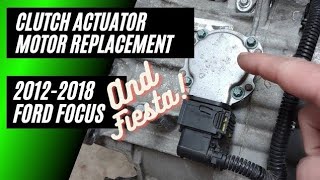
On vehicles with external motors (like the Ford Focus), swap the 'A' (lower) and 'B' (upper) clutch actuator motors. Clear codes and cycle the key. If the code changes to P285D (Clutch 'A' High), the motor is bad. If P2862 remains, the motor is fine.
Tools: Basic hand tools, E8 External Torx socket (Intermediate) - Visually Inspect Wiring and Connectors
Inspect the wiring harness between the TCM and the actuator. Look for chafing near the engine block, melted insulation near the exhaust, or green corrosion inside the connector pins.
Tools: Flashlight (Beginner) - Test Circuit Voltage at TCM Connector
Disconnect the TCM. Identify the Clutch 'B' actuator control pin using a wiring diagram. With the key ON (engine off), probe the harness pin. A reading >12.0V confirms a short to power in the wiring. A reading of 0V means the short is internal to the TCM.
Tools: Digital Multimeter, Vehicle-Specific Wiring Diagram (Advanced) - Analyze Live Scan Tool Data
Monitor the 'CLTCH_B_POS' (Position) and 'CLTCH_B_CMD' (Command) PIDs. If the commanded value is 0mm but the actual position reads a fixed high value or fails to move, the circuit is shorted.
Tools: Professional OBD-II Scan Tool (Advanced) - Check for Internal Mechanical Failure (Ford DPS6)
Remove the TCM. Manually turn the upper 'clock gear' (Clutch B) behind it. It must stop after approximately 6.5 turns. If it spins endlessly, the internal shift drum stop is broken, requiring transmission disassembly.
Tools: Hand tools, Paint marker (Advanced) - Analyze Actuator Signal
Backprobe the clutch 'B' actuator signal wire at the TCM. A normal signal is a PWM square wave. A flat line at battery voltage confirms a failed TCM driver or a short to power.
Tools: Oscilloscope, Wiring Diagram (Professional)
When This Code Triggers (Freeze-Frame Conditions)
- Engine Coolant Temp: 180-210°F (Vehicle at full operating temperature.)
- RPM: 1500-2500 (During acceleration or deceleration when a shift is commanded.)
- Engine Load: 30-60% (Under moderate acceleration when the TCM attempts to command a shift.)
- Vehicle Speed: 20-55 mph (While driving at city or highway speeds, corresponding to a 2-4 or 4-6 upshift.)
Related Codes
- P2861 — The opposite code: 'Clutch B Position Circuit Low'. P2862 is a short to power (>12V), while P2861 is a short to ground or open circuit (0V). Seeing both intermittently points to a failing TCM or frayed wire.
- P2837 — 'Shift Fork B Position Circuit Range/Performance'. P2862 is the electrical fault causing the high voltage, which directly results in the mechanical performance fault flagged by P2837.
- P287B — 'Shift Fork A Calibration Not Learned'. Appearing alongside P2862, this strongly suggests a major TCM failure or a broken internal shift drum stop affecting the entire transmission.
- U0101 — 'Lost Communication with TCM'. A failing TCM often sets circuit codes like P2862 right before it dies completely and drops off the vehicle's CAN bus network.
Climate & Environmental Factors
- High Heat: TCMs generate internal heat and are mounted directly to hot transmission cases. High ambient temperatures accelerate the degradation of internal solder joints and processing chips, causing premature module failure.
- Vibration: Constant engine vibration causes micro-fractures in the TCM's internal circuit board solder joints. This is the primary failure mechanism for Ford DPS6 TCMs.
- Moisture Intrusion: Driving through deep puddles or aggressive pressure washing forces water into the TCM or actuator connectors, causing green corrosion that bridges pins and creates high-voltage shorts.
How to Talk to a Mechanic About This Code
Say this: "I have a P2862 code on my vehicle. I know this code relates to the TCM, clutch actuators, or wiring. If it's a Ford, please check my VIN for coverage under the 14M02 extended warranty before starting any paid diagnosis."
Signals you are an informed customer, directs the technician to the most common failures, and prevents them from immediately quoting an expensive full clutch replacement.
Avoid saying:
- 'My transmission is acting weird.'
- 'Just replace the transmission.'
- 'A guy online said it's the TCM, just replace that.'
Questions to ask before authorizing the repair:
- Did you swap the actuator motors to rule them out?
- Does the TCM replacement quote include the mandatory programming and adaptive learning procedure?
- If you are recommending a clutch replacement, how did you determine the TCM is fully functional?
Where to Take It: Dealer vs Independent vs Chain
- Dealer:
Recommended First Stop for Ford owners to check warranty coverage. If out of warranty, get a second opinion from an independent specialist.
Best for: Vehicles potentially covered by Ford's 14M02 TCM extended warranty., Complex software programming and TSB access.
Downsides: Highest labor rates., May be quick to recommend a $7,000 full transmission replacement. (Typical cost: +50% vs. baseline) - Independent Shop:
Excellent choice for out-of-warranty repairs, provided they have the necessary programming equipment.
Best for: Out-of-warranty vehicles where cost is a major factor., Transmission specialists.
Downsides: Must confirm they have the specific bidirectional scan tools required for the adaptive learning procedure. (Typical cost: +0% vs. baseline) - Chain Shop:
AVOID. The diagnostic complexity and programming requirements make chain shops a poor choice.
Best for: Oil changes and brakes.
Downsides: Lack specialized training for complex dual-clutch transmission diagnostics., Unlikely to have manufacturer-specific programming tools. (Typical cost: -10% vs. baseline)
When to Walk Away From the Repair
If the estimated repair cost exceeds 50% of the car's private-party value, seriously consider selling the car as-is.
- Car worth $5000, fix is $900: Fix it. A $900 TCM replacement is well below the threshold and restores function.
- Car worth $4000, fix is $3500: Walk away. A $3,500 clutch replacement represents 87% of the car's value.
- Car worth $10000, fix is $4000: Borderline. Consider the car's overall condition and mileage before proceeding.
What Scan Tool You Need for This Code
Minimum: A bidirectional scan tool capable of performing the 'Transmission Adaptive Learning' procedure.
A basic $20 code reader cannot perform the mandatory relearn procedure required after replacing a TCM or actuator. Without this step, the car will not shift correctly.
Budget: FORScan with OBDLink EX Adapter (~$60) — The preferred DIY solution for Ford owners. Performs full diagnostics, live data monitoring, and the crucial TCM programming and adaptive learning procedures via laptop.
Mid-range: Foxwell NT510 Elite / Innova 5610 (~$150) — Handheld bidirectional scanners that read transmission codes, view live data, and perform the transmission relearn procedure without a laptop.
Professional: Autel MaxiCOM MK808S / XTOOL D7 (~$500) — Professional-grade tablets offering dealer-level bidirectional control and TCM programming for a wide variety of makes.
Rent vs buy: You cannot rent bidirectional scan tools from parts stores. Buying FORScan or a mid-range scanner is mandatory for DIY repair of this code.
How to Clear the Code After You Fix It
- Reconnect battery if disconnected.
- Use a bidirectional OBD-II scan tool to clear all diagnostic trouble codes.
- Perform the mandatory Transmission Adaptive Learning procedure using the scan tool.
Drive cycle (~30 minutes): After the adaptive learn procedure, cold start and idle for 3 minutes. Drive at steady speeds (25 mph, 45 mph, 65 mph) for 5-10 minutes each. Perform gentle accelerations and decelerations to confirm smooth shifting.
Readiness monitors affected: Comprehensive Component Monitor, Catalyst Monitor, O2 Sensor Monitor
Before emissions retest: drive at least 100 miles to fully set monitors.
Watch out for:
- The code returns immediately if the root cause (short circuit) is not fixed.
- Failure to perform the scan tool-based Transmission Adaptive Learning procedure results in harsh shifting or no-start conditions.
- Disconnecting the battery does not clear the code permanently or reset the adaptive memory.
Will This Fail Emissions / State Inspection?
Yes — this code typically fails an OBD-II emissions inspection.
- California: An active P2862 code with the Check Engine Light on is an automatic failure. All readiness monitors must be set before a retest.
- New York: Any fault code illuminating the Malfunction Indicator Lamp (MIL) results in an immediate inspection failure.
- Texas: In the 17 counties requiring emissions testing, an illuminated Check Engine Light fails the OBD-II portion of the state inspection.
Most Commonly Affected Vehicles
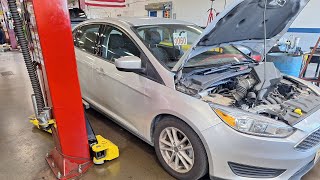
- Ford Focus (2012-2018) — Equipped with the DPS6 PowerShift transmission. Extremely prone to TCM failures. Check for extended warranty coverage under Customer Satisfaction Program 14M02.
- Ford Fiesta (2011-2016) — Uses the same problematic DPS6 transmission as the Focus. Subject to identical TCM, actuator, and internal mechanical faults.
- Dodge Dart (2013-2016) — Models with the 1.4L Turbo and C635 dual-dry clutch transmission (DDCT) experience high failure rates in the TCM and internal hydraulic controls.
- Hyundai Veloster (2012-2017) — EcoShift dual-clutch transmission models experience actuator and clutch pack failures. TCM replacements often exceed $1,500.
- Kia Forte (2017-2021) — Shares powertrain technology with Hyundai. Dry DCT models suffer from similar actuator and control module faults.
- Volkswagen Jetta / Golf (2010-2019) — DSG-equipped models experience Mechatronics unit failures, which integrate the TCM and electro-hydraulic controls.
Manufacturer-Specific Notes
- Ford: Ford issued Customer Satisfaction Program 14M02, extending the TCM warranty on 2011-2016 Fiestas and 2012-2018 Focuses to 10 years or 150,000 miles. Always check VIN coverage with a dealer before paying for repairs.
- Ford: A unique DPS6 failure is the aluminum shift drum stop shearing off inside the transmission case. This causes the drum to over-rotate, triggering P2862 and P2837. It requires removing the TCM to manually test gear rotation.
- Volkswagen: On DSG models, drivability issues don't always trigger a CEL. Software flaws in the Mechatronics unit often require a dealer-level reflash to correct, rather than hard part replacement.
Real Owner Stories
2012 Ford Focus with multiple actuator codes
Car began rough-shifting and skipping 3rd gear. Multiple codes were present including P090C (Clutch 'B' Low) and P285E (Fork 'A' High).
What they tried:
- Cleaned chassis ground connections.
- Attempted transmission adaptive learn procedure with FORScan, which failed.
Outcome: The combination of contradictory codes for both actuators pointed to a failing TCM. Replacing the TCM resolved all issues.
Lesson: When multiple circuit codes appear for both clutch actuators simultaneously, the root cause is almost always the central controller (TCM) or a shared ground, not multiple mechanical failures.
2014 Ford Focus misdiagnosed as needing a full clutch
Check engine light illuminated, car struggled to start, and lost reverse gear.
What they tried:
- Dealer stated TCM warranty expired and quoted $800 for a new TCM.
- Dealer later changed diagnosis, quoting $4,700 for a full clutch and fork replacement.
Outcome: The owner faced a repair bill exceeding the car's value due to a shop jumping straight to a mechanical rebuild without ruling out electronic faults.
Lesson: Be extremely wary of a P2862 diagnosis that immediately jumps to a $4,000 clutch replacement. Always verify the TCM and actuator motors are functional first.
2012 Ford Focus with intermittent heat-related failure
Owner experienced sluggish acceleration and lost reverse only after driving on the highway. The issue resolved itself after the car cooled down.
What they tried:
- Transmission shop topped off fluid and advised the owner to 'baby the car'.
Outcome: The symptoms strongly pointed to a failing TCM. Heat expands micro-fractures in the TCM's solder joints, causing the circuit high condition. Cooling down reconnects the joints.
Lesson: Intermittent transmission faults that appear when hot and disappear when cold are classic symptoms of a failing electronic module (TCM), not a mechanical fluid issue.
Ford Focus with internal mechanical failure
Vehicle presented codes P2862, P2837, and P287B. Transmission would not shift correctly.
What they tried:
- Technician removed the TCM and manually rotated the upper clock gear.
- The gear spun endlessly instead of stopping after 6.5 turns.
Outcome: The endless spinning confirmed a broken internal shift drum stop. The repair required replacing the transmission case half.
Lesson: If P2837 or P287B accompany P2862, remove the TCM and manually rotate the clock gears. If they spin endlessly, the transmission case is broken internally.
How to Prevent This Code From Triggering
- Change transmission gear oil. (Every 30,000 miles.) — The Ford DPS6 is an automated manual transmission. Fresh gear oil lubricates gears and synchronizers, preventing mechanical wear that mimics electronic faults.
- Avoid 'creeping' in stop-and-go traffic. (Daily habit.) — Creeping forces a dry dual-clutch transmission to slip constantly, generating massive heat that destroys the clutch assembly. Leave a gap and move decisively.
- Come to a complete stop before shifting to Reverse. (Every time you shift D to R.) — Shifting while rolling forces actuators and synchronizers to absorb severe shock, leading to premature mechanical failure.
- Clean main electrical ground connections. (Every 2 years.) — The TCM is highly sensitive to voltage. Poor grounds cause electrical noise that triggers false codes and damages the module.
Frequently Asked Questions
Is it safe to keep driving with code P2862?
No. The transmission is locked in limp mode, making highway driving dangerous. Continued driving overheats the clutch, causing thousands of dollars in mechanical damage.
What is the most common misdiagnosis for P2862?
Replacing the entire $3,000 clutch assembly when the actual problem is a $900 TCM or a $50 actuator motor. Always rule out electronic failures before authorizing internal mechanical repairs.
Can a bad battery cause code P2862?
Yes. A weak battery causes severe voltage fluctuations that disrupt TCM communication and trigger false circuit codes. Always test the battery and clean ground connections before replacing transmission parts.
Is the Ford Focus TCM covered by a recall?
It is not a safety recall, but Ford issued Customer Satisfaction Program 14M02 extending the TCM warranty to 10 years or 150,000 miles. Contact a dealer with your VIN to verify coverage before paying for repairs.
Can I replace the clutch actuator motors myself?
Yes, replacing the external motors is a straightforward DIY job. However, you must use a bidirectional scan tool (like FORScan) to perform the mandatory transmission adaptive learning procedure afterward. Skipping this step causes severe shifting issues.
What does 'Circuit High' actually mean?
The TCM detects constant 12V power on a wire that should be off or pulsing. This is caused by a wire rubbing against a power source or an internal short circuit inside the TCM.
Key Takeaways
- Code P2862 indicates a high-voltage short in the 'B' clutch circuit, disabling even gears (2, 4, 6) and Reverse.
- A failed Transmission Control Module (TCM) is the root cause in over 80% of Ford Focus and Fiesta cases.
- Before paying for diagnostics on a 2011-2018 Ford, call a dealership with your VIN to check for free replacement under extended warranty program 14M02.
- Swapping the 'A' and 'B' clutch actuator motors is a free, 30-minute DIY test to determine if a $50 motor is the culprit before replacing the $900 TCM.
- Never replace the $3,000 clutch assembly for this code without first verifying the TCM and actuator motors are fully functional.
Helpful Videos

The information in this article is provided for general reference and educational purposes only. Vehicle specifications, procedures, and part compatibility can vary by production date, trim level, and region. Always consult your vehicle's factory service manual and verify part numbers before purchasing or performing repairs. Safety-critical components such as airbags, seat belts, and braking systems should be installed by a qualified professional.
- 🎬 Helpful Videos
- What Does P2862 Mean?
- Can I Drive With P2862?
- Common Causes
- Symptoms
- Diagnostic Flowchart
- Common Fixes & Costs
- DIY vs Professional
- Used vs. New Parts: Buying Guide
- What Happens If You Wait — Timeline
- Cost of Not Fixing It
- Diagnosis Steps
- When This Code Triggers (Freeze-Frame Conditions)
- Related Codes
- Climate & Environmental Factors
- How to Talk to a Mechanic About This Code
- Where to Take It: Dealer vs Independent vs Chain
- When to Walk Away From the Repair
- What Scan Tool You Need for This Code
- How to Clear the Code After You Fix It
- Will This Fail Emissions / State Inspection?
- Most Commonly Affected Vehicles
- Manufacturer-Specific Notes
- Real Owner Stories
- 2012 Ford Focus with multiple actuator codes
- 2014 Ford Focus misdiagnosed as needing a full clutch
- 2012 Ford Focus with intermittent heat-related failure
- Ford Focus with internal mechanical failure
- How to Prevent This Code From Triggering
- Frequently Asked Questions
- Is it safe to keep driving with code P2862?
- What is the most common misdiagnosis for P2862?
- Can a bad battery cause code P2862?
- Is the Ford Focus TCM covered by a recall?
- Can I replace the clutch actuator motors myself?
- What does 'Circuit High' actually mean?
- Key Takeaways
- 🎟️ Get 5% Off