

OBD-II Code P2859: Clutch 'A' Pressure Disengagement Performance
What P2859 means, why it triggers, and how to fix it
- Code P2859 indicates a critical hydraulic pressure failure during clutch disengagement, requiring immediate diagnosis to prevent catastrophic transmission damage.
- The three most common culprits are degraded transmission fluid, a failed valve body assembly, or a malfunctioning Transmission Control Module (TCM).
- Driving with an active P2859 code generates extreme internal heat, escalating a $1,500 valve body repair into a $5,000+ full transmission replacement within miles.
- For Nissan CVT owners (2013-2021), P2859 triggers a strict diagnostic protocol requiring a borescope inspection of the CVT belt before authorizing any repairs.
What Does P2859 Mean?

The Transmission Control Module (TCM) detects incorrect hydraulic pressure when attempting to release (disengage) Clutch 'A'. The clutch fails to separate cleanly, causing harsh jolts, transmission slipping, and rapid internal wear.
Technical definition: Clutch 'A' Pressure Disengagement Performance. The TCM detects that actual hydraulic pressure in the Clutch 'A' circuit deviates from the commanded pressure during disengagement. The TCM monitors this via dedicated sensors and triggers P2859 when performance falls outside the manufacturer's specified range.
Can I Drive With P2859?
No — Do Not Drive. Do not drive. The transmission enters a 'limp mode' with severely reduced speed to protect itself. Continuing to drive with a slipping or binding clutch generates extreme heat, quickly causing catastrophic internal damage. This turns a $1,500 valve body repair into a $5,000+ transmission replacement.
Common Causes

- Low, contaminated, or incorrect transmission fluid (Very Common) — Fluid that is low, burnt, or the wrong type cannot maintain precise hydraulic pressure. Debris from normal wear also clogs the small passages within the valve body or the transmission filter, restricting fluid flow.
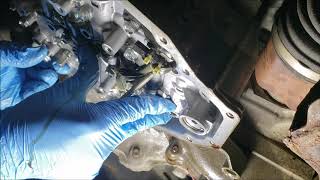
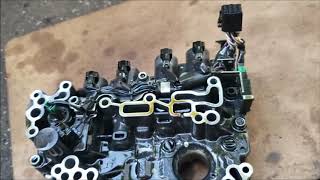
- Faulty transmission valve body or solenoids (Very Common) — The valve body is the transmission's hydraulic control center. A single faulty pressure control solenoid, a failed integrated pressure sensor, or a physical blockage within the valve body 🎬 Watch: Step-by-step guide on removing a CVT valve body. prevents proper pressure regulation.
- Failing Transmission Control Module (TCM) or software (Common) — Internal electronic failures, moisture intrusion, or corrupted calibration data cause the TCM to command incorrect pressure levels or misinterpret sensor data, triggering the fault even when mechanical components are healthy.
- Internal transmission mechanical failure (Less Common) — This code sometimes points to severe internal issues, such as a worn-out clutch pack, a failing hydraulic pump, or a stretched CVT belt, requiring a full transmission rebuild or replacement.
- Damaged wiring or connectors (Less Common) — Frayed wires, corroded pins, or loose connectors between the TCM and the transmission's solenoids disrupt the electrical signals needed to manage clutch pressure.
Symptoms
- Harsh, jerky, or delayed gear shifts — The car bangs or jolts into gear, especially when coming to a stop or accelerating from a low speed.
- Transmission slipping — Engine RPMs increase, but the vehicle's speed does not. The car loses power during acceleration.
- Vehicle enters 'Limp Mode' — The transmission locks into a single gear to prevent further damage, severely limiting top speed to around 35 mph.
- Hesitation or stalling — The vehicle hesitates to move from a stop or stalls completely because the clutch fails to disengage.
- Check Engine Light or Transmission Warning Light is on — The vehicle's computer illuminates a dashboard warning light to alert you to the fault.
- Loud clanking or grinding noises — Abnormal mechanical noises from the transmission area indicate severe internal damage, such as a broken CVT belt.
- Burning smell from transmission fluid — A binding clutch creates excessive friction, burning the transmission fluid and producing a distinct acrid smell.
Diagnostic Flowchart
Tap your situation to follow the diagnostic path that matches what you're seeing on this code.
Common Fixes & Costs
- Replace Transmission Valve Body
— Parts: $600-$1,500, Labor: $400-$1,000, ~4.5 hr book time
(Professional)
Nissan Sentra/Kicks (2013-2021, JF015E CVT): OEM
Subaru Crosstrek/Impreza (TR580 CVT): OEM - Replace or Reprogram Transmission Control Module (TCM)
— Parts: $600-$1,200, Labor: $300-$600, ~2.5 hr book time
(Professional)
Ford Focus/Fiesta (2011-2019, DSP6): OEM - Full Transmission Replacement or Rebuild — Parts: $2,500-$5,000, Labor: $1,000-$2,500, ~9 hr book time (Professional)
- Transmission Fluid and Filter Change — Parts: $50-$150, Labor: $100-$250, ~1.5 hr book time (DIY)
- Replace Clutch Pressure Control Solenoid — Parts: $50-$250, Labor: $200-$500, ~3 hr book time (Intermediate)
Used vs. New Parts: Buying Guide
When a used part is worth it: A used valve body or TCM from a low-mileage donor vehicle offers significant savings if the vehicle is older, has high mileage, and the budget is tight.
Donor-vehicle mileage cap: roughly under 80000 miles for the part to have meaningful remaining life.
Donor quality checklist:
- Verify the donor vehicle was not scrapped due to transmission failure.
- Match the part number exactly; superseded parts are not backward compatible without programming.
- Ensure the seller provides the donor vehicle's VIN, required for TCM reprogramming.
Decision logic:
- If The part is a TCM for a Ford PowerShift or a valve body for a Nissan/Subaru CVT → Buy a new or professionally remanufactured part. Used parts carry a massive risk of having the exact same inherent defect.
- If Vehicle is over 150,000 miles and the repair cost approaches the vehicle's value → A used part is a practical choice to extend the vehicle's life without over-investing.
- If The part is electronic, like a TCM → A new or remanufactured part with a warranty is strongly recommended, as electronic components fail without warning.
Warranty tradeoff: Used parts typically include a 30-90 day part-only warranty. Remanufactured or new aftermarket parts offer a 1-3 year warranty. The extra cost buys a significantly longer protection period.
Worst-case if a used part fails: $500-$1500 if a used part fails after installation, representing repeat labor charges and a second replacement part.
What Happens If You Wait — Timeline
- 0-1 month: Check Engine Light is on. Occasional, subtle harsh shifts or slight hesitation when coming to a stop. Symptoms are intermittent. (MPG impact: 0-5%% · Added cost: $0-$100 in wasted fuel. The problem is contained to a solenoid or the valve body.)
- 1-3 months: Shifting becomes consistently harsh. Transmission slipping is noticeable. A faint burning smell is present after driving. (MPG impact: 5-15%% · Added cost: $100-$400. The slipping clutch generates excessive heat, degrading fluid and damaging internal seals.)
- 3-6 months: Vehicle enters 'limp mode' frequently. Loud clanking noises begin. The car hesitates severely or stalls when put into gear. (MPG impact: 15-25%% · Added cost: $2,000-$4,000. A $1,500 valve body repair escalates to requiring a full transmission rebuild due to heat damage.)
- 6+ months: Catastrophic failure. The vehicle becomes undrivable. The transmission is completely destroyed internally with widespread metal contamination. (MPG impact: N/A (undrivable)% · Added cost: $4,000-$7,500+. The only option is a full transmission replacement.)
Cost of Not Fixing It
- 0-1 month: Increased transmission wear due to clutch slipping/binding, poor fuel economy, and worsening shift quality. (Added cost: $0-$100)
- 1-6 months: Significant damage to the clutch pack, CVT belt, or internal seals due to excessive heat. A $1,500 valve body repair escalates to a full rebuild. (Added cost: $2,000-$4,000)
- 6+ months: Catastrophic transmission failure. The vehicle becomes undrivable, guaranteeing a full transmission replacement is needed. (Added cost: $4,000-$7,500+)
Diagnosis Steps
- Check Transmission Fluid Level and Condition
Ensure the fluid is at the correct level and doesn't look dark, burnt, or contain metal particles. Finding excessive metal debris in the pan confirms severe internal damage and alters the entire diagnostic path.
Tools: Rag, vehicle owner's manual, drain pan (Beginner) - Scan for All Trouble Codes and Review Freeze Frame Data
Use an OBD-II scanner to read all codes. Other codes related to sensors or solenoids (like P0746, P0965) pinpoint specific electrical faults. Record the freeze-frame data to see vehicle speed and temperature when the code set.
Tools: OBD-II Scanner (Beginner) - Monitor Live Data with an Advanced Scanner
Use a bi-directional scan tool to monitor 'Clutch A Commanded Pressure' versus 'Clutch A Actual Pressure' in real-time. A significant, consistent deviation between the two values under load confirms a hydraulic or sensor fault.
Tools: Advanced bi-directional scan tool (Advanced) - Perform Manufacturer-Specific Internal Inspections
For Nissan CVTs, Technical Service Bulletins mandate using a borescope to inspect the CVT belt for scoring or damage after removing the valve body. Belt damage requires full transmission replacement, not just a valve body.
Tools: Borescope, socket set (Professional) - Test Solenoid Circuit with a Multimeter
Disconnect the TCM harness. Using a multimeter set to Ohms, test the resistance of the Clutch 'A' pressure control solenoid. Compare the reading to the manufacturer's specification (e.g., 10-13 ohms for a Subaru TR580 lock-up solenoid).
Tools: Multimeter, vehicle-specific wiring diagram (Advanced) - Inspect Wiring and Connectors
Visually inspect the wiring harness going to the transmission and the TCM. Look for frayed wires, corrosion, or loose connections at the main transmission connector.
Tools: Flashlight (Intermediate) - Perform a Transmission Line Pressure Test
Connect a pressure gauge to the transmission test port. Significantly low pressure at idle points to a weak pump or internal leak. Pressure that fails to rise under load points to a faulty pressure regulator solenoid.
Tools: Transmission pressure gauge set, service manual (Professional) - Inspect the Valve Body
Remove the transmission oil pan to visually inspect the valve body for cracks, blockages, or stuck solenoids. This is a required step in many official diagnostic procedures.
Tools: Socket set, torque wrench, drain pan, new gasket and fluid (Advanced)
When This Code Triggers (Freeze-Frame Conditions)
- Engine Coolant Temp: 180-210°F (Vehicle is at full operating temperature.)
- RPM: 1200-2500 RPM (During light acceleration, cruising, or when coming to a stop.)
- Engine Load: 20-50% (Light to moderate engine load, rarely during heavy acceleration.)
- Vehicle Speed: 25-55 mph (Code sets during city or highway cruising speeds as the transmission shifts or prepares to disengage for a stop.)
Related Codes
- P2857 — Clutch 'A' Pressure Engagement Performance. The direct counterpart to P2859. P2859 flags a fault during disengagement, while P2857 flags a fault during engagement. Seeing both confirms a severe valve body or mechanical issue.
- P0746 — Pressure Control Solenoid 'A' Performance/Stuck Off. A specific electrical fault identifying a problem with the solenoid itself, whereas P2859 describes the resulting incorrect hydraulic pressure.
- P0965 — Pressure Control Solenoid 'B' Control Circuit Range/Performance. Having both P2859 and P0965 suggests a wider systemic failure, like a bad TCM or completely failed valve body.
- P17F0 / P17F1 — CVT Judder codes. Extremely common alongside P2859 in Nissan vehicles. Their presence strongly suggests catastrophic mechanical damage (worn belt/pulley) requiring full transmission replacement.
Climate & Environmental Factors
- Extreme Cold Weather: Cold temperatures thicken transmission fluid, increasing hydraulic resistance. This exacerbates pre-existing valve body issues, making symptoms more noticeable on a cold start.
- Extreme Hot Weather / High Load: Hot ambient temperatures or towing puts thermal stress on the transmission. A clutch struggling to disengage slips more, generating excess heat and accelerating fluid breakdown.
- High Humidity / Moisture: Humidity contributes to corrosion on external wiring harnesses and the TCM connector. Corrosion increases resistance, leading to erratic signals and triggering pressure codes.
How to Talk to a Mechanic About This Code
Say this: "I have a P2859 code and the car is experiencing harsh shifts. I'd like to book a diagnostic appointment. Can you please check for any relevant Technical Service Bulletins, inspect the fluid condition for metal debris, and use a scanner to compare commanded versus actual clutch pressure before recommending a repair?"
This signals you understand the diagnostic path. It directs the mechanic to perform specific tests instead of jumping to a full transmission replacement. It helps avoid shops that recommend major repairs without proper diagnosis.
Avoid saying:
- 'My transmission is acting weird, just fix it.'
- 'I got a P2859 code, just replace the transmission.'
- 'The internet said it's the valve body, can you give me a price for that?'
Questions to ask before authorizing the repair:
- What were the results of the fluid and pan inspection? Was there excessive metal?
- Can you show me the live data from the scan tool that shows the clutch pressure discrepancy?
- If you are recommending a valve body, what is the diagnostic step if that doesn't fix it?
- Is the recommended part new, used, or remanufactured, and what is the warranty on both the part and the labor?
Where to Take It: Dealer vs Independent vs Chain
- Dealer:
Recommended if the vehicle is under warranty or has a known, complex issue (Nissan/Ford) where dealer-specific knowledge is critical.
Best for: Vehicles still under powertrain warranty or a related extended warranty., Complex manufacturer-specific issues where TSBs and proprietary software are required for diagnosis and programming.
Downsides: Highest labor rates and part costs., May default to full component replacement rather than a targeted repair. (Typical cost: +50% vs. baseline) - Independent Shop:
Highly Recommended, but ONLY if it is a reputable, independent transmission specialist shop. A general-purpose shop is NOT recommended.
Best for: Out-of-warranty vehicles where the owner is cost-sensitive., Shops that specialize specifically in transmission repair.
Downsides: Quality varies greatly; a general mechanic lacks the specific tools for modern CVTs., Many general shops outsource transmission rebuilds, adding a markup. (Typical cost: +0% vs. baseline) - Chain Shop:
AVOID. This code requires specialized diagnostic capabilities far beyond what is available at a chain repair shop.
Best for: Simple fluid changes, but even this is risky if they use the wrong fluid type.
Downsides: Technicians are not specialists in complex internal transmission work., Lack the advanced diagnostic tools needed to differentiate between a solenoid, valve body, or TCM failure. (Typical cost: -10% vs. baseline)
When to Walk Away From the Repair
If the estimated repair cost exceeds 50% of the car's private-party value, selling the car as-is is often the most financially sensible decision.
- Car worth $8000, fix is $4500: Borderline. The repair cost is over 50% of the car's value. Consider selling as-is unless the car is in perfect condition and you plan to keep it for several years.
- Car worth $15000, fix is $2500: Fix it. The repair cost is well below the 50% threshold and extends the life of a valuable vehicle.
- Car worth $4000, fix is $3500: Walk away. The repair cost is nearly 90% of the car's value. Do not fix it.
What Scan Tool You Need for This Code

Minimum: A scanner that reads manufacturer-specific transmission codes and displays live transmission data PIDs, such as clutch commanded pressure and actual pressure.
A basic $20 code reader only shows the P2859 code. It cannot access live data from the TCM needed to see if the pressure is actually failing. Without this, you are guessing at the cause and will waste money replacing the wrong parts.
Budget: BlueDriver Pro (~$100) — Reads and clears enhanced transmission codes for many makes. However, its ability to show advanced OEM-specific live data like transmission clutch pressure is limited depending on the vehicle.
Mid-range: Foxwell NT604 Elite / ANCEL FX2000 (~$150) — Offers diagnostics for the Engine, ABS, SRS, and Transmission systems. Reads codes and displays live data streams for the transmission, which is the minimum required to diagnose P2859 effectively.
Professional: Autel MaxiCOM MK808 / Launch CRP909E (~$500-900) — Provides full, OEM-level diagnostics. These bidirectional tools command solenoids to activate for testing. They offer comprehensive live data graphing for clutch pressures, making them the best choice for accurately diagnosing P2859.
How to Clear the Code After You Fix It
- Use a compatible OBD-II scan tool to clear the diagnostic trouble codes.
- Perform a mandatory TCM reset and adaptive learning procedure using an advanced scan tool.
- Perform a complete drive cycle to allow the TCM to relearn shift points and verify the repair.
Drive cycle (~30 minutes): Start with a cold engine. Idle for 2-3 minutes. Drive in mixed city conditions with several stop-and-go situations. Accelerate to a steady highway speed (55-60 mph) for 10-15 minutes. Coast down, park, and let the vehicle cool.
Readiness monitors affected: Transmission-related monitors, Comprehensive Component Monitor
Before emissions retest: drive at least 50 miles to fully set monitors.
Watch out for:
- Clearing the code without fixing the hardware guarantees the code will return immediately.
- Failing to perform a manufacturer-specific TCM relearn procedure after replacing a valve body results in continued harsh shifting.
- Disconnecting the battery resets all readiness monitors, causing an automatic emissions test failure.
Will This Fail Emissions / State Inspection?
Yes — this code typically fails an OBD-II emissions inspection.
- California: An illuminated Check Engine Light is an automatic failure. All readiness monitors must be 'Ready'. After a repair, a full drive cycle is required before re-testing.
- New York: The annual safety inspection includes an OBD-II emissions scan. Code P2859 illuminates the Check Engine Light, resulting in an automatic failure.
- Texas: In the 17 counties requiring emissions testing, an active P2859 code with the Check Engine Light on is an automatic failure.
Most Commonly Affected Vehicles

- Nissan Sentra / Versa / Kicks (2013-2021) — Extremely common issue related to Jatco CVT7 and CVT8 transmissions. Often requires valve body or full transmission replacement per Nissan TSB NTB22-021.
- Ford Focus / Fiesta (2011-2019) — Vehicles with the DSP6 PowerShift dual-clutch transmission log this code due to notoriously faulty TCMs or clutch actuators.
- Subaru Impreza / Crosstrek / Forester (2012-2017) — Associated with a faulty torque converter lock-up solenoid within the valve body on the TR580 CVT. Valve body replacement is the standard fix.
- Chevrolet Cruze / Sonic / Malibu (2012-2019) — Appears on models with 6-speed (6T30/6T40) automatic transmissions, pointing to issues within the valve body's solenoid pack or the TCM.
- Honda Accord / Civic / CR-V (2013-2018) — Linked to faulty pressure switches or solenoids. Honda issued TSBs for software updates to address harsh shifting related to this code.
Manufacturer-Specific Notes
- Nissan: P2859 is often considered a 'death code' for Nissan CVTs. TSB NTB22-021 dictates a strict diagnostic flow: inspect fluid for debris, then borescope the CVT belt. If the belt is damaged, the entire transmission must be replaced. A fluid change will not fix it.
- Subaru: On TR580 CVTs, this issue traces to a failing lock-up duty solenoid integrated into the valve body. Replacing the entire valve body is the only approved repair. Subaru extended the CVT warranty to 10 years/100,000 miles for many 2010-2020 models.
- Ford: On DSP6 PowerShift transmissions, P2859 is usually a symptom of a failing Transmission Control Module (TCM), not the clutch itself. TCMs fail due to heat and vibration. Check for extended warranty coverage under Customer Satisfaction Program 14M02.
Real Owner Stories
2015 Nissan Sentra at ~85K miles
Check engine light came on, transmission slipped and failed to accelerate. Code P2859 was present.
What they tried:
- Replaced the CVT valve body with a new OEM part. The problem and code remained.
Outcome: A transmission specialist advised a full transmission replacement was necessary. The owner wasted money on a valve body that was not the root cause.
Lesson: On Nissan CVTs, P2859 indicates internal failure beyond the valve body. Following the TSB diagnostic flow (checking for metal debris, inspecting the belt) is critical before replacing the valve body.
2013 Nissan Sentra SR with ~112K km
Car exhibited erratic shifting, hesitation, and intermittent limp mode. Code P2859 was stored.
What they tried:
- Mechanic suspected low fluid, which did not solve the issue.
- Reset the PCM and tested sensors, but the problem persisted.
Outcome: The valve body was replaced. Immediately after installation, gear selection responded instantly and all symptoms resolved.
Lesson: When symptoms are purely hydraulic without loud mechanical noises, the valve body is a primary suspect. Proper diagnosis prevents unnecessary full transmission replacements.
Subaru Crosstrek with TR580 CVT
Vehicle set a P2764 code (closely related to P2859) indicating a solenoid circuit failure.
What they tried:
- Technician tested the resistance of the lock-up solenoid at the TCM connector and found it was 2.73 ohms, far below the 13-ohm specification.
Outcome: The confirmed electrical failure required a valve body replacement, as Subaru does not sell the solenoid separately.
Lesson: A multimeter test definitively confirms a failed solenoid before expensive disassembly. A resistance reading outside the 10-13 ohm range points directly to a bad valve body.
2014 Nissan Sentra SR after curb impact
After hitting a curb at ~70mph, the car developed code P2859. The tachometer fluctuated aggressively.
What they tried:
- Checked for loose wires around the transmission with no success.
Outcome: The service manual's diagnostic tree recommended a full transaxle assembly replacement due to physical trauma.
Lesson: Severe physical impact causes internal transmission damage unrelated to typical wear. If the code appears immediately after an accident, suspect internal mechanical damage.
How to Prevent This Code From Triggering
- Change CVT fluid at recommended intervals. (Every 30,000 to 60,000 miles, or sooner for severe service.) — Fresh fluid provides proper lubrication and cooling. Degraded fluid leads to overheating and accelerated wear on the valve body and belt.
- Avoid aggressive driving habits. (Daily habit) — Smooth acceleration reduces shock load and heat buildup. Abrupt starts and stops accelerate wear on the CVT belt and clutch components.
- Check and maintain the engine's cooling system. (Annually or every 30,000 miles) — Transmission fluid is cooled by the engine's radiator. An inefficient cooling system causes the transmission to overheat, breaking down fluid and damaging seals.
- Install an auxiliary transmission cooler. (One-time upgrade for high-risk use) — If you frequently tow or live in a hot climate, an external cooler dissipates heat, which is the primary cause of automatic transmission failure.
- Allow the engine to warm up briefly before driving. (Daily, especially in cold weather) — Allows transmission fluid to circulate and reach operating temperature, ensuring proper lubrication and hydraulic pressure from the start.
Frequently Asked Questions
Can I fix P2859 myself?
If the cause is low fluid, a DIY fluid change is possible. However, replacing a valve body or TCM requires special tools, advanced diagnostic equipment, and professional programming. Misdiagnosing this specific code is common and expensive.
I replaced the valve body, but the code came back. What now?
If a new valve body fails to resolve P2859, the problem is likely the TCM, a damaged wiring harness, or severe internal mechanical failure. For Nissan CVTs, this usually means the CVT belt is damaged and the entire transmission requires replacement. Always inspect the belt before replacing the valve body.
How much will it cost to fix P2859 in 2024?
Costs vary widely based on the root cause. A valve body replacement ranges from $1,200 to $2,500. A full transmission replacement, common for Nissan models with this code, costs between $4,000 and $7,500.
Will driving with P2859 make it worse?
Yes. Driving causes the clutch to slip or bind, generating excessive heat and stress. This quickly destroys internal components, turning a localized repair into a catastrophic failure.
Will clearing the code fix the problem?
No. Clearing the code only turns the dashboard light off temporarily. The code returns as soon as the TCM detects the pressure fault again.
Is a faulty solenoid the same as a faulty valve body?
A solenoid is a small electrical valve mounted on or inside the larger valve body. While some older vehicles allow individual solenoid replacement, most modern transmissions require replacing the entire valve body assembly if a single solenoid fails.
Can a bad battery cause P2859?
A weak battery causes various erroneous electrical codes, but it is rarely the root cause of a specific hydraulic performance code like P2859. Low voltage disrupts TCM communication, but this usually triggers accompanying voltage-related DTCs. Always ensure the battery is healthy before starting expensive transmission diagnostics.
What happens if I ignore P2859?
Ignoring P2859 leads to severe drivability problems, including harsh shifting and eventual complete transmission failure. The vehicle will become undrivable and leave you stranded. Repair costs maximize as minor component damage turns into major internal destruction.
Key Takeaways
- Code P2859 indicates a critical hydraulic pressure failure during clutch disengagement, requiring immediate diagnosis to prevent catastrophic transmission damage.
- The three most common culprits are degraded transmission fluid, a failed valve body assembly, or a malfunctioning Transmission Control Module (TCM).
- Driving with an active P2859 code generates extreme internal heat, escalating a $1,500 valve body repair into a $5,000+ full transmission replacement within miles.
- For Nissan CVT owners (2013-2021), P2859 triggers a strict diagnostic protocol requiring a borescope inspection of the CVT belt before authorizing any repairs.
Helpful Videos

The information in this article is provided for general reference and educational purposes only. Vehicle specifications, procedures, and part compatibility can vary by production date, trim level, and region. Always consult your vehicle's factory service manual and verify part numbers before purchasing or performing repairs. Safety-critical components such as airbags, seat belts, and braking systems should be installed by a qualified professional.
- 🎬 Helpful Videos
- What Does P2859 Mean?
- Can I Drive With P2859?
- Common Causes
- Symptoms
- Diagnostic Flowchart
- Common Fixes & Costs
- Used vs. New Parts: Buying Guide
- What Happens If You Wait — Timeline
- Cost of Not Fixing It
- Diagnosis Steps
- When This Code Triggers (Freeze-Frame Conditions)
- Related Codes
- Climate & Environmental Factors
- How to Talk to a Mechanic About This Code
- Where to Take It: Dealer vs Independent vs Chain
- When to Walk Away From the Repair
- What Scan Tool You Need for This Code
- How to Clear the Code After You Fix It
- Will This Fail Emissions / State Inspection?
- Most Commonly Affected Vehicles
- Manufacturer-Specific Notes
- Real Owner Stories
- 2015 Nissan Sentra at ~85K miles
- 2013 Nissan Sentra SR with ~112K km
- Subaru Crosstrek with TR580 CVT
- 2014 Nissan Sentra SR after curb impact
- How to Prevent This Code From Triggering
- Frequently Asked Questions
- Can I fix P2859 myself?
- I replaced the valve body, but the code came back. What now?
- How much will it cost to fix P2859 in 2024?
- Will driving with P2859 make it worse?
- Will clearing the code fix the problem?
- Is a faulty solenoid the same as a faulty valve body?
- Can a bad battery cause P2859?
- What happens if I ignore P2859?
- Key Takeaways
- 🎟️ Get 5% Off