

OBD-II Code P2836: Shift Fork 'B' Position Circuit
What P2836 means, why it triggers, and how to fix it
- P2836 indicates an electrical failure in the 'B' shift fork circuit, which disables even-numbered gears (2, 4, 6) and reverse in dual-clutch transmissions.
- Ford Focus (2012-2018) and Fiesta (2011-2019) owners should immediately check eligibility for Ford's 14M02 warranty extension, which covers TCM replacements up to 150,000 miles.
- Never replace the $600+ Transmission Control Module (TCM) without first testing the battery voltage and cleaning the main ground straps, as low voltage directly mimics a failed module.
- Driving with an active P2836 code for more than a few weeks accelerates internal clutch wear, turning a $200 electrical diagnosis into a $3,000 mechanical transmission rebuild.
What Does P2836 Mean?

P2836 indicates the Transmission Control Module (TCM) detects an electrical fault in the 'B' shift fork circuit. In dual-clutch transmissions, the 'B' fork physically engages even-numbered gears (2, 4, 6) and reverse. When the TCM loses the fork's exact position data due to an open or shorted circuit, it cannot command gear changes safely, resulting in severe shifting issues.
Technical definition: Shift Fork 'B' Position Circuit. The Transmission Control Module (TCM) sets this code when the electrical signal from the shift fork 'B' position sensor falls outside expected voltage parameters, indicating an open circuit, short circuit, or sensor failure.
Can I Drive With P2836?
Yes, But With Caution. You can drive, but we strongly advise against it. The transmission will likely shift harshly, get stuck in gear, or enter 'limp mode.' Drive directly to a repair shop. Ignoring P2836 accelerates wear on clutches and internal components, turning a $600 electronic repair into a $3,000+ mechanical rebuild. The transmission can also fail to engage entirely, leaving you stranded.
Common Causes

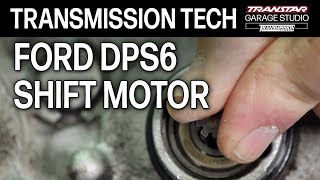
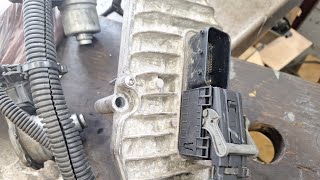
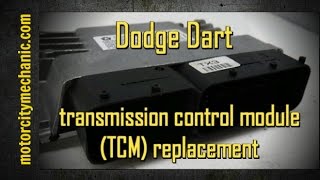
- Faulty Transmission Control Module (TCM) (Very Common) — Internal TCM failures, such as cracked solder joints or failed actuator driver circuits, are the leading cause of this code, especially in Ford, Dodge, and Chrysler models. 🎬 Watch: Diagnosing common Ford DPS6 TCM shifting problems
- Corroded or Damaged Wiring (Common) — Wiring harnesses connecting the shift fork sensor to the TCM suffer damage from road debris, vibration, or moisture corrosion, interrupting the signal.
- Low Battery Voltage or Poor Grounds (Common) — Low system voltage from a failing battery or poor ground connections to the TCM causes the module to misinterpret normal sensor readings. Always check this before replacing parts.
- Faulty Shift Fork Position Sensor (Common) — The sensor itself fails due to internal wear or contamination from transmission fluid, sending erratic voltage signals to the TCM.
- Worn Shift Fork Actuator Motors (Common) — The small electric motors that move the shift forks wear out, preventing correct fork movement and causing the position sensor to report a fault.
- Internal Mechanical Transmission Failure (Less Common) — In Ford DPS6 transmissions, a metal stop tab for the shift drum shears off inside the case. This allows the fork to over-travel, confusing the sensor and TCM.
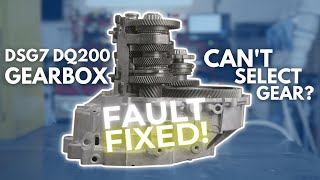
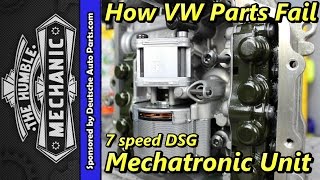
- Internal Hydraulic Fluid Leaks (VW/Audi) (Less Common) — Volkswagen/Audi DSG mechatronics units suffer from internal hydraulic pressure loss, often due to a cracked accumulator housing, preventing proper fork actuation. 🎬 See how to test and repair the DQ200 mechatronic unit
- Out-of-Date TCM Software (Rare) — Corrupted or outdated TCM software causes the module to misinterpret sensor readings. A manufacturer reflash resolves these logic glitches.
Symptoms
- Illuminated Check Engine or Transmission Warning Light — The dashboard warning light is the first and most consistent indicator of the fault.
- Harsh, Delayed, or Failed Shifts — The transmission slams into gear, hesitates, clunks loudly, or refuses to shift into even-numbered gears.
- Transmission Stuck in Gear (Limp Mode) — The TCM locks the transmission in a single gear (often 2nd) to prevent damage, causing poor acceleration and high RPMs at speed.
- Engine Revs Without Acceleration — The vehicle loses power or slips between gears, causing the engine to rev freely as if in Neutral.
- Stuck in Park — A faulty TCM circuit prevents the brake-shift interlock solenoid from releasing, trapping the gear selector in Park.
- Random Actuating Noises — Audible clicking or motor whirring from the transmission area while the vehicle is stationary with the ignition on.
Diagnostic Flowchart

Tap your situation to follow the diagnostic path that matches what you're seeing on this code.
Common Fixes & Costs
- Replace the Transmission Control Module (TCM)
— Parts: $400-$900, Labor: $150-$300, ~2.0 hr book time
(Professional)
Ford Focus/Fiesta: OEM AE8Z-7Z369-F (Alt: Dorman 609-031)
Dodge Dart: OEM 68210293AA (Alt: Remanufactured OEM) - Repair Damaged Wiring or Clean Grounds — Parts: $10-$50, Labor: $150-$300, ~2.5 hr book time (Intermediate)
- Replace Shift Fork Actuators/Sensors
— Parts: $150-$400, Labor: $200-$500, ~3.0 hr book time
(Intermediate)
Ford Focus/Fiesta: OEM AE8Z-7C604-A (Clutch Actuator Motor) (Alt: Standard Motor Products) - Update or Reprogram the TCM Software — Parts: $0, Labor: $100-$200, ~1.0 hr book time (Professional)
- Replace Mechatronics Unit (VW/Audi)
— Parts: $1200-$2500, Labor: $400-$600, ~4.0 hr book time
(Professional)
VW/Audi (DQ200 7-speed): OEM 0AM927769D (Alt: Remanufactured OEM) - Replace Transmission Case Half or Full Assembly — Parts: $1000-$3000, Labor: $1000-$2000, ~10.0 hr book time (Professional)
Used vs. New Parts: Buying Guide
When a used part is worth it: A used TCM is a budget option for older vehicles, but ONLY if you have access to a professional shop with the specific tools to reprogram it to your VIN.
Donor-vehicle mileage cap: roughly under 80000 miles for the part to have meaningful remaining life.
Donor quality checklist:
- Match the part number exactly.
- Ensure the donor vehicle was not junked for transmission issues.
- Verify the seller offers a minimum 30-day warranty.
Decision logic:
- If The part is for a Ford Focus/Fiesta with the 14M02 warranty extension → Go to a dealer first; the replacement is likely free.
- If Budget allows and you plan to keep the car → Buy a new OEM or pre-programmed remanufactured unit for reliability and warranty.
- If You cannot confirm access to a capable programming tool → Do NOT buy a used TCM. It will not work without programming.
Warranty tradeoff: Used: 30-90 days (part only). Remanufactured: 1-year to lifetime. New OEM: 1-2 years (often requires dealer installation).
Worst-case if a used part fails: $300-600 if an improperly programmed used module fails, requiring repeat labor and professional diagnosis.
What Happens If You Wait — Timeline
- 0-1 month: Intermittent Check Engine Light. Occasional harsh shifts or slight hesitation when the transmission is hot. The car remains drivable. (MPG impact: 0-5%% · Added cost: $0 - $50 (Wasted fuel))
- 1-4 months: Constant Check Engine Light. Harsh shifting becomes frequent. The transmission intermittently enters 'limp mode,' getting stuck in one gear. (MPG impact: 5-10%% · Added cost: $50 - $200 (Increased fuel costs and minor drivetrain stress))
- 4-8 months: Severe drivability issues. The vehicle frequently slips between gears or loses power. Constant harsh shifting accelerates wear on internal clutch packs and synchronizers. (MPG impact: 10-15%% · Added cost: $200 - $800 (Clutch damage begins; fluid flush required))
- 8+ months: Catastrophic internal failure. Uncontrolled shifting destroys the clutch packs, gears, or bearings. The vehicle fails to move, forcing a full mechanical rebuild. (MPG impact: 15-25%+% · Added cost: $3,000 - $7,000+ (Complete transmission rebuild or replacement))
Cost of Not Fixing It

- 0-1 month: Erratic shifting, poor drivability, and a 5-10% drop in fuel economy. The vehicle enters 'limp mode' unexpectedly. (Added cost: Negligible, besides increased fuel cost.)
- 1-6 months: Harsh shifting puts severe stress on the transmission's internal clutches and mechanical parts, causing overheating and accelerated wear. (Added cost: $0 - $500 (Potential for fluid flush or minor solenoid damage).)
- 6+ months: Catastrophic internal transmission failure. Excessive wear destroys clutches and gears, requiring a complete transmission rebuild. (Added cost: $3000 - $7000+ (Cost of a rebuilt or new transmission assembly).)
Diagnosis Steps
- Read the Trouble Codes
Use an OBD-II scanner to confirm P2836. Check for related codes like P2837, P2831, P0607, or P0884, which help pinpoint whether the issue is isolated to one fork or indicates a systemic TCM failure.
Tools: OBD-II Scanner (Beginner) - Visually Inspect Wiring and Grounds
Inspect the wiring harness connecting to the transmission and TCM. Look for frayed wires, loose connections, or corrosion. Meticulously check the main TCM ground straps, as poor grounds frequently cause this code.
Tools: Flashlight, Basic Hand Tools (Beginner) - Test Battery and Charging System
Test the battery voltage (should be 12.4V+ off, 13.7V+ running). Low system voltage causes the TCM to misinterpret sensor data, triggering false circuit codes.
Tools: Multimeter (Beginner) - Analyze Live Sensor Data
Use an advanced scan tool to view live data for the shift fork position sensor. Voltage should change smoothly (typically 0.5V to 4.5V) during shifts. Jumps or flatlines indicate a sensor or circuit problem.
Tools: Advanced OBD-II Scanner (Intermediate) - Test Sensor Circuit Continuity
Disconnect the sensor and TCM connectors. Use a multimeter to check for continuity on the signal wire (resistance under 1.0 Ω). Check for a short to ground by measuring resistance between the signal wire and chassis ground (should read OL).
Tools: Multimeter (Advanced) - Back-Probe the Sensor Voltage Signal
With the sensor connected and ignition on, back-probe the signal wire. Voltage must be stable and within the 0.5V to 4.5V range. Wiggle the harness; any voltage fluctuation confirms an intermittent wiring break.
Tools: Multimeter, Back-probe pins (Advanced) - [Pro Tip] Check for Broken Shift Drum Stop (Ford DPS6)
Remove the TCM to expose the two 'clock gears'. Manually rotate the upper gear (Fork B). It must stop firmly after approximately 6.5 turns. If it spins freely, the internal shift drum stop tab has sheared off, requiring transmission case replacement.
Tools: Basic hand tools (Advanced) - Check Mechatronic Unit Hydraulic Pressure (VW/Audi)
For DSG models, use a VAG scan tool to monitor requested vs. actual hydraulic pressure in the mechatronics unit. Specified pressure is 50-60 bar. Inability to build pressure confirms an internal leak.
Tools: Advanced VAG-specific Scan Tool (Advanced) - Test the TCM
If the sensor, wiring, voltage, and internal mechanics test good, the TCM is the culprit. Seeing multiple circuit codes (e.g., P2831 and P2836 together) guarantees a failed TCM.
Tools: Professional diagnostic tools (Professional)
When This Code Triggers (Freeze-Frame Conditions)
- Engine Coolant Temp: 180-205°F (Occurs when the vehicle is fully warmed up, as heat increases electrical resistance in failing components.)
- RPM: 1200-2800 RPM (Triggers during light acceleration or steady cruising when the transmission prepares for a shift.)
- Engine Load: 25-60% (Sets under moderate engine load during city or highway driving when frequent shifting is required.)
- Vehicle Speed: 20-55 mph (Activates during a specific shift event, typically the 2-4 or 4-6 upshift.)
Related Codes
- P2837 — Indicates the sensor's signal is illogical or outside the expected voltage range. While P2836 points to a dead circuit, P2837 means the TCM receives a signal, but it is nonsensical.
- P2831 — The equivalent code for 'Shift Fork A'. Seeing both P2831 and P2836 together guarantees a systemic problem (failed TCM or bad ground), not two independent fork failures.
- P0700 — A generic 'Transmission Control System Malfunction' code. It simply tells the engine computer that the TCM has stored a specific fault like P2836.
- P2838 / P2839 / P283A — Variations of the 'Shift Fork B' fault. P2838 means voltage is too low, P2839 means it is too high, and P283A indicates an intermittent signal.
Climate & Environmental Factors
- High Humidity / Road Salt: Moisture and salt accelerate corrosion on external wiring harnesses and TCM casings, causing the open or shorted circuits that trigger P2836.
- Cold Weather: Thickened transmission fluid puts extra strain on shift actuator motors. Cold temperatures also cause cracked solder joints inside a failing TCM to contract and lose connection.
- High Temperatures: Repeated heat cycles degrade the TCM circuit board, which is often mounted directly to the hot transmission case, leading to intermittent electrical faults.
How to Talk to a Mechanic About This Code
Say this: "I have a P2836 code on my [Make/Model] and experience [harsh shifting/limp mode]. Please check for TSBs, verify battery voltage, and inspect the TCM grounds before recommending a module replacement. If it's a Ford, please perform the manual 'clock gear' rotation test."
This proves you are an informed customer. It forces the shop to perform logical, low-cost diagnostic steps first, preventing them from immediately quoting a $1,000 TCM replacement without troubleshooting.
Avoid saying:
- 'My transmission is acting weird, can you fix it?'
- 'My check engine light is on, just do whatever it takes.'
- 'I think I need a new transmission.'
Questions to ask before authorizing the repair:
- Did you verify the battery voltage and inspect the wiring harness and grounds?
- (For Fords) What was the result of the manual clock gear rotation test?
- Is the replacement part new, used, or remanufactured, and what is the warranty?
- Does this repair require a post-installation programming or 'relearn' procedure, and is that included in the quote?
Where to Take It: Dealer vs Independent vs Chain
- Dealer:
Highly recommended. They possess the specific programming tools required for TCM replacements and can verify extended warranty eligibility.
Best for: Vehicles under warranty or covered by a manufacturer's extended service program (like Ford 14M02)., Complex manufacturer-specific issues, like VW/Audi mechatronics units., Performing required TCM software updates and programming.
Downsides: Highest labor rates and parts costs., May replace a whole assembly rather than diagnosing a smaller component. (Typical cost: +40% vs. baseline) - Independent Shop:
A strong choice ONLY if you verify they have the capability to program a new TCM for your specific vehicle model.
Best for: Out-of-warranty vehicles where cost is a major factor., Shops that specialize exclusively in transmissions.
Downsides: May lack the expensive, manufacturer-specific tools to program a new TCM. (Typical cost: +0% vs. baseline) - Chain Shop:
AVOID. Chain shops are ill-equipped to accurately diagnose or repair the root cause of a P2836 code.
Best for: Routine maintenance like oil changes and brake jobs.
Downsides: Technicians lack specialized training for complex dual-clutch transmission diagnostics., Do not have the tools for TCM programming or software updates. (Typical cost: -10% vs. baseline)
When to Walk Away From the Repair
If the estimated repair cost exceeds 50% of the car's current private-party market value, seriously consider selling or trading in the vehicle.
- Car worth $4500, fix is $1000: Fix it. The repair cost is well below the 50% threshold and restores drivability.
- Car worth $4500, fix is $3000: Walk away. The repair cost is 66% of the car's value. It is not economically sensible to invest this much into an aging vehicle with a problematic transmission.
- Car worth $10000, fix is $1500: Fix it. This is a reasonable cost to keep a valuable vehicle on the road.
What Scan Tool You Need for This Code
Minimum: An OBD-II scanner that reads transmission-specific codes and displays live sensor data.
A basic $20 code reader only shows the P2836 code. It cannot display the live voltage from the shift fork position sensor, which is crucial for determining if the fault is in the sensor, wiring, or TCM.
Budget: BlueDriver Pro OBD2 Scanner (~$100) — Connects to your smartphone to read transmission codes and display live data for the shift fork position sensor, allowing you to watch its voltage in real-time.
Mid-range: Foxwell NT510 Elite (~$150) — Offers manufacturer-specific diagnostics and includes special functions like the 'transmission relearn' procedure required after replacing actuators.
Professional: Autel MaxiCOM MK808 (~$450) — Provides full bidirectional control to command TCM tests. Necessary for programming a new TCM to the vehicle's VIN.
How to Clear the Code After You Fix It
- Use an OBD-II scan tool to clear all fault codes from the TCM and ECU.
- Perform the manufacturer-specific transmission adaptive relearn procedure using an advanced scan tool.
- Complete a full drive cycle to allow readiness monitors to run their self-tests.
Drive cycle (~30 minutes): Cold start and idle for 3 minutes. Drive in stop-and-go city traffic with several full stops. Drive for 10 minutes at a steady 55 mph. Let the vehicle cool down completely.
Readiness monitors affected: Comprehensive Component Monitor, Transmission
Before emissions retest: drive at least 50 miles to fully set monitors.
Watch out for:
- Disconnecting the battery will not reliably clear the code and resets all readiness monitors to 'Not Ready'.
- Failing to perform the adaptive learning procedure after a repair guarantees continued poor shifting.
- The code returns immediately if the underlying electrical fault is not repaired.
Will This Fail Emissions / State Inspection?
Yes — this code typically fails an OBD-II emissions inspection.
- California: An active Check Engine Light results in an automatic smog check failure. The vehicle must complete a drive cycle to set readiness monitors after repair.
- New York: An illuminated Check Engine Light and a stored P2836 code is an automatic failure of the NYS OBD-II emissions inspection.
- Texas: In emissions-testing counties, a vehicle with code P2836 fails the OBD portion of the inspection.
Most Commonly Affected Vehicles

- Ford Focus (2012-2018) — Extremely common issue with the DPS6 transmission. TCM failures and broken internal shift drum stops are well-documented. Covered by extended warranty program 14M02.
- Ford Fiesta (2011-2019) — Uses the same problematic DPS6 transmission. Early build 2011 models are especially prone to TCM failure.
- Dodge Dart (2013-2016) — Equipped with the C635 DDCT, known for internal TCM failures that trigger this code.
- Chrysler 200 (2015-2017) — Shares the C635 DDCT platform with the Dodge Dart and experiences identical TCM and circuit faults.
- Volkswagen Golf, Jetta, Passat (2008-2023) — Models using the 7-speed dry clutch DSG (DQ200) log this code due to mechatronics unit failure (hydraulic pressure loss).
- Audi A3 (2008-2023) — Shares DSG technology with VW. Susceptible to mechatronics unit failures that cause shift fork position errors.
- Hyundai Veloster, Elantra, Tucson (2016-2023) — Models with the 7-speed DCT are affected by actuator control issues. TSB 21-AT-014H addresses TCU software updates.
- Kia Forte, Optima, Seltos (2016-2023) — Shares the 7-speed DCT with Hyundai and is susceptible to identical clutch actuator and control module logic issues.
Manufacturer-Specific Notes
- Ford: On DPS6 transmissions, a sheared locating tab for the upper shift drum directly causes P2836. Diagnosis requires removing the TCM and verifying the upper 'clock gear' stops firmly after 6.5 turns. Ford's 14M02 program extends TCM warranty to 10 years/150,000 miles.
- Volkswagen / Audi: On 7-speed DSG (DQ200) models, the mechatronics unit frequently cracks at the accumulator housing, causing hydraulic pressure loss and triggering gear position faults.
- Dodge / Chrysler: The C635 DDCT is highly sensitive to low voltage. Ensure the battery is fully charged and all TCM grounds are pristine before condemning the module, as low voltage perfectly mimics TCM failure.
- Hyundai / Kia: Many 7-speed DCT drivability issues stem from software logic. Always check for TCU software updates (e.g., TSB 21-AT-014H) and perform a 'clutch touch point' relearn before replacing hardware.
Real Owner Stories
2015 Ford Focus at 69K miles with multiple circuit codes
The check engine light was intermittent, and the car ran poorly. A scan revealed P0805, P087A, P2831, and P2836, covering both shift forks and clutch position sensors.
Outcome: Because multiple distinct circuit codes for both fork 'A' and 'B' appeared simultaneously, the root cause was a central failure. The shop replaced the Transmission Control Module (TCM), resolving all codes.
Lesson: When multiple, seemingly separate transmission circuit codes appear at once, suspect a common point of failure like the TCM or its main power/ground connections.
2014 Ford Focus with intermittent no-shift condition
In cold weather, the transmission would not engage in forward or reverse. The owner previously lost even gears (2, 4, 6, R) while driving.
Outcome: The temperature sensitivity and temporary fix from clearing codes confirmed a progressive internal hardware failure (cracked solder joints) inside the OEM TCM. A new, dealer-programmed OEM TCM permanently fixed it.
Lesson: Avoid cheap aftermarket TCMs. If clearing a code temporarily restores shifting, you have a hard component failure that requires replacement, not a software glitch.
2012 Ford Focus with P2837 (Shift Fork B Range/Performance)
The check engine light illuminated with symptoms pointing to the 'B' shift fork. The specific code (P2837) suggested the sensor's signal was illogical, not just absent.
Outcome: The free-spinning gear confirmed a broken internal shift drum locating tab. This mechanical failure allowed the fork to over-travel, causing the out-of-range sensor signal. The repair required replacing the transmission case half.
Lesson: For Ford DPS6 transmissions, always perform the manual 'clock gear' rotation test before replacing the TCM to rule out a catastrophic internal mechanical failure.
How to Prevent This Code From Triggering
- Change transmission fluid and filter at recommended intervals (Every 30,000-40,000 miles for most DCTs) — Clean fluid lubricates and cools internal components. Degraded fluid increases wear on gears and causes mechatronics units to malfunction.
- Stop 'creeping' in heavy traffic (Daily driving habit) — Inching forward causes dry DCT clutches to slip continuously, generating excessive heat and premature wear. Leave a gap and move up decisively.
- Use the brake pedal to hold the car on an incline (When stopped on hills) — Using the accelerator to hold the car forces the clutches to slip against gravity, creating intense heat. Always use the brakes.
- Shift to Neutral during long stops (At stoplights longer than a minute) — Shifting to Neutral fully disengages the clutches, preventing the partial engagement heat buildup that occurs when idling in Drive.
- Ensure TCM software is up to date (During routine major services) — Software updates improve shifting logic and fix bugs, reducing unnecessary mechanical stress on actuators and forks.
Frequently Asked Questions
What is a shift fork and why does it need a sensor?
A shift fork is an electrically-controlled arm that slides gears into place inside a dual-clutch transmission. The sensor tells the TCM the fork's exact position to confirm successful gear changes.
What is the difference between the 'A' and 'B' shift forks?
Fork 'A' handles odd-numbered gears (1, 3, 5), while fork 'B' handles even-numbered gears (2, 4, 6) and Reverse. This split design allows the transmission to pre-select the next gear for faster shifting.
What are common misdiagnosis mistakes for P2836?
Replacing the TCM without testing battery voltage or cleaning ground connections is the most common error. On Fords, failing to check for a broken internal shift drum stop leads to costly, incorrect TCM replacements.
Is P2836 a serious problem?
Yes. While it won't immediately destroy the engine, it causes severe drivability issues and accelerates internal transmission wear, leading to a $3,000+ rebuild if ignored.
Will clearing the code fix the problem?
No. P2836 is caused by a physical hardware or electrical fault. The code returns as soon as the TCM runs its self-test on the next drive.
Can I replace the Transmission Control Module (TCM) myself?
No. The new module must be professionally programmed to your vehicle's specific VIN using specialized manufacturer tools, otherwise the car will not start.
Why is this code so common on the Ford Focus and Fiesta?
The Ford DPS6 transmission suffers from well-documented design flaws, including a TCM prone to internal electronic failure and a weak mechanical shift drum stop tab that breaks easily.
What is a DSG mechatronics unit?
In VW/Audi vehicles, the mechatronics unit combines the transmission computer and the electro-hydraulic valve body into one component. It controls all gear selection and clutch operation.
What does a 'transmission adaptive learn' procedure do?
This scan tool procedure forces the TCM to relearn the exact position of the shift forks and clutch engagement points. It is mandatory after replacing a TCM or actuators to ensure smooth shifting.
Key Takeaways
- P2836 indicates an electrical failure in the 'B' shift fork circuit, which disables even-numbered gears (2, 4, 6) and reverse in dual-clutch transmissions.
- Ford Focus (2012-2018) and Fiesta (2011-2019) owners should immediately check eligibility for Ford's 14M02 warranty extension, which covers TCM replacements up to 150,000 miles.
- Never replace the $600+ Transmission Control Module (TCM) without first testing the battery voltage and cleaning the main ground straps, as low voltage directly mimics a failed module.
- Driving with an active P2836 code for more than a few weeks accelerates internal clutch wear, turning a $200 electrical diagnosis into a $3,000 mechanical transmission rebuild.
Helpful Videos


The information in this article is provided for general reference and educational purposes only. Vehicle specifications, procedures, and part compatibility can vary by production date, trim level, and region. Always consult your vehicle's factory service manual and verify part numbers before purchasing or performing repairs. Safety-critical components such as airbags, seat belts, and braking systems should be installed by a qualified professional.
- 🎬 Helpful Videos
- What Does P2836 Mean?
- Can I Drive With P2836?
- Common Causes
- Symptoms
- Diagnostic Flowchart
- Common Fixes & Costs
- Used vs. New Parts: Buying Guide
- What Happens If You Wait — Timeline
- Cost of Not Fixing It
- Diagnosis Steps
- When This Code Triggers (Freeze-Frame Conditions)
- Related Codes
- Climate & Environmental Factors
- How to Talk to a Mechanic About This Code
- Where to Take It: Dealer vs Independent vs Chain
- When to Walk Away From the Repair
- What Scan Tool You Need for This Code
- How to Clear the Code After You Fix It
- Will This Fail Emissions / State Inspection?
- Most Commonly Affected Vehicles
- Manufacturer-Specific Notes
- Real Owner Stories
- 2015 Ford Focus at 69K miles with multiple circuit codes
- 2014 Ford Focus with intermittent no-shift condition
- 2012 Ford Focus with P2837 (Shift Fork B Range/Performance)
- How to Prevent This Code From Triggering
- Frequently Asked Questions
- What is a shift fork and why does it need a sensor?
- What is the difference between the 'A' and 'B' shift forks?
- What are common misdiagnosis mistakes for P2836?
- Is P2836 a serious problem?
- Will clearing the code fix the problem?
- Can I replace the Transmission Control Module (TCM) myself?
- Why is this code so common on the Ford Focus and Fiesta?
- What is a DSG mechatronics unit?
- What does a 'transmission adaptive learn' procedure do?
- Key Takeaways
- 🎟️ Get 5% Off