

OBD-II Code P2829: Pressure Control Solenoid 'K' Performance/Stuck Off
The Ultimate Expert Guide to Diagnosing and Fixing P2829
- Check your transmission fluid first; low or burnt fluid causes over 50% of P2829 codes.
- Expect the vehicle to lock into 'limp mode,' limiting your speed to 30-40 mph to prevent further internal damage.
- Driving with a P2829 code causes the transmission to slip and overheat, risking a $3,500+ complete rebuild.
- Do not blindly replace the solenoid; a $150 bi-directional scan tool test will prove if the valve is mechanically seized or electrically dead.
- Replacing the entire valve body ($900-$2,300) is often a more permanent fix than swapping a single solenoid, especially on modern CVTs.
What Does P2829 Mean?

P2829 means the Transmission Control Module (TCM) detected that Pressure Control Solenoid 'K' is malfunctioning. This solenoid regulates the hydraulic pressure required for clutch operation and smooth gear shifting. When 'stuck off,' it fails to open, preventing fluid pressure from building up and forcing the transmission into a protective 'limp mode'.
Technical definition: The SAE/OBD-II definition for P2829 is "Pressure Control Solenoid 'K' Performance/Stuck Off". The TCM commands the 'K' solenoid to actuate but detects—via feedback circuits or gear ratio monitoring—that it remains closed. The 'K' designation indicates the transmission utilizes at least eleven solenoids in its valve body.
Can I Drive With P2829?
Yes, But With Caution. You can drive a short distance, but we strongly advise against it. The transmission will be in 'limp mode,' with limited gears and harsh shifting. Continuing to drive causes cascading damage; slipping creates excessive heat that burns out clutch packs and contaminates fluid. Driving more than a few miles risks overheating the catalytic converter, adding $800-$2,500 to the repair bill.
Common Causes

- Low, Dirty, or Contaminated Transmission Fluid (Very Common) — Old, burnt, or low fluid cannot provide the hydraulic pressure the solenoids need to operate. Debris and sludge physically clog the solenoid's internal passages and filter screens, causing it to stick.
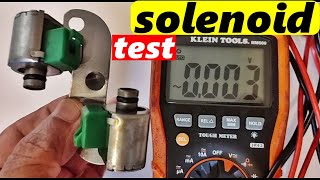
- Failed Pressure Control Solenoid 'K' (Very Common) — The solenoid fails mechanically or electrically. The internal plunger seizes from debris, or the electronic coil burns out, creating an open circuit 🎬 See how to test a solenoid using a multimeter that prevents activation.
- Contaminated Valve Body or Sticking Valves (Common) — The valve body is the hydraulic control center. Overheating warps the valve body, or debris from worn clutches clogs its narrow passages, starving the 'K' solenoid of pressure. This is a frequent failure point in modern CVTs. 🎬 Watch this Nissan CVT valve body replacement walkthrough
- Wiring Harness or Connector Issues (Common) — Wires leading from the TCM to the transmission fray, corrode, or short due to heat and vibration. A damaged connector or water intrusion blocks the electrical signal from reaching the solenoid.
- Faulty Transmission Control Module (TCM) (Less Common) — The TCM fails internally or suffers a bad driver circuit, preventing it from sending the ground signal to activate the solenoid. Multiple simultaneous solenoid codes strongly point to a failing TCM.
- Software or Firmware Glitches (Less Common) — The TCM's calibration contains a bug that misinterprets data and falsely triggers a P2829 code. Manufacturers release Technical Service Bulletins (TSBs) with software updates to correct this.
- Failing Internal Transmission Pump (Rare) — The main oil pump creates hydraulic pressure for the entire system. A failing pump cannot generate enough pressure for the solenoids to operate, triggering performance codes even if the solenoid is functional.
Symptoms

- Harsh, Delayed, or Slipping Shifts — You feel a noticeable clunk, hesitation, or a long pause when the transmission changes gears. The engine revs up, but the car fails to accelerate properly.
- Vehicle Enters 'Limp Mode' — The transmission locks into a single gear (usually 2nd or 3rd) to prevent damage. Speed is limited to 30-50 mph, with poor acceleration.
- Increased Fuel Consumption — Because the transmission cannot shift into higher gears, the engine runs at higher RPMs, burning significantly more fuel.
- Unusual Transmission Noises — You hear whining, clunking, or buzzing sounds from the transmission during gear changes, indicating hydraulic distress.
- Burning Smell from Transmission — A sharp, acrid smell indicates the fluid is overheating due to excessive clutch slippage and internal friction.
- Check Engine Light Illuminated (also visible on scanner) — The computer illuminates a warning light on the dashboard to alert you to a powertrain fault.
Diagnostic Flowchart
Tap your situation to follow the diagnostic path that matches what you're seeing on this code.
Common Fixes & Costs
- Transmission Fluid and Filter Change — Parts: $75-$200, Labor: $150-$300, ~1.5 hr book time (Intermediate)
- Replace Transmission Valve Body — Parts: $500-$1200, Labor: $400-$800, ~4 hr book time (Professional)
- Replace Pressure Control Solenoid 'K' — Parts: $100-$300, Labor: $200-$500, ~3 hr book time (Advanced)
- Repair or Replace Transmission Wiring Harness — Parts: $50-$600, Labor: $150-$400, ~2.5 hr book time (Intermediate)
- Replace or Reprogram Transmission Control Module (TCM) — Parts: $600-$1200, Labor: $150-$300, ~2 hr book time (Professional)
DIY vs Professional
- Transmission Fluid and Filter Change — Beginner: Yes
Tools: Wrench set, drain pan, funnel, torque wrench. - Replace Transmission Valve Body — Beginner: No
Tools: Full socket set, torque wrench, fluid pump, service manual. - Replace Pressure Control Solenoid 'K' — Beginner: No
Tools: Full socket set, torque wrench, fluid pump, multimeter, service manual. - Repair or Replace Transmission Wiring Harness — Beginner: No
Tools: Multimeter, wire strippers, soldering iron/crimp tools, heat shrink, wiring diagrams. - Replace or Reprogram Transmission Control Module (TCM) — Beginner: No
Tools: Basic hand tools, specialized OBD-II interface (J2534 passthru), manufacturer software subscription.
Used vs. New Parts: Buying Guide
When a used part is worth it: A used valve body makes sense only on an older vehicle (>150k miles) where repair cost is a major factor. A part from a verified low-mileage vehicle wrecked for non-drivetrain reasons is the best scenario.
Donor-vehicle mileage cap: roughly under 60000 miles for the part to have meaningful remaining life.
Donor quality checklist:
- Verify the donor vehicle's mileage and reason for salvage.
- Match the part number exactly.
- Ask about the seller's testing process.
- Favor sellers who specialize in transmissions.
Decision logic:
- If The cost of a new valve body is less than 30% of the vehicle's value. → Buy new or remanufactured. The warranty is worth the cost.
- If The vehicle has over 150,000 miles and budget is the primary concern. → A used part is viable, but accept a shorter lifespan.
- If The part is a known high-failure item (like CVTs). → Strongly favor a new or remanufactured unit with engineering updates.
Warranty tradeoff: Used parts carry a 30-90 day warranty covering only the part. New parts carry a 1-3 year warranty. If a used part fails, you pay for expensive installation twice.
Worst-case if a used part fails: $600-$1300 if a used part fails after the warranty period.
What Happens If You Wait — Timeline
- 0-2 weeks: Intermittent harsh shift or slight hesitation. Check Engine Light turns on and off. The TCM logs a P2829 code. (MPG impact: 0-3%% · Added cost: $0)
- 2 weeks - 2 months: Shifting becomes consistently harsh. The vehicle enters 'limp mode' intermittently. Slipping causes excess heat, degrading the transmission fluid. (MPG impact: 5-10%% · Added cost: $50-$150 in wasted fuel.)
- 2-6 months: The vehicle is permanently in 'limp mode'. Burnt fluid loses lubricating properties, accelerating wear on clutches. Inefficient engine operation damages the catalytic converter. (MPG impact: 10-20%% · Added cost: $1200-$2800 for catalytic converter replacement.)
- 6+ months: Catastrophic transmission failure. Debris from burnt clutch packs destroys the valve body and torque converter. The vehicle becomes undriveable. (MPG impact: 20%+% · Added cost: $3500-$7000+ for a complete transmission rebuild.)
Cost of Not Fixing It
- Short-Term (0-1 month): Continued harsh shifting and 'limp mode'. Fuel economy decreases by 5-15%. (Added cost: $50-$150 in wasted fuel.)
- Medium-Term (1-6 months): Constant slipping overheats the fluid, accelerating wear on clutch packs. Inefficient operation damages the catalytic converter. (Added cost: $1200-$2800 for catalytic converter replacement.)
- Long-Term (6+ months): Catastrophic transmission failure. Burnt clutches contaminate the entire system. (Added cost: $3500-$7000+ for a complete transmission rebuild.)
Diagnosis Steps

- Scan for Codes and Review Live Data
Use an OBD-II scanner to confirm P2829 is active. View live data from the TCM to monitor the commanded state vs. the actual state of solenoid 'K'. Look for PIDs related to 'EPC Solenoid Current' or 'Line Pressure Solenoid Duty Cycle'.
Tools: OBD-II Scanner (Advanced/Bi-Directional Recommended) (Beginner) - Check Transmission Fluid Level and Condition
Pull the transmission dipstick (if equipped). Fluid should be at the 'FULL' mark and bright red. Dark brown, burnt-smelling fluid with metal shavings indicates severe internal damage. Low or dirty fluid is the leading cause of solenoid codes.
Tools: Rag, gloves, funnel (Beginner) - Check for Technical Service Bulletins (TSBs)
Check online for TSBs related to P2829 for your specific vehicle. Manufacturers release software updates to fix false codes, saving you from unnecessary parts replacement.
Tools: Internet access, VIN (Beginner) - Perform a Solenoid Actuation Test
Using a bi-directional scan tool, command the 'K' solenoid to turn on and off. You should hear a faint clicking sound from the transmission. If there is no click, the solenoid is mechanically seized or electrically dead.
Tools: Advanced Bi-Directional Scan Tool (Advanced) - Inspect the Wiring Harness and Connectors
Visually inspect the wiring harness running to the transmission. Look for chafed wires, melting, or corrosion. Unplug the connector and check for bent pins or fluid intrusion.
Tools: Flashlight, contact cleaner (Intermediate) - Test the Solenoid's Electrical Resistance
Disconnect the solenoid connector and use a multimeter to test the coil's resistance. Compare the reading to the manufacturer's specification (typically 10-30 ohms). An 'OL' reading means the coil is open; zero ohms means it's shorted.
Tools: Multimeter, basic hand tools, service manual (Intermediate) - [PRO TIP] Perform a Solenoid Circuit Voltage Drop Test
Connect one multimeter lead to the battery's negative post. Back-probe the other lead into the solenoid's ground-side control wire at the TCM. Command the solenoid ON. A reading above 0.5 volts indicates excessive resistance in the wiring, not a bad solenoid.
Tools: Multimeter with back-probe pins, bi-directional scan tool, wiring diagram (Advanced) - [PRO TIP] Perform a Transmission Line Pressure Test
Connect a pressure gauge to the transmission's test port. Measure pressure at idle and stall speed, comparing to specs. Low pressure indicates a failing pump or clogged filter, while pressure that ignores solenoid commands points to a stuck valve.
Tools: 300-400 PSI fluid pressure gauge kit, service manual, wheel chocks (Advanced) - [PRO TIP] Analyze Solenoid Waveform with an Oscilloscope
Connect a voltage probe and low-amp clamp to the solenoid's control wire. When commanded on, you should see a sharp voltage drop and a clean current ramp. A noisy signal indicates a failing coil or poor connection.
Tools: Automotive Oscilloscope, low-amp clamp, back-probe pins (Professional)
When This Code Triggers (Freeze-Frame Conditions)
- Engine Coolant Temp: 180-200°F (82-93°C) (The fault is detected when the vehicle is fully warmed up.)
- RPM: 1500-2500 RPM (Sets during steady-state driving when the TCM commands a gear change.)
- Engine Load: 25-60% (Occurs under moderate load when the transmission upshifts.)
- Vehicle Speed: 35-55 mph (56-88 km/h) (Triggered during city or highway driving as the transmission shifts through upper gears.)
Related Codes
- P282A — Pressure Control Solenoid 'K' Stuck On. P2829 points to an open circuit or closed valve, while P282A points to a short to power or a jammed open valve.
- P0700 — Transmission Control System Malfunction. An informational code set by the ECU to illuminate the Check Engine Light when the TCM stores a fault like P2829.
- P2820 — Pressure Control Solenoid J Performance/Stuck Off. Multiple solenoid codes strongly suggest a systemic problem like a faulty TCM or contaminated fluid.
- P0971 — Shift Solenoid 'D' Control Circuit High. A purely electrical fault. Seeing this alongside P2829 points to a wiring issue affecting multiple solenoids.
Climate & Environmental Factors
- Hot Climates / Heavy Use: High temperatures accelerate fluid oxidation, reducing lubrication. Degraded fluid creates varnish on valves and solenoids, causing them to stick.
- Cold Climates: Extreme cold thickens fluid, causing delayed shifts and straining the pump. Repeated expansion and contraction makes rubber seals brittle.
- High Humidity: Moisture enters through faulty vents, contaminating fluid, promoting internal rust, and causing electrical shorts in external connectors.
How to Talk to a Mechanic About This Code
Say this: "I have a P2829 code with harsh shifting. Please start by checking the transmission fluid condition, then perform electrical tests on the solenoid 'K' circuit before recommending a valve body."
This directs the shop to follow a logical diagnostic path, preventing them from immediately quoting a full transmission rebuild.
Avoid saying:
- 'Just fix whatever's wrong'
- 'My check engine light is on, can you look at it?'
- 'The car is shifting funny'
- 'Whatever you recommend'
Questions to ask before authorizing the repair:
- What was the condition and level of the transmission fluid?
- Did you test the solenoid's resistance and command it on with a scan tool?
- If recommending a valve body, why is replacing just the solenoid not the right repair?
- Does this repair require a software update or re-learn procedure?
- What is the warranty on parts and labor?
Where to Take It: Dealer vs Independent vs Chain
- Dealer:
A strong choice if under warranty or requiring proprietary software. Otherwise, an expensive option.
Best for: Vehicles under powertrain warranty, Complex TCM software updates, Known TSBs or recalls
Downsides: Highest labor rates, Defaults to replacing expensive assemblies instead of smaller components. (Typical cost: +50% vs. baseline) - Independent Shop:
The best choice is an independent transmission specialist. They have the expertise and are cost-effective.
Best for: Out-of-warranty vehicles, Shops specializing in transmission repair
Downsides: General mechanics lack internal transmission expertise., May lack latest manufacturer software. (Typical cost: +0% vs. baseline) - Chain Shop:
Risky. Avoid general-purpose chains for anything beyond a fluid service.
Best for: Transmission fluid changes, Transmission-specific chains (e.g., AAMCO)
Downsides: General chains lack specialized tools for internal diagnosis., High pressure for upselling. (Typical cost: -10% vs. baseline)
When to Walk Away From the Repair
If the estimated repair cost exceeds 50% of the car's private-party value, seriously consider selling the car as-is.
- Car worth $8000, fix is $1500: Fix it. The repair cost is well below the 50% threshold.
- Car worth $4000, fix is $2200: Walk away. The repair cost is over 50% of the car's value.
- Car worth $2500, fix is $1500: Walk away. At 60% of the vehicle's value, this is a poor investment.
What Scan Tool You Need for This Code
Minimum: A scanner that reads manufacturer-specific transmission codes and views live transmission data PIDs.
A basic $20 reader only shows the code. It cannot read live data like solenoid command status, forcing you to guess at the repair.
Budget: BlueDriver Pro Scan Tool (~$100) — Reads and clears transmission codes. Displays some live data, but lacks bi-directional tests.
Mid-range: Foxwell NT809BT / Autel AP200 / XTOOL A30M (~$130-350) — Offers bi-directional control, allowing you to command the 'K' solenoid on and off to test its mechanical function.
Professional: Autel MaxiCOM MK808 / Innova 5610 (~$450-800) — Provides full bi-directional control, OEM-level live data, and records data streams for intermittent issues.
Rent vs buy: Auto parts stores rent basic readers insufficient for this code. Buying a mid-range scanner with bi-directional control is a worthwhile investment.
How to Clear the Code After You Fix It
- Use an OBD-II scan tool to clear the P2829 code from the TCM's memory.
- Perform a complete transmission drive cycle to allow readiness monitors to run.
- Re-scan the vehicle to ensure the code has not returned.
Drive cycle (~30 minutes): Perform a drive cycle including a cold start, idling, mixed city driving, and 10-15 minutes of steady highway driving. This allows the TCM to verify the repair.
Readiness monitors affected: Comprehensive Component Monitor, Catalyst Monitor, Evaporative System Monitor
Before emissions retest: drive at least 100 miles to fully set monitors.
Watch out for:
- Disconnecting the battery clears the code but resets all monitors to 'Not Ready', causing an automatic emissions failure.
- The code returns immediately if the mechanical or electrical fault remains.
- Failure to perform a complete drive cycle leaves readiness monitors incomplete.
Will This Fail Emissions / State Inspection?
Yes — this code typically fails an OBD-II emissions inspection.
- California: An illuminated Check Engine Light is an automatic failure. You must drive 100+ miles through a full drive cycle before re-testing.
- New York: Fails the NYVIP3 inspection if the Check Engine Light is on. Only one readiness monitor is allowed to be 'Not Ready'.
- Texas: In the 17 counties requiring emissions testing, an illuminated Check Engine Light results in automatic failure. Drive 50-100 miles to reset monitors before inspection.
Most Commonly Affected Vehicles
- Toyota Corolla, Camry, Avalon, RAV4 (2014-2018) — K313 CVT transmissions develop solenoid and valve body issues. Fluid contamination leads to valve body failure, making a full replacement the permanent fix.
- Subaru Outback, Forester, Crosstrek, Impreza (2012-2019) — TR580 and TR690 CVTs are prone to solenoid failure. Subaru issued a warranty extension for certain models.
- Nissan Sentra, Altima, Rogue, Murano (2012-2018) — Jatco CVTs suffer premature failure due to heat and fluid breakdown. Using correct NS-2 or NS-3 fluid is critical.
- Ford Focus, Fiesta (2011-2018) — The DPS6 'PowerShift' transmission sets performance codes due to faulty clutches, seals, and TCMs.
- Chevrolet Cruze, Sonic, Malibu, Equinox (2011-2016) — The 6-speed automatic (6T30/6T40/6T45) experiences individual solenoid failures leading to P2829.
- Hyundai Elantra, Sonata, Tucson (2011-2017) — 6-speed automatics suffer internal wiring harness degradation and solenoid failures.
- Kia Optima, Forte, Sorento (2011-2017) — Shares powertrain components with Hyundai, making them susceptible to identical solenoid and harness issues.
- Honda Accord, Civic, CR-V (2008-2015) — Many Honda transmissions feature externally-mounted solenoids, making diagnosis and replacement significantly easier.
Manufacturer-Specific Notes
- Subaru: On TR580/TR690 CVTs, the valve body is located on top of the transmission, requiring access from the engine bay. Subaru extended warranties on certain 2010-2018 models to 10 years/100,000 miles.
- Toyota: For the K313 CVT, this code is tied directly to a faulty valve body assembly. Replacing the entire valve body is the manufacturer-recommended fix.
- Honda: Many Honda automatics feature externally mounted solenoids, turning a difficult internal job into a simple driveway repair.
- Nissan: Jatco CVTs are extremely sensitive to overheating. Multiple class-action lawsuits extended the CVT warranty to 84 months/84,000 miles for certain models.
Real Owner Stories
2016 Toyota Corolla with K313 CVT at 110,000 miles
Owner experienced hesitation and sudden, jerky surges when accelerating. The transmission warning light illuminated.
What they tried:
- A local mechanic initially diagnosed a fault in the Transmission Control Module (TCM).
Outcome: The owner suspected the valve body and replaced the entire assembly themselves. The P2829 code cleared, resolving the shifting issues and saving an estimated $2,800.
Lesson: On modern CVTs like the Toyota K313, solenoid performance codes are symptoms of a failing valve body. Replacing the entire assembly is a more permanent fix than chasing individual solenoids.
Subaru Outback with TR580 CVT, mileage unknown
Car went into limp mode with P2829 and other solenoid codes present. The check engine light and AT oil temp light flashed.
What they tried:
- The owner cleared the codes, but they returned immediately.
- They performed a continuity check on the wiring and found no issues.
Outcome: The owner replaced the entire valve body assembly. This resolved the issue permanently. The repair was labor-intensive, requiring removal of the air intake to access the top-mounted valve body.
Lesson: When multiple solenoid codes appear simultaneously, the root cause is systemic. It points to a bad wiring harness, a faulty TCM, or a complete valve body failure.
Nissan Sentra with Jatco CVT, ~80,000 miles
Vehicle exhibited harsh shifting, delayed engagement, and entered limp mode with code P2829.
What they tried:
- A transmission shop quoted a full rebuild for over $3,500.
- A specialist recommended a fluid and filter change, noting burnt fluid.
Outcome: The fluid change failed. The specialist replaced the pressure control solenoid, but the code returned within 50 miles. Finally, replacing the entire valve body permanently fixed the problem for $1,500.
Lesson: Replacing just the solenoid is a wasted step if debris in the valve body remains. On high-failure CVTs, addressing the entire valve body is the only reliable solution.
How to Prevent This Code From Triggering
- Regular Transmission Fluid and Filter Changes (Every 30,000 to 60,000 miles) — Clean fluid lubricates properly, while a new filter removes metal shavings that clog solenoid passages.
- Use ONLY the Manufacturer-Specified Fluid (Every fluid change) — Modern transmissions require specific fluid with precise friction modifiers. Generic fluid causes chemical incompatibilities that damage seals and trigger codes.
- Install an Auxiliary Transmission Cooler (Once, especially for towing or hot climates) — Heat breaks down fluid, creating varnish that kills solenoids. An auxiliary cooler keeps temperatures stable.
- Practice Smooth Driving Habits (Daily habit) — Avoiding aggressive acceleration reduces sudden spikes in hydraulic pressure and minimizes wear on internal components.
- Address Fluid Leaks Immediately (As soon as detected) — Low fluid allows the pump to suck in air, reducing hydraulic pressure and causing overheating that destroys solenoids.
Frequently Asked Questions
I replaced the solenoid, but the P2829 code came back. What now?
If a new solenoid doesn't fix the issue, the root cause is likely a wiring fault or a clogged valve body. Perform a voltage drop test on the wiring harness to find hidden resistance. If the wiring passes, you likely need a full valve body replacement.
Does the type of transmission fluid really matter?
Yes. Modern transmissions require specific fluids with precise friction modifiers. Using generic fluid causes overheating, shifting problems, and premature solenoid failure.
Can I just clear the P2829 code and keep driving?
You can clear it, but it will return immediately once the TCM runs its self-test. Ignoring P2829 causes severe clutch wear and overheating, turning a $500 repair into a $3,500 rebuild.
Is the Pressure Control Solenoid 'K' inside or outside the transmission?
Most pressure control solenoids are mounted inside the transmission on the valve body, requiring you to drain the fluid and remove the pan. However, some manufacturers like Honda mount them externally, while Subaru places the valve body on top of the transmission.
What's the difference between a solenoid and a valve body?
The valve body is the hydraulic brain of the transmission, featuring a maze of fluid passages. Solenoids are electro-magnetic valves mounted on this body. The TCM commands the solenoids to open or close, directing fluid pressure to shift gears.
Why do multiple solenoid codes appear at once?
Multiple simultaneous solenoid codes rarely mean all solenoids failed at once. This pattern points to a shared electrical issue, like a bad ground wire, a faulty TCM, or severe fluid contamination clogging the entire valve body.
Can I replace just one solenoid or do I need the whole valve body?
It depends on the vehicle; some allow individual solenoid replacement, while many modern CVTs require a complete valve body assembly. Because debris causing one solenoid to fail likely contaminated the others, replacing the entire valve body is often the most reliable fix.
Can a P-code mean different things on different car brands?
Yes, while P2829 is a standard SAE transmission code, some manufacturer-specific scanners might display '2829' for a different system. Always use a high-quality OBD-II scanner and verify the code against your specific vehicle's service manual.
Key Takeaways
- Check your transmission fluid first; low or burnt fluid causes over 50% of P2829 codes.
- Expect the vehicle to lock into 'limp mode,' limiting your speed to 30-40 mph to prevent further internal damage.
- Driving with a P2829 code causes the transmission to slip and overheat, risking a $3,500+ complete rebuild.
- Do not blindly replace the solenoid; a $150 bi-directional scan tool test will prove if the valve is mechanically seized or electrically dead.
- Replacing the entire valve body ($900-$2,300) is often a more permanent fix than swapping a single solenoid, especially on modern CVTs.
Helpful Videos


The information in this article is provided for general reference and educational purposes only. Vehicle specifications, procedures, and part compatibility can vary by production date, trim level, and region. Always consult your vehicle's factory service manual and verify part numbers before purchasing or performing repairs. Safety-critical components such as airbags, seat belts, and braking systems should be installed by a qualified professional.
- 🎬 Helpful Videos
- What Does P2829 Mean?
- Can I Drive With P2829?
- Common Causes
- Symptoms
- Diagnostic Flowchart
- Common Fixes & Costs
- DIY vs Professional
- Used vs. New Parts: Buying Guide
- What Happens If You Wait — Timeline
- Cost of Not Fixing It
- Diagnosis Steps
- When This Code Triggers (Freeze-Frame Conditions)
- Related Codes
- Climate & Environmental Factors
- How to Talk to a Mechanic About This Code
- Where to Take It: Dealer vs Independent vs Chain
- When to Walk Away From the Repair
- What Scan Tool You Need for This Code
- How to Clear the Code After You Fix It
- Will This Fail Emissions / State Inspection?
- Most Commonly Affected Vehicles
- Manufacturer-Specific Notes
- Real Owner Stories
- 2016 Toyota Corolla with K313 CVT at 110,000 miles
- Subaru Outback with TR580 CVT, mileage unknown
- Nissan Sentra with Jatco CVT, ~80,000 miles
- How to Prevent This Code From Triggering
- Frequently Asked Questions
- I replaced the solenoid, but the P2829 code came back. What now?
- Does the type of transmission fluid really matter?
- Can I just clear the P2829 code and keep driving?
- Is the Pressure Control Solenoid 'K' inside or outside the transmission?
- What's the difference between a solenoid and a valve body?
- Why do multiple solenoid codes appear at once?
- Can I replace just one solenoid or do I need the whole valve body?
- Can a P-code mean different things on different car brands?
- Key Takeaways
- 🎟️ Get 5% Off