

OBD-II Code P2820: Pressure Control Solenoid 'J' Performance / Stuck Off
The Ultimate Expert Guide to What P2820 Means, Why It Triggers, and How to Fix It for Good
- Check for Technical Service Bulletins (TSBs) first; 2014-2017 Toyota Corollas and 2016-2017 Scion iMs often only need a $150-$300 dealer software update to fix P2820.
- Verify transmission fluid level and condition immediately, as low or burnt fluid is the leading physical cause of a stuck solenoid.
- Never replace the solenoid without testing the wiring harness first; a broken wire or corroded connector causes the exact same P2820 code.
- Stop driving the vehicle if it enters 'limp mode' or shifts harshly, as slipping clutches generate heat that destroys a $3,500 transmission in under 500 miles.
What Does P2820 Mean?

The Transmission Control Module (TCM) detected a problem with 'Pressure Control Solenoid J'. This small electronic valve manages transmission fluid pressure to engage clutches for smooth shifting. Code P2820 means the TCM commanded the solenoid to turn 'on' to build pressure, but it failed to respond and is stuck 'off'.
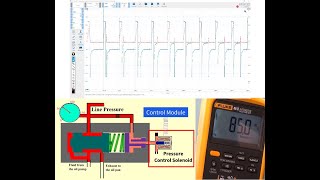
Technical definition: SAE/OBD-II defines P2820 as "Pressure Control Solenoid 'J' Performance/Stuck Off". 🎬 Watch: A complete guide to fixing the P2820 code The TCM monitors solenoid operation via feedback voltage or hydraulic pressure changes. When commanded 'ON' without the corresponding electrical or hydraulic response, the TCM sets this code.
Can I Drive With P2820?
Yes, But With Caution. Yes, but it is strongly discouraged. Driving with harsh, slipping shifts generates excessive heat, rapidly degrading transmission fluid and damaging internal clutches. Ignoring this turns a sub-$800 solenoid or software repair into a $3,000-$5,000+ transmission replacement. If the vehicle enters 'limp mode', drive directly to a repair facility.
Common Causes

- Low or dirty transmission fluid (Very Common) — Transmission fluid is the system's lifeblood. Low fluid prevents proper hydraulic pressure. Old fluid contaminated with clutch material clogs the solenoid's tiny passages, causing it to stick.
- Failed Pressure Control Solenoid 'J' (Common) — The solenoid's internal electronic coil burns out, shorts, or the mechanical plunger physically jams from debris and wear, preventing it from opening.
- Faulty TCM or outdated software (Common) — The TCM contains internal faults or outdated software that sets the code erroneously. This is the primary cause for 2014-2017 Toyota and Scion models. 🎬 See how this code affects Toyota Corolla CVT transmissions
- Wiring or connector issues (Common) — Wires leading to the solenoid fray, corrode, or short to ground. Fluid intrusion inside the connector plug blocks the electrical signal from reaching the solenoid.
- Internal valve body contamination or wear (Less Common) — The solenoid sits inside the valve body. If valve body passages clog with debris or bores wear out, fluid pressure fails to regulate even if the solenoid works perfectly.
- Internal Transmission Mechanical Failure (Rare) — A failing clutch pack or bearing generates excessive metal debris. This debris circulates, clogging the valve body and solenoids, triggering P2820 as a secondary symptom of catastrophic failure.
Symptoms

- Harsh or clunky shifting — Gear changes feel forceful and abrupt, like the car is being kicked from behind during upshifts or downshifts.
- Delayed gear engagement — Shifting from Park to Drive or Reverse causes a 1- to 2-second pause before the transmission engages.
- Transmission slipping — Engine RPMs flare up between shifts, or the car loses power momentarily as the transmission struggles to hold a gear.
- Vehicle enters 'limp mode' — The TCM protects the transmission by limiting speed and locking the vehicle in a single gear (usually 2nd or 3rd).
- Check Engine Light illuminated — The dashboard warning light activates immediately upon the TCM detecting the fault.
- Transmission overheating (also visible on scanner) — Slipping clutches generate excess heat, triggering a warning light and accelerating internal component wear.
Diagnostic Flowchart

Tap your situation to follow the diagnostic path that matches what you're seeing on this code.
Common Fixes & Costs
- Reprogram Transmission Control Module (TCM) — Parts: $0, Labor: $150-$300, ~1 hr book time (Professional)
- Transmission Fluid and Filter Change — Parts: $50-$120, Labor: $150-$250, ~1.5 hr book time (Intermediate)
- Replace Pressure Control Solenoid 'J' — Parts: $25-$150, Labor: $250-$550, ~3 hr book time (Professional)
- Replace Valve Body Assembly — Parts: $400-$1200, Labor: $400-$800, ~4.5 hr book time (Professional)
- Replace Transmission Control Module (TCM) — Parts: $500-$1500, Labor: $150-$300, ~2 hr book time (Professional)
DIY vs Professional
- Reprogram Transmission Control Module (TCM) — Beginner:
Tools: Manufacturer-specific diagnostic tool, stable power supply. - Transmission Fluid and Filter Change — Beginner:
Tools: Socket set, drain pan, fluid pump, torque wrench. - Replace Pressure Control Solenoid 'J' — Beginner:
Tools: Fluid change tools, multimeter, torque wrench, service manual. - Replace Valve Body Assembly — Beginner:
Tools: Extensive mechanic's tools, torque wrench, lift.
Used vs. New Parts: Buying Guide
When a used part is worth it: A used OEM solenoid from a low-mileage vehicle is acceptable for budget repairs. Never buy a used valve body; always choose a professionally remanufactured unit.
Donor-vehicle mileage cap: roughly under 80000 miles for the part to have meaningful remaining life.
Donor quality checklist:
- Verify the donor vehicle was not scrapped due to a collision that damaged the transmission pan.
- Match the part number exactly; solenoids are highly specific to the year and calibration.
- Ensure the seller offers at least a 30-day functional warranty.
Decision logic:
- If The required part is a single solenoid and the vehicle has over 150k miles → A new aftermarket or used OEM solenoid is a budget-conscious choice.
- If The required part is the entire valve body assembly → Buy a high-quality remanufactured unit. Used valve bodies carry a massive risk of hidden contamination.
- If The vehicle is a known problem model (e.g., Nissan CVT) → Buy the newest, highest-quality OEM part available to prevent repeat failures.
Warranty tradeoff: Used parts offer 30-90 days. New aftermarket parts offer 1 year. Remanufactured valve bodies typically offer 1-3 years of coverage.
Worst-case if a used part fails: $800
What Happens If You Wait — Timeline
- 0-1 month: Check Engine Light illuminates. Shifting becomes harsh or delayed. The vehicle occasionally slips between gears. (MPG impact: 5%% · Added cost: $0)
- 1-3 months: Slipping increases, and engine RPMs flare between shifts. The transmission enters 'limp mode' intermittently. Fluid darkens and smells burnt. (MPG impact: 10%% · Added cost: $500)
- 3-6 months: The vehicle frequently locks in limp mode or refuses to engage gears. Fluid is black. Clutch packs are severely burned. (MPG impact: 20%% · Added cost: $2500)
- 6+ months: Complete transmission failure. The vehicle will not move. All internal components are compromised by metal debris. (MPG impact: 0%% · Added cost: $4000)
Cost of Not Fixing It
- 0-1 month: Continued harsh shifting, a 5-10% drop in fuel economy, and increased stress on transmission mounts. (Added cost: $0-$100)
- 1-6 months: Slipping clutches generate extreme heat, burning the fluid and destroying internal seals and clutch packs. (Added cost: $2,500-$5,000)
- 6+ months: Catastrophic transmission failure. Burnt fluid and metal debris contaminate the entire system, requiring a full replacement. (Added cost: $3,500-$8,000)
Diagnosis Steps

- Check for Technical Service Bulletins (TSBs)
Search for TSBs related to P2820 for your specific vehicle. Manufacturers frequently release software updates to fix erroneous codes. Many Toyota and Scion models require a simple software reflash to resolve this exact issue.
Tools: Smartphone or PC (Beginner) - Check Transmission Fluid Level and Condition
Pull the transmission dipstick (if equipped). Fluid must sit at the 'Full' mark when warm and appear reddish/pink. Dark brown, black, or burnt-smelling fluid indicates severe overheating and internal clutch wear.
Tools: Shop Towel (Beginner) - Scan for Codes and Review Freeze Frame Data
Confirm P2820 is active and check for related codes (e.g., P0700, P0751). Analyze the freeze frame data to see vehicle speed, RPM, and temperature at the exact moment the fault occurred.
Tools: OBD-II Scanner (Beginner) - Visually Inspect Wiring and Connectors
Examine the transmission wiring harness for chafed, melted, or broken wires. Unplug the main transmission connector to check for corrosion, bent pins, or fluid intrusion.
Tools: Flashlight (Intermediate) - Monitor Live Data with a Scan Tool
Monitor the 'Solenoid J Commanded Duty Cycle' and 'Transmission Line Pressure' PIDs. If the TCM commands the solenoid on but line pressure fails to increase, you have a hydraulic or mechanical failure.
Tools: Advanced Scan Tool (Advanced) - Perform a Solenoid Actuator Test
Command Solenoid 'J' on and off using a bi-directional scanner while stationary. Listen for a faint 'click' from the transmission pan. No click confirms the solenoid is dead or lacks power.
Tools: Bi-Directional Scan Tool (Advanced) - Test the Solenoid Circuit Voltage
Backprobe the solenoid power wire at the transmission connector with the key on. It must read battery voltage (11-14.5V). Check the ground wire for less than 0.5 ohms of resistance. Poor readings indicate wiring faults.
Tools: Multimeter, Back-probe kit (Advanced) - Test the Solenoid Coil Resistance
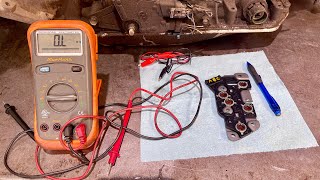
Measure the electrical resistance (Ohms) of the solenoid's internal coil and compare it to factory specs. Infinite Ohms (OL) means an open circuit, while near-zero Ohms means a short. Both require replacement.
Tools: Multimeter, Service Manual (Advanced) - [PRO TIP] Check Solenoid Waveform with an Oscilloscope
Back-probe the control wire to observe the Pulse Width Modulated (PWM) signal from the TCM. A clean square wave indicates a healthy TCM and wiring. A flat or distorted line points to a failing TCM or shorted coil.
Tools: Oscilloscope (Professional) - [PRO TIP] Perform a Transmission Line Pressure Test
Connect a mechanical pressure gauge to the transmission test port. Compare actual pressure to scan tool commands. If pressure fails to respond despite good electrical signals, the valve body is clogged or the pump is failing.
Tools: Transmission Pressure Gauge Set (Professional)
When This Code Triggers (Freeze-Frame Conditions)
- Engine Coolant Temp: 180-210°F (Faults typically occur when the vehicle is fully warmed up, as hot fluid exposes internal leaks and electrical coil shorts.)
- RPM: 1200-2500 (Occurs during light to moderate acceleration when the TCM commands a gear shift.)
- Vehicle Speed: 25-55 mph (Sets during city or highway cruising speeds when the transmission actively regulates line pressure.)
Related Codes
- P0700 — A general transmission fault code. It commands the Check Engine Light on, while P2820 is stored in the TCM to identify the specific failure.
- P0751 — Indicates Solenoid 'A' is stuck off. Seeing multiple solenoid codes simultaneously proves the issue is systemic (bad ground, clogged valve body) rather than a single failed solenoid.
- P2825 — Indicates an electrical circuit fault for Solenoid 'J'. While P2820 is a functional/mechanical failure, P2825 guarantees the problem is in the wiring, connector, or solenoid coil.
Climate & Environmental Factors
- Extreme Cold Weather: Thickens transmission fluid, causing delayed solenoid actuation and triggering performance codes until the vehicle reaches operating temperature.
- Extreme Heat / Heavy Towing: Accelerates fluid breakdown and varnish buildup. Debris clogs fine solenoid passages, and excessive heat directly melts the solenoid's electrical coil.
- High Humidity / Water Exposure: Moisture penetrates external wiring harness connectors, creating high resistance or short circuits that mimic a failed solenoid.
How to Talk to a Mechanic About This Code
Say this: "I have a Check Engine Light on and my scanner shows code P2820 for the pressure control solenoid 'J'. I'm experiencing harsh shifting. I've checked for TSBs and would like to schedule a diagnostic appointment."
This signals you are an informed customer. It focuses the mechanic on a specific system, prevents broad diagnostic upcharges, and ensures they check software updates first.
Avoid saying:
- 'My transmission is acting weird, can you fix it?'
- 'Just do whatever it takes to fix it.'
- Authorizing a teardown of the transmission just to get a quote.
Questions to ask before authorizing the repair:
- Based on your diagnosis, is the problem electrical or mechanical? What tests confirmed this?
- If replacing the solenoid, do you guarantee this fixes the issue? What are the next steps if the code returns?
- Is a software update available for my TCM, and have you checked if it applies to this code?
Where to Take It: Dealer vs Independent vs Chain
- Dealer:
The best first stop if you own an affected Toyota/Scion or if your car is under warranty.
Best for: Vehicles under warranty., Toyota/Scion models with known TSBs for P2820., Complex electronic issues requiring TCM reprogramming.
Downsides: Highest labor rates., May default to replacing the entire transmission rather than a single solenoid. (Typical cost: +50% vs. baseline) - Independent Shop:
Excellent choice for out-of-warranty repairs, provided they are a dedicated transmission specialist.
Best for: Out-of-warranty vehicles., Shops specializing in transmissions with deep diagnostic expertise.
Downsides: May lack access to the latest manufacturer software updates. (Typical cost: +0% vs. baseline) - Chain Shop:
AVOID for diagnosing P2820. They are not equipped for the electrical and mechanical diagnosis this code requires.
Best for: Simple fluid and filter changes.
Downsides: Lack specialized tools and in-depth knowledge for complex transmission diagnostics., High risk of misdiagnosis. (Typical cost: -10% vs. baseline)
When to Walk Away From the Repair
If the estimated repair cost exceeds 50% of the car's current private-party value, sell or trade in the vehicle. For cars over 150,000 miles, lower this threshold to 40%.
- Car worth $5000, fix is $3000: Walk away. The repair cost is 60% of the car's value. Put this money toward a replacement vehicle.
- Car worth $15000, fix is $700: Fix it. The repair is less than 5% of the vehicle's value and is a worthwhile investment.
- Car worth $3500, fix is $4000: Walk away. The repair cost exceeds the car's total value.
What Scan Tool You Need for This Code
Minimum: A scanner that reads transmission live data (PIDs) and performs bi-directional controls (actuator tests).
A basic $20 code reader only shows the P2820 code. It cannot command the solenoid to activate or show live line pressure. Without this, you are guessing at the cause and will replace parts unnecessarily.
Budget: BlueDriver Pro (~$100) — Reads transmission codes and graphs live data. Bi-directional capabilities are limited and may not perform the required solenoid actuator test.
Mid-range: Foxwell NT510 Elite / Autel MaxiCOM MK808S (~$180) — Offers robust bi-directional control to command the 'J' solenoid on and off. Graphs commanded vs. actual line pressure to distinguish between electrical and mechanical faults.
Professional: Autel MaxiSYS MS906BT (~$1200) — Provides OEM-level diagnostics, advanced bi-directional controls, and performs TCM software updates or relearn procedures after a repair.
Rent vs buy: Buy a mid-range scanner. Auto parts stores offer free code reading, but their tools cannot perform the necessary actuator tests required for P2820.
How to Clear the Code After You Fix It
- Use an OBD-II scan tool to clear the diagnostic trouble codes (DTCs).
- Ensure the fuel tank is between 1/4 and 3/4 full.
- Perform a complete drive cycle to run readiness monitors and self-test the repair.
Drive cycle (~30 minutes): Start cold and idle for 3 minutes. Drive in stop-and-go traffic for 15 minutes. Maintain a steady highway speed (55-60 mph) for 10 minutes. Coast to a stop and idle for 30 seconds before shutting off.
Readiness monitors affected: Comprehensive Component Monitor, Transmission Component Monitor
Before emissions retest: drive at least 100 miles to fully set monitors.
Watch out for:
- Disconnecting the battery clears the code but resets all monitors to 'Not Ready', guaranteeing an emissions failure.
- The code returns immediately if the mechanical or electrical fault remains unfixed.
- Failing to maintain a steady highway cruise prevents the transmission monitor from running.
Will This Fail Emissions / State Inspection?
Yes — this code typically fails an OBD-II emissions inspection.
- California: An active Check Engine Light is an automatic failure. A full drive cycle must be completed to set readiness monitors before re-testing.
- New York: The NYS DMV inspection includes an OBD-II scan. An illuminated MIL due to P2820 results in an automatic failure.
- Texas: In emissions-testing counties, an illuminated Check Engine Light fails the vehicle. You must drive 50-100 miles after clearing the code to reset monitors.
Most Commonly Affected Vehicles
- Toyota Corolla (2014-2017) — Subject to TSB T-SB-0289-17. The primary fix is a software update. If P2820 is already stored, Toyota's Special Service Campaign mandates a full CVT replacement.
- Scion iM (2016-2017) — Covered under TSB S-SB-0002-18 for a software issue that incorrectly triggers P2820. Requires reprogramming or CVT replacement.
- Nissan Juke, Altima, Sentra, Murano, Pathfinder (2011-2018) — Prone to widespread valve body wear. Class-action settlements extended warranties to 84,000 miles for CVT-related repairs on many models.
- Chevrolet Cruze, Malibu, Equinox (2016-2019) — The 9T50 9-speed automatic suffers from casting debris in the valve body. A blocked separator plate orifice causes a stuck-in-gear condition with this code.
- Ford Focus (2012-2018) — The DPS6 PowerShift transmission suffers rampant TCM failures. Always inspect the main battery-to-chassis ground points before replacing parts.
- Honda Accord, Civic (2014-2019) — CVT models log this code due to fluid degradation. Failed solenoids are often not serviced separately, requiring a full valve body replacement.
- Hyundai Sonata, Elantra (2011-2019) — The 6-speed A6MF transmission features a block of 8 solenoids. Failure is typically caused by internal shorts or normal wear debris.
- Subaru Outback, Forester (2010-2018) — Lineartronic CVTs develop solenoid issues if fluid service intervals are ignored. P2820 points to a failing solenoid pack or contaminated valve body.
Manufacturer-Specific Notes
- Toyota / Scion: P2820 is frequently a software glitch. A dealer reflash fixes it unless the code is already hard-set, which mandates a full CVT replacement under a special service campaign.
- General Motors: On 9T50 9-speed transmissions, P2820 accompanied by a 'stuck in 2nd gear' symptom is caused by a blocked orifice in the valve body separator plate.
- Nissan: P2820 is a symptom of widespread valve body wear. Check for extended warranty coverage (up to 84 months/84,000 miles) resulting from CVT class-action lawsuits.
- Ford: On DPS6 PowerShift transmissions, poor chassis grounds cause erratic transmission codes. Clean the main battery grounds before condemning the TCM or solenoids.
Real Owner Stories
2015 Toyota Corolla with 105k miles
The Check Engine Light illuminated with code P2820. The owner had no prior transmission service history.
What they tried:
- A forum expert recommended changing the fluid and clearing the code.
Outcome: The issue was a known software glitch covered by TSB T-SB-0289-17. Because the code was already stored, Toyota's Special Service Campaign mandated a complete CVT replacement at no charge to the owner.
Lesson: Always check TSBs first on Toyota/Scion vehicles. A catastrophic-sounding code might result in a free transmission replacement.
2013 Nissan Juke with 112k miles
The vehicle randomly stalled on the expressway, locking the shifter. Transmission codes appeared after a second stalling incident.
What they tried:
- The mechanic cleared the codes and asked the owner to drive until the light reappeared to narrow down the intermittent issue.
Outcome: The vehicle stalled again in traffic. The root cause was an intermittent electrical short in the solenoid coil that only failed when the transmission fluid reached maximum operating temperature.
Lesson: Clearing codes and 'waiting for it to happen again' is dangerous. Test solenoid resistance when the transmission is hot to catch intermittent electrical failures.
How to Prevent This Code From Triggering
- Change transmission fluid and filter regularly (Every 30,000 to 60,000 miles) — Clean fluid prevents clutch debris from clogging the fine passages inside the solenoids and maintains proper hydraulic pressure.
- Use only manufacturer-specified transmission fluid (Every fluid change) — Incorrect fluid alters viscosity and friction characteristics, degrading internal seals and causing solenoids to stick.
- Install an auxiliary transmission cooler (Once, if towing or living in a hot climate) — External coolers keep fluid temperatures stable, protecting the solenoid's sensitive electronics from heat damage.
- Check for TCM software updates (Annually at a dealership) — Manufacturers release updates to correct logic errors that falsely trigger solenoid codes or cause unnecessary wear.
Frequently Asked Questions
Can I just clear the P2820 code and keep driving?
You can clear the code, but it returns immediately when the TCM runs its diagnostic test. Ignoring it causes permanent, expensive damage to internal clutches. Fix the root cause to avoid a full transmission rebuild.
How much does it cost to fix code P2820?
Costs range from $150-$300 for a software reflash to $200-$370 for a fluid change. Replacing the solenoid costs $275-$700, while a full valve body replacement runs $800-$2,000. If the TCM failed, expect a $650-$1,800 bill.
Is a P2820 fix covered by my powertrain warranty?
Yes, the transmission and internal components are core powertrain parts covered under manufacturer warranties. Toyota issued a Special Service Campaign for this specific code on 2014-2017 Corollas. Nissan also extended warranties on many CVT models due to legal settlements.
What are common misdiagnosis mistakes for P2820?
The biggest mistake is replacing hard parts before checking for software updates, especially on Toyota and Scion models. Another error is replacing the solenoid without testing the wiring harness for shorts or open circuits. Always verify electrical integrity before dropping the transmission pan.
Will changing the transmission fluid fix a P2820 code?
A fluid change only fixes P2820 if the root cause is minor contamination or slightly low fluid. If the solenoid failed electrically or is mechanically seized, new fluid will not help. It is a good first step for dirty fluid, but rarely a guaranteed solution.
How do I know if it's the solenoid or the TCM?
A technician uses a bi-directional scan tool to command the solenoid 'on'. If it clicks and wiring tests pass, the solenoid works and the TCM is likely faulty. An oscilloscope provides definitive proof by showing if the TCM sends a clean signal to the transmission.
Can I replace a transmission solenoid myself?
Replacing a transmission solenoid is an advanced DIY job requiring fluid drainage, pan removal, and precise valve body work. You risk introducing dirt or incorrectly installing sensitive components. Stop DIY and go to a shop if you lack a torque wrench, service manual, or a clean workspace.
What happens if I don't fix a P2820 code?
Driving with a stuck solenoid causes constant harsh shifting, extreme heat, and burnt clutch packs. This rapidly degrades the transmission fluid and cooks internal rubber seals. A sub-$800 repair quickly cascades into a $3,500+ complete transmission replacement.
Key Takeaways
- Check for Technical Service Bulletins (TSBs) first; 2014-2017 Toyota Corollas and 2016-2017 Scion iMs often only need a $150-$300 dealer software update to fix P2820.
- Verify transmission fluid level and condition immediately, as low or burnt fluid is the leading physical cause of a stuck solenoid.
- Never replace the solenoid without testing the wiring harness first; a broken wire or corroded connector causes the exact same P2820 code.
- Stop driving the vehicle if it enters 'limp mode' or shifts harshly, as slipping clutches generate heat that destroys a $3,500 transmission in under 500 miles.
Helpful Videos

The information in this article is provided for general reference and educational purposes only. Vehicle specifications, procedures, and part compatibility can vary by production date, trim level, and region. Always consult your vehicle's factory service manual and verify part numbers before purchasing or performing repairs. Safety-critical components such as airbags, seat belts, and braking systems should be installed by a qualified professional.
- 🎬 Helpful Videos
- What Does P2820 Mean?
- Can I Drive With P2820?
- Common Causes
- Symptoms
- Diagnostic Flowchart
- Common Fixes & Costs
- DIY vs Professional
- Used vs. New Parts: Buying Guide
- What Happens If You Wait — Timeline
- Cost of Not Fixing It
- Diagnosis Steps
- When This Code Triggers (Freeze-Frame Conditions)
- Related Codes
- Climate & Environmental Factors
- How to Talk to a Mechanic About This Code
- Where to Take It: Dealer vs Independent vs Chain
- When to Walk Away From the Repair
- What Scan Tool You Need for This Code
- How to Clear the Code After You Fix It
- Will This Fail Emissions / State Inspection?
- Most Commonly Affected Vehicles
- Manufacturer-Specific Notes
- Real Owner Stories
- 2015 Toyota Corolla with 105k miles
- 2013 Nissan Juke with 112k miles
- How to Prevent This Code From Triggering
- Frequently Asked Questions
- Can I just clear the P2820 code and keep driving?
- How much does it cost to fix code P2820?
- Is a P2820 fix covered by my powertrain warranty?
- What are common misdiagnosis mistakes for P2820?
- Will changing the transmission fluid fix a P2820 code?
- How do I know if it's the solenoid or the TCM?
- Can I replace a transmission solenoid myself?
- What happens if I don't fix a P2820 code?
- Key Takeaways
- 🎟️ Get 5% Off