

P2817 on 2016-2018 Honda Civic: Causes and Fixes for Pressure Control Solenoid 'H' Fault
On a 2016-2018 Honda Civic, code P2817 is most often caused by a software glitch in the Transmission Control Module (TCM). A software update from a Honda dealer, as outlined in TSB A19-047, is the most common fix. This is typically a one-hour labor charge, with owner-reported costs ranging from $100 to $250.
- For a 2016-2018 Civic, P2817 is most likely a software problem, not a failed part.
- The first step should always be to check with a Honda dealer about TSB A19-047 before attempting any repairs.
- The same issue affects 2017-2018 CR-Vs and 2018-2019 Accords with CVTs.
- Expect to pay between $100-$250 for the software update if the vehicle is out of warranty.
What's Unique About the 2016-2018 Honda CIVIC
For the 10th generation Honda Civic, this code is very frequently a software issue rather than a mechanical failure. Honda acknowledged this by issuing Technical Service Bulletin (TSB) A19-047, which points to the TCM misinterpreting sensor data. Unlike many other vehicles where this code would immediately point to a bad solenoid or wiring, the first step for this specific Civic is to check if the software update has been performed. This same software issue and TSB also apply to the 2017-2018 CR-V and 2018-2019 Accord models with a CVT. The TSB specifically applies to Civic models with the 1.5L engine and a CVT.
Diagnostic Flowchart
Tap your situation to follow the diagnostic path that matches what you're seeing on this vehicle.
Symptoms You May Notice
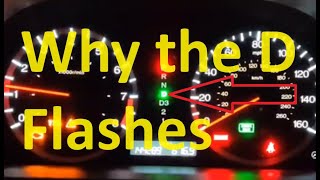
- Flashing 'D' (Drive) indicator light on the dashboard 🎬 Watch: Why the D light flashes and how to fix it
- Check Engine Light is on
- Transmission may not shift properly or may feel like it's slipping
- Vehicle may enter 'limp mode' with reduced engine power
- Jerky or harsh shifting/acceleration
- Engine revs high without a corresponding increase in speed
- Replacing the pressure control solenoid without first checking for the required software update. This is the most common mistake and leads to unnecessary expense, as TSB A19-047 is the primary fix for this specific vehicle.
Most Likely Causes
- Transmission Control Module (TCM) Software Error 🔴 High Probability Honda issued TSB A19-047 specifically for this issue, where the TCM misreads drive pulley oil pressure as high when it is actually within specification.
How to confirm: A Honda dealer or a qualified shop with Honda's i-HDS software (Version 1.004.064 or later) can check the current software version and see if the update from TSB A19-047 is applicable and has been performed.
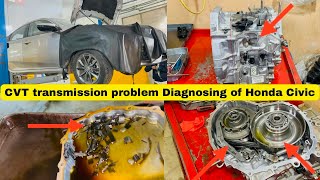
Typical fix: Update the TCM and PGM-FI (engine control) software using the J2534 Rewrite PC application. 🎬 See a technician diagnose CVT issues on a 2017 Civic This is typically a 0.4-hour labor operation according to the TSB.
Est. part cost: $0 - Low or Dirty CVT Fluid 🟡 Medium Probability CVT transmissions are sensitive to fluid level and condition. Dirty or degraded fluid can clog the small passages and screens in the solenoids, causing them to stick or perform poorly.
How to confirm: Check the transmission fluid level and condition. The fluid should be at the correct level and be a translucent red, not dark brown, black, or milky.
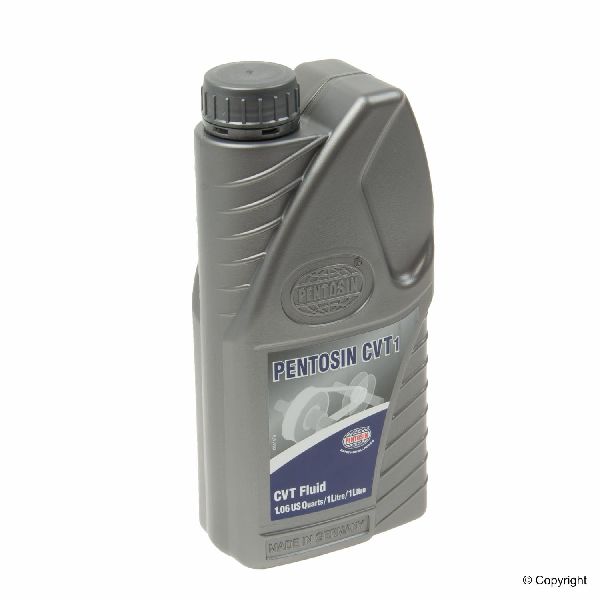
Typical fix: Perform a CVT fluid drain and fill using only genuine Honda HCF-2 fluid. A full fluid exchange may be necessary if the fluid is very contaminated.
Est. part cost: $50-$150 - Faulty Pressure Control Solenoid 'H' ⚪ Low Probability While less common than the software issue on this platform, the solenoid can fail electrically (open/short circuit) or mechanically (stuck). This should only be considered after the software and fluid have been addressed.
How to confirm: After ruling out software and fluid issues, a technician can test the solenoid's resistance with a multimeter to see if it's within the manufacturer's specifications (typically 10-30 Ω). They can also perform an active test with a scan tool like the Honda HDS to command the solenoid on and off.
Typical fix: Replace the faulty pressure control solenoid. This requires removing the valve body cover for access.
Est. part cost: $100-$300
Rare But Worth Checking
- Wiring Harness or Connector Issue: Damage to the wiring leading to the transmission or corrosion in the main connector can interrupt the signal to the solenoid. This is worth checking before replacing internal parts.
- Faulty Transmission Control Module (TCM): In very rare cases, if a software update doesn't work and the solenoid/wiring are good, the TCM itself may have a hardware failure.
- Internal Transmission Mechanical Failure: A clogged transmission filter or a failing transmission pump could also lead to pressure-related codes, but these are much less common than the software glitch.
Diagnosis Steps
- Connect an OBD-II scanner to confirm P2817 is the primary code present.
- Contact a Honda dealer with your VIN to determine if TSB A19-047 is open for your vehicle. This is the most critical step.
- If the TSB applies, have the PGM-FI and TCM software updated by a dealer or qualified shop with Honda i-HDS software. This resolves the majority of cases.
- If the TSB does not apply or has already been performed and the code persists, inspect the CVT fluid level and condition. The fluid should be clean, at the proper level, and not smell burnt.
- If fluid is low or dirty, perform a drain and fill with genuine Honda HCF-2 transmission fluid and clear the code.
- If the code returns, inspect the transmission's main electrical connector and wiring harness for any signs of damage, corrosion, or loose pins.
- If wiring is intact, the next step is to test the Pressure Control Solenoid 'H' itself. This involves checking its internal resistance with a multimeter against factory specifications. A typical reading is between 10-30 Ω.
- If the solenoid fails the resistance test, it must be replaced. This requires removing the lower valve body for access. 🎬 Watch: How to address a stuck shift solenoid valve
- If the solenoid and wiring test good, the issue may be a rare internal failure of the Transmission Control Module (TCM) or another internal transmission component, like the fluid pump.
Parts You'll Likely Need
- TCM Software Update
(OEM #N/A (Labor Operation 1255F7))— This is the most common fix, as specified by Honda's TSB A19-047, to correct a logic error in the transmission control module.
Trusted brands: Honda
OEM price range: $100-$250 (Labor)
Aftermarket price range: N/A - Honda HCF-2 CVT Fluid
(OEM #08200-HCF2)— Low or dirty fluid is a common cause of solenoid performance issues. Only HCF-2 fluid should be used in this transmission.
Trusted brands: Honda Genuine
OEM price range: $15-$25 per quart
Aftermarket price range: N/A - Pressure Control Solenoid 'H' — If the software and fluid are good, the solenoid itself may have failed electrically or mechanically. Often part of the valve body assembly.
Trusted brands: Honda Genuine, Hitachi, Aisin
OEM price range: $150-$300
Aftermarket price range: $80-$180
Technical Service Bulletins (TSBs) & Recalls
- A19-047 (Version 2, July 18, 2019): Service Bulletin for the flashing 'D' light and DTC P2817, which advises a software update for the PGM-FI and TCM. It applies to 2016-18 Civic (1.5L CVT), 2017-18 CR-V, and 2018-19 Accord (CVT).
Platform-Specific Known Issues
- A known software issue covered by Honda TSB A19-047 causes the TCM to incorrectly flag P2817. The bulletin states the TCM misreads the drive pulley oil pressure as high when it is actually within specification.
- Owner experiences on forums like Reddit confirm that dealers charge between $200-$250 for this out-of-warranty software update, which typically resolves the issue.
Mechanic-Grade Diagnostic Values
- Pressure Control Solenoid 'H' Coil Resistance — expected: 10 - 30 Ω (Ohms). Failure: An open circuit (>1 kΩ) or a short circuit (<5 Ω) indicates a faulty solenoid.
- Solenoid 'H' PWM Duty Cycle (Live Data) — expected: Varies with load and driving conditions.. Failure: A steady '0%' value while the vehicle is under load suggests the TCM is not commanding the solenoid, pointing to a wiring or TCM issue.
Scan Tool Commands That Help
- Honda Diagnostic System (HDS): Shift Solenoid Valve Output Test — After confirming the software is up to date, this test in the 'Miscellaneous Test Menu' can be used to command the solenoid on and off to verify its mechanical and electrical operation without removing it from the transmission. If the solenoid operates correctly during the test, the issue may lie with the transmission fluid pump.
- Honda Diagnostic System (HDS) or equivalent J2534 device: Clear EEPROM / Relearn Procedure — This is required after replacing the valve body assembly to initialize the new components with the Transmission Control Module (TCM).
Wiring & Ground Locations
- Valve Body Assembly — Internal to the CVT, accessible after removing the transmission pan/cover. The solenoids are mounted on this assembly.. This is the physical location of the Pressure Control Solenoid 'H'. Access is required for testing resistance directly at the solenoid or for replacement.
- Transmission Ground — A primary ground strap typically runs from the transmission housing to the chassis or engine block.. A poor transmission ground can cause a variety of electrical issues for all transmission sensors and solenoids, leading to erratic behavior and fault codes. Ensuring this connection is clean and tight is a crucial step in diagnosing any electronic transmission fault.
OEM Part Supersession History
27000-5X9-004→27000-5X9-014— Part revision or update by the manufacturer.
Heads up: These part numbers refer to the entire valve body assembly with solenoids for the 1.5L Turbo CVT. Other part numbers like 27000-5LJ-014, 27000-5LJ-024, and 27000-5LJ-034 are also associated with this assembly. Always confirm the correct part number with the vehicle's VIN.
Model Year Variations Within This Range
- 2016-2018: The TSB A19-047 specifically applies to the Civic models equipped with the 1.5L engine and a CVT. It does not apply to models with the 2.0L engine.
Helpful Videos

Used OEM Parts in Stock


New Aftermarket Parts Available

The information in this article is provided for general reference and educational purposes only. Vehicle specifications, procedures, and part compatibility can vary by production date, trim level, and region. Always consult your vehicle's factory service manual and verify part numbers before purchasing or performing repairs. Safety-critical components such as airbags, seat belts, and braking systems should be installed by a qualified professional.
- Honda CIVIC:
- 🎬 Helpful Videos
- 🛍️ Shop This Part
- What's Unique About the 2016-2018 Honda CIVIC
- Diagnostic Flowchart
- Symptoms You May Notice
- Most Likely Causes
- Rare But Worth Checking
- Diagnosis Steps
- Parts You'll Likely Need
- Technical Service Bulletins (TSBs) & Recalls
- Platform-Specific Known Issues
- Mechanic-Grade Diagnostic Values
- Scan Tool Commands That Help
- Wiring & Ground Locations
- OEM Part Supersession History
- Model Year Variations Within This Range
- 🎟️ Get 5% Off