

OBD-II Code P2817: Pressure Control Solenoid 'H' Performance/Stuck Off
The Ultimate 2026 Guide: What P2817 means, why it triggers, and how to fix it for good.
- Code P2817 indicates Pressure Control Solenoid 'H' is stuck off, causing the transmission to slip, shift harshly, or lock into a single gear.
- On 2016-2019 Honda Civic, CR-V, and Accord models, a known software glitch triggers this code falsely; a $150-$250 dealer software update (TSB A19-047) is the definitive fix.
- Low, burnt, or incorrect transmission fluid causes 40% of physical solenoid failures, making a $150 fluid and filter change the best first diagnostic step.
- Stop driving immediately; operating with low hydraulic pressure burns clutch packs within 50 miles, escalating a $200 solenoid repair into a $3,500 transmission rebuild.
What Does P2817 Mean?

Code P2817 indicates the Transmission Control Module (TCM) detects that 'Pressure Control Solenoid H' is failing to operate. This electronically controlled valve directs transmission fluid to manage hydraulic pressure for gear changes. The 'Stuck Off' status means the solenoid fails to activate when commanded, preventing the hydraulic pressure required to engage gears and causing immediate shift failures.
Technical definition: Pressure Control Solenoid 'H' Performance/Stuck Off. The TCM sets this code when it commands a specific gear but detects via speed sensors that the transmission failed to achieve the correct gear ratio. This mismatch confirms a hydraulic or mechanical failure in the circuit controlled by solenoid 'H'.
Can I Drive With P2817?
No — Do Not Drive. Do not drive. The transmission shifts harshly, gets stuck in gear, or enters a low-power 'limp mode'. Continuing to drive with incorrect hydraulic pressure causes clutch packs to slip and burn, generating extreme heat that warps internal components. This quickly escalates a $200 solenoid issue into a $3,500 transmission rebuild.
Common Causes


- TCM Software Error (Honda Specific) (Very Common) — On 2016-2019 Honda models with CVT transmissions, a known TCM software glitch incorrectly interprets normal operating pressures as a fault, falsely triggering P2817. A dealership software update (TSB A19-047) is the only fix. 🎬 Watch: Diagnosing P2817 on 2016-2021 Honda Civics
- Low, Contaminated, or Incorrect Transmission Fluid (Very Common) — Low fluid prevents the creation of necessary hydraulic pressure. Old, contaminated fluid contains clutch debris that clogs the tiny screens within the solenoid, causing it to stick physically. Using non-OEM fluid alters friction properties and triggers performance codes.
- Failed Pressure Control Solenoid 'H' (Common) — The solenoid fails electrically when its internal coil winding burns out (open circuit) or shorts. It fails mechanically if the internal plunger seizes due to wear or debris.
- Damaged Wiring or Corroded Connectors (Less Common) — Engine heat, vibration, or rodents damage the transmission wiring harness. Connectors accumulate moisture and corrode, severing the electrical signal between the TCM and the solenoid.
- Electrical System Failures (Battery, Alternator, Grounds) (Less Common) — Modern transmissions require precise voltage. A weak battery, failing alternator, or a corroded transmission-to-chassis ground strap causes erratic voltage drops, forcing the TCM to set false solenoid codes.
- Internal Transmission Mechanical Failure (Rare) — A failing transmission oil pump, clogged internal hydraulic passages, or a defective valve body causes a systemic loss of pressure, triggering P2817 even if the solenoid itself functions perfectly.
Symptoms

- Harsh, Delayed, or Failed Shifts — The vehicle slams into gear, hesitates significantly before shifting, or refuses to shift into a specific gear altogether.
- Vehicle Enters 'Limp Mode' — Engine power is severely reduced, and the transmission locks into a single gear (often 2nd or 3rd) to prevent catastrophic internal damage.
- Transmission Slipping (also visible on scanner) — Engine RPMs flare up without a corresponding increase in vehicle speed during acceleration, indicating the gear is not fully engaged.
- Check Engine Light / Flashing 'D' Indicator (also visible on scanner) — The TCM illuminates the Check Engine Light. On many affected vehicles, particularly Hondas and Subarus, the 'D' (Drive) or AT Temp indicator flashes continuously.
- Transmission Overheating & Whining Noises (also visible on scanner) — Slipping clutches generate excessive friction and heat, triggering a burning smell. A struggling hydraulic pump produces a distinct whining sound from the transmission pan area.
Diagnostic Flowchart
Tap your situation to follow the diagnostic path that matches what you're seeing on this code.
Common Fixes & Costs
- TCM Software Update — Parts: $0, Labor: $150-$250, ~1.0 hr book time (Professional)
- Transmission Fluid and Filter Change — Parts: $60-$120, Labor: $100-$200, ~1.5 hr book time (DIY)
- Replace Pressure Control Solenoid 'H' — Parts: $40-$250, Labor: $200-$500, ~3.0 hr book time (Intermediate)
- Repair Damaged Wiring or Connectors — Parts: $15-$50, Labor: $80-$250, ~1.5 hr book time (Intermediate)
- Replace Valve Body Assembly — Parts: $600-$1500, Labor: $300-$600, ~4.0 hr book time (Professional)
DIY vs Professional
- TCM Software Update — Beginner:
- Transmission Fluid and Filter Change — Beginner:
- Replace Pressure Control Solenoid 'H' — Beginner:
- Repair Damaged Wiring or Connectors — Beginner:
- Replace Valve Body Assembly — Beginner:
Used vs. New Parts: Buying Guide
When a used part is worth it: For major components like a complete valve body or TEHCM, a used part from a low-mileage donor vehicle offers significant savings. Never buy individual used solenoids.
Donor-vehicle mileage cap: roughly under 60000 miles for the part to have meaningful remaining life.
Donor quality checklist:
- Verify the donor vehicle's VIN to confirm it wasn't scrapped for a transmission issue.
- Match part numbers exactly; electronic components are VIN-specific.
- Require a minimum 90-day warranty from the seller.
Decision logic:
- If The fix is a known software update (e.g., Honda TSB) → Go to the dealer; parts are irrelevant.
- If The part is an individual solenoid and labor is high → Buy a new OEM part to avoid paying labor twice if a used part fails.
- If Vehicle has >150k miles and requires a $1,500 valve body → Purchase a used valve body to keep repair costs below the vehicle's total value.
Warranty tradeoff: Used parts carry a 30-90 day part-only warranty, meaning you pay labor again if it fails. New OEM parts offer 1-2 year warranties covering parts and labor.
Worst-case if a used part fails: 800-1500. If a used valve body fails, you pay the significant labor costs a second time.
What Happens If You Wait — Timeline
- 0-2 weeks: Check Engine Light illuminates. Occasional hesitation or a slightly harsh shift occurs as the solenoid sticks intermittently. (MPG impact: 0-5%% · Added cost: $0)
- 2 weeks - 3 months: Shifting is noticeably delayed. The transmission slips, causing engine RPMs to flare. Fluid becomes contaminated with initial clutch material. (MPG impact: 5-10%% · Added cost: $50-$150 in wasted fuel)
- 3-6 months: Vehicle enters 'limp mode' randomly. Severe slipping burns the clutch packs, turning the fluid black and warping internal steel plates. (MPG impact: 10-20%% · Added cost: $1,500-$2,500 (Rebuild required))
- 6+ months: Catastrophic failure. The transmission refuses to engage gears. Abrasive debris destroys the valve body, oil pump, and torque converter. (MPG impact: N/A (Vehicle is undrivable)% · Added cost: $3,000-$5,000+ (Full replacement required))
Cost of Not Fixing It
- 0-1 Month: Noticeable decrease in fuel economy, harsh shifting, and random activation of 'limp mode'. The vehicle is unsafe in traffic. (Added cost: 50-150)
- 1-6 Months: Driving with low hydraulic pressure causes clutch packs to slip and burn. This contaminates the fluid with abrasive clutch material, accelerating wear on all internal components. (Added cost: 1500-3500)
- 6+ Months: Catastrophic transmission failure. Metal debris destroys the oil pump and torque converter, requiring a complete transmission replacement. (Added cost: 3000-5000+)
Diagnosis Steps

- Read DTCs and Freeze Frame Data
Scan the vehicle to confirm P2817 is active. Review freeze frame data to see the exact engine temperature, RPM, and vehicle speed when the fault occurred.
Tools: OBD-II Scanner (Beginner) - Check for Technical Service Bulletins (TSBs)
Search manufacturer TSBs using your VIN. For 2016-2019 Hondas, verify if TSB A19-047 (TCM Software Update) applies before touching any hardware.
Tools: Smartphone/PC, ALLDATA or NHTSA website (Beginner) - Inspect Transmission Fluid Level and Condition
Check the fluid level per the owner's manual. Fluid must be bright red (or OEM specified color) and free of burnt odors. Low or black fluid requires immediate attention.
Tools: Rag, Owner's Manual (Beginner) - Verify Battery Voltage and Grounds
Test the battery resting voltage (must be >12.4V) and charging voltage (13.7V-14.7V). Locate the main transmission ground strap and ensure it is tight and free of corrosion.
Tools: Digital Multimeter, Wire Brush (Beginner) - Inspect Wiring and Connectors
Visually inspect the transmission wiring harness for melting or chafing. Disconnect the main transmission connector and check for green corrosion or bent pins.
Tools: Flashlight (Intermediate) - Test Solenoid Resistance
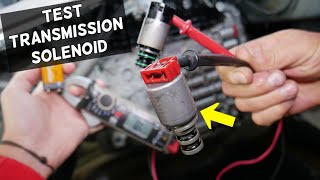
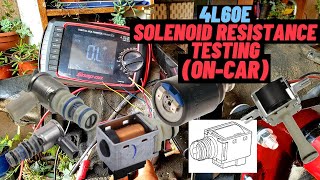
Disconnect the solenoid harness and measure resistance across the two pins for solenoid 'H'. Compare to OEM specs (typically 3-15 Ohms). An infinite reading confirms a dead solenoid.
Tools: Digital Multimeter, Service Manual (Intermediate) - Perform a Solenoid Active Test
Use a bidirectional scan tool to command solenoid 'H' on and off. Listen for a distinct 'click' from the transmission pan. No click confirms a failed solenoid or severed wiring.
Tools: Bidirectional Scan Tool (Advanced) - Analyze Solenoid PWM Signal
Connect an oscilloscope to the solenoid's control wire. Command the solenoid on; a clean square wave confirms the TCM is functioning. A flat line indicates a dead TCM driver.
Tools: Oscilloscope, Backprobe Pins (Professional) - Measure Transmission Line Pressure
Connect a fluid pressure gauge to the transmission test port. Compare idle and wide-open throttle pressures against OEM specs. Low pressure across the board indicates a failing pump, not a bad solenoid.
Tools: Transmission Pressure Gauge Kit (Professional)
When This Code Triggers (Freeze-Frame Conditions)
- Engine Coolant Temp: 175-210°F (The fault usually occurs when the engine is fully warmed up.)
- Engine RPM: 1500-3000 RPM (Triggers during light to moderate acceleration when a gear change is commanded.)
- Vehicle Speed: 25-55 MPH (Often triggers during an upshift at city or highway cruising speeds.)
- Transmission Fluid Temperature: 150-200°F (Code sets when the transmission fluid reaches normal operating viscosity.)
Related Codes
- P2816 — The opposite code: 'Pressure Control Solenoid H Stuck On'. P2817 causes slipping, while P2816 causes a harsh, locked-in gear condition.
- P0700 — A generic informational code set by the ECM indicating the TCM has stored a specific fault. Always diagnose the accompanying P2817 first.
- P0746, P0776, P0796 — Performance codes for other solenoids (A, B, C). Multiple solenoid codes indicate a systemic failure like low fluid or a dying pump, not multiple broken solenoids.
- P0969, P0970, P0971 — Circuit codes for solenoid 'H'. A circuit code points to a purely electrical fault (broken wire), whereas P2817 points to a mechanical or hydraulic failure.
Climate & Environmental Factors
- Cold Weather: Freezing temperatures thicken transmission fluid significantly. This causes a temporary drop in hydraulic pressure, leading to delayed engagement that mimics a failing solenoid and triggers P2817 until the vehicle warms up.
- Hot Weather / Heavy Towing: High ambient temperatures and heavy loads overheat transmission fluid. Overheated fluid loses its hydraulic properties, causing clutch slippage and setting performance codes. CVTs are particularly susceptible to heat breakdown.
How to Talk to a Mechanic About This Code
Say this: "I have a P2817 code on my [Year, Make, Model]. Please start by checking the transmission fluid level and condition, and verify if there are any open Technical Service Bulletins or software updates for my VIN before recommending hardware replacements."
This proves you understand the cheapest causes (fluid, software) and prevents the shop from immediately quoting a $2,000 valve body. For Hondas, it forces them to check the known TSB fix.
Avoid saying:
- 'My transmission is acting weird, can you fix it?'
- 'Just replace the solenoid the code is for.'
- 'Do whatever you think is best.'
Questions to ask before authorizing the repair:
- What was the exact condition and level of the transmission fluid?
- Did you check for software updates for my specific VIN?
- If recommending a solenoid, what were the exact electrical resistance readings?
- If recommending a valve body, what evidence proves the problem isn't just a single solenoid?
- What is the warranty on parts and labor?
Where to Take It: Dealer vs Independent vs Chain
- Dealer:
Mandatory for affected Honda/Acura models to get the software update. For other makes out of warranty, avoid.
Best for: Honda/Acura vehicles (2016-2020) requiring the TSB software update., Vehicles under powertrain warranty.
Downsides: Highest labor rates ($150-$250/hr)., Refuse to repair individual solenoids, defaulting to expensive full-assembly replacements. (Typical cost: +50% vs. baseline) - Independent Shop:
The best choice for non-Honda repairs. Always seek a dedicated transmission specialist over a general mechanic.
Best for: Out-of-warranty vehicles requiring physical repairs., Transmission specialists willing to replace individual solenoids instead of full valve bodies.
Downsides: May lack the manufacturer-specific software tools required to reflash a TCM. (Typical cost: +0% vs. baseline) - Chain Shop:
AVOID for diagnosing P2817. The risk of an expensive misdiagnosis is too high.
Best for: A simple transmission fluid and filter change.
Downsides: High pressure to upsell unnecessary transmission rebuilds., Technicians lack experience with complex internal valve body diagnostics. (Typical cost: -10% vs. baseline)
When to Walk Away From the Repair
If the estimated repair cost exceeds 50% of the car's private-party value, sell the car as-is or trade it in.
- Car worth $8000, fix is $250: Fix it. A software update or fluid change is a cheap, definitive repair.
- Car worth $5000, fix is $1800: Borderline. Get a second opinion before authorizing a valve body replacement.
- Car worth $3000, fix is $3500: Walk away. The cost of a transmission rebuild exceeds the vehicle's value.
What Scan Tool You Need for This Code
Minimum: A scanner that reads manufacturer-specific transmission codes and views live data (Transmission Fluid Temperature). Basic $20 code readers are insufficient.
Cheap scanners cannot perform the bidirectional active tests needed to command the solenoid, nor can they perform the 'relearn' procedure required after repairs.
Budget: Ancel BD310 / BlueDriver Pro (~$80) — Reads transmission codes and displays live fluid temp data. Good for initial diagnosis but lacks bidirectional control.
Mid-range: XTOOL D7S / Launch CRP919E BT (~$350) — Offers full bidirectional control to actively test the solenoids and performs transmission relearn procedures after a repair.
Professional: Autel MaxiCOM MK808S (~$450) — Provides advanced graphing of live data and access to guided diagnostic functions. Excellent for ruling out a bad TCM driver.
How to Clear the Code After You Fix It
- Use an OBD-II scan tool to clear all diagnostic trouble codes (DTCs).
- Perform a transmission-specific relearn procedure using a bidirectional scanner if required by the manufacturer.
- Conduct a full drive cycle to allow readiness monitors to run.
Drive cycle (~30 minutes): Start with a cold engine. Idle for 3 minutes. Drive in stop-and-go traffic for 15 minutes, ensuring all gears engage. Drive at a steady highway speed (55-65 mph) for 15 minutes. Allow the vehicle to cool down completely.
Readiness monitors affected: Comprehensive Component Monitor (CCM), Transmission Component Monitor
Before emissions retest: drive at least 50 miles to fully set monitors.
Watch out for:
- Clearing the code without fixing the mechanical issue guarantees the code returns on the next drive.
- Do not disconnect the battery to clear codes; this erases adaptive memory and readiness monitors without fixing the fault.
- Skipping the transmission relearn procedure after replacing a solenoid causes continued harsh shifting.
Will This Fail Emissions / State Inspection?
Yes — this code typically fails an OBD-II emissions inspection.
- California: An active Check Engine Light is an automatic failure. A complete drive cycle must be performed to set all readiness monitors before a retest.
- New York: The NYS inspection includes an OBD-II scan. A P2817 code results in an automatic failure.
- Texas: In emissions-testing counties, an illuminated Check Engine Light is an automatic failure. Clearing the code right before the test fails the vehicle for 'Not Ready' monitors.
Most Commonly Affected Vehicles
- Honda Civic (2016-2018) — Extremely common due to a TCM software glitch. Honda TSB A19-047 updates the software, which incorrectly flags high pressure. This is the primary fix.
- Honda CR-V (2017-2018) — Shares the same CVT and faulty TCM logic as the Civic. Covered by TSB A19-047.
- Honda Accord (2018-2019) — Affected by the CVT software issue causing false P2817 codes, addressed by the dealer software update.
- Acura ILX (2016-2020) — Platform-mate to the Honda Civic; experiences the identical software-related P2817 code.
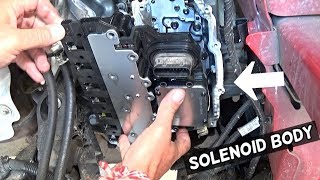
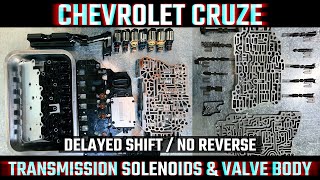
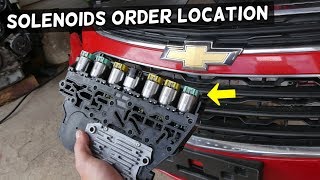
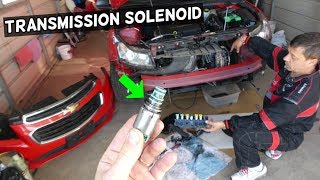
- Chevrolet Cruze, Sonic, Malibu, Equinox (2012-2019) — Models with 6T30/6T40/6T45 transmissions suffer frequent TEHCM failures. Solenoids are replaced as a complete internal pack.
- Subaru Outback, Forester, Impreza, Crosstrek (2012-2020) — Lineartronic CVTs are prone to valve body blockages. P2817 usually requires replacing the entire valve body assembly.
- Nissan Altima, Sentra, Rogue, Murano (2010-2020) — Jatco CVTs are highly susceptible to solenoid failures accelerated by fluid contamination and overheating.
- Ford Focus, Fiesta (2011-2019) — DPS6 dual-clutch transmissions set P2817 due to faulty actuators or poor main chassis grounds near the battery.
Manufacturer-Specific Notes
- Honda: For 2016-2019 models, call a dealer with your VIN to check for TSB A19-047. This software update fixes 90% of P2817 cases by correcting drive pulley oil pressure logic.
- Chevrolet/GM: On 6TXX transmissions, replace the entire TEHCM assembly (part #24256523) rather than a single solenoid. The labor is identical, and old solenoids will fail shortly after.
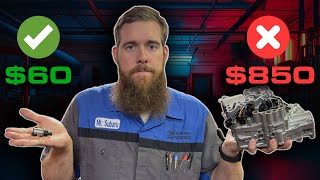
- Subaru: Subaru does not sell individual solenoids for their CVTs. A P2817 code officially requires a $1,500 valve body replacement, though independent specialists can sometimes solder in aftermarket solenoids.
- Ford: On Focus/Fiesta DPS6 transmissions, clean the main chassis grounds near the battery before replacing actuators. Poor grounds cause false performance codes.
- Nissan: Nissan extended the CVT warranty to 84 months/84,000 miles for 2015-2018 Murano and 2016-2018 Maxima models due to a class-action lawsuit. Check your eligibility before paying out of pocket.
Real Owner Stories
2017 Honda CR-V at 75,000 miles
Check Engine Light and flashing 'D' indicator illuminated on the highway. The car drove normally.
What they tried:
- A general mechanic read P2817 and quoted $800 to replace the solenoid.
Outcome: The owner researched the code and found Honda TSB A19-047. A Honda dealership performed the TCM software update for $210. The code cleared permanently.
Lesson: Always check for TSBs before approving hardware repairs. For Hondas, P2817 is almost always a software bug.
2013 Subaru Outback at 110,000 miles
Harsh downshifts and stalling. AT Temp light flashing with codes P0700 and P2817.
What they tried:
- A local shop changed the CVT fluid, which failed to fix the issue.
- The shop quoted $3,500 for a full valve body replacement.
Outcome: A transmission specialist replaced only the specific failing solenoid on the valve body for $1,050, resolving the issue.
Lesson: While dealers mandate full valve body replacements for Subarus, independent transmission specialists can sometimes perform targeted, cheaper solenoid repairs.
2014 Chevy Cruze at 95,000 miles
Car entered 'limp mode' with harsh shifting. Codes P2817 and P0796 stored.
What they tried:
- Checked fluid level, which was normal.
Outcome: The owner learned the solenoids are integrated into the TEHCM. They replaced the entire TEHCM assembly at an independent shop for $1,200, fixing all shifting issues.
Lesson: Multiple solenoid codes indicate a systemic issue. On GM vehicles, replacing the entire TEHCM is the only reliable long-term repair.
How to Prevent This Code From Triggering
- Change Transmission Fluid and Filter Regularly (Every 30,000-60,000 miles) — Clean fluid prevents debris from clogging the tiny screens inside the solenoids. For CVTs, fluid changes are critical at 30,000-mile intervals.
- Use ONLY Manufacturer-Specified Fluid (Every fluid change) — OEM fluids possess specific friction properties required for solenoids and clutches. Universal fluids cause slippage and trigger performance codes.
- Install an External Transmission Cooler (Once, if towing or living in a hot climate) — Heat destroys transmissions. An external cooler prevents fluid breakdown, significantly extending the life of solenoids and CVT belts.
- Check and Maintain Electrical System Health (Annually) — Solenoids require stable voltage. Testing the battery and cleaning transmission ground straps prevents erratic voltage drops that trigger false codes.
Frequently Asked Questions
What is the most common misdiagnosis for P2817?
Replacing the solenoid without checking for TSBs or fluid condition. On 2016-2019 Hondas, the issue is a software glitch requiring a dealer update, not a hardware failure.
Can I just replace the 'H' solenoid to fix P2817?
Only if properly diagnosed as the root cause. Low fluid or software errors frequently trigger this code falsely. Follow a diagnostic flowchart to avoid wasting money on unneeded parts.
How much does it cost to fix code P2817?
A TCM software update costs $150-$250, while a fluid change runs $160-$320. Solenoid replacement ranges from $240 to $750. Full valve body or TCM replacements exceed $1,200.
Where is the Pressure Control Solenoid 'H' located?
It mounts directly to the valve body inside the transmission. Access requires draining the fluid and removing the transmission oil pan. It is not externally accessible.
What does the 'H' in 'Solenoid H' mean?
It is a manufacturer designation identifying a specific solenoid within the valve body. Automatic transmissions use multiple solenoids (A, B, C, H) to control distinct hydraulic circuits.
Can a bad battery cause transmission problems like P2817?
Yes. A weak battery or failing alternator provides unstable voltage to the TCM. This causes erratic solenoid behavior and triggers false diagnostic codes.
Can a transmission fluid flush fix P2817?
If dirty fluid causes the solenoid to stick, a fluid and filter change restores normal operation. However, it will not fix an electrically dead solenoid or a software glitch. Avoid pressurized flushes; stick to drain-and-fill procedures.
Can I fix P2817 myself?
Intermediate DIYers can check fluid, inspect wiring, and test solenoid resistance. Stop DIY and take the vehicle to a transmission specialist if the fix requires software updates, internal valve body work, or oscilloscope testing.
Will ignoring P2817 cause more damage?
Yes. Driving with low hydraulic pressure causes clutches to slip and burn rapidly. This destroys the transmission internally, turning a $200 repair into a $3,500 rebuild.
What's the difference between a 'Performance' code and a 'Circuit' code?
A 'Circuit' code (e.g., P0971) indicates a purely electrical fault like a broken wire. A 'Performance' code like P2817 means the TCM commanded a shift, but the mechanical or hydraulic action failed to occur.
Key Takeaways
- Code P2817 indicates Pressure Control Solenoid 'H' is stuck off, causing the transmission to slip, shift harshly, or lock into a single gear.
- On 2016-2019 Honda Civic, CR-V, and Accord models, a known software glitch triggers this code falsely; a $150-$250 dealer software update (TSB A19-047) is the definitive fix.
- Low, burnt, or incorrect transmission fluid causes 40% of physical solenoid failures, making a $150 fluid and filter change the best first diagnostic step.
- Stop driving immediately; operating with low hydraulic pressure burns clutch packs within 50 miles, escalating a $200 solenoid repair into a $3,500 transmission rebuild.
Helpful Videos
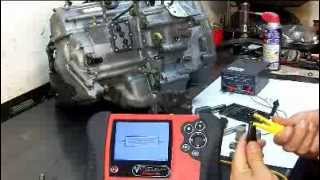
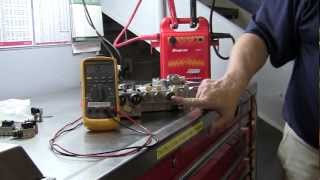
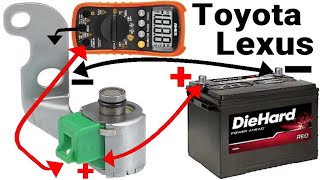

The information in this article is provided for general reference and educational purposes only. Vehicle specifications, procedures, and part compatibility can vary by production date, trim level, and region. Always consult your vehicle's factory service manual and verify part numbers before purchasing or performing repairs. Safety-critical components such as airbags, seat belts, and braking systems should be installed by a qualified professional.
- 🎬 Helpful Videos
- What Does P2817 Mean?
- Can I Drive With P2817?
- Common Causes
- Symptoms
- Diagnostic Flowchart
- Common Fixes & Costs
- DIY vs Professional
- Used vs. New Parts: Buying Guide
- What Happens If You Wait — Timeline
- Cost of Not Fixing It
- Diagnosis Steps
- When This Code Triggers (Freeze-Frame Conditions)
- Related Codes
- Climate & Environmental Factors
- How to Talk to a Mechanic About This Code
- Where to Take It: Dealer vs Independent vs Chain
- When to Walk Away From the Repair
- What Scan Tool You Need for This Code
- How to Clear the Code After You Fix It
- Will This Fail Emissions / State Inspection?
- Most Commonly Affected Vehicles
- Manufacturer-Specific Notes
- Real Owner Stories
- 2017 Honda CR-V at 75,000 miles
- 2013 Subaru Outback at 110,000 miles
- 2014 Chevy Cruze at 95,000 miles
- How to Prevent This Code From Triggering
- Frequently Asked Questions
- What is the most common misdiagnosis for P2817?
- Can I just replace the 'H' solenoid to fix P2817?
- How much does it cost to fix code P2817?
- Where is the Pressure Control Solenoid 'H' located?
- What does the 'H' in 'Solenoid H' mean?
- Can a bad battery cause transmission problems like P2817?
- Can a transmission fluid flush fix P2817?
- Can I fix P2817 myself?
- Will ignoring P2817 cause more damage?
- What's the difference between a 'Performance' code and a 'Circuit' code?
- Key Takeaways
- 🎟️ Get 5% Off