

P2813 on 2015-2017 Nissan JUKE: CVT Pressure Solenoid 'G' Fault Guide
On a 2015-2017 Nissan Juke, code P2813 almost always indicates a fault within the CVT's valve body. This is a known issue addressed by Nissan TSBs. The most common fix is replacing the valve body assembly, which is a complex job best left to professionals. Ignoring the code can lead to catastrophic CVT failure.
- P2813 on a 2015-2017 Juke is a serious transmission code that should be addressed immediately.
- The most likely cause is a failed CVT control valve body, a known issue for this vehicle.
- This is not a simple DIY repair; it requires specialized knowledge, tools, and potentially software reprogramming.
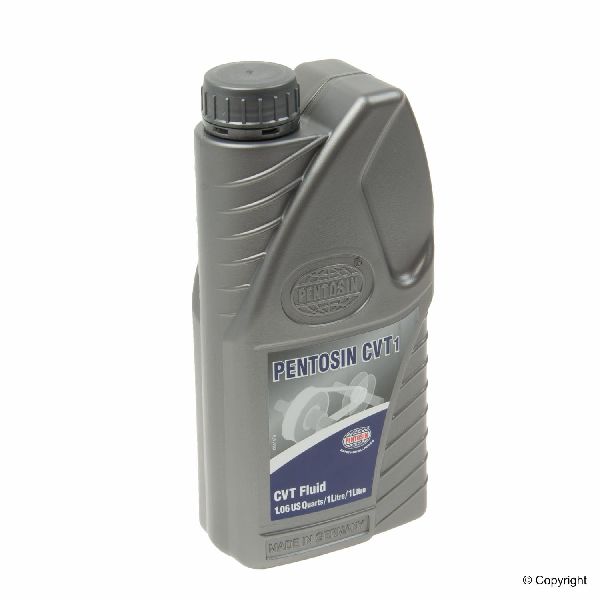
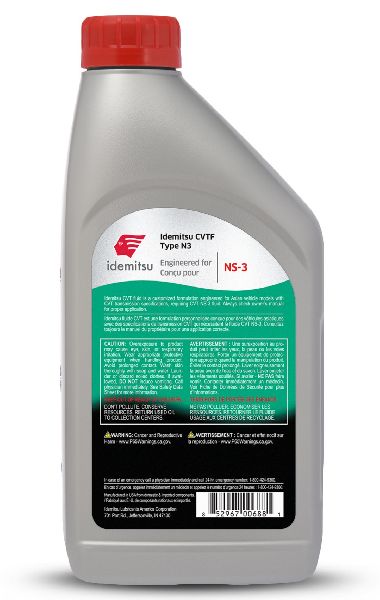
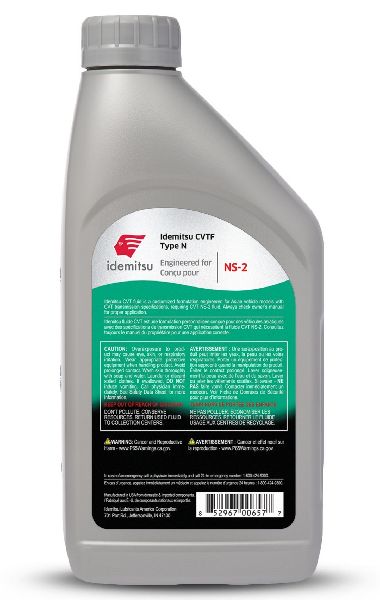
- Always use genuine Nissan NS-3 CVT fluid. Using the wrong fluid will cause further damage.
- Check for related codes like P0776, P17F0, and P0841, as they confirm the diagnosis of a valve body failure.
What's Unique About the 2015-2017 Nissan JUKE
For this generation of Nissan Juke, P2813 is rarely a simple wiring or solenoid issue. It is part of a well-documented pattern of internal CVT failures. Nissan has issued Technical Service Bulletins (TSBs) that group P2813 with other codes (like P0776, P17F0, and P0841), all pointing to a required valve body or full CVT replacement. Unlike other vehicles where this code might be an isolated electrical fault, on the Juke, it's a strong indicator of a specific, known mechanical/hydraulic failure within the transmission's control system. The issue is so prevalent that it also affects platform mates like the Nissan Rogue.
Diagnostic Flowchart
Tap your situation to follow the diagnostic path that matches what you're seeing on this vehicle.
Symptoms You May Notice
- Harsh or delayed shifting, especially when putting the car into Drive or Reverse.
- Vehicle hesitation or juddering during acceleration.
- Transmission slipping, where engine RPMs rise without a corresponding increase in vehicle speed.
- Check Engine Light or other transmission warning lamp is illuminated.
- Vehicle may enter 'limp mode' with reduced power.
- A loud bang or jolt when shifting from Park to Reverse or Drive.
- Car won't move in Drive but may move in Reverse, especially after warming up.
- Replacing only the individual pressure control solenoid 'G'. On this platform, the solenoids are integral to the valve body, and the failure is typically in the body itself, not just one solenoid. The entire assembly is replaced as a unit.
- Replacing the valve body but failing to perform the TCM reprogramming with the new calibration data. This will often cause the same code or other shifting problems to persist.
Most Likely Causes
- Faulty CVT Control Valve Body 🔴 High Probability The CVT (model RE0F10D, also known as Jatco JF016E) used in these Jukes has a known issue with premature valve body failure, as documented in Nissan TSB NTB20-091A. The solenoids are integrated into this assembly, and internal wear in the valve body bores causes pressure loss, triggering the code. This is the most common root cause.
How to confirm: A professional technician will follow the diagnostic procedure outlined in TSB NTB20-091A, which involves checking for a specific group of stored DTCs (P2813, P0776, P17F0, etc.) and may involve inspecting for belt slippage using a borescope.
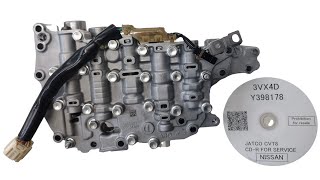
Typical fix: Replace the entire CVT control valve body assembly with a new kit, which includes the valve body, gaskets, and other single-use parts. The TCM must then be reprogrammed with calibration data from a QR code supplied with the new valve body. 🎬 See how to program the new valve body using the QR code.
Est. part cost: $800-$1500 - Low or Contaminated Transmission Fluid 🟡 Medium Probability CVTs are highly sensitive to fluid level and condition. Low fluid can cause pressure drops, while old or contaminated fluid (from internal wear) can damage solenoids and clog passages in the valve body, leading to this code.
How to confirm: Check the level and condition of the Nissan NS-3 CVT fluid. The fluid should be clean, greenish-blue, and not smell burnt. This check is complex on many Nissans as there is no traditional dipstick and requires a specific procedure.
Typical fix: Perform a CVT fluid drain and fill using only genuine Nissan NS-3 CVT Fluid. If the fluid is very dirty or contains metal particles, the transmission may have internal damage beyond the valve body, and a fluid change alone will not fix the issue.
Est. part cost: $100-$200 - Wiring or Connector Issues ⚪ Low Probability
How to confirm: Inspect the wiring harness and connectors between the TCM and the transmission valve body for any signs of damage, corrosion, or loose pins. This is typically done after confirming the fluid is okay and before condemning the expensive valve body.
Typical fix: Repair the damaged section of the wiring harness or clean/replace the faulty connector.
Est. part cost: $20-$100
Rare But Worth Checking
- Failed Transmission Control Module (TCM): While possible, a faulty TCM is much less common than a valve body failure for this specific code on this vehicle. It should only be considered after all other causes have been ruled out. Often, a TCM replacement is misdiagnosed when a reprogramming (calibration) was all that was needed after a valve body replacement.
Diagnosis Steps
- Verify the presence of P2813 and any other related codes using a professional-grade OBD-II scanner.
- Check the transmission fluid level and condition. Note that this requires a specific procedure as there is no dipstick. Burnt fluid or fluid with excessive metal debris may indicate a problem beyond the valve body.
- Inspect the transmission wiring harness and connectors for visible damage, corrosion, or loose connections.
- Consult Nissan Technical Service Bulletin NTB20-091A. This TSB provides a specific diagnostic flowchart for this group of codes.
- If the TSB directs, inspect the CVT for belt slippage using a borescope.
- If diagnostics confirm a valve body fault, replace the control valve assembly.
- After replacement, the TCM MUST be reprogrammed using the calibration data from the QR code supplied with the new valve body kit.
- Perform a final test drive to ensure all shifting issues are resolved.
Parts You'll Likely Need
- CVT Control Valve Assembly Kit
(OEM #3170E-28X0B (2WD) or 3170E-28X9D (AWD))— This is the most common failure part for code P2813 on this vehicle, as documented by Nissan's own service bulletins. The kit includes the valve body, pan gasket, seals, and the crucial QR code for reprogramming.
Trusted brands: Nissan Genuine OEM, Hitachi
OEM price range: $1000-$1500
Aftermarket price range: $700-$1200 - Nissan NS-3 CVT Fluid
(OEM #999MP-CV0NS3)— This specific fluid is required for any service involving the CVT. Using incorrect fluid can cause severe damage. The TSB specifies that approximately 6 quarts may be needed for a valve body replacement.
Trusted brands: Nissan Genuine OEM
OEM price range: $20-$25 per quart
Related Codes That Often Appear With This One
- P0776 — Pressure Control Solenoid 'B' Performance/Stuck Off. Often set with P2813 as part of the same valve body failure documented in TSB NTB20-091A.
- P17F0 — CVT Judder (T/M INSPECTION). A primary code indicating a serious mechanical issue within the CVT, often triggering the valve body codes.
- P17F1 — CVT Judder (C/V ASSY). Similar to P17F0, points to a required CVT assembly or sub-assembly inspection/replacement. Often seen with P2813 on platform mates like the Rogue.
- P0841 — Transmission Fluid Pressure Sensor/Switch 'A' Circuit Range/Performance. Also related to the hydraulic control system within the valve body and listed in the same TSB.
Technical Service Bulletins (TSBs) & Recalls
- NTB20-091A: '2015-2017 JUKE; DTC P17F0, P17F1, P0776, P2813, P1715 AND/OR P0841 STORED'. This is the primary document outlining the known issue and repair procedure. It details the diagnostic steps, part numbers, and reprogramming requirements.
Platform-Specific Known Issues
- The 2015-2017 Nissan Juke (excluding NISMO RS models) is subject to Technical Service Bulletin NTB20-091A, which outlines a known issue with the CVT that causes codes P2813, P0776, P17F0, P17F1, and others to be stored. The bulletin provides a specific repair path that often involves replacing the control valve body or the entire CVT assembly.
- Owner experiences on forums like Reddit confirm that this issue is widespread and often leads to expensive repairs, with some quotes for a full CVT replacement reaching $6,000.
Mechanic-Grade Diagnostic Values
- TCM Power Supply Voltage — expected: More than 11 V. Failure: Voltage below 11V can cause the TCM to set various codes, including P2813.
- Solenoid Coil Resistance — expected: Typically 3-30 ohms, but varies by solenoid. (e.g., a similar JATCO CVT has specs of 3-9 Ω for one solenoid and 6-19 Ω for another).. Failure: Infinite resistance (open circuit) or zero resistance (short circuit). A reading outside the specific OEM spec for that solenoid indicates a fault.
- DTC P2813 Set Conditions (example from similar platform) — expected: Code is checked for when Vehicle Speed < 3 km/h, CVT Fluid Temp > 20°C, and Selector is not in P or N.. Failure: The TCM detects a fault when its command to the solenoid does not result in the expected electrical feedback under these specific low-speed conditions.
Scan Tool Commands That Help
- Nissan CONSULT-III Plus: WRITE IP CHARA – REPLACEMENT AT/CVT — This function is mandatory after replacing the CVT valve body or entire transmission assembly. It writes the unique calibration data from a QR code/CD (supplied with the new part) to the TCM. Failure to perform this step will result in persistent shifting problems or codes.
- Nissan CONSULT-III Plus: CLUTCH POINT LEARNING — This procedure is required after certain repairs, including valve body replacement, to relearn the clutch engagement points. If not performed correctly, the vehicle may not move when put into gear.
- Nissan CONSULT-III Plus: CONFORM CVTF DETERIORTN — Used to reset the CVT fluid deterioration counter after performing a fluid change. This ensures the TCM's adaptive strategies are based on fresh fluid properties.
Wiring & Ground Locations
- TCM Connector F81 — The Transmission Control Module (TCM) is located under the left side of the instrument panel.. This is the main connector for the TCM. Checking for power, ground, and signal integrity at these pins is a key diagnostic step. A poor connection here can mimic an internal transmission fault.
- Ground Point E104 — Located at the left end of the dash.. A poor ground connection at this point, which serves multiple components in the dash area, can introduce electrical noise or voltage drops affecting TCM operation.
- Ground Point F44 — Located at the right rear of the engine compartment.. This is a primary engine bay ground. Corrosion or looseness here can cause a variety of issues, including unstable power supply to the transmission and its control modules. A weak ground was identified as a real-world problem for a Juke TCM.
Real Owner Repair Stories
- YouTube video by Muhammad Haron (Nissan Pathfinder (similar platform with CVT)) — Harsh, hard hit when shifting into Drive or Reverse. Codes P17F0 and P2813 present.
❌ Tried (didn't work) Replacing the TCM (Transmission Control Module) with a new one and programming it did not fix the hard shifting.
✅ What actually fixed it The final solution was to use the scan tool to 'rewrite the configuration data' again. This specific reprogramming step, even after the initial programming, resolved the harsh shifting and the P2813 code. - YouTube video by 'Diagnose It All' (Nissan Juke) — Undisclosed symptoms leading to TCM diagnosis.
❌ Tried (didn't work) Initial ground tests with a test light appeared okay, but were actually weak., Purchasing a used TCM, which turned out to be the wrong part number with a different, incompatible wiring pinout.
✅ What actually fixed it The mechanic repaired the original TCM using components from the incorrect donor TCM. He also discovered and corrected a poor ground connection that was not obvious with basic testing. This highlights the importance of load testing grounds and verifying TCM part numbers.
OEM Part Supersession History
31705-28X0A→31705-28X0B, 31705-28X2B— Part revisions to address failure modes or manufacturing improvements.
Heads up: Always verify the correct part number for the vehicle's specific VIN and drivetrain (2WD vs AWD), as multiple versions exist for the JF016E/RE0F10D transmission.
Model Year Variations Within This Range
- 2015-2017: There are at least two different TCM wiring configurations used in the Juke. One uses pins 31 and 32 for data communication, while another uses pins 33 and 23. The power and ground pins also differ. This makes sourcing a used TCM very risky without an exact part number match.
Helpful Videos

We Have This Part in Stock

The information in this article is provided for general reference and educational purposes only. Vehicle specifications, procedures, and part compatibility can vary by production date, trim level, and region. Always consult your vehicle's factory service manual and verify part numbers before purchasing or performing repairs. Safety-critical components such as airbags, seat belts, and braking systems should be installed by a qualified professional.
- Nissan JUKE:
- 🎬 Helpful Videos
- 🛍️ Shop This Part
- What's Unique About the 2015-2017 Nissan JUKE
- Diagnostic Flowchart
- Symptoms You May Notice
- Most Likely Causes
- Rare But Worth Checking
- Diagnosis Steps
- Parts You'll Likely Need
- Related Codes That Often Appear With This One
- Technical Service Bulletins (TSBs) & Recalls
- Platform-Specific Known Issues
- Mechanic-Grade Diagnostic Values
- Scan Tool Commands That Help
- Wiring & Ground Locations
- Real Owner Repair Stories
- OEM Part Supersession History
- Model Year Variations Within This Range
- 🎟️ Get 5% Off