

OBD-II Code P2805: Transmission Range Sensor 'B' Circuit Range/Performance
What P2805 means, why it triggers, and how to fix it
- Code P2805 triggers when the transmission computer detects a voltage variance of more than 5% between the range sensor's internal 'A' and 'B' safety circuits.
- A faulty sensor or water-damaged wiring harness causes 80% of P2805 codes, resulting in harsh shifting or a complete no-start condition.
- Do not replace parts immediately; perform a 5-minute visual inspection of the wiring connector for water intrusion and check for manufacturer Technical Service Bulletins.
- Driving with an active P2805 code forces the transmission into limp mode, risking $2,500+ in internal clutch damage if ignored for more than a few weeks.
What Does P2805 Mean?

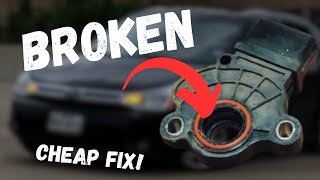
The P2805 code means your car's Powertrain Control Module (PCM) is receiving conflicting signals from the transmission range sensor. This sensor (also called a neutral safety switch) tells the computer which gear you selected (Park, Reverse, Neutral, Drive). To ensure safety, the sensor uses two separate internal circuits, labeled 'A' and 'B'. When the voltage signals from these two circuits do not match, the computer cannot verify the true gear position and triggers the P2805 code.
Technical definition: The SAE/OBD-II definition for P2805 is "Transmission Range Sensor 'B' Circuit Range/Performance". The PCM or Transmission Control Module (TCM) continuously compares the voltage signals from the 'A' and 'B' circuits of the transmission range sensor. If the variance between these two signals exceeds a pre-programmed threshold (typically >5%) for a set duration, the module registers a correlation fault.
Can I Drive With P2805?
Yes, But With Caution. You can physically drive, but it is highly discouraged. The transmission defaults to a single gear (limp mode), shifts harshly, or fails to engage Drive or Reverse. The vehicle often refuses to start if it cannot confirm it is in Park or Neutral. Continuing to drive causes excessive wear on internal transmission clutches, potentially adding $2,500 to the repair cost.
Common Causes

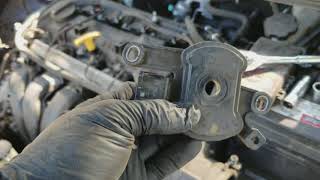
- Faulty Transmission Range Sensor (TRS) (Very Common) — The sensor itself is the most frequent failure point. 🎬 Watch: Ford Focus range sensor replacement walkthrough Internal potentiometers or Hall-effect elements wear out, get contaminated, or short circuit, causing them to send erratic voltage signals.
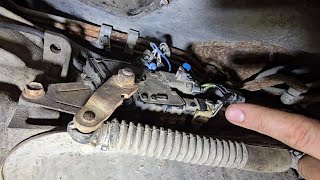
- Damaged Wiring or Water Intrusion (Common) — Moisture entering the sensor's electrical connector causes short circuits and corrosion. Wires leading to the sensor also fray or short against the chassis due to heat and vibration, degrading the signal.
- Misadjusted or Damaged Shift Linkage (Less Common) — A loose or stretched mechanical linkage connecting the gear shifter to the transmission puts the sensor in a physical position that does not match the selected gear, causing a correlation error.
- Low or Dirty Transmission Fluid (Less Common) — Severely low or contaminated transmission fluid causes erratic hydraulic pressure and shifting delays, which the computer sometimes misinterprets as a range sensor performance fault.
- Low Battery Voltage (Rare) — A failing battery drops system voltage significantly during startup. This starves control modules of power, leading to temporary communication glitches and phantom codes like P2805.
- Faulty Powertrain/Transmission Control Module (PCM/TCM) (Rare) — The computer module reading the sensor signal rarely fails. However, a software glitch or internal processor failure causes the module to set a false P2805 code.
Symptoms

- Check Engine Light is On — The Malfunction Indicator Lamp (MIL) illuminates on the dashboard. A transmission-specific warning light (like a wrench icon) often accompanies it.
- Car Won't Start or Stuck in Park — The vehicle refuses to crank because the computer cannot confirm it is safely in Park or Neutral. The gear lever often locks in the Park position.
- Erratic or Harsh Shifting — The transmission shifts roughly, hesitates, or slams into gear because the computer lacks accurate gear position data to control hydraulic pressure.
- Transmission Enters 'Limp Mode' — The transmission locks into a single forward gear (usually 2nd or 3rd) to prevent internal damage, severely limiting acceleration and top speed.
- Incorrect Gear Display — The PRNDL indicator on the dashboard flashes, goes blank, or highlights the wrong gear.
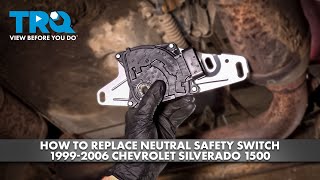
- Reverse Lights Inoperative — The backup lights fail to illuminate when shifting into Reverse, creating a safety hazard. 🎬 Watch: Step-by-step neutral safety switch replacement for GM trucks
Diagnostic Flowchart

Tap your situation to follow the diagnostic path that matches what you're seeing on this code.
Common Fixes & Costs
- Replace Transmission Range Sensor
— Parts: $40-$150, Labor: $100-$300, ~2.0 hr book time
(Intermediate)
Ford Focus/Fiesta (2012-2018): OEM AE8Z-7F293-A (Alt: Dorman, Standard Motor Products (SMP))
Chevrolet Silverado (2007-2020): OEM 24229422 (Alt: ACDelco Professional)
Hyundai/Kia (2011-2018): OEM 42700-26700 (Alt: Various) - Repair Damaged Wiring or Connector — Parts: $10-$50, Labor: $100-$250, ~1.5 hr book time (Intermediate)
- Adjust Shift Linkage — Parts: $0-$80, Labor: $100-$200, ~1.0 hr book time (Intermediate)
- Perform Transmission Adaptive Learn — Parts: $0, Labor: $100-$150, ~1.0 hr book time (Professional)
- Replace or Reprogram TCM — Parts: $600-$1200, Labor: $150-$300, ~2.0 hr book time (Professional)
DIY vs Professional
- Replace Transmission Range Sensor — Beginner:
- Repair Damaged Wiring or Connector — Beginner:
- Adjust Shift Linkage — Beginner:
- Perform Transmission Adaptive Learn — Beginner:
Used vs. New Parts: Buying Guide
When a used part is worth it: Never. A used sensor is an electronic component with unknown wear. Given the low cost of a new aftermarket sensor ($40-$150), the risk of premature failure is not worth the savings.
Donor-vehicle mileage cap: roughly under 40000 miles for the part to have meaningful remaining life.
Donor quality checklist:
- Match the OEM part number exactly.
- Inspect connector pins for green corrosion or bent terminals.
Decision logic:
- If The sensor is located inside the transmission oil pan → Always buy a new OEM part. The labor cost to drop the pan twice is too high to risk a used component.
- If The budget is extremely tight → Purchase a new aftermarket sensor from a reputable brand like Standard Motor Products (SMP) rather than a junkyard part.
Warranty tradeoff: Used parts offer a 30-day warranty. New aftermarket parts include a 1-year to lifetime warranty.
Worst-case if a used part fails: $300-$600 in repeat labor costs if a used internal sensor fails.
What Happens If You Wait — Timeline
- 0-1 month: Check Engine Light illuminates. Symptoms are intermittent, often appearing only in wet weather. Occasional hesitation occurs when shifting out of Park. (MPG impact: 0-2%% · Added cost: $0)
- 1-4 months: Shifting becomes consistently harsh. The dashboard gear indicator flickers. The vehicle occasionally refuses to start in Park, requiring a shift to Neutral. (MPG impact: 3-8%% · Added cost: $50-$150 (Wasted fuel))
- 4-8 months: Transmission frequently locks into 'limp mode' (2nd or 3rd gear). Unpredictable shifting creates a safety hazard in traffic. Internal clutches begin slipping. (MPG impact: 10-20%% · Added cost: $500-$1,500 (Accelerated clutch wear))
- 8+ months: Prolonged operation with incorrect hydraulic pressure destroys the transmission internals. The vehicle fails to engage any gear and requires a tow. (MPG impact: N/A% · Added cost: $2,500-$5,000 (Full transmission rebuild))
Cost of Not Fixing It
- Immediate: The vehicle refuses to start or shift out of Park, requiring a tow. (Added cost: $100-$200 (Towing))
- 0-3 months: Harsh shifting accelerates wear on transmission clutches and solenoids. Fuel economy drops by up to 15%. (Added cost: $50-$200 (Wasted fuel))
- 3+ months: Prolonged operation with incorrect hydraulic pressures destroys the transmission internals, requiring a full rebuild. (Added cost: $2,500-$5,000 (Transmission rebuild))
Diagnosis Steps
- Read Codes and Check TSBs
Use an OBD-II scanner to confirm P2805. Note paired codes (e.g., P0705, P0600). Before touching the car, search for Technical Service Bulletins (TSBs) for your specific year/make/model, as manufacturers often issue software updates or redesigned parts for this exact code.
Tools: OBD-II Scanner, Internet Access (Beginner) - Visual Inspection and Harness Wiggle Test
Locate the transmission range sensor. Inspect the wiring harness for chafing, melted plastic, or water intrusion. While monitoring live sensor data on a scanner, aggressively wiggle the wiring harness near the connector. If the voltage drops out, you have a broken wire or loose pin, not a bad sensor.
Tools: Flashlight, Advanced OBD-II Scanner (Beginner) - Monitor Live Sensor Data
Using an advanced scanner, view the live data stream for Transmission Range Sensor 'A' and 'B'. Slowly move the shifter through P-R-N-D-L. Both voltage readings must change smoothly and mirror each other. A deviation of >5% or a signal stuck at 0V/5V confirms an electrical fault.
Tools: Advanced OBD-II Scanner with Live Data (Intermediate) - Inspect and Adjust Shift Linkage
Verify the shift cable connecting the gear selector to the transmission is tight and properly aligned. A loose linkage physically misaligns the sensor, causing the computer to read a gear position that differs from the cabin shifter.
Tools: Basic hand tools (wrenches, sockets) (Intermediate) - Check Transmission Fluid
Verify the transmission fluid level and condition. Burnt or severely low fluid causes hydraulic pressure drops that trigger secondary correlation codes.
Tools: Rag, Dipstick (if applicable) (Beginner) - [PRO TIP] Test Sensor Voltage and Ground at Connector
Disconnect the sensor. Turn the key ON (engine off). Use a multimeter to verify the connector provides a 5.0V reference voltage and a solid ground (<0.1V). Reconnect and backprobe the signal wires; voltages must change smoothly (e.g., 0.5V to 4.5V) as you shift gears. A dead signal wire indicates a short.
Tools: Digital Multimeter, Vehicle-specific wiring diagram (Advanced) - [ADVANCED] Test Sensor and Harness Resistance
With the battery disconnected, measure the resistance of the signal wires from the sensor connector to the PCM connector. Resistance must be <5 ohms. Measure from each signal wire to chassis ground; resistance must be infinite (no continuity). This isolates shorts in the wiring harness.
Tools: Digital Multimeter (Ohmmeter), Wiring diagram (Professional) - [ADVANCED] Analyze Sensor Waveform
For intermittent faults, connect an oscilloscope to circuits 'A' and 'B'. Move the shifter. A healthy sensor produces a clean, stepped waveform. Micro-dropouts or electrical noise on the graph definitively prove a failing internal sensor track.
Tools: Oscilloscope (Professional)
When This Code Triggers (Freeze-Frame Conditions)
- Vehicle Speed: 0-60 mph (Triggers either when stationary and shifting out of Park, or while driving at steady speeds as the computer continuously monitors correlation.)
- Gear Position: Any (The freeze frame records the gear the computer assumed it was in when the voltage mismatch occurred.)
Related Codes
- P0705 — Indicates a general circuit malfunction. P2805 is more specific, pointing to a correlation mismatch between circuits A and B.
- P0706 — Indicates the sensor signal is outside the expected voltage range. Often appears alongside P2805, confirming a failed sensor.
- P2802 / P2803 — P2802 means Circuit B is shorted to ground (0V). P2803 means Circuit B is shorted to power (5V). These pinpoint the exact electrical fault causing the P2805 mismatch.
- P0600 — Indicates a CAN bus communication failure. When paired with P2805, it means the sensor wiring is shorting out the entire communication network.
Climate & Environmental Factors
- Humidity and Moisture: Heavy rain or driving through deep puddles forces water into aging connector seals, causing immediate short circuits and triggering the code.
- Extreme Heat: Prolonged engine bay heat bakes the plastic sensor housing and wiring insulation, causing them to crack and expose internal circuits to the elements.
How to Talk to a Mechanic About This Code
Say this: "I have a P2805 code. Before replacing the transmission range sensor, please inspect the wiring harness for water intrusion or chafing, check the shift linkage alignment, and verify if there are any software update TSBs for this issue."
This directs the mechanic to perform a thorough electrical diagnosis rather than blindly firing the parts cannon, saving you from paying for an unneeded sensor.
Avoid saying:
- 'My car is shifting weird, fix it.'
- 'Just replace the neutral safety switch.'
Questions to ask before authorizing the repair:
- Did you test the live voltage data for circuits A and B?
- Did you find any corrosion inside the connector?
- Does the new sensor require a software relearn, and do you have the tool to perform it?
Where to Take It: Dealer vs Independent vs Chain
- Dealer:
Recommended only if your vehicle requires a proprietary software relearn or falls under a specific manufacturer TSB.
Best for: Vehicles under warranty, Audi/VW models requiring mechatronics replacement, Ford models requiring proprietary TCM software updates
Downsides: Highest labor rates, Tendency to replace entire expensive assemblies rather than repairing wiring (Typical cost: +50% vs. baseline) - Independent Shop:
The best choice for most vehicles. A competent independent shop easily diagnoses wiring faults and replaces external sensors for half the dealer cost.
Best for: Out-of-warranty vehicles, Wiring repairs and sensor replacements
Downsides: May lack the $5,000+ scan tools required for specific adaptive relearns. (Typical cost: +0% vs. baseline) - Chain Shop:
Avoid. They are highly likely to misdiagnose a wiring fault as a bad sensor, leading to repeat visits.
Best for: Oil changes and tires
Downsides: Technicians lack advanced electrical diagnostic training. (Typical cost: -10% vs. baseline)
When to Walk Away From the Repair
If the repair cost exceeds 40% of the vehicle's private-party value, consider selling it.
- Car worth $10000, fix is $350: Fix it. This is a standard sensor replacement cost.
- Car worth $3000, fix is $2200: Walk away. If the diagnosis requires a full mechatronics unit or TCM replacement, the cost is 73% of the car's value.
What Scan Tool You Need for This Code
Minimum: A scanner capable of reading and graphing live data streams for manufacturer-specific Transmission Range Sensor PIDs.
A $20 code reader only displays 'P2805'. It cannot show the live voltage data from circuits A and B, making it impossible to determine if the sensor is dead, stuck, or erratic.
Budget: BlueDriver Bluetooth Pro (~$100) — Graphs live transmission sensor data on your smartphone, allowing you to spot voltage dropouts while wiggling the wiring harness.
Mid-range: Foxwell NT510 Elite (~$180) — Offers bidirectional control to perform the mandatory 'Transmission Adaptive Learning' procedure required after replacing the sensor on many vehicles.
Professional: Autel MaxiCOM MK808BT (~$450) — Provides OE-level diagnostics, full bidirectional control, and TCM reprogramming capabilities for all makes.
How to Clear the Code After You Fix It
- Ensure all wiring connectors are securely fastened and packed with dielectric grease.
- Use an OBD-II scan tool to clear the diagnostic trouble codes.
- Perform a transmission adaptive learn procedure if required by your manufacturer.
- Complete a full drive cycle to reset emissions readiness monitors.
Drive cycle (~20 minutes): Idle for 3 minutes. Drive in stop-and-go traffic for 5 minutes, ensuring the transmission shifts through lower gears. Accelerate to 55 mph and maintain steady speed for 10 minutes. Decelerate to a complete stop.
Readiness monitors affected: Comprehensive Component Monitor
Before emissions retest: drive at least 50 miles to fully set monitors.
Watch out for:
- Clearing the code without fixing the wiring guarantees the code returns on the next drive.
- Skipping the adaptive learn procedure on Ford or Audi vehicles causes persistent harsh shifting.
Will This Fail Emissions / State Inspection?
Yes — this code typically fails an OBD-II emissions inspection.
- California: A vehicle fails the Smog Check if the Check Engine Light is on. After repairs, a complete drive cycle must set all readiness monitors before re-testing.
Most Commonly Affected Vehicles
- Ford Focus / Fiesta (2012-2018) — DPS6 transmissions frequently suffer TCM and range sensor failures. A software relearn is mandatory after replacement.
- Ford F-150 (2015-2020) — Highly susceptible to water intrusion in the 10-speed transmission wiring harness during wet weather.
- Chevrolet Silverado 2500 HD (2007-2020) — The neutral safety switch assembly frequently fails, causing no-start conditions. Corroded frame ground straps mimic this failure.
- Hyundai / Kia Elantra, Sonata, Optima (2011-2018) — Multiple Service Actions address internally failing inhibitor switches. Upgraded part 42700-26700 resolves the common no-start issue.
- Audi A3, S3, TT (2015-2020) — TSB 2051686/1 dictates replacing both the drive position sensor and the mechatronics unit to resolve P2805.
Manufacturer-Specific Notes
- Ford: Disconnecting the battery on DPS6 transmissions erases the TCM's adaptive memory, triggering P2805. A scan tool relearn procedure is required to fix it.
- Audi/Volkswagen: Dealerships often refuse to replace just the sensor for this code, citing TSBs that require a $2,000+ mechatronics unit replacement.
- Hyundai/Kia: An intermittent no-start caused by P2805 can almost always be bypassed by shifting the gear selector into Neutral before turning the key.
Real Owner Stories
2018 Ford F-150 with 10-speed transmission
While driving at 40 mph in heavy rain, the truck downshifted to 1st gear, stalled, and refused to restart. The wrench light illuminated.
Outcome: Water intruded into the transmission range sensor wiring harness connector, causing a temporary short circuit. Cleaning and sealing the connector with dielectric grease permanently fixed the issue.
Lesson: If P2805 appears during wet conditions, prioritize inspecting and sealing the wiring connectors before replacing any parts.
2011 Hyundai Elantra with intermittent no-start
The car intermittently failed to crank. The dealership could not replicate the problem.
Outcome: The transmission range sensor (inhibitor switch) failed internally and stopped reporting 'Park'. Replacing the switch resolved the issue.
Lesson: If your car won't start, try starting it in Neutral. Success confirms a faulty transmission range sensor.
2014 Ford Focus with DPS6 transmission
Immediately after a transmission replacement, the car shifted poorly and threw a P2805 code.
Outcome: A Ford dealer found the shop failed to perform the mandatory 'Transmission Adaptive Learning' procedure after installing the new unit. Running the software relearn fixed the car in 20 minutes.
Lesson: On many modern vehicles, replacing transmission components requires a software relearn. Skipping this step guarantees persistent codes and poor shifting.
How to Prevent This Code From Triggering
- Apply dielectric grease to the sensor connector. (Whenever the connector is disconnected.) — Dielectric grease seals connector pins against moisture and road salt, preventing the corrosion responsible for most electrical correlation codes.
- Avoid high-pressure washing in the engine bay. (During every wash.) — High-pressure water easily bypasses the rubber weather seals on transmission electrical connectors, causing immediate short circuits.
- Perform regular transmission fluid changes. (Every 30,000 to 60,000 miles.) — Clean fluid maintains precise hydraulic pressure, preventing erratic shifting that stresses electronic control components.
Frequently Asked Questions
Can I fix a P2805 code myself?
Yes, if the sensor is externally mounted or the issue is a dirty connector. If the sensor is inside the transmission oil pan or requires a software relearn, take it to a professional.
What is the difference between a Transmission Range Sensor and a Neutral Safety Switch?
They are the same component. Older cars used a simple switch to prevent starting in gear. Modern range sensors do that while also sending precise gear data to the computer for shift timing.
What is the most common misdiagnosis for P2805?
Replacing the sensor without checking the wiring harness. Technicians frequently find that a $5 corroded wire or loose ground strap is the actual cause of the voltage mismatch.
My car won't start. Is P2805 the reason?
Yes. If the computer receives conflicting signals and cannot verify the transmission is in Park or Neutral, it disables the starter motor to prevent the car from lurching forward.
Will clearing the code fix the problem?
No. The code returns the moment you shift gears and the computer detects the voltage mismatch again.
How urgent is a P2805 code?
Very urgent. Unpredictable shifting creates a safety hazard in traffic, and driving in limp mode rapidly destroys internal transmission clutches.
Can a weak battery cause a P2805 code?
Yes. A dying battery drops system voltage during engine cranking. This starves the TCM of power, causing temporary data errors that trigger phantom correlation codes.
What is 'Transmission Adaptive Learning'?
A software calibration process performed with a scan tool. It teaches the transmission computer the exact voltage parameters of the newly installed sensor.
Key Takeaways
- Code P2805 triggers when the transmission computer detects a voltage variance of more than 5% between the range sensor's internal 'A' and 'B' safety circuits.
- A faulty sensor or water-damaged wiring harness causes 80% of P2805 codes, resulting in harsh shifting or a complete no-start condition.
- Do not replace parts immediately; perform a 5-minute visual inspection of the wiring connector for water intrusion and check for manufacturer Technical Service Bulletins.
- Driving with an active P2805 code forces the transmission into limp mode, risking $2,500+ in internal clutch damage if ignored for more than a few weeks.
Helpful Videos

The information in this article is provided for general reference and educational purposes only. Vehicle specifications, procedures, and part compatibility can vary by production date, trim level, and region. Always consult your vehicle's factory service manual and verify part numbers before purchasing or performing repairs. Safety-critical components such as airbags, seat belts, and braking systems should be installed by a qualified professional.
- 🎬 Helpful Videos
- What Does P2805 Mean?
- Can I Drive With P2805?
- Common Causes
- Symptoms
- Diagnostic Flowchart
- Common Fixes & Costs
- DIY vs Professional
- Used vs. New Parts: Buying Guide
- What Happens If You Wait — Timeline
- Cost of Not Fixing It
- Diagnosis Steps
- When This Code Triggers (Freeze-Frame Conditions)
- Related Codes
- Climate & Environmental Factors
- How to Talk to a Mechanic About This Code
- Where to Take It: Dealer vs Independent vs Chain
- When to Walk Away From the Repair
- What Scan Tool You Need for This Code
- How to Clear the Code After You Fix It
- Will This Fail Emissions / State Inspection?
- Most Commonly Affected Vehicles
- Manufacturer-Specific Notes
- Real Owner Stories
- 2018 Ford F-150 with 10-speed transmission
- 2011 Hyundai Elantra with intermittent no-start
- 2014 Ford Focus with DPS6 transmission
- How to Prevent This Code From Triggering
- Frequently Asked Questions
- Can I fix a P2805 code myself?
- What is the difference between a Transmission Range Sensor and a Neutral Safety Switch?
- What is the most common misdiagnosis for P2805?
- My car won't start. Is P2805 the reason?
- Will clearing the code fix the problem?
- How urgent is a P2805 code?
- Can a weak battery cause a P2805 code?
- What is 'Transmission Adaptive Learning'?
- Key Takeaways
- 🎟️ Get 5% Off