

OBD-II Code P2804: Transmission Range Sensor 'B' Circuit Intermittent
The Ultimate Guide to P2804: What it means, why it triggers, and how to fix it for good.
- Code P2804 indicates the transmission range sensor's 'B' circuit signal is dropping out, which forces the vehicle into a protective 2nd or 3rd gear limp mode.
- Perform a live-data 'wiggle test' on the sensor's wiring harness before spending $200+ on a replacement part, as corroded connectors cause the majority of these faults.
- Verify your battery reads at least 12.4V with the engine off; low system voltage frequently triggers false P2804 codes by starving sensitive transmission electronics.
- Limit driving to under 10 miles to reach a repair shop, as sustained limp-mode operation overheats transmission fluid and causes $3,000+ in internal clutch damage.
What Does P2804 Mean?
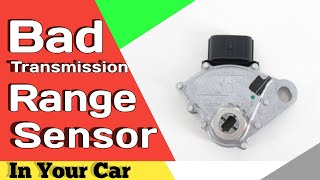
The Powertrain Control Module (PCM) detected an intermittent signal from the transmission range sensor's 'B' circuit. This sensor (also called a neutral safety switch) tells the computer which gear is selected. When this specific signal drops out, the computer cannot determine the gear position, causing poor shifting, no-start conditions, and limp mode activation.
Technical definition: The PCM or Transmission Control Module (TCM) detected that the electrical signal from the 'B' circuit of the transmission range sensor is unstable, erratic, or temporarily disappearing. The code sets after the fault occurs on two consecutive driving cycles.
Can I Drive With P2804?
yes_but_not_advised. Yes, but only to a safe location or repair shop. Your vehicle will likely enter a protective 'limp mode,' locking the transmission in 2nd or 3rd gear. This causes dangerously slow acceleration and places extreme strain on internal clutches. Ignoring this turns a minor electrical repair into a $3,000+ transmission rebuild.
Common Causes
- Damaged or corroded wiring harness and connectors (Very Common) — Exposed undercarriage wiring is highly susceptible to moisture, road salt, and physical damage. Chafed insulation, bent connector pins, or corroded grounds cause the signal to drop out intermittently.
- Faulty Transmission Range Sensor (TRS) (Common) — The sensor's internal electrical contacts wear out, get contaminated with debris, or fail due to moisture intrusion, leading to an erratic signal.
- Transmission fluid contamination (Common) — Transmission fluid leaks past internal seals and contaminates the sensor or its electrical connector, causing short circuits or signal degradation.
- Misadjusted shift cable or sensor alignment (Less Common) — If the sensor is not perfectly aligned with the gear selector's physical position, it sends conflicting signals. This frequently happens after transmission work or if the linkage stretches.
- Low vehicle battery voltage (Less Common) — A weak battery (under 12.4V) or failing alternator starves sensitive transmission electronics, causing unpredictable sensor dropouts and false codes.
- Internal shifter assembly fault (Uncommon) — In vehicles with electronic shifters, the cabin mechanism that sends the gear position to the TCM develops faults, leading to downstream signal problems.
- Failing PCM or TCM (Rare) — A fault within the control module's internal circuits or a damaged connector pin creates a false P2804 code. This is the absolute last item to consider.
Symptoms
- Transmission stuck in 'Limp Mode' — The vehicle defaults to a single gear (usually 2nd or 3rd) to protect the transmission, resulting in very poor acceleration and a limited top speed.
- Engine won't start or has intermittent no-start — The sensor acts as a neutral safety switch. If it fails to signal that the car is in Park or Neutral, it prevents the starter from engaging.
- Incorrect or flashing gear indicator display — The dashboard gear selection indicator (P, R, N, D) flickers, disappears, or shows a gear different from the physical shifter position.
- Harsh or delayed shifting — The transmission shifts erratically, slams into gear, or delays engagement because it receives incorrect gear data.
- Reverse lights fail to illuminate — A faulty sensor fails to trigger the backup lights when shifting into Reverse, creating a safety hazard.
- Check Engine Light is on (also visible on scanner) — The Malfunction Indicator Lamp (MIL) illuminates on the dashboard.
Diagnostic Flowchart
Tap your situation to follow the diagnostic path that matches what you're seeing on this code.
Common Fixes & Costs
- Repairing wiring or replacing pigtail connector — Parts: $15-$40, Labor: $100-$250, ~1.5 hr book time (Intermediate)
- Replacing the Transmission Range Sensor (External)
— Parts: $40-$150, Labor: $100-$200, ~1.0 hr book time
(Intermediate)
: OEM 42700-26700 (Alt: {"brand": "Standard Motor Products", "part_number": "NS-623"}) - Replacing the Internal Lead Frame / Sensor Assembly
— Parts: $150-$350, Labor: $300-$600, ~3.5 hr book time
(Professional)
: OEM AL3Z-7G276-D - Adjusting the shift linkage — Parts: $0, Labor: $50-$150, ~0.8 hr book time (Intermediate)
- Updating TCM/PCM Software — Parts: $0, Labor: $100-$200, ~1.0 hr book time (Professional)
DIY vs Professional
- Repairing wiring or replacing connectors — Beginner: No
Tools: Digital Multimeter, wire strippers, crimpers, heat shrink tubing, terminal pin tools, contact cleaner. - Replacing an EXTERNAL Transmission Range Sensor — Beginner: Yes, with caution.
Tools: Socket set, wrenches, jack and jack stands, vehicle-specific alignment pin (e.g., a 5mm drill bit). - Replacing an INTERNAL Transmission Range Sensor (Lead Frame) — Beginner: No
Tools: Full professional toolset, transmission fluid drain pan, torque wrench.
Used vs. New Parts: Buying Guide
When a used part is worth it: A used OEM external sensor from a low-mileage vehicle (under 80k miles) is acceptable for older vehicles on a strict budget. Never use a used internal lead frame.
Donor-vehicle mileage cap: roughly under 80000 miles for the part to have meaningful remaining life.
Donor quality checklist:
- Verify the part number matches exactly.
- Inspect connector pins for any green corrosion or bent terminals.
- Avoid parts from vehicles in salt-belt regions.
Decision logic:
- If The sensor is internal to the transmission (e.g., a lead frame) → Always buy new. The high labor cost makes it too risky to install a used component.
- If The vehicle is less than 10 years old and the part is external → Buy a new OEM or high-quality aftermarket part for reliability and warranty.
- If The vehicle is over 15 years old and budget is the primary concern → A low-mileage used OEM external sensor is an acceptable choice.
Warranty tradeoff: Used salvage parts offer a 30-day part-only warranty. New aftermarket parts offer 1-year to lifetime warranties. New OEM parts offer 1-2 year warranties.
Worst-case if a used part fails: $250-$500 if a used external sensor fails, requiring repeat labor. $1,000+ if a used internal sensor fails.
What Happens If You Wait — Timeline
- 0-1 month: Intermittent Check Engine Light. Occasional hard shift or delayed engagement. Often resets on its own. (MPG impact: 0-2%% · Added cost: $0)
- 1-3 months: Check Engine Light stays on. Limp mode activates intermittently, forcing a restart. Gear indicator flickers. (MPG impact: 3-8%% · Added cost: $50-$150 in wasted fuel and potential tow.)
- 3-6 months: Vehicle enters limp mode frequently, locking in 2nd or 3rd gear. Intermittent no-start conditions occur. (MPG impact: 10-20%% · Added cost: $500-$1,500 in accelerated wear on transmission clutches due to high heat.)
- 6+ months: Sustained limp mode operation overheats and destroys internal transmission components. Vehicle becomes undriveable. (MPG impact: 20-30%+% · Added cost: $3,000-$5,000+ for a required transmission rebuild.)
Cost of Not Fixing It
- 0-1 month: Intermittent no-start conditions leave you stranded. Noticeable drop in fuel economy due to inefficient gear selection and limp mode. (Added cost: $50-$100 in wasted fuel and potential tow fees.)
- 1-6 months: Operating in limp mode causes extreme heat and stress on transmission clutches and the torque converter, accelerating internal wear. (Added cost: $1,000-$2,500 for premature clutch replacement or partial rebuild.)
- 6+ months: Catastrophic transmission failure. Sustained overheating cooks the fluid and destroys internal seals and hard parts. The vehicle becomes undriveable. (Added cost: $3,500-$7,000 for a complete transmission replacement.)
Diagnosis Steps
- Read Codes and Freeze Frame Data
Use an OBD-II scanner to confirm P2804. Analyze the freeze-frame data to identify the vehicle speed, RPM, and temperature when the code set. Note any accompanying low-voltage or P0705 codes.
Tools: OBD-II Scanner (Beginner) - Check Battery and Charging System
Verify the battery reads 12.4-12.6V with the engine off and 13.2-14.5V when running. Clean any corrosion from the battery terminals. Low voltage causes false intermittent codes.
Tools: Digital Multimeter, Wire Brush (Beginner) - Visually Inspect Wiring and Connectors
Locate the transmission range sensor. Inspect the wiring harness for melted plastic, chafed wires, or broken clips. Disconnect the plug and check for green corrosion or transmission fluid inside the connector.
Tools: Flashlight (Beginner) - Perform a Live-Data 'Wiggle Test'
With the engine running and a scanner monitoring the TRS 'B' circuit status, gently wiggle the wiring harness from the sensor up to the TCM. If the scanner signal drops out while wiggling a specific area, you found the broken wire.
Tools: OBD-II Scanner with Live Data (Intermediate) - Test the Sensor Resistance
Disconnect the sensor. Using a multimeter, measure the resistance between its pins while moving the gear lever through all positions. Compare readings to the manufacturer's service manual. Jumpy or out-of-spec readings confirm a bad sensor.
Tools: Digital Multimeter, Service Manual (Intermediate) - Pro Tip: Back-Probe for Voltage Drop
With the ignition ON and connector plugged in, back-probe the sensor's ground pin. A reading above 0.1V indicates a bad ground. Back-probe the power pin; a drop over 0.2V from battery voltage indicates unwanted resistance in the feed wire.
Tools: Digital Multimeter, Back-probe pins (Advanced) - Pro Tip: Use an Oscilloscope
Connect an oscilloscope to the sensor's signal wire and ground. Cycle the shifter and wiggle wires. A P2804 fault appears as a sudden 'glitch' or complete dropout in the waveform, instantly confirming the intermittent open circuit.
Tools: Oscilloscope, Wiring Diagram (Professional)
When This Code Triggers (Freeze-Frame Conditions)
- Engine Coolant Temp: 180-210°F (The fault frequently appears when the vehicle is fully warmed up, as heat expansion exacerbates loose wiring connections.)
- Vehicle Speed: 30-60 mph (Common at cruising speeds, where sustained road vibrations expose intermittent wiring breaks.)
- Engine Load: 25-50% (Typically sets under moderate load while maintaining speed on a level road.)
Related Codes
- P0705 — A general 'Transmission Range Sensor Circuit Malfunction'. Seeing this alongside P2804 confirms the TRS system is the root cause.
- P2800 — Indicates a general malfunction in the 'B' circuit, whereas P2804 specifies the fault is intermittent (coming and going).
- P2801 — Indicates a 'Range/Performance' issue. The signal is present but irrational, unlike P2804 where the signal drops out completely.
- P2802 — Indicates the 'B' circuit voltage is consistently low (short to ground), rather than intermittently dropping out.
- P2803 — Indicates the 'B' circuit voltage is consistently high (short to power).
Climate & Environmental Factors
- Road Salt (Salt Belt Regions): Corrosive winter brine aggressively attacks undercarriage wiring harnesses and connector pins, causing green corrosion that creates high resistance and intermittent open circuits.
- High Humidity and Moisture: Moisture penetrates connectors with failing rubber seals, leading to short circuits and erratic sensor readings.
- Cold Weather: Freezing temperatures cause plastic wiring insulation to become brittle and crack, creating entry points for moisture and worsening loose connections.
How to Talk to a Mechanic About This Code
Say this: "I have a check engine light with code P2804 for an intermittent transmission range sensor circuit. The car intermittently goes into limp mode. Please start by performing a live-data wiggle test on the wiring harness and connector before quoting a sensor replacement."
Signals you understand the code's most common cause (wiring vs. sensor). It directs the shop to perform a proper electrical diagnosis rather than immediately firing the parts cannon.
Avoid saying:
- 'My car is shifting funny.' (Too vague, invites a wide-ranging and expensive diagnostic).
- 'Just replace the transmission sensor.' (Prevents proper diagnosis; if the wiring is bad, the new sensor won't fix it).
- 'My car won't start sometimes, I think it's the battery.' (Misdirects the mechanic from the known trouble code).
Questions to ask before authorizing the repair:
- Did you perform a 'wiggle test' on the wiring harness while monitoring live data?
- Did you confirm good voltage and ground at the connector?
- Is this an external sensor or an internal lead frame?
- Does the new part require a specific alignment or programming procedure?
Where to Take It: Dealer vs Independent vs Chain
- Dealer:
Recommended only if the sensor is internal or covered by a specific warranty extension. Otherwise, too expensive.
Best for: Vehicles under powertrain warranty., Vehicles with known TSBs or extended warranty programs (e.g., Ford Focus TCM)., Complex internal mechatronics unit replacements.
Downsides: Highest labor rates., Often defaults to replacing large, expensive assemblies rather than repairing a single wire. (Typical cost: +40% vs. baseline) - Independent Shop:
The best fit for most P2804 scenarios. A good independent transmission shop provides the best value for electrical diagnostics.
Best for: Out-of-warranty vehicles., Diagnosing and repairing common wiring issues., Replacing external sensors.
Downsides: Diagnostic skill varies; choose a shop with strong reviews for electrical work. (Typical cost: +0% vs. baseline) - Chain Shop:
Avoid for initial diagnosis. Acceptable only if you have already confirmed the external sensor is faulty and just need it bolted on.
Best for: Simple, clear-cut part replacements where diagnosis is already certain.
Downsides: Technicians often lack experience for complex intermittent electrical diagnosis., High risk of replacing the sensor without testing the wiring. (Typical cost: -10% vs. baseline)
When to Walk Away From the Repair
If the estimated repair cost exceeds 40% of the car's private-party value, consider selling the vehicle as-is.
- Car worth $3000, fix is $1500: Walk away. The repair cost is 50% of the car's value. Sell as a 'mechanic special'.
- Car worth $10000, fix is $1200: Fix it. The repair is only 12% of the vehicle's value and restores proper function.
- Car worth $5000, fix is $2200: Borderline. Get a second opinion from an independent shop. If the car needs other major maintenance, sell it.
What Scan Tool You Need for This Code
Minimum: A scanner that reads manufacturer-specific transmission codes and displays live data PIDs for the transmission range sensor.
A basic $20 code reader cannot display live voltage data. Without live data, you cannot perform a 'wiggle test' to find the intermittent wiring fault.
Budget: BlueDriver Pro / Autel AP200 (~$60-120) — Connects to your smartphone via Bluetooth to read transmission codes and display live data streams. The minimum required to watch the sensor's signal while wiggling wires.
Mid-range: Foxwell NT510 Elite (~$150-180) — A handheld scanner that graphs multiple live data PIDs at once, making it much easier to spot fast signal dropouts. Offers limited bidirectional controls.
Professional: Autel MaxiCOM MK808 (~$400-500) — Provides full bidirectional control and fast live data graphing to catch micro-glitches. Essential for professional shops, but overkill for a single DIY diagnosis.
How to Clear the Code After You Fix It
- Use an OBD-II scan tool to erase the P2804 code from the PCM/TCM memory.
- Perform a complete OBD-II drive cycle to allow readiness monitors to run.
- Rescan the vehicle to ensure the code has not returned.
Drive cycle (~20 minutes): 1) Cold start and idle for 3 minutes. 2) Drive in stop-and-go traffic with light accelerations. 3) Drive at a steady 55 mph for 10 minutes. 4) Let the vehicle cool down completely.
Readiness monitors affected: Comprehensive Component Monitor, Catalyst (CAT) Monitor, Evaporative (EVAP) System Monitor
Before emissions retest: drive at least 50 miles to fully set monitors.
Watch out for:
- Disconnecting the battery clears the code but resets all readiness monitors to 'Not Ready', causing an automatic emissions test failure.
- If the intermittent wiring fault wasn't properly fixed, the code returns immediately during the drive cycle.
Will This Fail Emissions / State Inspection?
Yes — this code typically fails an OBD-II emissions inspection.
- California: An active Check Engine Light is an automatic failure. Clearing the code requires driving 50-100 miles to reset the Comprehensive Component Monitor before retesting.
- New York: Any emissions-related trouble code, including P2804, causes an automatic OBD-II inspection failure.
- Texas: In emissions-testing counties, an illuminated Check Engine Light automatically fails the OBD portion of the inspection.
Most Commonly Affected Vehicles
- Hyundai / Kia Elantra, Sonata, Optima, Forte (2011-2017) — The external inhibitor switch is a highly documented failure point. TSB 17-AT-005 addresses this, recommending replacement with updated part 42700-26700.
- Ford Focus, Fiesta (2012-2018) — The DPS6 transmission suffers from TCM failures (which houses the TRS). Check Customer Satisfaction Program 14M02 for extended 10-year/150k-mile warranty coverage.
- Chevrolet Cruze, Sonic (2011-2016) — Prone to brittle wiring harnesses. The connector at the transmission frequently fails, causing intermittent electrical faults.
- Nissan Altima, Rogue (2007-2015) — The transmission range switch on these CVT models is prone to failure, often requiring a $350-$500 dealer replacement.
- Volkswagen Jetta, Golf, Passat (2006-2015) — On DSG transmissions, the range sensor is integrated into the mechatronics unit. P2804 is often an early warning of expensive mechatronics failure.
Manufacturer-Specific Notes
- Ford: On 6-speed transmissions (6F35, 6R80), the TRS is integrated into a molded lead frame inside the transmission oil pan. Replacement requires draining fluid and removing the valve body, making it highly labor-intensive.
- Hyundai/Kia: High failure rates of the external inhibitor switch prompted TSBs. The fix is a straightforward external replacement, and diagnosis is so common that technicians suspect the switch immediately.
- Volkswagen/Audi: On DSG transmissions, the range sensor is built into the internal mechatronics unit. Diagnosis requires specialized VAG-COM tools, and replacement is exceptionally expensive.
Real Owner Stories
2013 Hyundai Elantra at 110K miles
Check engine light illuminated, gear indicator disappeared, and the car only started in Neutral. Transmission stuck in 3rd gear.
What they tried:
- Feared a major transmission failure.
- Took to an independent shop familiar with Hyundai quirks.
Outcome: Replaced the external inhibitor switch (part #42700-26700) for $250 total ($110 part, $140 labor). The problem resolved immediately.
Lesson: On Hyundai/Kia models, an intermittent no-start and blank gear indicator strongly points to the external inhibitor switch, a fast and inexpensive repair.
2016 Ford F-150 5.0L at 95K miles
Wrench light appeared, transmission stuck in 3rd gear. Scanner showed P2804 and P0722.
What they tried:
- Dealership quoted $1,900 for repair.
- Local transmission shop quoted $1,050.
Outcome: The mechanically inclined owner dropped the transmission pan and replaced the internal molded lead frame assembly for $450 in parts and fluid.
Lesson: On many Fords, the range sensor is part of the internal lead frame. This is highly labor-intensive, making independent transmission shops a much better value than dealerships.
2012 Chevy Cruze at 85K miles
Intermittent P2804 code. Car occasionally shifted hard but drove normally after restarting.
What they tried:
- Replaced the transmission range sensor, but the code returned a week later.
- Performed a live-data 'wiggle test' on the wiring harness.
Outcome: Found frayed wires inside the pigtail connector. Spliced in a new $25 pigtail connector, permanently fixing the code.
Lesson: Always perform a wiring wiggle test before replacing the sensor. Replacing parts without fixing damaged wiring guarantees the code will return.
How to Prevent This Code From Triggering
- Apply dielectric grease to the transmission harness connector seal (Anytime the connector is disconnected) — Creates a moisture-proof barrier on the rubber seal, preventing water and road salt from corroding the pins. Never apply directly to the metal pins.
- Perform undercarriage washes (Monthly in winter (salt-belt regions)) — Removes corrosive road salt that eats away at wiring insulation and sensor housings.
- Visually inspect underbody wiring (Every oil change (5,000-7,500 miles)) — Spots loose wiring harnesses before they rub against the chassis and wear through the insulation.
Frequently Asked Questions
Can I drive my car with a P2804 code?
Yes, but only to a repair shop. The vehicle will likely enter 'limp mode,' causing dangerously slow acceleration. Extended driving in this state causes severe internal transmission damage.
What is the most common cause of a P2804 code?
The most frequent cause is damaged wiring or a corroded connector, not the sensor itself. These exposed parts degrade from moisture and road debris. Always perform a 'wiggle test' on the wiring before replacing parts.
What are the most common misdiagnosis mistakes for P2804?
The biggest mistake is replacing the transmission range sensor without testing the wiring harness. Since intermittent wiring faults are the primary cause, the problem often returns. Another pitfall is immediately suspecting a faulty PCM, which is rare and expensive.
Can a weak battery cause a P2804 code?
Yes. A weak battery or corroded terminals causes low voltage throughout the electrical system. This triggers erratic signals from sensitive electronic components like the transmission range sensor.
Is the transmission range sensor the same as a neutral safety switch?
Yes, 'transmission range sensor', 'neutral safety switch', and 'inhibitor switch' refer to the same component. It tells the computer the gear position and prevents the starter from engaging unless the vehicle is in Park or Neutral.
Will clearing the code fix the problem?
No. Clearing the code only turns off the check engine light temporarily. Because P2804 is an intermittent fault, the light returns as soon as the computer detects the erratic signal again.
How much does it cost to fix code P2804?
A simple wiring repair costs $150–$300. Replacing an external range sensor typically costs $200–$500. If the sensor is internal to the transmission (like a Ford lead frame), costs rise to $600–$1,200+ due to extensive labor.
Can I fix P2804 myself?
You can replace an external sensor yourself if you are comfortable with basic tools and alignment procedures. However, if the sensor is internal or requires complex wiring repairs, stop DIYing and take it to a professional transmission shop.
Key Takeaways
- Code P2804 indicates the transmission range sensor's 'B' circuit signal is dropping out, which forces the vehicle into a protective 2nd or 3rd gear limp mode.
- Perform a live-data 'wiggle test' on the sensor's wiring harness before spending $200+ on a replacement part, as corroded connectors cause the majority of these faults.
- Verify your battery reads at least 12.4V with the engine off; low system voltage frequently triggers false P2804 codes by starving sensitive transmission electronics.
- Limit driving to under 10 miles to reach a repair shop, as sustained limp-mode operation overheats transmission fluid and causes $3,000+ in internal clutch damage.
Helpful Videos

The information in this article is provided for general reference and educational purposes only. Vehicle specifications, procedures, and part compatibility can vary by production date, trim level, and region. Always consult your vehicle's factory service manual and verify part numbers before purchasing or performing repairs. Safety-critical components such as airbags, seat belts, and braking systems should be installed by a qualified professional.
- 🎬 Helpful Videos
- What Does P2804 Mean?
- Can I Drive With P2804?
- Common Causes
- Symptoms
- Diagnostic Flowchart
- Common Fixes & Costs
- DIY vs Professional
- Used vs. New Parts: Buying Guide
- What Happens If You Wait — Timeline
- Cost of Not Fixing It
- Diagnosis Steps
- When This Code Triggers (Freeze-Frame Conditions)
- Related Codes
- Climate & Environmental Factors
- How to Talk to a Mechanic About This Code
- Where to Take It: Dealer vs Independent vs Chain
- When to Walk Away From the Repair
- What Scan Tool You Need for This Code
- How to Clear the Code After You Fix It
- Will This Fail Emissions / State Inspection?
- Most Commonly Affected Vehicles
- Manufacturer-Specific Notes
- Real Owner Stories
- 2013 Hyundai Elantra at 110K miles
- 2016 Ford F-150 5.0L at 95K miles
- 2012 Chevy Cruze at 85K miles
- How to Prevent This Code From Triggering
- Frequently Asked Questions
- Can I drive my car with a P2804 code?
- What is the most common cause of a P2804 code?
- What are the most common misdiagnosis mistakes for P2804?
- Can a weak battery cause a P2804 code?
- Is the transmission range sensor the same as a neutral safety switch?
- Will clearing the code fix the problem?
- How much does it cost to fix code P2804?
- Can I fix P2804 myself?
- Key Takeaways
- 🎟️ Get 5% Off