

OBD-II Code P2789: Clutch 'A' Adaptive Learning at Limit
What P2789 means, why it triggers, and how to fix it
- P2789 indicates the Transmission Control Module (TCM) has reached its maximum adjustment limit and can no longer compensate for wear or faults in the 'A' clutch.
- Over 70% of P2789 codes on 2012-2016 Ford Focus and Fiesta models are caused by a failing TCM, which is often covered under Ford's extended warranty program 14M02.
- Stop driving immediately if you experience stalling or violent shuddering; continuing to drive a slipping dual-clutch adds $1,500+ in collateral damage to actuators and forks.
- Do not replace the mechanical clutch assembly without first performing a $150-$250 TCM software update and adaptive relearn using a bi-directional scan tool.
What Does P2789 Mean?

P2789 means the Transmission Control Module (TCM) can no longer adjust the clutch to keep shifts smooth. The transmission's 'adaptive learning' makes small adjustments over time to compensate for clutch wear. This code indicates these adjustments have reached their programmed maximum limit, meaning the TCM can no longer compensate for a developing mechanical or electrical fault.
Technical definition: The official SAE/OBD-II definition for P2789 is "Clutch 'A' Adaptive Learning at Limit". This indicates the Transmission Control Module (TCM) has detected that the adaptive learning process for clutch 'A' has reached its pre-programmed maximum threshold. The TCM can no longer apply the correct hydraulic pressure or actuator position to ensure smooth clutch engagement due to mechanical wear, module failure, or software issues. The 'A' refers to the first clutch (odd gears) in a dual-clutch system or the primary clutch in an automated manual transmission.
Can I Drive With P2789?
Yes, But With Caution. You can drive, but it is unsafe. You will likely experience harsh shifting, stalling, or sudden power loss in traffic. Continuing to drive with a slipping clutch generates excessive heat, causing cascading damage to the clutch assembly and actuators, potentially adding thousands to the final repair bill. Get the vehicle diagnosed immediately.
Common Causes


- Failing Transmission Control Module (TCM) (Very Common) — The TCM is the brain of the transmission. Internal failures from moisture, vibrations, or solder joint fatigue corrupt its memory or ability to learn, triggering the code even if mechanical parts are fine. This is the primary cause in Ford and Dodge models.
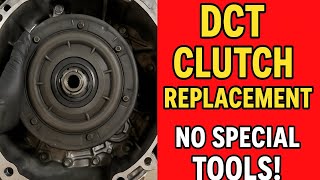
- Worn or failing dual-clutch assembly (Very Common) — As clutch friction material wears down, the TCM constantly adjusts the engagement point. Eventually, wear exceeds the TCM's adjustment range, causing the code. This is frequent in Ford PowerShift transmissions. 🎬 See how to replace the DCT clutch without special tools
- Binding clutch actuators or shift forks (Common) — Electric motors actuate the clutch forks in dual-clutch systems. If these motors or forks stick due to accumulated clutch dust, the clutch won't engage correctly, forcing the adaptive system to its limit.
- Low, dirty, or incorrect transmission fluid (Common) — Fluid is essential for proper hydraulic pressure and cooling. Low or contaminated fluid causes clutches to slip or operate erratically, maxing out the adaptive learning parameters.
- Outdated TCM software (Less Common) — Manufacturers release software updates to expand adaptive learning parameters or fix bugs that cause this code prematurely. This is a known fix for heavy-duty Allison transmissions.
- Poor TCM ground connection (Rare) — A corroded ground point causes erratic behavior and false codes. The module misinterprets sensor data or loses its adaptive memory due to an unstable voltage supply.
- Wiring or connector issues (Rare) — Damaged wires or corroded connectors between the TCM and transmission sensors interrupt communication, tricking the TCM into registering an adaptive problem.
- Inaccurate engine torque reporting (Rare) — The TCM relies on accurate torque data from the Engine Control Module (ECM). If the engine reports torque inaccurately, the TCM cannot adapt shifts correctly, leading to a P2789 code.
Symptoms

- Harsh, jerky, or delayed shifting — The car bangs into gear, hesitates, or feels like it is slipping between shifts, especially at low speeds or under heavy load.
- Shuddering on acceleration from a stop — A noticeable vibration or shudder as you accelerate from a standstill is a classic symptom of a failing dual-clutch system.
- Engine stalls when coming to a stop — If the clutch fails to disengage properly, it forces the engine to stall when the vehicle stops.
- Check Engine Light or Transmission Warning Light is on — The vehicle's computer illuminates a warning light on the dashboard to alert the driver of the fault.
- Failure to engage or disengage gears — The transmission refuses to go into gear, gets stuck in a single gear, or unexpectedly shifts to neutral.
- Reduced fuel economy — An inefficiently shifting transmission with slipping clutches leads to a noticeable decrease in gas mileage.
- Transmission overheating (also visible on scanner) — Slipping clutches generate excessive heat, causing the transmission to run hotter than normal and potentially leading to further damage.
Diagnostic Flowchart
Tap your situation to follow the diagnostic path that matches what you're seeing on this code.
Common Fixes & Costs
- Replace Transmission Control Module (TCM) — Parts: $400-$800, Labor: $150-$300, ~1.5 hr book time (Professional)
- Perform TCM Software Update/Relearn — Parts: $0, Labor: $150-$250, ~1.0 hr book time (Professional)
- Replace Clutch Actuator(s) — Parts: $100-$250 per actuator, Labor: $100-$200, ~1.2 hr book time (Intermediate)
- Replace Dual-Clutch Assembly — Parts: $600-$1,200, Labor: $800-$1,500, ~8.5 hr book time (Professional)
- Repair Wiring/Ground Fault — Parts: $10-$50, Labor: $120-$250, ~1.5 hr book time (Intermediate)
Used vs. New Parts: Buying Guide
When a used part is worth it: For a Transmission Control Module (TCM), a remanufactured unit is a cost-effective option for common failures like the Ford Focus/Fiesta. For a dual-clutch assembly, a used part is highly discouraged.
Donor-vehicle mileage cap: roughly under 60000 miles for the part to have meaningful remaining life.
Donor quality checklist:
- For TCMs, ensure the part number is an exact match and check if it comes from a vehicle that was not scrapped due to transmission failure.
- For remanufactured TCMs, choose a reputable supplier that offers a warranty and tests the unit before shipping.
- Avoid used clutch assemblies entirely; they carry a high risk of premature failure.
Decision logic:
- If The fix is a TCM for a high-failure model (e.g., Ford Focus) → A warrantied, remanufactured TCM offers the best balance of cost and reliability.
- If The fix is a dual-clutch assembly → Always buy new (OEM or high-quality aftermarket like LuK/Sachs). The labor cost is too high to risk using a part with an unknown lifespan.
- If The vehicle has high mileage (>150k miles) and a tight budget → A used TCM is a temporary solution, but it must be programmed and carries a high risk of early failure.
Warranty tradeoff: Used TCMs often have a 30-90 day warranty. Remanufactured TCMs typically offer a 1-year to lifetime warranty. New OEM parts carry a 1-2 year warranty. A new clutch kit has a 1-year/12,000-mile warranty.
Worst-case if a used part fails: $500-$1500 if a used TCM or clutch fails after installation, requiring repeat labor costs plus the cost of another part.
What Happens If You Wait — Timeline
- 0-1 month: Code P2789 is set, and the Check Engine Light is on. The driver notices subtle harshness in low-speed shifts or a slight, intermittent shudder on takeoff. (MPG impact: 0-3%% · Added cost: $0)
- 1-4 months: Shuddering and harsh shifting become consistent. The clutch slips more frequently, generating excess heat. The driver notices a definitive drop in fuel economy. (MPG impact: 5-10%% · Added cost: $50-$150)
- 4-8 months: Constant clutch slippage generates enough heat to damage the clutch forks, actuators, and input shaft seals. The shudder becomes a violent shake. A full clutch and actuator replacement is now required. (MPG impact: 10-15%% · Added cost: $800-$1500)
- 8+ months: Catastrophic failure occurs. Extreme heat and mechanical stress destroy the dual-clutch assembly, warp internal components, and damage the transmission case. The vehicle stops moving. A full transmission replacement is required. (MPG impact: 15-25%+% · Added cost: $3000-$7000)
Cost of Not Fixing It
- 0-1 month: Noticeable decline in shift quality, increased shudder, and a potential drop in fuel economy of 5-10%. (Added cost: Negligible, but risk of unsafe driving conditions increases.)
- 1-6 months: Continued driving with a slipping clutch generates extreme heat, accelerating wear of the clutch assembly, clutch forks, and actuators. This turns a single-part failure into a multi-part failure. (Added cost: $500-$1500)
- 6+ months: Catastrophic damage to the dual-clutch assembly. Excessive heat and mechanical stress damage internal transmission seals, bearings, and the transmission case, requiring a full transmission replacement. (Added cost: $3000-$7000+)
Diagnosis Steps
- Scan for All Trouble Codes
Check for any other transmission or engine-related codes. Codes for clutch actuators (P07A3, P07A5), solenoids, or sensors are often the root cause and must be addressed first.
Tools: OBD-II Scanner (Beginner) - Check for TCM Software Updates and Recalls
Contact a dealership to see if there are available software updates or active recalls for your vehicle's TCM. A simple reflash with updated software resolves the issue on many Ford and Allison transmissions.
Tools: Professional Scan Tool (or shop visit) (Advanced) - Inspect Wiring, Connectors, and Grounds
Visually inspect the wiring harness and connectors going to the TCM and transmission housing. Pay special attention to ground points, looking for corrosion, damage, or loose connections.
Tools: Flashlight (Intermediate) - Check Transmission Fluid Level and Condition
Ensure the transmission fluid is at the correct level and is not dark, burnt-smelling, or contaminated. Low or dirty fluid causes numerous shifting problems.
Tools: Gloves, Rag (Beginner) - Perform a Clutch Adaptive Learning Reset
Use a capable scan tool to perform the 'Clutch Adaptive Learning' procedure. This forces the TCM to relearn the clutch engagement points. If the procedure fails, it strongly points to a mechanical or module failure.
Tools: Advanced Bi-Directional Scan Tool (Advanced) - Test Clutch Actuators and Mechanicals
Test the clutch actuators and the movement of the clutch forks. Remove externally mounted actuators to manually check if the forks move freely or are sticking due to debris.
Tools: Basic hand tools, clutch fork tool (Advanced) - Pro Tip: Analyze Scan Tool Live Data for Shudder
Monitor the Input Shaft Speed Sensor (ISS) for clutch 'A' while accelerating lightly. A rapid spike or oscillation in the ISS RPM graph exceeding 250 RPM confirms excessive clutch shudder, pointing to a mechanical issue.
Tools: Advanced Graphing Scan Tool (Advanced) - Pro Tip: Test Clutch Actuator Motor Resistance
Disconnect the clutch actuator's electrical connector and measure the resistance between the motor terminals. An excessively high (open circuit) or very low (short circuit) reading indicates a failed actuator motor.
Tools: Digital Multimeter, Basic Hand Tools, Service Manual (Advanced) - Pro Tip: Perform a TCM Voltage Drop Test on Ground Circuit
Set a multimeter to DC volts. Place the positive lead on the negative battery terminal and the negative lead on the TCM's ground pin. A reading higher than 0.1 volts indicates excessive resistance in the ground circuit.
Tools: Digital Multimeter, Wiring Diagram (Advanced)
When This Code Triggers (Freeze-Frame Conditions)
- Engine Coolant Temp: 180-210°F (The code typically sets when the engine is fully warmed up.)
- RPM: 1500-2500 RPM (The fault is detected during steady-state cruising or light acceleration when the system is trying to maintain a smooth shift.)
- Engine Load: 20-50% (Occurs under light to moderate engine load, where the TCM actively makes fine adjustments to clutch engagement.)
- Vehicle Speed: 25-55 mph (Triggered during city or suburban driving where repeated shifts provide opportunities for the system to detect adaptation failures.)
Related Codes
- P07A3 — 'Transmission Friction Element 'A' Stuck On' indicates a mechanical issue where the clutch is not disengaging. P07A3 points directly to a mechanical binding, which causes P2789 because the TCM's attempts to adapt to the binding have failed.
- P07A5 — 'Transmission Friction Element 'B' Stuck On' is the equivalent of P07A3 for the second clutch. P07A5 indicates the direct mechanical cause (stuck 'B' clutch), while P2789 is the resulting adaptive learning failure.
- P0902 — 'Clutch Actuator Circuit Low' points to an electrical problem with the clutch actuator motor. If P0902 is present, it is the root cause of P2789; the clutch cannot be controlled properly due to the electrical fault.
- P2787 — 'Clutch Temperature Too High' indicates the clutch is overheating from slipping. P2787 is a direct measurement of heat, while P2789 is the result of the control system's failed attempt to compensate for the slipping.
Climate & Environmental Factors
- Cold Weather: Worsens shudder symptoms on dry dual-clutch transmissions. Cold transmission fluid is more viscous, and dry clutch materials require heat to achieve a smooth friction coefficient. Engagement is harsher until the transmission reaches operating temperature.
- High Humidity / Road Salt: Accelerates corrosion on the TCM's external connectors, wiring harness, and ground points. Moisture ingress into the TCM is a known cause of internal circuit board failure.
How to Talk to a Mechanic About This Code
Say this: "I have a P2789 code on my vehicle and I'd like to schedule a diagnostic. I want to start by checking for any TCM software updates, recalls, or warranty extensions. Please also test the clutch actuators and TCM ground connections before concluding that the clutch assembly needs replacement."
This signals you are an informed customer who understands that P2789 has multiple common causes beyond a worn-out clutch. It directs the shop to follow a logical, cost-effective diagnostic path.
Avoid saying:
- 'My transmission is acting weird, can you fix it?'
- 'Just do whatever it takes to get rid of the check engine light.'
- Authorizing a repair based on a phone estimate without an in-person inspection.
Questions to ask before authorizing the repair:
- Did you check for any technical service bulletins (TSBs), software updates, or warranty extensions for this code on my specific vehicle?
- If you are recommending a clutch replacement, what specific tests did you perform to rule out a faulty TCM, actuator, or wiring issue?
- Can you provide a written estimate that separates the cost of parts and labor?
- If the repair is completed, will you perform the 'clutch adaptive learning' relearn procedure, and is that included in the cost?
- What is the warranty on both the parts and the labor for this specific repair?
Where to Take It: Dealer vs Independent vs Chain
- Dealer:
Recommended first stop, especially for Ford, Dodge, and other makes with known TCM issues. Their ability to check for warranty coverage and perform software updates saves thousands.
Best for: Vehicles under warranty or covered by a recall/extended service program (like Ford's 14M02 for the TCM)., Repairs requiring manufacturer-specific software updates or TCM programming., Complex diagnostics on newer or European vehicles.
Downsides: Typically the highest labor rates., May default to replacing larger assemblies rather than smaller, individual components. (Typical cost: +40% vs. baseline) - Independent Shop:
A good option, but only if it is a reputable transmission specialist. Ask specifically if they have experience with your vehicle's transmission type and can perform the necessary electronic resets.
Best for: Out-of-warranty vehicles where the diagnosis is likely mechanical (e.g., a worn clutch)., Owners seeking a lower labor rate than the dealership.
Downsides: Quality and expertise vary widely; a general mechanic lacks the specific tools or experience for dual-clutch systems., Must confirm they have a bi-directional scan tool capable of performing the mandatory clutch relearn procedure. (Typical cost: +0% vs. baseline) - Chain Shop:
AVOID. This is a complex diagnostic and repair job that is far outside the scope of most chain repair shops.
Best for: Simple, routine maintenance like oil changes or brake pad replacement.
Downsides: Technicians generally lack the specialized training for complex transmission diagnostics and repair., High risk of misdiagnosis, leading to unnecessary and expensive part replacements. (Typical cost: -10% vs. baseline)
When to Walk Away From the Repair
If the total estimated repair cost exceeds 50% of your car's current private-party market value, sell or scrap the vehicle.
- Car worth $4500, fix is $3500: Walk away. The repair cost is over 75% of the car's value. This is financially unwise.
- Car worth $10000, fix is $1100: Fix it. The repair (e.g., a new TCM or actuators) is a reasonable percentage of the car's value and will restore its function.
- Car worth $3000, fix is $1200: Borderline. The cost is 40% of the car's value. Get a second opinion and carefully consider the car's overall condition before proceeding.
What Scan Tool You Need for This Code
Minimum: A bi-directional scan tool with access to the Transmission Control Module (TCM) and the ability to perform the 'Clutch Adaptive Learning' or 'TCM Relearn' special function.
A standard $20-$50 code reader only reads and clears the P2789 code. It CANNOT perform the mandatory electronic relearn procedure required after replacing a clutch, actuator, or TCM. Without this bi-directional command, the repair fails, and the code returns immediately.
Budget: N/A (~$0) — Scanners in this price range are read-only and are not sufficient for this repair. They lack the essential bi-directional control needed for the transmission relearn procedure.
Mid-range: Foxwell NT510 Elite / XTOOL D7 (~$180) — Provides full system diagnostics to read all modules, view live transmission data, and crucially, offers the bi-directional control needed to command the 'Transmission Relearn' or 'Adaptive Learning' function after a repair.
Professional: Autel MaxiCOM MK808S / Launch CRP919E (~$450) — Offers robust bi-directional controls, extensive service functions including clutch relearns for a wide range of vehicles, faster processing, and a professional-grade interface for efficient diagnosis and repair.
Rent vs buy: Rentals from auto parts stores are basic code readers and will NOT work for this job. For P2789, you must either buy a capable bi-directional scanner or take the vehicle to a shop that owns one.
How to Clear the Code After You Fix It
- Use an advanced bi-directional scan tool to perform the 'Clutch Adaptive Learning' or 'TCM Relearn' procedure.
- Use the scan tool to clear the P2789 and any related fault codes.
- Perform a specific drive cycle as recommended by the manufacturer to verify the repair.
Drive cycle (~20 minutes): After the relearn procedure, perform a cold start, followed by gentle acceleration and deceleration through all gears in city driving, then 10-15 minutes of steady highway speed driving.
Readiness monitors affected: Comprehensive Component Monitor, Transmission
Before emissions retest: drive at least 50 miles to fully set monitors.
Watch out for:
- Clearing the code with a basic scanner without performing the mandatory adaptive learning reset causes the code to return immediately.
- If the underlying mechanical or electrical fault is not fixed, the code returns as soon as the TCM reaches its adaptive limit again.
Will This Fail Emissions / State Inspection?
Yes — this code typically fails an OBD-II emissions inspection.
- California: An illuminated Check Engine Light from a P-code results in an automatic failure of the smog inspection. All readiness monitors must be set to 'Ready' to pass.
- New York: The New York Vehicle Inspection Program (NYVIP) includes an OBD-II scan. A P2789 code causes the vehicle to fail the emissions portion of the inspection.
- Texas: In counties requiring emissions testing, a vehicle with an active P2789 code and illuminated Check Engine Light fails the OBD portion of the state inspection.
Most Commonly Affected Vehicles
- Ford Focus (2012-2016) — Uses the DPS6 PowerShift dual-clutch transmission, infamous for widespread issues with the TCM, clutch assembly, and clutch forks.
- Ford Fiesta (2011-2016) — Equipped with the same problematic DPS6 PowerShift transmission as the Focus, suffering from identical TCM and clutch failures.
- Dodge Dart (2013-2015) — Models with the dual dry-clutch transmission have known TCM issues. Recall #15V542000 addresses a TCM mounting bracket that damages the module's circuit board.
- Volkswagen Jetta, Golf (2006-2015) — Models equipped with the Direct-Shift Gearbox (DSG) exhibit this code due to Mechatronics unit failures or clutch pack wear.
- Land Rover Discovery 3 (LR3) (2005-2009) — This code is often related to issues with the transfer box control module or its associated wiring and sensors, not the main transmission clutch.
- Nissan Juke, Qashqai (2011-2017) — Reported in models with automated or dual-clutch systems, pointing towards issues in the transmission control system or clutch assembly.
- Suzuki Every, Celerio (2014-2021) — A common issue in Suzuki models with 'Auto Gear Shift' (AGS) automated manual gearboxes, requiring recalibration or repair of the clutch/actuator assembly.
- Various Heavy-Duty Trucks with Allison Transmissions (2006-2019) — Allison 1000/2000 series transmissions set this code in low-mileage vehicles due to a software issue requiring a TCM reflash to calibration B191 or newer.
Manufacturer-Specific Notes
- Ford: On Focus and Fiesta models with the DPS6 PowerShift, the TCM is a primary failure point. Ford issued Customer Satisfaction Program 14M02, extending warranty coverage for the TCM to 10 years or 150,000 miles.
- Allison: For 1000/2000 series transmissions, Allison issued Service Information Letter (SIL) 34-1K2K-19, Rev. A for P2789 on low-mileage vehicles. The fix is a TCM software update to calibration B191 or newer, not a mechanical repair.
- Dodge: On the 2013-2015 Dodge Dart, the TCM was subject to recall #15V542000. The mounting bracket exerts force on the module and damages its circuit board, leading to a sudden shift to neutral.
- Thomas Built Buses: For school buses with Cummins ISB Natural Gas engines and Allison transmissions, TSB TT8008 addresses P2789. The cause is inaccurate engine torque reporting, fixed by reflashing the TCM with calibration 61BR0AB8.
Real Owner Stories
2014 Ford Focus with 70k miles had shifting issues and no reverse.
The owner experienced shifting problems, including a failure to go into reverse. A local transmission shop initially quoted a full transmission replacement, then changed the diagnosis to a dual-clutch replacement for $3,790.
Outcome: The vehicle was taken to a Ford dealership. The repair was covered completely under Ford's extended warranty program for the TCM. The final cost to the owner was an $80 towing fee.
Lesson: For Ford Focus/Fiesta models, always check for recalls and warranty extensions (like Customer Satisfaction Program 14M02) before agreeing to expensive transmission repairs. A faulty TCM is the most common cause.
2014 Ford Focus with 138k miles developed harsh shifting and threw a P07A5 code, a precursor to P2789.
After replacing the car battery, the owner experienced harsh, hesitant shifting. The check engine light came on with code P07A5 (Transmission Friction Element 'B' Stuck On).
Outcome: Cleaning the corroded ground connection resolved the shifting issues. The root cause was an electrical issue causing the TCM to malfunction, not a mechanical transmission failure.
Lesson: Inspect and clean major ground connections before condemning the transmission, especially after a battery replacement. An unstable ground causes the TCM to behave erratically and trigger false codes.
Maruti Suzuki Celerio with an Automated Manual Transmission (AMT/AGS) had grinding noises and warning lights.
The vehicle made a loud grinding noise in reverse, with both the Malfunction and Auto Transmission warning lights illuminated. A scan revealed code P2789.
Outcome: The clutch plate was completely bent and the release bearing had broken apart. Replacing the clutch plate and bearing assembly resolved the issue.
Lesson: In automated manual transmissions, P2789 is often a direct result of a straightforward mechanical failure. A worn-out clutch or release bearing is a primary cause.
How to Prevent This Code From Triggering
- Change transmission fluid regularly (Every 30,000-40,000 miles (or 3-5 years) for DCTs) — Even in 'dry' clutch systems, gear oil lubricates bearings, forks, and actuators. Clean fluid reduces wear and prevents the buildup of metallic debris that interferes with sensors and actuators.
- Avoid 'creeping' in traffic (Daily driving habit) — Inching forward in traffic forces a dual-clutch transmission to repeatedly slip, generating excessive heat and accelerating wear. Leave a small gap and move up decisively.
- Use manual/sport mode in specific situations (As needed (heavy traffic, parking lots, hills)) — Locking the transmission in 1st gear using manual mode prevents frequent, wear-inducing 1-2 shifts in slow traffic. This reduces clutch and actuator work, minimizing heat.
- Come to a complete stop before shifting from Drive to Reverse (Every time you park or maneuver) — Shifting into Reverse while rolling forward forces the transmission's internal synchronizers and clutches to absorb significant shock, leading to premature wear.
- Regularly clean chassis and TCM ground points (Every 2-3 years or during battery service) — Corrosion on ground points creates electrical resistance, starving the TCM of stable voltage. This corrupts its software, erases adaptive memory, and causes false error codes.
Frequently Asked Questions
What does 'adaptive learning' actually mean?
It is a process where your transmission computer (TCM) automatically adjusts for wear in the clutch over time to keep shifts smooth. When it can no longer make adjustments, it sets the P2789 code.
What is the most common misdiagnosis for P2789?
A common mistake is immediately replacing the clutch assembly without testing the TCM and its wiring. A faulty TCM, bad ground, or outdated software mimics a worn clutch, leading to an expensive and unnecessary repair. Always check for TCM software updates first.
Is it safe to keep driving with code P2789?
It is not recommended. You risk sudden loss of power, harsh shifting, or stalling, which is dangerous in traffic. Continuing to drive causes more expensive damage to the transmission.
Why did the code come back after the clutch was replaced?
The 'clutch adaptive learning' procedure was likely not performed correctly. The TCM must be commanded via a scan tool to forget the old clutch values and relearn the engagement points for the new one. If skipped, the TCM uses the old, maxed-out parameters.
Can I fix P2789 myself?
Fixing P2789 is generally not a DIY job. Replacing a TCM or a clutch assembly requires special tools, advanced knowledge, and the ability to program the new module to the vehicle.
Will a weak car battery cause a P2789 code?
It is very unlikely. While a weak battery causes unrelated electrical gremlins, P2789 is almost always a specific fault within the transmission's mechanical parts or dedicated control system. Diagnosing the transmission system is the priority.
Can a bad ground cause P2789?
Yes, a poor ground connection to the TCM is a possible cause. An unstable ground disrupts the TCM's internal processing, causing it to lose its adaptive data or misinterpret sensor readings.
What is 'Clutch A' versus 'Clutch B'?
In a dual-clutch transmission, 'Clutch A' typically handles the odd-numbered gears (1, 3, 5, R), while 'Clutch B' handles the even-numbered gears (2, 4, 6). Code P2789 specifically points to a problem with the 'A' clutch.
Key Takeaways
- P2789 indicates the Transmission Control Module (TCM) has reached its maximum adjustment limit and can no longer compensate for wear or faults in the 'A' clutch.
- Over 70% of P2789 codes on 2012-2016 Ford Focus and Fiesta models are caused by a failing TCM, which is often covered under Ford's extended warranty program 14M02.
- Stop driving immediately if you experience stalling or violent shuddering; continuing to drive a slipping dual-clutch adds $1,500+ in collateral damage to actuators and forks.
- Do not replace the mechanical clutch assembly without first performing a $150-$250 TCM software update and adaptive relearn using a bi-directional scan tool.
Helpful Videos


The information in this article is provided for general reference and educational purposes only. Vehicle specifications, procedures, and part compatibility can vary by production date, trim level, and region. Always consult your vehicle's factory service manual and verify part numbers before purchasing or performing repairs. Safety-critical components such as airbags, seat belts, and braking systems should be installed by a qualified professional.
- 🎬 Helpful Videos
- What Does P2789 Mean?
- Can I Drive With P2789?
- Common Causes
- Symptoms
- Diagnostic Flowchart
- Common Fixes & Costs
- Used vs. New Parts: Buying Guide
- What Happens If You Wait — Timeline
- Cost of Not Fixing It
- Diagnosis Steps
- When This Code Triggers (Freeze-Frame Conditions)
- Related Codes
- Climate & Environmental Factors
- How to Talk to a Mechanic About This Code
- Where to Take It: Dealer vs Independent vs Chain
- When to Walk Away From the Repair
- What Scan Tool You Need for This Code
- How to Clear the Code After You Fix It
- Will This Fail Emissions / State Inspection?
- Most Commonly Affected Vehicles
- Manufacturer-Specific Notes
- Real Owner Stories
- 2014 Ford Focus with 70k miles had shifting issues and no reverse.
- 2014 Ford Focus with 138k miles developed harsh shifting and threw a P07A5 code, a precursor to P2789.
- Maruti Suzuki Celerio with an Automated Manual Transmission (AMT/AGS) had grinding noises and warning lights.
- How to Prevent This Code From Triggering
- Frequently Asked Questions
- What does 'adaptive learning' actually mean?
- What is the most common misdiagnosis for P2789?
- Is it safe to keep driving with code P2789?
- Why did the code come back after the clutch was replaced?
- Can I fix P2789 myself?
- Will a weak car battery cause a P2789 code?
- Can a bad ground cause P2789?
- What is 'Clutch A' versus 'Clutch B'?
- Key Takeaways
- 🎟️ Get 5% Off