

OBD-II Code P2766: Input/Turbine Speed Sensor 'B' Circuit Range/Performance
The Ultimate Expert Guide to Diagnosing and Fixing P2766
- P2766 triggers limp mode and erratic shifting, making the vehicle unsafe to drive at highway speeds.
- Expect repair costs ranging from $150 for a simple wiring fix to over $1,500 if the sensor is integrated into a failing CVT valve body.
- Subaru, Nissan, and Ford owners must check for active Technical Service Bulletins (TSBs) and extended warranties before paying for any repairs.
- Never replace the speed sensor without first verifying its live data output and performing a wiring harness wiggle test.
- A scan tool with live data capabilities is mandatory to distinguish between a failed sensor, broken wiring, or internal mechanical slippage.
What Does P2766 Mean?
The Powertrain Control Module (PCM) detected an irrational or out-of-spec signal from Input Speed Sensor 'B'. This sensor measures how fast the transmission's input shaft is spinning. The computer compares this speed to engine RPM and output shaft speed to command smooth gear shifts. When the 'B' sensor sends erratic data, the computer loses the ability to control the transmission properly, triggering limp mode.
Technical definition: Input/Turbine Speed Sensor 'B' Circuit Range/Performance. This diagnostic trouble code (DTC) sets when the PCM or Transmission Control Module (TCM) detects the sensor's signal voltage or frequency falls outside the expected operational range. The PCM constantly compares the 'B' sensor's reading to the crankshaft position sensor and output speed sensor. A P2766 code indicates a performance mismatch, meaning the sensor is providing data that contradicts the current mechanical operating conditions.
Can I Drive With P2766?
No — Do Not Drive. Do not drive the vehicle. The transmission will shift violently, lock into a single gear (limp mode), or cause the engine to stall unexpectedly. These conditions lead to a sudden loss of vehicle control and create a severe safety hazard.
Common Causes
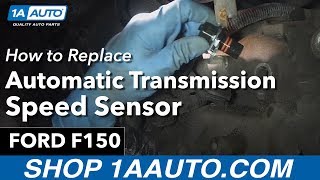
- Damaged Wiring or Corroded Connectors (Very Common) — The transmission wiring harness is exposed to extreme heat, vibration, and moisture. Wires fray, melt, or short-circuit against the chassis, and connector pins corrode, instantly disrupting the sensor's 🎬 See this walkthrough on replacing a Ford transmission speed sensor low-voltage signal.
- Failed Input/Turbine Speed Sensor 'B' (Common) — The magnetic pickup sensor fails internally from repeated heat cycles or becomes coated with microscopic metallic debris from normal transmission wear. This metallic sludge blocks the sensor from reading the reluctor wheel cleanly.
- Contaminated or Low Transmission Fluid (Common) — Low fluid causes overheating and clutch slippage. Dirty fluid acts as a liquid abrasive and carries metal particles that interfere with magnetic sensors, generating erratic speed readings.
- Faulty Transmission Valve Body or Solenoids (Less Common) — On modern CVTs (especially Subaru and Nissan), the speed sensors are integrated directly into the valve body assembly. A failure in the valve body's internal circuitry or solenoids triggers this code and requires replacing the entire unit.
- Failed Torque Converter (Less Common) — A failing torque converter causes internal slipping, shuddering, and extreme fluid overheating. These mechanical events create a discrepancy between engine speed and transmission input speed that the PCM interprets as a sensor performance fault.
- Internal Mechanical Transmission Failure (Rare) — Worn clutch packs or a failing planetary gear set cause erratic spinning of the input shaft. The speed sensor accurately reports this erratic behavior, but because the reading is irrational compared to other sensors, the PCM sets a performance code.
- Failed or Outdated TCM/PCM (Very Rare) — Outdated software or a failed analog-to-digital converter inside the control module misinterprets valid sensor data. Manufacturers frequently release Technical Service Bulletins (TSBs) with software updates to fix these logic bugs.
Symptoms
- Harsh, Delayed, or Erratic Shifting — The vehicle slams into gear, hesitates for long periods before shifting, or shifts at unpredictable times.
- Transmission Stuck in Limp Mode — To prevent catastrophic damage, the TCM locks the transmission into a single gear (typically 2nd or 3rd), resulting in extremely poor acceleration and high engine RPMs at cruising speed.
- Check Engine Light / Transmission Warning Light On — The PCM illuminates the Malfunction Indicator Lamp (MIL) or a dedicated transmission warning light (like the AT Oil Temp light).
- Engine Stalling When Coming to a Stop — A faulty signal prevents the torque converter clutch from disengaging when the vehicle stops, causing the engine to stall exactly like stopping a manual car without pressing the clutch.
- Decreased Fuel Economy — Because the transmission cannot shift into overdrive or lock the torque converter, the engine runs at higher-than-normal RPMs, increasing fuel consumption by 10-20%.
- Fluctuating Speedometer — If the vehicle uses input speed data to calculate vehicle speed, a faulty signal causes the speedometer needle to bounce erratically or drop to zero.
- Cruise Control Inoperative — The vehicle's computer disables cruise control as a safety measure when it cannot rely on transmission sensor data to maintain a steady speed.
Diagnostic Flowchart
Tap your situation to follow the diagnostic path that matches what you're seeing on this code.
Common Fixes & Costs
- Replacing the Input/Turbine Speed Sensor
— Parts: $50-$250, Labor: $100-$300, ~1.2 hr book time
(DIY)
Nissan (Altima, Rogue, Sentra): OEM 31935-1XF01, 31935-1XF0D (Alt: Beck/Arnley 090-0015, Delphi SS11423)
Ford (Focus, Fiesta): OEM AE8Z-7C604-A (Alt: Dorman 917-637)
Chevrolet (Equinox, Cruze): OEM 24276627 (Alt: ACDelco 24276627) - Repairing Damaged Wiring or Connector — Parts: $10-$50, Labor: $150-$300, ~1.5 hr book time (Intermediate)
- Replacing the Transmission Valve Body
— Parts: $500-$1800, Labor: $400-$1000, ~4 hr book time
(Professional)
Subaru (Impreza, Crosstrek, Forester): OEM 31825AA050, 31825AA051, 31825AA052 (Alt: Remanufactured units from VelocityTitan or JCarPart.) - Transmission Fluid and Filter Service — Parts: $50-$150, Labor: $100-$250, ~1 hr book time (Intermediate)
- Replacing/Reprogramming the Transmission Control Module (TCM) — Parts: $600-$1200, Labor: $150-$400, ~2.5 hr book time (Professional)
Used vs. New Parts: Buying Guide
When a used part is worth it: Buying a used valve body is highly discouraged due to the risk of premature failure. A used external sensor from a low-mileage donor car is acceptable for older vehicles on a tight budget.
Donor-vehicle mileage cap: roughly under 80000 miles for the part to have meaningful remaining life.
Donor quality checklist:
- Verify the exact part number matches; superseded numbers are often incompatible.
- Choose remanufactured units from reputable suppliers with state-of-the-art testing equipment.
- Avoid cheap online units that use low-quality aftermarket solenoids.
Decision logic:
- If The vehicle is a Subaru with a TR580 CVT → Buy a new OEM or high-quality remanufactured valve body. Used units carry a massive risk of repeat failure.
- If The vehicle is older (>10 years) and the failed part is an external sensor → A used OEM sensor from a low-mileage donor car is a low-risk way to save money.
- If The vehicle is high-value and you plan to keep it long-term → Always buy new OEM parts to ensure longevity and reliability.
Warranty tradeoff: Used parts carry a 30-90 day warranty. New aftermarket parts offer 1-3 years. A new OEM valve body installed by a dealer carries the best warranty but at the highest cost.
Worst-case if a used part fails: $1500 if a cheap remanufactured valve body fails, requiring you to pay for repeat labor and a second part.
What Happens If You Wait — Timeline
- 0-1 month (Intermittent Fault): Check Engine Light appears intermittently. Occasional harsh shift or slight hesitation occurs. Cruise control disables. (MPG impact: 0-5%% · Added cost: $0)
- 1-3 months (Consistent Fault): Check Engine Light stays on. Shifting becomes noticeably erratic. Vehicle enters limp mode frequently. Fuel economy drops. (MPG impact: 5-15%% · Added cost: $50-$150 in wasted fuel.)
- 3-6 months (Mechanical Wear Begins): Incorrect shift pressures cause excessive heat. Fluid burns, and internal clutches slip, generating metallic debris. A whine or shudder develops. (MPG impact: 10-20%% · Added cost: $1,500-$2,500 for a valve body or torque converter replacement.)
- 6+ months (Catastrophic Failure): The transmission fails completely. Widespread internal damage from heat and metal debris destroys the unit. The vehicle cannot move. (MPG impact: N/A% · Added cost: $4,000-$8,000 for a full transmission replacement.)
Cost of Not Fixing It
- 0-1 Month: Erratic shifting, decreased fuel economy (10-20%), and potential for stalling in traffic. The vehicle is unsafe. (Added cost: $50-$150 in wasted fuel.)
- 1-6 Months: Continued driving generates excessive heat, burning the fluid and accelerating wear on clutches. A minor sensor issue escalates into severe mechanical damage. (Added cost: $2000-$5000)
- 6+ Months: Catastrophic transmission failure. Metal debris destroys the valve body, torque converter, and cooler. The transmission requires a complete rebuild. (Added cost: $4000-$8000)
Diagnosis Steps
- Read Codes & Freeze Frame Data
Use an advanced OBD-II scanner to confirm P2766. Document all stored codes and review the freeze frame data to see the exact engine RPM, vehicle speed, and load at the moment the fault occurred.
Tools: Advanced OBD-II Scanner (Beginner) - Live Data Analysis (Pro Tip)
Use the scanner's live data function to monitor Input Speed Sensor 'A' and 'B' simultaneously. While driving, their readings must be nearly identical. If Sensor 'B' shows erratic data, dropouts to zero, or readings that don't correlate with engine RPM, the fault is isolated to the 'B' sensor or its circuit.
Tools: Advanced OBD-II Scanner (Intermediate) - Check Transmission Fluid Level and Condition
Inspect the transmission fluid. It must be at the correct level and bright red. Fluid that is dark brown, smells burnt, or contains metallic particles indicates severe internal mechanical failure, rendering further electrical diagnosis pointless until the mechanical damage is addressed.
Tools: Rag, Dipstick (if equipped), Lift/Jack Stands (Beginner) - Perform a 'Wiggle Test'
With the engine running and the scanner graphing the input speed sensor 'B' data, vigorously wiggle the wiring harness at the sensor connector and along its path to the TCM. Sharp spikes or dropouts on the graph confirm an intermittent short or open wire.
Tools: Advanced OBD-II Scanner, Gloves (Intermediate) - Inspect Wiring and Connectors
Visually inspect the wiring harness between the TCM and the input speed sensor. Look for melted insulation near the exhaust, chafing against the chassis, or green corrosion inside the connector pins.
Tools: Flashlight, Inspection Mirror (Intermediate) - Check for Technical Service Bulletins (TSBs)
Search manufacturer TSBs for your specific year, make, and model. P2766 is frequently tied to known software bugs or valve body defects that require a specific dealer-level fix or software flash.
Tools: Internet Access (Beginner) - Test the Sensor Circuit with a Multimeter
Disconnect the sensor and TCM. Check for continuity and resistance on the signal, power, and ground wires between the sensor connector and the TCM connector to isolate the fault to the sensor, wiring, or module.
Tools: Digital Multimeter, Vehicle-Specific Repair Manual (Advanced) - Perform Oscilloscope Waveform Analysis
Connect a lab scope to the sensor's signal wire. A healthy sensor produces a clean, consistent square wave (Hall effect) or sine wave (inductive) that increases in frequency with RPM. Missing peaks or inconsistent amplitude confirm a failing sensor or damaged reluctor wheel.
Tools: Automotive Oscilloscope (Lab Scope), Backprobe Pins (Advanced)
When This Code Triggers (Freeze-Frame Conditions)
- Engine Coolant Temp: 180-210°F (The engine is at full operating temperature.)
- RPM: 1500-2500 RPM (The fault occurs during steady-state cruising or light acceleration, not at idle.)
- Engine Load: 25-50% (The code sets under moderate load conditions, such as maintaining speed on a highway.)
- Vehicle Speed: 40-65 mph (The irrational signal is detected at steady highway speeds when the computer expects a stable correlation between input and output speeds.)
Related Codes
- P2765 — The generic code for the Input/Turbine Speed Sensor 'B' Circuit. P2765 indicates a general circuit malfunction, while P2766 specifies a 'Range/Performance' issue (irrational signal).
- P2767 — Indicates 'No Signal' from the 'B' circuit. P2767 points to a complete electrical failure (broken wire, dead sensor), whereas P2766 implies a signal is present but nonsensical.
- P0717 — Indicates 'No Signal' from the 'A' input speed sensor. Seeing codes for both 'A' and 'B' sensors points to a shared wiring harness failure or a bad TCM ground.
- P0722 — Indicates 'No Signal' from the Output Speed Sensor. Having both input (P2766) and output (P0722) codes strongly suggests a widespread electrical issue or catastrophic internal mechanical failure.
- P2784 — Indicates 'Input/Turbine Speed Sensor A/B Correlation'. The PCM found a massive discrepancy between sensor 'A' and 'B'. This rules out a TCM fault and points directly to a failed sensor or its dedicated wiring.
Climate & Environmental Factors
- High Temperatures / Hot Climates: Heat destroys automatic transmissions. High fluid temperatures accelerate fluid breakdown, creating metallic debris that contaminates speed sensors and causes solenoids to fail prematurely. Jatco CVTs are highly susceptible to this.
- Cold Temperatures / Cold Climates: Thick, cold transmission fluid causes delayed shifting on startup. While it doesn't trigger P2766 directly, it exacerbates existing mechanical wear and makes intermittent sensor dropouts more noticeable.
- High Humidity: Moisture accelerates corrosion on external wiring harness connectors. Compromised weather seals allow water to short the low-voltage signal from the speed sensor to ground.
How to Talk to a Mechanic About This Code
Say this: "I have a P2766 code and I'm experiencing harsh shifting. Please start by checking for TSBs, inspecting the fluid condition, and verifying the sensor circuit and live data before recommending major part replacements."
This signals you understand P2766 is often a symptom, not the root cause. It directs the technician to follow a logical diagnostic path instead of immediately quoting an expensive transmission replacement.
Avoid saying:
- 'My transmission is acting weird, can you fix it?'
- 'I think I need a new transmission speed sensor.'
- 'Just do whatever it takes to fix it.'
Questions to ask before authorizing the repair:
- What were the specific results of the live data tests?
- Did you find any Technical Service Bulletins (TSBs) for my vehicle?
- If recommending a transmission replacement, why is a simpler sensor or valve body repair not possible?
- What is the warranty covering both parts and labor?
Where to Take It: Dealer vs Independent vs Chain
- Dealer:
Recommended first stop for Subaru, Ford, and Nissan owners to check for warranty extensions. Otherwise, get their diagnosis and compare with a transmission specialist.
Best for: Vehicles under a powertrain warranty or known warranty extension (Subaru, Ford)., Vehicles requiring a mandatory TCM software update., Complex issues requiring proprietary diagnostic tools.
Downsides: Highest labor rates., May default to replacing the entire transmission instead of repairing internal components. (Typical cost: +50% vs. baseline) - Independent Shop:
A good option, but specifically seek out a reputable transmission specialty shop rather than a general mechanic.
Best for: Out-of-warranty vehicles with common failures (external Honda sensors, wiring issues)., Getting a second opinion on a dealer's quote., General diagnosis and fluid services.
Downsides: General mechanics often lack the specialized training for complex internal CVT work. (Typical cost: +0% vs. baseline) - Chain Shop:
AVOID for P2766 diagnosis and repair.
Best for: Simple fluid changes (only if using OEM fluid).
Downsides: Technicians lack specialized training for complex transmission diagnostics., High risk of misdiagnosis and unnecessary upsells. (Typical cost: -10% vs. baseline)
When to Walk Away From the Repair
If the estimated repair cost exceeds 50% of the car's current private-party value, seriously consider selling or trading in the vehicle.
- Car worth $5000, fix is $2800: Walk away. The repair cost is over 50% of the car's value.
- Car worth $15000, fix is $2200: Fix it. The repair cost is well below the 50% threshold.
- Car worth $3000, fix is $2500: Walk away. The repair cost is nearly the entire value of the car.
What Scan Tool You Need for This Code
Minimum: A scanner that reads transmission-specific codes and displays live data for the input and output speed sensors.
A basic $20 code reader only shows 'P2766'. It cannot show the live RPM data needed to see if the signal is erratic, dropping out, or nonsensical.
Budget: TOPDON TopScan / Kingbolen Ediag Elite (~$90) — These Bluetooth dongles offer full system diagnostics and graph Input Sensor 'A' and 'B' RPMs in real-time.
Mid-range: Innova 5610 / Foxwell NT510 Elite (~$320) — Provides robust live data, freeze frame details, and bidirectional tests. The Foxwell performs transmission adaptations required after repair.
Professional: Autel MaxiCOM MK808S / Launch Creader CRP919X (~$360-500) — Professional tablets offering full bidirectional control to command solenoids and perform mandatory transmission relearn procedures.
How to Clear the Code After You Fix It
- Use an OBD-II scan tool to clear the diagnostic trouble codes.
- Perform a complete drive cycle to allow the vehicle's readiness monitors to run.
- Perform a TCM relearn procedure if a new valve body or sensor was installed.
Drive cycle (~30 minutes): A generic drive cycle includes a cold start, 3 minutes of idling, 20 minutes of mixed city/highway driving including steady speeds at 55 mph, and several stop-and-go situations.
Readiness monitors affected: Comprehensive Component Monitor, Catalyst Monitor, Oxygen Sensor Monitor
Before emissions retest: drive at least 100 miles to fully set monitors.
Watch out for:
- Disconnecting the battery clears the code but resets all readiness monitors to 'Not Ready', causing an automatic emissions failure.
- The code returns immediately if the underlying mechanical fault was not repaired.
- Failing to perform a mandatory TCM relearn procedure will cause harsh shifting even with a new sensor.
Will This Fail Emissions / State Inspection?
Yes — this code typically fails an OBD-II emissions inspection.
- California: An illuminated Check Engine Light is an automatic smog check failure. A full drive cycle must be completed to set readiness monitors before a re-test.
- New York: An active P2766 code is an automatic failure. The vehicle cannot be registered or renewed until the issue is fixed and the code is cleared.
- Texas: In emissions-testing counties, an illuminated Check Engine Light is an automatic failure. You must drive 50-100 miles to reset readiness monitors after clearing the code.
Most Commonly Affected Vehicles
- Subaru Impreza, Crosstrek, Forester, Legacy/Outback (2012-2019) — Extremely common on TR580 CVTs. The speed sensors are integrated into the valve body. Subaru issued warranty extensions (10 years/100,000 miles) and TSB 16-102-16R. P2766 guarantees a valve body replacement.
- Nissan Altima, Rogue, Sentra, Murano, Juke (2007-2018) — These Jatco CVTs have notoriously high failure rates. P2766 is a precursor to complete transmission failure. Class-action lawsuits resulted in warranty extensions and repair reimbursements.
- Jeep Patriot, Compass (2007-2017) — Equipped with the same problematic Jatco CVT as Nissan. Prone to overheating during highway driving, which accelerates wear and triggers this code.
- Ford Focus, Fiesta (2011-2019) — The DSP6 PowerShift dual-clutch transmission loses even-numbered gears when this code sets. Covered under the Vargas v. Ford Motor Company class-action settlement for buybacks and reimbursements.
- Hyundai Elantra, Veloster, Tucson (2012-2017) — On DCT models, P2766 points to a failure of the sensor monitoring the even-numbered gear input shaft, often caused by a faulty clutch actuator.
- Honda Civic, Pilot, Accord, Odyssey (2006-2015) — Input and output speed sensors are externally mounted and simple to replace. Failure is common due to age and heat cycles.
- Chevrolet Equinox, Trax, Malibu, Cruze (2016-2025) — GM 6Txx or 9Txx series transmissions set this code when the input speed sensor fails. The TCM often requires reprogramming after replacement.
Manufacturer-Specific Notes
- Subaru: On TR580/TR690 CVTs, P2766 is the hallmark of a failing valve body. Do not replace external parts. Check for the 10-year/100,000-mile warranty extension and TSB 16-102-16R. The only fix is a new valve body.
- Nissan/Jeep (Jatco CVT): This code is a death rattle for the Jatco CVT, indicating overheating and internal wear. Check for class-action settlement programs that provide warranty extensions to 84 months/84,000 miles or $5,000 repair reimbursements.
- Ford (PowerShift DCT): In the DSP6 transmission, this code accompanies shuddering and power loss. Due to the Vargas v. Ford settlement, owners may be eligible for cash payments or vehicle buybacks. Check dealer coverage before paying out of pocket.
- Hyundai/Kia (DCT): A P2766 code specifically points to a problem with the 2-4-6-R gear shaft sensor circuit. This is frequently linked to faulty clutch actuators rather than the sensor itself.
Real Owner Stories
2015 Subaru Crosstrek at 110K miles
Check engine light, AT oil temp light, and traction control light illuminated. The car was stuck in limp mode.
Outcome: The owner called a dealership and confirmed the vehicle was covered under Subaru's extended CVT warranty. The dealer replaced the valve body for a $100 deductible.
Lesson: If you own a Subaru CVT, always check for warranty extensions or TSBs at a dealership before paying an independent shop.
2013 Nissan Altima at 95K miles
Car shuddered on acceleration and whined. P2766 and P0741 codes were present.
Outcome: The owner researched Nissan CVT class-action settlements and negotiated with Nissan corporate, who covered 50% of the replacement cost as a goodwill gesture.
Lesson: For Nissan/Jeep Jatco CVTs, P2766 signals impending transmission failure. Research class-action settlements for potential reimbursement.
2014 Ford Focus at 80K miles
The car hesitated and shuddered from a stop, eventually setting P2766 and jerking harshly.
Outcome: The dealer replaced the sensor, performed a mandatory TCM software update, and executed a clutch relearn procedure for $450. The car shifted smoothly afterward.
Lesson: On Ford PowerShift models, a simple sensor swap is insufficient. The fix must include a TCM software update and clutch relearn procedure.
2010 Honda CR-V at 150K miles
The 'D' light blinked, shifting was erratic, and P2766 set.
Outcome: The owner installed a new $60 OEM sensor in 30 minutes, clearing the code and solving the problem permanently.
Lesson: On vehicles with external sensors (like older Hondas), P2766 is often a fast, inexpensive DIY fix.
How to Prevent This Code From Triggering
- Change transmission fluid and external filter. (Every 30,000-40,000 miles, especially for CVTs.) — Clean fluid lubricates, cools, and prevents the metallic wear that destroys magnetic speed sensors and clogs valve bodies.
- Install an auxiliary external transmission cooler. (One-time installation for towing or hot climates.) — Reduces fluid temperatures by 20-50°F, dramatically slowing fluid breakdown and extending the life of sensors and solenoids.
- Avoid aggressive driving habits. (Daily habit.) — Smooth inputs reduce mechanical stress, lower operating temperatures, and prolong the life of internal clutches.
- Install TCM/PCM software updates. (During regular service visits.) — Updates improve shifting logic, adjust hydraulic pressures, and fix bugs that trigger false diagnostic codes.
Frequently Asked Questions
Can I just replace the input speed sensor to fix P2766?
Rarely. P2766 is a 'performance' code, meaning the sensor is often correctly reporting an underlying mechanical issue. On many vehicles (Subaru/Nissan CVTs), the sensor is permanently integrated into the valve body and cannot be replaced separately.
What is the difference between an input speed sensor and an output speed sensor?
The input speed sensor measures the rotational speed of the transmission's input shaft receiving power from the engine. The output speed sensor measures the speed of the shaft sending power to the wheels. The computer compares these to calculate the current gear ratio.
Why is the repair so expensive if it's just a sensor?
In modern CVTs, the sensor is integrated into the valve body deep inside the transmission. Replacing it requires draining the fluid, removing the oil pan, and installing a complex $800+ assembly, driving up parts and labor costs.
What are the most common misdiagnosis mistakes for P2766?
The biggest mistake is replacing the sensor without verifying its live data output. Another is condemning the expensive TCM without exhaustively ruling out wiring harness shorts or contaminated transmission fluid.
Can a DIY mechanic replace the input speed sensor?
It depends on the vehicle. On older cars or Hondas, the sensor is external and takes 10 minutes to swap. On modern CVTs, the sensor is internal and requires professional tools and a digital relearn procedure.
Can I prevent code P2766?
Strict adherence to transmission fluid changes every 30,000 to 60,000 miles is the best prevention. Clean fluid prevents overheating and reduces the metallic wear that destroys magnetic speed sensors.
My car has P2766 but drives fine sometimes. Can I ignore it?
No. An intermittent fault will inevitably become permanent, potentially leaving you stranded in traffic. Continued driving with incorrect shift pressures causes catastrophic internal transmission damage.
Can a transmission fluid leak cause P2766?
Yes, indirectly. Low fluid from a leak causes the transmission to overheat and internal clutches to slip. This slipping creates an irrational speed difference between the engine and transmission, triggering the P2766 performance code.
What type of sensor is the input speed sensor?
They are typically Inductive (2-wire, generates AC sine wave) or Hall Effect/Magnetoresistive (3-wire, generates DC square wave). Knowing the type is critical for proper testing with a multimeter or oscilloscope.
Key Takeaways
- P2766 triggers limp mode and erratic shifting, making the vehicle unsafe to drive at highway speeds.
- Expect repair costs ranging from $150 for a simple wiring fix to over $1,500 if the sensor is integrated into a failing CVT valve body.
- Subaru, Nissan, and Ford owners must check for active Technical Service Bulletins (TSBs) and extended warranties before paying for any repairs.
- Never replace the speed sensor without first verifying its live data output and performing a wiring harness wiggle test.
- A scan tool with live data capabilities is mandatory to distinguish between a failed sensor, broken wiring, or internal mechanical slippage.
Helpful Videos


The information in this article is provided for general reference and educational purposes only. Vehicle specifications, procedures, and part compatibility can vary by production date, trim level, and region. Always consult your vehicle's factory service manual and verify part numbers before purchasing or performing repairs. Safety-critical components such as airbags, seat belts, and braking systems should be installed by a qualified professional.
- 🎬 Helpful Videos
- What Does P2766 Mean?
- Can I Drive With P2766?
- Common Causes
- Symptoms
- Diagnostic Flowchart
- Common Fixes & Costs
- Used vs. New Parts: Buying Guide
- What Happens If You Wait — Timeline
- Cost of Not Fixing It
- Diagnosis Steps
- When This Code Triggers (Freeze-Frame Conditions)
- Related Codes
- Climate & Environmental Factors
- How to Talk to a Mechanic About This Code
- Where to Take It: Dealer vs Independent vs Chain
- When to Walk Away From the Repair
- What Scan Tool You Need for This Code
- How to Clear the Code After You Fix It
- Will This Fail Emissions / State Inspection?
- Most Commonly Affected Vehicles
- Manufacturer-Specific Notes
- Real Owner Stories
- 2015 Subaru Crosstrek at 110K miles
- 2013 Nissan Altima at 95K miles
- 2014 Ford Focus at 80K miles
- 2010 Honda CR-V at 150K miles
- How to Prevent This Code From Triggering
- Frequently Asked Questions
- Can I just replace the input speed sensor to fix P2766?
- What is the difference between an input speed sensor and an output speed sensor?
- Why is the repair so expensive if it's just a sensor?
- What are the most common misdiagnosis mistakes for P2766?
- Can a DIY mechanic replace the input speed sensor?
- Can I prevent code P2766?
- My car has P2766 but drives fine sometimes. Can I ignore it?
- Can a transmission fluid leak cause P2766?
- What type of sensor is the input speed sensor?
- Key Takeaways
- 🎟️ Get 5% Off