

P2765 on 2013-2014 Audi RS5: Input Speed Sensor 'B' Circuit Causes and Fixes
On the 2013-2014 Audi RS5, code P2765 almost always points to a failed internal sensor module within the S-Tronic DL501 transmission's Mechatronic unit. The fix is a specialized repair kit, not a full transmission replacement. Expect to pay $2,000-$3,500 for a professional repair at an independent shop, whereas a dealer might quote over $7,500 for a full unit replacement.
- P2765 on a 2013-2014 RS5 is a very specific code that points to a known failure inside the transmission's Mechatronic unit.
- The correct and most cost-effective fix is a Mechatronic repair kit (e.g., 0B5398048D), not a full transmission or Mechatronic unit replacement.
- This is a serious issue that requires professional repair due to its complexity and the need for specialized tools and software for adaptation.
- Many other high-performance Audis from the same era, like the S4 and S5, share this exact transmission and failure mode.
What's Unique About the 2013-2014 Audi RS5
The 2013-2014 RS5 is equipped with the first-generation DL501 S-Tronic transmission. This code is not about a simple, external sensor you can easily replace. The sensor and its circuitry are integrated into a complex printed circuit board (PCB) located inside the transmission's Mechatronic unit. This internal circuit board is a well-documented weak point, especially on DL501 units produced between 2009 and 2013, and is prone to failure from heat and vibration over time. The degradation of internal solder joints and wiring leads to P2765, making it a common and specific indicator of this internal failure.
Diagnostic Flowchart
Tap your situation to follow the diagnostic path that matches what you're seeing on this vehicle.
Symptoms You May Notice
- "Gearbox Malfunction: You can continue driving" message on the dashboard (often with limited functionality)
- Flashing PRNDS gear indicator
- Vehicle enters 'limp mode,' often stuck in one gear (e.g., only odd or even gears available)
- Harsh, jerky, or delayed gear shifts
- Failure to engage Drive or Reverse
- Stalling when coming to a stop
- EPC (Electronic Power Control) warning light may illuminate 🎬 Watch: Real-world symptoms of a gearbox malfunction in action.
- Replacing the entire transmission: This is a common, but incorrect and extremely expensive, recommendation from shops unfamiliar with this specific issue. Forum users report quotes as high as $14,000 for a transmission replacement when the actual fix was the ~$800 repair kit.
- Replacing the entire Mechatronic unit: While this will fix the problem, it is much more expensive than using the available repair kit which targets the specific failed components. A full Mechatronic unit can cost several thousand dollars.
- Blaming the Transmission Control Module (TCM): The TCM is part of the Mechatronic assembly, but the fault usually lies with the sensor circuit board, not the control module itself. The repair kit specifically addresses the circuit board.
Most Likely Causes
- Failed Mechatronic Internal Circuit Board / Sensor Module 🔴 High Probability The printed circuit boards and integrated sensors within the early DL501 Mechatronic units are a known weak point. The internal wiring, solder joints, and sensor components degrade over time from constant exposure to heat and vibration within the transmission fluid, leading to open circuits and implausible signals. This is a widely acknowledged issue for this transmission across multiple Audi models.
How to confirm: A diagnostic scan with an Audi-specific tool (like VCDS or OBDeleven) will show P2765, often accompanied by other related sensor or solenoid codes as listed in Audi's Technical Service Bulletin (TSB) 2032211. The TSB specifies that the fault code must appear with a specific DFCC (Diagnostic Fault Code Counter) number (8095 or 8104 for P2765) to confirm this specific failure.
Typical fix: Replacement of the internal Mechatronic circuit boards and sensors using a dedicated repair kit (e.g., part number 0B5398048D).
Est. part cost: $450-$900
Rare But Worth Checking
- Damaged Mechatronic Connector or External Wiring: While the internal failure is most common, it's worth visually inspecting the main transmission harness connector for corrosion, pushed-out pins, or damage from road debris before condemning the internal unit.
- Failed Transmission Control Module (TCM): In very rare instances, the main processing component of the TCM can fail. However, the fault almost always lies with the sensor circuit board, which is a separate component within the Mechatronic assembly and is replaced by the repair kit.
Diagnosis Steps
- Perform a full diagnostic scan with an Audi-compatible tool (VCDS, OBDeleven) to confirm P2765 and check for any other related transmission codes listed in TSB 2032211. Note the DFCC code associated with P2765.
- Check the transmission fluid level and condition. While low or dirty fluid is not the direct cause of a circuit fault, it indicates the overall health and service history of the transmission.
- Perform a thorough visual inspection of the transmission's external wiring harness and the main round connector for any signs of damage, corrosion, or fluid intrusion.
- If external checks pass and codes point to the internal sensor module per TSB 2032211/2, the next step is to remove the transmission pan to access the Mechatronic unit.
- Carefully remove the Mechatronic unit from the transmission. This is a delicate and heavy component.
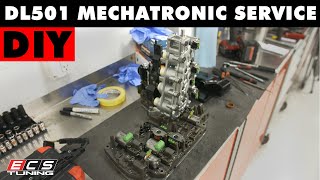
- Install the Mechatronic repair kit on a clean workbench. This involves replacing the two printed circuit boards and, depending on the kit, associated solenoids. A helpful video guide is available on YouTube demonstrating the process. 🎬 See this repair kit installation with expert tips and tricks.
- Reinstall the Mechatronic unit, transmission pan with a new gasket, and refill with the correct S-Tronic transmission fluid (approx. 7-8 liters).
- Perform a basic settings and adaptation procedure using a diagnostic tool. This step is mandatory and includes clutch valve calibration and distance sensor adaptation for the new components to function correctly. 🎬 Watch: How to perform the mandatory VCDS transmission adaptation.
Parts You'll Likely Need
- Mechatronic Repair Kit (with solenoids)
(OEM #0B5398048D (supersedes 0B5398048C))— This is the official Audi-specified kit to fix the common internal circuit board failure that causes code P2765. It includes the new circuit boards, solenoids, and hardware. Using the latest revision is critical.
Trusted brands: Audi Genuine, BorgWarner (OEM supplier)
OEM price range: $600-$900
Aftermarket price range: $450-$650 - Mechatronic Repair Kit (PCBs only)
(OEM #0B5398009F (supersedes 0B5398009A, B, C, D, E))— This is an alternative kit that includes only the two circuit boards/harnesses without the solenoids. It is a cheaper option if the solenoids are known to be good, but replacing them is often recommended while the unit is out.
Trusted brands: Audi Genuine
OEM price range: $400-$600
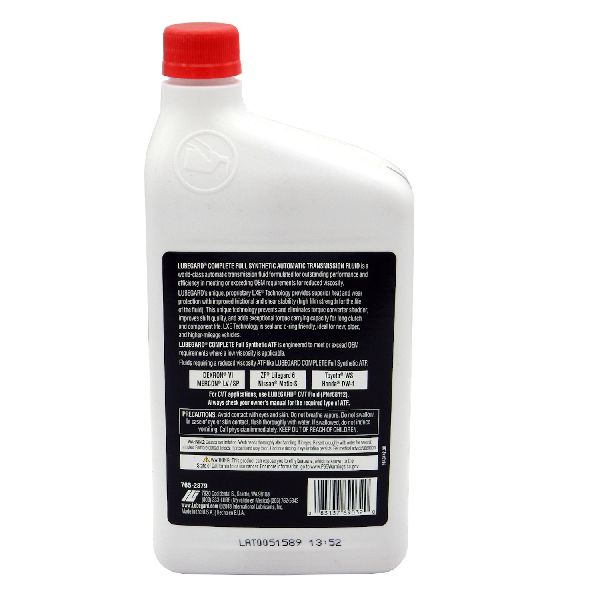
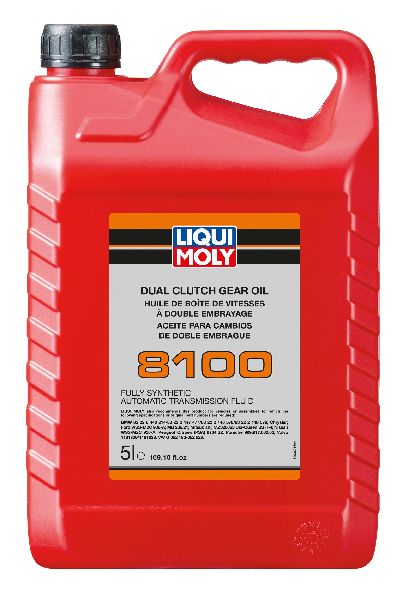
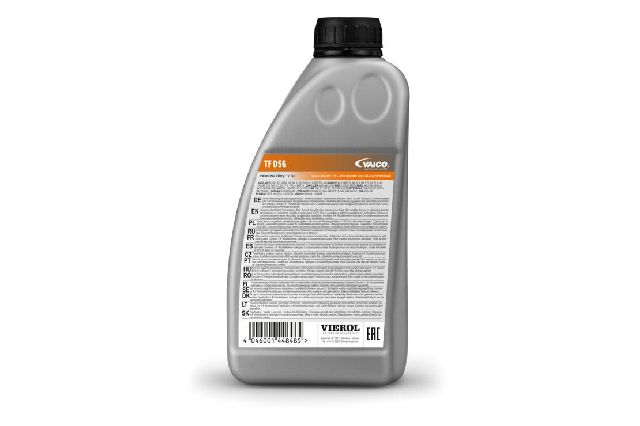
Aftermarket price range: $300-$450 - S-Tronic Transmission Fluid (DCTF)
(OEM #G052529A2)— The transmission must be drained to perform the repair, requiring a full refill (approx. 7-8 liters). Using the correct OEM or equivalent fluid is mandatory.
Trusted brands: Audi Genuine, Liqui Moly 8100, Pentosin FFL-2
OEM price range: $25-$35 per liter
Aftermarket price range: $18-$25 per liter - Transmission Pan Gasket and Filter
(OEM #0B5321371F (Gasket), 0B5325429E (Filter))— The pan must be removed to access the Mechatronic unit, and the gasket must be replaced. It is best practice to replace the external fluid filter at the same time.
Trusted brands: Audi Genuine, Vaico, Mahle
OEM price range: $100-$150
Aftermarket price range: $60-$100
Related Codes That Often Appear With This One
- P0715 — This code for 'Input/Turbine Speed Sensor 'A' Circuit' often appears with P2765 because both sensors (A and B) are integrated into the same internal circuit board assembly that fails.
- P179F — This code for 'Drive Position Sensor Malfunction' is also listed in TSB 2032211/2 as being related to the same internal Mechatronic circuit board failure.
- P0501 — This code for 'Vehicle Speed Sensor 'A' Range/Performance' can be triggered as a consequence of the transmission input speed data being unreliable, causing conflicts in the vehicle's overall speed calculation.
- P2159 — Similar to P0501, this code for 'Vehicle Speed Sensor 'B' Range/Performance' can be set when the TCM cannot get a reliable speed reading from the transmission.
Technical Service Bulletins (TSBs) & Recalls
- A351619 / TSB 2032211/2 (and its later revisions, e.g., 2032211/9): This is the primary document for this issue. It lists a group of codes, including P2765 with DFCC 8095/8104, that point directly to a faulty internal sensor module ('poor internal contact area on the circuit board'). It instructs technicians to use the repair kit (0B5398048C or a later version) instead of replacing the entire Mechatronic unit.
Platform-Specific Known Issues
- The failure of the internal Mechatronic circuit board is the single most common major issue with the DL501 transmission in this and other B8/B8.5 generation Audi vehicles (S4, S5, Q5). The issue was so prevalent that it became the subject of multiple TSBs and a robust aftermarket repair industry.
- Owner experiences frequently highlight a significant cost discrepancy, where a dealership may quote a full transmission or Mechatronic replacement for $7,500-$14,000, while a knowledgeable independent specialist performs the correct repair using the kit for $2,000-$3,500.
Mechanic-Grade Diagnostic Values
- Clutch Oil Pressure Solenoids (N435, N439) Resistance - Gen 1 Valve Body — expected: 16.0 Ohms (± 0.1 Ohm) at 25°C. Failure: Significant deviation from the expected resistance, indicating a failing solenoid coil.
- VFS Clutch Solenoids (N436, N440) Resistance — expected: 4.8 Ohms (± 0.1 Ohm) at 25°C. Failure: Significant deviation from the expected resistance.
- Main Pressure Solenoid (N472) Resistance — expected: 4.2 Ohms (± 0.1 Ohm) at 25°C. Failure: Significant deviation from the expected resistance.
- Shift Fork Actuator Solenoids (N433, N434, N437, N438) Resistance — expected: 4.8 Ohms (± 0.1 Ohm) at 25°C. Failure: Significant deviation from the expected resistance.
Hidden / Shadow Codes Worth Checking
- DFCC 8095 / 8104: These are Diagnostic Fault Code Counter (or Context) codes that accompany the main P2765 DTC. Their presence is required to confirm the specific internal circuit board failure described in TSB 2032211. If P2765 is present without these specific DFCCs, the TSB does not apply and other causes should be investigated. (see via Audi-specific diagnostic tools like VCDS (VAG-COM) or ODIS will display the DFCC alongside the primary fault code.)
Scan Tool Commands That Help
- VCDS (VAG-COM) or ODIS: Erase counter for start and stop processes — This is the first step in the adaptation sequence, performed with the key on and engine off, to clear old adaptation values before calibration.
- VCDS (VAG-COM) or ODIS: Clutch valve calibration — Performed with the engine running after replacing the Mechatronic repair kit. This function calibrates the pressure application for the new clutch valves/solenoids.
- VCDS (VAG-COM) or ODIS: Distance sensor calibration — Performed with the engine running. This calibrates the newly installed gear position and speed sensors to the physical locations of the shift forks. The transmission will make audible clicking noises during this process.
- VCDS (VAG-COM) or ODIS: Clutch engagement point adaptation — This is a final step, performed with the engine running, to teach the TCM the precise 'kiss point' for each clutch pack for smooth takeoffs. This is followed by a defined test drive to complete the learning process.
Wiring & Ground Locations
- Main Mechatronic Connector (T16 or T17) — On the side of the DL501 transmission case. It is a large, round, multi-pin connector.. While internal failure is most common, damage or corrosion at this external connector or its wiring harness can mimic an internal circuit fault. A visual inspection and continuity check from this connector to the TCM is a valid, though advanced, diagnostic step before removing the Mechatronic unit. The connector part number is often cited as 420973716.
OEM Part Supersession History
0B5398048C→0B5398048D— Revision to improve reliability of the solenoids and circuit boards. The 'D' revision is the most current and recommended version for the full repair kit including solenoids.
Heads up: Older revisions should be avoided. Always use the latest available part number for the repair.0B5398009A, 0B5398009B, 0B5398009C, 0B5398009D, 0B5398009E→0B5398009F— Multiple revisions of the circuit board/harness kit (without solenoids) were released to address the degradation and failure issues. The 'F' revision is the latest and most robust version.
Heads up: Using any of the older superseded part numbers is not recommended as they are prone to the original failure mode.
Model Year Variations Within This Range
- 2013-2014: There are no significant mechanical differences in the DL501 transmission or Mechatronic unit between the 2013 and 2014 RS5 models that would alter the diagnosis or repair of code P2765. The primary change for 2013 was a facelift which included an electromechanical steering system and updated MMI, but the powertrain remained the same.
Helpful Videos

We Have This Part in Stock




The information in this article is provided for general reference and educational purposes only. Vehicle specifications, procedures, and part compatibility can vary by production date, trim level, and region. Always consult your vehicle's factory service manual and verify part numbers before purchasing or performing repairs. Safety-critical components such as airbags, seat belts, and braking systems should be installed by a qualified professional.
- Audi RS5:
- 🎬 Helpful Videos
- 🛍️ Shop This Part
- What's Unique About the 2013-2014 Audi RS5
- Diagnostic Flowchart
- Symptoms You May Notice
- Most Likely Causes
- Rare But Worth Checking
- Diagnosis Steps
- Parts You'll Likely Need
- Related Codes That Often Appear With This One
- Technical Service Bulletins (TSBs) & Recalls
- Platform-Specific Known Issues
- Mechanic-Grade Diagnostic Values
- Hidden / Shadow Codes Worth Checking
- Scan Tool Commands That Help
- Wiring & Ground Locations
- OEM Part Supersession History
- Model Year Variations Within This Range
- 🎟️ Get 5% Off