

P2764 on 2012-2018 Ford Focus: Causes and Fixes for the PowerShift Transmission
On a 2012-2018 Focus, P2764 almost always points to a faulty Transmission Control Module (TCM) or a failed clutch actuator motor, not a torque converter. The generic definition is misleading as this car has a dual-clutch system. A TCM replacement can cost $900-$1,500, while actuators are around $200 each plus labor. Ford extended the TCM warranty for many of these vehicles.
- Ignore the 'Torque Converter' part of the P2764 code definition; your car doesn't have one. The problem is with the dual-clutch control system.
- Before buying parts, check if your vehicle's VIN is covered by Ford's extended warranty for the Transmission Control Module (14M01/TSB 16-0129). A dealer may fix it for free.
- The most likely causes are a bad Transmission Control Module (TCM) or a bad clutch actuator motor.
- A key DIY diagnostic step is to swap the upper and lower clutch actuators to see if the fault code follows the part.
- Always check simple things first, like the main transmission ground strap, before condemning expensive components.
What's Unique About the 2012-2018 Ford Focus

The Ford Focus from this era uses the DSP6 PowerShift, a dry dual-clutch automatic transmission known for significant reliability issues. Unlike traditional automatics, it uses electric motors (actuators) to operate the clutches instead of hydraulic pressure and solenoids. Code P2764 is often a symptom of the two most common failures on this platform: a defective Transmission Control Module (TCM) or a failing clutch actuator motor, both of which were subject to warranty extensions and numerous Technical Service Bulletins (TSBs).
Symptoms You May Notice
- Harsh, jerky, or delayed gear shifts.
- Vehicle shudders or vibrates on acceleration, especially from a stop.
- Transmission warning light illuminated on the dashboard.
- Complete loss of power or inability to move from a stop.
- Engine stalls when coming to a stop.
- Transmission gets stuck in one gear or drops into neutral unexpectedly.
- Intermittent no-start or no-crank condition.
- Flashing PRNDL/S gear selector light on the instrument cluster.
- Replacing the entire transmission assembly when only the TCM or a clutch actuator is at fault.
- Replacing the clutch pack when the issue is purely electronic with the control units.
- Mistaking the generic P2764 definition and attempting to diagnose a non-existent torque converter.
Most Likely Causes

- Faulty Transmission Control Module (TCM) 🔴 High Probability The TCM on the DPS6 transmission is a widely documented failure point, leading to class-action lawsuits and extended warranty programs from Ford. Internal electronic failures, specifically cracked solder joints on the compliant pins, are common due to vibration and thermal stress.
How to confirm: After ruling out actuators and wiring, the TCM is the likely culprit. A professional diagnosis with a Ford-specific scan tool is often required. The presence of multiple other transmission codes alongside P2764 (especially U0100, U0101, U1013, P0606) almost guarantees a failed TCM, per TSB 16-0129.
Typical fix: Replace the Transmission Control Module. The new module must be programmed to the vehicle's VIN and undergo an adaptive learning procedure. Check with a Ford dealer for coverage under warranty extension 14M02.
Est. part cost: $600-$1000 - Failed Clutch Actuator Motor 🔴 High Probability The electric motors that actuate the clutch forks are another common failure item. They can short out internally or become mechanically stuck. There are two identical actuators (upper and lower) and they are interchangeable for diagnostic purposes.
How to confirm: Swap the positions of the upper (Clutch A) and lower (Clutch B) actuators. They are held by a few bolts and are externally mounted. Clear the codes and drive the vehicle. If the fault code changes from a Clutch A related code to a Clutch B related code (e.g., P090C), the actuator is bad.
Typical fix: Replace the faulty clutch actuator. It's often recommended to replace both actuators at the same time as a preventative measure. The OEM part number is AE8Z-7C604-A.
Est. part cost: $150-$250 per actuator - Poor Ground Connection or Damaged Wiring 🟡 Medium Probability These vehicles are known to have issues with grounding straps, which can cause a variety of electrical and transmission-related codes. The main ground from the battery to the chassis and the transmission case ground are frequent points of corrosion or were assembled with paint on the threads, impeding connection.
How to confirm: Visually inspect the main ground straps from the battery to the chassis and from the chassis to the transmission case for corrosion or looseness. Check the wiring harness leading to the clutch actuators and TCM for any signs of chafing, breaks, or corrosion, particularly where the harness may rub against the intake manifold or engine block.
Typical fix: Clean the grounding points with a wire brush and ensure a tight connection. Repair or replace any damaged sections of the wiring harness.
Est. part cost: $5-$50
Diagnosis Steps

- Scan for all DTCs. Note if P2764 appears with other transmission codes, especially U0100, U0101, U1013, or P0606, which strongly point towards a failing TCM per TSB 16-0129.
- Check for any applicable warranty extensions or recalls. Contact a Ford dealer with your VIN to check for coverage under Customer Satisfaction Program 14M02, which extended the TCM warranty to 10 years or 150,000 miles.
- Inspect the primary battery-to-chassis and chassis-to-transmission ground straps. Ensure they are clean, tight, and free of corrosion. A poor ground can cause numerous erratic electrical faults.
- Inspect the wiring harnesses going to the TCM and the two clutch actuators. Look for any signs of damage, chafing, or corrosion on the connectors. A known chafe point exists where the harness can rub against the intake manifold.
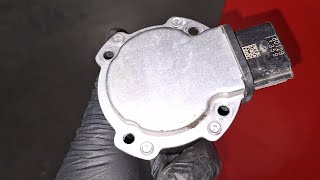
- To isolate a faulty actuator, swap the upper and lower clutch actuator motors. They are identical parts (AE8Z-7C604-A). Clear the codes and see if the fault code changes to the other clutch circuit (e.g., from P2764 to P090C). If it does, the actuator you moved is faulty. 🎬 See this walkthrough on diagnosing and replacing the clutch actuators.
- If the actuators and wiring are good, the fault is highly likely to be the Transmission Control Module (TCM) itself.
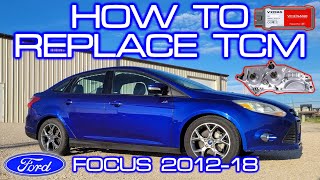
- Professional replacement of the TCM is recommended, as it requires programming to the vehicle's VIN and a clutch adaptive learning procedure with specialized tools like Ford IDS or a capable aftermarket tool like FORScan. 🎬 Watch: How to replace and program the TCM using IDS.
Parts You'll Likely Need
- Transmission Control Module (TCM)
(OEM #AE8Z-7Z369-F)— This is the most common failure point on the DSP6 transmission that causes a wide range of electrical fault codes, including P2764. Internal solder joints are known to fail.
Trusted brands: Motorcraft
OEM price range: $600-$1000
Aftermarket price range: $400-$700 (Remanufactured) - Clutch Actuator Motor
(OEM #AE8Z-7C604-A)— These electric motors are the second most common failure. A short or internal failure in the motor will trigger a 'circuit low' code. Both actuators (upper and lower) use the same part number.
Trusted brands: Motorcraft
OEM price range: $180-$250
Aftermarket price range: $80-$150
Related Codes That Often Appear With This One
- P090C — This code means 'Clutch B Actuator Control Circuit Low'. It is the sister code to P2764 if it's referring to Clutch A, indicating a similar electrical fault with the other actuator.
- P0902 — This is a generic code for 'Clutch Actuator Circuit Low', which points to the same family of problems with the clutch actuator motors or their control circuits.
- P0606 — This code for 'PCM Processor Fault' is frequently stored alongside other TCM communication codes (like U0100, U1013) and is a strong indicator of internal TCM failure per TSB 16-0129.
- U0100 — Stands for 'Lost Communication With ECM/PCM'. When the TCM fails, it often stops communicating with the main engine computer, triggering this code.
Technical Service Bulletins (TSBs) & Recalls
- TSB 16-0129: Supersedes previous TSBs and addresses intermittent loss of engagement, no-start, or loss of power. It explicitly states that if DTCs U0100, U0101, U1013, and/or P0606 are present, the TCM should be replaced.
- TSB 15-0121: Preceded TSB 16-0129 and introduced a software update to enable the setting of DTC P0606 as an early indicator of internal TCM failure.
Platform-Specific Known Issues
- The DSP6 PowerShift transmission was the subject of multiple class-action lawsuits due to high failure rates of the TCM, clutch packs, and actuators.
- Ford issued Customer Satisfaction Program 14M02, extending the warranty on the Transmission Control Module to 10 years or 150,000 miles for many of these vehicles.
- Ford also issued Customer Satisfaction Program 14M01 which extended the warranty on the dual clutch assembly itself for issues like shuddering.
- Due to parts shortages, Ford has authorized dealers to use refurbished or aftermarket TCMs for out-of-warranty repairs in some cases.
Mechanic-Grade Diagnostic Values
- Main Ground Strap Resistance — expected: Less than 0.1 Ω. Failure: A value above 0.1 Ω indicates a poor ground connection that needs to be cleaned or repaired.
- Clutch Actuator Motor Winding Resistance — expected: Approximately 12-13 Ω (when cold). Failure: A significantly lower reading (e.g., 4-7 Ω) or an open circuit (infinite resistance) indicates a failed actuator motor.
- Clutch Actuator Travel (FORScan Live Data) — expected: 9-14mm. Failure: Values outside this range, or that are erratic, can indicate a failing actuator or a problem with the clutch forks.
Hidden / Shadow Codes Worth Checking
- P0606: While a standard OBD-II code, Ford specifically enabled this 'PCM/TCM Processor Fault' code via a software update (TSB 15-0121) to act as an early warning and a definitive indicator of an internal TCM failure on the DPS6 transmission. (see via Standard OBD-II scanner, but its presence alongside communication codes like U0100 is the key diagnostic clue per Ford TSBs.)
Scan Tool Commands That Help
- FORScan / Ford IDS: TCM Adaptive Learning — This procedure is mandatory after replacing the TCM, clutch assembly, or clutch actuators. It performs a series of relearns for the clutch touch points and shift drums to ensure smooth operation.
- FORScan / Ford IDS: Reset All Adaptations / Clear Transmission Adaptive Tables — Used to clear the learned values from the TCM's memory before starting the adaptive learning procedure. This is the first step to ensure the new learning process starts from a clean slate.
- Launch PRO / High-End Aftermarket Scanners: Clutch System Adaptive Learn — Similar to the FORScan/IDS function, this command on capable aftermarket scanners can also perform the necessary clutch relearn procedure after a part replacement.
Wiring & Ground Locations

- Main Chassis Ground — On the driver's side strut tower, where the negative battery cable terminates on a painted stud.. This is the primary ground for the vehicle's electrical systems. The factory design, where the connection relies on the bolt threads through a painted surface, is a known weak point. A poor connection here can cause voltage instability for the TCM and clutch actuators, leading to various codes including P2764.
- Transmission Case Ground — A strap connecting the transmission housing to the vehicle's chassis/frame.. Provides a direct ground path for the transmission assembly. Corrosion or looseness here can cause erratic behavior and electrical fault codes originating from the transmission and TCM.
- Engine Wiring Harness Chafe Point — The section of the main engine wiring harness that routes near the intake manifold.. The harness can rub against a sharp edge of the intake manifold, causing wires to short to ground. This can affect multiple systems, including the transmission controls, and was the subject of TSB 15-0036.
- TCM Connectors — Two large multi-pin connectors that plug into the externally mounted TCM on the front of the transmission case.. These are the primary interface for the TCM. The clutch actuator motor control circuits pass through these connectors. Checking for corrosion or backed-out pins here is a key diagnostic step.
Real Owner Repair Stories
- Reddit r/FordFocus user post (2012-2014 Ford Focus SE (Automatic)) — Sudden loss of power, rough idle, unresponsive gas pedal, multiple error codes starting with accelerator pedal position sensor and progressing to others.
❌ Tried (didn't work) Replacing spark plugs.
✅ What actually fixed it The owner discovered TSB 15-0036 regarding a wiring harness chafe point. Upon inspection, they found a gash in the harness where it rubbed against the intake manifold. Splicing and repairing the damaged wires resolved all symptoms. - YouTube video by 'Ford Focus DCT Ground Mod' (2012+ Ford Focus with PowerShift) — Jerky, hesitant, and inconsistent shifting.
❌ Tried (didn't work) Living with the poor shifting behavior.
✅ What actually fixed it The owner performed a 'ground mod' by removing the main chassis ground point on the strut tower, sanding the paint off the chassis and the connector lug to ensure a bare metal-to-metal connection, and reinstalling it. This provided a more stable ground for the TCM and actuators, significantly improving shift quality.
OEM Part Supersession History
AE8Z-7Z369-B, AE8Z-7Z369-D, AE8Z-7Z369-E→AE8Z-7Z369-F— Internal hardware and software revisions to improve reliability and address common failure modes like cracked solder joints and processor faults.
Heads up: While later revisions are generally better, any replacement TCM (new or used) must be programmed to the specific vehicle's VIN and undergo the adaptive learning procedure to function correctly.
Model Year Variations Within This Range
- 2016-2018: Late-build 2016, and all 2017-2018 models, seem to have a higher incidence of clutch actuator failure compared to earlier years, where the TCM was more frequently the primary culprit. The diagnostic approach remains the same (swapping actuators), but the probability shifts slightly.
- 2012-2014: Vehicles built before specific dates in 2014 are more susceptible to the wiring harness chafing issue near the intake manifold, as addressed in TSB 15-0036.
Diagnostic Flowchart
Other Known Issues on This Vehicle
Issues unrelated to this code that are worth knowing about as an owner of this generation:
- Electric Power Steering (EPAS) Failure 🔴 High — Common, especially on 2012-2014 models. Can occur without warning at any mileage, often manifesting as a 'Steering Assist Fault' message. (Ref: Numerous owner complaints, but no universal recall. Diagnosis often leads to a full steering rack replacement.)
- Passenger-Side Engine Mount Collapse 🟠 Medium — Very common across all years. The hydraulic mount fluid leaks out, causing the rubber to sag and the engine's vibration to transfer directly into the chassis, felt in the seat and steering wheel.
- Faulty Canister Purge Valve 🟠 Medium — Widespread issue leading to a recall. Typically occurs between 30,000-100,000 miles. (Ref: Ford Recalls 12V-190, 18S32. Symptoms include rough idle, stalling after refueling, and an illuminated check engine light.)
- Leaking Coolant Expansion Tank 🟡 Low — Common failure. The plastic tank develops hairline cracks, leading to slow coolant leaks.
Used vs. New Parts: Buying Guide for This Vehicle
When a used part is the smart pick: A used Transmission Control Module (TCM) can be a viable option, especially given the high cost and potential backorder status of new OEM units. Used clutch actuators are generally not recommended due to their relatively low cost when new and the high labor involved in replacement.
Donor-vehicle mileage cap: roughly under 80000 miles for the part to have meaningful remaining life.
What to inspect on the donor part:
- For a TCM, verify the part number is a later revision if possible (e.g., AE8Z-7Z369-F).
- Ensure the donor vehicle was not involved in a front-end collision that could have damaged the externally-mounted TCM.
- Check connectors for any signs of corrosion, bent pins, or heat damage.
- Ask the seller if they know the history of the transmission (e.g., was it shifting correctly before being pulled?).
OEM-only on this vehicle (don't cheap out):
- Transmission Control Module (TCM) - While remanufactured units exist, a new or known-good used OEM (Motorcraft) unit that is properly programmed is the most reliable path. The complexity and programming requirements make unknown aftermarket brands a significant risk.
Aftermarket brands forum-validated for this vehicle:
- Dorman offers a remanufactured TCM (part #609-030) and new clutch actuators, which are generally considered acceptable alternatives if OEM parts are unavailable.
Brands owners have reported issues with on this vehicle:
- Unnamed, no-brand 'clones' of the TCM and actuators sold on marketplaces like eBay and Amazon should be avoided. They often fail quickly or are dead on arrival, and may not be programmable.
Real Owner Stories
Aggregated from forums and TSBs cited above. Mileages and costs reflect what owners reported in those sources.
2012-2018 Ford Focus
Symptoms: Owner experienced shudder and no-start conditions.
What fixed it: The owner first isolated a bad clutch actuator by performing the 'actuator swap' diagnostic. A year later, the Transmission Control Module (TCM) was ultimately replaced under warranty.
Source hint: FocusFanatics.com - Thread: 'TCM, Actuators, or Grounding? My P0902/P2764 Story'
Related OBD-II Codes
Frequently Asked Questions
Is the Transmission Control Module (TCM) on my 2014 Ford Focus covered by a warranty?
My Focus has codes U0100 and P0606 along with P2764. What does that mean?
Can I really just swap the two clutch actuators to diagnose the problem?
Could a bad ground wire cause my Focus's transmission to act up?
My transmission shudders but I don't have code P2764. Is there a warranty for that?
Do Ford Fiestas have these same PowerShift transmission problems?
Helpful Videos
We Have This Part in Stock



The information in this article is provided for general reference and educational purposes only. Vehicle specifications, procedures, and part compatibility can vary by production date, trim level, and region. Always consult your vehicle's factory service manual and verify part numbers before purchasing or performing repairs. Safety-critical components such as airbags, seat belts, and braking systems should be installed by a qualified professional.
- Ford Focus:
- 🎬 Helpful Videos
- 🛍️ Shop This Part
- What's Unique About the 2012-2018 Ford Focus
- Symptoms You May Notice
- Most Likely Causes
- Diagnosis Steps
- Parts You'll Likely Need
- Related Codes That Often Appear With This One
- Technical Service Bulletins (TSBs) & Recalls
- Platform-Specific Known Issues
- Mechanic-Grade Diagnostic Values
- Hidden / Shadow Codes Worth Checking
- Scan Tool Commands That Help
- Wiring & Ground Locations
- Real Owner Repair Stories
- OEM Part Supersession History
- Model Year Variations Within This Range
- Diagnostic Flowchart
- Other Known Issues on This Vehicle
- Used vs. New Parts: Buying Guide for This Vehicle
- Real Owner Stories
- 2012-2018 Ford Focus
- Related OBD-II Codes
- Frequently Asked Questions
- 🎟️ Get 5% Off