

OBD-II Code P2724: Transmission Pressure Control Solenoid 'E' Stuck On
The Ultimate Guide to P2724: What it means, why it triggers, and how to fix it for good.
- Code P2724 indicates a stuck transmission solenoid that causes harsh shifting or limp mode, making the vehicle unsafe to drive until diagnosed.
- On 2019-2020 GM Silverado and Sierra trucks, this code almost always points to a faulty Transmission Control Module (TCM) requiring replacement under TSB #23-NA-018.
- Always check transmission fluid condition first; replacing dark, burnt fluid and the filter resolves the issue in roughly 20% of non-GM truck cases for under $300.
- Do not replace internal transmission parts without using a bi-directional scan tool to verify if the solenoid is mechanically stuck or suffering an electrical short.
What Does P2724 Mean?

The Transmission Control Module (TCM) detected the Pressure Control Solenoid 'E' is stuck in the 'on' position. This solenoid manages transmission fluid pressure to change gears. When stuck on, it continuously applies fluid pressure to a clutch pack that should be released, destroying the hydraulic commands needed for smooth shifting.
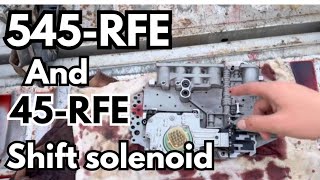
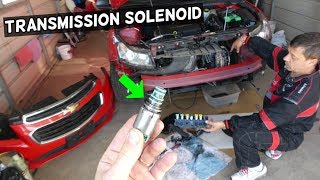
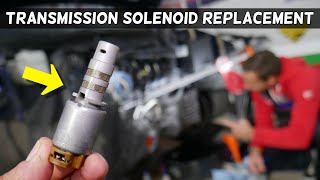
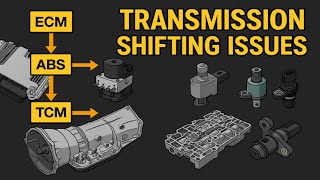
🎬 Watch: Understanding how the P2724 solenoid error affects your transmission.Technical definition: The TCM commanded Pressure Control Solenoid 'E' to turn off (de-energize), but internal diagnostics detected it remained on (energized). The TCM confirms this fault by comparing the expected gear ratio to the actual gear ratio calculated from the input and output speed sensors.
Can I Drive With P2724?
No — Do Not Drive. Driving is unsafe. This problem causes sudden harsh shifting, stalling, limp mode, or rear wheel lock-up on certain vehicles, which is extremely dangerous in traffic. Tow the vehicle to a qualified repair shop immediately.
Common Causes

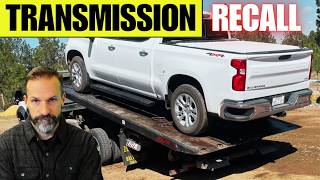
- Faulty Transmission Control Module (TCM) (Very Common) — The computer controlling the transmission fails internally, sending a constant 'on' signal to the solenoid. This is a heavily documented defect on 2019-2020 GM trucks where an internal short circuit develops. 🎬 See the details on the major GM 10-speed transmission recall.
- Low or Dirty Transmission Fluid (Common) — Old, dirty, or low transmission fluid is a primary cause of solenoid failure. Debris and metal shavings clog the tiny filter screens on the solenoid body, causing the internal valve to physically stick open.
- Failed Pressure Control Solenoid 'E' (Common) — The solenoid itself fails due to an electrical short inside its coil windings or mechanical binding from internal wear, preventing it from turning off when commanded.
- Damaged Transmission Wiring Harness (Less Common) — Wiring harnesses (both internal and external) degrade from heat, fluid exposure, and road debris. Cracked insulation causes short circuits that keep the solenoid permanently energized.
- Defective Transmission Valve Body (Rare) — The solenoid mounts inside the valve body. A crack, blockage, warp, or cross-leak within these fluid passages causes pressure problems that mimic a stuck solenoid.
- Software or Calibration Error (Rare) — The TCM's software logic contains a flaw. Manufacturers occasionally release software updates (reflashes) to correct how the module interprets sensor data or commands solenoids.
- Failed Internal Transmission Pump (Rare) — A failing transmission pump creates inconsistent hydraulic pressure and sends metal debris throughout the system, causing solenoids to stick.
Symptoms
- Harsh, Erratic, or Delayed Shifting — You feel a noticeable jolt, bang, or hesitation when the transmission changes gears. It feels 'grabby' or lingers in a gear too long.
- Transmission Stuck in Gear (Limp Mode) — The vehicle locks into a single gear (often 2nd or 3rd) to prevent further internal damage, resulting in extremely poor acceleration.
- Rear Wheels Locking Up at Low Speeds — On 2019-2020 GM trucks, a known TCM failure causes the rear wheels to lock up when stopping or moving slowly, feeling as if the brakes were slammed on.
- Check Engine Light On — The computer illuminates the Malfunction Indicator Lamp on the dashboard to alert you to the active transmission fault.
- Engine Stalling — The engine stalls when stopping because the transmission fails to disengage the gears, effectively fighting the brakes.
- Transmission Overheating (also visible on scanner) — Incorrect pressure causes extra friction as clutches that should be released are partially applied, triggering a high transmission temperature warning.
Diagnostic Flowchart

Tap your situation to follow the diagnostic path that matches what you're seeing on this code.
Common Fixes & Costs
- Replace the Transmission Control Module (TCM) — Parts: $300-$450, Labor: $400-$800, ~2.5 hr book time (Professional)
- Transmission Fluid and Filter Change — Parts: $50-$120, Labor: $150-$250, ~1.5 hr book time (Intermediate)
- Replace Pressure Control Solenoid 'E' — Parts: $150-$300, Labor: $200-$500, ~3 hr book time (Advanced)
- Repair or Replace Wiring Harness — Parts: $50-$250, Labor: $150-$400, ~2 hr book time (Intermediate)
- Replace Transmission Valve Body — Parts: $400-$900, Labor: $300-$600, ~4 hr book time (Professional)
Used vs. New Parts: Buying Guide
When a used part is worth it: For a solenoid or valve body, a used part from a verified low-mileage vehicle is a budget-friendly option. However, for the specific GM TCM issue, buying used is strictly prohibited due to high failure rates and VIN-specific programming requirements.
Donor-vehicle mileage cap: roughly under 60000 miles for the part to have meaningful remaining life.
Donor quality checklist:
- Verify the donor vehicle was not scrapped due to transmission failure.
- Match part numbers exactly; superseded parts contain critical updates.
- Inspect valve bodies for sludge or debris in the passages before installation.
Decision logic:
- If The known fix is the TCM (e.g., 2019-2020 GM Trucks) → Buy a new, updated OEM part. A used module contains the same defect and creates programming failures.
- If The fix is a solenoid pack or valve body on a high-mileage vehicle (>120k miles) → A used part from a low-mileage donor is a reasonable gamble to save money.
- If The part is a solenoid and the vehicle is a daily driver → Buy a new OEM or reputable aftermarket part. The cost savings of used parts do not justify the risk of repeat labor.
Warranty tradeoff: Used parts carry a 30-90 day warranty that excludes labor costs. New aftermarket parts offer 1-year to lifetime warranties. New OEM parts installed by a dealer include a 12-month/12,000-mile warranty.
Worst-case if a used part fails: $400-$800 if a used solenoid or valve body fails after installation, primarily due to repeating the labor-intensive replacement process.
What Happens If You Wait — Timeline
- 0-100 miles: Code P2724 is set. You notice intermittent harsh shifts or engine stalling. On affected GM trucks, the risk of wheel lock-up is immediate. (MPG impact: 0-5%% · Added cost: $100-$300 (Potential towing cost).)
- 100-500 miles: Shifting becomes consistently harsh. The transmission enters 'limp mode.' The stuck solenoid causes constant hydraulic pressure on a clutch pack, generating significant heat. (MPG impact: 5-15%% · Added cost: $200-$500 (Accelerated fluid breakdown and initial clutch glazing).)
- 500-1,000 miles: Excessive heat burns the clutch friction material. This burnt material circulates in the fluid, acting like sandpaper throughout the transmission. (MPG impact: 15-25%% · Added cost: $1,000-$1,500 (Permanent damage to the affected clutch pack and contamination of the valve body).)
- 1,000+ miles: Catastrophic failure. Contaminated fluid clogs other solenoids and scores the valve body. The transmission slips severely or fails to engage. A complete rebuild is required. (MPG impact: >25%% · Added cost: $2,800-$8,000+ (Full transmission replacement or rebuild cost).)
Cost of Not Fixing It
- Immediate (0-100 miles): Unpredictable harsh shifting, limp mode, and engine stalling. On affected GM trucks, rear wheels lock up immediately. (Added cost: Towing cost ($100-$300).)
- Short Term (100-1,000 miles): Driving with a stuck solenoid causes excessive friction, rapidly degrading transmission fluid and burning internal clutch packs. (Added cost: $200-$500 for a fluid flush that is no longer effective.)
- Long Term (1,000+ miles): Catastrophic internal transmission damage. Burnt clutch material contaminates the hydraulic system, requiring a complete rebuild. (Added cost: $2,800-$8,000+ for a transmission rebuild or replacement.)
Diagnosis Steps
- Read Trouble Codes & Check TSBs
Use an OBD-II scanner to confirm P2724 is active. Note all other codes (e.g., P2727, P2729) and check for manufacturer Technical Service Bulletins (TSBs) for your VIN, as they point directly to known defects.
Tools: OBD-II Scanner (Beginner) - Check Transmission Fluid Level & Condition
Verify the fluid level and condition. Fluid must be bright red and not smell burnt. Dark, dirty, or burnt-smelling fluid with metal shavings confirms severe internal mechanical damage.
Tools: Rag, Dipstick or Fluid Extract Pump (Beginner) - Perform Bi-Directional Scan Tool Testing [PRO TIP]
Use an advanced scan tool to command Solenoid 'E' on and off while monitoring circuit voltage. If voltage stays near 12V when commanded 'off', the TCM or wiring has a short. If voltage drops to 0V but symptoms persist, the solenoid is mechanically stuck.
Tools: Advanced Bi-Directional Scan Tool (Advanced) - Inspect External Wiring and Connectors
Visually inspect the main transmission wiring harness from the TCM to the transmission case. Look for physical damage, melting, chafing, or corrosion on the connector pins.
Tools: Flashlight, Multimeter (Intermediate) - Test Solenoid Resistance
Drop the transmission pan to access the solenoid. Disconnect it and measure internal electrical resistance. A reading near 0 Ohms indicates a short; an infinite reading (OL) indicates an open circuit.
Tools: Socket Set, Drain Pan, Multimeter, Service Manual (Advanced) - Inspect Internal Transmission Harness
With the transmission pan off, inspect the internal wiring harness for brittle, cracked, or damaged insulation causing short circuits.
Tools: Flashlight, Pick Tool (Advanced) - Check Transmission Line Pressure
Connect pressure gauges to specific transmission ports to measure hydraulic pressure in various gears. Abnormally high pressure in the Solenoid 'E' circuit confirms a hydraulic fault.
Tools: Transmission Pressure Gauge Set, Service Manual (Advanced) - Attempt Scan Tool 'Service Cleaning Procedure'
Use a manufacturer-specific scan tool to run a 'Solenoid Cleaning' function. This rapidly cycles the solenoids to dislodge debris, serving as a temporary fix or diagnostic confirmation.
Tools: Manufacturer-Specific Scan Tool (Professional)
When This Code Triggers (Freeze-Frame Conditions)
- Transmission Fluid Temperature: 175-210°F (Vehicle is at full operating temperature.)
- Engine RPM: 1200-2800 RPM (During or immediately after a commanded gear shift under light to moderate acceleration.)
- Vehicle Speed: 25-55 mph (The fault occurs during shifts at city or highway cruising speeds.)
- Commanded Gear vs. Actual Gear: Mismatch Detected (The TCM commanded a shift but the gear ratio calculated from speed sensors did not match the expected ratio.)
Related Codes
- P2723 — The opposite code, 'Pressure Control Solenoid E Stuck Off'. P2724 means the solenoid is stuck open holding pressure; P2723 means it is stuck closed unable to build pressure.
- P2725 — Indicates a specific electrical circuit failure (open, short to ground, or short to power) rather than a mechanical 'stuck' condition.
- P0700 — A general 'Transmission Control System Malfunction' code. It is purely informational, set by the TCM to turn on the Check Engine Light alongside P2724.
- P2727 / P2729 — These circuit codes are triggered by the exact same internal TCM failure on 2019-2020 GM trucks per TSB #23-NA-018.
Climate & Environmental Factors
- High Temperature / Hot Soak: After driving, the vehicle sits and heat radiates through components. This 'hot soak' causes internal wire bonds in faulty GM TCMs to short circuit, leading to wheel lock-up upon restarting.
- Cold Weather: Extreme cold causes transmission fluid to thicken, making solenoids sluggish. A solenoid slow to de-energize due to thick fluid is flagged as 'stuck on' by a sensitive TCM.
How to Talk to a Mechanic About This Code
Say this: "I have a [Year, Make, Model] with a P2724 code experiencing [Symptom]. I would like to schedule a diagnostic appointment. (For GM trucks add: 'I am aware of TSB #23-NA-018 for a potential TCM failure on this model and would like that checked specifically.')"
This language shows you have done your research, states the specific code, and directs the technician toward a known issue, preventing unnecessary diagnostic fees.
Avoid saying:
- 'My check engine light is on, can you just fix it?'
- 'I think I need a new transmission.'
- 'Just do whatever it takes.'
Questions to ask before authorizing the repair:
- What specific tests did you perform to isolate the cause to the recommended part?
- If replacing the TCM, does the cost include programming the new module to my vehicle's VIN?
- Can you provide a written estimate breaking down parts and labor costs?
- What is the warranty on this specific repair, and is it covered nationwide?
Where to Take It: Dealer vs Independent vs Chain
- Dealer:
Best for: Vehicles under warranty., The specific 2019-2020 GM truck issue (P2724 with wheel lock-up) due to TSB #23-NA-018 and required programming., Complex, manufacturer-specific software updates.
Downsides: Higher labor rates and parts costs., Technicians often replace entire assemblies rather than isolating smaller component failures. (Typical cost: +50% vs. baseline) - Independent Shop:
For the GM truck TCM failure, the dealer is the safest choice. For all other vehicles, a reputable independent transmission specialist offers the best balance of expertise and cost.
Best for: Out-of-warranty vehicles where the cause is a solenoid, wiring, or fluid issue., Owners seeking better value and personal service.
Downsides: Quality varies greatly; look for ASE certifications., May lack proprietary tools to program a new TCM. (Typical cost: +0% vs. baseline) - Chain Shop:
AVOID for diagnosing the root cause of P2724. Do not rely on them for initial diagnostic work if a TCM or internal repair is suspected.
Best for: Simple fluid and filter changes.
Downsides: Technician skill varies widely., Lack specialized tools for in-depth transmission diagnostics or TCM programming., Prone to upselling or misdiagnosis on complex issues. (Typical cost: -10% vs. baseline)
When to Walk Away From the Repair
If the estimated repair cost exceeds 50% of the car's private-party value, sell or scrap the vehicle.
- Car worth $25000, fix is $1000: Fix it. This is a 2019 GM truck with the TCM issue. The repair cost is well below the threshold and solves a critical safety problem.
- Car worth $8000, fix is $700: Fix it. This is a typical cost for a solenoid replacement on an out-of-warranty vehicle.
- Car worth $4000, fix is $3500: Walk away. The transmission requires a full rebuild. The repair cost is nearly the entire value of the car.
What Scan Tool You Need for This Code

Minimum: A scanner that reads transmission-specific live data (PIDs) and features bi-directional control to command the solenoid on and off.
A basic $20 code reader only shows 'P2724'. It cannot distinguish between a faulty $1000 TCM, a $300 solenoid, or a wiring short. Proper diagnosis requires testing the component's response.
Budget: Ancel BD310 / BlueDriver Pro (~$100) — Reads freeze-frame data and displays live transmission data PIDs. Offers clues but lacks critical bi-directional control.
Mid-range: XTOOL D7 / Foxwell NT Series (~$350) — Provides bi-directional control. Allows you to command solenoid 'E' on and off to verify electrical responsiveness.
Professional: Autel MaxiCOM MK808 / Launch X431 Series (~$500-1200) — Full OEM-level bidirectional controls, transmission relearn procedures, and the ability to perform solenoid cleaning cycles.
Rent vs buy: Auto parts stores offer free loaner tools, but they lack bi-directional tests. Buy a midrange scanner only if you are a serious DIYer performing advanced diagnostics regularly.
How to Clear the Code After You Fix It
- Use an OBD-II scan tool to clear all Diagnostic Trouble Codes (DTCs).
- Perform a complete drive cycle to allow the vehicle's readiness monitors to run their self-tests.
- Do not disconnect the battery, as this resets readiness monitors to 'Not Ready' and fails to clear permanent codes.
Drive cycle (~30 minutes): Cold start and idle for 3 minutes. Drive in city traffic (25-45 mph) with several stops for 15 minutes. Drive at steady highway speed (55-60 mph) for 10 minutes. Safely coast to a lower speed. Allow the vehicle to cool completely (8 hours) before another short trip.
Readiness monitors affected: Comprehensive Component Monitor, Misfire Monitor, Catalyst Monitor, Evaporative System (EVAP) Monitor
Before emissions retest: drive at least 50 miles to fully set monitors.
Watch out for:
- Clearing the code and immediately going for an emissions test results in a 'Not Ready' failure.
- The code returns quickly if the underlying mechanical or electrical fault is not repaired.
- Permanent DTCs (pDTCs) only clear after the vehicle's computer verifies the repair through a complete drive cycle.
Will This Fail Emissions / State Inspection?
Yes — this code typically fails an OBD-II emissions inspection.
- California: An active P2724 code causes an automatic smog check failure. A full drive cycle must be completed to set all readiness monitors before a retest.
- New York: The NYS inspection includes an OBD-II scan. An illuminated Check Engine Light for a transmission code is an automatic failure.
- Texas: In emissions-testing counties, an active P2724 code fails the OBD-II inspection. Recently cleared codes fail if readiness monitors are not set.
Most Commonly Affected Vehicles
- Chevrolet Silverado 1500 (2019-2022) — Extremely common on 10-speed transmissions due to TCM failure, addressed in TSB #23-NA-018.
- GMC Sierra 1500 (2019-2022) — Shares the same platform and 10-speed transmission as the Silverado, affected by the identical TCM failure.
- GMC Acadia (2020-2022) — On 9-speed transmissions, TSB #21-NA-169 notes P2724 on low-mileage vehicles requires replacing the solenoid and valve body.
- Chevrolet Equinox (2020-2022) — Covered under TSB #21-NA-169 for the 9-speed transmission, where early-life solenoid failure triggers this code.
- Hyundai Sonata (2011-2018) — Internal transmission wiring harness degradation causes short circuits triggering solenoid codes.
- Ford F-150 / Explorer (2011-2020) — Molded lead frame failures in 6R80 and 10R80 transmissions cause intermittent electrical connections to the solenoids.
- Honda Accord / Odyssey (2008-2017) — Solenoid failures occur frequently when using non-OEM transmission fluid.
- Land Rover Various (2010-2019) — ZF 8-speed transmissions experience mechatronic unit (valve body) failures triggering this code.
Manufacturer-Specific Notes
- General Motors (Chevrolet/GMC 10-Speed): On 2019-2020 Silverado and Sierra 1500 trucks, code P2724 is caused by a faulty TCM, not the solenoid. This causes dangerous rear wheel lock-up at low speeds. GM issued TSB #23-NA-018 advising dealers to replace the TCM.
- General Motors (9-Speed): On low-mileage 2020-2022 vehicles (Acadia, Equinox), TSB #21-NA-169 states P2724 is due to an early failure of the control solenoid/valve body assembly requiring full replacement.
- Hyundai / Kia: The internal transmission wiring harness is a common failure point. Insulation degrades from heat, causing wires to short together and trigger solenoid performance codes.
- Ford: The molded lead frame (internal harness and sensors) frequently cracks, causing intermittent electrical connections to the solenoids and triggering P2724.
Real Owner Stories
2019 Chevy Silverado 1500 at 72K miles - The Textbook TCM Failure
Owner experienced sudden rear wheel lock-up at low speed after parking the truck for an hour ('hot soak'). The truck went into limp mode and the Check Engine Light came on with code P2724.
Outcome: The dealer replaced the Transmission Control Module (TCM) per GM TSB #23-NA-018. The new module was programmed to the vehicle, resolving the issue completely.
Lesson: On a 2019-2020 GM truck with P2724 and wheel lock-up, do not replace the solenoid or valve body. The problem is the TCM, requiring a dealer-level repair.
2021 GMC Acadia at 11K miles - Low-Mileage Misdiagnosis
Check Engine Light on with P2724 and harsh shifting. Independent shops quoted a valve body replacement.
Outcome: The TSB guided the technician to replace both the solenoid body and the valve body assembly as a unit. The repair was covered under the powertrain warranty.
Lesson: Always check for TSBs on newer, low-mileage vehicles. What seems like a standard solenoid issue is often a known manufacturing defect with a specific repair protocol.
Older Honda Accord at 150K miles - The 'Easy Fix' with Dirty Fluid
Vehicle developed erratic shifting and set code P2724. The transmission fluid had not been changed in over 60,000 miles.
Outcome: After the fluid service, the code cleared and did not return. The dirty, sludgy fluid was causing the solenoid's internal valve to physically stick.
Lesson: Before condemning expensive hardware, start with the simplest cause. Dirty transmission fluid is a frequent culprit for solenoid codes and is the cheapest fix.
How to Prevent This Code From Triggering
- Perform regular transmission fluid and filter changes. (Every 30,000-60,000 miles, or as specified by your manufacturer.) — Clean fluid prevents debris and sludge from clogging the tiny passages and filter screens on the solenoids.
- Use only the manufacturer-specified transmission fluid (OEM fluid). (Every time fluid is added or changed.) — Incorrect fluids have the wrong viscosity and friction properties, degrading seals within the solenoids and causing failure.
- Avoid aggressive driving and excessive heat. (Daily habit.) — Hard acceleration and frequent towing generate excessive heat, breaking down fluid and burning out electrical coils inside solenoids.
- Install an auxiliary transmission cooler. (Once, especially if you tow or live in a hot climate.) — Combats overheating by providing additional cooling capacity, preserving fluid life and protecting internal components.
- Address fluid leaks immediately. (As needed.) — Low fluid levels cause pressure drops, slipping, and overheating, destroying solenoids.
Frequently Asked Questions
What does 'stuck on' actually mean for the solenoid?
It means the solenoid's internal valve is stuck open, allowing transmission fluid to flow and create hydraulic pressure continuously when it should be closed. This holds a clutch pack engaged when the computer wants to disengage it, causing harsh shifts, binding, or gear ratio errors.
What are the most common misdiagnosis mistakes for P2724?
On 2019-2020 GM trucks, the most frequent error is replacing the solenoid or valve body when the official TSB points directly to a faulty Transmission Control Module (TCM). In general, another common mistake is replacing the solenoid without first checking the fluid condition and inspecting wiring for shorts.
The GM TSB mentions a 'hot soak.' What does that mean?
'Hot soak' refers to the period after a vehicle reaches full operating temperature and is parked for 30 minutes to 4 hours. Heat continues to radiate through the components. This condition causes an internal short circuit in faulty GM TCMs, leading to wheel lock-up upon restarting.
Is it safe to drive my car with code P2724?
No, it is not safe. The transmission shifts harshly, gets stuck in one gear, causes the engine to stall, or causes the wheels to lock up without warning. Tow the vehicle to a repair shop for diagnosis.
How much does it typically cost to fix P2724?
A simple fluid and filter change costs $175-$350, while replacing a single solenoid costs $350-$800. If the TCM is the cause, the repair costs $700-$1200 because the part requires special programming. Full valve body replacement ranges from $700 to $1500.
Can I fix P2724 myself?
Checking the fluid is a DIY task, but most fixes require accessing internal transmission components. Replacing a TCM is a professional-only job because it requires proprietary software for programming to the vehicle.
What is the difference between P2724, P2723, and P2725?
P2724 means the solenoid is mechanically or electronically stuck 'On' and passing pressure. P2723 is the opposite, meaning it is stuck 'Off' and unable to pass pressure. P2725 is a specific electrical fault code indicating a short or open in the wiring circuit itself.
What kind of transmission fluid should I use?
Always use the specific Automatic Transmission Fluid (ATF) recommended by your vehicle's manufacturer. Using a generic or incorrect fluid type causes shifting problems, damages solenoids, and voids your warranty.
Key Takeaways
- Code P2724 indicates a stuck transmission solenoid that causes harsh shifting or limp mode, making the vehicle unsafe to drive until diagnosed.
- On 2019-2020 GM Silverado and Sierra trucks, this code almost always points to a faulty Transmission Control Module (TCM) requiring replacement under TSB #23-NA-018.
- Always check transmission fluid condition first; replacing dark, burnt fluid and the filter resolves the issue in roughly 20% of non-GM truck cases for under $300.
- Do not replace internal transmission parts without using a bi-directional scan tool to verify if the solenoid is mechanically stuck or suffering an electrical short.
Helpful Videos






The information in this article is provided for general reference and educational purposes only. Vehicle specifications, procedures, and part compatibility can vary by production date, trim level, and region. Always consult your vehicle's factory service manual and verify part numbers before purchasing or performing repairs. Safety-critical components such as airbags, seat belts, and braking systems should be installed by a qualified professional.
- 🎬 Helpful Videos
- What Does P2724 Mean?
- Can I Drive With P2724?
- Common Causes
- Symptoms
- Diagnostic Flowchart
- Common Fixes & Costs
- Used vs. New Parts: Buying Guide
- What Happens If You Wait — Timeline
- Cost of Not Fixing It
- Diagnosis Steps
- When This Code Triggers (Freeze-Frame Conditions)
- Related Codes
- Climate & Environmental Factors
- How to Talk to a Mechanic About This Code
- Where to Take It: Dealer vs Independent vs Chain
- When to Walk Away From the Repair
- What Scan Tool You Need for This Code
- How to Clear the Code After You Fix It
- Will This Fail Emissions / State Inspection?
- Most Commonly Affected Vehicles
- Manufacturer-Specific Notes
- Real Owner Stories
- 2019 Chevy Silverado 1500 at 72K miles - The Textbook TCM Failure
- 2021 GMC Acadia at 11K miles - Low-Mileage Misdiagnosis
- Older Honda Accord at 150K miles - The 'Easy Fix' with Dirty Fluid
- How to Prevent This Code From Triggering
- Frequently Asked Questions
- What does 'stuck on' actually mean for the solenoid?
- What are the most common misdiagnosis mistakes for P2724?
- The GM TSB mentions a 'hot soak.' What does that mean?
- Is it safe to drive my car with code P2724?
- How much does it typically cost to fix P2724?
- Can I fix P2724 myself?
- What is the difference between P2724, P2723, and P2725?
- What kind of transmission fluid should I use?
- Key Takeaways
- 🎟️ Get 5% Off