

P2723 on 2002-2003 Chevrolet Silverado 1500 HD: Pressure Control Solenoid 'E' Causes and Fixes
On a 2002-2003 Silverado 1500 HD, code P2723 points to a problem with the main Electronic Pressure Control (EPC) Solenoid in the 4L80E transmission. The most common fix is to replace this solenoid, which is located inside the transmission pan. This repair typically also includes a new filter, gasket, and fresh DEXRON-VI fluid, which is the backward-compatible fluid for the original DEXRON-III.
- P2723 on a 2002-2003 Silverado 1500 HD points to the main Electronic Pressure Control (EPC) solenoid in the 4L80E transmission.
- The most likely cause is a failed EPC solenoid, which can be confirmed by testing its resistance (should be 3.5-8 ohms).
- Always check the transmission fluid level and condition first, as low or dirty fluid can cause this code.
- When replacing the solenoid, it is critical to also replace the transmission filter and refill with DEXRON-VI fluid.
- Due to the complexity and potential for misdiagnosis (e.g., valve body debris), professional service is strongly recommended.
What's Unique About the 2002-2003 Chevrolet SILVERADO 1500 HD
The 2002-2003 Silverado 1500 HD uses the robust 4L80E transmission, where the P2723 code is well-documented. While the EPC solenoid can fail, a notable issue on this GMT800 platform is the potential for debris from normal wear or a failing torque converter to clog small orifices in the valve body or the solenoid's internal screens. This can mimic a solenoid failure, making a thorough diagnosis crucial, as simply replacing the solenoid might not fix the root cause if a hydraulic blockage is present. The manufacturer has issued service bulletins that group P2723 with other transmission codes, indicating a known pattern of faults often stemming from a single root cause like debris or a systemic pressure issue. [PIP4379M]
Diagnostic Flowchart
Tap your situation to follow the diagnostic path that matches what you're seeing on this vehicle.
Symptoms You May Notice
- Harsh, erratic, or delayed gear shifts.
- Transmission slipping (engine RPMs rise without an increase in speed).
- Check Engine Light and/or Transmission Warning Light is on.
- Vehicle may enter 'limp mode,' often stuck in second or third gear.
- Inability to shift into certain gears or a complete loss of forward or reverse gears.
- Reduced acceleration and power, especially under load or when towing.
- Increased fuel consumption.
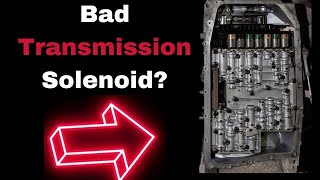
- Transmission overheating. 🎬 Watch: 7 common signs of a bad transmission solenoid
- Replacing the EPC solenoid without checking for debris in the valve body. A clogged passage in the valve body can prevent proper pressure regulation even with a new solenoid, leading to the code returning. The valve body should be inspected for blockages when the solenoid is replaced.
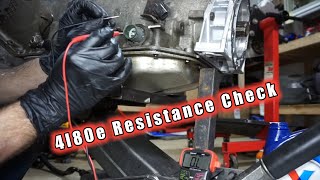
- Assuming the solenoid is faulty when the root cause is a damaged internal wiring harness or a poor connection at the main case pass-through connector. 🎬 See how to check solenoid resistance without dropping the pan
Most Likely Causes
- Failed Electronic Pressure Control (EPC) Solenoid 🔴 High Probability Solenoids are electro-mechanical parts that wear out over time from heat cycles and constant use. Contaminated fluid can cause the internal plunger to stick or clog the small filter screens, and the internal coil can short out or break.
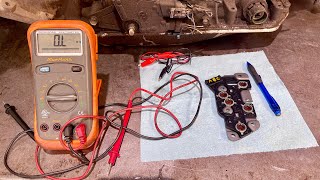
How to confirm: After dropping the transmission pan, disconnect the solenoid and measure its resistance with a multimeter. For the 4L80E, a good EPC solenoid should read between 3.5 and 8 ohms. A reading outside this range (or an open circuit) indicates failure. Also, visually inspect the solenoid's screens for metallic debris.
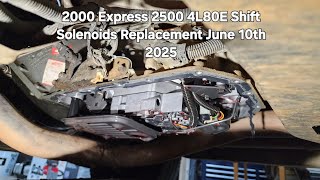
Typical fix: Replace the EPC solenoid. This is done after removing the transmission pan and filter. 🎬 Watch: Step-by-step 4L80E shift solenoid replacement walkthrough
Est. part cost: $40-$90 - Low or Dirty Transmission Fluid 🟡 Medium Probability Over time, fluid breaks down and collects clutch material and metal shavings. Low fluid levels can cause the pump to cavitate, leading to pressure drops and aeration, while dirty fluid can clog the fine passages in the valve body and the solenoids themselves, causing them to stick.
How to confirm: Check the transmission fluid dipstick with the engine running and the transmission warm and in Park. The fluid should be at the correct level, pink or red in color, and have no burnt smell. Dark, brown, or burnt-smelling fluid indicates a problem.
Typical fix: Perform a transmission fluid and filter change. If the fluid is very dirty, a simple pan drop and fill is often safer for high-mileage vehicles than a high-pressure flush, which can dislodge more debris and cause further issues.
Est. part cost: $50-$120 for fluid and a filter kit - Damaged Internal Wiring Harness ⚪ Low Probability The internal harness is submerged in hot transmission fluid, and over many years, the plastic connectors and wire insulation can become brittle and crack, causing shorts or open circuits. A common failure point is the main pass-through connector, which can leak fluid through the pins, causing poor connections.
How to confirm: With the pan removed, visually inspect the wiring harness leading to the EPC solenoid for any signs of cracking, chafing, or burnt connectors. Check for continuity from the main external transmission connector to the solenoid plug. A visual inspection of the external connector for leaking fluid is also a key indicator.
Typical fix: Replace the internal transmission wiring harness. Part numbers like 24222798 or 24230344 are common for this application.
Est. part cost: $70-$150
Rare But Worth Checking
- Faulty Transmission Control Module (TCM) or Powertrain Control Module (PCM): This is rare and should only be considered after all other possibilities (solenoid, wiring, fluid) have been exhaustively ruled out. A faulty computer can fail to send the correct signal to the solenoid or misinterpret sensor feedback. In some cases, a transmission that was run for a long time with a mechanical fault can damage the control module.
- Worn or Damaged Transmission Pump: A failing transmission pump cannot generate the necessary line pressure for the EPC solenoid to regulate. This is a major mechanical failure and would likely be accompanied by whining noises from the front of the transmission and more severe shifting problems.
Diagnosis Steps
- Check the transmission fluid level and condition using the dipstick. Note any low levels or fluid that is dark, burnt, or contains debris.
- Connect an OBD-II scanner to check for P2723 and any other related codes, such as P0700 or gear ratio codes.
- Using an advanced scan tool, monitor the commanded vs. actual transmission line pressure (if available). Command the EPC solenoid on and off to see if it responds and if pressure changes accordingly.
- Safely raise the vehicle and drop the transmission pan to gain access to the internal components. Be prepared to catch 6-8 quarts of fluid.
- Visually inspect the fluid in the pan and the magnet for excessive metal shavings or clutch material. A small amount of fine grey material is normal, but large flakes or chunks indicate a serious internal problem.
- Locate the EPC solenoid on the valve body. Inspect its wiring and connector for damage.
- Disconnect the EPC solenoid and measure its resistance using a multimeter. The reading should be between 3.5 and 8 ohms. If it is out of spec, the solenoid is bad.
- If the solenoid tests good, carefully inspect the internal wiring harness for brittle plastic, cracked wires, or a loose pass-through connector.
- If the solenoid and wiring test good, inspect the valve body passages for blockages or debris before reinstalling.
- If the solenoid was replaced, install a new transmission filter and pan gasket, then refill with the correct amount of DEXRON-VI fluid. Check the fluid level again after running the engine and shifting through the gears.
Parts You'll Likely Need
- Electronic Pressure Control (EPC) Solenoid
(OEM #24225320)— This is the component directly identified by the P2723 code and is the most common point of failure. Note: This part number has been superseded by 24248892.
Trusted brands: ACDelco, Bosch, Rostra, Sonnax
OEM price range: $60-$100
Aftermarket price range: $40-$70 - Transmission Filter and Pan Gasket Kit
(OEM #24208576)— The transmission pan must be removed for the repair, and the filter and gasket should always be replaced during this service. A deep pan filter kit is required for the 4L80E.
Trusted brands: ACDelco, Wix, ATP
OEM price range: $30-$50
Aftermarket price range: $20-$40 - DEXRON-VI Automatic Transmission Fluid — This is the GM-specified fluid for this transmission, as it is fully backward-compatible with the original DEXRON-III fluid. A pan drop and fill will require approximately 6-8 quarts.
Trusted brands: ACDelco, Valvoline
Related Codes That Often Appear With This One
- P0700 — This is a generic code indicating the Transmission Control Module (TCM) has detected a fault. It acts as a messenger to turn on the Check Engine Light and will almost always be present with specific transmission codes like P2723.
- P0731, P0732, P0733, P0734 — These codes indicate incorrect gear ratios for gears 1 through 4. They often appear with P2723 because incorrect line pressure from the faulty EPC solenoid prevents the clutches from engaging properly, causing gear slip and ratio errors. The TSB #PIP4379M specifically lists these codes together.
Technical Service Bulletins (TSBs) & Recalls
- PIP4379M: Mentions P2723 as part of a list of potential transmission codes and advises following diagnostics for Diagnostic Trouble Code P0701 first. Technician will also ensure the fluid level is correct.
Platform-Specific Known Issues
- A known issue documented in GM Technical Service Bulletins is debris from the torque converter or clutches clogging the orifices in the valve body separator plate, which can trigger a P2723 code even with a functional solenoid.
- TSB #PIP4379M acknowledges that P2723 can appear with a wide range of other transmission DTCs, pointing to a systemic pressure control issue rather than an isolated fault.
- The main electrical pass-through connector on the case is a known weak point. Over time, the O-ring can fail, and hot ATF can seep through the connector pins, causing intermittent electrical faults for the EPC solenoid and other components.
Mechanic-Grade Diagnostic Values
- EPC (Force Motor) Solenoid Resistance — expected: 4.0 to 5.5 Ohms. Some sources state a wider range of 3.0 to 8.0 Ohms is acceptable.. Failure: A reading of 0 Ohms (short circuit) or infinite/OL (open circuit). A live test showed a good solenoid at 4.5-4.6 Ohms.
- Shift Solenoid A & B Resistance — expected: 20 to 22 Ohms.. Failure: A reading significantly outside this range indicates a faulty shift solenoid, which should be checked while the pan is off.
- EPC Solenoid Current Draw — expected: Up to 1.1 Amps.. Failure: No current draw when commanded ON indicates an open circuit; excessive draw indicates a short.
- EPC Solenoid Duty Cycle at Idle — expected: Approximately 50% to 70% on a scan tool.. Failure: Duty cycle that does not change with engine load or is stuck at 0% or 100% may indicate a control or solenoid problem.
Scan Tool Commands That Help
- GM Tech2 / GDS2: Transmission Output Controls — This function allows a technician to manually command the EPC solenoid ON, OFF, or to a specific duty cycle while monitoring line pressure sensors. This directly tests if the solenoid is physically and electrically responding to commands from the PCM/TCM.
- GM Tech2 / SPS2: TCM/PCM Reprogramming — If a Technical Service Bulletin (TSB) has been released with updated software, reprogramming the control module can fix logic errors or adjust pressure control algorithms that may contribute to the P2723 code.
Wiring & Ground Locations
- Main Transmission Connector (C2) — The large, round, black plastic connector on the passenger side of the transmission case.. Pins C and D in this connector are for the EPC solenoid high and low signals. Resistance tests can be performed here without dropping the transmission pan. Pin E is the +12V power feed for the solenoids.
- G104 — On the left (driver's side) rear of the engine block.. This is a primary engine ground. A poor connection here can cause erratic behavior from various engine and transmission sensors and actuators controlled by the PCM.
- G105 — On the lower right (passenger's side) front of the engine block.. Another critical engine ground. Corrosion or looseness at this point can lead to intermittent electrical faults that are difficult to trace.
- PCM Main Ground — A small ground wire from the main wiring harness to a bolt on the top of the engine block, typically on the passenger side cylinder head.. This is a direct ground for the Powertrain Control Module. If this wire is corroded or broken, it can cause a host of bizarre issues, including incorrect transmission commands and false trouble codes.
"I Checked Everything" — The Actual Cause
- A common scenario is when the EPC solenoid and wiring test perfectly fine, but the P2723 code persists. The root cause is often mechanical wear inside the valve body, specifically in the pressure regulator valve bore. The aluminum bore wears over time, allowing hydraulic pressure to leak past the valve. This leak prevents the solenoid from building or maintaining the pressure commanded by the TCM, even though the solenoid itself is functioning correctly. Aftermarket companies like Sonnax manufacture oversized valve and sleeve kits to repair these worn bores.
OEM Part Supersession History
24225320→24248892— Updated part design and manufacturer (from Bosch to Holley/other).
Heads up: The post-1994 Holley-style solenoid, used in 2002-2003 models, cannot be replaced with the earlier Bosch-style solenoid (pre-1994). The older design requires a 'cleaning pulse' from the PCM that later models do not provide, and using the wrong part will result in incorrect, high line pressure.24230986, 24241901→24248892— Part number consolidation by GM.
Model Year Variations Within This Range
- 2002-2003: There were no significant internal design changes to the 4L80E transmission or its electronic controls within the 2002-2003 model years that would alter the diagnosis or repair of a P2723 code. The key design changes occurred before this period (around 1994 and 1999).
Helpful Videos

We Have This Part in Stock



The information in this article is provided for general reference and educational purposes only. Vehicle specifications, procedures, and part compatibility can vary by production date, trim level, and region. Always consult your vehicle's factory service manual and verify part numbers before purchasing or performing repairs. Safety-critical components such as airbags, seat belts, and braking systems should be installed by a qualified professional.
- Chevrolet SILVERADO 1500 HD:
- 🎬 Helpful Videos
- 🛍️ Shop This Part
- What's Unique About the 2002-2003 Chevrolet SILVERADO 1500 HD
- Diagnostic Flowchart
- Symptoms You May Notice
- Most Likely Causes
- Rare But Worth Checking
- Diagnosis Steps
- Parts You'll Likely Need
- Related Codes That Often Appear With This One
- Technical Service Bulletins (TSBs) & Recalls
- Platform-Specific Known Issues
- Mechanic-Grade Diagnostic Values
- Scan Tool Commands That Help
- Wiring & Ground Locations
- "I Checked Everything" — The Actual Cause
- OEM Part Supersession History
- Model Year Variations Within This Range
- 🎟️ Get 5% Off