

OBD-II Code P2713: Pressure Control Solenoid 'D' Performance / Stuck Off
The Ultimate Guide to Understanding, Diagnosing, and Fixing P2713
- Check your transmission fluid immediately; low or burnt fluid causes over 40% of P2713 codes and is the cheapest fix at $200-$370.
- Stop driving the vehicle; continuing past 50 miles with a slipping transmission generates extreme heat that turns a $300 solenoid repair into a $4,000 rebuild.
- Test the solenoid's electrical resistance with a multimeter before replacing it; a healthy modern solenoid typically reads between 2 and 5 ohms.
- Inspect the external transmission wiring harness for chafed wires or corroded pins, as electrical shorts mimic mechanical solenoid failures perfectly.
- Use an advanced bidirectional scan tool to compare the TCM's commanded solenoid pressure against actual line pressure to isolate hydraulic blockages from electrical faults.
What Does P2713 Mean?

The Powertrain or Transmission Control Module (PCM/TCM) detected a performance problem with 'Pressure Control Solenoid D'. This precise, electronically controlled valve manages the hydraulic fluid pressure needed for smooth gear shifts. The computer commands the solenoid using a Pulse-Width Modulated (PWM) signal, but feedback indicates the expected hydraulic pressure was not achieved, causing poor shifting and transmission slipping.
Technical definition: Pressure Control Solenoid 'D' Performance/Stuck Off. This diagnostic trouble code (DTC) indicates the Transmission Control Module (TCM) commanded the solenoid to activate, but sensor feedback shows the resulting hydraulic pressure is incorrect or the solenoid is mechanically stuck in the 'off' (no pressure) position.
Can I Drive With P2713?
no_not_recommended. Driving is strongly discouraged. The transmission shifts harshly, slips, or enters 'limp mode' with limited gears to prevent immediate failure. Continuing to drive for more than 50 miles causes rapid, severe internal damage. Slipping clutches generate extreme heat, burning the fluid and destroying seals and other solenoids. This quickly turns a $300 solenoid repair into a $4,000 transmission rebuild. Erratic shifting also sends unburnt fuel into the exhaust, destroying the catalytic converter and adding $2,000 to the final bill.
Common Causes

- Low, Burnt, or Dirty Transmission Fluid (Very Common) — The most frequent cause. Incorrect fluid level, or fluid contaminated with clutch material, loses its hydraulic properties and causes the solenoid's internal valve to stick.
- Failed Pressure Control Solenoid 'D' (Common) — The solenoid itself fails electrically (internal short/open) or mechanically (stuck plunger), even with clean fluid.
- Wiring or Connector Issues (Common) — Heat and vibration damage the wiring harness or electrical connector. Corrosion, loose connections, or chafed wires interrupt the TCM signal.
- Clogged Transmission Filter or Dirty Valve Body (Less Common) — A clogged filter restricts fluid flow. Sludge and metallic debris block the intricate passages within the valve body, preventing pressure buildup.
- Faulty Transmission Control Module (TCM) (Less Common) — Thermal stress or voltage spikes destroy the TCM's internal driver circuit, preventing it from sending the correct signal to the solenoid.
- Low System Voltage or Poor Ground (Uncommon) — A failing battery, alternator, or corroded ground strap provides insufficient voltage to the transmission solenoids, causing unpredictable operation.
- Improper Previous Repair or Reassembly (Uncommon) — Appears after a transmission rebuild or valve body service if a wiring harness is pinched, a connector is loose, or a solenoid is damaged during installation.
- Internal Transmission Mechanical Failure (Uncommon) — A failing transmission oil pump, cracked clutch housing, or faulty torque converter causes a system-wide loss of hydraulic pressure.
Symptoms

- Harsh, Delayed, or Erratic Shifting — Gear changes feel abrupt, jerky, or significantly delayed. The engine flares (RPMs jump up between shifts) as the transmission struggles to engage.
- Transmission Slipping — Engine RPMs increase, but the vehicle doesn't accelerate, as if momentarily in neutral. The clutch pack lacks pressure to engage fully.
- Vehicle Enters 'Limp Mode' — The transmission defaults to a single gear (usually 2nd or 3rd) to prevent further damage, severely limiting speed and acceleration.
- Check Engine Light and/or Transmission Warning Light On — The TCM logs the fault and illuminates the Malfunction Indicator Lamp (MIL) and dedicated transmission warning lights.
- Stalling When Coming to a Stop — Erratic hydraulic pressure causes the engine to stall when slowing down, particularly after exiting a highway.
- Decreased Fuel Economy — Inefficient power transfer forces the vehicle to consume 5-15% more fuel to maintain speed.
- Audible Whining or Grinding Noise — Low fluid pressure causes whining noises from the transmission pump, or grinding sounds if mechanical damage occurs.
- Transmission Overheating (also visible on scanner) — Slipping clutches and incorrect fluid pressure generate excessive friction, triggering the transmission temperature warning light.
Diagnostic Flowchart
Tap your situation to follow the diagnostic path that matches what you're seeing on this code.
Common Fixes & Costs
- Transmission Fluid and Filter Change — Parts: $50-$120, Labor: $150-$250, ~1.5 hr book time (DIY)
- Replace Pressure Control Solenoid 'D'
— Parts: $50-$300, Labor: $200-$500, ~3 hr book time
(Intermediate)
Toyota Tacoma/Tundra: OEM - Repair Wiring Harness or Connector — Parts: $20-$60, Labor: $150-$400, ~2 hr book time (Intermediate)
- Replace Transmission Valve Body
— Parts: $400-$2,000, Labor: $400-$1,200, ~4.5 hr book time
(Professional)
Nissan Altima/Rogue (CVT): OEM - Replace or Re-program Transmission Control Module (TCM)
— Parts: $600-$1,500, Labor: $200-$600, ~2.5 hr book time
(Professional)
Ford Focus/Fiesta (DPS6): OEM
Used vs. New Parts: Buying Guide
When a used part is worth it: A used valve body or solenoid is rarely recommended. It makes sense only for an older, low-value vehicle where the goal is to keep it running for a short time on a tight budget.
Donor-vehicle mileage cap: roughly under 60000 miles for the part to have meaningful remaining life.
Donor quality checklist:
- Verify the donor vehicle was not scrapped due to transmission failure.
- Source from a reputable salvage yard offering at least a 30-90 day warranty.
- Match the part number exactly, including identifying marks or colors on the solenoid.
Decision logic:
- If The part is a single, externally accessible solenoid → A new aftermarket part offers the best value. OEM is best if the price is close.
- If The entire valve body needs replacement → A professionally remanufactured valve body is the recommended repair. It is cleaned, inspected, and updated with new components.
Warranty tradeoff: Used parts offer a 30-90 day part-only warranty, leaving you to pay for labor again if it fails. New aftermarket parts have a 1-year to limited lifetime warranty. Remanufactured valve bodies come with a 1 to 3-year warranty.
Worst-case if a used part fails: $500-$1000 if a used part fails after installation, primarily due to repeat labor costs for transmission pan removal and fluid replacement.
What Happens If You Wait — Timeline
- 0-2 weeks: Check Engine Light illuminates. Driver notices subtle, occasional harsh shifts, especially when the transmission is cold. No major drivability issues yet. (MPG impact: 0-3%% · Added cost: $0)
- 2 weeks - 3 months: Shifting becomes noticeably harsh, erratic, or delayed. The transmission slips during gear changes (engine RPMs flare up). Fuel economy drops. (MPG impact: 5-15%% · Added cost: $50-$150 in wasted fuel)
- 3-6 months: Transmission slipping becomes severe, generating intense heat. The burnt fluid accelerates wear on all internal components. The vehicle enters 'limp mode' frequently. (MPG impact: 15-25%% · Added cost: $1,500-$4,000 (if catalytic converter is destroyed))
- 6+ months: Catastrophic internal failure. Clutch packs are destroyed. Metal debris contaminates the valve body and torque converter. The vehicle stops moving entirely. (MPG impact: >25%% · Added cost: $3,000-$7,000 (for a complete transmission rebuild or replacement))
Cost of Not Fixing It
- 0-1 month: Noticeable drop in fuel economy (5-15%), harsh shifting, and entering 'limp mode'. Risk of stalling in traffic. (Added cost: Negligible, but drivability is poor.)
- 1-3 months: Continued slipping overheats and burns the transmission fluid, causing permanent damage to seals and clutch packs. This overheats the catalytic converter. (Added cost: $1,200-$4,000 (if catalytic converter is damaged).)
- 3+ months: Catastrophic internal transmission failure. Slipping clutches and bands are destroyed, contaminating the entire valve body and torque converter with debris. The vehicle stops moving. (Added cost: $3,000-$7,000 (for a complete transmission rebuild or replacement).)
Diagnosis Steps

- Check Transmission Fluid Level and Condition
With the vehicle at operating temperature, check the transmission fluid. Healthy fluid is bright red; dark brown or black fluid smelling burnt indicates severe contamination.
Tools: Gloves, Rag, Dipstick (if equipped) (Beginner) - Read Diagnostic Trouble Codes & Check TSBs
Use an OBD-II scanner to confirm P2713 and check for related codes. Check Technical Service Bulletins (TSBs) for your specific year and model for known manufacturer software updates.
Tools: OBD-II Scanner, Access to TSB Database (Beginner) - Analyze Live Scan Tool Data (Pro Tip)
Monitor transmission PIDs. Compare the 'Commanded' state for Solenoid 'D' with 'Actual' pressure readings. If the TCM commands 85% duty cycle but line pressure remains static, you have a hydraulic or mechanical issue.
Tools: Advanced OBD-II Scanner with Live Data (Advanced) - Inspect External Wiring and Connectors
Visually inspect the main transmission wiring harness and case connector. Look for chafing, melting, fluid contamination, or corroded pins.
Tools: Flashlight, Mirror (Intermediate) - Test Solenoid Resistance
Remove the transmission oil pan. Disconnect the solenoid and measure resistance across its pins. Compare to manufacturer specs (typically 10-40 ohms, or 2-5 ohms on newer models). Infinite or near-zero resistance confirms a failed solenoid.
Tools: Multimeter, Socket Set, Drain Pan, Service Manual (Advanced) - Test Solenoid Circuit for Voltage and Ground
With the key on (engine off), check for battery voltage (11.5V-12.5V) on the power supply wire. Check the control wire for continuity back to the TCM. Lack of power or ground indicates a wiring issue.
Tools: Multimeter, Wiring Diagram (Advanced) - Perform a Harness 'Wiggle Test' (Pro Tip)
While monitoring solenoid voltage with a multimeter, wiggle the wiring harness between the transmission and TCM. Fluctuating readings indicate an intermittent short or open.
Tools: Multimeter, Wiring Diagram (Advanced) - Perform a Transmission Pressure Test
Connect a hydraulic pressure gauge to transmission test ports. Compare actual line pressure to manufacturer specifications (e.g., 55-65 PSI at idle) to confirm a hydraulic fault versus an electrical one.
Tools: Transmission Pressure Gauge Kit, Service Manual (Professional)
When This Code Triggers (Freeze-Frame Conditions)
- Engine Coolant Temp: 175-210°F (Vehicle is fully warmed up and operating in closed loop.)
- Engine RPM: 1200-2500 RPM (During a shift event or under steady cruise conditions.)
- Vehicle Speed: 30-55 mph (Code sets during the 3-4 or 4-5 upshift at highway speeds.)
- Transmission Fluid Temperature: 160-220°F (Transmission is at normal operating temperature.)
Related Codes
- P2714 — Indicates 'Pressure Control Solenoid 'D' Performance/Stuck Off'. Functionally identical to P2713. The diagnostic and repair procedures are exactly the same.
- P2715 — Indicates the opposite problem: 'Pressure Control Solenoid 'D' Stuck On'. P2713 causes low pressure and slipping; P2715 causes excessive pressure and harsh, banging shifts.
- P2716 — Specifies an 'Electrical' fault in the solenoid 'D' circuit. P2713 is a performance code, while P2716 points directly to an open or shorted electrical circuit.
- P0740 — Torque Converter Clutch (TCC) Solenoid circuit code. Frequently appears alongside P2713 when a major hydraulic failure in the valve body or pump starves multiple solenoids of fluid pressure.
Climate & Environmental Factors
- Cold Weather: Freezing temperatures thicken transmission fluid, increasing hydraulic resistance. This causes delayed engagement, harsh shifts, or temporary slipping until the fluid warms up. Cold also causes seals to contract and leak.
- Hot Weather: High ambient temperatures accelerate the breakdown of transmission fluid. Thinned, overheated fluid loses its hydraulic properties, leading to clutch slippage and solenoid malfunction. Prolonged heat degrades solenoid coils and wiring insulation.
- High Humidity / Salty Climates: Moisture and road salt cause significant corrosion on external electrical connectors, wiring harnesses, and ground points. A corroded transmission case connector is a common cause of intermittent electrical faults.
How to Talk to a Mechanic About This Code
Say this: "I have a P2713 code with harsh shifting and I'd like to schedule a diagnostic. Please start by checking the transmission fluid level and condition, and inspecting the external wiring harness for damage. I'd like to confirm if the solenoid itself is failing electrically or if it's a wiring issue before we discuss replacing larger components like the valve body."
This signals you've done your research and guides the technician toward a logical, cost-effective diagnostic path. It discourages them from immediately quoting a full transmission rebuild.
Avoid saying:
- 'My transmission is acting weird, can you fix it?'
- 'Just do whatever it takes to get it running right.'
- 'A friend said I probably need a new transmission.'
- Asking for a price over the phone before they've seen the car.
Questions to ask before authorizing the repair:
- What was the condition of the transmission fluid? Was it burnt or low?
- Did you test the solenoid's resistance with a multimeter? What was the ohm reading?
- Did you confirm there is proper voltage and ground at the solenoid's connector?
- If you are recommending a valve body or transmission replacement, can you show me the hydraulic pressure test results that confirm a failure beyond the individual solenoid?
- Will you provide a written estimate that breaks down parts and labor costs?
- What is the warranty on this repair, and what does it cover?
Where to Take It: Dealer vs Independent vs Chain
- Dealer:
Recommended only if the vehicle is under warranty or has a specific software-related TSB. Otherwise, it is the most expensive option.
Best for: Vehicles under powertrain warranty., Vehicles with known TSBs (Technical Service Bulletins) requiring a specific software update.
Downsides: Highest labor rates, often 1.5-2x an independent shop., More likely to replace an entire assembly (like a valve body or full transmission) rather than diagnose a single component. (Typical cost: +50% vs. baseline) - Independent Shop:
Best fit, provided you find a reputable, independent TRANSMISSION SPECIALIST. A general auto shop lacks the expertise and marks up outsourced work.
Best for: Out-of-warranty vehicles where cost is a major factor., Getting a second opinion on a dealership's expensive quote.
Downsides: Quality and expertise vary dramatically. You must find a shop that specializes in transmissions, not a general mechanic. (Typical cost: +0% vs. baseline) - Chain Shop:
AVOID for initial diagnosis. These shops are notorious for using a transmission code to sell a complete rebuild. Get a diagnosis from a specialist first.
Best for: Simple fluid changes if you don't trust other options.
Downsides: High pressure to upsell is common. A P2713 code is easily turned into a recommendation for a full, unnecessary transmission rebuild., Technician skill is highly inconsistent between locations. (Typical cost: -10% vs. baseline)
When to Walk Away From the Repair
If the estimated repair cost exceeds 40-50% of the car's private-party value, seriously consider selling or trading in the vehicle instead of fixing it.
- Car worth $7000, fix is $800: Fix it. The repair cost is well below the 50% threshold and restores a valuable asset.
- Car worth $5000, fix is $3500: Walk away. The repair cost is 70% of the car's value. It is not a sound financial decision.
- Car worth $3000, fix is $1500: Borderline. At 50% of the car's value, the decision depends heavily on the car's overall condition. If it needs other repairs, walk away.
What Scan Tool You Need for This Code

Minimum: A scanner that reads transmission-specific live data, including Transmission Fluid Temperature (TFT) and solenoid commanded vs. actual states.
A basic $20 code reader only tells you the P2713 code exists. It cannot show the live data needed to determine *why* the code is set. You must see if the TCM is commanding the solenoid.
Budget: BlueDriver Pro Scan Tool (~$100) — Connects to your smartphone and displays enhanced live data for many vehicle makes, including transmission fluid temperature. It is a good first step to check for overheating.
Mid-range: XTOOL D7 or Kingbolen K7 (~$300-400) — These are true bidirectional tools. They allow you to view comprehensive live data and perform 'active tests' to command the solenoid on and off yourself, isolating electrical vs. mechanical failures.
Professional: Autel MaxiCOM MK808S / MK900BT (~$450-700) — Offers full bidirectional control, access to all vehicle modules, and includes special transmission 'relearn' functions required after replacing a solenoid or valve body.
Rent vs buy: For a complex code like P2713, diagnosing it properly requires seeing live data and performing active tests. Free loaner tools are too basic; you will likely need to buy a mid-range scanner.
How to Clear the Code After You Fix It
- Use a professional OBD-II scan tool to clear all Diagnostic Trouble Codes (DTCs).
- Perform a complete transmission drive cycle to allow the TCM to relearn and verify the repair.
Drive cycle (~20 minutes): From a cold start, idle for 2 minutes. Drive in stop-and-go traffic for 5-10 minutes, coming to complete stops. Accelerate moderately to highway speed (55-60 mph) and hold steady for 3-5 minutes. Coast down to 20 mph without braking. Repeat acceleration and coast-down 2-3 times. Safely stop and idle for 30 seconds before shutting down.
Readiness monitors affected: Comprehensive Component Monitor, Catalyst Monitor
Before emissions retest: drive at least 50 miles to fully set monitors.
Watch out for:
- Disconnecting the battery does not clear the code from the TCM on modern vehicles and erases all readiness monitors, guaranteeing an emissions test failure.
- The code returns immediately if the underlying mechanical or electrical fault is not repaired.
- Failure to complete the full drive cycle leaves readiness monitors 'Not Ready', preventing an emissions test.
Will This Fail Emissions / State Inspection?
Yes — this code typically fails an OBD-II emissions inspection.
- California: An active Check Engine Light from a powertrain code like P2713 is an automatic failure. All required readiness monitors must be set to 'Ready' to pass the OBD-II test.
- New York: The NYS DMV inspection includes an OBD-II scan. An illuminated Malfunction Indicator Lamp (MIL) for any emissions-related code results in an automatic test failure.
- Texas: In the 17 counties requiring emissions testing, an active P2713 code causes an automatic failure of the OBD-II test. The vehicle also fails if required readiness monitors are not set.
Most Commonly Affected Vehicles
- Toyota Tacoma, Highlander, Sienna (2017-2024) — On 2024 Tacoma models, TSB T-SB-0076-24 notes P271371 requires full transmission replacement due to internal manufacturing debris. On 2017-2018 Highlander/Sienna, TSB T-SB-0160-18 addresses P27137F related to harsh shifts.
- Toyota Camry, Avalon (2018-2020) — Appears with TCC codes (P0740). TSB-0122-20 updates ECM software to address related faults, but hardware issues in the valve body or transmission remain the root cause.
- Ford Focus, Fiesta (2012-2018) — The DPS6 'PowerShift' dual-clutch transmission is infamous for TCM failures, clutch actuator issues, and solenoid problems. A major class-action settlement provides reimbursement for repairs.
- Nissan Altima, Sentra, Rogue, Murano (2013-2018) — CVT transmissions are highly susceptible to valve body and solenoid failures. A class-action lawsuit extended the warranty to 84 months/84,000 miles for many models.
- Chevrolet / GMC Silverado, Sierra, Tahoe (2007-2014) — Trucks with 6L80/6L90 transmissions are known for TCM failures. The TCM is located inside the transmission on the valve body, making replacement labor-intensive.
- Honda Accord, CR-V (2017-2023) — On CVT models, electrical circuit faults related to pressure control solenoids are a known issue, pointing to problems in the wiring harness or the solenoid itself.
- Subaru Outback, Legacy, Forester (2010-2015) — TR580 and TR690 CVT transmissions frequently experience failure of the lockup duty solenoid, requiring valve body service or solenoid replacement.
- Volvo S60, XC60, XC90 (2010-2016) — Aisin-Warner transmissions (like the TF-80SC) develop valve body issues as they age, leading to harsh shifting and pressure control solenoid codes.
Manufacturer-Specific Notes
- Toyota/Lexus: TSB T-SB-0076-24 for the 2024 Tacoma specifically calls for full transmission replacement for code P271371 due to manufacturing debris. Do not attempt a solenoid swap.
- General Motors (GM): On 6-speed automatic transmissions (6L series), the TCM is located inside the oil pan, bolted to the valve body. This 'TEHCM' unit is a common failure point and increases labor costs.
- Ford: A class-action settlement for 2012-2016 Focus and 2011-2016 Fiesta models with the DPS6 transmission provides cash payments for multiple service visits and reimbursement for out-of-pocket costs.
- Nissan/Infiniti: A class-action settlement extended the warranty on the CVT assembly to 84 months or 84,000 miles for many 2015-2018+ models. Shops typically replace the entire valve body assembly rather than individual solenoids.
Real Owner Stories
2015 Infiniti Q50 at 122K miles - Post-Repair Complication
Check engine light with code P2713 appeared two weeks after having the transmission rebuilt to fix other issues.
What they tried:
- The owner stopped driving the car to avoid damaging the newly rebuilt transmission.
Outcome: The code appearing so soon after a major repair strongly suggests an installation error, incorrect fluid fill, or a faulty connector rather than a new component failure.
Lesson: If a new code appears immediately after a major repair, contact the repair shop. The issue is likely related to the recent service. Do not attempt further repairs before letting the original shop inspect their work.
Infiniti Q50 - The Misdiagnosis Chain
Car went into limp mode with a P2713 code appearing right after a new valve body was installed by a friend.
What they tried:
- They added more transmission fluid, which made the clunking and shifting worse. The car had trouble revving over 2,000 RPMs.
Outcome: The core issue was a cascade of problems: an initial misdiagnosis, followed by an incorrect part installation, and an improper fluid fill procedure.
Lesson: Replacing a major component like a valve body without a professional diagnosis is a costly mistake. An incorrect fluid level causes symptoms identical to or worse than the original problem.
Generic Case - The Simple Fix
A high-mileage vehicle started exhibiting moderately harsh shifts and the check engine light came on, revealing code P2713.
What they tried:
- The owner checked the transmission fluid. It was dark brown and smelled burnt.
Outcome: A transmission fluid and filter change was performed. The old, contaminated fluid caused the solenoid to stick. After the service, the code was cleared and did not return.
Lesson: Always start with the simplest cause. Before ordering expensive parts, check the transmission fluid level and condition. A fluid and filter service is the correct fix in a significant number of P2713 cases.
How to Prevent This Code From Triggering
- Change transmission fluid and filter at recommended intervals (Every 30,000-60,000 miles, or as specified by manufacturer) — Fresh fluid maintains hydraulic properties and contains detergents that keep the valve body clean. This prevents sticking due to contaminated fluid.
- Use only the manufacturer-specified transmission fluid (Every time fluid is added or changed) — Using a generic fluid causes seal swelling/shrinking and has incorrect frictional properties, leading to premature wear and solenoid malfunction.
- Install an auxiliary transmission cooler (One-time install for vehicles used for towing or in hot climates) — An auxiliary cooler lowers operating temperatures by 30-50°F, dramatically extending the life of the fluid, seals, and electrical components.
- Avoid aggressive driving and excessive idling (Daily habit) — Hard acceleration creates pressure spikes and high temperatures, putting extra stress on solenoids and clutches.
- Check for TCM software updates (During routine service visits every 20,000-30,000 miles) — Software updates improve shifting logic, adjust line pressure parameters, and compensate for normal wear, preventing stress on components.
Frequently Asked Questions
Can I fix code P2713 myself?
A DIYer can check and change the transmission fluid. However, replacing a solenoid requires removing the transmission pan and is best left to experienced mechanics. Incorrect installation causes immediate transmission failure.
How much does it cost to fix P2713?
A fluid and filter service costs $200-$370. Replacing the faulty solenoid ranges from $250 to $800. A new valve body or full transmission replacement costs between $800 and $7,000 depending on the vehicle.
What is the most common cause of P2713?
The most frequent cause is low, old, or contaminated transmission fluid. Proper fluid level and condition are critical for the hydraulic solenoids to function correctly. Always check the fluid before replacing parts.
What does Pressure Control Solenoid 'D' actually do?
It acts as a variable valve, precisely regulating the hydraulic pressure applied to a specific clutch pack inside the transmission. This modulation of pressure allows for smooth gear engagement. Solenoid 'D' controls pressure for a specific gear or shift event.
Can a bad TCM cause solenoid codes?
Yes. The TCM's internal driver that sends the electrical signal to the solenoid can burn out. This causes a solenoid performance or electrical code even if the solenoid itself is perfectly fine.
Is it hard to replace a transmission solenoid?
The difficulty is intermediate to advanced. It requires draining the transmission, removing the oil pan, and sometimes removing the entire valve body. It is a messy job requiring strict cleanliness and precise torque specs.
What is a common misdiagnosis for P2713?
A common mistake is replacing the solenoid or TCM without thoroughly testing the wiring harness. A corroded pin or chafed wire mimics a failed component perfectly. Testing the harness first saves hundreds of dollars.
My transmission fluid is clean. Can the solenoid still be bad?
Yes. The solenoid fails for purely electrical reasons, such as an internal short or broken wire coil. This prevents it from working regardless of fluid condition.
Will clearing the code fix the problem?
No. Clearing the code only turns off the check engine light temporarily. The TCM will detect the underlying mechanical or electrical fault and trigger the code again within a few minutes of driving.
Is a pressure control solenoid the same as a shift solenoid?
They are similar but function differently. A shift solenoid is a simple on/off switch to direct fluid. A Pressure Control Solenoid (PCS) precisely modulates hydraulic pressure to ensure smooth clutch application.
Key Takeaways
- Check your transmission fluid immediately; low or burnt fluid causes over 40% of P2713 codes and is the cheapest fix at $200-$370.
- Stop driving the vehicle; continuing past 50 miles with a slipping transmission generates extreme heat that turns a $300 solenoid repair into a $4,000 rebuild.
- Test the solenoid's electrical resistance with a multimeter before replacing it; a healthy modern solenoid typically reads between 2 and 5 ohms.
- Inspect the external transmission wiring harness for chafed wires or corroded pins, as electrical shorts mimic mechanical solenoid failures perfectly.
- Use an advanced bidirectional scan tool to compare the TCM's commanded solenoid pressure against actual line pressure to isolate hydraulic blockages from electrical faults.
Helpful Videos
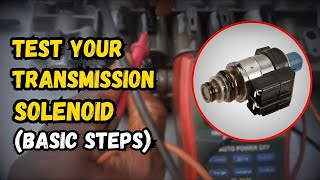
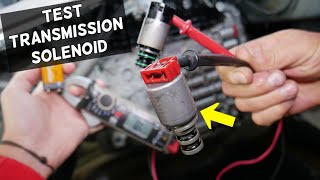


The information in this article is provided for general reference and educational purposes only. Vehicle specifications, procedures, and part compatibility can vary by production date, trim level, and region. Always consult your vehicle's factory service manual and verify part numbers before purchasing or performing repairs. Safety-critical components such as airbags, seat belts, and braking systems should be installed by a qualified professional.
- 🎬 Helpful Videos
- What Does P2713 Mean?
- Can I Drive With P2713?
- Common Causes
- Symptoms
- Diagnostic Flowchart
- Common Fixes & Costs
- Used vs. New Parts: Buying Guide
- What Happens If You Wait — Timeline
- Cost of Not Fixing It
- Diagnosis Steps
- When This Code Triggers (Freeze-Frame Conditions)
- Related Codes
- Climate & Environmental Factors
- How to Talk to a Mechanic About This Code
- Where to Take It: Dealer vs Independent vs Chain
- When to Walk Away From the Repair
- What Scan Tool You Need for This Code
- How to Clear the Code After You Fix It
- Will This Fail Emissions / State Inspection?
- Most Commonly Affected Vehicles
- Manufacturer-Specific Notes
- Real Owner Stories
- 2015 Infiniti Q50 at 122K miles - Post-Repair Complication
- Infiniti Q50 - The Misdiagnosis Chain
- Generic Case - The Simple Fix
- How to Prevent This Code From Triggering
- Frequently Asked Questions
- Can I fix code P2713 myself?
- How much does it cost to fix P2713?
- What is the most common cause of P2713?
- What does Pressure Control Solenoid 'D' actually do?
- Can a bad TCM cause solenoid codes?
- Is it hard to replace a transmission solenoid?
- What is a common misdiagnosis for P2713?
- My transmission fluid is clean. Can the solenoid still be bad?
- Will clearing the code fix the problem?
- Is a pressure control solenoid the same as a shift solenoid?
- Key Takeaways
- 🎟️ Get 5% Off