

OBD-II Code P2707: Shift Solenoid 'F' Performance or Stuck Off
The Ultimate Expert Guide to P2707: What It Means, Why It Happens, and How to Fix It for Good
- Code P2707 indicates a failure in the 'Shift Solenoid F' circuit, causing severe drivability issues like harsh banging shifts, gear slipping, and 'limp mode'.
- On Ford and GM 10-speed transmissions (2017+), this code almost always points to a catastrophic internal hydraulic leak from a failed CDF clutch drum or valve body, not a simple bad solenoid.
- Stop driving immediately; continuing to drive with a slipping 'F' clutch destroys the transmission, turning a $2,000 valve body replacement into an $8,000 complete rebuild.
- Do not replace parts without performing the specific vacuum and pressure tests outlined in manufacturer Technical Service Bulletins (like Ford TSB 24-2254) to confirm the internal leak.
What Does P2707 Mean?

The Transmission Control Module (TCM) commanded Shift Solenoid 'F' to activate, but it did not respond. This solenoid is a critical electro-hydraulic valve that directs transmission fluid to engage a specific clutch pack for gear changes. When it is 'stuck off,' it fails to open, starving the clutch of the hydraulic pressure needed to shift correctly.
Technical definition: The SAE/OBD-II definition is Shift Solenoid 'F' Performance/Stuck Off. The TCM detected a performance issue or an open circuit in the electrical system for Shift Solenoid 'F'. The TCM expected a specific voltage or current change when commanding the solenoid on; the absence of this change implies the solenoid or its hydraulic circuit is not functioning.
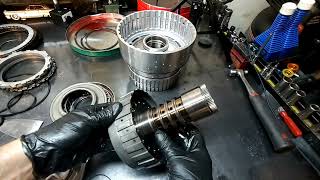
🎬 Watch: A deep dive into diagnosing P2707 and P2708 codesCan I Drive With P2707?
No — Do Not Drive. Do not drive. The vehicle may still move, but you will experience harsh shifting, delayed gear engagement, and a high risk of the transmission entering 'limp mode' with limited gears. Continuing to drive causes severe, cascading internal transmission damage, including clutch pack destruction and valve body scoring. This escalates a potentially manageable $2,000 valve body repair into an $8,000+ complete transmission replacement.
Common Causes

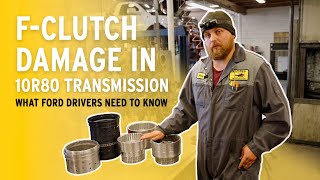
- Internal Mechanical Failure (CDF Clutch Drum Sleeve) (Very Common) — On modern Ford 10R80 transmissions, a bushing inside the 'CDF clutch drum' walks out of its bore, uncovering hydraulic passages and causing a massive internal pressure leak. This prevents the 'F' clutch circuit from receiving pressure, triggering the code. Ford covers this design flaw in multiple Technical Service Bulletins (TSBs).
- Faulty Main Control Valve Body (Very Common) — The valve body is the transmission's hydraulic control center. Valves stick due to debris from failing parts, the body warps causing cross-leaks, or internal solenoids fail. Replacing the entire valve body assembly is the standard repair for many affected Fords. 🎬 See the four most common failure points for this transmission
- Low, Dirty, or Burnt Transmission Fluid (Common) — Low fluid prevents the pump from supplying adequate pressure to the solenoids and clutches. Old, burnt, or contaminated fluid clogs tiny hydraulic passages, causing solenoids to stick. Finding brass-colored 'glitter' in Ford 10R80 fluid is a definitive sign of CDF drum bushing failure.
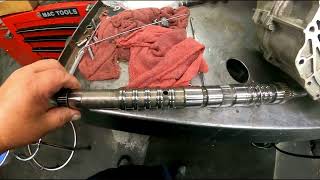
- Blown Input Shaft End Plug (Less Common) — On Ford 10R80 transmissions, a small, pressed-in plug at the tip of the input shaft ejects. This plug seals the 'F' clutch hydraulic circuit; its absence creates a complete loss of pressure, directly triggering P2707.
- Failed Shift Solenoid 'F' (Less Common) — The solenoid itself fails electrically (internal coil burns out) or mechanically (piston sticks from debris). On 10-speed transmissions, the solenoid is usually a symptom of fluid starvation rather than the root cause.
- Damaged Wiring or Connectors (Less Common) — Heat, vibration, or road debris damages the wiring harness connecting the TCM to the transmission. This causes an open or short circuit, preventing the TCM's command from reaching the solenoid.
- Faulty Transmission Control Module (TCM) (Rare) — The internal driver circuit responsible for sending power to solenoid 'F' burns out. This is highly uncommon and requires exhaustively ruling out all mechanical and electrical possibilities first.
Symptoms

- Harsh, Abrupt, or Banging Shifts — A severe 'clunk' or 'bang' occurs when the transmission attempts to shift, particularly on downshifts or when coming to a stop. The vehicle hesitates significantly before slamming into gear.
- Transmission Slipping or Flare — Engine RPMs suddenly spike between shifts without any increase in vehicle speed. The 'F' clutch pack fails to engage due to a lack of hydraulic pressure, causing a momentary neutral condition.
- Inability to Engage Gears — The vehicle fails to move when shifted into Drive or Reverse, or experiences a long delay before engaging with a harsh jolt. Some vehicles shift back to Park automatically.
- Vehicle Enters 'Limp Mode' (also visible on scanner) — The transmission's computer recognizes the severe fault and enters a self-preservation mode, limiting the vehicle to a single gear (e.g., 3rd or 5th) to prevent further damage.
- Transmission Overheating (also visible on scanner) — Slipping clutches generate immense heat. The transmission fluid overheats, creating a burning smell and potentially pushing fluid out of the vent tube onto the undercarriage.
- Check Engine Light or Wrench Light (also visible on scanner) — The Malfunction Indicator Lamp or a powertrain fault light (often shaped like a wrench on Ford vehicles) illuminates on the dashboard.
Diagnostic Flowchart
Tap your situation to follow the diagnostic path that matches what you're seeing on this code.
Common Fixes & Costs

- Transmission Rebuild (to replace CDF clutch drum/input shaft) — Parts: $1500-$3000, Labor: $3500-$5500, ~22 hr book time (Professional)
- Replace Main Control Valve Body Assembly — Parts: $800-$1500, Labor: $400-$800, ~7.5 hr book time (Professional)
- Replace Shift Solenoid 'F' — Parts: $50-$150, Labor: $300-$600, ~3.5 hr book time (Intermediate)
- Transmission Fluid and Filter Service — Parts: $100-$250, Labor: $150-$250, ~1.5 hr book time (Intermediate)
- Replace Transmission Control Module (TCM) — Parts: $400-$1000, Labor: $150-$400, ~1.5 hr book time (Professional)
Used vs. New Parts: Buying Guide
When a used part is worth it: For the 10R80 transmission, buying a used (junkyard) valve body or complete transmission is NOT recommended. These units likely have the same inherent design flaws and are prone to early failure. Choose a quality remanufactured unit with upgrades or a new OEM unit.
Donor-vehicle mileage cap: roughly under 80000 miles for the part to have meaningful remaining life.
Donor quality checklist:
- For remanufactured units, verify the builder specifically addresses and upgrades the known 10R80 weak points: the CDF drum, valve body, and torque converter clutch.
- Look for builders who dyno-test their transmissions before shipping and offer a comprehensive warranty.
- For new OEM parts, ensure they are the latest superseded part numbers containing design updates.
Decision logic:
- If Vehicle is a daily driver and you plan to keep it long-term → Invest in a quality remanufactured ('built') transmission that corrects factory flaws. The long-term reliability outweighs the higher initial cost.
- If Budget is the primary concern and the vehicle's future is uncertain → A standard rebuild from a reputable shop is the cheapest major repair, but carries the risk of repeat failure if underlying design flaws are not addressed.
- If The part being replaced is the valve body only → Buy a new OEM valve body. It comes with the latest updates and a new solenoid strategy ID required for programming.
Warranty tradeoff: Used/junkyard parts typically have a 30-90 day warranty on the part only. A standard shop rebuild offers a 12-month/12,000-mile warranty. Quality remanufactured units and new OEM parts come with multi-year, higher-mileage warranties.
Worst-case if a used part fails: $4000-7000 if a cheap rebuild or used part fails, including the cost of repeat labor, new fluids, and another replacement component.
What Happens If You Wait — Timeline
- 0-1 month: Code P2707 appears. Intermittent harsh shifts occur, especially on downshifts. May feel like a 'bang' or 'clunk' when coming to a stop. (MPG impact: 0-2%% · Added cost: $0. The problem is contained but requires immediate diagnosis.)
- 1-3 months: Shifting becomes consistently harsh. Transmission 'flares' or slips between gears. Vehicle enters 'limp mode' with limited gears. (MPG impact: 5-10%% · Added cost: $500-$1,500. The slipping 'F' clutch generates extreme heat, burning the fluid and damaging adjacent seals and clutch packs.)
- 3-6 months: Catastrophic symptoms. Vehicle fails to engage Drive or Reverse. A burning smell is noticeable. Debris from the failed 'F' clutch circulates through the entire transmission. (MPG impact: 15-25%% · Added cost: $2,500-$4,000. Circulating debris scores the valve body, clogs the filter, and damages other solenoids and clutch packs.)
- 6+ months: Total transmission failure. The vehicle is undrivable. The damage is so extensive that the unit is no longer rebuildable. (MPG impact: N/A (undrivable)% · Added cost: $7,000-$9,500+. The only option is a complete replacement with a new or remanufactured transmission.)
Cost of Not Fixing It
- 0-1 month: Continued driving causes slipping clutches to generate extreme heat, rapidly degrading the transmission fluid and causing accelerated wear on internal seals and clutch packs. (Added cost: Escalates a potential valve body repair ($2,000) into a definite transmission rebuild ($5,000+).)
- 1-3 months: Catastrophic failure of the 'F' clutch pack occurs. Debris from burnt clutch material circulates throughout the transmission, contaminating the valve body and damaging other clutch packs. (Added cost: Guarantees a full, complex rebuild is necessary, costing $5,000-$8,500 as more hard parts are destroyed.)
- 3+ months: Total transmission failure. The damage becomes so severe (e.g., cracked drum, scored case) that the transmission is no longer rebuildable, forcing a full replacement. (Added cost: The most expensive outcome, costing $7,000-$9,500+ for a replacement transmission and labor.)
Diagnosis Steps
- Scan for All Trouble Codes & Research TSBs
Use a professional-grade OBD-II scanner to read all codes from the TCM and PCM. Note any other solenoid (P07xx) or gear ratio (P0729-P0736) codes. Immediately research Technical Service Bulletins (TSBs) for your vehicle. For Fords, TSBs like 24-2254 point directly to the root cause (CDF drum, valve body) and the required diagnostic procedure.
Tools: OBD-II Scanner, Internet access (Beginner) - Check Transmission Fluid Level and Condition
With the engine warm and the vehicle level, check the fluid. It should be at the 'full' mark and a clear reddish color. A burnt odor indicates overheating from clutch slippage. For Ford 10R80s, drain a small sample and look for fine, brass-colored 'glitter'—a definitive sign of CDF drum bushing failure.
Tools: Rag, drain pan (Beginner) - Analyze Live Scan Tool Data & Perform Active Test
Access the TCM live data using a bidirectional scanner. Monitor 'Shift Solenoid F Commanded State' and Line Pressure Control (LPC) PIDs. Use the scanner's active test function to command Solenoid 'F' on and off while listening for a 'click' from the transmission pan. No click suggests a bad solenoid or open circuit.
Tools: Professional Bi-Directional Scan Tool (Intermediate) - Inspect External Wiring and Connectors
Visually inspect the wiring harness going to the transmission for melting, chafing, or physical damage. Disconnect the main transmission connector and check for corrosion, bent pins, or water intrusion.
Tools: Flashlight, connector cleaning tools (Intermediate) - Test the Solenoid's Electrical Integrity (Resistance)
Drop the transmission pan. Disconnect the solenoid and use a multimeter set to Ohms (Ω) to measure resistance across its two pins. A good Ford 10R80 solenoid reads between 5.0 and 5.4 ohms at room temperature. An infinite reading (OL) means an open coil; near zero means a shorted coil.
Tools: Socket set, drain pan, multimeter, vehicle-specific service manual (Advanced) - Verify Power and Ground at the Solenoid Connector
With the solenoid disconnected, probe the harness-side connector. Have a helper turn the ignition on and command the solenoid 'on' with the scan tool. One pin must show battery voltage (~12V) and the other a good ground. Voltage below 9V indicates high resistance in the wiring or a weak TCM driver.
Tools: Multimeter, bidirectional scan tool, wiring diagram (Advanced) - Perform Advanced Hydraulic/Mechanical Tests
If electrical tests pass, the issue is mechanical. For Ford 10R80s, follow TSB 24-2254 using a specialized vacuum/pressure transducer kit to test the CDF clutch cylinder hydraulic circuit for leaks. A significant vacuum loss confirms the internal leak without a full teardown. Also, probe the input shaft for a missing end plug.
Tools: Specialized pressure/vacuum gauges (Rotunda 164-R9833), transmission repair tools (Professional)
When This Code Triggers (Freeze-Frame Conditions)
- Engine Coolant Temp: 185-215°F (Fully warmed up)
- Engine RPM: 1300-1800 (During light-throttle upshifts)
- Engine Load: 15-40% (Steady acceleration or cruise)
- Vehicle Speed: 20-55 mph (Accelerating through gears)
Related Codes
- P0700 — This is a generic Transmission Control System Malfunction code. P0700 is a 'flag' code that tells the engine computer to turn on the Check Engine Light, while P2707 identifies the specific circuit at fault.
- P2706, P2708, P2709 — These codes indicate different failure modes for Shift Solenoid 'F', such as 'Stuck On' (P2708) or 'Intermittent' (P2709). On Ford 10R80s with a major hydraulic leak, the TCM becomes confused and sets any of these codes for the same root cause.
- P0729 - P0736 (Incorrect Gear Ratio Codes) — These codes result directly from the P2707 fault. When the 'F' clutch fails to apply, the transmission slips. P2707 points to the cause (solenoid circuit fault), while P0729-P0736 point to the effect (slipping/wrong gear).
- P0751, P0756, P0761, etc. (Other Solenoid Codes) — These are performance codes for other shift solenoids. Seeing multiple solenoid codes together alongside P2707 indicates a systemic hydraulic failure, like a bad valve body or CDF drum leak, rather than multiple simultaneously bad solenoids.
Climate & Environmental Factors
- Cold Temperatures: Symptoms of P2707, such as harsh or delayed shifts, are more pronounced during cold starts before the transmission reaches operating temperature (approx. 120°F). Thicker fluid exacerbates issues with sticking valves or hydraulic leaks past worn seals.
- High Temperatures: High ambient temperatures reduce the cooling system's ability to compensate for the excessive heat generated by a slipping clutch, accelerating fluid breakdown and internal damage.
How to Talk to a Mechanic About This Code
Say this: "I have a P2707 code on my Ford and I'm experiencing harsh shifting. I'm aware of the common 10R80 issues like the CDF drum and valve body problems described in Ford's TSBs. I'd like to schedule a diagnostic that specifically follows the TSB to test for internal hydraulic leaks before we discuss replacing any parts."
This signals you are an informed consumer. It directs the technician away from a simple solenoid replacement and toward the manufacturer's recommended diagnostic procedure for the known design flaw.
Avoid saying:
- 'My transmission is acting weird.'
- 'The check engine light is on, can you just fix it?'
- 'I think I need a new shift solenoid.'
Questions to ask before authorizing the repair:
- Did you perform the hydraulic leak test specified in TSB 24-2254?
- What were the results of the electrical tests on the solenoid and its wiring?
- If the CDF drum needs replacement, are you using the latest updated part number from Ford?
- Does the quoted price for a valve body replacement include the necessary TCM reprogramming and adaptive learn drive cycle?
- What is the warranty on the parts and labor for this repair?
Where to Take It: Dealer vs Independent vs Chain
- Dealer:
A strong choice if the vehicle is under warranty. For out-of-warranty repairs, they have the specific tools and knowledge but will be the most expensive option.
Best for: Vehicles still under powertrain warranty, as this is a very expensive repair., Cases where you are certain a Ford TSB applies and want the official manufacturer-prescribed fix.
Downsides: Highest labor rates and parts costs., May be quick to recommend a full transmission replacement over a rebuild. (Typical cost: +50% vs. baseline) - Independent Shop:
Best overall fit for out-of-warranty repairs, BUT only if it's a reputable, specialized transmission shop. A general mechanic is not equipped for this specific, complex job.
Best for: Out-of-warranty vehicles where cost is a major factor., Shops that specialize in transmission repair and are familiar with the common 10R80 failures.
Downsides: Quality and expertise vary widely. You must find a shop that specifically states they work on modern, complex transmissions like the 10R80., May not have immediate access to the latest TSBs or specialized Ford diagnostic software (FDRS). (Typical cost: +0% vs. baseline) - Chain Shop:
AVOID. This is a complex, specialized repair that is far beyond the scope of a typical chain shop's capabilities. The risk of misdiagnosis and incorrect repair is extremely high.
Best for: Simple maintenance like fluid changes, but even that is risky for the 10R80 due to specific fluid and level check procedures.
Downsides: Technician skill is highly variable and often not specialized enough for complex internal transmission work., Very likely to misdiagnose the issue as a simple solenoid or recommend an unnecessary and expensive transmission replacement. (Typical cost: -10% vs. baseline)
When to Walk Away From the Repair
If the estimated repair cost for a transmission rebuild or replacement (typically $5,000-$8,500) exceeds 50% of your vehicle's private-party value, you should seriously consider selling the vehicle as-is or trading it in.
- Car worth $25000, fix is $6500: Fix it. The repair cost is significant but well below the 50% threshold of the truck's value.
- Car worth $15000, fix is $7000: Borderline. This is a tough decision. The repair is almost half the vehicle's value. Get a second opinion and consider the truck's overall condition before proceeding.
- Car worth $10000, fix is $7500: Walk away. The repair cost is 75% of the vehicle's value. It is not economically sensible to perform this repair.
What Scan Tool You Need for This Code

Minimum: A scanner that reads manufacturer-specific transmission codes and displays live transmission data, including solenoid commanded states and fluid temperature.
A basic $20 code reader only shows the P2707 code. It cannot access the live data from the TCM needed to see if the solenoid is being commanded on, nor can it perform the active tests or relearn procedures required for a proper diagnosis and repair.
Budget: BlueDriver Pro (~$100) — Reads enhanced transmission codes and displays live data streams on your smartphone. It helps you see if the TCM is commanding the solenoid, but it lacks bidirectional control.
Mid-range: Foxwell NT510 Elite / NT650 (~$200) — Offers full system diagnostics and bidirectional control (active tests) to command the solenoid on and off manually. It also performs some transmission service relearn functions after a repair.
Professional: Autel MaxiCOM MK808 / XTOOL D7 (~$500-700) — Provides full professional-level bidirectional control. These tools are essential for a valve body replacement as they perform the mandatory 'Solenoid Body Strategy Relearn' procedure and reset transmission adaptive tables.
Rent vs buy: For P2707, a basic rental scanner is insufficient because diagnosis requires bidirectional control. If you are an advanced DIYer planning to tackle the diagnosis yourself, buying a mid-range tool is necessary. However, since the most common repairs are not DIY-friendly, most owners are better off paying for a professional diagnosis.
How to Clear the Code After You Fix It
- Use a professional OBD-II scan tool to clear Diagnostic Trouble Codes (DTCs) and reset the Transmission Adaptive Tables.
- Perform the manufacturer-specific adaptive learning drive cycle.
Drive cycle (~30 minutes): After warming the transmission to operating temperature (196-216°F), accelerate from a stop with light (15%) throttle to 55 mph, allowing shifts 1-10. Brake gently to a complete stop and hold for 5 seconds. Shift to Neutral (1 sec), then Reverse (2 secs), then Neutral (1 sec), then Drive (2 secs). Repeat this entire sequence 6 more times.
Readiness monitors affected: Catalyst Monitor, Oxygen Sensor Monitor, Evaporative System Monitor
Before emissions retest: drive at least 100 miles to fully set monitors.
Watch out for:
- Clearing the code without fixing the root mechanical cause results in the code returning almost immediately.
- Failure to perform the adaptive learning drive cycle after a major repair results in poor shift quality.
- Clearing codes just before an emissions test resets readiness monitors, causing an automatic failure.
Will This Fail Emissions / State Inspection?
Yes — this code typically fails an OBD-II emissions inspection.
- California: An illuminated Check Engine Light results in an automatic smog check failure. After repairs, a full drive cycle must be completed to set all readiness monitors before a re-test is possible.
- New York: The NYS DMV emissions inspection includes an OBD-II scan. Any fault code that illuminates the Check Engine Light, including P2707, is an automatic failure.
- Texas: In the 17 counties that require emissions testing, an active P2707 code and illuminated Check Engine Light cause the vehicle to fail the inspection automatically.
Most Commonly Affected Vehicles
- Ford F-150 (2017-2023) — Extremely common issue with the 10R80 transmission. The primary cause is the CDF clutch drum sleeve failure. TSBs 24-2254 and 23-2250 apply. Models built after August 2022 feature an updated drum design.
- Ford Explorer (2020-2023) — Equipped with the 10R60/10R80, these are highly susceptible to faulty main control valve bodies and CDF clutch cylinder sleeve failures. TSB 24-2254 specifically calls out these models.
- Ford Mustang (2018-2023) — The 10R80 transmission in the Mustang triggers this code due to a faulty valve body, CDF drum sleeve failure, or a blown-out input shaft end plug.
- Ford Ranger (2019-2023) — Uses the 10R80 and suffers from widespread issues: sticking valves in the main control body and CDF clutch drum sleeve movement.
- Ford Transit (2020-2023) — The 10R80-equipped Transit is frequently cited in Ford TSBs for P2707 caused by the CDF clutch cylinder sleeve moving out of position and creating a major hydraulic leak.
- Chevrolet / GMC Silverado, Sierra, Tahoe, Suburban, Camaro (2019-2023) — These vehicles use the 10L80 or 10L90 transmission, co-developed with Ford. They suffer from valve body issues, torque converter problems, and solenoid failures that trigger P2707.
- Honda Accord, Odyssey, Pilot, Ridgeline (2010-2020) — P2707 is uncommon but occurs due to degraded transmission fluid, a single failing solenoid, or a clogged passage in the valve body. It rarely indicates a catastrophic design flaw.
- Toyota Camry, Highlander, RAV4, Tundra (2010-2020) — This code is extremely rare in Toyota vehicles. Diagnosis should start with transmission fluid condition and level, followed by checking the solenoid's electrical integrity.
Manufacturer-Specific Notes
- Ford: On 10R80/10R60-equipped vehicles, P2707 is a 'symptom code' more than 90% of the time. Do not replace the solenoid. The root cause is almost certainly a major internal hydraulic leak from the CDF clutch drum sleeve or a blown input shaft plug. Diagnosis MUST follow TSB 24-2254.
- General Motors (GM): GM's 10L80/10L90 transmissions share a similar architecture with Ford but have different control strategies. They are known to have issues with torque converters and valve bodies that cause similar symptoms and trigger a P2707 code.
- Honda: P2707 is typically caused by neglecting transmission fluid changes, leading to fluid degradation and clogged linear solenoids. A '3x drain and fill' procedure with genuine Honda DW-1 fluid often resolves the issue without major parts replacement.
- Toyota: This code is exceptionally rare on Toyota models. Verify the fluid is correct and full, and check if recent non-transmission work damaged a wiring harness. A true internal failure causing this code is highly unlikely.
Real Owner Stories
2018 Ford F-150 5.0L at 29K miles
Owner took the truck in for erratic shifting, with the first shift of the day being particularly hard. There was no Check Engine Light on.
What they tried:
- Dealer diagnosed a bad solenoid and replaced the entire valve plate assembly under warranty.
Outcome: After the repair, skip-shifting felt 'clunky'. The dealer advised driving for 500-1000 miles for the transmission to re-learn.
Lesson: Even a warranty repair like a valve body replacement requires a significant adaptive learning period. Document any persistent strange behavior, as the root cause (like the CDF drum) may not have been addressed.
2007 Honda Odyssey with slipping transmission
Transmission slipped badly and broke down. The torque converter turned purple from heat, and the transmission was full of sludge and burnt clutch material.
What they tried:
- A complete transmission rebuild.
Outcome: A full rebuild was required, including replacing incinerated clutches and updating the valve body to correct engineering deficiencies.
Lesson: A simple fluid change won't fix a mechanically failed unit. A quality rebuild that includes updates to known weak points is more reliable than a standard remanufactured unit.
2020 Ford Explorer with persistent shifting issues
Owner experienced ongoing shifting problems. Even a full transmission replacement did not solve the issue.
What they tried:
- A full transmission replacement was performed, but the problem remained.
Outcome: A technician traced the problem to the wiring harness. It was routed too close to the exhaust, causing heat damage and intermittent signal loss to the solenoids.
Lesson: If major mechanical parts are replaced but the problem persists, suspect the wiring. Heat, chafing, or corrosion causes identical symptoms to a major internal failure.
2007 Ford F-150 5.4L with 4R75E transmission
Immediately after a transmission service, the truck began to jump out of gear when starting from a stop on a steep hill.
What they tried:
- The owner noted the fluid level was correct and not burnt.
Outcome: The issue was misdiagnosed as a transmission problem. It was likely an engine misfire under load, which feels like a transmission slip.
Lesson: Don't immediately assume a transmission problem. A shudder under load is often caused by an engine misfire from a bad spark plug or ignition coil.
How to Prevent This Code From Triggering
- Perform transmission fluid and filter changes at recommended intervals. (Every 30,000-60,000 miles. For the Ford 10R80, experts recommend a 30,000-mile interval despite the 'lifetime fluid' claim.) — Clean fluid maintains hydraulic properties, lubricates moving parts, and keeps tiny valve body passages clean. Old fluid allows for premature wear.
- Use ONLY the manufacturer-specified fluid. (Every fluid service.) — Using a generic fluid instead of the specified type (e.g., Motorcraft Mercon ULV for the 10R80) causes incorrect clutch friction, seal swelling, and rapid failure.
- Install an auxiliary transmission cooler. (Once, especially if you tow or operate in high-heat climates.) — Heat is the #1 killer of automatic transmissions. An auxiliary cooler keeps fluid temperatures stable, preventing fluid breakdown and overheating of internal components.
- Avoid aggressive driving when the transmission is cold. (Daily habit.) — Allow the transmission fluid to reach operating temperature before demanding hard acceleration. Cold, thick fluid puts extra strain on seals and exacerbates sticking valves.
- Address engine misfires or cooling system issues immediately. (As needed.) — An engine that is misfiring or overheating places undue stress on the transmission and torque converter, accelerating wear and leading to failures.
Frequently Asked Questions
Can I just replace Shift Solenoid F to fix P2707?
On a 10-speed transmission, almost certainly not. The code indicates a circuit failure usually caused by fluid starvation from a major internal leak (CDF drum or valve body). Replacing the solenoid when there is no pressure for it to control wastes money.
How much does it really cost to fix P2707?
Costs vary dramatically based on the root cause. A valve body replacement typically costs $1,200 to $2,300. A full transmission rebuild to fix the common CDF drum failure costs $5,000 to $8,500 depending on collateral damage.
What is the 'CDF drum' and why does it fail?
The CDF clutch drum is a rotating component deep inside the 10R80 transmission sealed by a metal sleeve. A factory design flaw allows this sleeve to move out of position, uncovering fluid passages. This creates a massive internal hydraulic leak that starves the clutches of pressure.
What is a TSB and why is it so important for P2707?
A Technical Service Bulletin (TSB) is a manufacturer notice to dealers about a known, common problem. For P2707 on Fords, TSBs like 24-2254 are critical because they acknowledge the CDF drum design flaw. They provide the exact diagnostic test to confirm it and list the updated parts needed.
Can a bad battery or low voltage cause P2707?
Yes, modern transmissions rely heavily on stable voltage to energize solenoids. A weak battery or failing alternator prevents the TCM from supplying enough power, triggering a performance code. However, you will typically see other electrical codes alongside it.
I got a P2707 code right after a transmission fluid change. What happened?
The shop likely used the wrong fluid type, as the 10R80 requires specific Mercon ULV. They may have also under-filled the transmission or dislodged debris that is now clogging a valve passage. Return the vehicle to the shop immediately for correction.
What's the difference between a shift solenoid and a linear solenoid?
A traditional shift solenoid is a simple on/off valve. A linear solenoid allows the TCM to open it partially using a pulse-width modulated signal, providing precise control over hydraulic pressure. Most modern transmissions use linear solenoids for smoother shifts.
Key Takeaways
- Code P2707 indicates a failure in the 'Shift Solenoid F' circuit, causing severe drivability issues like harsh banging shifts, gear slipping, and 'limp mode'.
- On Ford and GM 10-speed transmissions (2017+), this code almost always points to a catastrophic internal hydraulic leak from a failed CDF clutch drum or valve body, not a simple bad solenoid.
- Stop driving immediately; continuing to drive with a slipping 'F' clutch destroys the transmission, turning a $2,000 valve body replacement into an $8,000 complete rebuild.
- Do not replace parts without performing the specific vacuum and pressure tests outlined in manufacturer Technical Service Bulletins (like Ford TSB 24-2254) to confirm the internal leak.
Helpful Videos


The information in this article is provided for general reference and educational purposes only. Vehicle specifications, procedures, and part compatibility can vary by production date, trim level, and region. Always consult your vehicle's factory service manual and verify part numbers before purchasing or performing repairs. Safety-critical components such as airbags, seat belts, and braking systems should be installed by a qualified professional.
- 🎬 Helpful Videos
- What Does P2707 Mean?
- Can I Drive With P2707?
- Common Causes
- Symptoms
- Diagnostic Flowchart
- Common Fixes & Costs
- Used vs. New Parts: Buying Guide
- What Happens If You Wait — Timeline
- Cost of Not Fixing It
- Diagnosis Steps
- When This Code Triggers (Freeze-Frame Conditions)
- Related Codes
- Climate & Environmental Factors
- How to Talk to a Mechanic About This Code
- Where to Take It: Dealer vs Independent vs Chain
- When to Walk Away From the Repair
- What Scan Tool You Need for This Code
- How to Clear the Code After You Fix It
- Will This Fail Emissions / State Inspection?
- Most Commonly Affected Vehicles
- Manufacturer-Specific Notes
- Real Owner Stories
- 2018 Ford F-150 5.0L at 29K miles
- 2007 Honda Odyssey with slipping transmission
- 2020 Ford Explorer with persistent shifting issues
- 2007 Ford F-150 5.4L with 4R75E transmission
- How to Prevent This Code From Triggering
- Frequently Asked Questions
- Can I just replace Shift Solenoid F to fix P2707?
- How much does it really cost to fix P2707?
- What is the 'CDF drum' and why does it fail?
- What is a TSB and why is it so important for P2707?
- Can a bad battery or low voltage cause P2707?
- I got a P2707 code right after a transmission fluid change. What happened?
- What's the difference between a shift solenoid and a linear solenoid?
- Key Takeaways
- 🎟️ Get 5% Off