

OBD-II Code P2706: Shift Solenoid 'F' Malfunction
The Ultimate Expert Guide to What P2706 Means, Why It Triggers, and How to Fix It
- Code P2706 indicates an electrical circuit failure in Shift Solenoid 'F', causing harsh shifts and forcing the transmission into a restricted 'limp mode'.
- Always check for Technical Service Bulletins (TSBs) first, as a $150 software update permanently fixes this code on many vehicles, especially Ram trucks.
- If software isn't the issue, expect to pay $550 to $1,200 to replace the internal transmission solenoid pack or lead frame.
- Stop driving immediately; operating in limp mode with incorrect hydraulic pressure destroys internal clutches and turns an $800 repair into a $5,000 transmission rebuild.
What Does P2706 Mean?

The Powertrain Control Module (PCM) or Transmission Control Module (TCM) detected a critical electrical circuit malfunction in 'Shift Solenoid F'. This electronically controlled hydraulic valve manages transmission fluid flow to engage or disengage clutch packs. When the computer commands this solenoid and receives electrical feedback outside the expected range, it triggers code P2706 and illuminates the check engine light.
Technical definition: Code P2706 indicates a malfunction in the electrical circuit of Shift Solenoid 'F'. The control module actively monitors the circuit's integrity by measuring voltage, resistance, or the inductive spike after a test pulse. When the detected response deviates from precise manufacturer specifications, the module registers a fault.
Can I Drive With P2706?
Yes, But With Caution. You can drive, but do not exceed a few miles to reach safety. The transmission enters 'limp mode,' locking into a single gear (often 3rd or 4th) and causing dangerously poor acceleration. Some vehicles fail to move forward from a stop entirely. Continuing to drive causes uncontrolled hydraulic line pressure, leading to catastrophic internal transmission failure and replacement costs exceeding $5,000.
Common Causes

- Outdated TCM/PCM Software (Very Common) — Manufacturers frequently release Technical Service Bulletins (TSBs) to update transmission control software. Original factory logic often incorrectly flags a P2706 code, making a simple software reflash the permanent fix, especially on Ram trucks.
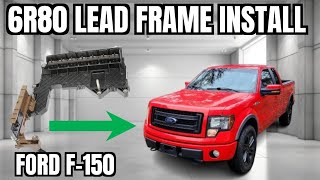
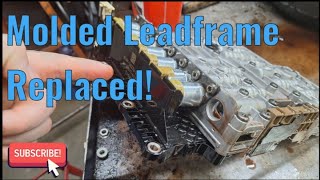
- Faulty Shift Solenoid 'F' or Solenoid Pack (Very Common) — The solenoid fails electrically from an internal short/open circuit, or mechanically from a stuck plunger. In modern vehicles (Ram, Ford), this solenoid is integrated into a non-serviceable 'solenoid pack' or 'lead frame,' a well-documented high-failure item. 🎬 Watch: Step-by-step guide to replacing a faulty lead frame
- Wiring Harness or Connector Damage (Common) — Exposed to extreme heat and corrosive fluids, transmission wires become brittle. Melted insulation or corroded connector pins interrupt the electrical signal between the TCM and the solenoid.
- Low, Burnt, or Contaminated Transmission Fluid (Common) — Low fluid starves solenoids of hydraulic pressure. Burnt, dirty fluid introduces abrasive particles that clog tiny passages within the solenoid, causing it to stick, overheat, and fail electrically.
- Internal Transmission Fluid Varnish (Less Common) — Prolonged use of degraded fluid forms a sticky varnish on internal components, causing solenoid valves to stick. This is a known issue on Honda/Acura models where a fluid flush often resolves the code without parts replacement.
- Faulty Transmission Control Module (TCM) (Rare) — The TCM's internal driver circuit responsible for sending the signal to Solenoid 'F' burns out. Suspect this only after proving the solenoid and wiring are fully functional.
- Defective Transmission Valve Body (Rare) — Wear in the solenoid bores or cracks in the casting cause hydraulic cross-leaks. This typically sets pressure codes but occasionally contributes to erratic solenoid operation and electrical faults.
Symptoms

- Harsh, Banging, or Delayed Shifting — The vehicle slams into gear, hesitates before shifting, or shifts at unpredictable times.
- Failure to Engage Gear — When shifting from Park to Drive, the vehicle experiences a long delay or fails to engage a forward gear entirely.
- Decreased Fuel Economy — Inability to reach overdrive gears forces the engine to run at higher, inefficient RPMs, drastically reducing fuel mileage.
- Vehicle Enters 'Limp Mode' (also visible on scanner) — The TCM locks the transmission into a single gear (usually 2nd, 3rd, or 4th) to prevent damage, resulting in extremely poor acceleration and high highway RPMs.
- Check Engine Light (MIL) is On (also visible on scanner) — The Malfunction Indicator Lamp illuminates. Some vehicles also flash a separate transmission warning light.
Diagnostic Flowchart
Tap your situation to follow the diagnostic path that matches what you're seeing on this code.
Common Fixes & Costs
- Reprogram the Transmission Control Module (TCM/PCM) — Parts: $0, Labor: $150-$250, ~1 hr book time (Professional)
- Replace Shift Solenoid 'F' or Solenoid Pack — Parts: $300-$700, Labor: $250-$500, ~2.5 hr book time (Intermediate)
- Repair or Replace Damaged Wiring/Connector — Parts: $20-$150, Labor: $150-$300, ~2 hr book time (Intermediate)
- Replace Transmission Fluid and Filter(s) — Parts: $75-$200, Labor: $150-$250, ~1.5 hr book time (DIY)
- Replace the Transmission Valve Body — Parts: $400-$900, Labor: $300-$600, ~3.5 hr book time (Professional)
- Replace the Transmission Control Module (TCM) — Parts: $400-$1200, Labor: $200-$400, ~2.5 hr book time (Professional)
Used vs. New Parts: Buying Guide
When a used part is worth it: Used parts make sense only on older, high-mileage vehicles where a new OEM part is a significant fraction of the car's value. Avoid used parts for known high-failure items like Ford lead frames or Ram solenoid packs.
Donor-vehicle mileage cap: roughly under 75000 miles for the part to have meaningful remaining life.
Donor quality checklist:
- Verify the exact part number and connector color-coding (critical for Ram 68RFE).
- Obtain the donor VIN to confirm accident history rather than mechanical failure.
- Avoid parts from flood-damaged or rust-belt vehicles due to connector corrosion.
Decision logic:
- If A TSB exists for a software update → Do not buy any part; perform the software update first.
- If The part is a known high-failure item (e.g., Ford lead frame, Ram solenoid pack) → Buy a new OEM or high-quality aftermarket part with an updated design.
- If Vehicle is over 150,000 miles and budget is the primary concern → A used part is a reasonable gamble, but carries limited remaining life.
Warranty tradeoff: Used parts typically offer a 30-90 day part-only warranty. New aftermarket parts offer 1-year to lifetime warranties. New OEM parts carry a 1-2 year warranty, often including labor if dealer-installed.
Worst-case if a used part fails: $500-$1000 if a used part fails, requiring you to pay for the part and labor a second time.
What Happens If You Wait — Timeline
- 0-1 month: Check engine light illuminates. Intermittent harsh shifts or delayed engagement occur. Vehicle occasionally enters limp mode. (MPG impact: 0-5%% · Added cost: $0-$50 in wasted fuel.)
- 1-3 months: Shifting problems become severe. Limp mode is frequent. Transmission fluid smells burnt as it overheats due to incorrect line pressures. (MPG impact: 5-15%% · Added cost: $200-$400 in accelerated clutch wear and fluid degradation.)
- 3-6 months: Driving in limp mode causes significant wear on internal clutch packs. Metal shavings contaminate the fluid, clogging the filter and damaging the valve body. (MPG impact: 15-25%% · Added cost: $1,500-$3,000 (A partial transmission rebuild is now required).)
- 6+ months: Catastrophic failure. The transmission fails to shift, makes grinding noises, or cannot move the vehicle. Extreme heat destroys seals and warps parts. (MPG impact: N/A (Vehicle is likely undrivable)% · Added cost: $4,000-$8,000+ (Complete transmission replacement required).)
Cost of Not Fixing It
- 0-1 month: Erratic shifting, vehicle entering 'limp mode,' and a significant drop in fuel economy. Stranded on the roadside is highly likely. (Added cost: Negligible, but high inconvenience.)
- 1-6 months: Incorrect hydraulic pressure causes accelerated wear on clutch packs. Transmission fluid overheats and burns, losing lubricating properties. (Added cost: $1,800-$3,500 for a transmission rebuild if addressed before catastrophic failure.)
- 6+ months: Catastrophic internal transmission failure. Slipping clutches generate extreme heat, warping metal components and contaminating the hydraulic system with debris. (Added cost: $4,000-$8,000+ for a complete replacement with a new or remanufactured transmission.)
Diagnosis Steps

- Scan Codes & Check TSBs
Retrieve all powertrain codes. Note generic codes like P0700. Immediately search for Technical Service Bulletins (TSBs) for your specific year/make/model. A software update is often the required first step.
Tools: OBD-II Scanner, Internet Access (Beginner) - Check Fluid Level and Condition
Check the transmission fluid at operating temperature. Dark black fluid, a burnt smell, or metallic particles indicate severe internal wear requiring more than a solenoid fix.
Tools: Rag, Transmission Dipstick (if equipped) (Beginner) - Inspect External Wiring and Connectors
Visually inspect the transmission wiring harness for chafing or melting. Disconnect the main transmission connector and check for corrosion, moisture, or pushed-out pins.
Tools: Flashlight, Safety Glasses (Intermediate) - Test Solenoid Circuit Resistance
Identify the Solenoid 'F' pins at the transmission connector using a wiring diagram. Measure resistance through the solenoid. Compare to spec (e.g., Ram 68RFE MS solenoid is ~1.3 Ohms; Ford 6R80 VFS is 5.0-6.0 Ohms). Infinite reading means an open circuit; near-zero means a short.
Tools: Digital Multimeter, Vehicle-Specific Wiring Diagram (Advanced) - Check Power and Ground at Connector
Verify the solenoid receives power and has a solid ground. With the key on, the power pin must show battery voltage (~12.6V). The ground pin resistance to the chassis must be under 0.5 Ohms.
Tools: Digital Multimeter (Intermediate) - Command Solenoid via Scan Tool
Use a bi-directional scan tool to command Shift Solenoid 'F' on and off. Listen for a distinct click from the transmission pan. No click confirms a fault in the wiring or the solenoid itself.
Tools: Advanced Bi-Directional Scan Tool (Advanced) - Monitor Live Data (PIDs)
Watch 'Solenoid F Status', 'Transmission Line Pressure', and 'TCM Voltage' on a scan tool. Status must change when commanded, and pressure should increase with throttle. Failure to change status points to a circuit failure.
Tools: Advanced Bi-Directional Scan Tool (Advanced) - Analyze Command with Oscilloscope
Back-probe the Solenoid 'F' command wire at the TCM. A clean square wave (PWM signal) confirms the TCM is sending the command. An inductive spike when turned off confirms the coil is electrically sound.
Tools: Automotive Oscilloscope, Probes, Wiring Diagram (Professional) - Inspect Internal Wiring and Solenoid
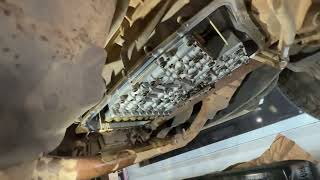
If external tests pass, drop the transmission pan. Inspect the internal wiring harness. If intact, the solenoid or solenoid pack is the confirmed failure point and requires replacement.
Tools: Socket Set, Torque Wrench, Drain Pan, Gasket Scraper (Professional)
When This Code Triggers (Freeze-Frame Conditions)
- Engine Coolant Temp: 180-210°F (Vehicle is at full operating temperature.)
- Engine RPM: 1200-2500 RPM (During a shift event under light to moderate acceleration.)
- Vehicle Speed: 25-55 mph (The fault is often set during upshifts in city or highway driving.)
- Gear Commanded: 3rd, 4th, or 5th (Triggers when the TCM commands a specific gear change involving Solenoid 'F'.)
Related Codes
- P0700 — A generic transmission fault code requesting the check engine light. It confirms a fault is stored in the TCM and almost always appears alongside P2706.
- P2707 — Indicates 'Shift Solenoid F Performance/Stuck Off.' P2706 is electrical, while P2707 is mechanical. The TCM sets P2707 when the commanded gear ratio doesn't match reality, indicating a mechanically stuck solenoid.
- P0871 — Indicates 'Overdrive Pressure Switch Rationality.' Frequently appears with P2706 on Ram 68RFE transmissions. Seeing both strongly points to a failure within the solenoid pack/valve body assembly.
- P0998 / P0999 — Specific electrical codes for 'Shift Solenoid F Control Circuit Low' (P0998 - short to ground) and 'High' (P0999 - short to power). P2706 is a general circuit fault encompassing these.
- P0750 — Indicates 'Shift Solenoid A Malfunction'. When multiple solenoid codes appear simultaneously, it indicates a failure of the shared solenoid pack circuit board rather than individual solenoids.
Climate & Environmental Factors
- Cold Weather: Low temperatures thicken transmission fluid, increasing hydraulic resistance. This strains the solenoid's coil during actuation and causes slower mechanical response, triggering faults on cold starts.
- High Heat: Sustained high temperatures accelerate fluid breakdown and degrade the solenoid's internal electrical coil, leading to open or short circuits. Heat also makes wiring harnesses brittle.
- High Humidity: Moisture penetrates weathered connector seals, causing corrosion on pins and circuit boards. This increases resistance or causes short circuits.
How to Talk to a Mechanic About This Code
Say this: "I have a check engine light with a P2706 code, indicating an electrical fault with shift solenoid 'F'. I'd like to schedule a diagnostic. Can you confirm your technicians can perform manufacturer TSB software updates for the TCM?"
This signals you understand the code is a specific electrical circuit fault. It directs the shop to check for low-cost software fixes before quoting hardware, reducing the risk of misdiagnosis.
Avoid saying:
- 'My transmission is acting weird.'
- 'My check engine light is on, can you just fix it?'
- 'I got a P2706, just replace the solenoid.'
- 'Give me a quote over the phone.'
Questions to ask before authorizing the repair:
- Did you check for Technical Service Bulletins (TSBs) recommending a software reflash before recommending hardware?
- Did you test the solenoid's resistance and check the wiring harness integrity?
- Does the quote include a full fluid/filter change and the required transmission relearn procedure?
- Can you provide me with the old parts after the repair?
- What is the warranty on parts and labor?
Where to Take It: Dealer vs Independent vs Chain
- Dealer:
Best for: Vehicles under warranty., Repairs requiring a TCM software update (reflash)., Complex transmissions (e.g., Audi DSG, ZF 8-speed).
Downsides: Highest labor rates., May default to replacing expensive assemblies rather than targeted repairs. (Typical cost: +50% vs. baseline) - Independent Shop:
Excellent choice, but ONLY if it is a reputable independent shop specializing in transmission repair.
Best for: Out-of-warranty vehicles., Common failures on well-known transmissions (e.g., Ram 68RFE, Ford 6R80)., Getting a second opinion on a dealer quote.
Downsides: General mechanics lack specific tools for internal transmission work., May lack access to the latest TSBs or flashing equipment. (Typical cost: +0% vs. baseline) - Chain Shop:
AVOID. The risk of misdiagnosis and incorrect repair is extremely high.
Best for: Simple fluid and filter changes (use with caution).
Downsides: Technicians are not transmission specialists., High pressure to upsell to a full transmission replacement. (Typical cost: -10% vs. baseline)
When to Walk Away From the Repair
If the estimated repair cost exceeds 50% of the car's current private-party market value, seriously consider selling or trading in the vehicle.
- Car worth $15000, fix is $1400: Fix it. The repair cost is less than 10% of the vehicle's value.
- Car worth $5000, fix is $1400: Borderline. At nearly 30% of the car's value, get a second opinion.
- Car worth $3000, fix is $1400: Walk away. The repair cost is almost 50% of the car's value. Consider selling 'as-is'.
What Scan Tool You Need for This Code
Minimum: A scanner that reads manufacturer-specific transmission codes and displays live data for the Transmission Control Module (TCM).
A basic $20 code reader only shows 'P2706'. It cannot see solenoid command status, fluid temperature, or line pressure, making proper diagnosis impossible.
Budget: ANCEL AD310 (~$30) — Reads and clears the basic P2706 code. Lacks transmission-specific PIDs. Only useful for confirming the code exists.
Mid-range: Foxwell NT510 Elite / XTOOL D7 (~$200-350) — Offers bi-directional control to command the shift solenoid on/off. Reads manufacturer-specific data streams and performs transmission relearns.
Professional: Autel MaxiCOM MK808 / Launch X431 (~$450-1200) — Provides full OEM-level diagnostics, advanced data graphing, and TCM programming capabilities.
Rent vs buy: Buy a mid-range scanner. Proper P2706 diagnosis requires bi-directional control and live data, which rental scanners do not provide.
How to Clear the Code After You Fix It
- Use a professional OBD-II scan tool to clear the diagnostic trouble codes (DTCs).
- Perform the specific transmission relearn or adaptive learning procedure required by the manufacturer.
- Complete a full drive cycle to allow readiness monitors to become 'Ready'.
Drive cycle (~20 minutes): 1) Cold start and idle for 2-3 minutes. 2) Drive in stop-and-go traffic with light accelerations. 3) Drive for 5-10 minutes at a steady 55 mph. 4) Allow the vehicle to cool down completely.
Readiness monitors affected: Comprehensive Component Monitor, Transmission
Before emissions retest: drive at least 100 miles to fully set monitors.
Watch out for:
- Disconnecting the battery clears the code but resets all readiness monitors to 'Not Ready', causing an automatic emissions failure.
- The code returns immediately if the underlying electrical fault remains.
- Failing to perform a manufacturer-specific relearn procedure after replacing a solenoid pack causes continued shifting problems.
Will This Fail Emissions / State Inspection?
Yes — this code typically fails an OBD-II emissions inspection.
- California: An illuminated Check Engine Light is an automatic failure. The vehicle must complete a full drive cycle to set readiness monitors before re-testing.
- New York: An illuminated Malfunction Indicator Lamp causes an automatic failure. For 2001+ vehicles, only one readiness monitor is allowed to be 'Not Ready'.
- Texas: In emissions-testing counties, an illuminated Check Engine Light results in automatic failure. Drive 50-100 miles after clearing the code to reset monitors.
Most Commonly Affected Vehicles
- Ram 2500 / 3500 (2018-2020) — Extremely common due to solenoid pack failures in the 68RFE transmission. TSB #18-061-20 REV. A (2018) and TSB #18-055-22 (2020) recommend a software update first. CRITICAL: 2018 and older use a grey/white connector; 2019+ use a blue connector. They are not interchangeable.
- Dodge Ram, Grand Caravan (2007-2018) — Often related to solenoid pack failures in the 68RFE (trucks) and 545RFE transmissions.
- Jeep Grand Cherokee (2005-2013) — Solenoid and wiring issues are frequent on the 545RFE and Mercedes-sourced W5A580 transmissions.
- Ford F-150, Explorer (2004-2015) — Common on 6R60 and 6R80 transmissions. The fault is typically a failure of the molded lead frame housing the solenoid connections, causing an internal open circuit.
- Chevrolet / GMC Silverado, Sierra, Tahoe (2007-2016) — Appears on 6L80/6L90 transmissions due to a failed solenoid within the TEHCM or a brittle internal wiring harness running to the transmission case connector.
- Honda / Acura Accord, TLX, MDX (2013-2018) — Common on 6-speed and 9-speed automatics due to varnish build-up. A '3x drain and fill' with genuine Honda DW-1 ATF often resolves the issue without replacing hardware.
- Toyota Camry, Avalon (2010-2017) — Reported on U660E/U760E 6-speed automatics, pointing to an internal solenoid failure or transmission wiring issue.
- Audi A4, A6, Q5 (2009-2016) — Triggered on DSG (S-Tronic) or ZF 8-speed transmissions. The fault is typically a faulty solenoid within the complex Mechatronic unit.
Manufacturer-Specific Notes
- Ram / Dodge / Chrysler: On 68RFE transmissions, P2706 is usually a failed solenoid pack. Always check for software TSBs first. Connector color is critical: 2018 and older use grey/white; 2019+ use blue. They will not work if swapped.
- Honda / Acura: On 6-speed and 9-speed automatics, P2706 is frequently caused by internal varnish. A triple drain-and-fill using genuine Honda DW-1 ATF often cleans the passages and resolves the fault without parts replacement.
- General Motors (Chevrolet / GMC): On 6L80/6L90 transmissions, solenoid codes are commonly caused by the internal wiring harness connecting the main harness to the TEHCM becoming brittle and cracking in hot fluid.
- Ford: On 6R80 transmissions, solenoids mount to a notorious 'molded lead frame.' Ford issued Customer Satisfaction Program 19N01, extending the warranty on this part to 10 years/150,000 miles for certain 2011-2013 models.
Real Owner Stories
2018 Ram 2500 with 68RFE at 85k miles
Towing a 12,000 lb trailer, the truck shifted erratically and set codes P0871 and P2706. Restarting temporarily resolved the issue.
What they tried:
- Owner suspected a major transmission failure.
- A shop diagnosed a faulty solenoid pack, a common issue on the 68RFE.
Outcome: The solenoid pack was replaced. Before replacement, checking TSB #18-061-20 REV. A is crucial, as a software update sometimes fixes this. The repair cost for a solenoid pack replacement ranges from $700 to $1,200.
Lesson: On a Ram 68RFE, P2706 almost always points to the solenoid pack. Always check for software TSBs before authorizing hardware replacement to avoid misdiagnosis.
2006 Dodge Ram 1500 with 545RFE at 260k miles
Experienced a single hard downshift with codes P0700 and P2706. The issue was intermittent and did not trigger limp mode.
What they tried:
- One shop suggested rebuilding the transmission.
- A reputable shop diagnosed an intermittent electrical issue with the solenoid pack and quoted $1500 for replacement, filters, and fluid.
Outcome: The owner replaced the solenoid pack, a known failure point causing intermittent electrical faults.
Lesson: For high-mileage vehicles, intermittent electrical codes often point to a failing solenoid pack. A second opinion from a transmission specialist prevents unnecessary full rebuilds.
2017 Audi A4 Quattro with S-Tronic DSG
Displayed 'Transmission malfunction! No reverse gear' with a solenoid code. The car would not go into Drive or Reverse.
What they tried:
- Dealer replaced the entire Mechatronic unit for over $3,000.
- A week later, the same error appeared with new shift fork position codes.
Outcome: The $3,000+ repair failed. The issue escalated to multiple circuit faults, indicating a complex electrical problem not solved by the new part.
Lesson: On complex transmissions like Audi's DSG, a solenoid code is often a symptom of a deeper Mechatronic or wiring issue. Component replacement isn't a guaranteed fix.
2013 Ford F-150 with 6R80 at 98k miles
Experienced delayed shifts, harsh downshifting, and limp mode.
What they tried:
- Two shops quoted $2,200 for a new TCM or full transmission replacement.
- The owner suspected the molded lead frame based on forum research.
Outcome: The issue was the internal lead frame. Ford's extended warranty program (19N01) covered the specific part. Proper diagnosis saved thousands.
Lesson: Don't assume a Ford 6R80 needs a full replacement. The molded lead frame is a common, cheaper fix. Always check for warranty extensions.
How to Prevent This Code From Triggering
- Change transmission fluid and filter(s) at recommended intervals. (Every 30,000-60,000 miles.) — Clean fluid prevents abrasive particles from clogging shift solenoids and ensures proper heat dissipation.
- Use only the manufacturer-specified transmission fluid. (Every fluid change.) — Incorrect fluid leads to varnish formation, incorrect friction properties, and seal degradation, causing solenoid malfunction.
- Install an auxiliary transmission cooler. (Once, for vehicles used for towing.) — Heat destroys transmissions. An auxiliary cooler stabilizes fluid temperatures, preventing breakdown of fluid and electrical insulation.
- Install TCM software updates. (During regular service visits.) — Software updates correct overly sensitive fault logic and improve shifting strategies, reducing stress on solenoids.
- Address engine overheating issues immediately. (As needed.) — An overheating engine quickly overheats the transmission fluid, accelerating damage to internal components and solenoids.
Frequently Asked Questions
What exactly does Shift Solenoid 'F' do?
Shift Solenoid 'F' is an electronically controlled valve that directs transmission fluid to apply or release a specific clutch. By controlling fluid flow, it executes specific gear shifts.
Is Shift Solenoid 'F' the same as the 'MS' solenoid on my Ram truck?
Yes. On Chrysler, Dodge, and Ram vehicles with the 68RFE transmission, the OBD-II designation 'Shift Solenoid F' corresponds to the Multi-Select (MS) solenoid.
Can I just replace the transmission fluid to fix P2706?
Only if the root cause is varnish buildup, which is common on Honda/Acura vehicles. If the solenoid has a permanent electrical failure or damaged wiring, a fluid change will not fix the problem.
What is the most common misdiagnosis for P2706?
The most costly mistake is replacing the solenoid pack when the actual problem is a software glitch. Always check for applicable TSBs for a TCM reflash to save hundreds of dollars.
My mechanic wants to replace the whole solenoid pack for one code. Is that necessary?
Yes. In modern transmissions, individual solenoids are integrated into a single, sealed assembly called a solenoid pack or TEHCM. The entire unit must be replaced.
How much should a P2706 repair cost?
A simple TCM software update costs $150-$250. A full solenoid pack replacement on a Ram or Ford truck typically costs between $550 and $1,200, including parts, fluid, and labor.
Can a bad battery cause a P2706 code?
A failing battery creates low voltage conditions that cause electronic modules, including the TCM, to behave erratically and set false codes. If you have an intermittent P2706 and an old battery, test the charging system first.
My P2706 code is intermittent. What does that mean?
Intermittent faults are caused by failing electrical connections, such as a loose pin, broken wire, or cracked circuit board. These problems often appear only at certain temperatures or vibrations, requiring advanced tools like an oscilloscope to diagnose.
Key Takeaways
- Code P2706 indicates an electrical circuit failure in Shift Solenoid 'F', causing harsh shifts and forcing the transmission into a restricted 'limp mode'.
- Always check for Technical Service Bulletins (TSBs) first, as a $150 software update permanently fixes this code on many vehicles, especially Ram trucks.
- If software isn't the issue, expect to pay $550 to $1,200 to replace the internal transmission solenoid pack or lead frame.
- Stop driving immediately; operating in limp mode with incorrect hydraulic pressure destroys internal clutches and turns an $800 repair into a $5,000 transmission rebuild.
Helpful Videos

The information in this article is provided for general reference and educational purposes only. Vehicle specifications, procedures, and part compatibility can vary by production date, trim level, and region. Always consult your vehicle's factory service manual and verify part numbers before purchasing or performing repairs. Safety-critical components such as airbags, seat belts, and braking systems should be installed by a qualified professional.
- 🎬 Helpful Videos
- What Does P2706 Mean?
- Can I Drive With P2706?
- Common Causes
- Symptoms
- Diagnostic Flowchart
- Common Fixes & Costs
- Used vs. New Parts: Buying Guide
- What Happens If You Wait — Timeline
- Cost of Not Fixing It
- Diagnosis Steps
- When This Code Triggers (Freeze-Frame Conditions)
- Related Codes
- Climate & Environmental Factors
- How to Talk to a Mechanic About This Code
- Where to Take It: Dealer vs Independent vs Chain
- When to Walk Away From the Repair
- What Scan Tool You Need for This Code
- How to Clear the Code After You Fix It
- Will This Fail Emissions / State Inspection?
- Most Commonly Affected Vehicles
- Manufacturer-Specific Notes
- Real Owner Stories
- 2018 Ram 2500 with 68RFE at 85k miles
- 2006 Dodge Ram 1500 with 545RFE at 260k miles
- 2017 Audi A4 Quattro with S-Tronic DSG
- 2013 Ford F-150 with 6R80 at 98k miles
- How to Prevent This Code From Triggering
- Frequently Asked Questions
- What exactly does Shift Solenoid 'F' do?
- Is Shift Solenoid 'F' the same as the 'MS' solenoid on my Ram truck?
- Can I just replace the transmission fluid to fix P2706?
- What is the most common misdiagnosis for P2706?
- My mechanic wants to replace the whole solenoid pack for one code. Is that necessary?
- How much should a P2706 repair cost?
- Can a bad battery cause a P2706 code?
- My P2706 code is intermittent. What does that mean?
- Key Takeaways
- 🎟️ Get 5% Off