

P2704 on 2018-2023 Ford Mustang: Transmission Friction Element 'E' Causes and Fixes
On 2018-2023 Mustangs with the 10-speed 10R80 automatic transmission, P2704 almost always points to a serious internal issue, most commonly a failed CDF clutch drum. A bushing inside the drum walks out of place, causing a hydraulic leak. This is not a DIY fix, requires transmission removal, and often costs $2,500-$4,500+ for a professional repair involving an updated drum (Part No. JL3Z-7H351-B).
- P2704 on a 2018-2023 Mustang is a serious code indicating an internal transmission failure, not a simple sensor issue.
- The most likely cause is a well-documented failure of the CDF clutch drum within the 10R80 10-speed transmission.
- This is not a DIY-friendly repair. It requires a transmission specialist and will be costly, typically running over $2,500.
- Ensure your mechanic is aware of Ford's TSBs regarding the 10R80 transmission, as they provide the correct diagnostic path.
- Ignoring the symptoms will lead to escalating damage and eventual transmission failure.
What's Unique About the 2018-2023 Ford MUSTANG
The 2018-2023 Ford Mustang uses the 10-speed 10R80 automatic transmission, which is known for a specific, widespread design flaw. A critical component called the CDF (Clutch D/F) drum contains a sleeve with bushings that can move or 'walk' out of place. This movement uncovers hydraulic passages, causing a significant internal leak that starves the 'E' clutch of the pressure needed to engage properly. This design flaw is the most frequent cause of P2704 and a host of other related transmission codes. Ford has issued multiple Technical Service Bulletins (TSBs) and released an updated CDF drum with a machined lip to prevent the sleeve from moving.
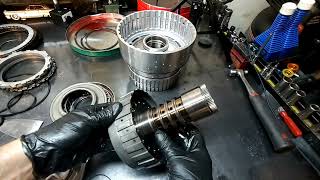
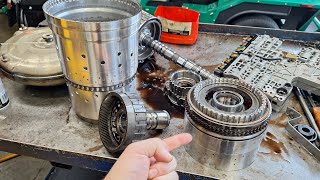
🎬 Watch: See how the CDF drum sleeve fails and walks.Diagnostic Flowchart
Tap your situation to follow the diagnostic path that matches what you're seeing on this vehicle.
Symptoms You May Notice
- Harsh, delayed, or erratic shifts.
- Slipping between gears, especially on the 3-4 or 4-5 shift.
- Illuminated Check Engine Light or Wrench Light.
- Sudden loss of acceleration or the transmission neutralizing while driving.
- Loud thud or clunk during shifts, sometimes described as feeling 'rear-ended'.
- Vehicle entering 'limp mode'.
- Delayed or harsh engagement when shifting from Park to Drive or Reverse.
- Failure to engage Reverse.
- Replacing only a shift solenoid without inspecting the CDF drum. If the drum's bushing has failed, the hydraulic leak will persist.
- Performing only a transmission fluid and filter change. This will not fix the mechanical failure causing the code.
- Replacing the valve body when the CDF drum is the actual root cause. While the valve body can be a contributor, the drum failure is the more common root mechanical failure for this specific code on this platform.
Most Likely Causes
- Failed CDF Clutch Drum Assembly 🔴 High Probability The bushings in the original CDF drum of the 10R80 transmission are known to walk out of position, causing a significant internal hydraulic pressure leak that affects clutch engagement. This is a well-documented design flaw.
How to confirm: Diagnosis often requires transmission disassembly for visual inspection of the drum and its internal sleeve. A technician may also perform a hydraulic pressure test on the clutch circuits to detect leakage, as outlined in newer TSBs.
Typical fix: Replacement of the original CDF drum with an updated, redesigned part (OEM Part No. JL3Z-7H351-B) that has a machined lip to prevent the bushing from moving. This requires a full transmission overhaul. 🎬 Watch: A complete teardown showing the bushing failure in detail.
Est. part cost: $400-$800 - Main Control Valve Body Failure 🟡 Medium Probability Valves within the valve body can stick, or solenoids can fail, leading to incorrect hydraulic pressure control. Debris from a failing CDF drum can also contaminate and damage the valve body. Ford TSB 23-2123 specifically details a procedure to overhaul the valve body to address these shift concerns.
How to confirm: A technician can use a high-end scan tool to command individual solenoids and monitor their response. Inspection after removing the transmission pan may reveal debris. TSB 23-2123 provides a diagnostic path starting with checking for codes before overhauling the valve body.
Typical fix: Overhaul or replacement of the main control valve body assembly. Ford has TSBs that detail this procedure. In some cases, this is done first, and if the problem persists, the CDF drum is then replaced.
Est. part cost: $600-$1200 - Low or Contaminated Transmission Fluid ⚪ Low Probability While this can cause issues, it's more often a symptom of a larger problem (like a leak from the failing CDF drum causing clutch material to contaminate the fluid) rather than the root cause itself.
How to confirm: Check the transmission fluid level and condition. The fluid may be dark, burnt, or contain excessive metallic debris on the pan magnet.
Typical fix: A fluid and filter change will not solve the underlying mechanical issue but is a necessary part of the larger repair.
Est. part cost: $150-$250
Rare But Worth Checking
- Powertrain Control Module (PCM) or Software Issue: In very rare cases, an engine issue like a misfire can be misinterpreted by the PCM, leading to transmission codes. One documented case on an F-150 showed bad spark plugs causing P2704 and P0735, misleading the technician to perform a full transmission rebuild before finding the true engine-related cause. Always address engine codes first.
Diagnosis Steps
- Scan the PCM and TCM for all stored trouble codes. Note all codes, as they provide crucial clues to the root cause.
- Check the transmission fluid level and condition. Look for a burnt smell or excessive metal particles, which indicate internal damage. Note that a small amount of fine, gray sludge on the pan magnet is considered normal by Ford.
- Review Ford Technical Service Bulletins (TSBs) such as TSB 23-2123 and TSB 23-2250, as they directly address the common causes of this code on the 10R80 transmission and provide a detailed diagnostic flowchart.
- Using an advanced scan tool, monitor live transmission data, including clutch apply times and solenoid commands.
- Per TSB 23-2123, if related DTCs are present, the next step is often to overhaul the main control valve body. 🎬 Watch: Step-by-step walkthrough of a 10R80 valve body replacement.
- If the issue persists or if a major hydraulic leak is suspected, the next step is to remove the transmission for a physical inspection of the CDF clutch drum and its bushings, which is the most likely point of failure.
Parts You'll Likely Need
- CDF Clutch Drum Assembly (Updated)
(OEM #JL3Z-7H351-B)— This is the most common failure point. An updated part with a machined lip prevents the bushing from walking out, providing a permanent fix. This part supersedes previous versions like HL3Z-7H351-A.
Trusted brands: Motorcraft
OEM price range: $400-$800
Aftermarket price range: $350-$700 - Main Control Valve Body — May be required if valves are sticking or if it has been contaminated with debris from the failing drum. TSB 23-2123 outlines an overhaul procedure for this part.
Trusted brands: Motorcraft
OEM price range: $800-$1200
Aftermarket price range: $600-$1000 - Transmission Pan Gasket and Filter Kit — These are always replaced whenever the transmission is serviced.
Trusted brands: Motorcraft
OEM price range: $50-$100
Aftermarket price range: $30-$70 - Motorcraft MERCON ULV Automatic Transmission Fluid
(OEM #XT-12-QULV)— This is the specific, required fluid for the 10R80 transmission. Using any other fluid can cause damage.
Trusted brands: Motorcraft
OEM price range: $10-$15 per quart
Related Codes That Often Appear With This One
- P0735 — This code indicates 'Gear 5 Incorrect Ratio.' Since Friction Element 'E' is critical for 5th gear, a problem with it often triggers both codes simultaneously.
- P0771 / P0772 — These codes point to Shift Solenoid 'E' being stuck off or on. They often appear with P2704 as the system tries to diagnose whether the fault is electrical (solenoid) or mechanical/hydraulic (clutch performance).
- Any P07xx or P27xx code — The provided TSBs list dozens of codes that can be caused by the same CDF drum and valve body issues, indicating a systemic transmission problem.
Technical Service Bulletins (TSBs) & Recalls
- TSB 23-2250: Supersedes earlier bulletins, lists P2704 and attributes the cause to software, sticking valves in the main control, or axial movement of the CDF clutch cylinder sleeve.
- TSB 23-2123: Supersedes TSB 22-2139. Provides procedures to overhaul the main control valve body to fix harsh/delayed shifts associated with P2704 and other codes, often as the first major repair step.
- TSB 22-2428: Lists P2704 with other transmission codes related to shift concerns due to the CDF drum sleeve moving.
- TSB 24-2254: A newer TSB that points to the CDF clutch cylinder sleeve movement causing hydraulic leaks as the rea
Platform-Specific Known Issues
- The 10R80 10-speed automatic transmission in 2018-2023 Mustangs is widely known for a design flaw in the CDF (Clutch D/F) drum. Bushings inside the drum can slide out of position, creating a hydraulic leak that starves the associated clutch packs of pressure. This leads to slipping, harsh shifts, and codes like P2704. Ford has released several updated versions of the drum to correct this issue, with the latest being part number JL3Z-7H351-B.
Mechanic-Grade Diagnostic Values
- Shift Solenoid (A-F) Operation — expected: These are linear force solenoids where hydraulic pressure is directly proportional to the current supplied by the TCM. Zero current results in zero pressure.. Failure: A failure is indicated by an inability to control pressure precisely, which is diagnosed by observing apply times with a scan tool rather than a simple resistance check.
- Line Pressure (LPC) and Torque Converter Clutch (TCC) Solenoid Current — expected: Control current ranges from a low of ~50 mA to a high of ~850 mA.. Failure: Incorrect current readings when commanded by a scan tool can indicate a solenoid or wiring fault.
Scan Tool Commands That Help
- Ford IDS/FDRS or equivalent: Solenoid Body Strategy/ID Programming — This is mandatory after replacing the valve body or the entire transmission. The 12-digit Solenoid ID and 13-digit Strategy number from the new component must be written to the PCM/TCM for correct operation.
- Ford IDS/FDRS or equivalent: Adaptive Learning Drive Cycle — After a repair like a valve body overhaul or replacement, a specific drive cycle procedure must be performed to allow the TCM to relearn clutch apply pressures and shift points.
- Ford IDS/FDRS or equivalent: Disable Adaptive Learning Strategy (ALS) — In some cases of persistent erratic shifting without hard fault codes, a technician may disable the adaptive learning to force the transmission to use its base shift strategy, which can resolve some drivability complaints.
Wiring & Ground Locations
- Main Transmission Case Connector — External connector on the 10R80 transmission case.. This 26-pin connector is the single point of connection for all electronic controls of the transmission, including the shift solenoids. Damage, corrosion, or poor pin fit here can cause P2704 and other transmission codes.
- G104 — On the left front fender apron, located behind the battery.. This is a primary chassis ground. While it specifically grounds the Data Link Connector, poor chassis grounds in this area can introduce electrical noise that may affect various modules.
- G201 — Located on the passenger side kick panel, near the Powertrain Control Module (PCM).. This is a direct ground for the PCM. A fault with this ground can cause erratic behavior and false codes from the module that controls the transmission.
Real Owner Repair Stories
- Gears Magazine (2019 Ford F-150 3.5L (with 10R80)) — Codes P0735 (Gear 5 Incorrect Ratio) and P2704 (Friction Element 'E' Apply Time). Transmission slipped in 5th gear, but only when hot.
❌ Tried (didn't work) Complete transmission teardown and inspection (found no visible faults)., Replacement of the main control valve body., Replacement of the CDF drum with an updated part., Re-installation of the rebuilt transmission.
✅ What actually fixed it The root cause was engine-related, not transmission-internal. The engine had misfires on cylinders #1 and #5. Replacing the spark plugs eliminated the misfires, which in turn resolved the transmission codes and slipping symptom. - Mustang6G.com forum user (2018 Mustang GT (Boosted)) — 5-6 flare at light throttle, progressing to hard 3-4 downshifts and rapid gear hunting (3-4-3-4) at light throttle. No DTCs were present.
❌ Tried (didn't work) Initial driving with the issue.
✅ What actually fixed it The owner had a new, VIN-appropriate valve body installed. The transmission shop also performed a fluid/filter change, reset the Keep Alive Memory (KAM), and disabled the Adaptive Learning Strategy (ALS). The combination of these actions resulted in perfect shifts.
"I Checked Everything" — The Actual Cause
- A well-documented case in Gears Magazine involved a 2019 F-150 with P2704 and P0735. A shop performed a complete transmission rebuild, replacing the valve body and the CDF drum, but the 5th gear slip persisted. After extensive diagnosis, the root cause was found to be worn spark plugs causing engine misfires. The PCM was misinterpreting the crankshaft speed fluctuations during the misfires as a transmission slip event. Replacing the spark plugs completely resolved the transmission codes and symptoms.
OEM Part Supersession History
HL3Z-7H351-A, JL3Z-7H351-A→JL3Z-7H351-B— The original CDF drum design allowed an internal bushing/sleeve to 'walk' or slide out of position, uncovering hydraulic passages and causing a pressure loss to the clutch packs.
Heads up: The older parts should not be used. JL3Z-7H351-B is the correct and permanent fix, as it features a machined lip that physically prevents the sleeve from moving.
Model Year Variations Within This Range
- 2018-2020: Early build 10R80s are considered more susceptible to both the mechanical CDF drum failure and harsh shifting from aggressive software calibrations.
- 2021+: Ford reportedly revised the transmission's outer shell and potentially the CDF drum for the 2021 model year to address known failure points. However, failures can still occur, and the ultimate fix remains the updated JL3Z-7H351-B drum.
Helpful Videos
We Have This Part in Stock


The information in this article is provided for general reference and educational purposes only. Vehicle specifications, procedures, and part compatibility can vary by production date, trim level, and region. Always consult your vehicle's factory service manual and verify part numbers before purchasing or performing repairs. Safety-critical components such as airbags, seat belts, and braking systems should be installed by a qualified professional.
- Ford MUSTANG:
- 🎬 Helpful Videos
- 🛍️ Shop This Part
- What's Unique About the 2018-2023 Ford MUSTANG
- Diagnostic Flowchart
- Symptoms You May Notice
- Most Likely Causes
- Rare But Worth Checking
- Diagnosis Steps
- Parts You'll Likely Need
- Related Codes That Often Appear With This One
- Technical Service Bulletins (TSBs) & Recalls
- Platform-Specific Known Issues
- Mechanic-Grade Diagnostic Values
- Scan Tool Commands That Help
- Wiring & Ground Locations
- Real Owner Repair Stories
- "I Checked Everything" — The Actual Cause
- OEM Part Supersession History
- Model Year Variations Within This Range
- 🎟️ Get 5% Off