

OBD-II Code P2703: Transmission Friction Element 'D' Apply Time/Performance
What P2703 means, why it triggers, and how to fix it
- P2703 triggers when transmission clutch 'D' engages outside the target 150-250 millisecond window, causing harsh or delayed shifts.
- Check your transmission fluid level and condition first, as degraded fluid causing low hydraulic pressure is the most common easily fixable culprit.
- Stop driving immediately to prevent a $300 solenoid or fluid fix from escalating into a $5,000+ complete transmission rebuild.
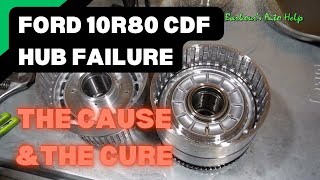
- On 2017-2023 Ford 10R80 transmissions, P2703 almost always indicates a failed CDF clutch drum bushing requiring a $2,500-$4,500 internal rebuild.
What Does P2703 Mean?
The P2703 code means your vehicle's Transmission Control Module (TCM) detected a performance problem with an internal clutch pack known as Friction Element 'D'. This clutch is taking too long (or too little time) to engage during a gear shift. The TCM monitors the apply time in milliseconds; when this timing falls outside the manufacturer's specified range, it triggers P2703 and initiates symptoms like harsh shifting, slipping, and dashboard warning lights.
Technical definition: The official definition for P2703 is 'Transmission Friction Element 'D' Apply Time Range/Performance'. The TCM continuously compares input speed sensor (ISS) and output speed sensor (OSS) data to verify a commanded gear change completes within a pre-programmed time frame. When the apply time for clutch 'D' is too slow, too fast, or inconsistent, the TCM logs this fault code.
Can I Drive With P2703?
No — Do Not Drive. Do not drive. The transmission shifts erratically and harshly, risking a sudden, dangerous downshift at highway speeds. Some vehicles enter 'limp mode,' limiting speed and gears to prevent catastrophic failure. Continuing to drive causes accelerated wear on internal components, turning a manageable repair into a $5,000+ transmission replacement.
Common Causes
- Low, Dirty, or Burnt Transmission Fluid (Very Common) — Old, contaminated, or low fluid cannot provide the necessary hydraulic pressure for the clutch packs to engage quickly. This causes a delay the TCM flags as a performance issue. Fluid thickened by extreme cold also triggers this code.
- Internal Mechanical Failure (CDF Drum or Seals) (Very Common) — Friction material on the clutch pack wears out, or internal seals harden and leak pressure. On 2017+ Ford 10-speed transmissions, a specific design flaw in the CDF clutch drum bushing causes a massive internal hydraulic leak, making this the primary cause for those vehicles.
- Faulty Shift or Pressure Control Solenoid (Common) — Solenoids are electronic valves directing fluid to the clutch. If a solenoid clogs with debris, fails electrically, or sticks open/closed, it cannot regulate the hydraulic pressure needed to apply the clutch on time.
- Failing Transmission Valve Body (Common) — The valve body is the hydraulic brain of the transmission. Its intricate channels clog with sludge, or its mechanical valves stick. Sticking valves in the main control body frequently cause P2703.
- Faulty Transmission Pump (Uncommon) — A weak transmission pump cannot generate enough line pressure to operate the hydraulic circuits. This system-wide low pressure causes multiple clutches, including 'D', to apply slowly.
- Damaged Internal Wiring Harness (Uncommon) — Wiring inside the transmission pan becomes brittle from heat and fluid exposure. A chafed wire or corroded connector causes an intermittent electrical signal to the solenoid, leading to erratic clutch application.
- TCM Software or Hardware Failure (Rare) — Outdated software causes incorrect shift parameters, requiring a manufacturer update (TSB). Rarely, a physical failure within the TCM's internal circuits prevents it from correctly commanding the clutch.
Symptoms
- Harsh, Jerky, or 'Clunky' Shifting — You feel a significant bang or jolt as the transmission shifts, particularly between gears utilizing the 'D' clutch.
- Delayed Gear Engagement — When shifting from Park to Drive or Reverse, there is a noticeable 2-to-5 second pause before the transmission engages and the vehicle moves.
- Vehicle Stuck in 'Limp Mode' — To protect itself from further damage, the transmission defaults to a single gear (often 2nd or 3rd), severely limiting speed and performance.
- Check Engine / Transmission Warning Light — The Malfunction Indicator Lamp (MIL) or a dedicated transmission warning light illuminates on the dashboard.
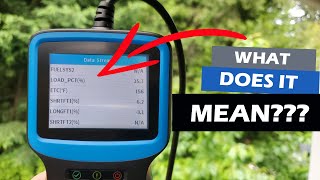
- Transmission Slipping & High RPMs (also visible on scanner) 🎬 Watch: How to read transmission live data on your scanner — Engine RPMs flare up during a shift without a corresponding increase in vehicle speed. This forces the engine to operate inefficiently, causing a noticeable drop in fuel economy.
Diagnostic Flowchart
Tap your situation to follow the diagnostic path that matches what you're seeing on this code.
Common Fixes & Costs
- Transmission Fluid and Filter Change — Parts: $80-$150, Labor: $150-$250, ~2 hr book time (DIY)
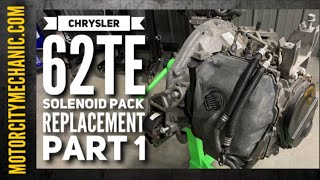
- Replace Shift Solenoid 'D' or Solenoid Pack
— Parts: $150-$400, Labor: $200-$500, ~3.5 hr book time
(Intermediate)
: OEM - Replace CDF Clutch Drum Assembly (Ford 10R80)
— Parts: $200-$500, Labor: $2,000-$3,000, ~22 hr book time
(Professional)
: OEM - Replace or Overhaul Transmission Valve Body
— Parts: $700-$1,500, Labor: $400-$800, ~5 hr book time
(Professional)
: OEM - Rebuild or Replace Transmission — Parts: $3,000-$7,000, Labor: $1,000-$2,500, ~14 hr book time (Professional)
Used vs. New Parts: Buying Guide
When a used part is worth it: For a common part like a Chrysler 62TE solenoid pack on an older, high-mileage vehicle, a used part from a reputable salvage yard is a budget-conscious choice. Do not buy used complex, wear-prone components like a Ford 10R80 valve body.
Donor-vehicle mileage cap: roughly under 70000 miles for the part to have meaningful remaining life.
Donor quality checklist:
- Verify the donor vehicle's mileage and reason for salvage (accident damage is better than internal failure).
- Match the part number exactly; electronic components are often VIN-specific.
- Check for a 30-90 day warranty to protect against dead-on-arrival parts.
Decision logic:
- If The part has a high failure rate or was updated by the manufacturer (e.g., Ford 10R80 valve body) → Buy new or professionally remanufactured to get the latest design.
- If The vehicle is over 150,000 miles and budget is the primary concern → A used part is a viable risk, but understand it is a temporary solution.
- If Labor for installation exceeds 5 hours → Buy new. The cost of a second installation if the used part fails negates initial savings.
Warranty tradeoff: Used parts offer a 30-90 day warranty covering the part only. New aftermarket parts offer 1-year warranties. New OEM parts offer 1-2 year warranties, often including labor if installed at a dealership.
Worst-case if a used part fails: $800-2000 if the used part fails after installation, primarily due to repeated labor costs.
What Happens If You Wait — Timeline
- 0-1 month: Code P2703 sets. Intermittent harsh shifts or slight delays occur, especially when cold. No other major symptoms. (MPG impact: 0-2%% · Added cost: $0)
- 1-3 months: Shifting becomes consistently harsh. Transmission slipping increases, generating excess heat that degrades the fluid. (MPG impact: 3-8%% · Added cost: $50-$150 in wasted fuel. The window for an inexpensive fluid or solenoid fix closes.)
- 3-6 months: Fluid is dark and burnt. Slipping causes permanent damage to the 'D' clutch pack. The vehicle unpredictably enters 'limp mode'. Debris circulates into the valve body. (MPG impact: 8-15%% · Added cost: $1,500-$2,500 (Repair now requires valve body or major component replacement).)
- 6+ months: Catastrophic failure. The initial failure destroys other clutch packs and the torque converter. The vehicle loses the ability to move. (MPG impact: 15-25%+% · Added cost: $4,000-$8,000+ (Requires complete transmission replacement).)
Cost of Not Fixing It
- 0-1 month: Noticeable harsh shifting and a 5-10% drop in fuel economy. The slipping clutch generates excess heat, degrading the transmission fluid. (Added cost: Negligible)
- 1-6 months: Fluid becomes burnt, losing hydraulic properties and accelerating wear on other clutches. The vehicle unpredictably enters 'limp mode'. A simple fix escalates to a valve body replacement. (Added cost: $1500-2500)
- 6+ months: Catastrophic internal transmission failure. The initial failure destroys other clutch packs and the torque converter. The vehicle stops moving altogether. (Added cost: $4000-8000+)
Diagnosis Steps
- Check Transmission Fluid Level and Condition
With the vehicle at operating temperature (160-180°F) and on a level surface, check the fluid. It must be reddish-pink and clear. Dark brown/black fluid, a burnt smell, or metallic particles ('glitter') indicate severe internal damage. Low fluid points to a leak you must repair.
Tools: Rag, Owner's Manual, Infrared Thermometer (optional) (Beginner) - Scan for All Diagnostic Trouble Codes (DTCs)
Use an OBD-II scanner to read TCM codes. P2703 accompanied by solenoid codes (P0766) or gear ratio errors (P0731-P0735) narrows the diagnosis to specific hydraulic circuits or mechanical failures.
Tools: OBD-II Scanner (Beginner) - Monitor Live Data with an Advanced Scanner
Use a bi-directional scan tool to view live transmission data. Monitor 'Clutch 'D' Apply Time'. The target apply time is typically 150-250 milliseconds. Significant deviations confirm the fault. Ensure fluid temperature is 160-180°F for accurate readings.
Tools: Advanced Bi-Directional Scanner (Intermediate) - Drop the Transmission Pan for Inspection
Remove the transmission pan for direct inspection. A small amount of fine, grey material on the magnet is normal. Large metal shavings, chunks of clutch material, or thick sludge confirm major internal failure requiring a rebuild.
Tools: Socket Set, Drain Pan, Gasket Scraper, Torque Wrench (Advanced) - Test the Shift Solenoid Circuit Resistance
Disconnect the transmission harness and measure the resistance of the 'D' shift solenoid from the connector pins using a multimeter. Compare the reading to factory specs. Infinite resistance (open) or near-zero resistance (short) indicates a failed solenoid or wiring fault.
Tools: Digital Multimeter, Manufacturer's Wiring Diagram & Pinout Chart (Advanced) - Inspect External Wiring and Connectors
Visually inspect the main wiring harness leading to the transmission. Look for chafed, burnt, or corroded wires. Ensure the main connector is fully seated and pins are straight.
Tools: Flashlight, Mirror (Beginner) - Perform a Transmission Line Pressure Test
Connect a hydraulic pressure gauge to the transmission case test ports. Run the engine and shift through gears to verify line pressure meets factory specifications. Low pressure indicates a failing pump, internal leak, or clogged filter.
Tools: Transmission Pressure Gauge Set, Service Manual (Professional) - Use a Scope to Analyze Solenoid Waveform
Graph the voltage and amperage pattern of the 'D' solenoid while driving using an oscilloscope. A noisy, delayed, or misshapen waveform reveals a failing solenoid or weak TCM driver that a multimeter misses.
Tools: Automotive Oscilloscope, Probes, Service Manual (Professional)
When This Code Triggers (Freeze-Frame Conditions)
- Engine Coolant Temp: 180-200°F (The code typically sets when the transmission is at full operating temperature.)
- Engine RPM: 1500-3000 RPM (The fault is detected during a commanded gear shift under light to moderate acceleration.)
- Engine Load: 25-60% (Occurs under normal driving load, not at idle or full throttle.)
- Vehicle Speed: 30-60 mph (Triggers during an upshift or downshift at city or highway cruising speeds.)
Related Codes
- P0766 — Indicates 'Shift Solenoid 'D' Performance/Stuck Off'. The TCM often blames the solenoid for the clutch apply time failure.
- P2700, P2701, P2702, P2704 — Apply-time performance codes for other friction elements (A, B, C, E).
- P0729 - P0736 — Indicate 'Incorrect Gear Ratio' for various gears. Direct symptoms of a friction element failing to apply correctly.
- P0717 — Means 'Input/Turbine Speed Sensor 'A' Circuit No Signal'. The TCM relies on this data to calculate shift timing.
Climate & Environmental Factors
- Cold Weather: Cold temperatures increase transmission fluid viscosity. Thicker fluid flows slowly, delaying hydraulic action and directly causing slower apply times. This triggers P2703 on cold starts, which often disappears once the fluid reaches 160-180°F.
- High Heat / Heavy Towing: Sustained temperatures above 200°F cause fluid to break down and oxidize rapidly. Degraded fluid loses hydraulic pressure and lubrication properties, leading to clutch slippage and P2703.
- Humidity / Water Intrusion: Moisture contamination compromises hydraulic properties and causes internal corrosion. In cold weather, trapped water freezes, cracking components or blocking fluid passages.
How to Talk to a Mechanic About This Code
Say this: "I have a P2703 code with harsh shifting. I'd like to schedule a diagnostic to verify fluid level and condition, check for related TSBs, and get a full TCM scan. Please do not disassemble anything without my express authorization."
This signals you are an informed consumer. It directs the technician to perform a logical diagnostic sequence and protects you from the 'disassembly for quote' scam.
Avoid saying:
- My transmission is acting weird.
- Just fix whatever's wrong, I need the car back.
- A guy on the phone gave me a quote for $500.
Questions to ask before authorizing the repair:
- What were the specific results of the fluid check, pressure test, and scan? Can I see the freeze-frame data?
- If you recommend a solenoid or valve body, how have you ruled out an internal mechanical leak?
- If you recommend a rebuild, can you show me the metal debris in the pan?
- What is the warranty on the parts and labor, and is it nationwide?
- Will this repair require a TCM software update or adaptive relearn procedure, and is that included in the quote?
Where to Take It: Dealer vs Independent vs Chain
- Dealer:
Recommended for in-warranty Fords or if you want manufacturer-backed repair for complex TSBs. Be prepared for high costs if out of warranty.
Best for: Vehicles still under powertrain warranty., Complex, vehicle-specific issues like the Ford 10R80 CDF drum failure requiring proprietary tools.
Downsides: Highest labor rates., Defaults to full transmission replacement when a rebuild is a viable, cheaper option. (Typical cost: +50% vs. baseline) - Chain Shop:
Avoid. Chain shops are not equipped for the complex diagnosis P2703 requires.
Best for: None for this code.
Downsides: Technicians are not transmission specialists and work on commission., Highly likely to recommend a full, expensive transmission replacement without proper diagnosis. (Typical cost: -10% vs. baseline)
When to Walk Away From the Repair
If the estimated repair cost exceeds 50% of the car's private-party value, seriously consider replacing the vehicle.
- Car worth $25000, fix is $6500: Fix it. The repair cost is 26% of the vehicle's value and provides many more years of service.
- Car worth $8000, fix is $4500: Borderline (56%). Get a second opinion. If the rest of the car is in excellent condition, it might be worth it.
- Car worth $4000, fix is $3500: Walk away. The repair cost is 88% of the car's value. It is not financially sound to invest this much into an older vehicle.
What Scan Tool You Need for This Code
Minimum: A scanner that reads manufacturer-specific transmission codes and views live transmission data PIDs, specifically Transmission Fluid Temperature and Commanded vs. Actual Gear.
A basic $20 code reader only shows the P2703 code. It cannot see live data like clutch apply times or perform the critical transmission relearn procedure required after repairs.
Budget: BlueDriver Pro (~$100) — Reads transmission codes and views live data PIDs like fluid temperature on a smartphone app. Good for confirming the code and checking fluid health.
Mid-range: Foxwell NT510 Elite / NT680 Pro (~$180) — Reads and clears transmission codes, views advanced live data (clutch apply times), and performs the 'Quick Relearn' procedure needed for Chrysler/Ford repairs.
Professional: Autel MaxiCOM MK808 / Launch X431 Series (~$500-1200) — Provides full bidirectional control to command individual solenoids. Offers OEM-level diagnostics and performs all necessary relearn and calibration procedures.
Rent vs buy: For a one-time code read, auto parts stores offer free scanning. To properly diagnose P2703 by monitoring live data or perform a relearn procedure, you must buy a midrange or pro scanner.
How to Clear the Code After You Fix It
- Use a compatible OBD-II scan tool to clear the diagnostic trouble code from the TCM.
- Perform a transmission adaptive pressure relearn procedure using the scan tool.
- Conduct a specific drive cycle to allow the TCM to learn the new shift characteristics.
Drive cycle (~20 minutes): Cold start the vehicle and idle for 3 minutes. Drive, moderately accelerating and decelerating through all gears up to 65 mph. Hold a steady speed for 5 minutes. Perform several light stop-and-go accelerations. Allow the vehicle to cool completely and repeat.
Readiness monitors affected: Comprehensive Component Monitor, Catalyst Monitor
Before emissions retest: drive at least 50 miles to fully set monitors.
Watch out for:
- Disconnecting the battery does not clear the code from the TCM and resets all readiness monitors, guaranteeing an emissions test failure.
- Skipping the adaptive relearn procedure after a repair leaves shifting harsh or erratic because the TCM uses old data.
Will This Fail Emissions / State Inspection?
Yes — this code typically fails an OBD-II emissions inspection.
- California: An illuminated Check Engine Light results in an automatic smog check failure. A specific drive cycle must be completed to set all OBD-II readiness monitors before a retest.
- New York: Any diagnostic trouble code commanding the Malfunction Indicator Light (MIL) on, including P2703, is an automatic failure.
- Texas: In the 17 counties requiring emissions testing, an active P2703 code causes the vehicle to fail the OBD-II inspection.
Most Commonly Affected Vehicles
- Ford F-150, Ranger (2017-2023) — 10R80 10-speed transmissions are highly susceptible due to a design flaw in the CDF clutch drum bushing causing an internal hydraulic leak. Ford issued TSBs 22-2428 and 23-2123 for this issue.
- Ford Expedition, Explorer, Mustang (2018-2023) — These models use the 10R80 or 10R60 variant and suffer from the identical CDF clutch drum and valve body failures.
- Ram 1500 (2019-2023) — The ZF-licensed 8-speed automatic (850RE/8HP75) sets P2703 due to valve body issues or failing pressure control solenoids.
- Chrysler / Dodge Town & Country, Grand Caravan, Journey (2008-2019) — The 62TE transmission is notorious for solenoid pack failures. Replacing the pack (Mopar P/N 68376696AA) and performing a 'quick relearn' is the standard fix.
- GMC / Chevrolet Sierra, Silverado, Tahoe, Suburban (2014-2019) — 6L80 and 8L90 transmissions log this code when a failing torque converter sheds debris, clogging the valve body and solenoids.
- BMW 3-Series, 5-Series, X3, X5 (2010-2018) — ZF 6-speed and 8-speed transmissions set P2703 due to leaking mechatronic sealing sleeves or cracks in the valve body separator plate.
Manufacturer-Specific Notes
- Ford: On 10-speed (10R80/10R60) transmissions from 2017+, P2703 is a hallmark code for mechanical failure of the CDF clutch drum bushing. A fluid change or solenoid replacement will not fix it. Repair requires transmission removal and disassembly.
- Chrysler / Dodge / Ram: In 62TE 6-speed transmissions, P2703 is almost always caused by a failing solenoid pack. After replacement, an 'adaptive learn' procedure must be performed with a scan tool to reset shift logic.
- BMW: For ZF 6HP and 8HP transmissions, a common cause is the degradation of the mechatronic sealing sleeve. This rubber sleeve hardens and shrinks, causing internal pressure loss.
- General Motors (GM): On 6L80/6L90 and 8L90 transmissions, P2703 traces back to a failing torque converter shedding friction material that clogs the valve body.
Real Owner Stories
2019 Ford F-150 2.7L at 128k miles
While driving at 70 mph, the transmission violently downshifted from 10th to 1st gear. The check engine light illuminated with P2703.
Outcome: The owner found an independent transmission specialist who rebuilt the unit using updated CDF clutch drum parts for $6,500.
Lesson: On a Ford 10R80, a violent downshift with P2703 is a classic sign of internal CDF clutch drum failure. Avoid chain shops; find a specialist who rebuilds with updated parts.
2012 Dodge Grand Caravan at 115k miles
Vehicle experienced harsh shifting and slipping. P2703 was present, defined as 'Inadequate Element Volume UD'.
Outcome: The owner replaced the solenoid pack with an OEM Mopar part for $400. After a transmission relearn procedure via scan tool, the shifting issues resolved completely.
Lesson: For Chrysler/Dodge 62TE transmissions, P2703 is frequently a failed solenoid pack. This is a manageable DIY repair that saves thousands over a shop rebuild.
2018 Ford F-150 with 65k miles
The truck threw codes P0766 and P2703 and became stuck in 5th gear.
Outcome: The problem returned the next day. The combination of P0766 and P2703 on the 10R80 indicates a massive hydraulic leak from the CDF drum, not a software issue.
Lesson: Software flashes are temporary bandaids for mechanical failures. P0766 paired with P2703 on a 10R80 points directly to internal mechanical failure, not an electrical fault.
How to Prevent This Code From Triggering
- Perform regular transmission fluid and filter changes (Every 30,000-60,000 miles, or sooner if towing frequently.) — Clean fluid maintains correct hydraulic pressure and prevents sludge from clogging solenoids. This is the single most effective way to prevent transmission failure.
- Install an auxiliary transmission cooler (One-time installation for vehicles used for towing or in hot climates.) — Excess heat destroys automatic transmissions. A cooler keeps fluid temperatures stable, protecting internal seals and clutches from heat damage.
- Allow the vehicle to warm up briefly in cold weather (During cold starts (< 32°F / 0°C)) — Idling for 30-60 seconds warms the transmission fluid slightly, improving flow and reducing the chance of setting cold-related shift codes.
- Use the exact manufacturer-specified transmission fluid (Every fluid service) — Modern transmissions require specific fluid viscosities. Generic 'universal' fluids cause incorrect hydraulic pressure and long-term damage.
Frequently Asked Questions
Can I just add or change the transmission fluid to fix P2703?
If the fluid is low, topping it off provides a temporary fix, but you must repair the underlying leak. If the fluid is old, a fluid and filter change is a great first step and resolves the issue if caught early. However, fluid changes cannot fix internal mechanical failures.
My mechanic replaced the solenoid on my F-150 but the P2703 code came back. Why?
This is a common misdiagnosis on Ford 10R80 transmissions. The root cause is typically a mechanical failure of the internal CDF clutch drum creating a hydraulic leak, not the solenoid itself. The transmission must be removed and disassembled to replace the faulty drum.
What's the difference between a friction element, a solenoid, and a valve body?
The friction element (clutch pack) physically engages to create a gear ratio. The solenoid is an electronic valve the computer uses to direct fluid flow. The valve body is the hydraulic control center housing the solenoids and fluid passages.
Will a transmission additive or 'stop slip' product fix this code?
No. Additives are not a legitimate repair for P2703. They cannot fix a failed solenoid, a major hydraulic leak, or a clogged valve body, and only mask symptoms while severe damage occurs.
Is a transmission 'flush' better than a 'drain and fill' for this problem?
A 'drain and fill' with a filter change is the recommended starting point. High-pressure flushes on older transmissions dislodge large debris that gets stuck in the valve body, worsening the problem.
Why is the repair for P2703 on my Ford Expedition so expensive?
The high cost is because this code usually points to the failure of the internal CDF clutch drum. Replacing this part requires removing the entire transmission and completely disassembling it. A full rebuild at a shop costs between $2,500 and $4,500.
What happens if I keep driving with a P2703 code?
Continuing to drive causes the slipping clutch to generate excessive heat, burning the fluid and damaging seals. This leads to a cascading failure of other components, resulting in a complete transmission failure.
Does P2703 always mean I need a new transmission?
Not necessarily. The code indicates a performance issue caused by anything from low fluid to a bad solenoid. However, on certain vehicles like modern Fords, it strongly indicates a specific internal failure requiring a major rebuild.
Key Takeaways
- P2703 triggers when transmission clutch 'D' engages outside the target 150-250 millisecond window, causing harsh or delayed shifts.
- Check your transmission fluid level and condition first, as degraded fluid causing low hydraulic pressure is the most common easily fixable culprit.
- Stop driving immediately to prevent a $300 solenoid or fluid fix from escalating into a $5,000+ complete transmission rebuild.
- On 2017-2023 Ford 10R80 transmissions, P2703 almost always indicates a failed CDF clutch drum bushing requiring a $2,500-$4,500 internal rebuild.
Helpful Videos


The information in this article is provided for general reference and educational purposes only. Vehicle specifications, procedures, and part compatibility can vary by production date, trim level, and region. Always consult your vehicle's factory service manual and verify part numbers before purchasing or performing repairs. Safety-critical components such as airbags, seat belts, and braking systems should be installed by a qualified professional.
- 🎬 Helpful Videos
- What Does P2703 Mean?
- Can I Drive With P2703?
- Common Causes
- Symptoms
- Diagnostic Flowchart
- Common Fixes & Costs
- Used vs. New Parts: Buying Guide
- What Happens If You Wait — Timeline
- Cost of Not Fixing It
- Diagnosis Steps
- When This Code Triggers (Freeze-Frame Conditions)
- Related Codes
- Climate & Environmental Factors
- How to Talk to a Mechanic About This Code
- Where to Take It: Dealer vs Independent vs Chain
- When to Walk Away From the Repair
- What Scan Tool You Need for This Code
- How to Clear the Code After You Fix It
- Will This Fail Emissions / State Inspection?
- Most Commonly Affected Vehicles
- Manufacturer-Specific Notes
- Real Owner Stories
- 2019 Ford F-150 2.7L at 128k miles
- 2012 Dodge Grand Caravan at 115k miles
- 2018 Ford F-150 with 65k miles
- How to Prevent This Code From Triggering
- Frequently Asked Questions
- Can I just add or change the transmission fluid to fix P2703?
- My mechanic replaced the solenoid on my F-150 but the P2703 code came back. Why?
- What's the difference between a friction element, a solenoid, and a valve body?
- Will a transmission additive or 'stop slip' product fix this code?
- Is a transmission 'flush' better than a 'drain and fill' for this problem?
- Why is the repair for P2703 on my Ford Expedition so expensive?
- What happens if I keep driving with a P2703 code?
- Does P2703 always mean I need a new transmission?
- Key Takeaways
- 🎟️ Get 5% Off