

P2701 on 2019-2023 Ford Ranger: Transmission Clutch Apply Time Fault Causes & Fixes
On a 2019-2023 Ford Ranger, code P2701 almost always indicates a known internal issue with the 10R80 10-speed automatic transmission. The most common causes are a faulty main control valve body or a failed CDF clutch drum sleeve, a well-documented issue particularly on models built before August 16, 2022. This is not a DIY fix and typically requires professional service as outlined in Ford's Technical Service Bulletins (TSBs), often leading to a valve body or full transmission replacement under
- P2701 on a 2019-2023 Ranger is a serious code pointing to a known internal transmission problem, not a simple sensor failure.
- The issue is covered by multiple Ford Technical Service Bulletins, with the most likely culprits being the valve body or the CDF clutch drum.
- This is not a DIY-friendly repair. Take the vehicle to a qualified technician who is aware of the Ford TSBs for the 10R80 transmission.
- If your Ranger was built before August 16, 2022, it is at a higher risk for the specific CDF clutch drum failure.
- Do not ignore this code, as continued driving can lead to more extensive and costly transmission damage.
What's Unique About the 2019-2023 Ford RANGER
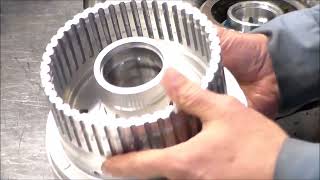
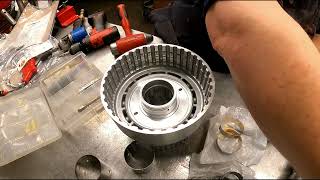
The 2019-2023 Ranger uses the 10R80 10-speed automatic transmission, which is known for specific mechanical and hydraulic issues. Ford has released multiple Technical Service Bulletins (TSBs) acknowledging that symptoms like harsh shifts, delayed engagement, and a cluster of trouble codes including P2701 are common. These problems are often traced back to specific internal components like the main valve body or the CDF clutch drum, particularly on Rangers built before August 16, 2022. The issues are so prevalent that class-action lawsuits have been filed 🎬 Watch: A mechanic explains the four most common failure points. concerning the 10R80 transmission in various Ford models.
Diagnostic Flowchart
Tap your situation to follow the diagnostic path that matches what you're seeing on this vehicle.
Symptoms You May Notice
- Harsh, jerky, or abrupt shifts, particularly the 3-5 shift.
- Delayed engagement when shifting from Park to Drive or Reverse.
- Transmission slipping or flaring (engine RPMs flare up between shifts).
- Check Engine Light or illuminated wrench light on the dashboard.
- Vehicle may enter 'limp mode,' getting stuck in a single gear.
- Possible engine stalling when coming to a stop.
- A noticeable shudder or vibration at cruising speeds.
- Loud clunking or banging noises during shifts.
- Replacing a single shift solenoid when the entire valve body or CDF drum is the root cause.
- Assuming a complete transmission rebuild is needed when a valve body or CDF drum repair would suffice.
- Performing only a fluid change when there is a significant internal hydraulic leak or mechanical failure.
Most Likely Causes
- Axial Movement of the CDF Clutch Cylinder Sleeve 🔴 High Probability This is a well-documented design defect in 10R80 transmissions built on or before August 15, 2022. The bushing/sleeve inside the CDF drum can move out of position ('walk'), uncovering fluid passages and causing a significant internal hydraulic leak that affects clutch operation and cooling. The original part was not designed with a sufficient stop to prevent this movement.
How to confirm: A technician must follow the diagnostic procedure in Ford TSB 25-2134 (or its latest version), which involves a specific hydraulic circuit leak test using the Ford Diagnostic & Repair System (FDRS) to confirm the internal leak. Visual inspection during a teardown will show the migrated sleeve.
Typical fix: Replacement of the CDF clutch cylinder/drum assembly with the updated part (JL3Z-7H351-B or newer). This is a major internal transmission repair requiring removal and disassembly of the transmission. Some owners under warranty report dealers opting to replace the entire transmission rather than attempting the rebuild.
Est. part cost: $150-$400 for the drum kit, but labor is extensive. - Sticking Valves in the Main Control Valve Body 🔴 High Probability The complex 10R80 valve body is prone to debris and wear, causing solenoid and regulator valves to stick. This disrupts the precise hydraulic control needed for smooth shifting. This is another primary cause identified by Ford in its TSBs.
How to confirm: Diagnosis involves checking for specific codes, inspecting transmission fluid for excessive debris, and following TSB diagnostic flowcharts. Often, if a software update doesn't fix the issue and the CDF drum passes its leak test, the valve body is the next likely culprit. A technician may find sticking valves upon disassembly of the main control unit.
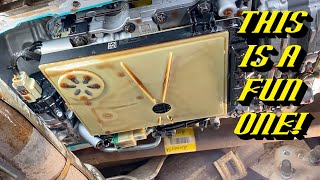
Typical fix: Replacement of the main control valve body assembly. This is less invasive than the CDF drum as it can be done by dropping the transmission pan, but it is still a complex job. The latest part number should always be used as it may contain revisions. In some cases, overhauling the existing valve body by cleaning the bores and freeing the valves can resolve the issue.
Est. part cost: $800-$1500 for an OEM Motorcraft valve body. - Low or Contaminated Transmission Fluid 🟡 Medium Probability While not a design flaw, the 10R80 is very sensitive to fluid level and condition. Some owners have reported their trucks were underfilled from the factory. Internal wear from other issues (like the CDF drum) can quickly contaminate the fluid with clutch material. The transmission requires a specific, very thin fluid, Mercon ULV, which has a viscosity of about 4.5 centistokes.
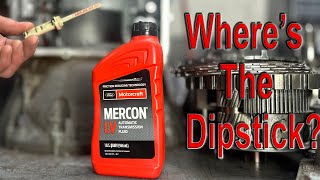
How to confirm: Check the transmission fluid level and condition. The 10R80 does not have a traditional dipstick; the level must be checked via a plug on the transmission case while the vehicle is at operating temperature. The fluid should be red and not smell burnt. Dark, glittery fluid indicates internal wear.
Typical fix: Perform a transmission fluid and filter change using only the correct Motorcraft MERCON ULV fluid (XT-12-QULV). This is often a first step but rarely a final solution if mechanical issues are present.
Est. part cost: $150-$250 - Powertrain/Transmission Control Module (PCM/TCM) Software Issue ⚪ Low Probability
How to confirm: A Ford dealer or qualified shop can check if the vehicle's PCM/TCM software is up to date using the FDRS. This is the first step in any TSB diagnostic procedure for this issue.
Typical fix: Update the PCM/TCM software to the latest calibration and perform a transmission adaptive learning drive cycle. This may resolve some shift quality complaints but will not fix an underlying mechanical or hydraulic failure.
Est. part cost: $0-$200
Diagnosis Steps
- Check for and document all stored DTCs in the PCM and TCM with an advanced scanner. Note if a group of P27xx or P07xx codes are present.
- Check for any available software updates for the PCM/TCM. This is the first step mandated by Ford's TSBs. If updates are available, perform them.
- Perform the transmission adaptive learning reset and drive cycle. If symptoms persist, proceed.
- Consult the latest Ford TSB for this issue (currently TSB 25-2134). The TSB provides a detailed diagnostic flowchart.
- If directed by the TSB, perform the 'Transmission Clutch Circuit Leak Test' using Ford's FDRS software to test for an internal leak at the CDF drum. This may involve using a VCMM with pressure transducers to calculate a leakage percentage.
- Check the transmission fluid level and condition. The 10R80 requires a specific procedure to check at the case plug. Fluid should be MERCON ULV.
- If the CDF drum test fails, the transmission requires disassembly to replace the CDF clutch cylinder assembly.
- If the CDF drum test passes but symptoms persist, the TSB often points to overhauling or replacing the main control valve body.
Parts You'll Likely Need
- Main Control Valve Body Assembly
(OEM #HL3Z-7A100-B (example, always verify latest))— This is one of the two most common failure points identified in Ford's TSBs for these symptoms. Sticking valves cause erratic hydraulic pressure.
Trusted brands: Motorcraft
OEM price range: $800-$1500
Aftermarket price range: $600-$1200 - CDF Clutch Cylinder / Drum Assembly
(OEM #JL3Z-7H351-B (Updated Part))— This is the other primary failure point, a known defect in transmissions built before mid-August 2022 that causes internal hydraulic leaks due to a migrating sleeve. The fix requires this updated part which has a built-in stop to prevent migration.
Trusted brands: Motorcraft
OEM price range: $150-$400 - Automatic Transmission Fluid (MERCON ULV)
(OEM #XT-12-QULV)— The correct fluid (Motorcraft MERCON ULV) is required for any service. The transmission holds about 13 quarts, so a full service requires a significant amount.
Trusted brands: Motorcraft
OEM price range: $10-$15 per quart - Aftermarket CDF Drum Saver Kit
(OEM #Sonnax 129910-01K)— For out-of-warranty repairs, aftermarket companies like Sonnax offer a kit to repair a failed original CDF drum by installing a new, more secure sleeve with a locking set screw to prevent rotation and a physical stop to prevent migration.
Trusted brands: Sonnax
Aftermarket price range: $50-$100
Related Codes That Often Appear With This One
- P2700 — Relates to Friction Element 'A' and indicates a systemic transmission issue.
- P2702 — Relates to Friction Element 'C' and indicates a systemic transmission issue.
- P2703 — Relates to Friction Element 'D' and indicates a systemic transmission issue.
- P2704 — Relates to Friction Element 'E' and indicates a systemic transmission issue.
- P0751 — Relates to Shift Solenoid 'A' performance, often triggered by the same hydraulic issues (valve body, CDF drum) that cause the P27xx codes.
- P0729 — Incorrect 6th gear ratio, often seen with the other codes as part of the same internal failure.
Technical Service Bulletins (TSBs) & Recalls
- TSB 25-2134: Supersedes previous versions, provides updated parts and a specific 'Transmission Clutch Circuit Leak Test' procedure using FDRS to definitively diagnose the CDF drum leak. Dated April 2025.
- TSB 22-2428: A comprehensive TSB covering multiple Ford models with the 10R80 transmission, citing P2701 and pointing to the CDF clutch sleeve and valve body as causes. This TSB is superseded but contains much of the foundational diagnostic information.
Platform-Specific Known Issues
- Ford TSBs 22-2428 and the superseding 25-2134 directly address a wide range of transmission codes, including P2701, on 2019-2023 Rangers. The TSBs identify the primary causes as sticking valves in the main control body or axial movement of the CDF clutch cylinder sleeve.
- Rangers built on or before August 15, 2022, are particularly susceptible to the CDF clutch drum sleeve failure. Ford later updated the part (to part number JL3Z-7H351-B and newer) to prevent this issue on newer models by adding a physical stop to prevent the sleeve from migrating.
Mechanic-Grade Diagnostic Values
- Shift Solenoid (A-F) Coil Resistance — expected: 5.0 - 5.4 Ohms at 20°C (68°F). Failure: A reading outside of this range indicates a faulty solenoid coil.
- Line Pressure Control (LPC) Solenoid Current — expected: Inversely proportional; ~50 mA for high pressure, ~850 mA for low pressure.. Failure: Current readings that do not correspond to commanded pressure indicate a potential solenoid or control issue.
- Torque Converter Clutch (TCC) Solenoid Current — expected: Directly proportional; ~50 mA for low pressure, ~850 mA for high pressure.. Failure: Current readings that do not correspond to commanded pressure indicate a potential solenoid or control issue.
- CDF Drum Hydraulic Leakage Test — expected: A low percentage of leakage calculated by FDRS software.. Failure: A high percentage of leakage confirms the CDF drum sleeve has shifted, causing an internal leak. The exact threshold is determined by the Ford diagnostic routine.
Scan Tool Commands That Help
- Ford FDRS (Ford Diagnostic & Repair System): Transmission Clutch Circuit Leak Test — This is the primary guided routine specified by Ford TSBs (like 25-2134) to definitively diagnose the common CDF clutch drum internal leak.
- Ford FDRS (Ford Diagnostic & Repair System): Programmable Module Installation (PMI) — Used after replacing a module like the TCM or valve body/solenoid body to load the correct software and calibration files.
- FORScan: Clear Transmission Adaptive Tables — This function can be used by independent shops or DIYers to reset the transmission's learned shift patterns. It can temporarily improve shift quality but will not fix an underlying mechanical fault.
- FORScan: Stop Use of Transmission Adaptive / Resume Transmission Adaptive Learning — Some users disable the adaptive learning feature entirely to achieve more consistent shift behavior, especially after installing a tune. This is an advanced user function and its long-term effects are debated.
Wiring & Ground Locations
- C177 — Internal transmission connector located on the valve body.. This connector houses the pins for the transmission's internal components, including the shift solenoids. A poor connection here could cause erratic solenoid behavior. For example, pinouts show Shift Solenoid E control is Yellow/Violet and the 12V power supply is Blue/Green.
Real Owner Repair Stories
- Reddit user r/RangerNext (2021 Ford Ranger XLT, 20,000 miles) — Shuddering, jumping gears, delayed shifts, especially when cold.
❌ Tried (didn't work) The dealership replaced the entire transmission and also found and replaced a bent driveshaft under warranty.
✅ What actually fixed it The issues persisted even after a full transmission replacement. The owner reported that while it was slightly smoother, the underlying problems remained, and they ultimately sold the vehicle at 33,000 miles due to the ongoing issues. - Ford F150 Forum (shared 10R80 transmission) (Ford F-150 with 10R80) — Erratic and harsh shifting.
❌ Tried (didn't work) Reprogramming the PCM/TCM, clearing KAM and shift tables.
✅ What actually fixed it The technician performed a pressure test which passed. They then removed the main control (valve body) and found several valves were sticking in their bores. Overhauling the main control, reassembling, and performing the adaptive road test procedure resolved the shifting problems.
"I Checked Everything" — The Actual Cause
- A known failure pattern for the 10R80 transmission is passing a standard pressure test, yet still having a faulty main control valve body. In one documented case, a technician confirmed the vehicle passed the pressure test, but upon disassembling the valve body, found that multiple valves were physically sticking in their bores. An overhaul of the valve body, rather than a full replacement, corrected the erratic shifting symptoms.
OEM Part Supersession History
HL3Z-7H351-A, JL3Z-7H351-A→JL3Z-7H351-B— The original CDF clutch drum assembly was prone to the internal sleeve 'walking' out of position, causing hydraulic leaks. The updated part (JL3Z-7H351-B) has a redesigned drum with a machined lip that acts as a hard stop to prevent the sleeve from migrating.
Heads up: Vehicles built on or before August 15, 2022, likely have the older, failure-prone part.
Model Year Variations Within This Range
- 2019 - 2022 (built on or before Aug 15, 2022): These vehicles were built with a CDF clutch drum assembly that did not have a retaining lip for the internal sleeve, making them highly susceptible to the sleeve 'walking' and causing internal hydraulic leaks, which triggers codes like P2701.
- 2022 - 2023 (built on or after Aug 16, 2022): These vehicles should have the updated CDF clutch drum assembly (part JL3Z-7H351-B or newer) from the factory, which includes a machined lip to prevent the sleeve from moving. While this reduces the likelihood of this specific failure, other 10R80 issues like faulty valve bodies can still occur.
Helpful Videos



We Have This Part in Stock


The information in this article is provided for general reference and educational purposes only. Vehicle specifications, procedures, and part compatibility can vary by production date, trim level, and region. Always consult your vehicle's factory service manual and verify part numbers before purchasing or performing repairs. Safety-critical components such as airbags, seat belts, and braking systems should be installed by a qualified professional.
- Ford RANGER:
- 🎬 Helpful Videos
- 🛍️ Shop This Part
- What's Unique About the 2019-2023 Ford RANGER
- Diagnostic Flowchart
- Symptoms You May Notice
- Most Likely Causes
- Diagnosis Steps
- Parts You'll Likely Need
- Related Codes That Often Appear With This One
- Technical Service Bulletins (TSBs) & Recalls
- Platform-Specific Known Issues
- Mechanic-Grade Diagnostic Values
- Scan Tool Commands That Help
- Wiring & Ground Locations
- Real Owner Repair Stories
- "I Checked Everything" — The Actual Cause
- OEM Part Supersession History
- Model Year Variations Within This Range
- 🎟️ Get 5% Off