

OBD-II Code P2698: Exhaust Aftertreatment Fuel Injector Performance
The Ultimate Guide to P2698: What it means, why it triggers, and how to fix it for good.
- Code P2698 forces your vehicle into a reduced-power limp mode and guarantees an emissions test failure due to an exhaust aftertreatment injector fault.
- Cleaning a clogged DEF injector nozzle with warm distilled water fixes this code over 50% of the time and costs under $15.
- Diagnose and fix exhaust temperature sensor codes (like P0544) first, as faulty sensors frequently trick the PCM into triggering a false P2698.
- Driving more than 100 miles with an active P2698 permanently clogs the Diesel Particulate Filter (DPF), turning a $15 cleaning into a mandatory $3,000+ DPF replacement.
What Does P2698 Mean?
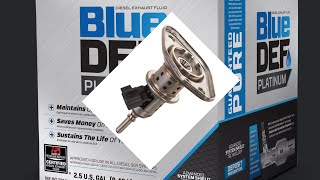
P2698 means your vehicle's Powertrain Control Module (PCM) detected a performance problem with the DEF (Diesel Exhaust Fluid) injector. This injector sprays fluid into the exhaust to reduce harmful NOx emissions. When it fails to spray the correct amount, the emissions system stops working, triggering the check engine light and forcing the engine into limp mode.
Technical definition: The SAE/OBD-II definition is "Exhaust Aftertreatment Fuel Injector 'A' Performance". The PCM monitors exhaust gas temperature and NOx sensors to verify the injector's spray. If the expected temperature or chemical change doesn't occur after commanding the injector to fire, the PCM sets P2698, indicating a mechanical or flow issue despite an intact electrical circuit.
Can I Drive With P2698?
Yes, But With Caution. Yes, but fix it immediately. Your vehicle will enter a reduced-power 'limp mode.' Driving more than 50-100 miles prevents DPF regeneration, causing irreversible soot clogging. Ignoring this code turns a $15 injector cleaning into a $3,000+ DPF replacement.
Common Causes
- Clogged Aftertreatment Fuel Injector (Very Common) — The injector nozzle becomes blocked with crystallized Diesel Exhaust Fluid (DEF) or soot. This is the most frequent cause, preventing the injector from spraying a proper pattern.
- Wiring Harness or Ground Fault (Common) — Extreme exhaust heat and vibration fray, melt, or corrode the wires and ground connections leading to the injector, introducing resistance the PCM flags as a fault.
- Failed Aftertreatment Fuel Injector (Common) — The injector fails internally due to a burnt electrical winding or a stuck mechanical pintle, rendering it unable to spray fluid.
- Low DEF Quality or Contamination (Less Common) — Old, expired, or contaminated DEF crystallizes prematurely, clogging the injector and damaging system components.
- Low DEF System Pressure (Less Common) — A weak DEF pump, clogged filter, or leaking supply line drops system pressure. The injector cannot spray fluid it doesn't receive.
- PCM Fault or Software Error (Rare) — A software glitch or internal hardware failure in the main computer causes it to misinterpret injector circuit signals. Check for Technical Service Bulletins (TSBs) before replacing the PCM.
Symptoms
- Reduced Engine Power (Limp Mode) — The vehicle's computer intentionally limits engine power and speed to prevent emissions system damage. Acceleration becomes severely sluggish.
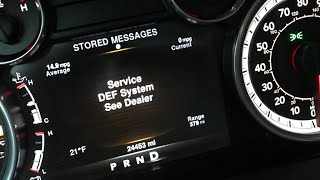
- Check Engine Light & DEF Warnings — The Malfunction Indicator Lamp illuminates alongside messages like "Service DEF System" or "Exhaust Fluid Range."
- Decreased Fuel Economy — Fuel consumption increases by 5-10% as engine efficiency drops due to the malfunctioning aftertreatment system.
- Visible Exhaust Smoke or Odor — A faint white or gray plume appears from the tailpipe, indicating untreated exhaust gases.
- Failed Emissions Test — The vehicle automatically fails state-mandated emissions inspections due to the active fault.
- DPF Regeneration Incomplete or Failed (also visible on scanner) — The Diesel Particulate Filter (DPF) cannot clean itself, leading to a permanently clogged exhaust and secondary trouble codes.
Diagnostic Flowchart
Tap your situation to follow the diagnostic path that matches what you're seeing on this code.
Common Fixes & Costs
- Clean the Aftertreatment/DEF Injector — Parts: $0-$15, Labor: $75-$175, ~1.2 hr book time (DIY)
- Replace the Aftertreatment/DEF Injector
— Parts: $200-$450, Labor: $100-$250, ~1.5 hr book time
(Intermediate)
: OEM PC3Z-5J281-A (Alt: Bosch 0444021058)
: OEM 4627241AF (Alt: Bosch Equivalent)
: OEM 12647372 (Alt: ACDelco 55573939) - Repair Wiring or Ground Connection — Parts: $10-$50, Labor: $100-$200, ~1.5 hr book time (Intermediate)
- Replace the DEF Pump Assembly
— Parts: $800-$2,300, Labor: $300-$500, ~3.5 hr book time
(Professional)
: OEM HC3Z-5L229-A (Alt: Dorman 904-370)
: OEM 68353831AB (Alt: Dorman 904-602) - Replace or Reprogram the Powertrain Control Module (PCM) — Parts: $450-$2,200, Labor: $200-$300, ~2.0 hr book time (Professional)
DIY vs Professional
- Clean the Aftertreatment/DEF Injector — Beginner: Yes
Tools: Basic socket set, soft brush, distilled water, safety glasses. - Replace the Aftertreatment/DEF Injector — Beginner: Yes
Tools: Socket set, torque wrench, new injector gasket. - Repair Wiring or Ground Connection — Beginner: No
Tools: Multimeter, wire strippers, crimpers, heat shrink tubing. - Replace the DEF Pump Assembly — Beginner: No
Tools: Advanced hand tools, transmission jack, bidirectional scan tool. - Replace or Reprogram the Powertrain Control Module (PCM) — Beginner: No
Tools: J-2534 Pass-Thru device, OEM software, battery maintainer.
Used vs. New Parts: Buying Guide
When a used part is worth it: Buying a used DEF injector is a waste of money. These parts fail internally or clog invisibly. Always buy new OEM or premium aftermarket.
Donor quality checklist:
- Avoid 'refurbished' injectors, which are often just externally cleaned used parts.
- Match the part number exactly, as automakers frequently update these parts.
Decision logic:
- If The part is under $500 and critical to the emissions system → Buy a new OEM or premium aftermarket (e.g., Bosch) part. The warranty is worth the cost.
- If The part is known to clog or wear out (like this injector) → Strongly favor new. You are buying a part with a full service life.
Warranty tradeoff: Used parts typically have a 30-day warranty. New aftermarket parts offer 1-3 years, while new OEM parts carry a manufacturer's warranty.
Worst-case if a used part fails: 300-500 in repeat labor costs if a cheap used injector fails immediately.
What Happens If You Wait — Timeline
- 0-1 month: Code P2698 sets. Vehicle enters limp mode with reduced power. DPF regeneration is inhibited. (MPG impact: 5-10%% · Added cost: $50-150 in wasted fuel.)
- 1-3 months: DPF saturates with soot. Exhaust backpressure increases, further reducing power. (MPG impact: 10-15%% · Added cost: $300-500 for a forced regeneration.)
- 3-6 months: Soot hardens into a permanent blockage. The DPF is permanently damaged. (MPG impact: 15-25%% · Added cost: $2,000-7,000 for mandatory DPF replacement.)
- 6+ months: Extreme backpressure destroys upstream components like turbocharger seals and EGR valves. (MPG impact: >25%% · Added cost: $3,000-9,000+ for DPF and turbo repairs.)
Cost of Not Fixing It
- Immediate (0-1 month): Vehicle stuck in limp mode, failed emissions test, and a 10% drop in fuel economy. (Added cost: 50-150 in wasted fuel.)
- Short Term (1-3 months): DPF saturates with soot due to halted regeneration. Exhaust backpressure spikes. (Added cost: 300-500 for a forced regeneration.)
- Long Term (3+ months): DPF permanently clogs with hardened soot and ash. Backpressure destroys turbocharger seals. (Added cost: 3,000-7,000 for DPF and turbo replacement.)
Diagnosis Steps
- Scan for All DTCs and Review Freeze Frame Data
Read all stored codes. Fix exhaust temperature sensors (P0544), NOx sensors (P2200), or injector circuit faults (P2699) first, as these frequently trigger a false P2698.
Tools: OBD-II Scanner (Beginner) - Inspect and Clean the Injector Nozzle
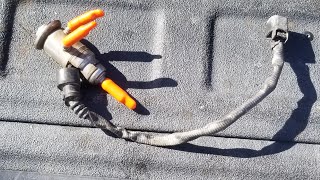
Remove the aftertreatment injector from the exhaust pipe. Clean any white, crusty DEF crystals or black soot off the nozzle using a soft brush and warm distilled water.
Tools: Wrenches, Distilled water, Soft brush (Intermediate) - Visually Inspect the Injector Wiring and Connectors
Check the electrical connector and wiring harness for melted plastic, loose pins, or frayed wires. Verify the ground connection on the chassis is tight and rust-free.
Tools: Flashlight (Beginner) - Test the Injector Circuit with a Multimeter
Disconnect the injector. Turn the key 'On' (engine off). Verify 12V on the power supply wire and less than 0.5 ohms of resistance on the ground wire.
Tools: Multimeter (Intermediate) - Check Injector Internal Resistance
Measure the disconnected injector's internal resistance. Compare to manufacturer specs (typically 11-13 Ohms for Ram, 2-12 Ohms for Ford/GM). An 'O.L.' or near-zero reading confirms internal failure.
Tools: Multimeter (Advanced) - Check DEF Pump Pressure with Scan Tool
Monitor the live DEF pump pressure PID. Pressure must remain stable within spec (e.g., 75-90 PSI for Ram 6.7L) when commanded on. Low pressure indicates a failing pump or leak.
Tools: Advanced scan tool (Advanced) - Perform a Quantitative Injector Flow Test
Remove the injector, place it in a graduated cylinder, and command a flow test via the scan tool. A healthy injector dispenses 40-55 mL of fluid in 2 minutes.
Tools: Bidirectional scan tool, Graduated cylinder (Advanced) - Check for Exhaust Leaks and Temperature Sensor Correlation
Inspect the exhaust upstream of the SCR for leaks. With a cold engine, verify all exhaust temperature sensors read within 5 degrees of ambient air temperature.
Tools: Scan tool (Intermediate)
When This Code Triggers (Freeze-Frame Conditions)
- Engine Coolant Temp: 180-200°F (82-93°C) (Engine is fully warmed up.)
- RPM: 1500-2500 RPM (During steady-state highway cruise or active DPF regeneration.)
- Engine Load: 30-60% (Vehicle under moderate load, sufficient to generate high exhaust temperatures.)
- Vehicle Speed: 45-65 mph (72-105 kph) (Sustained highway driving, which is when the PCM typically commands a dosing event.)
Related Codes
- P20EE — SCR NOx Catalyst Efficiency Below Threshold. A clogged injector from P2698 starves the catalyst of DEF, directly causing this efficiency code. Fix P2698 first.
- P2699 / P269A — These indicate a hard electrical fault (short to ground or short to power). P2698 is a performance code, meaning the circuit is intact but the mechanical action is failing.
- P2697 — Exhaust Aftertreatment Fuel Injector 'A' Control Circuit/Open. Points specifically to a broken wire, disconnected plug, or completely burnt injector coil.
- P20B9 / P20BA — Reductant Heater Control Circuit codes. If the DEF heater fails, frozen fluid prevents the injector from spraying, indirectly triggering P2698 in cold weather.
Climate & Environmental Factors
- Cold Weather: DEF freezes at 12°F (-11°C). Repeated freeze-thaw cycles promote urea crystallization, clogging the injector nozzle.
- Hot Weather: Sustained temperatures above 86°F (30°C) accelerate urea decomposition, degrading DEF quality and forming solid deposits.
- High Humidity: Unsealed DEF tanks absorb moisture, diluting the precise 32.5% urea concentration and causing sticky injector deposits.
How to Talk to a Mechanic About This Code
Say this: "I have an active P2698 code. Please verify DEF pressure and exhaust temperature sensor readings before recommending an injector replacement."
This directs the technician toward a proper diagnostic path instead of just replacing the most obvious part, saving you money on misdiagnosis.
Avoid saying:
- 'I think I need a new DEF injector.'
- 'Just do whatever it takes to clear the code.'
Questions to ask before authorizing the repair:
- Are there any other fault codes present besides P2698?
- Did you check the exhaust temperature sensors for proper correlation?
- Can you confirm the wiring harness and ground connection have been inspected for damage?
Where to Take It: Dealer vs Independent vs Chain
- Dealer:
Recommended if the vehicle is covered by an extended emissions warranty (common for Ram, VW, Audi). Otherwise, use an independent shop.
Best for: Vehicles still under an emissions or powertrain warranty., Known manufacturer-specific issues covered by a special coverage program.
Downsides: Higher labor rates, often 1.5-2x more than independent shops., May default to replacing entire assemblies rather than cleaning components. (Typical cost: +50% vs. baseline) - Independent Shop:
Best fit for most out-of-warranty vehicles. An experienced diesel technician can diagnose clogged injectors or wiring issues effectively.
Best for: Out-of-warranty diesel trucks where cost is a factor., Shops that specialize in diesel engines.
Downsides: Quality varies widely; look for ASE certification in diesel work. (Typical cost: +0% vs. baseline) - Chain Shop:
AVOID. The complexity of the aftertreatment system makes chain shops a poor choice for code P2698.
Best for: Simple, non-diagnostic work like oil changes.
Downsides: Technician experience with complex diesel emissions systems is limited., May lack the advanced diagnostic tools needed to troubleshoot the SCR system. (Typical cost: -10% vs. baseline)
When to Walk Away From the Repair
If the estimated repair cost for P2698 and related issues (like a clogged DPF) exceeds 50% of your truck's private-party value, consider selling it.
- Car worth $15000, fix is $2500: Fix it. The repair cost is well under the threshold and preserves the vehicle's value.
- Car worth $8000, fix is $4500: Borderline. Get a second opinion and consider the vehicle's overall condition before proceeding.
- Car worth $6000, fix is $7000: Walk away. The repair cost exceeds the vehicle's value.
What Scan Tool You Need for This Code
Minimum: A scanner that can read manufacturer-specific codes and view live data streams for DEF pressure and exhaust gas temperatures.
A basic $20 code reader cannot show the live sensor data needed to determine *why* the injector performance is poor, leading you to guess and replace the wrong parts.
Budget: iCarsoft HD V3.0 (~$110) — Reads heavy-duty truck codes and provides live data streaming for exhaust temperatures to identify sensor-related issues.
Mid-range: ANCEL HD3200 (~$400) — Offers full system diagnostics and can perform a forced DPF regeneration, a necessary step after many aftertreatment repairs.
Professional: Autel MaxiCOM MK808 (~$500) — A bidirectional tool that can command the DEF injector to fire for a flow test, the most definitive way to test mechanical function.
Rent vs buy: Buying a mid-range scanner is a good investment for any modern diesel owner to avoid costly diagnostic fees and misdiagnoses.
How to Clear the Code After You Fix It
- Use an OBD-II scan tool to clear all diagnostic trouble codes (DTCs).
- Perform the specific Diesel Drive Cycle recommended by the manufacturer.
- Check readiness monitors with the scan tool to confirm the Catalyst and NOx monitors have passed.
Drive cycle (~30 minutes): Cold start and idle for 3 minutes. Drive at a steady 55 mph for 20 minutes to heat the exhaust. Perform 4 cycles of decelerating to 20 mph and accelerating back to 60 mph. Let the vehicle cool down completely.
Readiness monitors affected: Catalyst Monitor, NOx Aftertreatment Monitor, Exhaust Gas Sensor Monitor
Before emissions retest: drive at least 100 miles to fully set monitors.
Watch out for:
- Disconnecting the battery clears the code but resets all readiness monitors to 'Not Ready', guaranteeing an emissions test failure.
- Not driving at sustained highway speeds prevents the diesel-specific readiness monitors from completing their self-tests.
Will This Fail Emissions / State Inspection?
Yes — this code typically fails an OBD-II emissions inspection.
- California: Active P2698 is an automatic Smog Check failure. Requires 100+ miles of driving post-repair to set readiness monitors.
- New York: Fails NYVIP3 OBD-II inspection immediately. Only one monitor can be 'Not Ready' for 2001+ vehicles.
- Texas: Illuminated Check Engine Light halts registration renewal until fixed and re-tested.
Most Commonly Affected Vehicles
- Ford F-250/F-350 Super Duty (2011-2019) — The 6.7L Power Stroke DEF injector frequently clogs. Ford issued updated parts, but TSBs for PCM re-flashes remain common.
- Ram 2500/3500 (2013-2020) — The 6.7L Cummins injector location makes it highly susceptible to heat and vibration damage. Extended emissions warranties often cover this.
- Chevrolet / GMC Silverado/Sierra 2500HD/3500HD (2011-2016) — LML Duramax engines log this code due to clogged injectors or failing NOx sensors providing bad feedback to the PCM.
- Volkswagen / Audi TDI Models (Jetta, Passat, Q7, A6) (2009-2016) — P2698 halts DPF regeneration. Vehicles with the 'Dieselgate' modification have an extended warranty covering the DEF injector.
- Volvo / Mack Trucks Various Heavy-Duty Models (2016-2017) — TSBs explicitly state P2698 is usually a ghost code caused by bad exhaust temperature sensors. Do not replace the injector without verifying sensor data.
Manufacturer-Specific Notes
- Volvo / Mack: Per TSB K74566374, P2698 is treated as a secondary symptom code. Technicians must diagnose exhaust gas temperature sensors and run 'Exhaust Aftertreatment Diagnostics' before replacing the injector.
- Ford / Ram / GM: On consumer diesel trucks, crystallized DEF causes this code over 50% of the time. Removing the injector and cleaning the tip with warm distilled water is the mandatory first step.
- Ram: Per bulletin D-24-10, certain 2013-2019 Ram trucks have an extended warranty (XQ1) covering the DEF injector for 10 years/120,000 miles. Check with a dealer before paying out of pocket.
- Volkswagen / Audi: Vehicles with the approved 'Dieselgate' emissions modification carry an Extended Emissions Warranty covering the DEF injector for the greater of 10 years/120,000 miles or 4 years/48,000 miles from the modification date.
Real Owner Stories
2013 Ram 2500 with 6.7L Cummins
Check engine light and a "200 miles to 5mph" warning appeared 300 miles after filling the DEF tank with a new box of DEF.
Outcome: A dealer diagnosed the new box of DEF as expired. They charged $328 to drain the tank, flush the system, and refill with fresh fluid, resolving the issue.
Lesson: Even sealed DEF expires. If a DEF code appears shortly after a refill, suspect fluid quality first.
2015 GMC Sierra 2500HD with LML Duramax
P2698 code appeared along with P20EE. The truck was in limp mode.
Outcome: A shop found the main engine wiring harness had rubbed through on an A/C bracket. Repairing the damaged wires cleared both codes.
Lesson: Don't assume the injector is bad just because it's clogged. Always inspect the wiring harness for chafing.
2016 Volvo VNL Heavy-Duty Truck
Intermittent P2698 code with no noticeable performance issues.
Outcome: The DPF Inlet temperature sensor read 40°F higher than the others. Replacing the faulty sensor resolved the ghost P2698 code.
Lesson: On heavy-duty trucks, P2698 is often a secondary code. Always check for underlying sensor issues before condemning the injector.
How to Prevent This Code From Triggering
- Use fresh, ISO 22241-certified DEF. (Every fill-up) — Ensures the correct 32.5% urea concentration, minimizing premature crystallization.
- Avoid frequent short trips. (Weekly) — Allows the exhaust to get hot enough to burn off minor crystal deposits at the injector nozzle.
- Keep the DEF tank at least half full. (Ongoing) — Reduces air space in the tank, minimizing water evaporation that concentrates urea and causes crystallization.
Frequently Asked Questions
What are the most common misdiagnosis mistakes for P2698?
The biggest mistake is replacing the injector without checking for other codes. Faulty exhaust gas temperature sensors or a bad ground wire frequently trigger P2698 as a symptom. Always diagnose active sensor codes and check for TSBs first.
Can a bad battery or alternator cause P2698?
Yes. The injector requires precise electronic pulses. A failing battery or alternator drops voltage below 12.8V, causing the injector driver to miss a pulse and trigger the code.
Can I fix P2698 myself?
Yes, cleaning a clogged injector nozzle or fixing a visible wire break are simple DIY tasks. However, diagnosing pump pressure or replacing a control module requires advanced scan tools and a diesel specialist.
Will bad or low DEF fluid cause a P2698 code?
Poor quality or expired DEF causes rapid crystallization that clogs the injector nozzle, leading directly to P2698. Low fluid levels trigger separate dashboard warnings, not this specific performance code.
What happens if I ignore code P2698?
Ignoring P2698 locks your vehicle in limp mode and stops DPF regeneration. Within 100 miles, the DPF becomes permanently clogged with soot. This turns a minor repair into a mandatory $3,000+ DPF replacement.
Is the aftertreatment fuel injector the same as an engine fuel injector?
No. An engine fuel injector sprays diesel into the cylinders for combustion. The aftertreatment injector sprays DEF into the exhaust pipe to neutralize NOx emissions.
Will the code clear itself if I fix the problem?
It rarely clears itself quickly. After repairing the issue, use an OBD-II scanner to clear the code. Drive at highway speeds for 30 minutes to run the emissions monitors and verify the fix.
How much does it cost to fix P2698?
Costs range from $15 for a DIY distilled water cleaning to $450 for a new injector. If the DEF pump or PCM failed, professional repairs exceed $1,500.
Key Takeaways
- Code P2698 forces your vehicle into a reduced-power limp mode and guarantees an emissions test failure due to an exhaust aftertreatment injector fault.
- Cleaning a clogged DEF injector nozzle with warm distilled water fixes this code over 50% of the time and costs under $15.
- Diagnose and fix exhaust temperature sensor codes (like P0544) first, as faulty sensors frequently trick the PCM into triggering a false P2698.
- Driving more than 100 miles with an active P2698 permanently clogs the Diesel Particulate Filter (DPF), turning a $15 cleaning into a mandatory $3,000+ DPF replacement.
Helpful Videos
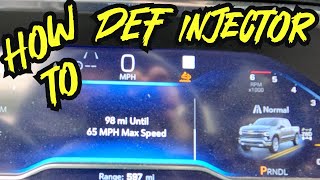

The information in this article is provided for general reference and educational purposes only. Vehicle specifications, procedures, and part compatibility can vary by production date, trim level, and region. Always consult your vehicle's factory service manual and verify part numbers before purchasing or performing repairs. Safety-critical components such as airbags, seat belts, and braking systems should be installed by a qualified professional.
- 🎬 Helpful Videos
- What Does P2698 Mean?
- Can I Drive With P2698?
- Common Causes
- Symptoms
- Diagnostic Flowchart
- Common Fixes & Costs
- DIY vs Professional
- Used vs. New Parts: Buying Guide
- What Happens If You Wait — Timeline
- Cost of Not Fixing It
- Diagnosis Steps
- When This Code Triggers (Freeze-Frame Conditions)
- Related Codes
- Climate & Environmental Factors
- How to Talk to a Mechanic About This Code
- Where to Take It: Dealer vs Independent vs Chain
- When to Walk Away From the Repair
- What Scan Tool You Need for This Code
- How to Clear the Code After You Fix It
- Will This Fail Emissions / State Inspection?
- Most Commonly Affected Vehicles
- Manufacturer-Specific Notes
- Real Owner Stories
- 2013 Ram 2500 with 6.7L Cummins
- 2015 GMC Sierra 2500HD with LML Duramax
- 2016 Volvo VNL Heavy-Duty Truck
- How to Prevent This Code From Triggering
- Frequently Asked Questions
- What are the most common misdiagnosis mistakes for P2698?
- Can a bad battery or alternator cause P2698?
- Can I fix P2698 myself?
- Will bad or low DEF fluid cause a P2698 code?
- What happens if I ignore code P2698?
- Is the aftertreatment fuel injector the same as an engine fuel injector?
- Will the code clear itself if I fix the problem?
- How much does it cost to fix P2698?
- Key Takeaways
- 🎟️ Get 5% Off