

P2681 on 2016-2017 Jeep Grand Cherokee 3.6L: Engine Coolant Bypass Valve Fixes
On a 2016-2017 Grand Cherokee with the 3.6L engine, code P2681 is frequently caused by a software glitch. The first step is to check if a PCM software update has been performed per manufacturer TSBs 18-024-17 or 18-049-20. If the software is current, the issue is likely the Engine Coolant Bypass Valve itself, its wiring, or the connector being contaminated.
- For a P2681 code on a 2016-2017 Grand Cherokee 3.6L, your first action should be to verify if the PCM software has been updated per manufacturer TSBs.
- This code specifically points to an electrical problem ('Open Circuit'), not a mechanical one like a stuck valve or coolant leak.
- If a software update doesn't fix it, the most common repair is replacing the Engine Coolant Bypass Valve (Mopar part #68252075AC) or repairing its wiring.
- Symptoms often include a Check Engine Light and poor performance from your cabin's heater.
What's Unique About the 2016-2017 Jeep GRAND CHEROKEE

For this specific generation of Jeep Grand Cherokee and its platform-mate, the Dodge Durango, the P2681 code is well-documented in multiple Technical Service Bulletins (TSBs). These bulletins reveal that the code can often be triggered erroneously due to a software logic issue within the Powertrain Control Module (PCM). The software was overly sensitive and could set the fault when no hardware issue existed. Therefore, unlike many other vehicles where this code points directly to a failed part, the primary diagnostic step for the 2016-2017 Grand Cherokee is to verify the PCM software is up-to-date before considering any hardware replacement.
Diagnostic Flowchart

Tap your situation to follow the diagnostic path that matches what you're seeing on this vehicle.
Symptoms You May Notice

- Check Engine Light is on
- Engine takes longer than usual to warm up to operating temperature
- Reduced, intermittent, or lukewarm air from the cabin heater, especially in cold weather.
- Fluctuations in the engine temperature gauge.
- A forum user noted that spilling coolant into the electrical connector while replacing the valve can cause the code to appear intermittently.
- Replacing the engine thermostat without diagnosing the P2681 code first.
- Replacing the coolant bypass valve before checking for and performing the required PCM software update, which is the most common fix for these specific model years.
Most Likely Causes

- Powertrain Control Module (PCM) Software Requires Update 🔴 High Probability The manufacturer identified a software logic issue and released multiple TSBs (e.g., 18-024-17, 18-049-20) to correct the logic that falsely triggers P2681 by changing it from a one-trip to a two-trip fault.
How to confirm: A Jeep dealership or a qualified repair shop with a wiTECH scan tool can check the current software calibration of the PCM against the latest version. They can see if the TSB has been performed. The TSB repair procedure specifies a labor time of 0.2 hours.
Typical fix: Reprogramming (flashing) the PCM with the latest software version. The TSB instructs technicians to clear all DTCs after the flash.
Est. part cost: $0 - Failed Engine Coolant Bypass Valve 🟡 Medium Probability The valve contains an electronic actuator and solenoid that can fail over time, causing an internal open circuit in the coil.
How to confirm: After confirming the PCM software is up-to-date, a technician can test the valve. With the ignition off and the connector disconnected, measure the resistance across the valve's terminals with a multimeter. An out-of-spec or infinite resistance reading (OL) indicates a failed valve. The valve is located near the top of the engine, accessible after removing the engine cover.
Typical fix: Replace the engine coolant bypass valve assembly.
Est. part cost: $150-$275 - Wiring Harness or Connector Issue 🟡 Medium Probability The wiring to the valve can become damaged from engine heat and vibration, or the connector pins can corrode. Spilled coolant during a repair is a known cause of connector contamination, leading to an open circuit fault.
How to confirm: Visually inspect the wiring harness leading to the coolant bypass valve for any signs of damage, chafing, or melting. Unplug the connector and check for corrosion, bent/loose pins, or signs of fluid intrusion. A user on a Ram forum fixed their P2681 code by discovering coolant had spilled into the connector, cleaning it thoroughly resolved the intermittent fault.
Typical fix: Repair the damaged section of wire, or clean or replace the connector pigtail. Using dielectric grease is sometimes debated but can help prevent future moisture intrusion.
Est. part cost: $10-$50
Rare But Worth Checking
- Failed Powertrain Control Module (PCM): This is very rare. The PCM should only be considered as the cause after all TSBs have been performed and both the bypass valve and its entire circuit have been thoroughly tested and confirmed to be good.
- Cracked Internal Valve Gear: A newer TSB for 2022-2023 Ram trucks with the 3.6L engine notes that codes including P2681 can be caused by a cracked internal gear inside the valve assembly. While not specific to the 2016-17 Grand Cherokee, it points to a potential mechanical failure mode of the valve itself, not just electrical.
Diagnosis Steps
- Connect an OBD-II scanner to verify P2681 is the active code and check for any other stored codes.
- Check with a dealer or qualified shop to see if TSBs #18-049-20 or #18-024-17 (and its revisions) have been performed on your vehicle. This is the most critical first step.
- If the software updates have not been done, have the PCM reprogrammed. This costs roughly one hour of dealer labor time. Clear the codes and perform a drive cycle to see if P2681 returns.
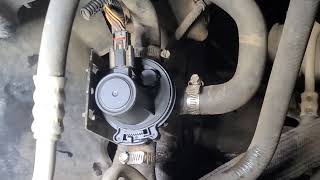
- If the code returns, locate the Engine Coolant Bypass Valve on the 3.6L engine, typically near the oil filter housing after removing the plastic engine cover.
- Visually inspect the electrical connector and wiring harness going to the valve. Unplug the connector and carefully check for any obvious damage, corrosion, or fluid contamination from spilled coolant.
- Disconnect the valve and use a multimeter to measure the resistance of the valve's internal coil. Compare this reading to the manufacturer's specification (typically 10-100 ohms). An open circuit (infinite resistance) confirms a bad valve.
- If the valve's resistance is within spec, test the wiring harness for continuity between the PCM and the valve connector to find any breaks in the wire.
- If the wiring and valve both test good, the fault may lie within the PCM, but this is extremely unlikely.
Parts You'll Likely Need
- Engine Coolant Bypass Valve
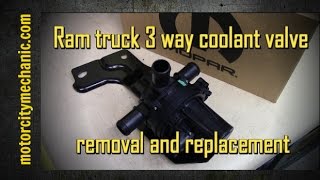
(OEM #68252075AC)— This is the component that fails electrically if the PCM software update does not resolve the code. It is also referred to as a 'Coolant 3 Way Valve'. This part number supersedes previous versions 68252075AA and 68252075AB.
Trusted brands: Mopar
OEM price range: $185-$275
Aftermarket price range: $150-$220
Related Codes That Often Appear With This One
- U1424 — The manufacturer TSBs list 'U1424 - Implausible Engine Torque Signal Received' as another code that can be resolved by the same PCM software update. [Bulletin #18-049-20, #18-024-17]
- P2299 — 'Brake Pedal Position/Accelerator Pedal Position Incompatible' is also frequently cited in the same TSBs, indicating a common software-related origin. [Bulletin #18-024-17 REV. A]
- P0335 — 'Crankshaft Position Sensor Circuit' is another code mentioned in the TSBs that can be falsely set along with P2681 due to the software glitch. The update changes it to a two-trip fault. [Bulletin #18-024-17, 17]
Technical Service Bulletins (TSBs) & Recalls
- 18-049-20: Supersedes 18-024-17 Rev C. Involves reprogramming the PCM for P2681 and other codes on 2016-2017 Grand Cherokee and Durango.
- 18-024-17 (and revisions A, B, C): Addresses P2681 for 2016-2017 models, also recommending a PCM reflash to fix falsely set DTCs. Specifies build date ranges for affected vehicles.
- 18-049-16 REV. B: An earlier TSB also calling for a PCM reflash to address P2681 on 2017 models.
Platform-Specific Known Issues
- A significant number of 2016-2017 Grand Cherokees with the 3.6L engine may have this code stored due to a software error, not a hardware failure. Multiple TSBs, including 18-049-20 and 18-024-17, were issued to reprogram the PCM to prevent this false code.
Helpful Videos
We Have This Part in Stock



The information in this article is provided for general reference and educational purposes only. Vehicle specifications, procedures, and part compatibility can vary by production date, trim level, and region. Always consult your vehicle's factory service manual and verify part numbers before purchasing or performing repairs. Safety-critical components such as airbags, seat belts, and braking systems should be installed by a qualified professional.
- Jeep GRAND CHEROKEE:
- 🎬 Helpful Videos
- 🛍️ Shop This Part
- What's Unique About the 2016-2017 Jeep GRAND CHEROKEE
- Diagnostic Flowchart
- Symptoms You May Notice
- Most Likely Causes
- Rare But Worth Checking
- Diagnosis Steps
- Parts You'll Likely Need
- Related Codes That Often Appear With This One
- Technical Service Bulletins (TSBs) & Recalls
- Platform-Specific Known Issues
- 🎟️ Get 5% Off