

P2647 on 2003-2010 Honda Accord: VTEC System Causes and Fixes
On a 2003-2010 Honda Accord with the 2.4L engine, code P2647 is most often caused by a low engine oil level or a faulty VTEC solenoid assembly. First, check your oil. If the level is correct, the most likely fix is replacing the entire VTEC solenoid assembly (spool valve). Using an OEM or high-quality aftermarket part is crucial, as cheap alternatives are known to fail quickly. The VTEC oil pressure switch is also a common failure point identified in a Honda TSB.
- First, check your engine oil. A low oil level is a very common and easy-to-fix cause for P2647.
- The code indicates a problem with the VTEC system, which will cause the car to enter 'limp mode,' limiting engine RPMs to around 3000.
- The most common parts to fail are the VTEC oil pressure switch or the entire VTEC solenoid assembly (spool valve).
- Honda issued a TSB (A13-021) specifically for this code, pointing to a faulty oil pressure switch.
- This is a very common, well-documented issue on 4-cylinder Accords and is considered a straightforward DIY repair for many owners.
What's Unique About the 2003-2010 Honda ACCORD

This code is extremely common on Honda and Acura vehicles from this era with K-series engines (like the Accord's K24). The VTEC system is highly sensitive to oil level, quality, and pressure. Over time, the VTEC solenoid assembly, which houses the control solenoid, the oil pressure switch, and a critical filter screen, is a known failure point. While low oil is a frequent trigger for VTEC issues, the integrated design of the solenoid assembly and the high failure rate of its individual components mean that replacing the entire unit is often the most effective and lasting repair.
Diagnostic Flowchart
Tap your situation to follow the diagnostic path that matches what you're seeing on this vehicle.
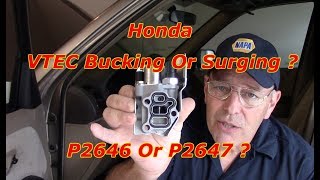
Generation note: This range covers the end of the 7th generation (2003-2007) and the beginning of the 8th generation (2008-2010) Honda Accord. The P2647 code is common on the 2.4L 4-cylinder (K24A) engine in both generations, and the causes and fixes are largely identical. 🎬 Watch: A complete overview of VTEC repair for P2647 codes. This issue is also prevalent across many other Honda and Acura models sharing the K-series engine, such as the CR-V, Element, and Acura TSX. This code is not common on the V6 models.
Symptoms You May Notice
- Check Engine Light (MIL) is on
- Engine will not rev past 2,500-3,000 RPM (limp mode)
- Vehicle bucks, hesitates, or jerks violently when trying to accelerate past the RPM limit
- Noticeable loss of power, feels 'gutless'
- Stalling at low RPMs
- Red oil pressure light may flicker or come on intermittently
- Problem may be intermittent, occurring only on a cold start and disappearing after a restart
- Replacing only the oil pressure switch when the entire solenoid assembly or screen is clogged. While the switch can be the sole problem, the issue often lies in the solenoid body or its filter screen, leading to the code's return.
- Using a cheap, low-quality aftermarket VTEC solenoid assembly. Many owners report these parts failing within months, leading them to redo the repair with an OEM part.
Most Likely Causes

- Low or Dirty Engine Oil 🔴 High Probability The VTEC system is operated by oil pressure, making it extremely sensitive to the oil's level and condition. K-series engines can consume oil between changes. While low oil is a critical issue, it more directly causes P2646 (Stuck Off). P2647 (Stuck On) implies the system has pressure when it shouldn't, but an oil level/condition check is always the mandatory first step.
How to confirm: Check the engine oil dipstick. The level should be between the two marks. Note the color and consistency of the oil; if it is very dark, sludgy, or overdue for a change, it can clog oil passages.
Typical fix: Top off or change the engine oil and replace the oil filter. Use the manufacturer-recommended viscosity, typically 5W-20. Using oil that is too thick can trigger this code.
Est. part cost: $30-$60 - Faulty VTEC Solenoid Assembly (Spool Valve) 🔴 High Probability This assembly contains the oil pressure switch, the solenoid, and a filter screen, all of which can fail. Many owners report that replacing just the switch or cleaning the screen does not solve the problem, and only a full assembly replacement works. Aftermarket solenoids, especially cheap unbranded units, are notorious for failing quickly, sometimes within a year.
How to confirm: After confirming oil level is correct, this is the most likely culprit. If replacing the pressure switch or cleaning the screen fails to fix the code, the solenoid itself is likely bad. Many owners choose to replace the entire assembly to avoid repeat repairs.
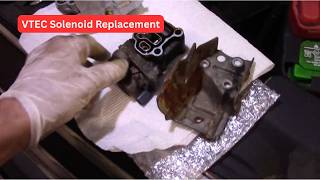
Typical fix: Replace the entire VTEC solenoid assembly. 🎬 See this walkthrough on replacing the full VTEC solenoid assembly. It is highly recommended to use a genuine Honda (OEM) part or a high-quality OEM-supplier part (like Keihin) for longevity.
Est. part cost: $150-$250 - Faulty Rocker Arm Oil Pressure Switch Only 🟡 Medium Probability Honda issued Technical Service Bulletin (TSB) A13-021 specifically identifying this switch (P/N 37250-PNE-G01) as a cause of intermittent failures for P2647. The switch can fail electrically or leak oil up through its connector, causing a bad reading.
How to confirm: The switch can be tested for continuity, but since the failure is often intermittent, it may test fine when cold. Given the TSB, many owners replace it as a primary diagnostic step. Check its electrical connector for oil contamination.
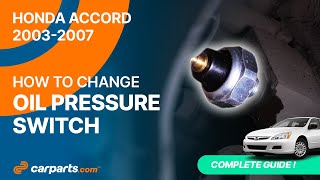
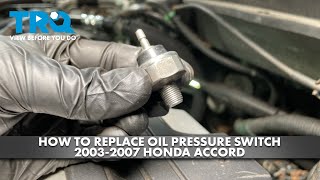
Typical fix: Replace the rocker arm oil pressure switch and its O-ring (P/N 91319-PAA-A01). Torque the new switch to 16 lb-ft (22 N·m). 🎬 Watch: How to replace the oil pressure switch step-by-step.
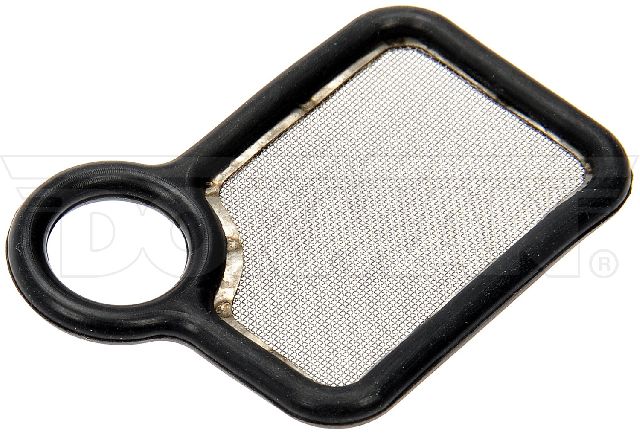
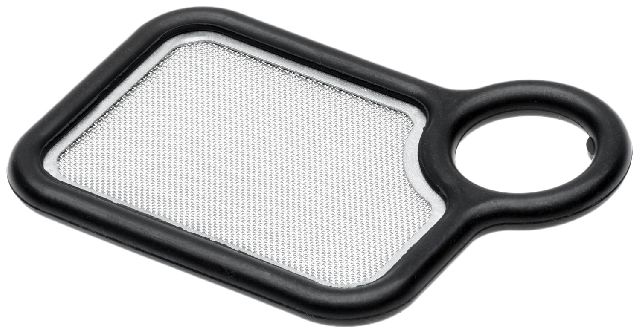
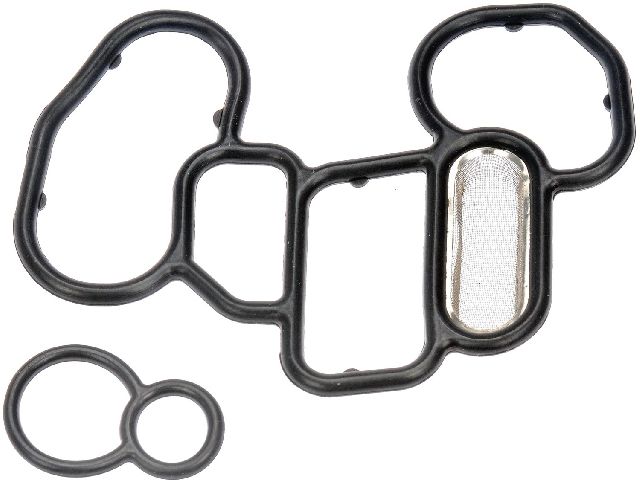
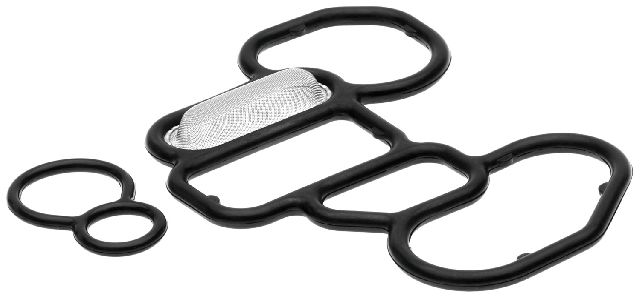
Est. part cost: $40-$70 - Clogged VTEC Solenoid Gasket/Screen 🟡 Medium Probability The gasket for the VTEC solenoid contains a small mesh screen to filter oil. This screen can become clogged with engine sludge from infrequent oil changes, restricting oil flow and triggering the code.
How to confirm: Remove the VTEC solenoid assembly (three 10mm bolts) and inspect the screen on the gasket. If it is full of dark, sludgy debris, it is clogged.
Typical fix: Replace the VTEC solenoid gasket/screen (P/N 15815-RAA-A02). This is a very inexpensive part, but since the labor is the same as replacing the whole assembly, many choose to replace the entire unit as a preventative measure.
Est. part cost: $10-$25
Rare But Worth Checking
- Wiring or Connector Issue: The upward-facing electrical connectors for the VTEC solenoid and oil pressure switch are highly susceptible to water intrusion, which causes corrosion and poor electrical contact. The wiring can also become brittle from engine heat. Cleaning the terminals with electronics cleaner and applying dielectric grease often resolves the issue. In some cases, the connector pigtail itself must be cut out and replaced.
- Internal Blockage of Solenoid Assembly: In at least one documented case, small foreign debris (pieces of plastic) found its way into the solenoid assembly, physically blocking the internal plunger and causing the P2647 code after extensive troubleshooting.
- Faulty Powertrain Control Module (PCM): An owner complaint to the NHTSA mentioned being told a PCM reprogram was needed to fix a P2647 code, though this is extremely rare compared to mechanical or sensor issues.
Diagnosis Steps

- Check Engine Oil Level and Condition: This is the first and most important step. If the oil is low, top it off. If the oil is old, dirty, or of the wrong viscosity (e.g., thicker than 5W-20), perform a full oil and filter change.
- Inspect and Clean Electrical Connectors: Unplug the two connectors on top of the VTEC assembly. Inspect them for green or white corrosion from water intrusion, or oil contamination from a leaking switch. Clean both the male and female sides of the connectors thoroughly with an electronics cleaner spray and a small brush. Allow to dry and apply a small amount of dielectric grease before reconnecting. Clear codes and test drive.
- Inspect the VTEC Solenoid Screen: Remove the VTEC solenoid assembly (spool valve) from the back of the cylinder head (held by three 10mm bolts). Check the integrated mesh filter screen for sludge or debris. If clogged, you can try cleaning it, but replacement of the gasket/screen (P/N 15815-RAA-A02) is recommended.
- Replace the Rocker Arm Oil Pressure Switch: Following Honda's TSB A13-021, replacing the switch (P/N 37250-PNE-G01) and its O-ring is a common and direct fix. Torque the new switch to 16 lb-ft (22 N·m).
- Replace the VTEC Solenoid Assembly: If the screen is clean and a new switch doesn't solve the issue, the solenoid itself is likely faulty. Replacing the entire assembly (P/N 15810-RAA-A03) is the most comprehensive repair. Ensure you use an OEM or high-quality aftermarket unit (e.g., Keihin, NTK) to avoid premature failure.
- Check for Mechanical Oil Pressure: If all else fails, a mechanic can test the engine's base oil pressure to rule out more serious internal engine problems like a failing oil pump or clogged passages.
Parts You'll Likely Need

- VTEC Solenoid Assembly (Spool Valve)
(OEM #15810-RAA-A03)— This is the complete assembly that includes the solenoid, pressure switch, and gasket/screen. Replacing the whole unit addresses all common failure points at once and is often the final fix after other attempts fail. OEM part 15810-RAA-A03 also replaces older numbers like 15810-PNE-G01 and 15810-PPA-A01.
Trusted brands: Honda (OEM), Keihin (OEM Supplier), NTK
OEM price range: $180-$250
Aftermarket price range: $50-$120 - Rocker Arm Oil Pressure Switch
(OEM #37250-PNE-G01)— This switch is identified in a Honda TSB as a common failure point. It can fail intermittently, especially when hot, or leak oil into its electrical connector. It's often replaced as a first step before the entire solenoid assembly. - VTEC Solenoid Gasket / Filter Screen
(OEM #15815-RAA-A02)— This inexpensive gasket includes the critical filter screen that can get clogged with sludge from old oil. If the screen is blocked, it can cause VTEC system malfunctions. It's often replaced whenever the solenoid assembly is removed.
Related Codes That Often Appear With This One
- P2646 — P2646 is the opposite code, for 'Rocker Arm Actuator System Performance/Stuck Off'. They both relate to the same VTEC system and often share the same root causes, though P2646 is more directly linked to low oil pressure.
Technical Service Bulletins (TSBs) & Recalls
- A13-021: Addresses MIL on with DTC P2647, citing an intermittent failure of the rocker arm oil pressure switch and recommending its replacement.
Platform-Specific Known Issues
- Honda Technical Service Bulletin (TSB) A13-021 (updated Sept 2015) directly addresses DTC P2647 on 2003-2012 Accords with the 4-cylinder engine. It identifies an intermittently failing rocker arm oil pressure switch as the likely cause and recommends replacing the switch (P/N 37250-PNE-G01) and its O-ring (P/N 91319-PAA-A01). The bulletin also applies to a wide range of other Honda models from the era, including the CR-V, Element, and Civic Si, confirming this is a widespread K-series engine issue.
Mechanic-Grade Diagnostic Values
- VTEC Solenoid Coil Resistance — expected: 14 to 30 Ohms. Failure: A reading outside this range indicates a faulty solenoid coil.
- VTEC Oil Pressure Switch Continuity (Engine OFF) — expected: Continuity (near 0 Ohms). Failure: No continuity (open circuit) when the engine is off indicates a faulty switch.
- VTEC Oil Pressure Switch Continuity (Engine Running, VTEC OFF) — expected: Continuity (near 0 Ohms). Failure: No continuity (open circuit) while the engine is running but VTEC is not engaged (e.g., at idle) can indicate a problem.
- VTEC Oil Pressure Switch Harness Voltage (Key On, Engine Off) — expected: Battery Voltage (approx. 12V). Failure: No voltage indicates an open in the wire between the PCM and the switch.
- Engine Block Ground (G101) to Battery Negative — expected: Less than 100 millivolts (0.1V) at idle. Failure: Higher voltage indicates a poor ground connection, which can cause erratic behavior in ECU-controlled solenoids.
Scan Tool Commands That Help
- Honda HDS (or equivalent bidirectional scanner): VTEC TEST (in INSPECTION MENU or Actuation Tests) — This function allows a technician to command the VTEC system on and off while monitoring the VTEC pressure switch status. It's used to confirm if the solenoid is responding to the PCM's command and if the pressure switch is correctly reporting the change in oil pressure. A failure during this test helps isolate the issue to the VTEC assembly or its wiring.
Wiring & Ground Locations
- G101 — On the driver's side of the intake manifold plenum, sometimes near the thermostat housing.. G101 is a primary ground termination point for the ECU and engine harness. While the VTEC solenoid grounds through its body to the cylinder head, a poor main engine ground at G101 can cause voltage drops and erratic behavior in various ECU-controlled components, potentially contributing to intermittent electrical faults.
- PCM Connector B, Pin 11 (B11) — At the Powertrain Control Module (PCM).. This is the specific pin on the PCM that receives the signal from the VTEC oil pressure switch. A diagnostic step for P2647 involves checking for battery voltage at this pin to trace an open circuit in the wiring between the switch and the PCM.
Real Owner Repair Stories
- Reddit user in r/HondaElement (Honda Element (uses same K24 engine and VTEC system)) — Persistent P2647 code for several years, limp mode.
❌ Tried (didn't work) Replaced VTEC solenoid with an aftermarket unit., Replaced oil pressure switch separately., Took to multiple shops; one suggested the aftermarket solenoid was faulty, another misdiagnosed it as an exhaust issue.
✅ What actually fixed it Replacing the VTEC solenoid's electrical connector pigtail. The original connector was brittle and cracked, and the wiring sheathing was damaged near the connector, causing an open circuit. - Car Talk Community user (Honda CR-V (uses same K24 engine and VTEC system)) — P2647 code, limp mode.
❌ Tried (didn't work) Replacing the VTEC solenoid assembly.
✅ What actually fixed it Performing an engine oil flush and switching to synthetic oil. The user noted that while they changed oil regularly, the previous owner's maintenance history was unknown, suggesting a potential sludge buildup that was cleared by the flush.
OEM Part Supersession History
15810-PNE-G01, 15810-PPA-A01, 15810-RAA-A01, 15810-RAA-A02→15810-RAA-A03— Part consolidation and potential design revisions by Honda over the years for the complete VTEC spool valve assembly.
Model Year Variations Within This Range
- 2003-2007 (7th Gen) vs 2008-2010 (8th Gen): While the P2647 fault is common to both, the specific K24 engine variant changed. The 7th gen Accord (2003-2007) primarily used the K24A4 or K24A8 engines, which were economy-focused. The 8th gen Accord (2008-2010) used the K24Z2 and K24Z3 engines, which had a different intake manifold design and slightly more power. However, the VTEC solenoid assembly (15810-RAA-A03) and the core causes of P2647 remain the same across these model years.
Helpful Videos
We Have This Part in Stock


The information in this article is provided for general reference and educational purposes only. Vehicle specifications, procedures, and part compatibility can vary by production date, trim level, and region. Always consult your vehicle's factory service manual and verify part numbers before purchasing or performing repairs. Safety-critical components such as airbags, seat belts, and braking systems should be installed by a qualified professional.
- Honda ACCORD:
- 🎬 Helpful Videos
- 🛍️ Shop This Part
- What's Unique About the 2003-2010 Honda ACCORD
- Diagnostic Flowchart
- Symptoms You May Notice
- Most Likely Causes
- Rare But Worth Checking
- Diagnosis Steps
- Parts You'll Likely Need
- Related Codes That Often Appear With This One
- Technical Service Bulletins (TSBs) & Recalls
- Platform-Specific Known Issues
- Mechanic-Grade Diagnostic Values
- Scan Tool Commands That Help
- Wiring & Ground Locations
- Real Owner Repair Stories
- OEM Part Supersession History
- Model Year Variations Within This Range
- 🎟️ Get 5% Off