

OBD-II Code P2646: Rocker Arm Actuator Performance (Stuck Off)
What P2646 means, why it triggers, and how to fix it
- Check your engine oil first; low fluid levels or incorrect viscosity (like 10W-30 instead of 5W-20) cause over 50% of P2646 codes.
- Do not immediately replace the $200+ VTEC solenoid; a clogged $15 filter screen or a faulty $40 oil pressure switch are far more likely culprits.
- Driving with a P2646 code forces the engine into 'limp mode' (capping RPMs around 3,000) and risks catastrophic valvetrain damage if oil starvation is the root cause.
- If you drive a 2003-2011 Honda Element, inspect the VTEC electrical connectors for water intrusion from a leaking windshield cowl before buying any parts.
What Does P2646 Mean?

The Powertrain Control Module (PCM) detected a failure in the system that changes engine valve operation at higher speeds (most famously known as Honda's VTEC). It reports the system is stuck in the 'off' position when commanded 'on' due to a lack of expected oil pressure.
Technical definition: The official SAE/OBD-II definition is "'A' Rocker Arm Actuator System Performance / Stuck Off (Bank 1)". The PCM commanded the rocker arm actuator ON (typically between 2,500-4,000 RPM) but the oil pressure sensor feedback did not confirm the change. This voltage mismatch indicates a hydraulic restriction or electrical fault.
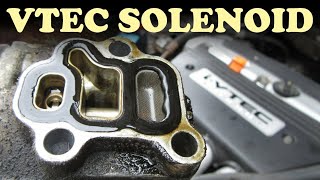
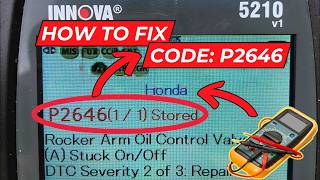
🎬 Watch: A complete overview of the P2646 code and its fixes.Can I Drive With P2646?
Yes, But With Caution. You can drive, but prolonged driving risks internal engine damage. Your engine will have noticeably less power, is often stuck in 'limp mode' (capping RPMs around 3,000), and gets poor fuel economy. This makes highway merging sluggish and unsafe. Continuing to drive with insufficient oil pressure turns a cheap sensor repair into a major engine overhaul. Address the issue immediately.
Common Causes

- Low, Dirty, or Incorrect Engine Oil (Very Common) — The variable valve timing system relies entirely on oil pressure. Low fluid levels, heavy sludge, or using the wrong viscosity (e.g., 10W-40 instead of 5W-20) prevents the system from building enough pressure to activate the actuator.
- Clogged Solenoid Gasket/Filter Screen (Very Common) — The solenoid assembly uses small mesh filter screens to block debris. These screens frequently clog with engine sludge, severely restricting oil flow and preventing system activation.
- Faulty Rocker Arm Oil Pressure Switch (Common) — This sensor tells the PCM if sufficient oil pressure exists to engage the system. When it fails or leaks, it incorrectly reports low pressure, triggering the code even when mechanical parts function perfectly.
- Faulty Rocker Arm Oil Control Solenoid (Common) — This electronically controlled valve directs oil pressure to the actuator. It fails electrically, sticks mechanically, or clogs internally. Cheap aftermarket replacements also have notoriously high failure rates out of the box.
- Corroded Connectors or Damaged Wiring (Common) — Electrical connectors for the solenoid and pressure switch are prone to water intrusion (especially on Honda Elements). This causes corrosion and poor electrical contact, mimicking a failed sensor.
- Restricted Internal Oil Passages (Rare) — In engines with severe sludge buildup from neglected maintenance, internal oil passages within the cylinder head block completely, starving the system of oil even if the pump and solenoid work.
- Faulty Powertrain Control Module (PCM) (Very Rare) — The PCM itself fails and misinterprets signals or fails to send commands. Consider this only after exhausting all hydraulic and electrical diagnostics.
Symptoms

- Poor Fuel Economy — Because the engine cannot operate in its optimal high-RPM valve timing range, fuel consumption noticeably increases.
- Engine Ticking or Noisy Valve Train — A loud ticking or clicking noise emits from the top of the engine due to oil starvation at the rocker arms.
- Engine in 'Limp Mode' (Limited RPM) (also visible on scanner) — To protect the engine, the PCM restricts RPMs (typically capping at 2,800-3,500 RPM). The vehicle feels weak, hesitates, and bucks during hard acceleration.
- Check Engine Light is On — The PCM illuminates the Malfunction Indicator Lamp (MIL) immediately when this code stores.
Diagnostic Flowchart
Tap your situation to follow the diagnostic path that matches what you're seeing on this code.
Common Fixes & Costs
- Engine Oil and Filter Change — Parts: $30-$70, Labor: $50-$100, ~0.5 hr book time (DIY)
- Replace VTEC Solenoid Gasket/Screen
— Parts: $10-$30, Labor: $75-$150, ~1.0 hr book time
(Intermediate)
Honda (K24 Engine): OEM 15815-RAA-A02 (Spool Valve Filter), 15845-RAA-A01 (VTC Strainer) (Alt: Dorman, Beck/Arnley) - Replace Rocker Arm Oil Pressure Switch
— Parts: $30-$60, Labor: $100-$150, ~0.7 hr book time
(DIY)
Honda (K24 Engine): OEM 37250-PNE-G01 (Alt: Standard Motor Products (PS418), Denso) - Replace Rocker Arm Oil Control Solenoid (VTEC Assembly)
— Parts: $150-$300, Labor: $150-$250, ~1.2 hr book time
(Intermediate)
Honda (K24 Engine): OEM 15810-RAA-A03 (Alt: Avoid aftermarket; high failure rate)
Chevrolet (2.5L Ecotec): OEM 19419980 (Alt: Dorman 916-999) - Repair Corroded Electrical Connector Pigtail — Parts: $15-$40, Labor: $100-$200, ~1.2 hr book time (Intermediate)
DIY vs Professional
- Engine Oil and Filter Change — Beginner:
Tools: Wrench for drain plug, oil filter wrench, drain pan, funnel. - Replace VTEC Solenoid Gasket/Screen — Beginner:
Tools: Basic socket set (10mm), ratchet, rags, brake cleaner. - Replace Rocker Arm Oil Pressure Switch — Beginner:
Tools: Deep socket or oil pressure switch socket, ratchet. - Replace Rocker Arm Oil Control Solenoid — Beginner:
Tools: Socket set (10mm), ratchet, torque wrench, rags. - Repair Corroded Electrical Connector Pigtail — Beginner:
Tools: Wire cutters/strippers, crimping tool or soldering iron, heat shrink tubing.
Used vs. New Parts: Buying Guide
When a used part is worth it: A used OEM VTEC Solenoid Assembly from a low-mileage donor vehicle is highly preferable to a cheap, new aftermarket part, which has a massive failure rate.
Donor-vehicle mileage cap: roughly under 80000 miles for the part to have meaningful remaining life.
Donor quality checklist:
- Verify the donor vehicle was not scrapped for engine failure or sludge issues.
- Match the part number exactly; superseded numbers have slight differences.
- Inspect the part for physical damage and ensure the filter screen is clean.
Decision logic:
- If Vehicle is < 80K miles and you plan to keep it long-term → Buy a new OEM part. The reliability is worth the cost.
- If Vehicle is > 150K miles and budget is the primary concern → A used OEM part is an acceptable risk. Expect it to have 40-70% of its life remaining.
- If The code returned after installing a new aftermarket part → Replace with a new OEM or a tested, used OEM part immediately.
Warranty tradeoff: Used parts typically have a 30-90 day functional warranty. New OEM parts usually carry a 1-year warranty.
Worst-case if a used part fails: $250-$500 if a cheap aftermarket part fails shortly after installation, requiring repeat labor and a new OEM part.
What Happens If You Wait — Timeline
- 0-2 weeks: Code sets, Check Engine Light is on. The car enters 'limp mode' (RPM limited to ~3000) during hard acceleration or highway driving. (MPG impact: 0-5%% · Added cost: $0)
- 2 weeks - 3 months: Limp mode becomes predictable. Sluggish acceleration is consistent. Fuel economy drops as the engine cannot use its efficient high-RPM mode. (MPG impact: 5-15%% · Added cost: $20-$60 in wasted fuel per month.)
- 3-6 months: Continued operation with insufficient oil pressure accelerates wear on rocker arms and camshaft lobes. (MPG impact: 10-20%% · Added cost: $500-$1500 (Camshaft or rocker arm damage).)
- 6+ months: Severe risk of major internal engine damage. Complete valvetrain failure due to oil starvation requires a cylinder head rebuild or engine replacement. (MPG impact: 15-25%% · Added cost: $2,500-$7,000+)
Cost of Not Fixing It
- 0-1 month: Persistent limp mode caps RPMs at 3,000, making highway merging unsafe. Fuel economy drops 5-15%. (Added cost: $20-$50 per month in extra fuel costs.)
- 1-6 months: Operating with insufficient valvetrain oil pressure accelerates wear on rocker arms and camshafts. (Added cost: $500-$1500 for minor valvetrain repairs.)
- 6+ months: Catastrophic internal engine damage. Valvetrain failure scores camshafts, requiring a cylinder head rebuild or engine replacement. (Added cost: $2,500-$7,000+)
Diagnosis Steps
- Check Engine Oil Level, Condition, and Viscosity
Park on a level surface and check the dipstick. If the oil is low, top it off. If it is dark, sludgy, or past its change interval, perform an oil change. Verify you are using the manufacturer-recommended oil weight (e.g., 5W-20).
Tools: Dipstick, clean rag, funnel, drain pan, oil filter wrench, appropriate socket for drain plug (Beginner) - Check for Manufacturer TSBs
Search for Technical Service Bulletins (TSBs) for your specific make and model. Toyota issued TSBs for Corolla/C-HR models requiring an ECM software update. Honda issued TSB A-13-021 recommending oil pressure switch replacement for intermittent codes.
Tools: Internet access or repair manual (Beginner) - Inspect Solenoid Filter Screens
Remove the VTEC solenoid assembly (typically held by three 10mm bolts). Inspect the integrated gasket and mesh screen for sludge. Check the secondary filter screen on the front/side of the cylinder head. A clogged screen confirms an oil flow restriction.
Tools: 10mm socket, ratchet, brake cleaner, clean rags (Intermediate) - Inspect Electrical Connectors
Visually inspect the electrical connectors for the solenoid and oil pressure switch. Look for green/white corrosion, pushed-out pins, or oil contamination. On Honda Elements, check for water dripping from the windshield cowl directly onto these connectors.
Tools: Flashlight, electrical contact cleaner (Beginner) - [PRO TIP] Check Live Data with a Scan Tool
Connect a bi-directional scan tool. Monitor the VTEC Pressure Switch PID. With key on/engine off, it reads OFF. Command a VTEC test (or drive above 3,000 RPM); it must switch to ON. Failure to switch indicates a pressure failure or bad switch.
Tools: Bi-directional scan tool (Advanced) - [PRO TIP] Test the Oil Pressure Switch Circuit
Unplug the pressure switch connector. Use a multimeter to verify 5V or 12V reference voltage at the harness. Test the switch itself: it must have continuity (closed circuit) with the engine off, and no continuity (open circuit) when the engine runs and RPMs increase.
Tools: Multimeter, wiring diagram (Advanced) - [PRO TIP] Test the Oil Control Solenoid
Check the solenoid coil resistance with a multimeter (Honda K-series typically read 14-30 Ohms). Apply a 12V power source to the terminals and listen for a sharp 'click'. A click confirms the electrical coil works, but does not rule out a mechanical internal clog.
Tools: Multimeter, 12V power source, jumper wires (Advanced) - [PRO TIP] Perform a Mechanical Oil Pressure Test
Remove the oil pressure switch and install a mechanical gauge. Start the engine and use a scan tool to activate the VTEC solenoid. Pressure must jump to the manufacturer spec (e.g., >57 psi). If pressure fails to rise, the issue is hydraulic. If pressure is good, the issue is electrical.
Tools: Mechanical oil pressure gauge with adapter, bi-directional scan tool (Expert)
When This Code Triggers (Freeze-Frame Conditions)
- Engine Coolant Temp: 180-200°F (Engine at full operating temperature.)
- RPM: 2500-3500 (During acceleration when VTEC is commanded to engage.)
- Engine Load: 30-60% (Moderate acceleration or steady cruise.)
- Vehicle Speed: 35-55 mph (City or highway driving under load.)
Related Codes
- P2647 — The opposite code (Stuck On). They share identical causes and diagnostic steps. P2646 sets when commanded ON with no pressure; P2647 sets when commanded OFF but pressure remains.
- P0011 — 'A' Camshaft Position - Timing Over-Advanced. A P2646 fault causes P0011 because cam timing cannot adjust without proper oil pressure. Fix P2646 first.
- P3400 / P3497 — Cylinder Deactivation System codes. On Honda V6 engines, seeing these alongside P2646 strongly points to a systemic oil pressure issue (low level, severe sludge, failing oil pump).
- P1009 — VTC Advance Malfunction. A Honda-specific code often paired with P2646, reinforcing that the root issue is oil pressure or sludge blocking the VTC/VTEC components.
Climate & Environmental Factors
- Cold Weather: Cold temperatures thicken engine oil. Using oil heavier than the manufacturer's recommendation (e.g., 10W-40 instead of 5W-20) prevents proper flow through VTEC passages on cold starts, triggering P2646.
- High Humidity & Rain: On Honda Elements, a design flaw allows water to leak from the windshield cowl directly onto the VTEC solenoid connectors. This causes rapid corrosion and false low-pressure readings.
How to Talk to a Mechanic About This Code
Say this: "I have a P2646 code on my [Make, Model]. I've already verified the oil level and condition are correct. Can you please start by inspecting the VTEC solenoid screens, the pressure switch, and the related wiring for corrosion?"
This signals you are an informed customer. It directs the shop to the cheapest failure points first, preventing them from immediately quoting a full $600 solenoid replacement.
Avoid saying:
- 'My check engine light is on, can you look at it?'
- 'My car is acting funny and feels slow.'
- 'Just fix whatever is wrong with it.'
Questions to ask before authorizing the repair:
- Did you find the VTEC filter screens to be clogged with sludge?
- Did you test the oil pressure switch, and did it pass or fail?
- Is there any visible corrosion on the electrical connectors for the solenoid or switch?
- If you are recommending a solenoid replacement, are you using an OEM part or an aftermarket one?
- If the quote is over $600, can you explain exactly what parts and labor are included?
Where to Take It: Dealer vs Independent vs Chain
- Dealer:
Recommended for specific TSB-related software fixes or as a last resort for complex diagnostics. For most common P2646 causes, an independent shop is better.
Best for: Vehicles where a known TSB exists for a software update (certain Toyotas)., Vehicles still under powertrain warranty., When you suspect a complex electrical or PCM issue.
Downsides: Highest labor rate., Quick to replace the entire expensive solenoid assembly rather than starting with the $15 gasket. (Typical cost: +50% vs. baseline) - Independent Shop:
Best overall fit. An experienced independent mechanic diagnoses this common code efficiently without automatically replacing the most expensive part.
Best for: Out-of-warranty vehicles, especially common ones like Honda and Toyota., Diagnosing and repairing the most common causes: clogged screens and faulty switches.
Downsides: Quality varies. Look for shops specializing in your vehicle's make., May lack manufacturer-specific diagnostic software for ECU updates. (Typical cost: +0% vs. baseline) - Chain Shop:
Acceptable for an oil change, but AVOID for diagnosing the P2646 code itself.
Best for: Getting an oil and filter change if it is overdue.
Downsides: Technician diagnostic experience is highly variable., High pressure to upsell services; lacks the specific expertise to diagnose beyond the basics. (Typical cost: -10% vs. baseline)
When to Walk Away From the Repair
If the total estimated repair cost for P2646 exceeds 40-50% of your car's private-party value, evaluate your options, especially on an older vehicle.
- Car worth $4500, fix is $2000: Walk away. A $2,000+ quote on a $4,500 car means the shop suspects major internal engine damage or is overcharging.
- Car worth $8000, fix is $500: Fix it. A $500 repair for a new OEM solenoid assembly on a car worth $8,000 is a sound investment.
- Car worth $3000, fix is $150: Fix it. If the fix is a simple oil change or a new pressure switch, it is highly cost-effective.
What Scan Tool You Need for This Code
Minimum: A basic OBD-II code reader confirms P2646 is the issue and resets the light after a simple repair like an oil change.
A basic reader cannot show live data (like the VTEC pressure switch status) or command the VTEC solenoid to activate for testing. For anything beyond an oil change, you are guessing.
Budget: ANCEL MT500 / MUCAR CDE900 (~$70) — Reads/clears codes and shows live data streams. Allows you to watch the VTEC pressure switch PID to see if it changes state when you drive.
Mid-range: Foxwell NT510 Elite / NT710 (Honda Specific) (~$150) — Provides bi-directional control. Allows you to command the VTEC solenoid ON and OFF while the engine runs to test the complete circuit.
Professional: Autel MaxiCOM MK808BT / Launch X431 Series (~$450-600) — Offers full professional-level bi-directional control and advanced data graphing to diagnose complex electrical issues.
Rent vs buy: You can get a free scan at most auto parts stores. However, to properly diagnose this issue yourself, you need to see live data or perform an active test, which rental tools cannot do. Buying a mid-range scanner is a worthwhile investment.
How to Clear the Code After You Fix It
- Use an OBD-II scan tool to clear the diagnostic trouble code.
- Perform a complete drive cycle to allow readiness monitors to run.
Drive cycle (~30 minutes): Perform a cold start, idle for 3 minutes. Drive in mixed city/highway conditions, including 5 minutes of steady-state cruising between 45-60 mph. Allow the vehicle to cool down completely and repeat.
Readiness monitors affected: Catalyst Monitor, Evaporative System Monitor, Oxygen Sensor Monitor, Comprehensive Component Monitor
Before emissions retest: drive at least 100 miles to fully set monitors.
Watch out for:
- The code returns immediately if the root cause (e.g., low oil, clogged screen) was not fixed.
- Disconnecting the battery clears the code but resets all readiness monitors, guaranteeing an emissions test failure.
- An intermittent fault causes the code to clear on its own after several successful drive cycles, giving a false sense of repair.
Will This Fail Emissions / State Inspection?
Yes — this code typically fails an OBD-II emissions inspection.
- California: An illuminated Check Engine Light from code P2646 is an automatic failure. All applicable OBD readiness monitors must be set to 'Ready' to pass.
- New York: The NYS DMV emissions inspection includes an OBD-II scan. An active P2646 code results in an automatic failure.
- Texas: In the 17 counties requiring emissions testing, an illuminated Check Engine Light causes an automatic failure.
Most Commonly Affected Vehicles

- Honda CR-V (2002-2009) — Extremely common on the K24 engine. TSB A-13-021 addresses intermittent codes by replacing the oil pressure switch.
- Honda Accord (2003-2012) — The 2.4L 4-cylinder (K24) engine is highly susceptible. Diagnosis usually leads to clogged VTEC solenoid screens.
- Honda Element (2003-2011) — Notorious for this code due to water leaking from the windshield cowl directly onto the VTEC solenoid's electrical connectors.
- Acura RSX (2002-2006) — Uses the K20 engine. High-RPM driving accelerates oil degradation, leading to clogged VTEC screens.
- Honda Civic (2002-2013) — Especially common on Si models with K-series engines. TSB A-13-021 applies to the 2002-2005 Si.
- Chevrolet Malibu (2013-2015) — Common on the 2.5L Ecotec engine. GM issued special coverage (N192289160) extending the warranty for the intake rocker arm oil control valve to 10 years/120,000 miles.
- Toyota Corolla (2014-2020) — Affects the 2ZR-FAE Valvematic engine. Toyota TSBs indicate an ECM software glitch requiring a dealer reprogram.
- Toyota C-HR (2018-2021) — TSB T-SB-0098-19 applies to these models. The cause is often related to the continuously variable valve lift controller assembly or its software.
Manufacturer-Specific Notes
- Honda/Acura: Overwhelmingly common on K-series (2.4L/2.0L) engines. Honda TSB A-13-021 addresses intermittent P2646/P2647 codes by recommending the replacement of the rocker arm oil pressure switch.
- Toyota: On Valvematic engines, this code is frequently a software glitch. TSBs T-SB-0011-14 and T-SB-0098-19 require an ECM calibration update via Toyota's Techstream software.
- Chevrolet/GM: On the 2.5L Ecotec, this points directly to the intake rocker arm oil control valve. TSB 21-NA-274 notes that if the old valve breaks apart internally, the camshaft cover must also be replaced to remove debris.
Real Owner Stories
2004 Honda CR-V with ~200k km
Check engine light came on, car went into limp mode (stuttering, loss of power above ~2900 RPM).
What they tried:
- Performed an oil change and inspected the VTEC solenoid filter screen.
- Found the filter was clogged and the gasket was cracked.
Outcome: Replaced the solenoid filter/gasket. After a 10-mile drive, the check engine light turned off and normal power was restored.
Lesson: Always check the simple and cheap fixes first. A clogged $15 VTEC filter screen is a very common cause of P2646.
2007 Honda Element with 170k miles
Intermittent P2646 code, especially after rain or driving through puddles, causing limp mode.
What they tried:
- Multiple shops replaced the VTEC solenoid and oil pressure switch, but the code kept returning.
- Owner noticed water dripping onto the engine near the solenoid after rain.
- Sealed leaking windshield washer nozzles.
- Replaced the corroded electrical connector (pigtail) for the oil pressure switch.
Outcome: Sealing the water leak and replacing the corroded connector permanently solved the problem.
Lesson: On Honda Elements, water intrusion is a primary suspect. If the code appears in wet conditions, inspect for leaks from the windshield cowl onto the VTEC wiring before replacing parts.
2006 Honda CR-V fighting P2646 for a year
Car constantly went into limp mode within 3 miles of driving, despite numerous repairs.
What they tried:
- Replaced the VTEC solenoid twice.
- Replaced the front VTC filter screen behind the tensioner pulley.
- Performed multiple engine oil treatments and oil changes.
Outcome: After replacing all mechanical components, a shop used a Honda Diagnostic System (HDS) to load-test the wiring circuits and found an intermittent short between the pressure switch and the ECU.
Lesson: If you replace all common mechanical culprits (oil, screens, switch, solenoid) and the code persists, the problem is electrical. Stop throwing parts at it and test the wiring harness.
How to Prevent This Code From Triggering
- Perform regular oil changes with high-quality oil. (Per manufacturer's schedule (e.g., 5,000-7,500 miles).) — Prevents the formation of engine sludge, which is the primary cause of clogged oil passages and filter screens that trigger P2646.
- Use the correct oil viscosity. (Every oil change.) — The VTEC system requires a specific oil weight (like 5W-20) to flow quickly through small passages. Thick oil cannot build pressure fast enough.
- Avoid frequent short trips. (Daily habit.) — Short drives prevent the engine from reaching full operating temperature, allowing moisture to contaminate the oil and accelerate sludge formation.
- Replace VTEC filter screens proactively. (Every 60,000-80,000 miles.) — The small mesh screens inevitably collect debris over time. Replacing them proactively is cheap insurance against a sudden limp mode event.
- For Honda Element owners: Seal windshield cowl and washer nozzles. (Once, or if a leak is detected.) — Prevents water from dripping directly onto the VTEC solenoid's electrical connectors, a known design flaw that causes corrosion.
Frequently Asked Questions
Can low engine oil really cause code P2646?
Yes. The variable valve timing system relies entirely on oil pressure to function. Low or heavily sludgy oil prevents the system from building enough pressure to activate the rocker arms.
Will an oil change fix a P2646 code?
If the code was triggered by low oil, dirty oil, or the wrong oil viscosity, a simple oil and filter change often resolves it. Always clear the code afterward and test drive to confirm.
I replaced the VTEC solenoid and the code came back. What now?
First, verify you used an OEM part, as cheap aftermarket solenoids fail frequently out of the box. Next, check the secondary VTC filter screen and inspect the electrical pigtail for hidden corrosion.
What are the most common misdiagnosis mistakes for P2646?
The biggest mistake is replacing the expensive VTEC solenoid assembly before checking the oil level or the $15 filter screens. Another common error is using cheap aftermarket parts that fail to meet OEM pressure calibrations.
Can I just clean the VTEC solenoid screen instead of replacing it?
You can clean the screen with brake cleaner, but the integrated rubber gasket is usually brittle and leaks if reused. Since a new gasket/screen assembly costs under $30, replacement is the smartest choice.
My Honda Element gets this code when it rains. What's the connection?
A known design flaw allows water from the windshield cowl to drip directly onto the VTEC solenoid connectors. This moisture causes electrical corrosion, leading to a false low-pressure signal. Sealing the leak and replacing the connector pigtail permanently fixes this.
Should I use an engine flush to fix P2646?
Avoid harsh chemical flushes, as they dislodge large chunks of sludge that permanently block critical oil passages. Instead, perform a standard oil change using high-quality synthetic oil and a premium filter.
Key Takeaways
- Check your engine oil first; low fluid levels or incorrect viscosity (like 10W-30 instead of 5W-20) cause over 50% of P2646 codes.
- Do not immediately replace the $200+ VTEC solenoid; a clogged $15 filter screen or a faulty $40 oil pressure switch are far more likely culprits.
- Driving with a P2646 code forces the engine into 'limp mode' (capping RPMs around 3,000) and risks catastrophic valvetrain damage if oil starvation is the root cause.
- If you drive a 2003-2011 Honda Element, inspect the VTEC electrical connectors for water intrusion from a leaking windshield cowl before buying any parts.
Helpful Videos

![SOLVED! P2646 CODE: How To Remove Replace Re-Install HONDA VTC Filter Strainer & Gasket [FULL VIDEO]](https://img.youtube.com/vi/QKpxe5_6w8I/mqdefault.jpg)

The information in this article is provided for general reference and educational purposes only. Vehicle specifications, procedures, and part compatibility can vary by production date, trim level, and region. Always consult your vehicle's factory service manual and verify part numbers before purchasing or performing repairs. Safety-critical components such as airbags, seat belts, and braking systems should be installed by a qualified professional.
- 🎬 Helpful Videos
- What Does P2646 Mean?
- Can I Drive With P2646?
- Common Causes
- Symptoms
- Diagnostic Flowchart
- Common Fixes & Costs
- DIY vs Professional
- Used vs. New Parts: Buying Guide
- What Happens If You Wait — Timeline
- Cost of Not Fixing It
- Diagnosis Steps
- When This Code Triggers (Freeze-Frame Conditions)
- Related Codes
- Climate & Environmental Factors
- How to Talk to a Mechanic About This Code
- Where to Take It: Dealer vs Independent vs Chain
- When to Walk Away From the Repair
- What Scan Tool You Need for This Code
- How to Clear the Code After You Fix It
- Will This Fail Emissions / State Inspection?
- Most Commonly Affected Vehicles
- Manufacturer-Specific Notes
- Real Owner Stories
- 2004 Honda CR-V with ~200k km
- 2007 Honda Element with 170k miles
- 2006 Honda CR-V fighting P2646 for a year
- How to Prevent This Code From Triggering
- Frequently Asked Questions
- Can low engine oil really cause code P2646?
- Will an oil change fix a P2646 code?
- I replaced the VTEC solenoid and the code came back. What now?
- What are the most common misdiagnosis mistakes for P2646?
- Can I just clean the VTEC solenoid screen instead of replacing it?
- My Honda Element gets this code when it rains. What's the connection?
- Should I use an engine flush to fix P2646?
- Key Takeaways
- 🎟️ Get 5% Off