

P2636 on 2012-2016 GMC Sierra Denali: Fuel Transfer Pump and Gauge Issues Explained
P2636 on your Sierra Denali means the secondary fuel pump is failing to transfer fuel from the rear tank to the front tank. This causes the fuel gauge to read empty and can lead to stalling. Common causes include a faulty fuel transfer pump, a kinked or clogged vent hose, or simply refueling with the engine running. This issue is most prevalent on Chassis Cab models with the dual-tank option (RPO N2N).
- P2636 on a dual-tank Sierra means the rear tank isn't sending fuel to the front tank.
- Before any repairs, ensure you are not refueling with the engine running, as this is a known cause.
- The most common mechanical failures are the transfer pump itself or a kinked/clogged fuel line between the tanks.
- Your fuel gauge will be unreliable, so track your mileage to avoid stalling until the issue is fixed.
- Check if your vehicle is covered by recall #17067, which provides a free fix for this exact problem on affected models.
What's Unique About the 2012-2016 Gmc SIERRA DENALI
The 2012-2016 Sierra Denali range, particularly the HD Chassis Cab models with the 6.6L LML Duramax diesel engine and the dual-tank option (RPO N2N), has a specific fuel system architecture vulnerable to this code. The system uses a transfer pump to make all fuel accessible to the engine's primary supply. GM has issued multiple Technical Service Bulletins (TSBs) because this transfer process can be interrupted by several known issues, from operator habits like refueling with the engine on, to specific hardware failures like kinked lines or faulty pumps. Emission Recall #17067 was a significant action that involved not just an ECM reprogram but also replacing fuel line connections to alter how fuel is supplied from the rear tank.
Diagnostic Flowchart
Tap your situation to follow the diagnostic path that matches what you're seeing on this vehicle.
Generation note: The 2012-2016 model years cover the end of the GMT900 platform (2012-2013) and the beginning of the K2XX platform (2014-2016). The dual-tank fuel transfer issue and the P2636 code are documented in TSBs that apply to vehicles in both generations, indicating a shared system design and vulnerability, especially in the HD Chassis Cab configurations.
Symptoms You May Notice
- Check Engine Light (Malfunction Indicator Lamp) is on
- Fuel gauge reads empty, even after filling the tank.
- Low fuel warning light is illuminated.
- Engine may stall while driving if the front tank runs out of fuel.
- Possible hesitation or loss of power under acceleration.
- Inability to fill the front tank completely if the transfer pump has failed in a way that blocks a line.
- Replacing the primary fuel pump in the front tank when the issue is with the secondary transfer pump in the rear tank.
- Replacing the fuel level sending units without first checking the transfer pump's operation and associated lines.
- Replacing the fuel transfer pump when the actual cause is a simple kink in the transfer line or a clogged vent.
Most Likely Causes
- Refueling with the engine running or ignition on 🔴 High Probability The fuel level sensing system performs a self-check during refueling. If the engine is on, the changing fuel levels can confuse the ECM's logic, making it assume a transfer pump fault. GM specifically warns against this in TSBs #PIT5208A and #PIT5510C.
How to confirm: Ask the primary driver about their refueling habits. If they refuel with the vehicle on, clear the code, turn the vehicle completely off, refuel, and then start the vehicle to see if the code returns.
Typical fix: Turn the vehicle completely off before refueling. Clear the DTC. This simple habit change often resolves the issue permanently.
Est. part cost: $0 - Faulty or failed fuel transfer pump 🟡 Medium Probability As outlined in multiple TSBs and confirmed by owner experiences, the transfer pump itself can fail, not moving fuel at a sufficient rate. These pumps are known to wear out, and sometimes even after recall work is done, the pump can fail years later.
How to confirm: A technician can use a scan tool to command the transfer pump on and perform a flow test. Per TSB #PIT5510, the pump should transfer more than 2.6 liters (0.70 gallons) in 2 minutes. A lack of flow, assuming the lines are clear, points to a bad pump.
Typical fix: Replace the rear fuel tank's transfer pump module. On some models, this is an in-tank pump assembly.
Est. part cost: $150-$400 - Kinked or plugged fuel tank fill/vent hose 🟡 Medium Probability TSB #PIT5510C and its revisions specifically call out that a kinked fuel transfer line can restrict flow and cause P2636. The line can be kinked during shipping, installation of the utility bed on chassis cabs, or during previous repairs. The bulletin advises technicians to inspect the line even if it's a new part.
How to confirm: Visually inspect the fuel lines between the rear and front tanks. The line is often covered in a protective conduit which must be slid back to properly check for kinks.
Typical fix: Replace the kinked fuel transfer line kit. GM released an updated part (Part No. 84214102 for some models) to address this.
Est. part cost: $50-$100 - Outdated Engine Control Module (ECM) Software ⚪ Low Probability TSB #PIT5510C notes that new ECM calibrations were released to improve the system's diagnostic logic and prevent false codes. Emission Recall #17067 also includes an ECM reprogram as part of the fix.
How to confirm: A GM dealer or a shop with a subscription to GM's service information can check the current calibration of your ECM against the latest available version for your VIN.
Typical fix: Reprogram the ECM with the latest software calibration. This is often done in conjunction with other repairs like the hose kit replacement.
Est. part cost: $0 if part of a recall, otherwise $100-$200 for labor.
Rare But Worth Checking
- Wiring or Connector Issues: The fuel pump control module (FPCM) and pump wiring are located on the frame rail, making them susceptible to moisture and corrosion, which can cause poor connections or shorts. The FPCM ground on the driver's side frame rail is a common point of failure.
- Clogged Rear Tank Vent: TSB 19-NA-277 (though not exclusively for P2636) describes how dirt and debris can clog the rear tank's vent. This can create a vacuum as the transfer pump operates, eventually causing the tank to deform or collapse, which can restrict fuel pickup and trigger a low-flow code. The fix involves adding a vent hose extension.
Diagnosis Steps
- Verify the driver's refueling habits. Ensure the vehicle is always off during refueling. Clear codes and see if the problem returns.
- Scan for other DTCs. Codes related to fuel level sensors (P0461, P2066) are common companions and can help confirm a fuel system issue.
- Check for applicable TSBs and recalls for your specific VIN. A dealer can confirm if software updates or recall repairs (like #17067) are pending.
- Visually inspect the fuel lines running between the two tanks. Slide back any protective conduit and look carefully for any kinks, especially in the transfer line, as noted in TSB #PIT5510D.
- Using a capable scan tool, monitor the fuel level sensor data for both tanks. According to forum discussions, the transfer pump should activate when the front tank is below ~17 gallons and the rear tank is above ~3 gallons, and shut off when the front tank reaches ~21 gallons. Observe if the levels change as expected when commanding the pump on.
- Perform a fuel transfer pump flow test as described in TSB #PIT5510. Command the pump to run for 2 minutes and verify it can move at least 2.6 liters (0.70 gallons) into a measuring container.
- If flow is low, inspect the wiring and connectors for the transfer pump and Fuel Pump Control Module (FPCM) for corrosion or damage. The FPCM is often on the frame rail and exposed to the elements.
- Check the rear tank vent for blockages. A clogged vent can create a vacuum and restrict flow.
- If wiring and vents are good but flow is low, the fuel transfer pump is the likely culprit and should be replaced.
Parts You'll Likely Need
- Fuel Transfer Pump
(OEM #ACDelco MU1749 (example, verify by VIN))— This pump is responsible for moving fuel between tanks. Its failure is a primary cause of the P2636 code.
Trusted brands: ACDelco, Delphi
OEM price range: $250-$400
Aftermarket price range: $150-$250 - Fuel Transfer Line Kit
(OEM #84214102)— A kinked or damaged transfer line will restrict fuel flow and trigger this code, as identified in TSB #PIT5510D. This part is often required to fix the issue.
Trusted brands: ACDelco, GM Genuine Parts
OEM price range: $70-$120
Aftermarket price range: $40-$80 - Hose Kit (For Recall 17067)
(OEM #84525925)— This is the specific kit used by dealers to perform the fix for Emission Recall #17067, which re-plumbs the fuel system and requires an ECM reprogram.
Trusted brands: GM Genuine Parts
OEM price range: $80-$150
Aftermarket price range: N/A
Related Codes That Often Appear With This One
- P0461 — Relates to the Fuel Level Sensor 'A' Circuit Range/Performance. Often appears with P2636 because the transfer failure causes illogical readings from the fuel level sensors.
- P2066 — Relates to the Fuel Level Sensor 'B' Circuit Performance. This is the sensor in the secondary tank, and its reading is critical for the ECM to determine if the transfer pump is working.
- P0087 — Indicates Fuel Rail/System Pressure Too Low. This can occur if the front tank runs dry because the transfer pump failed to replenish it.
Technical Service Bulletins (TSBs) & Recalls
- 17067: Addresses insufficient fuel transfer rate on 2015-2016 diesel models, causing P2636. The fix involves a new hose kit and ECM reprogram.
- PIT5212B / PIT5212A: Notes that P2636 can appear with other codes and advises updating scan tool software before diagnosis.
- PIT5208A: Identifies refueling with the engine on as a cause for P2636 and an empty gauge reading on 2007-2013 models.
- PIT5510A / PIT5510C / PIT5510D: Points to a faulty/kinked fuel tank fill vent hose as a cause for P2636 and provides a detailed repair procedure, including warnings about repeat failures from kinked replacement lines.
- 19-NA-277: While addressing a collapsed rear tank, it highlights how a clogged tank vent can impede fuel flow, a potential root cause for a P2636 code.
Platform-Specific Known Issues
- Emission Recall #17067 was issued for 2015-2016 diesel models (6.6L LML) with dual tanks (RPO N2N) because fuel may not transfer at a sufficient rate. The fix involves replacing fuel line connections with kit #84525925 to allow the rear tank to supply the engine directly, plus an ECM reprogram.
- TSB #PIT5208A specifically warns that refueling with the engine or ignition on can cause a false P2636 code on 2012-2013 models with dual tanks.
- TSB #PIT5510D provides detailed instructions for 2016 models on how to inspect for a kinked fuel transfer line and reroute it, indicating a known installation or design issue. It even warns that new replacement lines can be kinked out of the box.
Mechanic-Grade Diagnostic Values
- Fuel Transfer Pump Flow Rate — expected: Greater than 2.6 liters (0.70 gallons) in 2 minutes. Failure: Less than 2.6 liters in 2 minutes indicates a restriction (kinked line, clogged vent) or a failing pump.
- FPCM Ground Resistance (Pin 1, Black wire) — expected: Less than 1 ohm to a clean chassis ground. Failure: High resistance points to a corroded or broken ground connection on the frame rail.
- FPCM Constant Power (Pin 32, Red/White wire) — expected: 12V+ (Battery Voltage) at all times. Failure: No voltage suggests a blown fuse (check FSCM fuse) or a break in the power wire.
- FPCM Ignition Power (Pin 15, Pink wire) — expected: 12V whenever ignition is ON. Failure: No voltage points to an issue with the ignition circuit or fuse supplying the FPCM.
- FPCM Pump Command Signal (Pin 13, Dark Green/White wire) — expected: 12V for 2-6 seconds when key is first turned to 'ON'. Failure: No voltage indicates a problem with the ECM or the signal wire between the ECM and FPCM.
- Live Data: Transfer Pump Activation — expected: Pump turns ON when front tank is < 16.9 gallons AND rear tank is > 2.6 gallons.. Failure: Pump does not activate under these conditions.
- Live Data: Transfer Pump Deactivation — expected: Pump turns OFF when front tank reaches 20.9 gallons.. Failure: Pump continues to run or shuts off prematurely.
Scan Tool Commands That Help
- GDS2 / Tech2: Fuel Pump Relay 2 ON/OFF Command — Use this bidirectional control to manually activate the secondary (transfer) fuel pump. This allows a technician to verify the FPCM, relay, and pump are functional and to perform a flow test without relying on the automatic system logic.
Wiring & Ground Locations
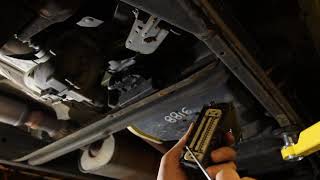
- Fuel Pump Control Module (FPCM) — On the driver's side frame rail, often in front of the spare tire or between the doors under the vehicle.. This module directly controls the transfer pump. Its location makes it highly susceptible to corrosion from road salt and moisture, leading to poor connections, internal failure, and triggering P2636.
- FPCM Ground — The FPCM's primary ground connection is typically a black wire (Pin 1) bolted directly to the driver's side frame rail near the module itself.. A corroded or loose ground is a very common point of failure. It creates high resistance, causing the FPCM to malfunction and incorrectly report a pump low-flow condition to the ECM.
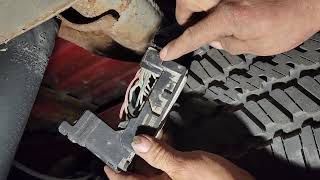
- FPCM Connector Pin 13 (Dark Green/White) — At the main electrical connector for the Fuel Pump Control Module.. This pin receives the 'pump on' command signal from the ECM. Testing for voltage here is a critical step to determine if a failure is with the pump/FPCM or if the ECM is not sending the command.
- Underhood Fuse Block Fuses — In the main fuse box under the hood on the driver's side.. Check fuse 21 (FSCM) and fuse 18 for the 2014-2017 models. These provide power to the fuel system control module and are a primary check for any no-power situation at the FPCM.
Real Owner Repair Stories
- DuramaxDiesels.com Forum (2016 GMC Sierra 3500 Chassis Cab w/ 6.6L LML) — Code P2636 for insufficient flow returned, even after the recall kit (#17067) had been installed and worked correctly for two years.
❌ Tried (didn't work) Visual inspection of the feed line for kinks., Verifying the rear tank breather was open.
✅ What actually fixed it The user suspected the transfer pump itself had failed despite being commanded 'on' by a scan tool. They ordered a new transfer pump, believing the original had worn out even after the recall modifications. The final fix was replacing the transfer pump.
OEM Part Supersession History
PIT5510B→PIT5510C, then PIT5510D— The service bulletin was updated to add a specific diagnostic tip: inspect the new fuel transfer line for kinks before installation, as this was causing repeat failures.
Model Year Variations Within This Range
- 2015-2016: These model years were subject to Voluntary Emission Recall #17067. The fix involved replacing fuel line connections to allow the rear tank to supply the engine directly (in addition to the front tank) and reprogramming the ECM. This changes the fundamental plumbing compared to earlier years or vehicles that have not had the recall performed.
- 2014-2017 vs 2018: The fuse and relay assignments in the underhood fuse block changed. For 2014-2017 models, check fuses 18, 21, and 41, and relays 60 and 70. For 2018 models, check fuses 18, 21, 41 and relays 59 and 66.
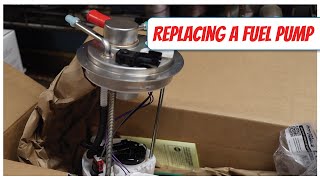
Helpful Videos
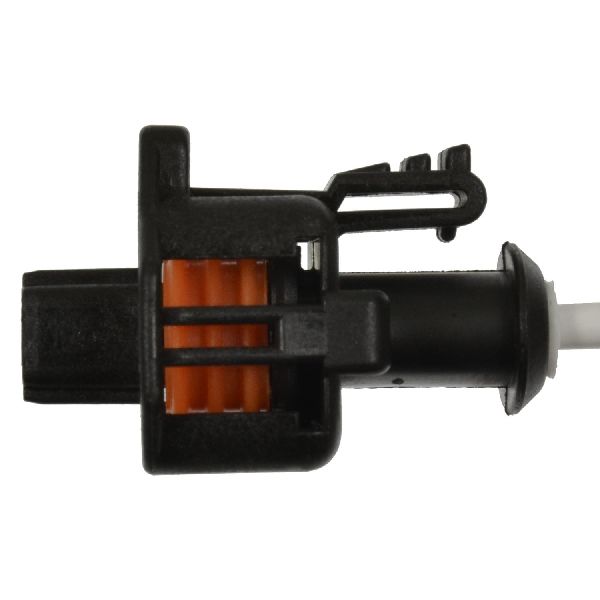
We Have This Part in Stock


The information in this article is provided for general reference and educational purposes only. Vehicle specifications, procedures, and part compatibility can vary by production date, trim level, and region. Always consult your vehicle's factory service manual and verify part numbers before purchasing or performing repairs. Safety-critical components such as airbags, seat belts, and braking systems should be installed by a qualified professional.
- Gmc SIERRA DENALI:
- 🎬 Helpful Videos
- 🛍️ Shop This Part
- What's Unique About the 2012-2016 Gmc SIERRA DENALI
- Diagnostic Flowchart
- Symptoms You May Notice
- Most Likely Causes
- Rare But Worth Checking
- Diagnosis Steps
- Parts You'll Likely Need
- Related Codes That Often Appear With This One
- Technical Service Bulletins (TSBs) & Recalls
- Platform-Specific Known Issues
- Mechanic-Grade Diagnostic Values
- Scan Tool Commands That Help
- Wiring & Ground Locations
- Real Owner Repair Stories
- OEM Part Supersession History
- Model Year Variations Within This Range
- 🎟️ Get 5% Off